
Reviewed · SEGWAY TOURS
2.5hr Guided Segway Tour of Historic Atlanta
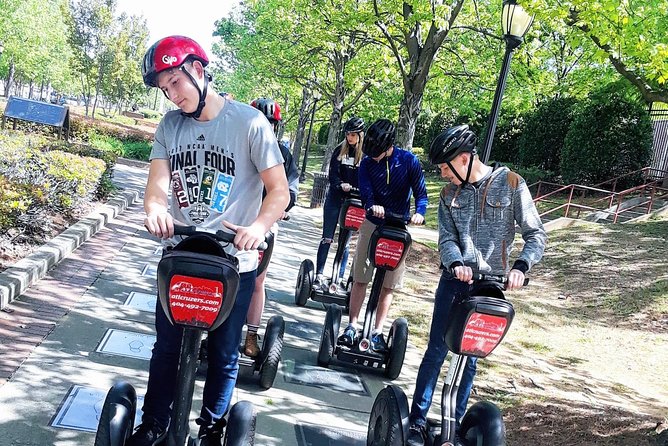
Atlanta is easier to understand on two wheels. This 2.5-hour tour links the city’s civil rights landmarks, old neighborhoods, BeltLine, cemetery gardens, and skyline viewpoints in one lively loop. I especially like the careful 15 to 30-minute training session and the way guides such as Jet, Jett, Jeremy, and Steve mix practical riding help with stories about Atlanta. The main drawback is that you spend only a few minutes at several major sights, so this is an excellent overview rather than a deep museum visit.
I also like the small maximum group size of 16 and the stop at Krog Street Market, which gives you a chance to pause for a drink or quick bite. The tour costs $69 per person, a fair price for the equipment, instruction, guide, and broad route, but you should be comfortable standing and steering for most of the morning.
In This Review
- Key points at a glance
- Why a Segway works well in Atlanta
- Training at Ted Turner Drive
- Cabbagetown and Oakland Cemetery
- The civil rights story in Old Fourth Ward
- Inman Park and Atlanta’s early suburbs
- Riding the Atlanta BeltLine Eastside Trail
- Jackson Street Bridge and the downtown skyline
- What the 2.5 hours really includes
- Is $69 a fair price?
- Who should book this Atlanta ride?
- Practical advice before you roll out
- Should you book the historic Atlanta Segway tour?
- FAQ
- How long is the Segway tour?
- Where does the tour start and end?
- Do I need previous Segway experience?
- What is the minimum age?
- What should I wear?
- Can I cancel for a full refund?
Key points at a glance

- Start with serious Segway instruction: First-time riders receive 15 to 30 minutes of practice before leaving downtown.
- Connect Atlanta’s civil rights story: The route includes Ebenezer Baptist Church and the Martin Luther King Jr. National Historic Site.
- Ride through four distinct areas: Inman Park, Old Fourth Ward, Cabbagetown, and Downtown each show a different side of the city.
- Pause at Krog Street Market: The 10-minute stop on the Atlanta BeltLine works well for a quick drink or snack.
- Get classic skyline photos: Oakland Cemetery and Jackson Street Bridge provide two very different views of downtown.
- Expect attentive guides: Jet and Jett receive repeated praise for calm instruction, safety awareness, humor, and local facts.
Why a Segway works well in Atlanta
Atlanta is spread out. Walking between the civil rights district, Inman Park, Cabbagetown, Oakland Cemetery, and downtown would take much longer and require more effort. A bus could cover the distance, but you would lose the close-up views of old houses, murals, streets, and changing neighborhoods.
The Segway gives you a middle ground. You cover more ground than on foot, yet you remain outside and close to the city. I like that balance. You can look up at buildings, notice public art, and hear the guide point out details without peering through a vehicle window.
The ride also gives the morning a playful edge. Several people arrive nervous, especially if they have never used a Segway. The guides seem to understand this. Jet and Jett are repeatedly praised for explaining the controls in a calm, clear way and for waiting until everyone feels ready. Jeremy is also singled out as a patient instructor, especially with first-time riders.
This is not a race. The group moves together, and the guide watches for road obstacles and helps riders handle the route. That attention matters in a city setting, where pavement conditions, crossings, and other road users require care.
More Segway Tours in Atlanta:
- Washington DC “See the City” Guided Sightseeing Segway Tour
★ 5.0 · 1,924 reviews - Guided Segway Tour of Downtown Nashville
★ 5.0 · 1,568 reviews - 60-Minute Guided Segway History Tour of Savannah
★ 5.0 · 1,163 reviews
Training at Ted Turner Drive
The tour begins at 160 Ted Turner Drive NW at 10:00 am. The equipment is provided, and the session begins with instruction on how to move, turn, stop, and control the Segway. Allow the full 15 to 30 minutes for this part rather than thinking of it as a quick formality.
I consider the training one of the strongest parts of the experience. A Segway is fairly simple to operate, but simple does not mean automatic. You need to trust the machine before riding through a city, and the guide’s job is to build that confidence without rushing you.
Past participants describe the training as one of the most thorough they have received on a Segway tour. That is useful information if you are in your early 60s, not especially athletic, or simply uneasy about balancing on a new machine. The tour is often praised as a good first Segway outing.
Still, you should take the physical requirements seriously. The published information gives two weight limits, 100 to 300 pounds in the tour description and 100 to 260 pounds in the additional details. Because the stricter limit is the safer one to follow, confirm the current requirement with ATL-Cruzers before booking if you are near the upper limit. The minimum age is 14, and anyone under 18 must be accompanied by an adult.
Wear flat, closed-toed shoes. Flip-flops and loose or hanging clothing are not allowed. A hat, sunscreen, and sunglasses are sensible, since much of the tour takes place outdoors.
Cabbagetown and Oakland Cemetery
One of the first distinctive areas is Cabbagetown, a former mill town on Atlanta’s east side. Today, it is known for art, food, and a more informal neighborhood feel. The tour passes public art, including Forward Warrior, described as one of Atlanta’s largest public mural projects.
Cabbagetown helps you see how Atlanta’s older industrial districts have changed. The neighborhood is not presented as a polished historic exhibit. Instead, you ride through a living area where old buildings, creative projects, and places to eat share the same streets.
The route then reaches Oakland Cemetery, Atlanta’s oldest cemetery and one of its largest green spaces. The setting offers a welcome change from city pavement. The gardens and mature trees create a quieter stop, while the skyline appears beyond the cemetery grounds.
Oakland’s notable names include Margaret Mitchell, Bobby Jones, Maynard Jackson, Civil War soldiers, and Kenny Rogers. The tour stop is short, listed at about three minutes, so do not expect time to seek out every grave or study the cemetery in detail. The value here is the combination of place, history, and view. You get a quick introduction, then a memorable look back toward downtown.
The civil rights story in Old Fourth Ward
The Martin Luther King Jr. National Historic Site is the emotional center of the route. The area includes the home where Dr. King was born and the original Ebenezer Baptist Church, where he was baptized and where he and his father served as pastors.
The tour also stops at Ebenezer Baptist Church, historically led by Dr. King’s grandfather and father. The visit helps connect the wider civil rights story to family, faith, and Atlanta’s Old Fourth Ward community.
The scheduled time at the church is about three minutes, and the time at the national historic site is about five minutes. That is enough for orientation and a guide’s explanation, but not enough for a full visit to every building or exhibit. If this subject is your main reason for visiting Atlanta, I would set aside extra time before or after the ride for a longer visit.
As a city introduction, though, this pairing works well. You are not just checking off a famous name. You are seeing the neighborhood and the institutions that shaped Dr. King’s early life and public work. The guide adds context while the group moves between the sites.
This is also where a personal guide can make a large difference. Jet, Jett, Jeremy, and Steve are praised for giving useful information without turning every stop into a long lecture. The strongest comments describe guides who are funny, attentive, and able to keep the morning moving.
More History Tours in Atlanta:
- Atlanta’s Black History and Civil Rights Tour
★ 5.0 · 1,330 reviews - Martin Luther King Jr. History Walking Tour
★ 5.0 · 687 reviews - 3-Hour Atlanta Beltline Food, Street Art and History Tour
★ 5.0 · 345 reviews - New York City: American Museum of Natural History Ticket
★ 4.5 · 15,447 reviews
Inman Park and Atlanta’s early suburbs
Inman Park is described as Atlanta’s first planned community and one of the country’s early garden suburbs. It was established in 1890 and is now a U.S. Historic District with Victorian homes and mature streets.
The area also connects to the 1864 Battle of Atlanta. That contrast is part of what makes the ride worthwhile: elegant houses sit in a place tied to war, urban growth, and later neighborhood renewal.
You pass old Victorian homes and the former home of Coca-Cola founder Asa Candler. The scheduled stop is only about two minutes, so the guide’s spoken explanation carries much of the visit. I would think of Inman Park as a moving history lesson rather than a formal house tour.
The Segway is useful here because you can see more than one block without tiring yourself out. At the same time, remember that you will not be stopping at every house or entering private buildings. Keep your expectations focused on the streetscape and the stories.
Riding the Atlanta BeltLine Eastside Trail
The Atlanta BeltLine is one of the city’s major redevelopment projects. It uses a former railway corridor around the urban core and turns it into a route for recreation, public art, and neighborhood connections.
The Eastside Trail offers a different view of Atlanta than the civil rights sites and Victorian homes. Here, you see the city changing in real time. Old industrial spaces, food destinations, art projects, and new paths come together along the former rail corridor.
The tour includes a stop near Krog Street Market, a food hall described as the oldest in Atlanta. The break lasts about 10 minutes and is intended for a quick bite or drink. That is long enough to refresh yourself, but not long enough for a relaxed meal or a serious food crawl.
I like this pause because it keeps the tour from becoming two and a half hours of constant motion. If you want something from the market, move promptly and keep it simple. The tour must continue with the group, and the stop is a short one.
The BeltLine also shows why this tour is more than a collection of famous landmarks. You are seeing how Atlanta reuses old infrastructure and links neighborhoods that once felt separate. The guide can explain the project while you ride through it, which gives the redevelopment a physical sense that a quick photograph cannot provide.
Jackson Street Bridge and the downtown skyline
Jackson Street Bridge is the classic photo stop. The tour pauses for about five minutes, giving you time to take a group picture with downtown Atlanta behind you.
The view works because it frames the city from outside its center. You see the skyline as a whole rather than looking up from among the towers. It is one of the more useful places to get your bearings, especially early in your visit.
Oakland Cemetery provides another skyline angle, but the two views feel different. Oakland gives you trees, historic grounds, and a quieter setting. Jackson Street Bridge gives you a more direct urban picture. Together, they create a strong visual finish to the sightseeing portion.
There is also a pass through a major downtown educational institution. The supplied details do not identify it by name, but it is located in the heart of downtown and is described as Georgia’s largest educational institution. Treat this as a drive-by point of interest, with the guide supplying the context as the group rolls through.
What the 2.5 hours really includes
The advertised duration is approximately two hours and 30 minutes. That includes the training, riding time, short sightseeing stops, the Krog Street Market break, and the return to the starting point.
The route covers a lot. You see Cabbagetown, Oakland Cemetery, the Old Fourth Ward, Inman Park, the BeltLine, Jackson Street Bridge, and downtown. The tradeoff is clear: several stops last only two to five minutes. You get breadth, not extended time at each location.
I think that is the right design for a first look at Atlanta. You can learn which districts deserve a longer visit later. You also avoid spending your entire morning inside one attraction.
The group maximum is 16 people. That is not a private tour, but it is small enough for the guide to keep an eye on riders and answer questions. The most praised guides are attentive about obstacles and make sure less confident riders are not left struggling at the back.
Weather matters. The tour requires good conditions, and poor weather can lead to a new date or a full refund. For normal cancellations, you can cancel at least 24 hours before the 10:00 am start for a full refund. Within 24 hours, the payment is not refunded, so do not book this as a flexible last-minute plan unless your schedule is firm.
Is $69 a fair price?
At $69 per person, this is not the cheapest way to see Atlanta, but the price includes the Segway, safety instruction, local guide, and 2.5-hour route. You are also paying for a guide who handles navigation and brings the places together into one story.
I see good value here if you are trying to cover several districts in one morning. A walking tour would likely focus on a smaller area. A bus tour might cover similar distances, but it would not give you the same outdoor access or neighborhood feel.
The value is weaker if you want long visits at the Martin Luther King Jr. National Historic Site, Oakland Cemetery, or Krog Street Market. In that case, the tour should be your orientation, followed by independent time at the places that interest you most.
Because the tour is often booked around 12 days ahead, I would reserve before your Atlanta dates are fixed too tightly, particularly if you need a specific morning. Just remember that the cancellation rules become strict inside 24 hours.
Who should book this Atlanta ride?
I would recommend it to adults and families with children aged 14 or older who want a broad, active introduction to Atlanta. It suits first-time Segway riders because the training is given real attention, not brushed aside.
It also works well for people who already know central Atlanta but want to connect neighborhoods they have not explored. A couple in their early 60s described it as a good fit for active people who are young at heart, and that seems fair based on the training emphasis and steady pace.
You may want another option if you dislike standing for extended periods, have balance concerns, are pregnant, or cannot meet the weight requirements. Pregnant participants are not permitted because of the risk of falling.
The tour is also less suitable for anyone wanting a slow, detailed examination of one historic site. The route keeps moving, and the short stops are designed to give you a taste of each place.
Practical advice before you roll out
Arrive ready to ride rather than dressed for a formal sightseeing day. Closed-toed, flat shoes are essential, and you should avoid anything loose that could hang near the equipment.
Bring sun protection. The operator recommends a hat, sunscreen, and sunglasses, and those items make sense for an outdoor morning. Check the forecast because the experience may be canceled in poor weather.
If you are nervous, say so during training. The strongest guide feedback centers on patience, clear instructions, and careful attention to obstacles. You do not need previous Segway experience, but you do need to listen closely and give yourself time to learn.
Finally, use the tour as a map for the rest of your Atlanta visit. Mark the places where you want more time, especially the King historic site, Oakland Cemetery, Inman Park, and Krog Street Market.
Should you book the historic Atlanta Segway tour?
Yes, if you want an active, efficient way to connect Atlanta’s major east-side sights and historic districts. The excellent safety instruction, personable guides, small group size, and skyline photo stops make the $69 price reasonable.
Book it as an overview, not as a substitute for visiting the attractions in depth. If you can accept short stops and outdoor riding, this is a smart first-morning choice. If you want a quiet museum day or have physical limits that make balancing difficult, choose a slower form of sightseeing instead.
FAQ
How long is the Segway tour?
The tour lasts approximately 2.5 hours, including a 15 to 30-minute training session, riding time, sightseeing stops, and the return to the meeting point.
Where does the tour start and end?
It starts at 160 Ted Turner Drive NW, Atlanta, Georgia 30303, at 10:00 am. The tour ends back at the same meeting point.
Do I need previous Segway experience?
No. A guided training session is included, and the tour information states that no previous experience is needed.
What is the minimum age?
The minimum age is 14. Children must be accompanied by an adult.
What should I wear?
Wear weather-appropriate clothing with flat, closed-toed shoes. Flip-flops and loose or hanging clothing are not allowed. A hat, sunscreen, and sunglasses are recommended.
Can I cancel for a full refund?
Yes, if you cancel at least 24 hours before the experience start time. Cancellations made less than 24 hours before the start time are not refunded. If poor weather cancels the tour, you will be offered another date or a full refund.
Just added in Atlanta
- 3-Hour Atlanta Beltline Food, Street Art and History Tour★ 5.0 · 345 reviews
- Private Stranger Things “The Upside Down” Film Locations Tour in Atlanta★ 5.0 · 338 reviews
- Martin Luther King Jr. History Walking Tour★ 5.0 · 687 reviews
- Guided Bike Tour in Atlanta with Snacks★ 5.0 · 394 reviews
- City Lights Atlanta Night-Time Tour with Photos & Dinner Stop★ 5.0 · 485 reviews
- Atlanta Sightseeing Bus Tour★ 4.5 · 837 reviews
- 90-Minute Guided Sightseeing Tour★ 5.0 · 1,004 reviews
- 2.5 Hour Atlanta Local Food + Victorian Cemetery Tour★ 5.0 · 693 reviews
Segway Tours, compared.

Washington DC “See the City” Guided Sightseeing Segway Tour
Read our review →
60-Minute Guided Segway History Tour of Savannah
Read our review →
90 Minute Historic Uptown Neighborhood Segway Tour of Charlotte
Read our review →


Browse the lists this tour appears in