
Reviewed · FOOD & DRINK
Hawaii Off The Beaten Path Food Tour
Come hungry, and bring curiosity. This three-hour Oahu food tour takes you from a Shinto temple to Honolulu’s markets and Chinatown eateries, with generous tastings of poke, roast meats, seafood, Filipino dishes, and unusual local fruit along the way. I like the strong local focus and the way guides such as Victor and TJ connect food to Hawaii’s many cultural influences. I also like the hotel pickup and small-group format. The main drawback is simple: you will stand for much of the morning, and the food can be so plentiful that pacing yourself becomes essential.
At $150 per person, this is not a quick sample tour with a few bites on toothpicks. It is closer to a progressive lunch with cultural commentary, transportation, and enough food to carry some back for later. I would book it early in an Oahu stay, especially since it often fills well ahead of time, but I would first check the raw seafood options, allergies, and pickup area.
In This Review
- Key things to know before you book
- Why this Oahu food tour feels different
- Starting beside Nuʻuanu Stream at Izumo Taishakyo Mission
- Manapua and Filipino flavors in downtown Honolulu
- Chinatown markets and the pleasure of eating locally
- Fresh prawns, sashimi, and Japanese-style seafood
- Tropical fruit, including the chance of something unusual
- Chinatown roast meats: duck, pork belly, and char siu
- Pandan cake and two versions of Hawaiian poke
- What the $150 price really includes
- Timing, pickup, and the walking conditions
- Who should book this tour?
- Should you book the Hawaii Off The Beaten Path Food Tour?
- FAQ
- How long does the Hawaii Off The Beaten Path Food Tour last?
- What time does the tour start?
- Is hotel pickup available?
- Can I join from Kailua, Kaneohe, or Ko Olina?
- What food is included?
- Are drinks included?
- Does the tour include raw seafood?
- Will I need to stand during the tour?
- Can I cancel for a full refund?
Key things to know before you book
- Seventeen tastings may be possible: Portions are generous, and some groups receive more than the listed stops suggest.
- Chinatown is the food center: Expect markets, family-run shops, roast-meat counters, seafood vendors, and sweets.
- The food crosses several cultures: Chinese, Filipino, Vietnamese, Japanese, Korean, and Hawaiian flavors all appear.
- Raw seafood is part of the experience: Chutoro sashimi, ahi poke, and limu poke are central tastings.
- Hotel pickup saves time: Pickup and return are offered in Waikiki and Honolulu, with a 15-minute window sent by text the day before.
- Standing is normal: Seating is arranged when possible, but comfortable shoes matter.
Why this Oahu food tour feels different
Many Honolulu food outings stay close to Waikiki. This one heads toward downtown and Chinatown, where the food is tied to everyday shopping, immigrant communities, and long-running local businesses. You are not simply handed a prepared plate and sent on your way. You move between markets, vendors, and small eateries while your guide explains what you are eating and why it matters.
The cultural mix is the main reason to choose this tour. A single morning may include a Japanese temple, Filipino braised chicken, Chinese roast duck, Vietnamese pandan cake, Japanese-style seafood, and Hawaiian poke. That variety gives you a useful introduction to Oahu’s food culture without pretending that Hawaiian cuisine is one narrow thing.
I also like the role of the guides. Victor and TJ are repeatedly praised for their humor, local insight, and care with different walking speeds. Victor is described as being born and raised on Oahu, with a broad understanding of the island’s culture and food. That matters here because Chinatown can be more rewarding when someone helps you read the shops, ingredients, and customs around you.
The tour is listed as small group, with a maximum noted as 12 in the highlights and up to 16 in the additional details. Since the stated limits differ, check the current group size when booking. Either way, this is intended to feel more personal than a large bus excursion.
More Food Tours in Oahu:
- Oahu Catamaran Waikiki Sunset on 40 Foot Catamaran: Food and BYOB
★ 5.0 · 836 reviews - Oahu in a Day: Waterfall – Food Trucks – Lookouts – Small Crowds
★ 5.0 · 475 reviews - Little Havana Food and Walking Tour in Miami
★ 5.0 · 8,882 reviews
Starting beside Nuʻuanu Stream at Izumo Taishakyo Mission
The morning begins at the Izumo Taishakyo Mission of Hawaii, a 125-year-old active Japanese Shinto temple beside Nuʻuanu Stream. You spend about 15 minutes here, and admission is included.
This is a smart opening stop. It gives you a quiet cultural marker before the eating begins and shows one part of Honolulu’s Japanese heritage. The temple also helps frame the larger theme of the morning: Oahu’s food traditions grew from many communities, not from one single culinary source.
The stop is brief, so do not expect a full temple tour. Its value is as an introduction and a reminder to look beyond beaches and hotel districts. From here, the route moves into downtown Honolulu and Chinatown.
Manapua and Filipino flavors in downtown Honolulu
One of the first food tastings is manapua, a soft baked bun with a savory, smoky pork filling. Think of it as a local take on a filled bun, with sweet bread balancing the meat inside.
Manapua is a useful first bite because it is filling but familiar enough to ease you into the more adventurous dishes later. The tour may feature freshly baked buns, and the portions appear to be far more than a token sample. If you eat a full breakfast before arriving, you may regret it before reaching the seafood stops.
Next comes turon, also called banana lumpia. This Filipino dessert wraps banana in a crisp fried shell. It brings sweetness and crunch to a menu otherwise heavy with meat and seafood.
Chicken adobo follows, with chicken marinated and simmered in a seasoned sauce. The dish is a good example of Filipino comfort food: savory, braised, and built around a cooking method that turns a simple ingredient into something deeply satisfying.
These Filipino dishes also help explain why this is not simply a Chinatown tour in the narrow sense. Honolulu’s food culture reflects movement across the Pacific, and the menu lets you taste that story instead of only hearing about it.
Chinatown markets and the pleasure of eating locally
The heart of the tour takes place around Chinatown markets and food shops. You may see vendors handling produce, seafood, and roast meats while regular customers shop for their own meals. That setting is more revealing than a polished restaurant designed mainly for sightseeing.
The route is not built around one long sit-down meal. You stop, taste, listen, then continue. Some food may need to be eaten while standing, and seating is arranged when it can be. I would wear shoes with good support and avoid bringing anything awkward to carry.
The market setting also means availability can change. Seasonal fruit, seafood, and roast meats depend on what looks good and what is in stock. That is a positive if you like food at its freshest, but it means the exact menu is not fixed. You should see the published dishes as a strong guide, not a locked promise.
A different kind of day out entirely:
- Oahu Grand Circle Island and Haleiwa Tour: 9-Hr Deluxe Experience
★ 5.0 · 17,387 reviews - Oahu: Grand Tour Around Island 16 Locations plus Snorkeling
★ 5.0 · 8,669 reviews - Parasailing Experience in Waikiki, HI
★ 5.0 · 7,692 reviews - Salute to Pearl Harbor Including USS Arizona
★ 4.5 · 7,433 reviews
Fresh prawns, sashimi, and Japanese-style seafood
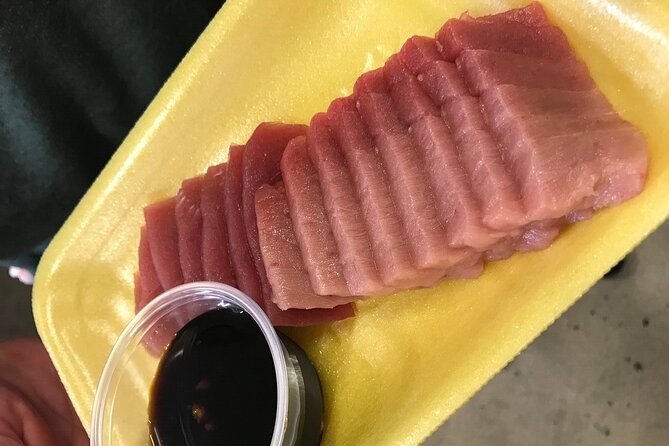
The Kauai wild-caught deep-water prawns are listed as ama ebi or botan shrimp. These are delicate seafood tastings that bring a different texture and sweetness from the richer roast meats.
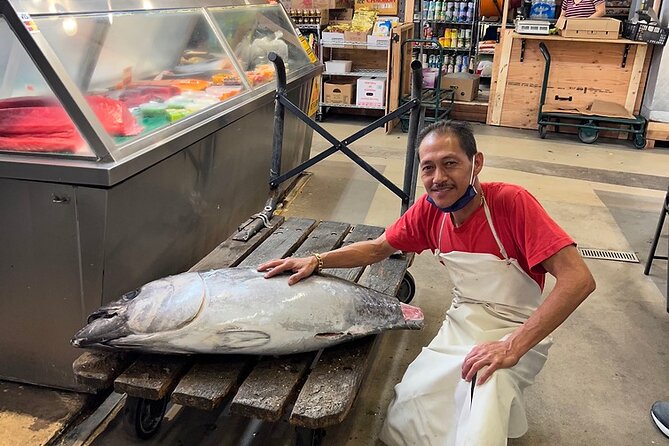
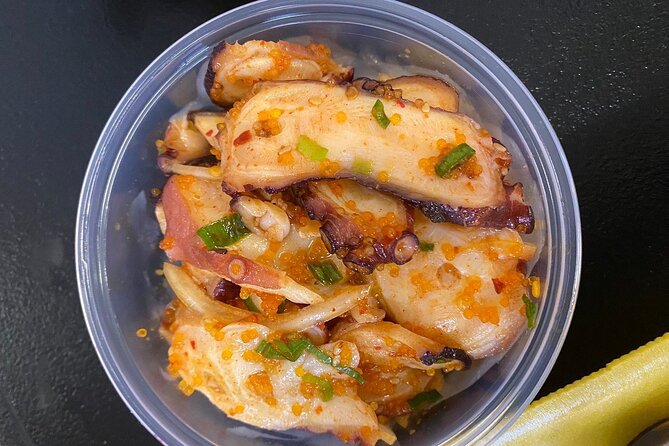
The fish-market stop is one of the tour’s biggest draws. Here, the group may try chutoro sashimi, made from fatty local bigeye tuna, along with cooked Japanese octopus served in a Korean-style spicy dressing and topped with flying fish eggs. The octopus is called tako poke in the menu description, while the sample menu describes it as Japanese madako. Either way, expect a cooked octopus preparation rather than raw octopus.
This is a serious seafood portion of the morning. If you enjoy sushi and poke, you will likely see the $150 price in a better light. If raw fish is not your thing, tell the operator before booking and ask what substitutions may be possible. The supplied information specifically asks people with serious food allergies to contact the company before booking, and that advice is worth following.
The freshness is part of the point. You are tasting fish in a market setting, not a generic seafood appetizer prepared far from the source. Still, raw seafood is never a minor detail. Anyone with dietary restrictions, strong aversions, or medical concerns should review the menu carefully.
Tropical fruit, including the chance of something unusual
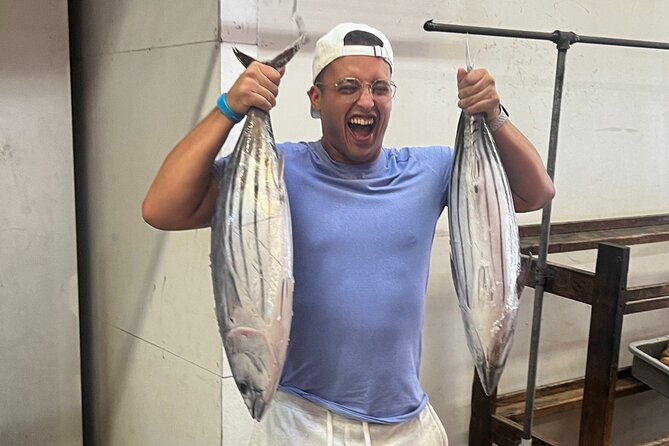
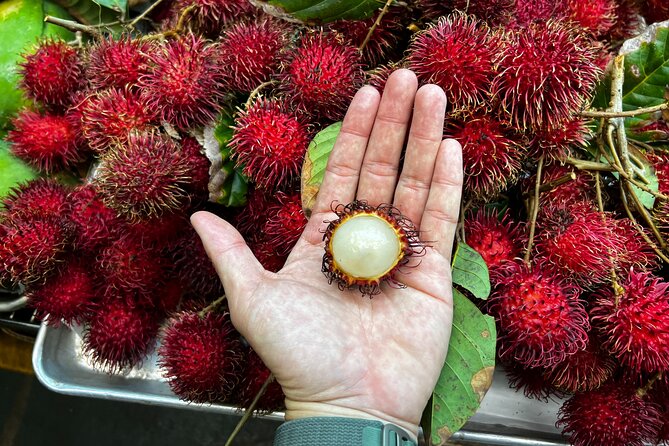
The fruit stop lasts about 20 minutes and can include more than five tastings, with some groups trying six or more locally grown exotic fruits. The selection depends on the season and what looks best that day.
This may become one of the morning’s most memorable sections. The menu can include fruit that you have never tried, and one person specifically singled out durian as a favorite. You might find a new favorite, or you might discover that certain tropical fruit is not for you. That element of surprise is part of the fun.
Fruit also gives the tour a welcome break from rich pork, duck, and fried foods. Pace yourself here. The tasting may look light, but a long series of fruit samples, meats, seafood, and desserts adds up quickly.
Chinatown roast meats: duck, pork belly, and char siu
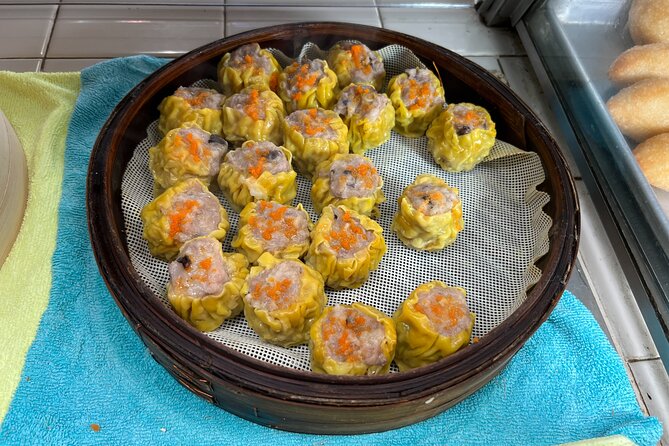
The roast-meat stop is a major reason to arrive hungry. Depending on availability, you may taste Chinese-style roast duck, crispy-skinned pork belly, and sweet honey barbecue pork belly, also known as char siu.
This is not a garnish-sized portion of meat. The food is described repeatedly as generous, and containers may be available for leftovers. That is helpful because you may not have room for every bite by the end of the route. It also gives you a second chance to enjoy something you liked after your stomach has recovered.
The roast duck and poke receive especially strong praise from the tour’s audience, but the appeal is broader than any one dish. You get to see how Chinatown’s prepared foods work as practical, everyday meals. The vendors are not there only for a tour group. They are serving food that local customers buy and take home.
Pandan cake and two versions of Hawaiian poke
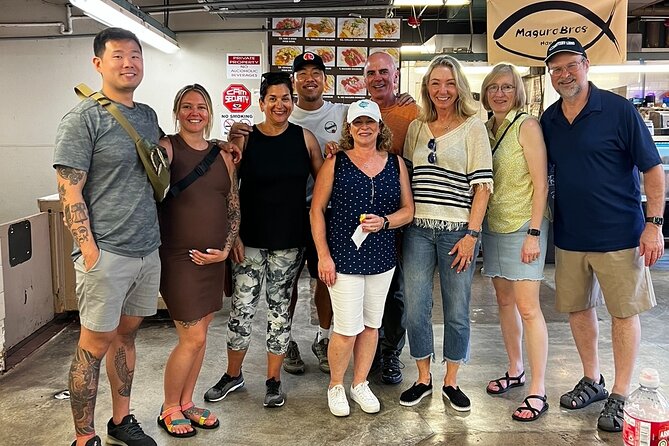
Vietnamese green pandan cake supplies the sweet finish before the final poke tasting. Pandan has a fragrant, distinctive flavor, and the cake adds a soft contrast to the crisp turon and savory meats.
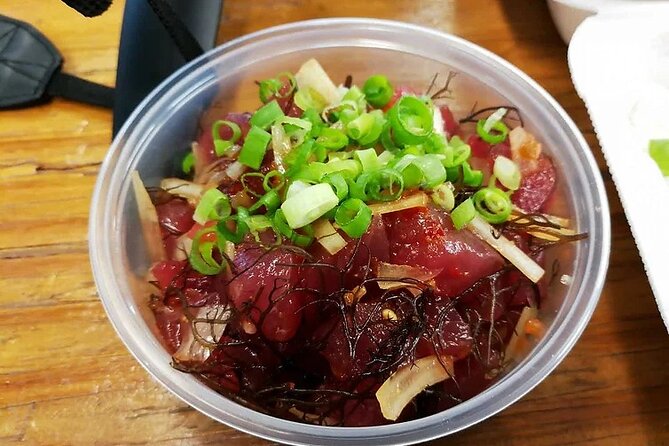
The tour then returns to Hawaii’s best-known local specialty: poke. One version is spicy ahi or tuna poke, with fresh fatty tuna in a spicy preparation. The other is Hawaiian-style ahi limu poke, made with cubed raw bigeye tuna seasoned in a local style.
Limu, a type of seaweed, gives the Hawaiian-style preparation a different character from a heavily sauced version. Tasting both helps you understand that poke is not one fixed recipe. Seasoning, texture, and toppings can vary, and freshness matters more than a long list of ingredients.
I would save room for these final bites. Poke is the dish many people expect to try in Hawaii, but sampling it in this wider context makes it more useful. You have already tasted Filipino, Chinese, Japanese, Korean, and Vietnamese food, so you can better see how local poke fits into Oahu’s wider food culture.
What the $150 price really includes
At $150 per person, this tour costs more than a casual Chinatown lunch. The value comes from the total package:
- Hotel pickup and drop-off in Waikiki or Honolulu
- About three hours of guiding and transportation
- A long list of food tastings
- Local juice, such as lilikoi, lychee, guava, or pineapple, or bottled water
- Cultural background at the temple, markets, and food stops
- Help finding places that are easy to miss on your own
The food alone can amount to several small meals. With manapua, adobo, turon, fruit, prawns, sashimi, octopus, roast meats, cake, and two types of poke, you are paying for quantity as well as access.
I would not choose this tour if you want a slow, seated culinary lecture or a refined restaurant meal. I would choose it if you want a practical introduction to Honolulu food, a guide who can explain the cultural links, and enough tasting food to replace lunch.
Timing, pickup, and the walking conditions
The tour starts at 9:30 a.m. Pickup from a Waikiki or Honolulu hotel or Airbnb usually happens between 9:00 and 9:30, depending on traffic. The operator sends a text the day before with a 15-minute pickup window and other details.
Pickup is limited to Honolulu and Waikiki. If you stay in Kailua, Kaneohe, Aulani, Ko Olina, or the Four Seasons area, you need to meet the group at the first stop. List your hotel or Airbnb when booking, or contact the operator at least 24 hours before the tour.
The route includes walking on even pavement, and the pace can be adjusted when needed. Still, most of the experience involves standing. Older adults can take part, but I would mention mobility needs before the morning begins and wear supportive shoes.
The tour is offered in English, uses a mobile ticket, and requires good weather. Free cancellation is available until 24 hours before the start time. If poor weather forces a cancellation, you can receive a different date or a full refund.
Who should book this tour?
This is a strong choice for first-time visitors who want to understand Honolulu through food instead of spending another morning around Waikiki. It also suits repeat Oahu visitors who have seen the usual attractions and want a closer look at Chinatown markets and local vendors.
Food-curious eaters will get the most from it. You should be open to raw tuna, octopus, unfamiliar fruit, Filipino food, Chinese roast meats, and sauces that may not match your usual tastes. Families can enjoy the range, and the guides have shown care with older parents and mixed-age groups.
I would hesitate if you have serious food allergies, dislike seafood, need a guaranteed seated meal, or prefer a fixed menu. Availability changes, and the morning can be a lot of food in a short time.
Should you book the Hawaii Off The Beaten Path Food Tour?
Book it if you want a big, varied morning of eating with a local guide and hotel transportation. The strongest features are the generous portions, the broad cultural range, the Chinatown market setting, and the chance to try excellent fish, roast meats, poke, and tropical fruit in one outing.
Skip it if you want quiet dining, firm menu guarantees, or little walking. For everyone else, this is best scheduled near the start of your Oahu stay. You will learn which foods deserve a second meal, which markets are worth another visit, and why Honolulu tastes far more varied than its resort district suggests.
FAQ
How long does the Hawaii Off The Beaten Path Food Tour last?
The tour lasts approximately three hours.
What time does the tour start?
The scheduled start time is 9:30 a.m. Hotel pickup generally takes place between 9:00 and 9:30 a.m.
Is hotel pickup available?
Yes. Pickup and drop-off are offered within the Honolulu and Waikiki areas. You need to provide your hotel or Airbnb details when booking.
Can I join from Kailua, Kaneohe, or Ko Olina?
Pickup is not offered from those areas. You need to meet the group at the first stop if you are staying on the east or west side of Oahu.
What food is included?
Included tastings can include manapua, chicken adobo, turon, tropical fruit, Kauai prawns, chutoro sashimi, spicy ahi poke, Japanese octopus, roast duck, roast pork belly, char siu, Vietnamese pandan cake, and Hawaiian-style ahi limu poke.
Are drinks included?
Yes. You receive local juice, such as lilikoi, lychee, guava, or pineapple, or bottled water.
Does the tour include raw seafood?
Yes. The menu includes chutoro sashimi, spicy ahi poke, and Hawaiian-style ahi limu poke. Serious food allergies should be discussed with the operator before booking.
Will I need to stand during the tour?
Yes. Standing is expected for much of the experience, although seating is arranged whenever possible.
Can I cancel for a full refund?
You can cancel for a full refund at least 24 hours before the experience starts. Changes or cancellations made less than 24 hours before the start time are not accepted for a refund. If poor weather causes the operator to cancel, you can receive another date or a full refund.
Just added in Oahu
- Oahu: Waikiki Turtle Canyons Cruise and Snorkel Excursion★ 4.8 · 825 reviews
- Waikiki, Hawaii: Deluxe Snorkel and Wildlife Cruise★ 5.0 · 352 reviews
- Waikiki Green Sea Turtle Snorkeling Tour – Boat Excursion★ 5.0 · 408 reviews
- Premier Waikiki Sunset Party Cruise with Live DJ and Full Bar★ 5.0 · 322 reviews
- Waikiki Trolley Green Line Diamond Head Shuttle★ 5.0 · 606 reviews
- Waikiki Beach Sunset Sail★ 5.0 · 378 reviews
- Wild Dolphin Watching and Snorkel Safari Off West Coast of Oahu★ 5.0 · 795 reviews
- Chief’s Official Pearl Harbor Self-Guided Multimedia Tour★ 4.0 · 407 reviews
Food & Drink, compared.
New Orleans Food Walking Tour of the French Quarter with Small-Group Option
Read our review →
NYC Bus Tour of Brooklyn, Bronx, Queens: Art, Food & Sports
Read our review →
Savannah First Squares Culinary & Cultural Walking Food Tour
Read our review →
Chinatown & Little Italy Food Tour with 7 Flavorful Tastings
Read our review →
Food Tour with 5+ Tastings of Local Delicacies
Read our review →
Browse the lists this tour appears in