
Reviewed · MANTA RAY SNORKEL TOURS
Kailua-Kona: Manta Ray Watching Nighttime Boat Trip
The ocean turns magical after sunset. This two-hour Kona Coast Boat Tours outing gives you a rare view of Big Island waters at night, with the choice to watch from the catamaran or float above manta rays as they circle beneath bright lights. I like the close-up snorkeling and the crew’s calm, funny approach, especially guides such as Kelly, Bryce, Koa, Elayo, and Kelley, who have helped nervous first-timers feel at ease.
I also like the simple value: for $75, you get the boat ride, guide, snorkel equipment, wetsuit top, life jacket, and light snacks. The main consideration is clear: book the snorkeling option if you want the full experience. From the boat alone, you may not see much of the rays, and the ride back can feel chilly, especially with wet swimwear.
In This Review
- Key points to know before you book
- Leaving Kailua-Kona after sunset
- What the crew explains before you enter the water
- Choosing between the boat and snorkeling options
- Watching the manta rays beneath the lights
- Returning to shore with saltwater and snacks
- Is $75 a fair price?
- The small drawbacks to plan around
- Who will enjoy this most?
- Should you book the Kona manta ray night trip?
- FAQ
- How long is the manta ray boat trip?
- How much does the experience cost?
- What is included?
- Is hotel pickup available?
- Where is the meeting point?
- What should I bring?
- Who cannot join the snorkeling activity?
Key points to know before you book
- The rays come remarkably close: Several people describe manta rays passing within inches of their faces, sometimes close enough to brush against someone by accident.
- Snorkeling is the better choice: The boat-only option offers scenery and information, but the underwater view is the real reason to go.
- The crew gets high marks for patience: Guides have assisted novice swimmers and first-time snorkelers while keeping the mood relaxed.
- Night conditions add a little challenge: The boat can be windy or choppy, and the water feels more intimidating in the dark than it does by day.
- Meeting at Honokohau Harbor takes care: The exact boat location can be confusing, so call ahead and confirm the pier or crew location.
- Sightings are exciting but not fixed: Groups have seen more than 10 rays, while another group saw two. Marine life never signs a contract.
Leaving Kailua-Kona after sunset
The meeting point is at Honokohau Harbor, about 4.5 miles south of Kona Airport and 3.5 miles north of Kailua-Kona town. After turning into the harbor from the main highway, take the second right and find the crew member in front of the restrooms.
That final instruction matters. The harbor has several boats and activity operators, and the meeting spot may not be obvious in the dark. One person compared the small restroom building to a Pizza Hut, which is oddly useful as a landmark. I would call 12 hours ahead, as requested, to confirm both your booking and the exact boat location.
There is no hotel pickup or drop-off, so you need your own transport to the harbor. Build in extra time for parking and finding the right spot. A few people have arrived at the wrong location and needed help, but the crew has been willing to guide them in.
Once aboard, you get a life jacket and prepare for a short ride away from shore. The catamaran is described as spacious and comfortable enough for the trip, though one person called the boat a little rugged. Another appreciated the music and relaxed atmosphere. On windy nights, the upper deck can be breezy, so hold on and bring a warm layer.
The ride itself is part of the evening. Kona’s shore becomes a dark outline, and the sea takes over. You may see fish or other marine life, and some outings have included dolphins, a monk seal, or turtles near the marina. Those sightings are pleasant extras, not the main promise of the trip.
More manta ray night snorkels:
- Big Island Manta Ray Night Snorkel
★ 5.0 · 5,656 reviews - Big Island: Kona Manta Ray Snorkel Tour in Keauhou Harbor
★ 4.5 · 2,465 reviews - KONA Manta Ray Night Snorkel – FREE re-ride if no Sightings
★ 5.0 · 2,212 reviews
What the crew explains before you enter the water
The guides provide an introduction to manta rays and explain why these animals gather in Kona’s warm coastal waters. The basic idea is easy to understand: the rays come to feed on tiny organisms drawn toward the lights at night.
You are not chasing the animals or handling them. The point is to float in place and watch as the mantas make wide, graceful turns beneath you. That quiet, respectful setup is important. It lets you see natural behavior rather than a staged animal performance.
The crew’s attitude is one of the strongest parts of this trip. Names that appear repeatedly include Captain Kelly, Bryce, Koa, Kelley, Elayo, Elio, Ilio, Chase, and Connor. The spelling varies in the available information, but the pattern is consistent: the staff explains instructions clearly, keeps spirits up, and pays attention to people who feel unsure in the water.
That patience matters more than a polished speech. Several people had never snorkeled before, and some felt anxious about entering the ocean at night. Guides stayed nearby, explained what to do, and helped them settle down. One person who was not a strong swimmer still felt safe enough to enjoy the sighting.
The language of instruction is English. If you need close help in the water, tell the crew early. You should not treat this as a casual swim from shore. It is an ocean outing at night, and you need to be comfortable following instructions.
Choosing between the boat and snorkeling options
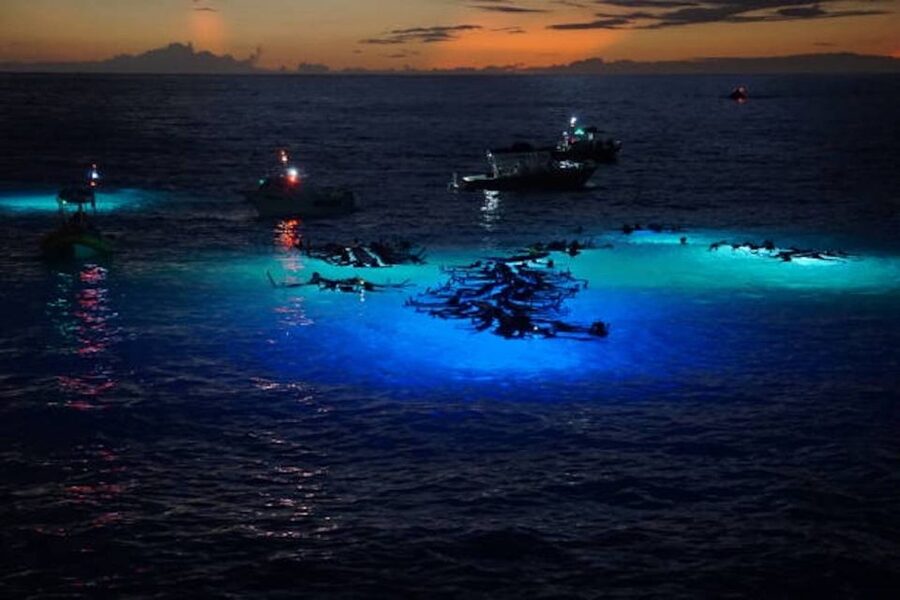
The tour offers two basic ways to experience the manta site. You can remain aboard and watch from the boat, or you can put on the supplied gear and enter the water.
I would choose snorkeling unless you have a strong reason not to. The boat ride may be pleasant, and the guide’s information is useful, but the manta rays are best seen from below the surface. One clear piece of advice from the available feedback is to book the snorkeling option from the start rather than hope to change plans at the last moment.
The supplied equipment includes snorkel gear, a wetsuit top, and a life jacket. Bring your own swimsuit and towel. The wetsuit top helps with warmth, but it is not a full-body suit. One person found a wetsuit worn and unpleasant, so equipment condition may vary. That is worth knowing if you are sensitive to shared gear.
You do not need to be an expert snorkeler, but you do need to be a swimmer. The activity is not suitable for non-swimmers or children under five. Families with older children have had a good time, including groups with children from ages eight to sixteen, but every child must be comfortable in open water and able to follow directions.
The crew controls the pace rather than rushing people through. Some groups spend around 40 minutes in the water, while another group reported roughly an hour. The exact time depends on conditions, the group, and the evening’s operation, but the format allows enough time to watch the rays rather than simply jump in and climb out.
Watching the manta rays beneath the lights
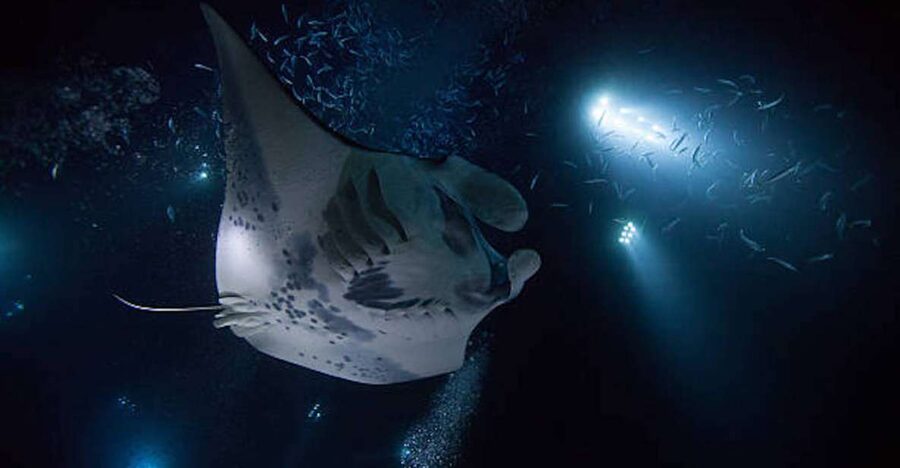
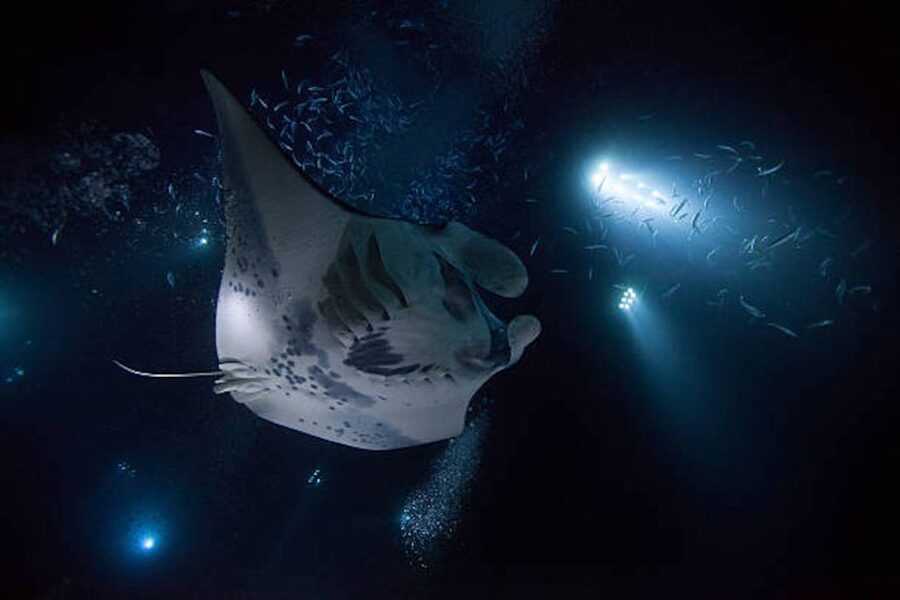
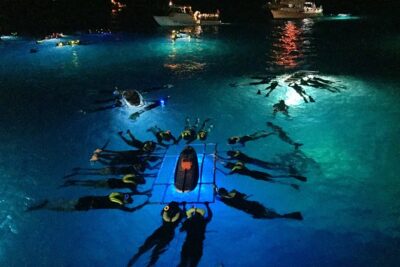
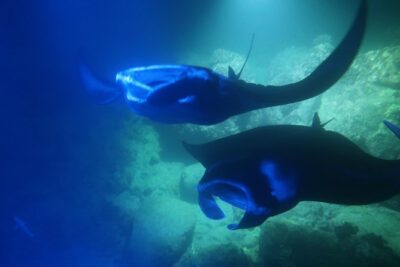
This is the part you came for. At the viewing area, lights attract small food organisms, and manta rays glide into the illuminated water. You float on the surface and look down as the animals make slow spirals and sweeping turns.
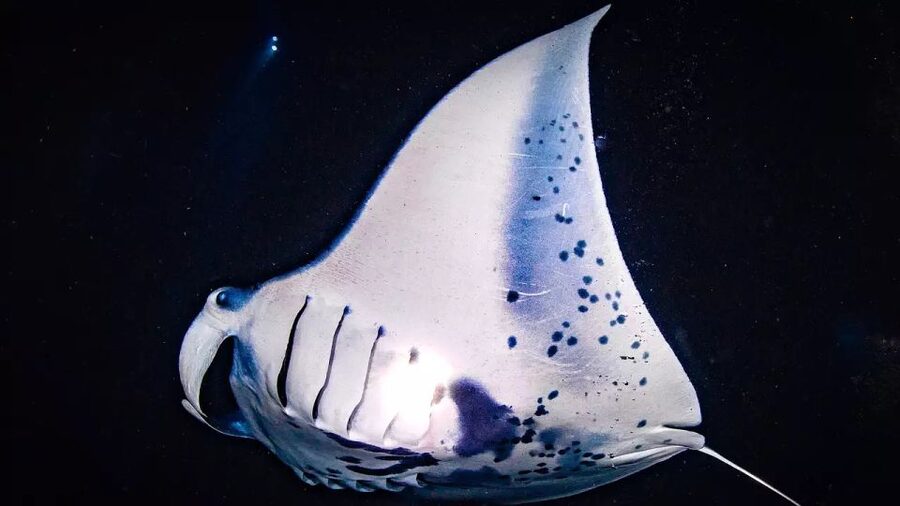
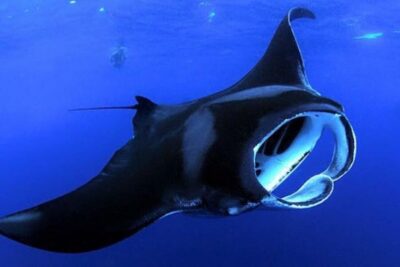
The scale can surprise you. The rays are large, yet their movements are gentle and smooth. Their broad bodies seem to fold through the water as they pass below, sometimes rising within inches of your face. One person described the sight as an underwater ballet, which fits better than most dramatic comparisons.
You should resist the urge to reach out. The best encounter comes from staying still and letting the animal choose its path. The rays may pass directly beneath you, turn, and return from another angle. That repeated movement gives you time to watch how they feed and steer.
Sightings vary. One outing had more than 10 manta rays, while another saw four, and another saw two. Some evenings may bring a large gathering, while others provide a smaller but still rewarding encounter. If seeing a specific number of rays is essential to your trip, no responsible boat operator can guarantee it.
The darkness makes the sighting feel more intense. You see the beam of light, the black water around it, and then a pale wing shape appears below. If night swimming makes you nervous, focus on the guide’s instructions and keep your face in the water for a few seconds at a time. Many people find the fear fades once the first ray arrives.
You might also spot other animals. Dolphins have joined one outing, and another group saw a monk seal. Turtles were seen around the marina on one trip. Treat these as lucky additions, not part of the core itinerary.
More Boat Tours in Big Island of Hawaii:
- Big Island: Captain Cook Snorkel On A Power Catamaran With Lunch
★ 5.0 · 2,232 reviews - Big Island Historical Dinner Cruise to Kealakekua Bay
★ 4.5 · 1,279 reviews - Deluxe Snorkel & Dolphin Watch Aboard a Luxury Catamaran from Kailua-Kona
★ 5.0 · 797 reviews - Afternoon Sail & Snorkel to the Captain Cook Monument
★ 5.0 · 722 reviews
Returning to shore with saltwater and snacks
Light snacks are included, which is welcome after time in the water. The food is simple rather than a meal, so eat beforehand if you know you need a substantial dinner.
The return ride can be cooler than expected. Bring something warm for the way back, along with a towel. You may feel comfortable while active in the water, then notice the wind as soon as you sit down in wet swimwear.
The boat ride is usually described as short and fairly smooth, but wind can change the feel of the trip. One outing had a choppy ride due to weather, though the manta viewing was still excellent. If you are prone to motion sickness, you may want to prepare in the way you normally do, but conditions cannot be predicted from one evening to the next.
A waterproof camera is allowed and worth bringing if you already own one. The dark setting can make photography difficult, so do not let filming distract you from watching. The manta rays are the main show, and they do not pause for a retake.
Is $75 a fair price?
At $75 per person, this is a strong value if you snorkel. The fee covers the boat, an English-speaking guide or instructor, snorkel gear, a wetsuit top, a life jacket, and light snacks. You are paying for access to a nighttime marine encounter that is difficult to arrange independently.
The value drops if you only remain on the boat. You still receive the ride, scenery, and explanation, but the rays may be hard to see from above. I would spend the money only if I planned to enter the water, assuming I met the swimming requirements.
The two-hour duration also works well for a busy Big Island schedule. It is long enough for the ride, safety briefing, water time, and return without taking up an entire day. The late timing can fit around a beach morning, a volcano visit, or a relaxed dinner, though you should confirm the exact start time when booking.
Free cancellation up to 24 hours before departure gives you some useful flexibility. You can also reserve now and pay later. Those terms help if your Kona plans are still shifting, but they do not remove the need to confirm the boat location before you go.
The small drawbacks to plan around
The meeting point is the biggest practical nuisance. Honokohau Harbor is not simply a matter of parking and walking to one obvious desk. Call ahead, read the directions carefully, and confirm the exact boat.
The water may be calm or choppy. You are heading out at night, so this is not the right pick if you strongly dislike boats, open water, or being unable to see below you. Even people who felt nervous often settled in, but you should make an honest choice about your comfort.
Shared wetsuit tops may show wear. One person specifically found one smelly and tattered. That sounds like an isolated complaint among otherwise highly positive feedback, but it is still a fair consideration.
The boat-only option may disappoint if your goal is close viewing. I would not choose it simply to save the trouble of getting wet. The magic is underwater.
Finally, manta encounters are wild-animal encounters. The crew may find a productive viewing spot, as they have done for many groups, but the number of rays and the time they remain nearby can change.
Who will enjoy this most?
I would recommend this to confident swimmers, first-time snorkelers who are willing to follow help, families with children at least five years old, solo visitors, and anyone who wants a memorable evening activity rather than another daytime boat ride.
It is especially good for people who appreciate quiet animal watching. You are not riding a thrill machine or feeding wildlife. You are floating in the dark while large, graceful rays move through the light.
It also suits nervous beginners better than many open-water activities because the guides have a strong record of staying patient and attentive. Still, the tour does not replace basic swimming ability. Non-swimmers should not book it.
Bring swimwear, a towel, warm clothes, and a waterproof camera. Call 12 hours ahead, check the boat’s exact position, and arrive early enough to find the harbor without a last-minute scramble.
Should you book the Kona manta ray night trip?
Yes, if you can swim and are prepared to snorkel. The close encounters, attentive crew, short duration, and $75 price make this one of the better-value nature activities around Kailua-Kona.
Choose the boat-only option only if you mainly want the evening ride and are comfortable with a limited view of the rays. For the full experience, get in the water, keep warm on the way back, and let the mantas come to you.
FAQ
How long is the manta ray boat trip?
The activity lasts two hours, including the boat ride, time at the manta viewing area, and the return to Kona.
How much does the experience cost?
The listed price is $75 per person.
What is included?
The price includes the boat trip, an English-speaking guide or instructor, snorkel gear, a wetsuit top, light snacks, and life jackets.
Is hotel pickup available?
No. Hotel pickup and drop-off are not included, so you need to reach Honokohau Harbor yourself.
Where is the meeting point?
The provider is about 4.5 miles south of Kona Airport and 3.5 miles north of Kailua-Kona town. After turning into Honokohau Harbor from the main highway, take the second right and meet the crew member in front of the restrooms.
What should I bring?
Bring swimwear, a towel, warm clothing for the return ride, and a waterproof camera if you want to take photos or video.
Who cannot join the snorkeling activity?
Children under five and non-swimmers should not participate. The tour is conducted in English, and people who do snorkel should be able to follow the crew’s water-safety instructions.
Just added in Big Island of Hawaii
- Volcano Adventure: Hilo Sightseeing w/ Optional Helicopter Tour★ 4.5 · 412 reviews
- Hilo Shore Excursion: Active Volcano, Lava Tube, Waterfall and Gardens★ 5.0 · 393 reviews
- Kealakekua Bay Snorkeling Tour – 4 hour Kona Zodiac Adventure★ 5.0 · 508 reviews
- Zodiac Raft Whale Watching Adventure★ 5.0 · 456 reviews
- Whale Watching On The Big Island★ 5.0 · 573 reviews
- Big Island, Hawaii: Volcanoes National Park Safari★ 4.5 · 545 reviews
- Manta Ray Night Snorkel Tour in Kailua-Kona, Big Island★ 5.0 · 382 reviews
- Hawaii Volcanoes, Waterfalls, Beaches & Hilo Highlights Day Tour★ 5.0 · 391 reviews
Manta Ray Snorkel Tours, compared.
Big Island: Kona Manta Ray Snorkel Tour in Keauhou Harbor
Read our review →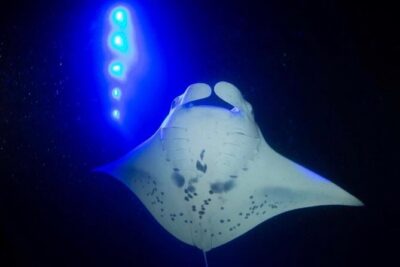
KONA Manta Ray Night Snorkel – FREE re-ride if no Sightings
Read our review →
Kailua Kona: Night Manta Ray Adventure on the Big Island
Read our review →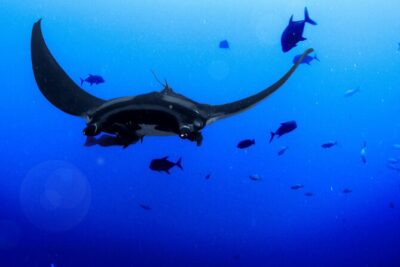
Manta Magic: Small-Group Manta Ray Night Snorkel in Kailua Kona
Read our review →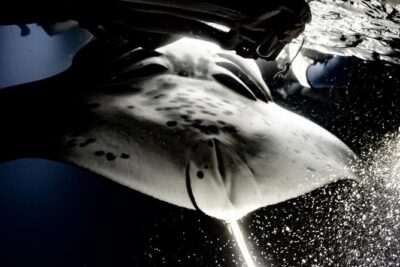
Browse the lists this tour appears in