
Reviewed · TROLLEY TOURS
Salt Lake City Trolley Tour with 3 Theatrical Guides & Live Show
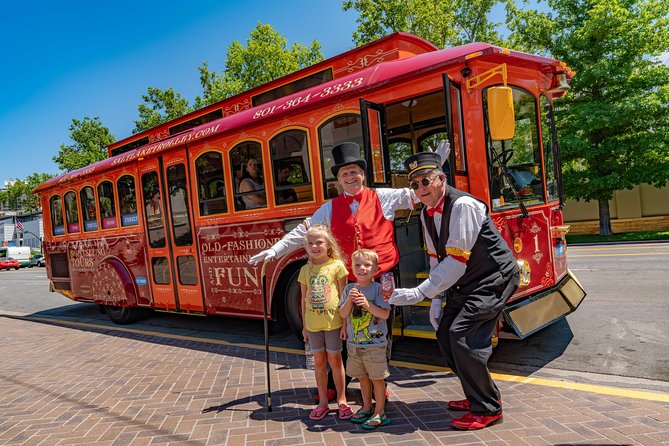
History gets a musical makeover here. The Salt Lake City Trolley Tour turns a city overview into a rolling theater show, with three theatrical guides mixing local stories, jokes, songs, and short visits to important landmarks. I like the strong Capitol stop, where you get the best views and a real sense of place, and I like the way the three-guide format keeps the ride moving.
The tour costs $69 per person and runs about 90 minutes to two hours. That is fair value if you want a cheerful introduction rather than a quiet, detail-heavy history lecture. The main drawback is the route: much of it focuses on central Salt Lake City, especially Temple Square and nearby historic buildings, so you should not expect a full tour of the wider metro area.
A few practical details matter. You ride in a trolley with a maximum of 27 people, receive an old-fashioned bottled soda and Cracker Jacks, and return to the Radisson Hotel Salt Lake City Downtown at 215 W S Temple Street. The tour is in English, uses mobile tickets, and can sell out, so booking ahead is sensible. Some departures include two longer stop opportunities, quick photo stops, and time for a restroom break.
In This Review
- Five things to know before you book
- Why the theatrical format works in Salt Lake City
- The Utah State Capitol gives the tour its best view
- Cathedral of the Madeleine adds a different side of Utah
- Temple Square and the pioneer story
- Civic Salt Lake: castles, mansions, and political drama
- Downtown renewal from City Creek to the Gateway
- The landmarks that make the route memorable
- What the timing and group size mean for you
- Who will enjoy this tour most
- Is $69 a fair price?
- Should you book the Salt Lake City Trolley Tour?
- FAQ
- How long does the Salt Lake City Trolley Tour last?
- Where does the tour begin and end?
- How much does the tour cost?
- What is included with the ticket?
- Is the tour offered in English?
- How many people can join the tour?
- Can I cancel for a full refund?
Five things to know before you book

- Three guides perform throughout the ride: The show works through different personalities, comic timing, music, and short historical roles rather than a single voice reading facts.
- The Utah State Capitol is the main stop: You have about 15 minutes there, with marble interiors, a grand rotunda, and broad views over Salt Lake Valley and the Wasatch Mountains.
- You see more than 20 downtown landmarks: Temple Square, the Cathedral of the Madeleine, the City and County Building, the Beehive House, the Delta Center, and the Gateway all appear along the route.
- It suits mixed-age groups: Children, teenagers, adults, and older family members can all follow the stories without needing a long attention span.
- Snacks are included: A bottled soda and Cracker Jacks give the ride a pleasantly old-fashioned feel.
- It is best as an orientation tour: Use it early in your visit, then return on foot to the places you want to explore properly.
Why the theatrical format works in Salt Lake City
A standard sightseeing ride can give you a list of names and dates. This tour tries to give those names a little personality. The guides may take on historic roles, trade jokes, sing, or play off one another while the trolley moves between landmarks.
That approach is especially useful in Salt Lake City, where the story can become confusing fast. Pioneer settlement, territorial politics, religious leadership, statehood, civic architecture, the 2002 Winter Olympics, and modern downtown development all sit close together. The show gives you a simple thread to follow.
The three-guide arrangement is one of the tour’s best features. Different performers bring different strengths. Anna and Matthew have been praised for keeping younger children engaged, while Mathew and Kelly have been singled out for acting and singing. Shayla and Luke have used historic characters and local lore to make the ride feel like a small theater performance.
The style is intentionally campy. If you want a restrained academic lecture, this may not be your ideal tour. If you enjoy a little corn with your history, the humor makes facts easier to remember. One useful detail from the feedback is that even a local learned something new, which suggests the show is not only for first-time visitors.
More Trolley Tours in the USA:
- Savannah Hop-On Hop-Off Trolley Tour
★ 4.5 · 6,527 reviews - Nashville Hop On Hop Off Trolley Tour
★ 4.5 · 5,643 reviews - Boston Hop-On Hop-Off Trolley Tour with 13 Stops
★ 4.5 · 5,576 reviews
The Utah State Capitol gives the tour its best view
The tour’s strongest scheduled stop is the Utah State Capitol. The building sits above downtown, so the setting does some of the work for you. From the terrace and grounds, you can look across the valley toward the snow-capped Wasatch Mountains.
Inside, the marble halls, sculptures, murals, dome, and rotunda give you a quick lesson in Utah’s ambitions after statehood. The guides connect the building to the long political fight for national recognition and explain how Utah moved from frontier territory toward statehood.
You get about 15 minutes here, which is enough for a look around and photographs. It is not enough for a slow architectural study. Still, this is the point where the tour feels most like conventional sightseeing rather than a passing view from the trolley.
If you have limited time in Salt Lake City, pay close attention here. The Capitol combines views, architecture, and politics in one stop. It is also the place most likely to give you a clear mental map of the city.
Cathedral of the Madeleine adds a different side of Utah
The Cathedral of the Madeleine is a useful counterpoint to the predominantly LDS landmarks downtown. Its Gothic Revival design includes soaring arches, carved stone columns, stained glass, hand-painted murals, and ornate altars.
The tour allows about five minutes at this stop. That is brief, particularly if the cathedral is open and you want time to look carefully at the interior. Construction has also affected the view at times, making the building less visible than expected.
Still, the stop matters because it widens the story. Salt Lake City was not shaped by one tradition alone. The cathedral reflects the work of Catholic pioneers who built an elaborate place of worship in what was still a young western city.
The music and theatrical presentation can add atmosphere, though the polished performance style may feel a little rehearsed to some people. That is part of the bargain here: you get entertainment and a quick introduction, not a quiet period of reflection.
Temple Square and the pioneer story
Temple Square is the spiritual center of the city and one of the major sights along the route. From the trolley, you see the grounds, gates, gardens, and the famous Salt Lake Temple.
The temple began in 1853 and took 40 years to complete. Pioneer craftsmen cut and hauled granite from a canyon about 20 miles away. The guides use that long construction period to explain the labor, faith, and organization behind the building.
The Salt Lake Temple is currently closed to the public according to the tour information, so this is an exterior sight rather than an inside visit. The Tabernacle and Conference Center are also primarily viewed as part of the moving route, with short stopping times listed.
The Salt Lake Tabernacle offers one of the tour’s more memorable pieces of engineering. Its domed roof spans 150 feet without interior pillars, and its acoustics helped make it famous as the home of the Tabernacle Choir. The Conference Center then shows how the same institution expresses itself in modern form, with seating for 21,000 and a rooftop garden.
You should see these buildings as part of a wider civic and religious story. The route does not give you a long guided visit inside each one, but it helps you understand why this cluster of structures dominates the city center.
A few more options to weigh up in the USA
- From Miami: Everglades Airboat, Wildlife Show & Bus Transfer
★ 4.2 · 8,622 reviews - Miami: Everglades National Park Airboat Tour & Wildlife Show
★ 4.5 · 7,296 reviews - The Haygoods: Branson’s Most Popular Show
★ 5.0 · 7,232 reviews - Oahu: The Magical Mystery Show! at Hilton Waikiki Beach Hotel
★ 5.0 · 2,754 reviews
Civic Salt Lake: castles, mansions, and political drama
Salt Lake City’s civic buildings offer a fine contrast to the temple district. The City and County Building looks like a sandstone castle, complete with a clock tower, gargoyles, and statues representing Columbia and Justice.
It was completed in 1894 and once served as Utah’s first State Capitol. The guides use it to explain the old rivalry between religious influence and civic government. That tension gives the architecture extra meaning. The building is not just decorative. It was a public statement.
Nearby Washington Square provides another view of the same building and its place in the city. Council Hall, Utah’s first territorial capitol, adds a smaller and older chapter. Built in 1866, it hosted debates over polygamy, women’s suffrage, and self-government before being moved brick by brick to Capitol Hill in 1963.
The Governor’s Mansion shifts the mood again. Built in 1902 for mining magnate Thomas Kearns, the Beaux-Arts house recalls Salt Lake’s early wealth and social ambition. You hear stories of parties, politics, fire, and restoration as the trolley passes.
The Beehive House gives you a more personal view of Brigham Young. Built in 1854, it served as both a home and an executive residence. The honeybee carvings symbolize industry and cooperation, and the stories about its busy household help turn a major historical figure into someone connected to daily life.
Downtown renewal from City Creek to the Gateway
The route does not stop with pioneer buildings. It also shows how Salt Lake City has remade its center.
City Creek Center, opened in 2012, is an open-air shopping complex spread across two city blocks. Retractable glass roofs, fountains, rooftop gardens, and a creek give the project a polished modern feel. The tour presents it as an example of the city joining commerce, design, and local identity.
The Salt Lake City Public Library offers a more thoughtful piece of modern architecture. Its five-story glass arc, designed by Moshe Safdie, curves around a public plaza. From the trolley, you learn about the rooftop garden, bright reading areas, and the idea of a library as a civic gathering place.
The Gateway recalls the 2002 Winter Olympics. Built on a former rail yard, the district now includes fountains, art, entertainment, and restored brick depots. The stop connects Salt Lake’s pioneer beginnings with its effort to present itself as a modern western city.
These sights are quick, usually listed as one-minute pass-by stops. You will not have time to shop, study the library, or explore the Olympic district during the ride. Their value is orientation. Afterward, you will know which places deserve a return visit.
The landmarks that make the route memorable
The tour packs in a surprising number of downtown landmarks. The Delta Center, home of the Utah Jazz, adds sports and Olympic history to the mix. The building has hosted NBA games, Olympic figure skating, concerts, and other major events.
The Joseph Smith Memorial Building brings you back to early 20th-century downtown. It opened in 1911 as Hotel Utah, with a white terracotta façade and Beaux-Arts decoration. Its later restoration and rededication give the building a second life.
The FamilySearch Library and FamilySearch Center connect the city to genealogy. Salt Lake City became a worldwide center for family records, preserving billions of documents. The tour only gives you an exterior look, but the subject adds a human angle: Utah history is not only about leaders and buildings. It is also about families tracing their roots.
The Church Office Building, with 28 stories of marble and glass, shows the worldwide reach of the Church of Jesus Christ of Latter-day Saints. Eagle Gate links that global present to Brigham Young’s former property, where the original gate marked the entrance to his farm.
At the Brigham Young Monument and Meridian Marker, geography and history meet. The marker identifies the point from which Utah land surveys begin, while the monument honors the leader who guided settlers into the Salt Lake Valley in 1847.
The Salt Lake Masonic Temple and Deuel Pioneer Log Home round out the route. The Masonic Temple hints at civic groups and fraternal life in the city. The log home, one of the earliest surviving structures, reminds you how modest the first dwellings were compared with the grand buildings that followed.
What the timing and group size mean for you
The advertised duration is about one hour and 30 minutes to two hours. That makes it easy to fit into a travel day, especially if you have only a short window before a flight or another activity.
The maximum group size is 27 people. That is small enough to feel more personal than a large sightseeing coach, though the actual atmosphere depends on the day’s performers and how full the trolley is.
The tour includes air conditioning, according to the feedback, which matters during warm weather. You also receive an old-fashioned bottled soda and Cracker Jacks. These are small extras, but they fit the nostalgic trolley-and-theater theme nicely.
Plan on getting off at the main scheduled stops rather than treating every landmark as a full visit. The Capitol receives the most time. Other locations may be quick photo opportunities or views from the vehicle. If you want to tour Temple Square, the cathedral, the library, or the museums in detail, set aside separate time.
The meeting point at the Radisson Hotel Salt Lake City Downtown is near public transportation. The tour returns there at the end, so you do not need to arrange a second pickup.
Who will enjoy this tour most
I would recommend it first to families. Children around school age can follow the songs and comedy, while adults get a useful introduction to local politics, religion, architecture, and city growth.
It also works well for couples, solo visitors, and fun-living adults who prefer an energetic tour to a formal lecture. The performances give you something to watch even when the trolley is passing a building rather than stopping.
This is a smart first activity in Salt Lake City. Take it early, use it to get your bearings, and then return to the places that caught your interest. The Capitol, Temple Square, the Cathedral of the Madeleine, and the City and County Building are the most obvious candidates.
You may want a different tour if you are seeking a full metropolitan overview, extensive walking, or long interior visits. One direct comment describes the route as concentrated in the original downtown, around Temple Square, the first mansions, the courthouse, and the Catholic cathedral. That is useful to know before you pay.
Is $69 a fair price?
At $69, this is not the cheapest way to look at downtown Salt Lake City. You can walk around Temple Square and view many buildings from outside without paying for a vehicle.
The price buys more than transport, though. You get three performers, a driver, live music, narration, snacks, air conditioning, and a structured route that covers a large number of landmarks in a short time. For a family or first-time visitor, the entertainment can make the cost feel reasonable.
The value is strongest when you want convenience and personality. The value is weaker if you are comfortable researching the city yourself and walking between nearby sights. I would think of the ticket as paying for a show with sightseeing attached, not simply for a ride around town.
Free cancellation is available if you cancel at least 24 hours before the start time. Changes or cancellations within 24 hours are not refunded, so keep that deadline in mind when making plans.
Should you book the Salt Lake City Trolley Tour?
Book it if you want a fun, fast introduction to central Salt Lake City and like your history served with music and jokes. The three-guide cast is the main reason to choose this tour over a standard bus ride, and the Capitol stop gives you the best mix of architecture and mountain views.
I would especially choose it for families, short visits, and anyone who wants a relaxed first look at the city. I would skip it if your priority is a detailed visit inside every major landmark or a tour that covers the wider Salt Lake region.
For most first-time visitors with 90 minutes to spare, this is a lively and useful way to begin. Just keep your expectations right: it is a theatrical downtown overview, not a full study of Utah.
FAQ
How long does the Salt Lake City Trolley Tour last?
The experience lasts approximately 1 hour and 30 minutes to 2 hours.
Where does the tour begin and end?
It begins at the Radisson Hotel Salt Lake City Downtown, 215 W S Temple Street, Salt Lake City. The trolley returns to the same meeting point at the end.
How much does the tour cost?
The listed price is $69 per person. Taxes, fuel surcharges, and service fees are included.
What is included with the ticket?
The tour includes three theatrical entertainers and sightseeing guides, a musical sightseeing show, an old-fashioned bottled soda, and Cracker Jacks snacks.
Is the tour offered in English?
Yes. The tour is offered in English and uses mobile tickets.
How many people can join the tour?
The activity has a maximum capacity of 27 travelers.
Can I cancel for a full refund?
Yes. You can cancel at least 24 hours before the experience start time for a full refund. Cancellations and changes made within 24 hours are not refunded or accepted.
Just added in the USA
- Atlanta: Zoo Atlanta General Admission Ticket★ 4.5 · 712 reviews
- NYC: Woodbury Common Premium Outlets Shopping Trip★ 4.2 · 761 reviews
- Wynwood Art District 1-Hour Street Art Tour by Golf Cart★ 4.9 · 492 reviews
- Zoo Miami: General Admission Ticket★ 4.5 · 868 reviews
- Willow Beach: Black Canyon Kayak Half Day Tour-No Shuttle★ 4.9 · 323 reviews
- From San Francisco: Napa & Sonoma Valley Full-Day Wine Tour★ 4.5 · 513 reviews
- Newport Beach: 2-Hour Whale Watching Tour★ 4.2 · 1,375 reviews
- New York City: Private Walking Tour with a Local★ 4.6 · 771 reviews
Trolley Tours, compared.
Boston Hop-On Hop-Off Trolley Tour with 13 Stops
Read our review →
Waikiki Trolley Hop-On Hop-Off Tour of Honolulu
Read our review →
Waikiki Trolley Blue Line Coastline & Local Grindz Hop-on Hop-off
Read our review →
Washington DC Monuments by Moonlight Tour by Trolley
Read our review →
Newport Gilded Age Mansions Trolley Tour with Breakers Admission
Read our review →Browse the lists this tour appears in