
Reviewed · SEDONA TOURS
Sedona Stargazing Tours LLC
The red rocks disappear after dark. Sedona Stargazing Tours takes you near Oak Creek for a focused look at planets, star clusters, nebulas, and distant galaxies. I like the powerful GPS-guided telescopes and the way the guides use laser pointers to explain constellations. I also like the small comforts, especially wide-view binoculars, chairs, blankets, and winter parkas when the temperature drops.
The main caution is simple: astronomy depends on the sky. Clouds can cancel the tour, while a bright moon can wash out faint stars and galaxies. At $89 per person, this is not a cheap hour outdoors, so your expectations should match the conditions. On a clear night, though, the expert instruction and close telescope views make the price easier to justify.
In This Review
- At a glance
- Why stargazing fits a Sedona evening
- Arriving at the Verde Valley School site
- What happens during the 75-minute viewing
- The telescopes are the heart of the experience
- Guides make the difference
- Cold nights require serious preparation
- Moonlight and clouds can change the value
- Is $89 per person fair?
- Who will enjoy this most?
- Booking and cancellation advice
- Should you book Sedona Stargazing Tours?
- FAQ
- Where does the stargazing tour meet?
- How long does the tour last?
- What can I see through the telescopes?
- Are binoculars and chairs provided?
- Is this a private tour?
- Is the tour suitable for children?
- What happens if the weather is poor?
At a glance
- Oak Creek observing site: You meet near Verde Valley School, away from much of Sedona’s nighttime glare.
- Large GPS-guided telescopes: The equipment can be aimed at planets, galaxies, nebulas, star clusters, and stars.
- Laser-pointer constellation tour: Guides explain the night sky overhead before the telescope viewing begins.
- Comfortable setup: Your chair and wide-view binoculars let you keep looking while another person uses the telescope.
- Personalized private experience: The activity is sold as private, with only your group participating.
- Weather matters: Poor conditions can lead to a new date or a full refund.
Why stargazing fits a Sedona evening
Sedona is famous for red-rock formations, but the area changes character after sunset. The rock walls fade into silhouettes, traffic quiets, and your attention shifts upward. This tour gives you a reason to pause instead of simply ending the day after dinner.
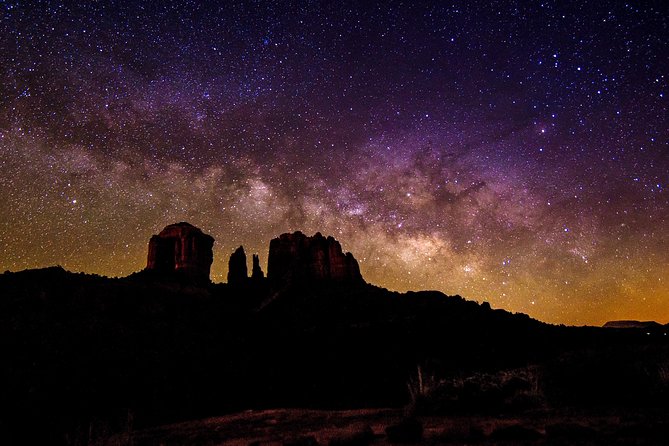
The observing site is near Oak Creek, at 3511 Verde Valley School Road. That location matters because a darker setting gives the telescopes and your eyes a better chance to pick out faint objects. You are not just standing in town and looking at the brightest stars. You are being taken to a place selected for night-sky viewing.
The experience lasts about 1 hour and 15 minutes, although the descriptions of the viewing time sometimes refer to about one hour. That is enough time for a useful introduction to astronomy and several telescope turns, but it is not an all-night observatory session. If you already spend evenings tracking stars with your own equipment, you may find the tour brief. For most people, the length is a good fit after a full day of hiking.
A few more options to weigh up in Sedona
- Verde Canyon Railroad Adventure Package
★ 4.5 · 2,821 reviews - Small-Group Grand Canyon Complete Tour from Sedona or Flagstaff
★ 5.0 · 1,928 reviews - Explore Sedona’s Vortexes: 2.5 Hour Jeep Tour of Mysticism
★ 5.0 · 1,834 reviews
Arriving at the Verde Valley School site

You meet at the designated location near Oak Creek, then walk a short distance to the observing area. The setup has been described as a field with chairs waiting and several large telescopes arranged for viewing. This is not a formal indoor planetarium, so expect an outdoor experience from start to finish.
The site itself is part of the appeal. You get away from bright shop signs and streetlights, and the darkness begins to feel like part of the activity. The tradeoff is that the ground and setting are practical rather than polished. You are there for the sky, not for buildings, exhibits, or museum-style facilities.
Pay close attention to the arrival instructions sent after booking. The start time shown at checkout may not be the final arrival time. The company adjusts instructions around sunset, the moon phase, and viewing conditions, and some participants have been asked to arrive earlier than the original time. Build a little flexibility into your evening rather than scheduling a tight dinner reservation afterward.
What happens during the 75-minute viewing
The guides begin with the naked-eye sky. Using a laser pointer, they identify constellations and explain where to look. This first step is more useful than it sounds. A telescope view can seem random if you do not know what you are seeing, while a constellation outline gives you a map.
The presentation includes information about the solar system, star positions, and zodiac names. The teaching style varies by guide, but the strongest guides combine facts with storytelling. Wes has been praised for bringing constellations to life, while Dave and Richard have also received warm mentions for clear explanations and a friendly manner. Mr. Sanders is another guide noted for strong astronomy knowledge.
Next, you take turns at the telescopes. The GPS auto-positioning system helps the guides locate selected objects quickly, which is valuable during a short tour. Instead of spending most of the hour hunting for a target, you can spend more time looking at it and asking questions.
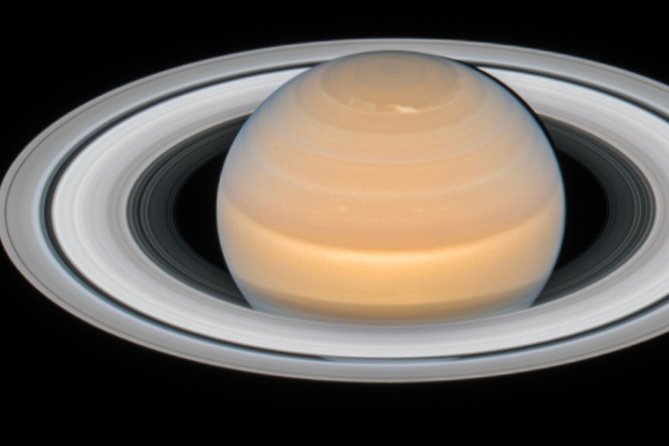
What you see depends on the date and the sky. Possible targets include planets, stars, galaxies, nebulas, and star clusters. Saturn, including its rings and a moon, has been a major highlight for many people. The Moon can also be striking through the equipment, especially when its surface features are clearly visible.
Between telescope turns, you use wide-view binoculars from your chair. That keeps you involved while another person is at the eyepiece. Binoculars also give you a broader view than a telescope, so the two tools serve different purposes. The telescope offers detail, while the binoculars help you appreciate the wider arrangement of stars.
The telescopes are the heart of the experience
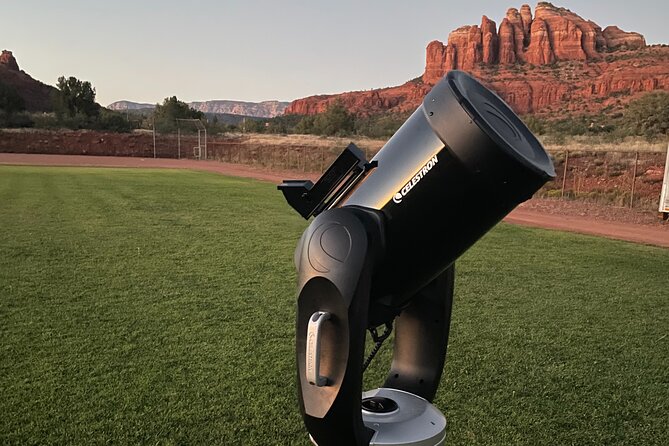
The equipment is one of the strongest reasons to book this tour instead of simply downloading a stargazing app and sitting outside. The large telescopes are designed for close viewing, and the GPS positioning makes the process easier for beginners.
You should not expect every object to look like a glossy space photograph. Telescope views are real-time observations, and the image may be small, soft, or less dramatic than pictures from professional observatories. Even so, seeing Saturn’s rings with your own eyes has a different impact. It connects the abstract idea of a planet to something you are directly observing.
The guides also make sure the telescopes are focused and that you are looking at the correct object. That matters for first-time users. A few seconds at an eyepiece can be confusing if you do not know what should be in view, especially when several people are waiting their turn.
Phone photography is possible in some situations, but it should be treated as a bonus rather than the purpose of the tour. A phone may capture the sky or a bright object, but the best part is usually the view through the telescope itself. Keep your phone available for a quick attempt, but do not judge the experience by the quality of the resulting image.
A different kind of day out entirely:
- Guided ATV Tour of Western Sedona
★ 5.0 · 1,767 reviews - Half-day Sedona Sightseeing Tour
★ 4.5 · 1,688 reviews - Sedona Outlaw Trail: 3-Hr 4×4 Tour of Western Canyons & Wildlife
★ 5.0 · 1,335 reviews - Sightseeing Highlights Tour of Sedona
★ 4.5 · 1,279 reviews
Guides make the difference
The company’s strongest asset is its astronomy staff. The guides explain what you are seeing, answer questions, and adjust the presentation to the interests of the group. That makes the tour more useful than a silent equipment demonstration.
I especially like the balance between instruction and conversation. You can learn basic astronomy without needing any prior knowledge, yet you can also ask more specific questions about planets, constellations, or the solar system. Families benefit because children can see something concrete rather than simply hearing a lecture about space.
The personality of the guide also shapes the night. Wes has been singled out for storytelling, and other guides have been praised for humor and patience. Richard has been noted not only for astronomy but also for photography and local outdoor knowledge. Since guide assignments can change, you should not book on the assumption that one particular person will lead your tour, but the range of positive guide comments is reassuring.
There is one practical weakness to watch for. Outdoor acoustics can be uneven, and one account noted difficulty hearing the main guide at times. If you miss a point, ask for it to be repeated. The staff are encouraged to take questions, and speaking up is better than quietly losing the thread.
Cold nights require serious preparation
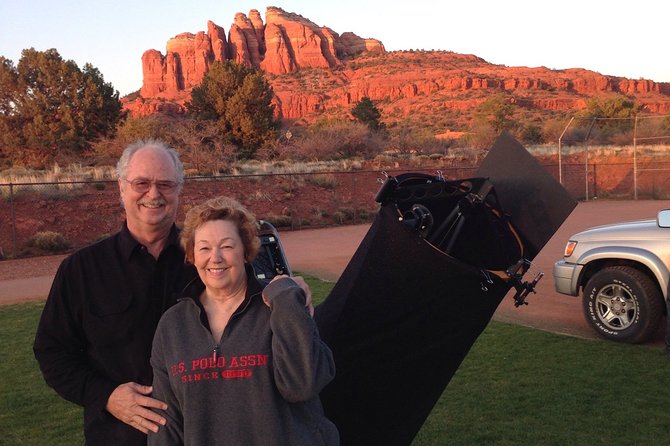
Sedona can feel surprisingly cold after sunset, particularly in winter. Several winter outings included blankets and parkas, which is a thoughtful touch, but you should still dress in layers.
Wear warm clothing even if the afternoon was mild. A hat, gloves, and sturdy shoes are sensible choices, and you may spend much of the hour sitting still. The chairs make the experience more comfortable, but they also mean you are not generating much body heat by walking around.
The blankets and parkas help, especially for children and anyone who gets cold easily. Still, provided clothing should be treated as backup, not a replacement for your own warm layers. The cold is the most common factor that can turn an otherwise excellent evening into a test of endurance.
The setup has also worked well for a person with limited mobility, with staff providing attentive assistance. Since the activity takes place outdoors and includes a walk to the sitting area, contact the company before booking if your group has specific mobility needs. Most people can participate, but the exact site conditions matter.
Moonlight and clouds can change the value
The best conditions are clear and dark. Cloud cover can block telescope targets and make constellation viewing frustrating. The company may cancel if the sky will not support the promised experience, and a new date or full refund is offered in that situation.
That policy is sensible, but it can be inconvenient. If you have only one night in Sedona, a cancellation may leave a hole in your schedule. I would book this early enough to leave room for another attempt, especially since the experience is often reserved about 23 days ahead.
A full or nearly full moon creates a different problem. The Moon itself can be an excellent target, but its brightness reduces the number of faint stars visible around it. You may still see planets and bright objects, yet the Milky Way and dim galaxies will not have the same impact.
When you book, check the moon phase if the darker sky is your main goal. A bright moon is not automatically a bad night, but it changes the show. If your priority is seeing the Moon’s craters, it may be a bonus. If you want dense star fields and subtle deep-sky objects, choose a darker period when possible.
Is $89 per person fair?
The $89 price buys more than a chair and a quick look through one telescope. You receive professional instruction, access to large equipment, wide-view binoculars, and a guided introduction to the night sky. The private format can also make the experience feel more personal, particularly if you want to ask questions.
The value is strongest for first-time stargazers, families, and couples who want a structured evening activity. You do not need to bring equipment or learn how to aim a telescope. The guide handles the technical work while you focus on seeing and understanding the objects overhead.
The value is less certain if you are mainly seeking a free view of the stars. Sedona’s night sky can be enjoyed without a paid tour, and the advertised time is relatively short. One hour of cloud or bright moonlight can feel expensive, even if the guide works hard.
I would judge the price by the equipment and the clarity of the night. On a crisp evening with visible planets, the cost is reasonable for a specialized activity. Under clouds, the company should cancel. Under a bright moon, you should understand that the selection of visible objects may be narrower.
Who will enjoy this most?
This tour suits you if you want an easy introduction to astronomy without buying or carrying equipment. It is also a strong family choice. Children who already love space can see planets through a real telescope, while adults get enough explanation to follow along.
Couples may appreciate the quiet setting and the unusual change of pace after a day among the red rocks. Solo visitors can also participate, since the guides make room for questions and conversation.
You may want to skip it if you dislike cold outdoor activities, have a very tight evening schedule, or expect every view to look like a NASA image. You should also reconsider if your main goal is a long session of advanced observing. This is a guided introduction, not a private research night.
The activity is private according to the booking information, meaning only your group is supposed to participate. Arrival coordination can still involve waiting briefly for everyone connected with the booking to assemble, so do not assume the evening will begin the instant you reach the meeting point.
Booking and cancellation advice
Confirmation arrives when you book, followed by an email with departure details and the address. Read that message carefully, especially the arrival time, because sunset and sky conditions can affect the schedule.
You can cancel for a full refund up to 24 hours before the start time. Changes or cancellations within 24 hours are not accepted for a refund. If poor weather cancels the activity, you can choose another date or receive a full refund. A cancellation caused by the minimum number of participants also leads to a new option or a refund.
The company has canceled on cloudy nights rather than run a weak program. That may frustrate you if stars are still visible through thin cloud, but it protects the basic promise of the tour: meaningful telescope viewing, not merely standing outside under a gray sky.
Should you book Sedona Stargazing Tours?
Book it if you want expert help, real telescope views, and a low-effort way to learn the night sky. The strongest reasons are the large GPS-guided telescopes, clear constellation explanations, comfortable seating, and guides such as Wes, Dave, Richard, and Mr. Sanders, whose styles add warmth to the technical material.
Book with realistic expectations. Check the moon phase, bring serious warm layers, keep your evening flexible, and read the updated arrival message. If the forecast is cloudy, accept that the tour may be canceled, and if the moon is bright, expect the Moon and planets to take center stage.
For most first-time stargazers visiting Sedona, $89 is a fair price on a clear night. It is a specialized experience, not a casual after-dinner walk, and the sky must cooperate. If it does, seeing Saturn’s rings or a distant galaxy through the telescope can become one of the most memorable hours of your visit.
FAQ
Where does the stargazing tour meet?
The meeting point is 3511 Verde Valley School Road, Sedona, Arizona 86351. The observing area is near Oak Creek, and the activity ends back at the meeting point.
How long does the tour last?
The tour lasts approximately 1 hour and 15 minutes. The viewing portion is also described as about one hour.
What can I see through the telescopes?
Depending on the date and conditions, you may see planets, stars, galaxies, nebulas, and star clusters. Saturn, its rings, moons, and the Moon have all been included among possible highlights.
Are binoculars and chairs provided?
Yes. You receive wide-view binoculars and a comfortable chair for viewing between turns at the telescopes. Blankets and parkas may also be provided during cold weather.
Is this a private tour?
The activity is identified as private, with only your group participating.
Is the tour suitable for children?
Yes. Most people can participate, and the astronomy presentation and telescope viewing are suitable for families. Children who enjoy space may find the experience especially engaging.
What happens if the weather is poor?
The tour requires good weather. If it is canceled because of poor conditions, you are offered another date or a full refund. You can also cancel at least 24 hours before the start time for a full refund.
Just added in Sedona
- Visit 4 Wineries in Limo Party Bus-Includes Charcuterie Lunch!★ 4.5 · 756 reviews
- Bliss – Sedona’s Most Luxurious Wine Tour – Lunch Included!★ 4.5 · 552 reviews
- Tour to Sacred Sites and Vortexes in Sedona★ 5.0 · 363 reviews
- PRIVATE Sedona Jeep Tour 7 Sacred Pools – Soldier’s Pass Trail★ 5.0 · 428 reviews
- Sedona Boynton Canyon Trolley Tour★ 4.5 · 326 reviews
- Sedona’s Seven Canyons: 2-Hour Rugged Adventure & Stunning Views★ 5.0 · 655 reviews
- Mogollon Rim Run Supreme Jeep Tour from Sedona★ 5.0 · 856 reviews
- Sightseeing Highlights Tour of Sedona★ 4.5 · 1,279 reviews
Sedona Tours, compared.

Small-Group Grand Canyon Complete Tour from Sedona or Flagstaff
Read our review →
Explore Sedona’s Vortexes: 2.5 Hour Jeep Tour of Mysticism
Read our review →

Sedona Outlaw Trail: 3-Hr 4×4 Tour of Western Canyons & Wildlife
Read our review →
Sedona Red Rocks Outback Tour: Scenic with mild off-roading
Read our review →Browse the lists this tour appears in