
Reviewed · MONUMENT VALLEY TOURS
Sunset Tour of Monument Valley
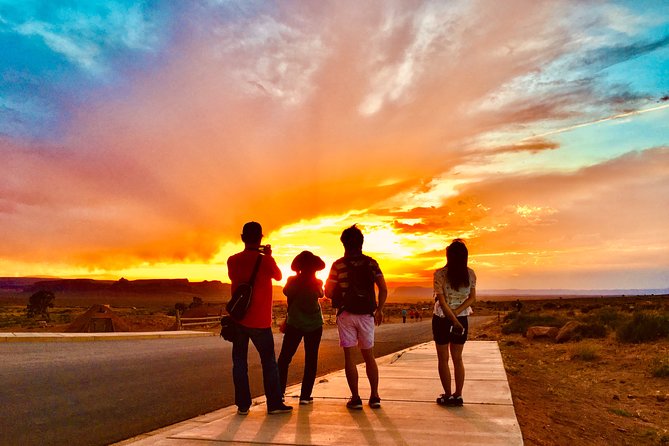
Sunset changes everything here. This three-hour Navajo-led tour takes you beyond the main scenic road into Monument Valley’s backcountry, where arches, petroglyphs, and quieter viewpoints add much more than another string of roadside photos. I especially like the mix of dramatic sunset scenery and personal cultural moments, including rug weaving, music, and stories shared by your guide.
I also like that the tour reaches places normally closed to independent visitors, including Big Hogan Arch and Anasazi ruins. The tradeoff is simple: the ride is very rough, dusty, and sometimes chilly, and the $85 price does not include the $8 tribal park admission fee.
In This Review
- Key points to know before you go
- Why sunset is the right time for Monument Valley
- Starting at The View Hotel
- Stop 1: West Mitten and East Mitten views
- Stop 2: John Ford’s Point and the Three Sisters
- Stop 3: A hogan and Navajo rug weaving
- Stop 4: Moccasin Arch, Big Hogan Arch, and live music
- Stop 5: Sun’s Eye and Anasazi petroglyphs
- Stop 6: Totem Pole Monument
- Stop 7: North Window or Artist’s Point
- The ride is part of the bargain
- What the Navajo guide adds
- Is $85 a fair price?
- Who will enjoy this three-hour outing
- Booking, weather, and timing tips
- Should you book the Monument Valley Sunset Tour?
- FAQ
- How long is the Sunset Tour of Monument Valley?
- Where does the tour begin?
- Where does the tour end?
- Is the Monument Valley tribal park admission fee included?
- Is KOA campground pick-up available?
- Is the tour suitable for most people?
- What happens if bad weather cancels the tour?
Key points to know before you go
- The sunset is only part of the experience: You also visit a hogan, see rug weaving, hear traditional music, and stop at petroglyphs and ruins.
- Backcountry access adds real value: Several arches and viewpoints are beyond the regular public route.
- Expect a rough ride: The open vehicle travels over uneven trails, so bring support, layers, and a way to protect yourself from dust.
- Guides make the difference: Travis, also known as Dark Sky, Larry, Jameson, and Jamieson have all been praised for storytelling, music, photography help, and care with older participants.
- You get time to look around: Plan on at least five to ten minutes at each scenic stop for photos and a quick look.
- The basic cost is not the full cost: Pay $85 per person for the tour, plus an $8 tribal park admission fee.
Why sunset is the right time for Monument Valley
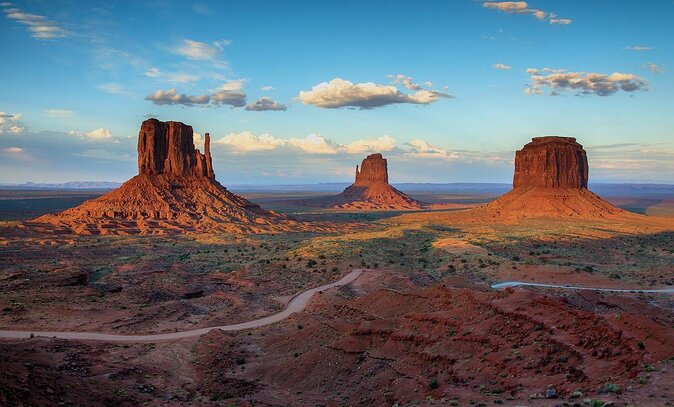
Monument Valley is already a place of giant shapes and long sight lines. At sunset, the West Mitten, East Mitten, Three Sisters, and other sandstone formations shift from bright red and orange to deep purple. Shadows stretch across the valley, and the same rock formations can look completely different from one stop to the next.
The timing also gives the tour a natural rhythm. You begin with broad views, move into narrower arches and canyon spaces, and finish near a viewpoint selected for the changing light. One particularly striking effect, visible in mid-September and March, is the shadow of the West Mitten appearing across the East Mitten. It is the sort of brief event that makes a scheduled sunset tour worthwhile.
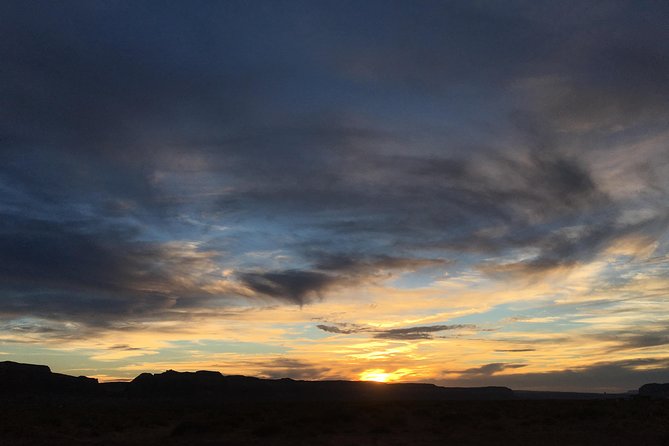
You should keep your expectations realistic. The sun does not guarantee perfect color every evening. Clouds and rain can change the show, and poor weather can lead to cancellation. Still, the tour is designed around the best light of the day, not simply a drive around the park.
A few more options to weigh up in Monument Valley
- Monument Valley: Backcountry Jeep Tour with Navajo Guide
★ 4.8 · 1,794 reviews - 3 Hour Monument Valley Tour
★ 5.0 · 1,616 reviews - 2.5 Hours of Monument Valley’s Backcountry 4×4 Tour
★ 5.0 · 1,550 reviews
Starting at The View Hotel
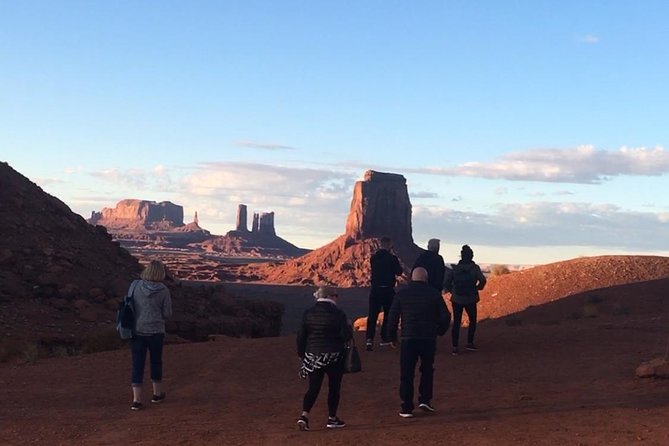
The tour begins outside The View Hotel at the guide loading area on Indian Rte 42. This is a useful meeting point because it sits directly by Monument Valley Navajo Tribal Park. The activity ends at the same location, so you do not need to arrange a separate ride back after dark.
Pick-up and drop-off are also available at the KOA campground, but only for overnight KOA customers. You must call the operator to confirm the departure time for that pick-up. If you are staying elsewhere, plan to reach The View Hotel for the start.
The tour is offered in English and includes a certified Navajo guide. The maximum group size is listed as 45 people, though some departures may feel much smaller. One party described riding with seven people in a van, while other accounts refer to a shaded truck or open vehicle. The exact vehicle may vary, so do not assume every departure has the same seating arrangement.
Stop 1: West Mitten and East Mitten views
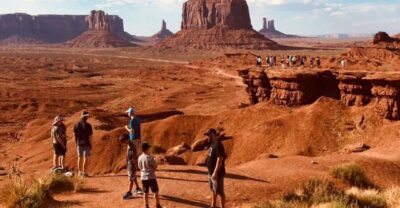
The opening stop gives you the classic Monument Valley scene: the West Mitten and East Mitten rising from the broad desert floor. These formations are among the valley’s most recognizable sights, and they establish the scale of the place immediately.
This is a good point to get your camera ready, but do not spend all your energy chasing the perfect first picture. The best light will develop gradually, and later stops offer different angles and more unusual details.
You should have at least five to ten minutes at each scenic stop. That is enough for photos and a short walk around, but not enough for a long hike or a quiet picnic. Think of this as a moving tour with frequent, focused pauses.
Stop 2: John Ford’s Point and the Three Sisters
John Ford’s Point is one of Monument Valley’s well-known viewpoints, named for the film director who used the area in many western movies. The view is broad and cinematic, with layered rock formations extending across the desert.
The Three Sisters Monument provides a different arrangement of stone towers. Your guide can help explain the names and shapes used for the formations, but the level of detail may vary by guide and by how well you can hear from your seat.
That last point matters. One person found it difficult to hear the guide, especially with the vehicle, wind, and open surroundings. Stay close when the guide is speaking, and ask for repetition if needed. You will get more from the visit if you hear the cultural and geographic context rather than treating each stop as a photo backdrop.
A different kind of day out entirely:
- Monument Valley: Sunset Tour with Navajo Guide
★ 4.8 · 1,467 reviews - 3.0 Hours of Monument Valley’s Sunrise or Sunset 4×4 Tour
★ 5.0 · 811 reviews - Monument Valley Extended Backcountry Tour
★ 5.0 · 720 reviews - Monument Valley: Horseback Adventure Tour
★ 4.4 · 715 reviews
Stop 3: A hogan and Navajo rug weaving
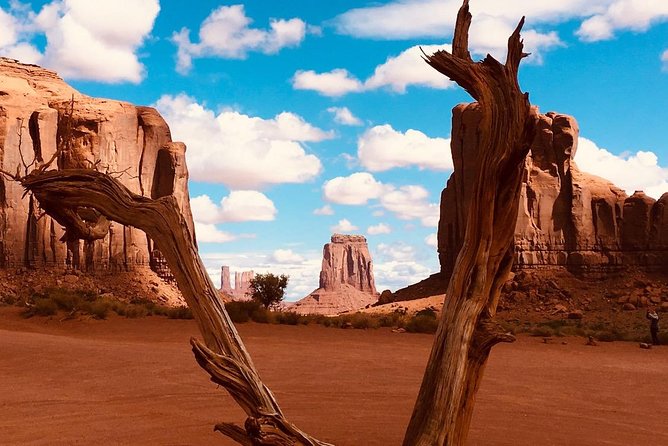
The hogan visit is one of the tour’s most distinctive parts. A hogan is a traditional Navajo dwelling, and the stop gives you a closer look at daily life and craft traditions than you would get from a standard scenic drive.
The rug weaving demonstration adds a hands-on cultural element. Navajo rugs are not simply souvenirs on display. The patterns, colors, and methods reflect a long craft tradition tied to family teaching and place. The demonstration is brief, but it gives you a reason to slow down and pay attention to the work itself.
This is also one of the stops where the guide’s manner matters most. Travis has been especially praised for explaining Navajo customs and family connections, while other guides have shared stories about clans, parents, and the way oral traditions are passed down. You are not just hearing a general park lecture. You may hear personal details that make the culture easier to understand.
Stop 4: Moccasin Arch, Big Hogan Arch, and live music
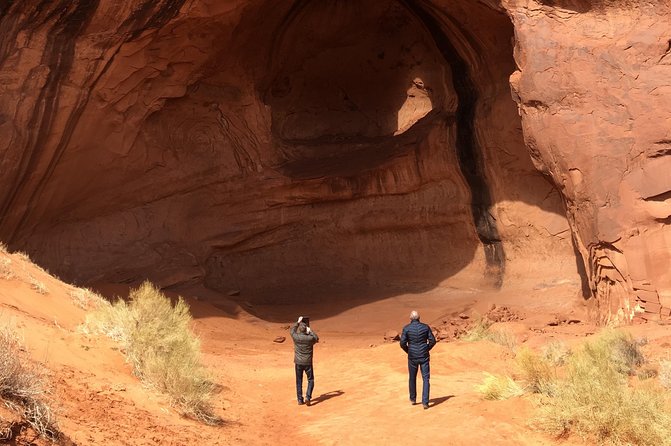
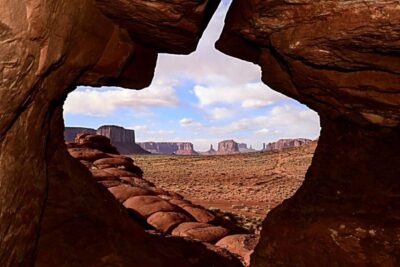
Moccasin Arch and Big Hogan Arch move the tour into more enclosed spaces. The shapes of the rock become the focus, with openings, curves, and changing light giving you a different view of the sandstone than the wide valley overlooks.
Big Hogan Arch is also a common setting for the live performance. Guides have played Native flute, double flute, drum, and guitar, and some have sung blessing songs or traditional music. Travis, known as Dark Sky, is often praised for performing more than once during the tour, including flute and drum music near the hogan and Big Hogan.
The music is not an added concert pasted onto a sightseeing drive. In a canyon or beneath an arch, the sound becomes part of the setting. You might hear a flute echo through the stone or a song offered as a blessing. The moment can feel quiet and personal, but the exact performance depends on the guide and the conditions that evening.
Stop 5: Sun’s Eye and Anasazi petroglyphs
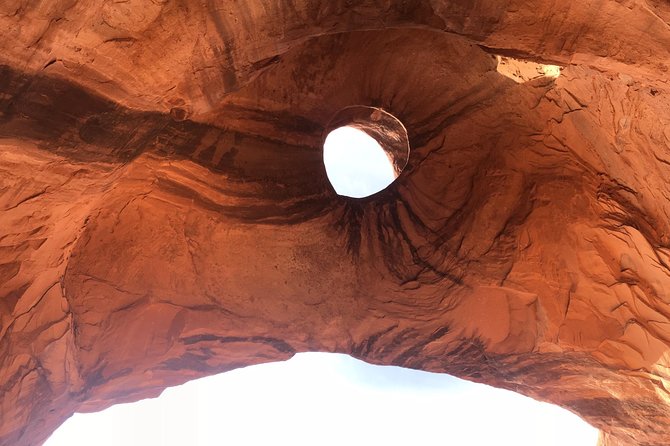
Sun’s Eye is another natural opening in the rock, shaped so that light and shadow become part of the view. These formations reward a slower look. Instead of only asking how tall or famous a monument is, you can watch how the setting sun moves through the opening.
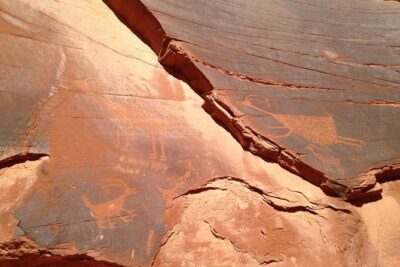
The nearby Anasazi petroglyphs and ruins add a human connection to the valley. Petroglyphs are not decorative marks. They are traces of people who lived in and traveled through this region long before modern tourism. Your guide can provide the setting for these images and explain how Navajo family stories connect with the area.
One especially memorable guide story involved a father teaching his child about Navajo people through petroglyphs. That kind of explanation gives the markings a place in living memory rather than presenting them as isolated archaeological objects.
You should treat this stop with care. Look closely, follow the guide’s instructions, and avoid touching or climbing near the ruins and rock art.
Stop 6: Totem Pole Monument
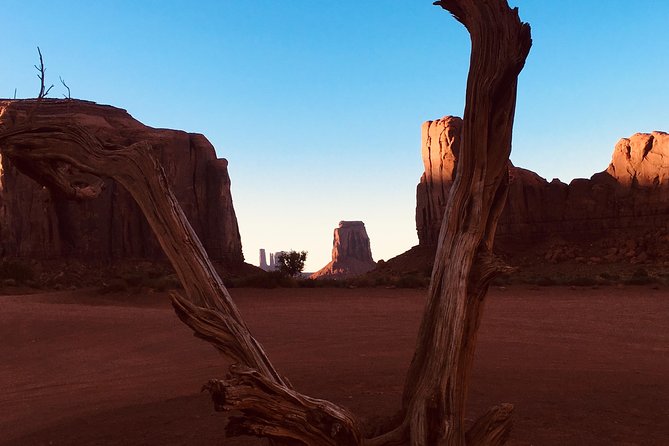
Totem Pole Monument is a slender sandstone formation surrounded by more open views. It looks quite different from the massive Mitten formations, and the contrast helps show how varied Monument Valley can be within a short drive.
The stop works well for photography because you can frame the narrow spire against the wider desert. It is also a chance to compare the natural forms you have seen so far. Some are broad and block-like, some are pierced by arches, and others rise as thin towers.
The short stop length means you will need to make decisions quickly. Take a few photographs, listen for the guide’s explanation, and keep an eye on the group’s return time.
Stop 7: North Window or Artist’s Point
The final stop may be North Window or Artist’s Point, depending on the day’s route and conditions. Both are intended to provide a strong closing view as the sun drops lower.
Artist’s Point is especially suited to a wide final panorama, while North Window frames the valley through rock. The exact choice matters less than the timing. Your guide is trying to place you at a useful viewpoint as the light changes, rather than stopping randomly at the end of the allotted time.
Bring patience here. Sunset photography often works better after the first bright burst of color, when shadows become stronger and the formations separate from the sky. If the group is large, finding a quiet angle may take some effort.
The ride is part of the bargain
This is not a smooth coach tour. The backcountry road is rough, and the ride has been described repeatedly as very bumpy and dusty. Some sections may feel jarring, especially for older participants or anyone with back problems.
A supportive bra, comfortable clothing, and a small cushion or pillow are practical suggestions. Older visitors may appreciate the extra padding. Wear shoes that can handle dust, and avoid bringing anything delicate or loose.
The weather can shift during the three-hour outing. It may feel warm when you set off, then chilly as the sun disappears. A beanie, vest, light jacket, sunglasses, and a head covering are useful. A bandana or mask can reduce the amount of red dust you breathe on the rougher sections.
The vehicle may provide shade, but you will still be exposed to the desert air between stops. Bring your own bottled water because it is not included.
What the Navajo guide adds
The guide is the heart of this experience. The route itself is beautiful, but you can see many of Monument Valley’s famous formations from public viewpoints. The guide adds access, interpretation, and a human connection to the place.
Travis, called Dark Sky, has received especially warm praise for his explanations of Navajo culture, geography, and family stories. He also plays flute, drum, and guitar. Larry is known for helping with panoramic photographs and for explaining the area’s past. Jameson and Jamieson have been praised for music, cultural stories, and clear explanations of the rock formations.
Do not expect every guide to deliver the same performance. Music may be part of the outing, but it is not a fixed stage show with a guaranteed set list. The most reliable feature is the presence of a certified Navajo guide who takes you through the tribal park and backcountry.
The size of the group can affect the experience. With a small group, it is easier to ask questions, hear the guide, and receive help with photographs. With a larger departure, stay near the guide at each stop and listen carefully before spreading out.
Is $85 a fair price?
At $85 per person, the tour costs more than simply driving to public viewpoints. You also pay an $8 per-person tribal park admission fee, and bottled water is extra. For two people, the basic outlay is $186 before drinks or other expenses.
The value comes from what you cannot easily arrange on your own. The tour takes you into backcountry areas normally off limits to independent visitors, including arches, caves, and places near petroglyphs and ruins. It also combines scenic stops with a hogan visit, rug weaving, and live music.
One criticism is fair: if you only want the famous Mitten views, you can see strong versions of them without booking a guided outing. The tour makes more sense if you want access beyond the regular route and an introduction to Navajo culture.
I would not choose this tour for a smooth, polished ride or a detailed academic lecture at every stop. I would choose it for access, atmosphere, and a guide who can connect the scenery with Navajo life and tradition.
Who will enjoy this three-hour outing
You are a good match for this tour if you want more than a quick roadside photograph. It suits couples, families, and friends who enjoy striking scenery but also want music, craft, local stories, and a chance to see less accessible parts of the park.
It can also work well for a second visit. One person returning to Monument Valley found the tour just as rewarding the second time because the backcountry route and guide added new places and context.
Families should prepare children for the rough ride and short stop schedule. People with limited tolerance for jolting roads may prefer to skip it. Most participants can take part, and service animals are allowed, but the supplied information does not promise a smooth surface or a quiet ride.
The English-language format is best for you if you can follow spoken explanations in an open vehicle. If you have difficulty hearing, sit close to the guide and ask questions when needed.
Booking, weather, and timing tips
The experience can be canceled for poor weather. If that happens, you are offered another date or a full refund. You can cancel for a full refund up to 24 hours before the start time, but changes or cancellations made inside that window are not refunded.
Book ahead if your schedule is fixed. The experience averages booking about 48 days in advance, which suggests that popular sunset dates can fill well before arrival.
Bring water, sun protection, warm layers, dust protection, and a camera. Arrive at the correct loading area outside The View Hotel, and confirm the departure time if you qualify for KOA pick-up.
Should you book the Monument Valley Sunset Tour?
Book it if you want the backcountry. The arches, hogan, petroglyphs, ruins, and music give you a fuller experience than a drive to the main overlooks. The sunset adds beautiful timing, but the Navajo guide and restricted-access route are the strongest reasons to go.
Skip it if your budget is tight and the classic Mitten views are enough for you. Also skip it if a dusty, bumpy ride sounds miserable.
For most people who want to connect the scenery with Navajo culture, I think the tour earns its price. Just pack a cushion, a jacket, water, and patience for the road. The reward is a memorable evening in Monument Valley, with a good chance of hearing the valley sing through a flute or drum as the light fades.
FAQ
How long is the Sunset Tour of Monument Valley?
The tour lasts approximately three hours.
Where does the tour begin?
The meeting point is outside The View Hotel at the guide loading area, Indian Rte 42, Oljato-Monument Valley, Utah.
Where does the tour end?
The activity ends back at the meeting point at The View Hotel.
Is the Monument Valley tribal park admission fee included?
No. The $8 per-person tribal park admission fee is separate from the tour price. Payment can be made by check or credit card.
Is KOA campground pick-up available?
KOA pick-up and drop-off are available only for overnight KOA customers. You must call to confirm the departure time.
Is the tour suitable for most people?
Most participants can take part, and service animals are allowed. The ride is very bumpy, so you should consider your comfort with rough roads before booking.
What happens if bad weather cancels the tour?
You will be offered a different date or a full refund. For your own cancellation, you must cancel at least 24 hours before the start time to receive a full refund.
Just added in Monument Valley
- 1.5 Hour Tour of Monument Valley’s Loop Drive★ 5.0 · 400 reviews
- Monument Valley Extended Backcountry Tour★ 5.0 · 720 reviews
- Monument Valley Backcountry Tour★ 5.0 · 645 reviews
- Monument Valley Group Tour – 3 Hours – Navajo Spirit Tours★ 5.0 · 636 reviews
- 3.0 Hours of Monument Valley’s Sunrise or Sunset 4×4 Tour★ 5.0 · 811 reviews
- 2 Hour Monument Valley Horseback Tour★ 4.5 · 458 reviews
- Monument Valley: Scenic 2.5-Hour Guided Tour★ 4.9 · 714 reviews
- Monument Valley: Horseback Adventure Tour★ 4.4 · 715 reviews
Monument Valley Tours, compared.
Monument Valley: Backcountry Jeep Tour with Navajo Guide
Read our review →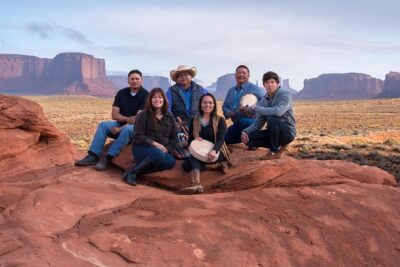
2.5 Hours of Monument Valley’s Backcountry 4×4 Tour
Read our review →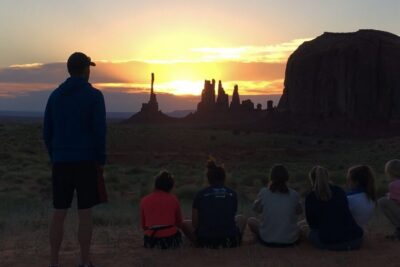
Monument Valley: Sunset Tour with Navajo Guide
Read our review →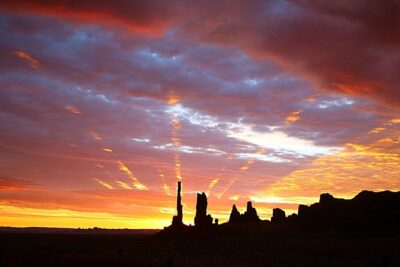
3.0 Hours of Monument Valley’s Sunrise or Sunset 4×4 Tour
Read our review →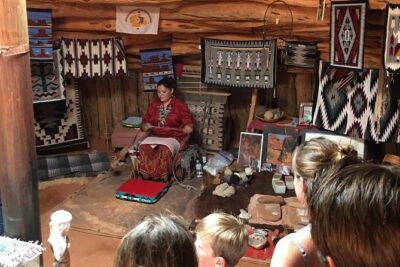
Browse the lists this tour appears in