
Reviewed · CITY TOURS
Washington DC Night-Time City Tour
The capital looks different after dark. This three-hour bus tour gives you a fast, useful introduction to Washington, DC, with stops at major memorials, the White House, the Capitol, and several less-visited monuments. I especially like the large number of sights covered and the cool, atmospheric view of the National Mall at night. Bottled water and phone chargers are also welcome touches.
The main drawback is the pace. You usually have only 5 to 15 minutes at each stop, so this works best as an overview rather than a slow study of every memorial. Lighting is another concern. The Jefferson Memorial, Washington Monument, Lincoln Memorial, and White House tend to photograph best, while some other sites can be quite dim.
Guide quality adds much to the experience. Kareem is often praised for his trivia and energy, while Regis and Vernon are also noted for clear explanations, humor, and good organization. Still, bus comfort can vary, especially if the air conditioning is weak or the vehicle is full.
In This Review
- Key points to know before booking
- What you get for $69.99
- Meeting at 7 p.m. on Independence Avenue
- The U.S. Capitol and the Grant Memorial
- The Washington Monument and presidential memorials
- Martin Luther King Jr. and Lincoln after dark
- Korean War, Vietnam, and World War II
- The Marine Corps Memorial and Arlington-side sights
- The White House, Ford’s Theatre, and passing sights
- Guides, trivia, and the human side of the tour
- Bus comfort, water, and what to bring
- Group size, timing, and the right expectations
- Who should book this nighttime tour?
- FAQ
- How long is the Washington DC Night-Time City Tour?
- How much does the tour cost?
- Where does the tour begin and end?
- What time does the tour start?
- Is hotel pickup included?
- Is bottled water provided?
- What happens if the tour is canceled because of weather?
Key points to know before booking
- More than 20 sights in about three hours: You cover a huge amount of central Washington without walking the entire National Mall.
- Night lighting changes the experience: The Jefferson Memorial, Lincoln Memorial, Washington Monument, and White House offer the strongest evening views.
- Kareem, Regis, and Vernon receive special praise: Their storytelling, trivia, humor, and personal attention can make the ride feel lively rather than rushed.
- Stops are short by design: Most photo and walking breaks last 5 to 15 minutes, enough for a quick look but not a full visit.
- The vehicle carries up to 53 people: A larger group can mean less personal attention and a more crowded ride.
- Water is included, but snacks may not be: Bring your own food and a full bottle if staying hydrated matters to you.
What you get for $69.99
At $69.99 per person, this tour is priced as a time-saving city overview. You are not paying for entry to a museum or a private guide. You are paying to move between many monuments without handling Washington traffic, parking, directions, or long walks.
That matters in DC. The memorials are spread across a broad area, and reaching them all on foot in one evening would be tiring. A bus lets you see the U.S. Capitol, memorials around the National Mall, the White House, Arlington area monuments, and several other sites in one outing.
I consider the price fair if this is your first evening in the city or if you have only a short stay. It is less attractive if you already know the National Mall well or want extended time at one or two memorials. In that case, walking independently gives you more freedom and costs less.
The value also depends on the guide. A lively guide can turn the gaps between stops into part of the experience with facts about presidents, war memorials, architecture, and places you pass from the bus. Kareem is especially well liked for turning the ride into a question-and-answer session, while Regis and Vernon are praised for their warmth and command of the material.
A few more options to weigh up in Washington DC
- DC Memorials Night Tour: Glass-Roof Convertible Upgrade Option
★ 4.5 · 6,933 reviews - National Mall Monuments Night Tour with 10+ Stops, Entry Tickets
★ 4.5 · 4,863 reviews - Washington DC Monuments by Moonlight Tour by Trolley
★ 4.5 · 3,956 reviews
Meeting at 7 p.m. on Independence Avenue
The tour begins at 1200 Independence Avenue SW. The listed start time is 7 p.m., and the activity returns to the same meeting point at the end.
There is no hotel pickup, so you need to reach the starting point on your own. The meeting area is near public transportation, which helps, but the tour does not include a ride back to your hotel. One especially helpful experience involved a guide taking a group to the Navy Yard after the tour, but you should not count on that as a standard service.
Arrive ready to board on time. The company assigns people to vehicles close to departure, and one booking problem resulted in a party being unable to join because its reservation had not reached the operator before the vehicle filled. The practical lesson is simple: book ahead and check your confirmation. This tour is booked about 17 days in advance on average, so last-minute seats may be hard to find.
The U.S. Capitol and the Grant Memorial
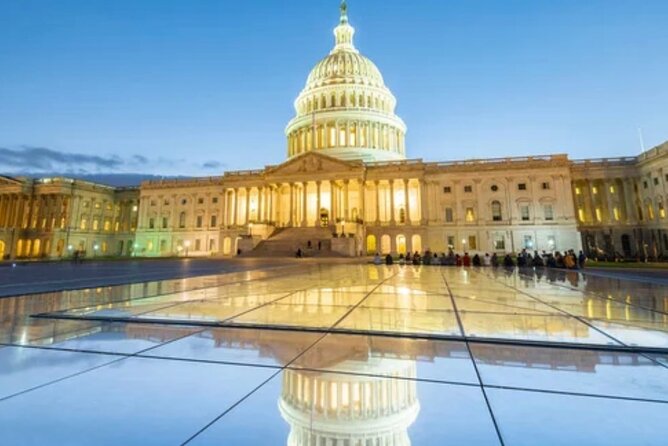
The opening portion brings you to the west side of the U.S. Capitol. Even from outside, the building provides a strong start, especially when the dome is lit against the evening sky.
Nearby, the Ulysses S. Grant Memorial gives the guide a chance to explain the Civil War and Grant’s role in preserving the Union. The stop is listed at about five minutes, so expect a short talk and photographs rather than a long look at the sculpture groups.
The James A. Garfield Monument and Peace Monument add more context about American government and the Civil War era. These stops are useful because they introduce figures and themes you might pass without noticing on your own. The tradeoff is that five minutes goes quickly, particularly if the group needs to leave the bus, gather around the guide, hear the explanation, and take pictures.
The Washington Monument and presidential memorials
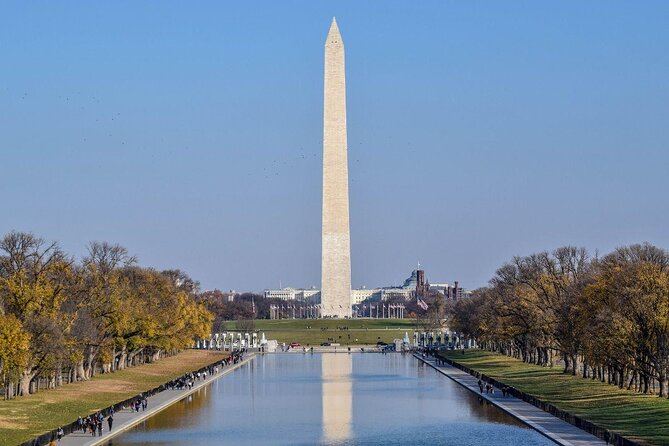
The Washington Monument is one of the evening’s most recognizable sights. Its tall, pale form is usually easy to spot, though the amount of illumination can affect your photographs. The tour gives you a chance to see it from the grounds rather than only from a passing road.
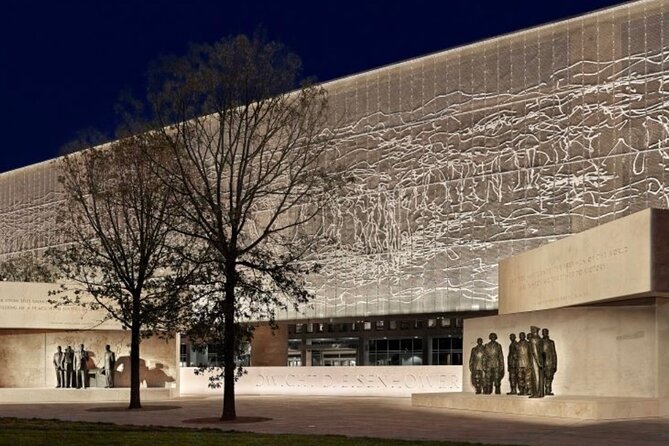
The route also includes the Eisenhower Memorial, the FDR Memorial, and the George Mason Memorial. The guide uses these stops to connect presidents and political thinkers with the city around them. You may also pass the Albert Einstein Memorial, depending on the precise route and timing.
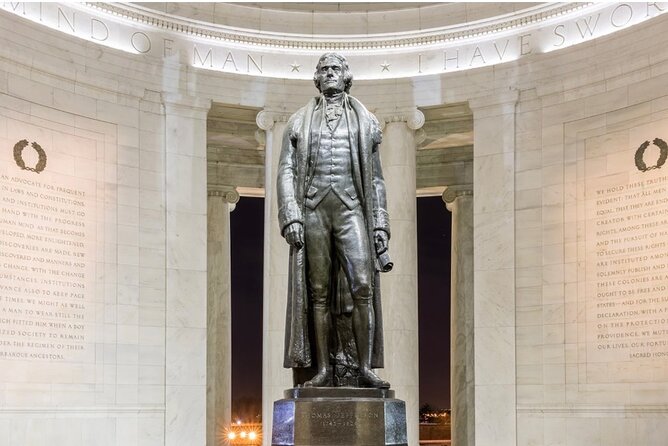
The Jefferson Memorial receives about 15 minutes, making it one of the more generous stops. This is important because the memorial sits at a distance from the main central cluster, and its setting around the Tidal Basin gives it a different mood from the boxier war memorials. The columns and dome tend to be well lit, and the open space makes it easier to take in the design.
The FDR Memorial is another place where more time would be useful. Its outdoor rooms, quotations, sculptures, and waterfalls reward close attention. On this tour, you should treat the stop as an introduction and return during daylight if you want to read everything.
A different kind of day out entirely:
- Hop-on Hop-off Sightseeing Tour by Open-top Bus with 18 Stops
★ 3.5 · 3,848 reviews - Washington DC in One Day: Guided Sightseeing Tour
★ 4.5 · 3,360 reviews - DC Monuments and Capitol Hill Tour by Electric Cart
★ 5.0 · 2,841 reviews - Washington DC Moonlight Tour by Electric Cart
★ 5.0 · 2,610 reviews
Martin Luther King Jr. and Lincoln after dark
The Martin Luther King Jr. Memorial receives about 10 minutes. The large stone figure and the surrounding quotations make this one of the most emotionally direct stops on the route. A good guide can explain the memorial’s connection to King’s speeches and the broader struggle for civil rights.
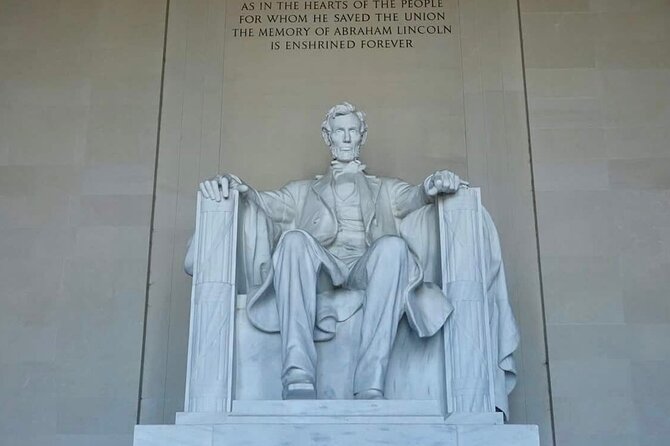
The Lincoln Memorial is given about 15 minutes. This is enough to walk up the steps, see the seated statue, look down the Reflecting Pool, and take a few photographs if the group moves promptly. The evening setting can be especially striking, though crowds and low light may affect how long you spend inside.
The tour’s treatment of American history is broad. It includes slavery, civil rights, war, the presidency, and the founding of the republic. One person felt the commentary focused too heavily on Black history, while the operator defended the accuracy of the information. I would see this as part of the tour’s approach: you will hear about the experiences of enslaved people and the civil rights movement alongside presidential and military history.
That mix is useful, but the balance can depend on the guide. If you prefer a tightly neutral, date-by-date lecture, the informal storytelling style may feel less predictable. If you like connections between monuments and the people they represent, it should make the ride more meaningful.
Korean War, Vietnam, and World War II
The Korean War Veterans Memorial is scheduled for roughly 10 minutes. Its ghostly figures can be difficult to appreciate in poor lighting, but the guide’s explanation helps you understand the memorial’s purpose and mood.
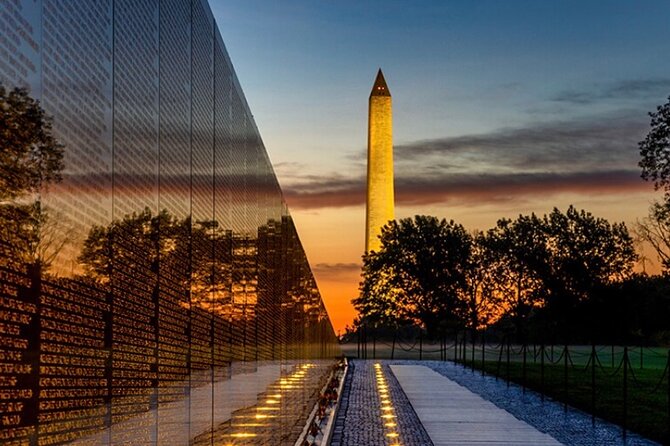
The Vietnam Veterans Memorial gets about 15 minutes. The long black wall is more intimate than the grand presidential monuments, and visitors often need a quiet moment to read names or reflect. Fifteen minutes is enough for a first look, though not enough if you want to search for a particular name.
The National World War II Memorial follows with about 10 minutes. Its fountains, columns, and broad plaza are easier to view as a whole than the Vietnam memorial, and the guide can explain the memorial’s place between the Lincoln Memorial and Washington Monument.
Lighting is a real factor at these sites. One passenger found that only a few major monuments were bright enough to appreciate fully, with the Jefferson, Washington, Lincoln, and White House areas working best. The Korean, Vietnam, and World War II memorials may look atmospheric at night, but details can disappear in shadows. Bring a phone with a good low-light camera, and do not expect every monument to look like a postcard.
The Marine Corps Memorial and Arlington-side sights
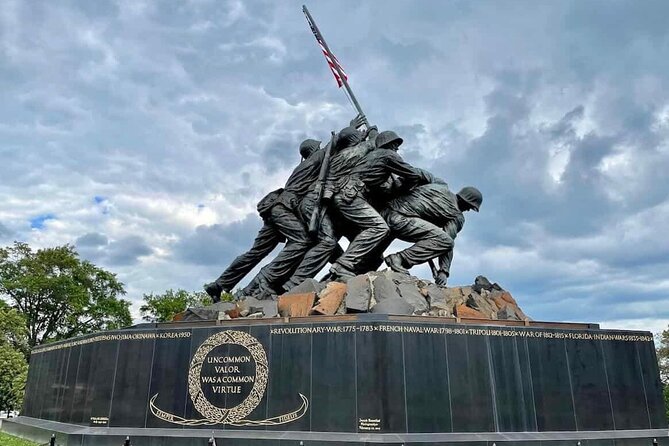
The U.S. Marine Corps War Memorial, commonly called the Iwo Jima Memorial, is included as a private tour stop. Its famous flag-raising sculpture sits across the river in Arlington, giving you a change of scenery from the National Mall.
The Air Force Memorial and Pentagon 9/11 Memorial are also listed as private tour stops. The precise amount of time at these locations may depend on road conditions, group timing, and the vehicle’s route. They broaden the tour beyond the standard Mall circuit, but you should confirm with the operator how much time is planned for each on your date.
Several people appreciated guides making an extra stop at the Marine Corps Memorial for a veteran in the group or at the Navy Memorial for a family with a serving sailor. That suggests some flexibility when traffic and timing allow. It is a pleasant bonus, not something to assume will happen.
The White House, Ford’s Theatre, and passing sights
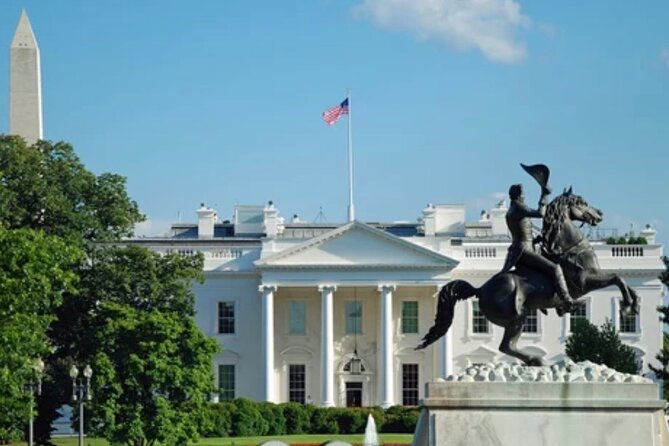
The White House is scheduled for about 10 minutes. You view it from outside, and admission is not included. The stop is mainly for photographs and a short explanation of the building’s role in American government.
The route also passes Ford’s Theatre, where President Lincoln was assassinated, along with the Navy Memorial and the Japanese American Memorial. Some of these locations may be passed without a stop. That is an important distinction: seeing a landmark from the bus is not the same as getting out to explore it.
The itinerary lists more than 22 stops or points of interest, but not all receive equal treatment. Some are five-minute talks, some are 10 or 15-minute walks, and some are viewed through the bus windows. Think of the tour as a moving introduction to DC, not a collection of full monument visits.
Guides, trivia, and the human side of the tour
The strongest part of this experience is often the person holding the microphone. Kareem is praised for trivia, energy, and his ability to involve the whole group. Regis is described as friendly, organized, and helpful, while Vernon receives credit for clear instructions and calling out a nickname so people could find their way back to the bus at busy stops.
That last detail matters. At each stop, you need to remember where the vehicle is parked and when to return. A guide who gives clear gathering instructions can prevent a stressful end to an otherwise pleasant stop.
Guide style is not identical from one departure to another. One passenger had trouble understanding a strong accent, while others found their guide easy to hear and engaging. If you have hearing difficulty, tell the operator before departure and position yourself where you can hear the explanation clearly.
The guides also have to cope with road closures, parades, weather, and traffic. One guide kept the route moving during major parade preparations, and another improvised when roads closed. That flexibility is valuable in Washington, where official events can change access with little warning.
Bus comfort, water, and what to bring
The vehicle is air-conditioned and includes phone chargers. Bottled water is advertised, and water is normally offered from a cooler. Bring your own bottle as a backup, especially on a warm evening.
Water service has not always been consistent. One departure ran short of cold bottles, and snacks were not offered even though they had been mentioned in the description. The operator later explained that snacks were discontinued because of litter on the bus. Pack a small snack if you need one, and do not rely on complimentary food.
Air conditioning is another practical issue. One group left before the tour ended because the bus felt hot and had poor airflow, especially toward the rear. The operator said the system was working but that airflow was weaker in the last row and affected by frequent door openings. If temperature matters to you, avoid the back row when possible and carry water.
Umbrellas may be available, and one rainy departure included them, but I would still bring rain protection if the forecast looks uncertain. The tour requires good weather and may be canceled if conditions are poor. In that case, you can choose another date or receive a full refund.
Group size, timing, and the right expectations
The maximum group size is 53 people. That is a substantial group for short walking stops. You may need to stay close to the guide, move promptly, and return to the bus at the stated time.
This is not a hop-on, hop-off service in the usual sense. You cannot decide to remain at the Lincoln Memorial while the rest of the group continues. The bus waits for the scheduled stop, and the group moves together.
The short stops are ideal if you want to collect photographs and learn what each site represents. They are less suitable if you want to read every inscription, linger beside the reflecting pool, or explore a memorial at your own pace.
The tour is available in English, with bilingual staff noted in the description. It runs for about three hours and returns to the original meeting point. Most people can participate, and service animals are allowed, but the operator does not promise hotel pickup or a private vehicle.
Who should book this nighttime tour?
I would choose this tour for a first visit, a short stay, families with older children, and anyone who wants to cover a lot of ground without navigating the city at night. It also works well near the start of a DC trip because you can learn the layout and decide which memorials deserve a longer return visit.
You should think twice if you dislike fixed schedules, large groups, or brief stops. People who want quiet time at the Vietnam Veterans Memorial, FDR Memorial, or Lincoln Memorial will probably prefer a separate daytime visit.
At $69.99, the tour earns its keep through coverage and convenience. Book it for the efficient route, the nighttime atmosphere, and the chance of a lively guide such as Kareem, Regis, or Vernon. Do not book it expecting every monument to be brightly lit, snacks to be guaranteed, or enough time for a detailed visit at each stop.
FAQ
How long is the Washington DC Night-Time City Tour?
The tour lasts approximately three hours.
How much does the tour cost?
The listed price is $69.99 per person.
Where does the tour begin and end?
It begins at 1200 Independence Ave SW, Washington, DC 20004, and ends back at the same meeting point.
What time does the tour start?
The scheduled start time is 7 p.m.
Is hotel pickup included?
No. Hotel pickup is not included.
Is bottled water provided?
Yes. A bottle of water is included, though bringing extra water is sensible because supply and temperature may vary.
What happens if the tour is canceled because of weather?
You can choose a different date or receive a full refund if poor weather causes the cancellation. You can also cancel at least 24 hours before the start time for a full refund. Cancellations within 24 hours are not refundable.
Just added in Washington DC
- Washington DC: Sightseeing Tour with Potomac River Cruise★ 4.7 · 311 reviews
- Washington DC: Monuments and Memorials Bike Tour★ 4.8 · 399 reviews
- DC: Capitol Hill and Library of Congress Tour with Tickets★ 4.7 · 1,125 reviews
- No-Wait Washington Monument Direct Entry Tickets & Guidebook★ 4.5 · 465 reviews
- Washington DC Sites at Night Guided Bicycle Tour★ 4.5 · 536 reviews
- Hop-On Hop-Off 21 Stop Trolley Tour + Arlington Cemetery Tour★ 4.0 · 369 reviews
- City Cruises DC: Scenic Buffet Lunch Cruise★ 4.0 · 418 reviews
- City Cruises Washington DC: Premier Dinner Cruise★ 3.5 · 375 reviews
City Tours, compared.
Boston Duck Boat Sightseeing City Tour with Cruise Along Charles River
Read our review →

New Orleans City Sightseeing Hop-On Hop-Off Bus Tour
Read our review →
Pearl Harbor, USS Arizona Memorial & Honolulu City Tour
Read our review →Browse the lists this tour appears in