
Reviewed · CRUISES & BOAT TOURS
Chicago Architecture River Cruise
Chicago looks best from the river. This cruise turns the city’s crowded streets into a moving front-row seat for architecture, with guides who connect buildings to the city’s past. I especially like the excellent skyline views and the way one short ride covers several parts of the Chicago River. The main drawback is that outdoor seating can get very cold, and onboard commentary may be hard to hear when passengers talk.
I also like the choice of departure points, either Navy Pier or Michigan Avenue, and the relaxed pace. Guides such as Jim, Ashley, and Sam have earned praise for mixing building details with humor and city stories. Still, you should arrive early for the best seats, check the departure instructions carefully, and bring warm layers outside of summer.
In This Review
- Key points to know before you book
- Why Chicago’s river is the right place to see the city
- Boarding at Navy Pier or Michigan Avenue
- The opening view of the Chicago River
- The Wrigley Building and Chicago’s early skyscraper style
- John Hancock Center and the view toward Michigan Avenue
- Marina City’s corncob towers
- Willis Tower and Chicago’s race for height
- Wave-like balconies and modern Chicago design
- The guide can make or break the hour
- Seating, weather, and the outdoor versus indoor choice
- Is $39 a fair price for this cruise?
- Who should book the Chicago Architecture River Cruise?
- Booking, cancellation, and timing tips
- FAQ
- How long is the Chicago Architecture River Cruise?
- Where does the cruise depart?
- What buildings can I see from the boat?
- Is the cruise offered in English?
- Are dogs allowed on the cruise?
- Can I cancel for a full refund?
- Should you book it?
Key points to know before you book
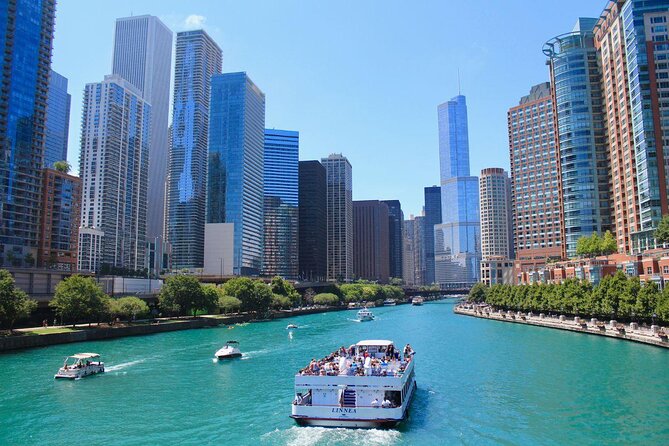
- The river is the star: You get broad views of the Wrigley Building, Willis Tower, John Hancock Center, Marina City, and many other landmarks from water level.
- A strong first-day activity: The one-hour to 90-minute ride gives you a useful overview before you explore Chicago on foot.
- Guides make the difference: The best tours pair architecture facts with stories about the Great Chicago Fire, balloon-frame construction, and the people behind the buildings.
- Arrive early for your seat: Front-row places can feel almost private, while late boarding may leave you with fewer choices.
- Cold weather needs serious planning: Blankets, hats, gloves, and hot drinks may be available for purchase, but warm clothing is still your best defense.
- Dogs are welcome: This is a pet-friendly cruise, with a restroom and full bar on board. WiFi is not included.
Why Chicago’s river is the right place to see the city
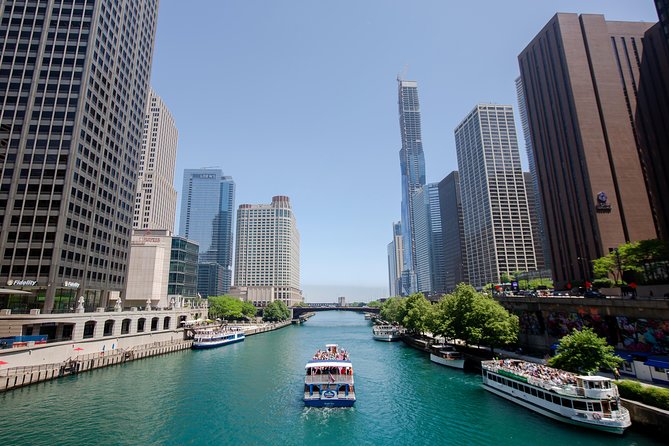
Chicago is famous for its towers, but the sidewalks do not always give you a clear view of them. Streets can be narrow, buildings can block one another, and you often end up craning your neck. From the river, the skyline opens up around you.
The boat moves through the historic Chicago River and its branches, giving you changing angles on the city. You see the lower levels, upper floors, setbacks, balconies, bridges, and materials in a way that is difficult from street level. That matters because Chicago architecture is not just about height. It is also about how buildings meet the river and fit together in tight downtown blocks.
For a first visit, I like this cruise because it quickly answers a basic question: what makes Chicago architecture special? You hear about innovation, rebuilding, steel-frame construction, and the city’s response to disaster while the examples pass directly in front of you.
The route is also a smart use of time. In roughly an hour, you cover more ground than you could on foot, without stopping at every intersection or trying to read a map while walking. You return to your starting point, so the cruise can fit neatly into a day at Navy Pier or along Michigan Avenue.
More Boat Tours in Chicago
- Chicago River: 1.5-Hour Guided Architecture Cruise
★ 4.8 · 8,046 reviews - Chicago Architecture Center River Cruise aboard First Lady
★ 5.0 · 5,536 reviews - Chicago: Architecture River Cruise Skip-the-Ticket Line
★ 4.8 · 4,325 reviews
Boarding at Navy Pier or Michigan Avenue
Your departure point depends on the option you choose. The two locations are practical for sightseeing, since both are near public transportation and major downtown attractions, but you need to confirm which pier applies to your booking.
This is one area where I would not rely on vague directions. A first-time visitor has reported getting lost and missing the cruise because the meeting instructions were not clear enough. Give yourself extra time to find the exact boarding location, especially if you are unfamiliar with the riverwalk, Navy Pier, or downtown bridges.
Once aboard, you find a seat and settle in for the ride. Boats can differ. Some are single-deck vessels, and the exact boat cannot be guaranteed. That means your seating and views may vary from one departure to another.
The boats have restrooms, and a full bar is available. Drinks and snacks cost extra, but the onboard service can be useful on a longer 90-minute departure or during a cold-weather cruise. WiFi is not provided, so download anything you need before boarding and keep your phone ready for photographs rather than streaming.
The opening view of the Chicago River
The first part of the cruise gives you a quick lesson in why water is such a good viewing platform. Instead of seeing one building at a time, you can compare several eras of Chicago design in a single glance.
Your guide introduces major landmarks and explains how the city changed after the Great Fire of 1871. You also hear about balloon-frame construction, a building method that changed how homes were made and helped Chicago grow quickly.
That background keeps the ride from becoming a simple parade of tall buildings. You begin to understand the city as a place that repeatedly tested new ideas. The Great Fire created a painful break with the past, but rebuilding also gave architects and engineers room to try new materials and forms.
The strongest guides turn this information into a story rather than a list. Sam, for example, has been praised for linking architecture, city culture, and the natural setting beside the river. Jim is known for passion and a lively presentation, while Ashley has been singled out for clear explanations and a good sense of humor. Guides vary by departure, but a good one can make the entire hour feel purposeful.
The Wrigley Building and Chicago’s early skyscraper style
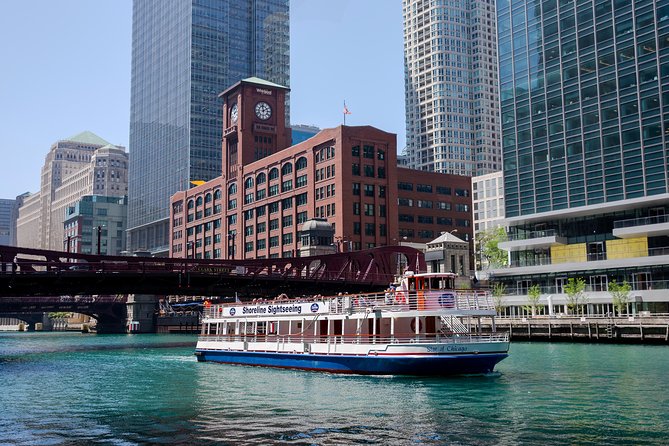
The Wrigley Building is one of the easiest landmarks to recognize from the river. Its bright exterior and detailed design make it a useful example of the decorative side of Chicago’s early skyscraper era.
From the boat, you get time to study the building as part of the river corridor rather than as an isolated photo stop. Look for how its ornament and tower shape contrast with the simpler glass and steel structures nearby.
The guide also places buildings in time. That is valuable because downtown Chicago can otherwise feel like a single wall of towers. The commentary helps you notice which structures belong to an older commercial age and which reflect later ideas about office space, technology, and urban design.
One benefit of the cruise is that you do not need prior architecture knowledge to follow along. The best explanations use plain language and point out details as you pass them. The tone is often light, with jokes mixed into the facts, though a few departures have had guides who spoke too quickly for everyone to follow.
A different kind of day out entirely:
- Chicago River 90-Minute Architecture Tour
★ 4.5 · 9,629 reviews - Chicago: Gangsters and Ghosts Walking Tour
★ 5.0 · 7,155 reviews - Chicago: Willis Tower Skydeck and The Ledge Ticket
★ 4.6 · 4,350 reviews - Chicago Crime and Mob Bus Tour
★ 4.5 · 3,186 reviews
John Hancock Center and the view toward Michigan Avenue
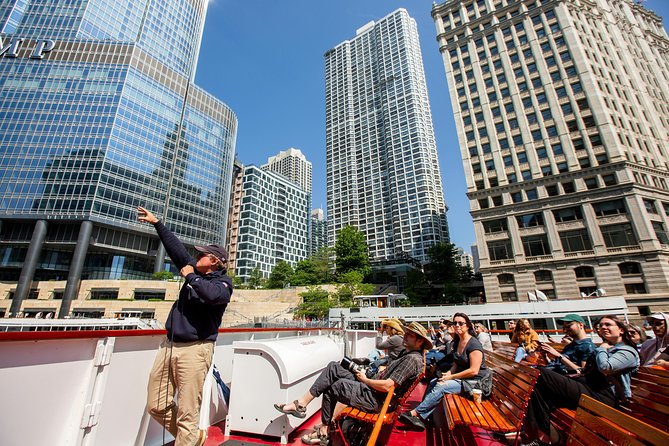
The John Hancock Center, now commonly called 875 North Michigan Avenue, rises about 1,128 feet and has 100 floors. From the river, its dark form is easy to pick out among the downtown towers.
The boat gives you a wider sense of its size than a close street-level view. You can compare the building’s strong vertical shape with lower structures around it. This is one of those moments when the river does the work: you simply sit back and watch the skyline shift.
The cruise is not designed as a visit to the observation deck, and you do not go inside the buildings. Its value is visual context. You see how the towers relate to one another, how the river cuts through downtown, and how the city’s height changes from one block to the next.
If photography matters to you, keep your camera or phone ready throughout the route. The boat keeps moving, and a building that looks ordinary from one angle may become striking a minute later. Front-row seating helps, but every seat can offer something different as the boat turns.
Marina City’s corncob towers
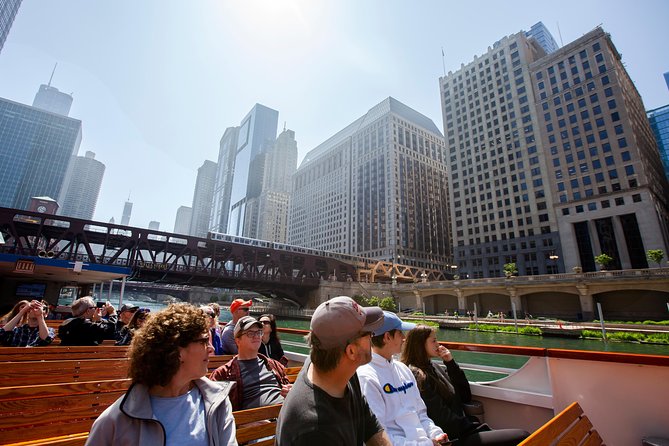
Marina City is among the most memorable sights on the route. Its twin corncob-shaped towers are unlike the straight-sided office buildings nearby, and their rounded balconies give them a playful look.
They are more than a quirky photo subject. The towers show how Chicago architects experimented with residential design and mixed-use living. Your guide explains the buildings as part of the city’s changing approach to housing and downtown life.
This is also a good example of why the cruise is useful for families and teenagers. A young passenger may not care about a long lecture on architectural theory, but a pair of unusual towers catches the eye. Once the building has your attention, the story behind it becomes easier to remember.
The ride includes many such moments. You do not need to love every architectural style. The route gives you enough variety to find a few buildings that stay with you after the boat returns to the dock.
Willis Tower and Chicago’s race for height
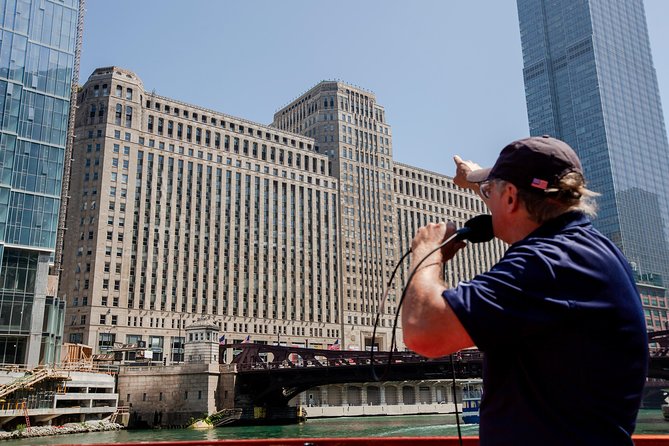
Willis Tower, formerly known as the Sears Tower, was once the tallest building in the world. It remains one of Chicago’s strongest skyline markers, and the river offers a clean view of its distinctive stepped form.
Your guide uses the tower to explain Chicago’s long contest with height, office space, engineering, and commercial ambition. Seen from the boat, the building is not just a famous name. It becomes part of a larger story about how downtown expanded upward.
The view is particularly useful if you plan to visit an observation deck later. From the river, you see the tower as others see it, rising above the city rather than looking down from its top. That change in viewpoint helps you understand its scale.
The route does not stop at one landmark. It keeps moving through a collection of buildings, so you gain a sense of how Chicago’s skyline developed over many decades. For someone with limited time, that broad view is a strong reason to choose the cruise.
Wave-like balconies and modern Chicago design
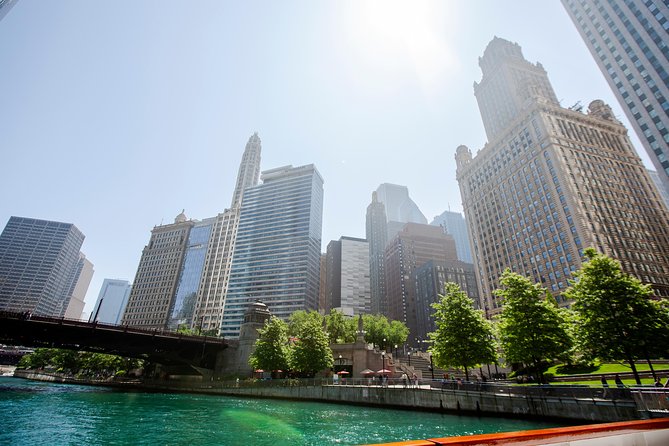
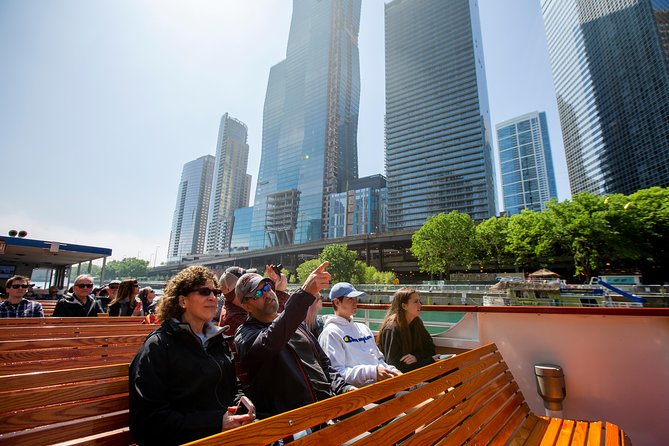
The route includes newer buildings as well as famous older towers. One notable example is a modern structure with wave-like balconies, a design that breaks up the hard lines common in downtown architecture.
These details are easy to miss when you rush through the city on foot. From the river, the building’s repeated curves become clear, and the guide can explain how architects use balconies, glass, concrete, and shape to change a tower’s appearance.
I find this mix of old and new more interesting than a tour devoted only to landmark buildings. Chicago’s architectural story is still continuing. The cruise lets you compare decorative towers, modernist forms, ambitious supertalls, and newer residential designs without traveling across the city.
The commentary also adds human context. You hear about architects such as Mies van der Rohe and Helmut Jahn, along with the events that shaped Chicago’s building tradition. The goal is not to turn you into an architecture student. It is to help you look up with a better eye.
The guide can make or break the hour
The most praised feature of this cruise is the live guide. A strong guide keeps the talk clear, adds humor, and explains why a building matters instead of simply naming it.
That difference is important on a short tour. You may see dozens of buildings, but you will remember only a handful unless the commentary gives them a story. Jim, Ashley, and Sam have each received especially warm praise for their delivery, humor, and command of Chicago architecture and city history.
There is a practical weakness: sound quality depends partly on passenger behavior. Loud conversations, phone use, and crying children can make the guide difficult to hear. One departure had passengers who struggled to follow a fast-speaking guide, and some eventually stopped listening.
I would choose a seat near the guide or the front when possible, arrive early, and avoid relying on the cruise as quiet study time. The boat can carry up to 250 people, so this is a public sightseeing experience, not a private architectural walk.
Seating, weather, and the outdoor versus indoor choice
Chicago weather matters a lot on the river. In autumn and winter, wind can make the temperature feel much lower than it does on land. Even cold-weather departures can be enjoyable, but only if you dress for the water.
Bring a warm coat, hat, gloves, and layers. Some cruises sell blankets, hats, gloves, and hot drinks, including spiked hot chocolate, but those purchases add to the cost and should not replace proper clothing.
Indoor or lower-level seating may help, yet you should not assume it will be perfectly warm. One cold-weather complaint described wind coming through lower-level window coverings. Other passengers found the boat clean and comfortable, even in freezing conditions, so the experience can vary with the vessel and the day.
Summer and mild-weather departures are easier. You can focus on views and photographs without worrying about numb fingers. Evening rides can also be beautiful, with the city lit up, but the river becomes colder after sunset. Check the forecast and dress for the coldest part of the ride, not just the temperature at the dock.
Is $39 a fair price for this cruise?
At $39 per person, the cruise offers good value if you want a broad introduction to Chicago architecture. You get about an hour to 90 minutes on the river, a live guide, views of major landmarks, a restroom, and a return to the starting point.
The price compares well with the time it saves. Seeing the same range of buildings from street level would take much longer, and you would spend part of that time navigating crowded sidewalks. The cruise also provides context that you might not get from simply photographing the skyline.
The value is strongest for first-time visitors, families, couples, and anyone with only a day or two in Chicago. It is also useful for architecture fans who want to see the city from a different angle.
Remember that drinks, snacks, and WiFi are not included. Optional purchases can raise the total, especially in cold weather when you may want a hot drink or blanket. You are paying mainly for the route, the views, and the live presentation. If the guide is engaging, that combination feels worthwhile. If commentary is hard to hear, the cruise becomes a scenic ride with less educational value.
Who should book the Chicago Architecture River Cruise?
I would recommend it to a first-time Chicago visitor who wants a quick orientation, especially if you enjoy buildings, photography, or city stories. Families can also get a lot from it because the unusual shapes of Marina City and the height of Willis Tower give children clear visual points to watch for.
It suits time-pressed visitors particularly well. You cover several branches of the river without changing trains, walking long distances, or planning a complicated route. Pet owners should also note that dogs are welcome.
You may want to skip it if you dislike boat rides, cold weather, or group commentary. It is not ideal if you need a quiet setting or guaranteed indoor warmth. It may also disappoint visitors expecting a private tour or a deep architectural seminar.
The cruise is offered in English, and most people can participate. It is not a hop-on, hop-off service. You board, follow the route, and finish where you started.
Booking, cancellation, and timing tips
The cruise offers many departure times during the day, which makes it easy to fit around museums, meals, and downtown sightseeing. It is commonly booked about six days ahead, so popular times may fill before your visit.
You receive a mobile ticket and confirmation when booking. Cruises can be rescheduled through Viator up to 24 hours before departure. You can cancel at least 24 hours ahead for a full refund, but changes or cancellations inside that window are not accepted. Poor weather can lead to a rescheduled trip or full refund.
From November 14, 2025 through April 2026, tours are scheduled to run for 60 minutes. Outside that seasonal period, the stated duration is approximately one to 90 minutes, depending on the option and departure.
I would book a daytime ride for the clearest building views and an evening departure if you want the city lights. Either way, reach the dock early, confirm the exact departure point, and line up before boarding if seat choice matters to you.
FAQ
How long is the Chicago Architecture River Cruise?
The cruise lasts approximately one hour to 90 minutes. From November 14, 2025 through April 2026, tours are scheduled to last 60 minutes.
Where does the cruise depart?
Depending on the option selected, the cruise departs from Navy Pier or Michigan Avenue. Check your mobile ticket carefully for the correct location.
What buildings can I see from the boat?
The route includes views of the Wrigley Building, John Hancock Center, Willis Tower, Marina City’s twin corncob towers, and many other notable Chicago buildings.
Is the cruise offered in English?
Yes. The experience is offered in English and includes live commentary from an onboard guide.
Are dogs allowed on the cruise?
Yes. The cruise is dog-friendly.
Can I cancel for a full refund?
Yes, if you cancel at least 24 hours before the experience start time. Cancellations or changes made less than 24 hours before departure are not accepted. If poor weather cancels the cruise, you can receive a different date or a full refund.
Should you book it?
Yes, if you want an efficient and enjoyable introduction to Chicago’s skyline. The river views are excellent, the route covers far more than a short walk, and a strong guide can turn familiar towers into memorable city stories.
Book it with realistic expectations. Choose your departure point carefully, arrive early, dress warmly in cool weather, and understand that the boat may carry a large group. At $39, it is a sensible use of your sightseeing budget, especially for a first visit or a tight schedule.
Just added in Chicago
- Original Chicago Architecture Interiors Tour: Dazzling Interiors★ 5.0 · 1,489 reviews
- Delicious Donuts & City Sights: Chicago’s Original Donut Tour★ 5.0 · 1,389 reviews
- BYOB Spray Paint and Sip at Studio W.I.P.★ 5.0 · 401 reviews
- Field Museum of Natural History Admission Tickets★ 4.5 · 489 reviews
- Bikes, Bites & Views: Chicago’s Signature Dishes Bike Tour-Adults★ 5.0 · 732 reviews
- The Escape Game Chicago: Epic 60-Minute Adventures in River North★ 5.0 · 332 reviews
- Chicago Loop District Food Tour with Deep Dish & Beef Sandwich★ 5.0 · 870 reviews
- City Cruises Chicago: Signature Lunch Cruise on Lake Michigan★ 4.0 · 348 reviews
Cruises & Boat Tours, compared.
Boston Duck Boat Sightseeing City Tour with Cruise Along Charles River
Read our review →
Best Niagara Falls US Tour W/Boat Ride, Cave & More Wonders!
Read our review →
Circle Line 2h Harbor Lights Cruise Skip-The-Box-Office
Read our review →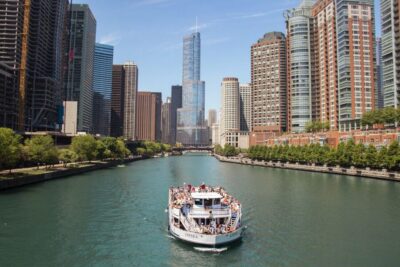
Chicago River: 1.5-Hour Guided Architecture Cruise
Read our review →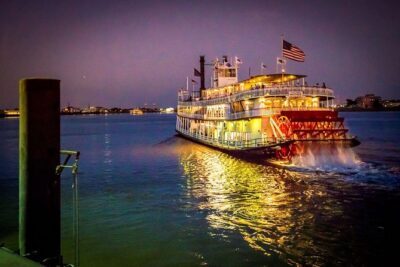
New Orleans Steamboat Natchez Jazz Cruise with Dinner Option
Read our review →
Biscayne Bay Millionaire’s Homes Sightseeing Cruise
Read our review →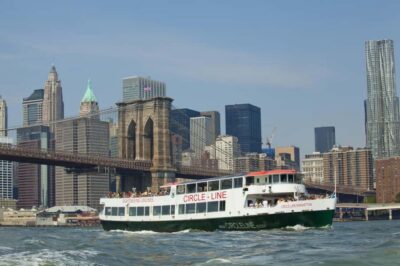
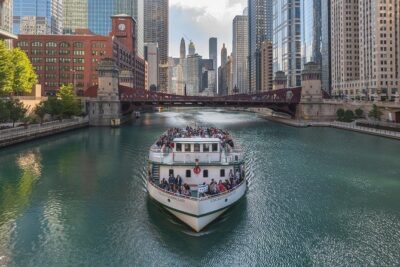
Chicago Architecture Center River Cruise aboard First Lady
Read our review →Browse the lists this tour appears in