
Reviewed · THE USA
Colonial Williamsburg Admission
Colonial America comes alive one building at a time. Colonial Williamsburg gives you access to government buildings, family homes, trade shops, performances, and two art museums for $37.50 per person. I especially like watching blacksmiths, printers, and other tradespeople work with old methods, and I like how costumed interpreters turn political debates and daily chores into living lessons. The main drawback is simple: this is a large place with a lot of walking, uneven bricks, and more to see than most people can fit into one day.
Start at the Visitor Center, get the current schedule, and plan before you cross the pedestrian bridge into the historic area. A two-day visit makes much more sense if you want the major buildings, trade demonstrations, performances, and art museums without rushing. Also, allow extra time at the ticket desk if you are redeeming a voucher, since the exchange process can take longer than expected.
In This Review
- Key points to know before you go
- Begin at the Visitor Center, not in the old town
- The Governor’s Palace shows royal Virginia before the break
- The Capitol brings 1776 into focus
- The Peyton Randolph House confronts freedom and slavery
- Trade shops make the past practical
- Homes, gardens, and public buildings fill out the town
- Reenactments and performances add a human voice
- The art museums are more than a rainy-day backup
- Food, taverns, and shopping require a little budget
- Why one day often feels too short
- Voucher, weather, and timing tips
- Who will enjoy Colonial Williamsburg most
- Should you book Colonial Williamsburg admission?
- FAQ
- Where do I redeem the Colonial Williamsburg admission voucher?
- What does the admission ticket include?
- How long should I plan for Colonial Williamsburg?
- Is the visit guided?
- Is food included in the ticket?
- Is parking included?
- Can I cancel for a full refund?
Key points to know before you go

- The Governor’s Palace and Capitol anchor the visit: These guided buildings explain royal rule, revolution, and Virginia’s changing government.
- Trade shops provide the best hands-on learning: Blacksmiths, printers, milliners, and other craftspeople demonstrate work instead of merely describing it.
- Two days are better than one: The historic area covers more than 300 acres, with 88 original eighteenth-century buildings and many rebuilt structures.
- The shuttle saves your legs: Complimentary buses connect key areas, though they can be crowded at busy times.
- The art museums deserve real time: Admission includes two major museums, a useful option when the weather turns hot, cold, or wet.
- The voucher requires planning: Redeem it at the Colonial Williamsburg Visitor Center, and be prepared to show or print the confirmation materials.
Begin at the Visitor Center, not in the old town
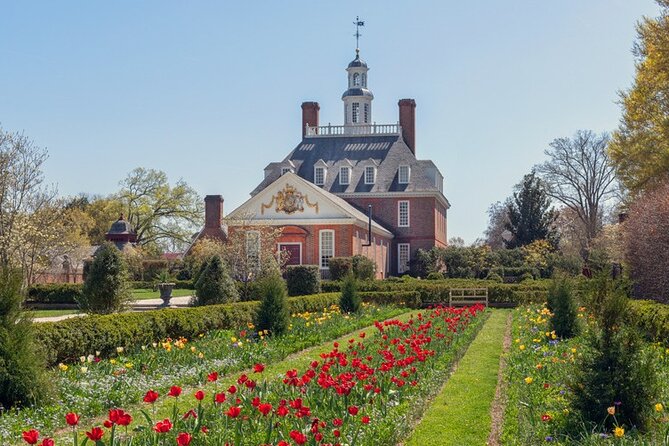
Your visit starts at the Colonial Williamsburg Visitor Center at 101 Visitor Center Drive. This is where you redeem the admission voucher, pick up maps, check current activities, and learn what is happening that day.
I would not skip this first stop. Colonial Williamsburg is spread out, and the daily program can change with weather, special events, and evening schedules. A few minutes with the map can save you from wandering past a building you meant to visit or arriving after a performance has ended.
The Visitor Center also shows Williamsburg: The Story of a Patriot, a film that introduces the city’s role in the years leading to the American Revolution. It gives you a useful framework before you begin seeing governors, lawmakers, craftspeople, household workers, and enslaved people represented throughout the site.
From the Visitor Center, a pedestrian bridge leads toward the historic area. The transition is pleasant and clear. You leave the modern parking area behind and enter a town where the buildings, clothing, language, and activities are designed to suggest eighteenth-century Williamsburg.
Other trips worth a look in the USA:
- NYC: SUMMIT One Vanderbilt Tickets
★ 4.7 · 51,195 reviews - NYC: 9/11 Memorial & Museum Timed-Entry Ticket
★ 4.8 · 31,428 reviews - NYC: Empire State Building Tickets – Observatory & Museum
★ 4.7 · 25,757 reviews
The Governor’s Palace shows royal Virginia before the break
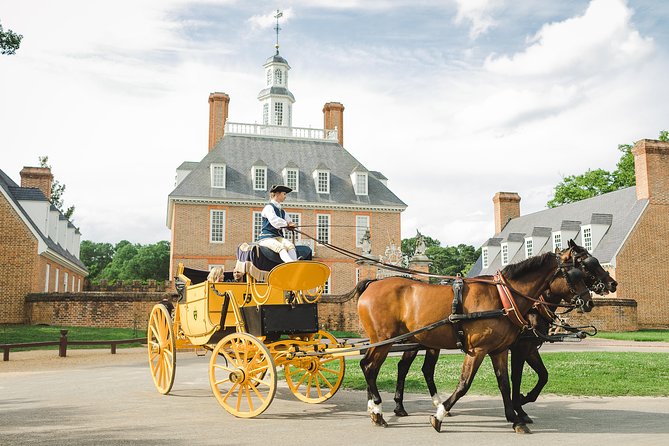
The Governor’s Palace is one of the strongest first stops. It presents Virginia during the final years of royal government, before the Revolution overturned the old political order.
The building’s formal rooms show the power and ceremony of the governor’s position. The experience is not just about polished furniture or grand interiors. It helps explain the gap between the people who governed Virginia and the colonists who increasingly questioned that system.
Costume interpreters guide the visit and add context that a silent building could not provide. Their presentations place the architecture inside the political tensions of the time. You get a sense of how government looked and felt before independence became a practical possibility.
The Palace is also a good reminder that Colonial Williamsburg is not a collection of unrelated old buildings. Each site contributes to a larger story. The Palace represents royal authority. The Capitol represents elected government and revolutionary change. Nearby homes and shops show how those decisions affected ordinary people.
The Capitol brings 1776 into focus
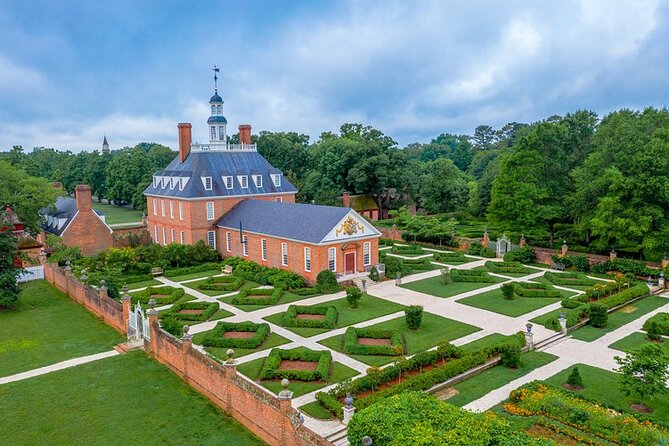
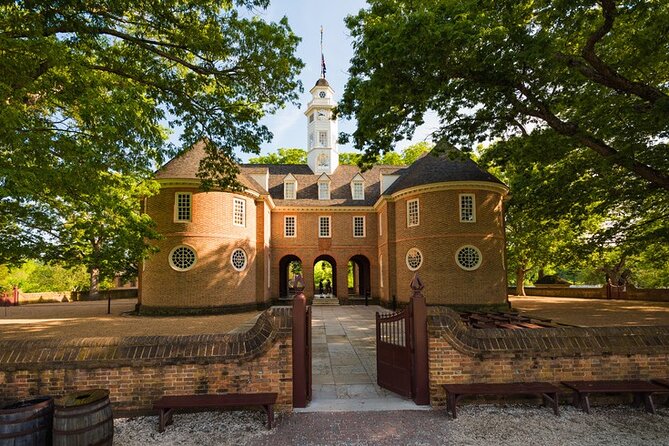
At the Capitol, the emphasis shifts from royal power to Virginia’s government during the turbulent year of 1776. The building is tied to the political debates that shaped the new state and the wider American Revolution.
This is one of the places where a costumed interpreter can make the setting much more memorable. You are not simply looking at a reconstructed meeting room. You are considering what lawmakers argued about, who had political power, and how ideas about liberty existed beside slavery and unequal rights.
The Capitol tour is often a highlight because the rooms feel connected to decisions rather than decoration. I would make this a priority even on a short visit, along with the Governor’s Palace and Courthouse.
The Courthouse adds another view of colonial public life. It shows how law worked at the local level and gives you a more grounded sense of community rules, disputes, and civic responsibilities. Together, the Palace, Capitol, and Courthouse create a useful three-part introduction to the town’s political world.
The Peyton Randolph House confronts freedom and slavery
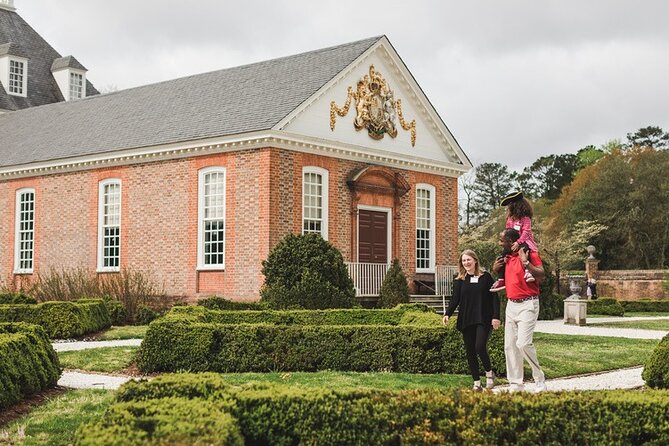
The Peyton Randolph House offers a more intimate and difficult look at colonial society. Peyton Randolph belonged to one of Virginia’s most prominent families, yet the house also reveals the sharp divide between comfort, political influence, and enslavement.
That contrast matters. A visit focused only on elegant rooms and revolutionary leaders would give you an incomplete picture. Here, the story includes the enslaved people whose labor supported the household and the wider economy.
The site helps you connect large political ideals with daily life. Declarations about liberty were being discussed in a society where many people were denied basic freedom. That tension is central to understanding Williamsburg, and it should not be treated as a side note.
Allow time to listen at the house rather than rushing through it for photographs. The most useful information comes from the interpretation of how the family lived, who worked there, and how power operated within the household.
A different kind of day out entirely:
- NYC: Empire State Building Observation Deck Tickets
★ 4.7 · 22,072 reviews - NYC: Edge Observation Deck Admission Ticket
★ 4.6 · 20,918 reviews - Grand Canyon West, Hoover Dam Stop and Optional Lunch and Skywalk
★ 5.0 · 19,535 reviews - New York City: Statue of Liberty & Ellis Island with Ferry
★ 4.6 · 18,683 reviews
Trade shops make the past practical

The trade shops are where Colonial Williamsburg becomes especially engaging for families and hands-on learners. At Anderson’s Blacksmith Shop and Public Armoury, you can watch a blacksmith pull red-hot iron from the forge and hammer it into tools, hardware, and weapons.
The heat, noise, and physical effort explain the work better than a label ever could. You see that making an ordinary object required skill, time, and strength. It also becomes easier to understand why tradespeople were important to the town’s survival.
Other shops demonstrate printing, millinery, and additional eighteenth-century trades. Masters, journeymen, and apprentices explain their work and answer questions. The quality of these demonstrations is one of the admission’s strongest features because the activity is direct and easy to remember.
I recommend checking several shops rather than stopping at only one. A blacksmith’s forge tells one story about metal and labor. A printer’s shop reveals how information spread. A milliner’s work shows the importance of clothing, fashion, and skilled handwork. Together, the shops give you a fuller picture of how residents made a living.
These demonstrations are also useful for children. A young visitor may not want a long lecture on colonial economics, but watching a tool take shape under a hammer is hard to ignore. The same is true for seeing how objects were produced before modern machines did most of the work.
Homes, gardens, and public buildings fill out the town
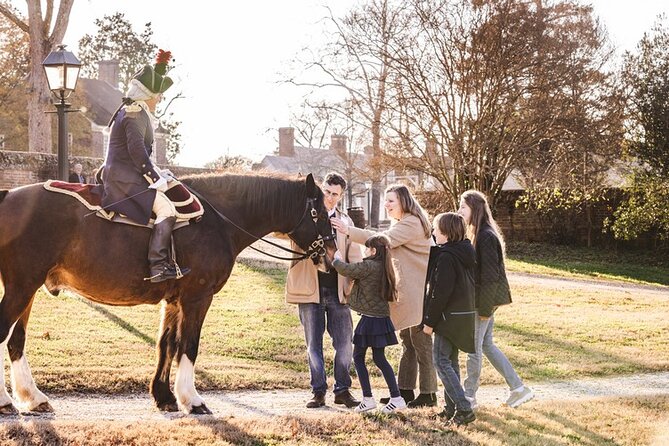
The major government buildings get much of the attention, but I would leave room for family homes, gardens, stores, kitchens, and smaller public buildings. These places show the ordinary routines behind the famous political events.
You might enter a local home and see how rooms were arranged, how food was prepared, or how a household divided work. Gardens add another layer, especially when interpreters explain what residents grew and how plants fit into daily needs.
The buildings are spread across a large area, so your visit will involve steady walking. The ground includes bricks and cobblestones, and several people find the terrain harder than expected. Benches are available for rest, and you can carry water and refill it as needed.
The shuttle is a welcome part of the admission. Use it when you want to skip a long stretch or move between areas. It helps, but buses may be crowded, and service conditions can vary. One visit had no buses operating for the day, so you should not assume the shuttle will remove every walking challenge.
If walking is difficult for you or someone in your group, plan conservatively. The experience requires a moderate level of physical fitness, and a mobility scooter may be awkward on uneven ground. Service animals are allowed.
Reenactments and performances add a human voice
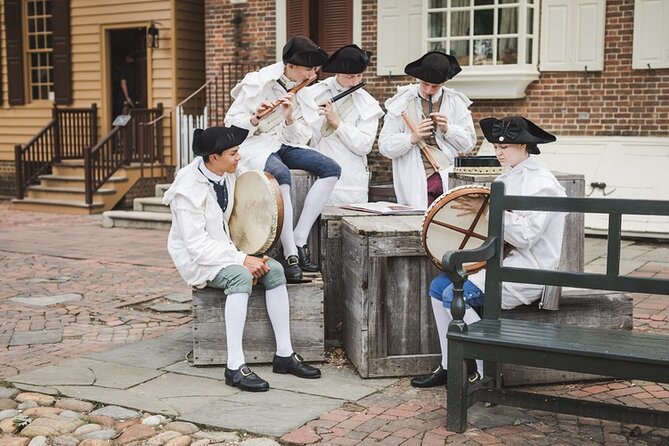
Colonial Williamsburg includes daily staged performances at Charlton Stage and in the Hennage Auditorium. Evening programs can include tours, plays, dances, concerts, and reenactments.
These events give the visit a change of pace. After several buildings and demonstrations, sitting down for a performance can help you absorb what you have seen. The actors and interpreters present political figures, residents, workers, and other people connected with the town.
Schedules matter. Some programs are only offered at certain times, and heat or severe weather can lead to cancellations. Check the day’s information at the Visitor Center instead of assuming every advertised activity will run.
The strongest performances make you feel connected to a particular person or moment. The weaker moments may feel less in character, especially during difficult weather or crowded periods. Still, the chance to see history presented through conversation, drama, and reenactment is a major reason to buy admission rather than simply walk around the public streets.
The art museums are more than a rainy-day backup
Admission also includes two art museums. These are easy to overlook when the restored town is the main reason for your visit, but they add serious value to the ticket.
The museums offer a break from the outdoor setting and provide a different way to understand early American life. Furniture, paintings, decorative objects, and other works can show what people valued, how they furnished their homes, and how British influence shaped colonial culture.
The museums are especially useful in poor weather. Colonial Williamsburg operates in all weather conditions, so rain, cold, wind, or heat can affect your day. A museum visit gives you a comfortable indoor period without abandoning the historical theme.
If you only have one day, you may need to choose between another building, a trade shop, and museum time. With two days, you can make room for all three.
Food, taverns, and shopping require a little budget
You can eat at restaurants, bars, lounges, and cafés in and around the historic area. Some tavern meals are designed around eighteenth-century fare and may include strolling musicians. This can be a memorable evening, particularly if you want the meal to feel like part of the visit rather than a break from it.
Food costs more than a packed lunch or simple snack, so plan accordingly. Bringing your own snacks and lunch can help control the day’s expense. You will appreciate having something easy to eat when the next performance or building tour is more important than sitting down for a full meal.
There are also more than 20 stores. The shopping area has useful gifts and souvenirs, though Market Square can feel more commercial than the quieter historic sites. I would browse, but I would not let the shops take time away from the trade demonstrations or major buildings unless shopping is a main goal.
Why one day often feels too short
The admission is listed for an approximate one to two days, and that range is realistic. A fast one-day visit can cover the Visitor Center, film, Governor’s Palace, Capitol, Courthouse, one or two trade shops, and a few performances.
That schedule leaves little room for wandering, meals, museums, gardens, or unexpected conversations with interpreters. You may also miss evening programming, which can include dances, concerts, and reenactments.
With two days, the pace improves. You can group nearby sites, use the shuttle when needed, return to a favorite trade shop, and spend proper time in the art museums. You also have a better chance of catching activities that run only once during the day.
At $37.50 per person, the ticket is a reasonable value if you use the included buildings, trade sites, performances, museums, and shuttle. It is less attractive if you only stroll through the streets and look at exterior architecture. The admission pays off when you treat Colonial Williamsburg as a full historical program, not just a pretty town to photograph.
Voucher, weather, and timing tips
The voucher must be redeemed at the Colonial Williamsburg Visitor Center. Bring the confirmation materials in a form the ticket desk can use. Printing is the safest option, since some people have had to email a PDF at the counter and wait while staff worked through the exchange.
Prebooking guarantees entry, which is useful during busy periods and holiday visits. However, the ticket redemption process may take time, so do not arrive minutes before a tour or performance you care about.
Dress for the forecast. The site operates in all weather, and the walking routes expose you to heat, wind, cold, and rain. Comfortable shoes are essential because bricks and cobblestones can be tiring even when the distance looks manageable on a map.
Free cancellation is available up to 24 hours before the experience begins. Changes or cancellations made within 24 hours are not accepted and are not refunded.
Who will enjoy Colonial Williamsburg most
I would recommend this admission to families, couples, solo visitors, and anyone who enjoys American history presented through places and people. Children have the demonstrations and performances. Adults can spend more time with the political conflicts, architecture, art, and social history.
It is also a good choice for repeat visitors. You can easily miss entire areas on a first visit, and returning for another afternoon gives you time to focus on different parts of the town.
I would be more cautious if your group has serious walking limitations, dislikes outdoor attractions, or expects a short, tightly guided tour. The admission includes guided tours of the Governor’s Palace, Capitol, and Courthouse, but much of the wider visit is self-guided. You need to choose your route and watch the schedule.
Should you book Colonial Williamsburg admission?
Book it if you want an active history lesson, not just a quick look at old buildings. The trade shops, costumed interpreters, political sites, performances, and art museums give you plenty to do, and the admission becomes good value when you stay for a full day or return for a second.
Plan for walking, check the shuttle and performance schedule, and start at the Visitor Center. If possible, give yourself two days. That extra time is the difference between racing from building to building and actually noticing how government, work, family life, slavery, and revolution fit together.
FAQ
Where do I redeem the Colonial Williamsburg admission voucher?
Redeem it at the Colonial Williamsburg Visitor Center at 101 Visitor Center Drive, Williamsburg, Virginia 23185.
What does the admission ticket include?
It includes admission to Colonial Williamsburg historic sites, trade shops, the Governor’s Palace, Capitol, Courthouse, daily staged performances at Charlton Stage and Hennage Auditorium, and two art museums. Complimentary shuttle service is also included.
How long should I plan for Colonial Williamsburg?
Plan for one to two days. A single day can cover major highlights, but two days allow more time for trade shops, performances, museums, gardens, meals, and additional buildings.
Is the visit guided?
The Governor’s Palace, Capitol, and Courthouse offer costume-interpreter-guided tours. The wider Colonial Williamsburg visit includes self-guided exploration along with interpreters at trade sites and other locations.
Is food included in the ticket?
No. Food and drinks are not included. Restaurants, taverns, bars, lounges, and cafés are available, and some evening tavern meals include eighteenth-century fare and strolling musicians.
Is parking included?
No. Parking fees are not included. The Visitor Center has parking, and complimentary shuttle service connects with areas of Colonial Williamsburg.
Can I cancel for a full refund?
Yes. Cancel at least 24 hours before the experience start time for a full refund. Cancellations or changes made less than 24 hours before the start time are not accepted and are not refunded.
Just added in the USA
- Atlanta: Zoo Atlanta General Admission Ticket★ 4.5 · 712 reviews
- NYC: Woodbury Common Premium Outlets Shopping Trip★ 4.2 · 761 reviews
- Wynwood Art District 1-Hour Street Art Tour by Golf Cart★ 4.9 · 492 reviews
- Zoo Miami: General Admission Ticket★ 4.5 · 868 reviews
- Willow Beach: Black Canyon Kayak Half Day Tour-No Shuttle★ 4.9 · 323 reviews
- From San Francisco: Napa & Sonoma Valley Full-Day Wine Tour★ 4.5 · 513 reviews
- Newport Beach: 2-Hour Whale Watching Tour★ 4.2 · 1,375 reviews
- New York City: Private Walking Tour with a Local★ 4.6 · 771 reviews