
Reviewed · MAUI TOURS
Maui Ocean Center All Day Admission Ticket
Come for the whales, stay for the reef. The Maui Ocean Center gives you a focused look at marine life found around Hawaii, from sharks and stingrays to octopuses, sea jellies, eels, and live Pacific corals. I especially like the Humpback Whales of Hawʻai 3D Sphere and the chance to see local species in well-labeled exhibits. The main drawback is size: many people finish the aquarium in about two hours, so the $55.44 price can feel high if you move quickly.
I also like the mix of indoor and outdoor areas, the touch pool, and the scheduled presentations by ocean naturalists. You can make this a short educational stop or use the all-day admission to slow down, eat at Seascape Restaurant, revisit favorite tanks, and read the conservation displays. If you expect a facility on the scale of Monterey Bay Aquarium, though, you may find Maui Ocean Center modest.
In This Review
- Five things to know before you go
- What kind of aquarium is Maui Ocean Center?
- Start with the 3D Humpback Whales of Hawʻai Sphere
- Follow the Living Reef to the Open Ocean
- Make time for turtles, sharks, and the touch pool
- Use the presentations to give the visit structure
- How long should you plan to stay?
- Cultural activities add more than fish tanks
- Is $55.44 a fair price?
- Who will enjoy this most?
- Timing, parking, and practical details
- My final call: book it if you value local marine life
- FAQ
- Where is Maui Ocean Center located?
- What time can I enter Maui Ocean Center?
- How long does a visit usually take?
- What does the admission ticket include?
- Is the 3D whale experience included?
- What animals can I see?
- Are food and drinks included?
- Do I have to pay for parking?
- Are service animals allowed?
- Can I cancel for a refund?
Five things to know before you go
- The 3D whale sphere is the main event: The short film places you close to humpback whales and is the feature most likely to stick with you.
- All the marine life is Hawaii-focused: You are seeing animals and coral tied to the islands, not a random collection from around the world.
- You can visit from 9 a.m. to 5 p.m.: Entry is allowed until 4 p.m., giving you room to plan around other Maui activities.
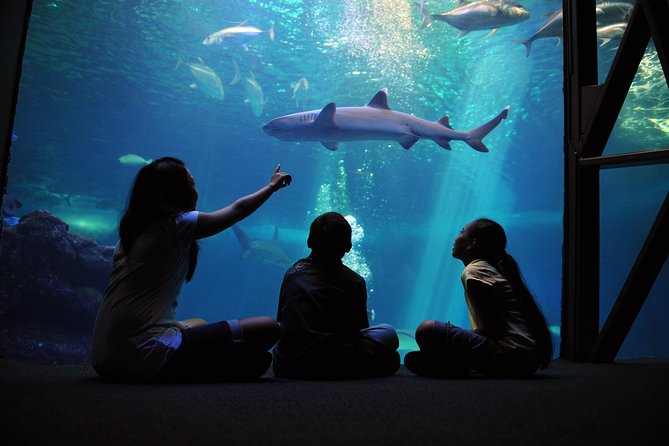
- The 750,000-gallon Open Ocean tank is the largest attraction: Look for sharks, rays, and other Pacific animals in the clear tunnel and viewing areas.
- Presentations add value: Turtle Lagoon, Shark Nursery Bay, Discovery Pool, Living Reef, and Nursery Bay have scheduled talks.
- Parking costs extra: Paid parking is $3 per hour through the ParkLinq app or a QR code at arrival.
What kind of aquarium is Maui Ocean Center?
Maui Ocean Center is not a giant city aquarium with animals from every continent. Its purpose is more specific: to explain Hawaii’s ocean environment through more than 60 exhibits, cultural demonstrations, live animals, and conservation messages.
That focus gives the visit a sense of place. You are not simply looking at colorful fish. You are learning about Hawaiian waters, coral reefs, native species, whales, and the relationship between island culture and the sea.
The facility is at 192 Maalaea Road in Wailuku, in the Maalaea area. It is easy to walk around, and most of the main exhibits are accessible. A few presentation areas use stairwells and uneven rock features, so anyone with mobility concerns should take extra care and ask staff for the easiest route.
The standard visit takes about two hours. I would allow closer to three hours if you want to attend several presentations, watch the whale film, stop at the touch pool, and read the signs. An ocean enthusiast could spend four or five hours here without rushing.
A few more options to weigh up in Maui
- Maui Pineapple Farm Tour in Haliimaile
★ 5.0 · 2,855 reviews - Maui Eco-Raft Tour: Eye-Level Whale or Dolphin Watching – Lahaina
★ 5.0 · 2,482 reviews - Maui Snorkeling Adventure to Molokini and Turtle Town
★ 4.5 · 2,221 reviews
Start with the 3D Humpback Whales of Hawʻai Sphere
The Humpback Whales of Hawʻai 3D Sphere is the attraction that gives the aquarium its emotional punch. The presentation creates the feeling of being close to humpback whales beneath the surface. It is brief, but the large-format setting makes the whales feel far more immediate than a standard aquarium screen.
I would plan this early in your visit. That way, you can use the rest of the day to explore the animals and displays that give the film more meaning.
The experience may not be suitable for children under five. Since age rules can change, check the current policy before you book if you are visiting with preschool-age children. This is also not a long movie, so keep your expectations in check. It is a memorable extra, not a full-length theater attraction.
For many people, the whale sphere is worth a good part of the admission price by itself. If whales are your main reason for coming, this is the first feature to prioritize.
Follow the Living Reef to the Open Ocean
The Living Coral Reef Exhibit is one of the strongest reasons to visit. It features a large collection of live Pacific corals, along with reef fish that depend on these fragile habitats.
The value here is scale and detail. Coral can be easy to overlook while snorkeling, especially when you are concentrating on fish. In an aquarium setting, you can look closely at the structure, colors, and movement of the reef without waves, masks, or sun glare getting in the way.
Some people expect even more coral displays, so coral specialists may find the collection smaller than hoped. Still, the exhibit gives you a useful introduction to how reef systems work and why coral health matters to Hawaii.
From there, continue to the 750,000-gallon Open Ocean exhibit. This is the aquarium’s major tank, with sharks, stingrays, and other Pacific marine life moving through a large underwater setting. The clear tunnel is especially good for photographs, and you may see a manta ray or watch sharks pass overhead.
The Open Ocean area is also where the aquarium feels most dramatic. Smaller tanks reward careful looking, but this large tank gives you a sense of the size and movement of the sea.
Make time for turtles, sharks, and the touch pool
Turtle Lagoon offers a calmer encounter with Hawaiian sea turtles. A daily marine naturalist presentation takes place at 10:30 a.m. and 2:30 p.m.
I recommend choosing the presentation that fits your schedule rather than trying to catch everything. The talks help turn a quick look at the turtles into a better understanding of their behavior and place in Hawaii’s marine environment.
Shark Nursery Bay has presentations at 11:45 a.m. and 1:45 p.m. This is a good stop for children, especially those fascinated by sharks but not yet ready for a long museum visit. The smaller setting makes it easier to see the animals and follow the explanation.
The Tide Pool Tactile Discovery area adds a hands-on element. You can use two fingers to touch marine animals under staff direction. That detail matters: this is not a free-for-all touch tank. The controlled approach helps you get close without treating the animals like toys.
The Discovery Pool is another place where the aquarium works well for young children. The mix of looking, listening, and careful touching keeps the visit active.
A different kind of day out entirely:
- Maui: Haleakala Sunrise Spectacular with Local Breakfast
★ 4.5 · 2,155 reviews - Maui Snorkeling Adventure From Ma’alaea Harbor to Molokini
★ 4.5 · 1,997 reviews - Maui: Turtle Town Snorkel with Photo and Video
★ 5.0 · 1,916 reviews - Road to Hana Adventure Maui Tour with Lunch
★ 5.0 · 1,832 reviews
Use the presentations to give the visit structure
You can wander through the aquarium at your own pace, but the daily presentations provide a useful schedule. Ocean naturalists speak at Turtle Lagoon, Open Ocean, Discovery Pool, Living Reef, and Nursery Bay.
The talks are especially valuable if you know little about Hawaiian marine life. Rather than reading every sign, you can hear the key points and then return to the exhibits that interest you most.
A practical plan looks like this:
- Arrive near 9 a.m. and check the day’s presentation times.
- See the whale sphere before the aquarium becomes busier.
- Visit Living Reef and Open Ocean next.
- Attend either the 10:30 a.m. Turtle Lagoon talk or the 11:45 a.m. Shark Nursery Bay presentation.
- Use the touch pool and smaller exhibits before lunch.
- Return for the 1:45 p.m. shark talk or 2:30 p.m. turtle talk if you are staying all day.
You do not need to attend every talk. Two or three presentations are enough to add substance without making the visit feel like a school timetable.
How long should you plan to stay?
The advertised duration is about two hours, and that is realistic for a straightforward visit. You can see the main exhibits, watch the whale presentation, and spend time at the largest tanks in that period.
Families with small children may finish even faster. A group moving briskly can see the aquarium in under an hour, especially if nobody reads the exhibit signs or waits for presentations.
I would plan on three hours for a more satisfying first visit. That gives you time for the Open Ocean tank, coral exhibits, touch pool, cultural activity, and at least one scheduled talk.
The all-day ticket matters most if you are staying near Maalaea or combining the aquarium with a relaxed day in the area. You can leave and return during the same day if the ticket terms allow it, but confirm the current reentry details before relying on that plan. The clear advantage is flexibility from opening at 9 a.m. until closing at 5 p.m., with final entry at 4 p.m.
Cultural activities add more than fish tanks
The Maui Ocean Center includes cultural activities, including a wood carving demonstration. This helps broaden the visit beyond animal identification.
The center connects the ocean with Hawaiian life and local culture. That context is important. Hawaii’s marine environment is not merely a backdrop for a holiday. It is part of the islands’ food traditions, stories, economy, and daily life.
You may find the cultural portion brief compared with the animal exhibits, but it gives the aquarium a stronger local identity. If you want a purely technical aquarium, this may feel like a side feature. If you want to understand Maui through its relationship with the sea, it adds real value.
The conservation message also runs through the displays. The aquarium emphasizes ocean awareness, coral restoration, and the importance of protecting marine habitats. That makes the visit worthwhile even when a particular tank is small or less active.
Is $55.44 a fair price?
At $55.44 per person, this is not a bargain attraction. The price makes the most sense if you use the all-day access, attend presentations, watch the whale sphere, and spend time with the coral and Open Ocean exhibits.
For a quick one-hour walk-through, the cost may feel steep. Several people have found the aquarium smaller than expected, especially after comparing it with major facilities in Monterey or Salt Lake City. Those comparisons are fair, but they also set a very high bar.
Maui Ocean Center is a medium-sized aquarium with a local mission. You are paying for the Hawaii-specific collection, the whale sphere, the educational staff, the touch experiences, and the conservation work, not for hundreds of huge tanks.
Food and drinks are not included. Parking is also separate at $3 per hour, paid with the ParkLinq app or by scanning the QR code when you arrive.
Seascape Restaurant is on site and serves island-inspired food and fresh catch specials. It is useful if you want to make the aquarium part of a longer outing rather than rush through and leave hungry. The Maui Ocean Treasures gift shop provides another stop before you go.
Who will enjoy this most?
I would recommend Maui Ocean Center to families with young children, couples who want a break from outdoor activities, and anyone interested in Hawaiian fish, coral, turtles, or whales.
It is also a smart option for a hot, rainy, or windier part of the day. The indoor exhibits give you a comfortable change from beaches and scenic drives.
Children often connect quickly with the sharks, turtles, rays, and touch pool. The paths are easy to follow, and there are plenty of photo opportunities. Parents should still keep a close eye on toddlers, especially near open areas and the nearby playground.
Older children and adults will get more from the visit if they read the signs or attend presentations. The aquarium can feel short if you treat it as a quick photo stop, but it becomes more rewarding when you pay attention to the local conservation message.
It may not satisfy serious aquarium fans looking for a facility the size of Monterey Bay Aquarium. It also may not suit you if you want a full-day attraction packed with rides, shows, or large-scale entertainment.
Timing, parking, and practical details
Your mobile ticket should be ready at entry. The listed starting time is 9 a.m., and admission is available through the day until final entry at 4 p.m. The aquarium closes at 5 p.m.
Because the experience is self-guided, you do not need to arrive as part of a tour group. Public transportation is nearby, and service animals are allowed. Most people can take part, but some presentation spaces have stairwells and rock features that may be difficult for people with limited mobility.
If you are coming from a cruise ship dock, check transportation costs before committing. One account reported spending about $100 round trip by taxi, which can change the value calculation dramatically. A rental car or public transportation may make more sense, depending on your plans.
Book at least a few weeks ahead if your schedule is fixed. This attraction is booked an average of 19 days in advance, which suggests that popular Maui dates can fill early.
The cancellation policy is generous if you plan carefully. Cancel at least 24 hours before the start time for a full refund. Changes or cancellations inside that window are not accepted, and the payment is not refunded.
My final call: book it if you value local marine life
I would book Maui Ocean Center if you want a manageable, educational look at Hawaii’s ocean life and you will take time for the whale sphere, presentations, touch pool, and Open Ocean tank.
I would skip it if your only goal is to see the biggest aquarium in the Pacific or if you plan to spend less than an hour inside. The price is easier to justify as a half-day outing than as a quick stop.
For the best value, arrive early, attend two presentations, allow at least three hours, and use the restaurant or gift shop to extend the visit. Families, first-time Maui visitors, and ocean lovers should find plenty to enjoy. Aquarium veterans should come for the Hawaiian focus, not the size.
FAQ
Where is Maui Ocean Center located?
Maui Ocean Center is located at 192 Maalaea Road, Wailuku, Hawaii 96793.
What time can I enter Maui Ocean Center?
All-day admission allows entry from 9 a.m. until 4 p.m. The aquarium closes at 5 p.m.
How long does a visit usually take?
The expected visit lasts about two hours. You can spend longer if you attend presentations, read the displays, eat at the restaurant, or revisit exhibits.
What does the admission ticket include?
Admission includes all-day access, more than 60 exhibits, the Humpback Whales of Hawʻai 3D Sphere, cultural activities, the touch pool, marine naturalist presentations, Shark Nursery Bay, Turtle Lagoon, and the Living Coral Reef Exhibit.
Is the 3D whale experience included?
Yes. The Humpback Whales of Hawʻai 3D Sphere is included with admission.
What animals can I see?
You can see sharks, stingrays, turtles, tropical reef fish, octopuses, eels, sea jellies, live Pacific corals, and other marine life native to Hawaii.
Are food and drinks included?
No. Food and drinks are not included. Seascape Restaurant is on site and serves fresh catch specials and island-inspired cuisine.
Do I have to pay for parking?
Yes. Parking costs $3 per hour and is paid through the ParkLinq app or by using the QR code upon arrival.
Are service animals allowed?
Yes. Service animals are allowed, and most people can participate in the experience.
Can I cancel for a refund?
Yes, if you cancel at least 24 hours before the experience start time. Cancellations or changes made less than 24 hours in advance are not accepted and are not refunded.
Just added in Maui
- Maui: Whale Watching Cruise with Open Bar from Ka’anapali Beach★ 5.0 · 802 reviews
- Maui Premium Sunset Dinner Cruise & Whale Watch★ 4.5 · 504 reviews
- Whale Watching from Ma’alaea Harbor★ 5.0 · 537 reviews
- West Maui Half Day Snorkel from Ka’anapali Beach★ 5.0 · 1,253 reviews
- West Maui and Molokai Special 45-Minute Helicopter Tour★ 5.0 · 759 reviews
- Turtle Reef Kayak Tour of Makena, Maui★ 4.5 · 328 reviews
- Maui Snorkeling Boat Tour to Turtle Town Aboard Quicksilver★ 4.5 · 542 reviews
- Water Bike Tour in South Maui★ 5.0 · 372 reviews
Maui Tours, compared.


Maui Snorkeling Adventure to Molokini and Turtle Town
Read our review →
Haleakala Sunrise Spectacular with Local Breakfast
Read our review →
Maui Snorkeling Adventure From Ma’alaea Harbor to Molokini
Read our review →



Maui Nui Luau at the Sheraton Maui Resort & Spa
Read our review →Browse the lists this tour appears in