
Reviewed · THE USA
Santa Fe Revisited
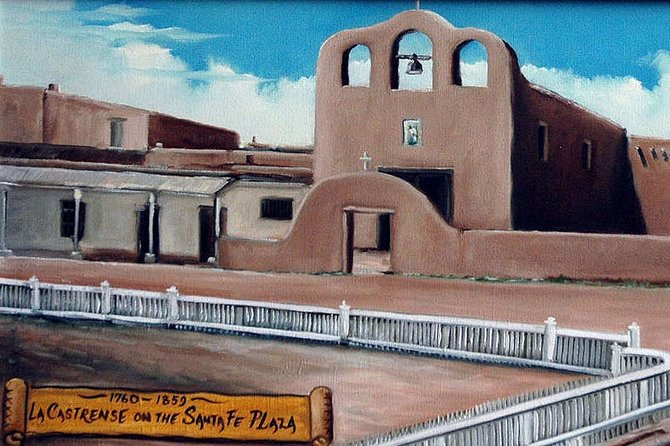
Santa Fe rewards a slower look. This 2-hour-15-minute walking tour makes the city’s old buildings, churches, legends, and political past easier to understand, with local historian and author Ana Pacheco leading the way. Her hometown connection gives the walk a personal feel, while her use of photos in a binder helps bring vanished places and earlier eras into view.
I especially like the small group size, capped at 10 people, and the unusually long tour time. You get room for questions instead of being hurried from one stop to the next. I also like the broad sweep of the subject, from Native American and Spanish beginnings to Mexican rule, American expansion, and the Manhattan Project. The main drawback is that entry into the churches and Loretto Chapel is not included, so this is primarily an outdoor history walk.
In This Review
- Key points to know before booking
- Why Ana Pacheco changes the feel of the walk
- Starting at the Cathedral Basilica and Santa Fe Plaza
- 109 East Palace and the Manhattan Project connection
- Palace of the Governors and the story of New Mexico’s pueblos
- Loretto Chapel and the Miraculous Staircase
- Burro Alley and the less polished side of old Santa Fe
- Ending at San Miguel Chapel
- How much walking and time should you allow?
- Is $80 a fair price?
- Who will enjoy this Santa Fe walk?
- Practical details before you reserve
- Should you book Santa Fe Revisited?
- FAQ
- How long is the Santa Fe Revisited tour?
- What time does the tour start?
- Where does the tour begin?
- Where does the tour end?
- Is admission to Loretto Chapel included?
- Are church interiors visited during the tour?
- What is the cancellation policy?
Key points to know before booking
- Ana Pacheco brings hometown authority: She grew up in Santa Fe and has written seven or eight books about the city and its past.
- The tour lasts about 2 hours and 15 minutes: That is longer than many city walks and allows time for context and questions.
- The route links major historic sites: You visit the Cathedral Basilica, Santa Fe Plaza, 109 East Palace, Palace of the Governors, Loretto Chapel, Burro Alley, and San Miguel Chapel.
- Church admission is separate: You can enter some places on your own, but guided entry is not part of the experience.
- The group is limited to 10 people: This suits anyone who wants a more personal pace and a chance to ask questions.
- The tour begins at 10:00 a.m.: It starts at the Cathedral Basilica of St. Francis of Assisi and ends at San Miguel Chapel.
Why Ana Pacheco changes the feel of the walk
A city can hand you dates and names, but a strong guide shows you how those facts connect. Ana Pacheco’s background is central to this experience. She is a Santa Fe native, an author of multiple books about local history, and an experienced speaker who uses humor and visual material to keep the past from feeling like a list of textbook entries.
That matters in Santa Fe because the city’s story is not simple. Native communities, Spanish settlers, Mexican authorities, American officials, artists, religious institutions, and military researchers all left their mark here. The same plaza or street can carry several layers of meaning, depending on the period you are discussing.
Ana’s style appears to suit people who want substance without a dry lecture. The strongest praise focuses on her ability to explain difficult or overlooked parts of local history clearly, while still keeping the pace lively. She also brings a binder of photographs, which is especially useful when discussing older buildings, changed streets, and events that are no longer visible.
The private format adds another benefit. With no more than 10 people, you should be able to hear the guide and ask for clarification. If your group is especially interested in architecture, Native history, religion, art, or the Manhattan Project, a small group makes it easier to spend a little more time on those subjects.
Other trips worth a look in the USA:
- NYC: SUMMIT One Vanderbilt Tickets
★ 4.7 · 51,195 reviews - NYC: 9/11 Memorial & Museum Timed-Entry Ticket
★ 4.8 · 31,428 reviews - NYC: Empire State Building Tickets – Observatory & Museum
★ 4.7 · 25,757 reviews
Starting at the Cathedral Basilica and Santa Fe Plaza
The tour begins at 10:00 a.m. outside the Cathedral Basilica of St. Francis of Assisi at 131 Cathedral Place. This is a sensible starting point because the surrounding area gathers several of the city’s major stories in a compact space.
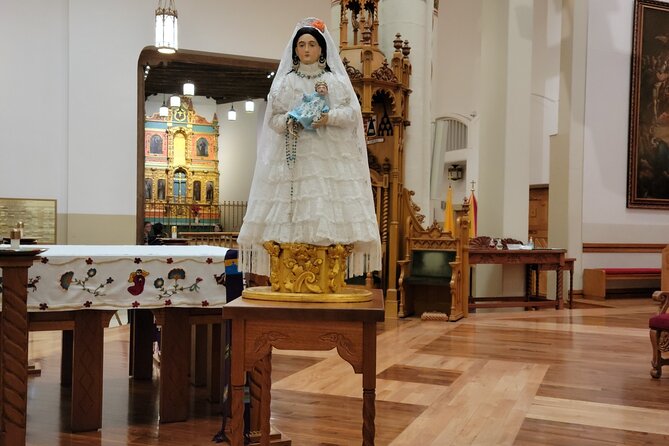
Here you learn about La Conquistadora, described as the oldest Madonna in the United States. The statue offers a way into Santa Fe’s Spanish and Catholic past, but the guide also places that tradition beside the older Native cultures of the region. That wider frame is important. Santa Fe did not begin with one arrival or one building. Its identity grew through contact, conflict, adaptation, and change.
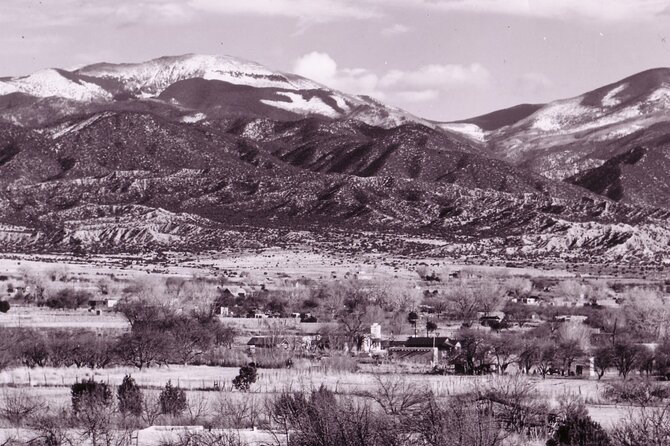
The nearby Santa Fe Plaza becomes the main stage for the city’s story. From here, Ana explains roughly four centuries of Native American, Spanish, Mexican, and American history. You also get an introduction to Santa Fe’s art and architecture, two subjects that are hard to separate from daily life in the historic center.
I would pay close attention to the way the buildings look from the outside. The tour is not only about famous names. It helps you read adobe forms, church design, public spaces, and the visual mixture that makes central Santa Fe distinctive.
The Cathedral does not allow guided tours inside, so do not expect to enter as part of the walking experience. You can visit on your own, subject to the church’s access rules, either before or after the tour. This is one of the most important practical details to understand before booking.
109 East Palace and the Manhattan Project connection
The brief stop at 109 East Palace lasts about five minutes, but the subject is much larger than the address suggests. During World War II, this location served as a military checkpoint connected with the Manhattan Project.
That detail gives Santa Fe a surprising connection to one of the most consequential scientific and military efforts in modern American history. It also shows why a local guide is useful. A visitor walking past the address alone might see an ordinary part of the city. Ana supplies the missing context.
The short stop also helps the overall structure of the tour. Santa Fe’s past is not presented as a single old Spanish chapter. The route moves across centuries, showing how the city remained tied to national and world events.
Palace of the Governors and the story of New Mexico’s pueblos
The Palace of the Governors is presented as the oldest government building in the United States. Its importance is political as well as architectural. This is where the tour turns toward the institutions that governed Santa Fe and the people who lived under those systems.
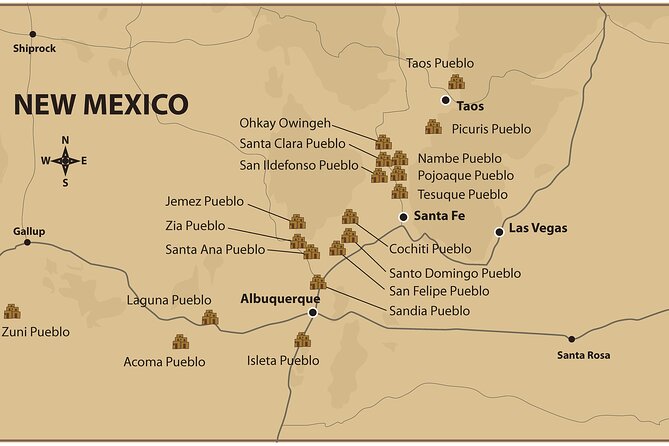
A key part of the discussion concerns New Mexico’s 19 Indian Pueblos. That subject adds necessary depth to any account of Santa Fe. The city’s Spanish and American buildings are only one part of the story, and the pueblos remain essential to understanding the region’s cultures and political history.
I appreciate that the tour does not treat Native history as a decorative footnote. The route includes a separate discussion of the only United States government building designed as a Native American symbol. The supplied details do not identify the building by name, but the point is clear: public architecture in Santa Fe can carry messages about identity, power, and cultural representation.
Because the Palace of the Governors is a major public landmark, you may want to plan extra personal time around the tour if you wish to explore its interior. The walking experience focuses on explanation from the street and on the larger story of the building.
A different kind of day out entirely:
- NYC: Empire State Building Observation Deck Tickets
★ 4.7 · 22,072 reviews - NYC: Edge Observation Deck Admission Ticket
★ 4.6 · 20,918 reviews - Grand Canyon West, Hoover Dam Stop and Optional Lunch and Skywalk
★ 5.0 · 19,535 reviews - New York City: Statue of Liberty & Ellis Island with Ferry
★ 4.6 · 18,683 reviews
Loretto Chapel and the Miraculous Staircase
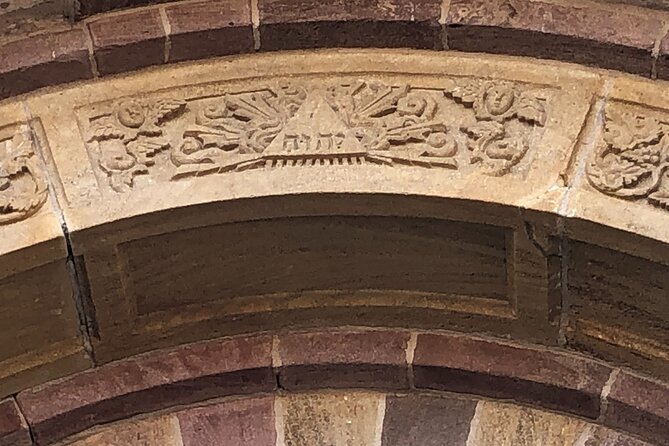
Loretto Chapel is one of the most recognizable stops on the route. Built in 1878 by Archbishop Lamy for the Sisters of Loretto Academy, the small Gothic Revival chapel was inspired by Sainte-Chapelle in Paris.
Its famous feature is the spiral staircase built between 1877 and 1881. The staircase makes a full 360-degree turn and became known as the Miraculous Staircase because of its unusual construction and the legend that Saint Joseph the Carpenter built it. The story is part of Santa Fe’s religious folklore, but the building also has a more documented architectural history, including its connection to architect Antoine Mouly.
The chapel closed in 1968 and was later deconsecrated by the Catholic Church. It now operates as a privately owned museum. Admission is not included in the tour price, so you will need to pay separately if you want to go inside.
This stop works best if you treat the guide’s explanation and the interior visit as two separate parts. Ana can give you the setting and the story from outside, then you can enter independently before or after the walk. Several people who joined the tour had already seen the sites from the outside and were satisfied with a historical explanation, but the choice depends on your priorities.
If the staircase is a must-see for you, allow extra time in your Santa Fe schedule. Do not assume the 10-minute stop includes a full visit.
Burro Alley and the less polished side of old Santa Fe
Burro Alley is a short street linking Palace Avenue and San Francisco Street. Its name comes from the burros once tied there by vendors who brought salt from the Galisteo Salt Basin and firewood from the surrounding mountains.
While the animals rested, the vendors visited nearby saloons and brothels. The corner near Palace Avenue was also associated with the gambling hall run by María Gertrudis Barceló, better known as Doña Tules.
This is the kind of stop that makes a walking tour worthwhile. Burro Alley is small and easy to overlook, yet its story reveals the working life and rougher social world behind Santa Fe’s grand churches and government buildings. It also helps correct the idea that old Santa Fe was only a quiet religious or administrative center.
The stop lasts about five minutes and does not require an admission ticket. You will not spend long there, but the tale gives the surrounding streets more character when you explore them later on your own.
Ending at San Miguel Chapel
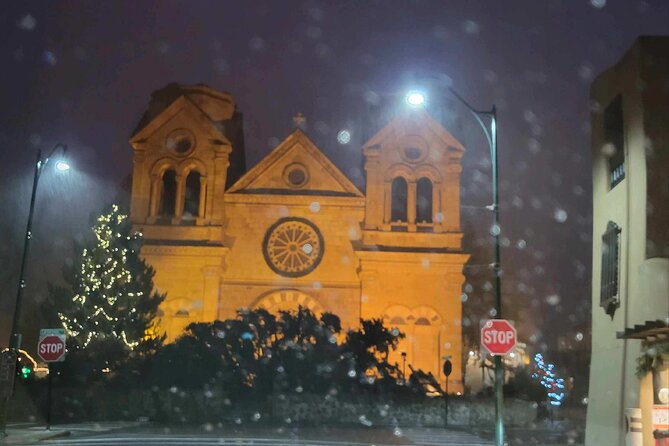
The route ends at San Miguel Chapel, located at 401 Old Santa Fe Trail. It is described as the oldest church in the country, adding another major religious landmark to a route already filled with sacred buildings.
The chapel provides a fitting final point because the tour has already introduced Spanish settlement, Catholic traditions, Native cultures, architecture, and the city’s long political story. You finish with a better sense of how these themes overlap rather than sit in separate boxes.
The endpoint also gives you a useful place from which to continue exploring. Since the tour begins at the Cathedral and ends at San Miguel Chapel, it is not a loop. Plan your day with that in mind, especially if you are coordinating lunch, parking, or another scheduled activity.
How much walking and time should you allow?
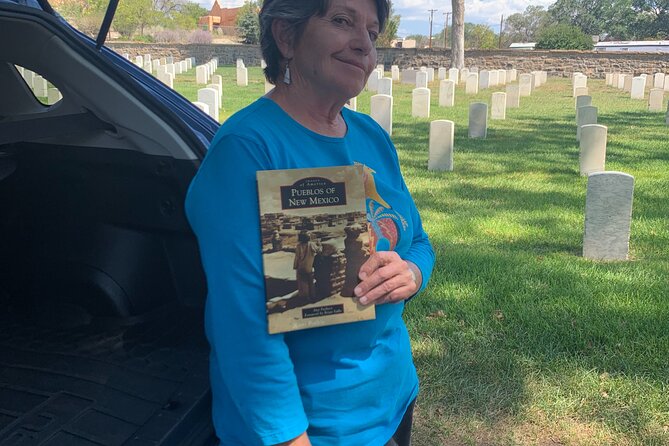
The official duration is approximately 2 hours and 15 minutes. The itinerary lists several short stops, but the real value lies in the explanations between them. This is not a quick photo walk. It is built around discussion, interpretation, and a steady connection between places.
The pace has been described as easy and well judged. Still, you should expect to be on foot for more than two hours, often outdoors. Wear comfortable shoes and consider the weather when you book. The experience requires good weather, and poor conditions can lead to a rescheduled tour or a full refund.
The start time is 10:00 a.m., which works well for placing the tour near the beginning of your Santa Fe visit. You will get a framework for later sightseeing, and you can return to the Cathedral, Loretto Chapel, Palace of the Governors, or San Miguel Chapel with more context.
Mobile tickets make arrival simple, and the meeting point is near public transportation. Service animals are allowed, and most people can participate. The group limit is 10, which keeps the walk more personal than a large coach-style city tour.
Is $80 a fair price?
The cost is $80 per person. That is not the cheapest way to see Santa Fe’s historic center, but the comparison should be with the quality and length of the explanation, not just the number of stops.
You are paying for a private guide format, a small group, more than two hours of instruction, and a guide who has spent years researching and writing about the city. If you mainly want exterior photographs and a quick orientation, the price may feel high. You can walk around the Plaza area on your own for free.
The value improves if you want to understand what you are seeing. Ana’s local background, book research, visual binder, and ability to connect several historical periods give the walk more substance than a basic sightseeing circuit. The tour also saves you from trying to piece together Santa Fe’s complicated past from separate signs and guidebooks.
Remember to budget separately for Loretto Chapel and any other site admission you choose to pay. The tour price covers the guided walk, not entry into the churches or private museum.
Who will enjoy this Santa Fe walk?
I would choose this experience if you like history, architecture, religion, Native cultures, political stories, or the social details of old cities. It is especially useful for a first visit because the route gives you a working map of central Santa Fe and a timeline for what you will see afterward.
It also suits repeat visitors. Several people had already visited the landmarks but had not gone inside them, and they still valued the historical background. That makes sense: seeing a building and understanding its role are two different experiences.
Families can benefit from the small group setting, since questions are easier to ask and the guide can clarify unfamiliar terms. Solo visitors and couples also get a more direct exchange with the guide than they would on a large group walk.
You may want a different experience if your priority is extensive interior access, art viewing, shopping, or a fast overview. The churches and Loretto Chapel are not toured inside with the group, and the central focus is history rather than food, galleries, or nightlife.
The tour is offered in English. It is booked, on average, about 27 days ahead, so advance planning is sensible if your Santa Fe dates are fixed.
Practical details before you reserve
The meeting point is the Cathedral Basilica of St. Francis of Assisi, 131 Cathedral Place. The tour ends at San Miguel Chapel, 401 Old Santa Fe Trail, so allow time to travel back to your starting point if needed.
Confirmation is provided at booking. Most people can participate, service animals are allowed, and public transportation is nearby. The tour requires a minimum number of participants, though the exact minimum is not provided.
You can cancel for a full refund up to 24 hours before the 10:00 a.m. start time. Cancellations or changes made within 24 hours are not refunded or accepted. If bad weather or an insufficient number of participants causes the company to cancel, you are offered another date or a full refund.
Should you book Santa Fe Revisited?
Book it if you want Santa Fe explained, not just photographed. Ana Pacheco’s local roots, writing background, humor, and visual aids make this a strong choice for anyone who wants the city’s Native, Spanish, Mexican, and American past placed in one clear story.
The best plan is to take it early in your stay, then revisit the buildings that catch your interest. Just remember that church and chapel entry is separate, the route ends away from its starting point, and the weather can affect the schedule.
At $80, this is a specialist history walk rather than a bargain stroll. For a curious visitor who values a personal guide and a fuller understanding of Santa Fe, it offers good value.
FAQ
How long is the Santa Fe Revisited tour?
The tour lasts approximately 2 hours and 15 minutes.
What time does the tour start?
The tour starts at 10:00 a.m.
Where does the tour begin?
It begins at the Cathedral Basilica of St. Francis of Assisi, 131 Cathedral Place, Santa Fe, New Mexico.
Where does the tour end?
It ends at San Miguel Chapel, 401 Old Santa Fe Trail, Santa Fe, New Mexico.
Is admission to Loretto Chapel included?
No. Admission to Loretto Chapel is not included in the tour price.
Are church interiors visited during the tour?
Guided entry into the churches is not included. You may enter certain sites on your own before or after the walking tour.
What is the cancellation policy?
You can cancel at least 24 hours before the start time for a full refund. Cancellations or changes made less than 24 hours before the tour are not refunded or accepted. If poor weather or an insufficient minimum group causes cancellation, you are offered another date or a full refund.
Just added in the USA
- Atlanta: Zoo Atlanta General Admission Ticket★ 4.5 · 712 reviews
- NYC: Woodbury Common Premium Outlets Shopping Trip★ 4.2 · 761 reviews
- Wynwood Art District 1-Hour Street Art Tour by Golf Cart★ 4.9 · 492 reviews
- Zoo Miami: General Admission Ticket★ 4.5 · 868 reviews
- Willow Beach: Black Canyon Kayak Half Day Tour-No Shuttle★ 4.9 · 323 reviews
- From San Francisco: Napa & Sonoma Valley Full-Day Wine Tour★ 4.5 · 513 reviews
- Newport Beach: 2-Hour Whale Watching Tour★ 4.2 · 1,375 reviews
- New York City: Private Walking Tour with a Local★ 4.6 · 771 reviews