
Reviewed · WASHINGTON DC TOURS
Skip-the-line National Archives Building Exclusive Guided Tour
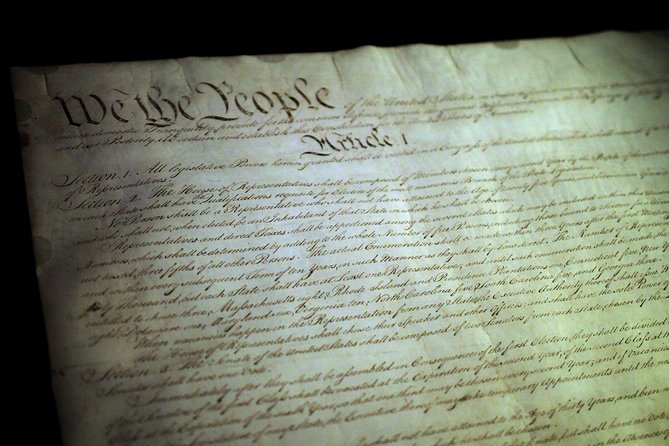
America’s founding papers are surprisingly small. That is part of what makes this Washington, DC tour so compelling: you get close to the original Constitution, Declaration of Independence, and Bill of Rights, then place them in a wider story that includes the Magna Carta, presidential letters, and the Emancipation Proclamation. I especially like the small private format and the way guides such as Annemarie, Donna, Meghan, Ryan, and Kate bring the documents to life with stories rather than simply pointing at glass cases.
I also like that the visit covers more than the famous Rotunda. The Public Vaults and Rubenstein Gallery add useful context, including letters from George Washington and John F. Kennedy. The main concern is that the experience costs $105.73 per person, and the quality depends heavily on your guide. One recent guest felt the guide talked too fast, left too little time for questions, and spent too long talking in one spot instead of letting the group explore.
In This Review
- Key points to know before booking
- What you are really paying for
- Meeting the guide at Constitution Avenue
- The Rotunda and the documents that shaped the country
- Public Vaults: letters, presidential voices, and difficult chapters
- The Rubenstein Gallery and the Magna Carta
- Guides make or break the experience
- Families, older visitors, and wheelchair users
- Timing, crowds, and the meaning of skip-the-line
- Is $105.73 good value?
- Booking, cancellation, and practical limits
- Should you book this National Archives tour?
- FAQ
- Where does the National Archives tour begin?
- Where does the tour end?
- How long does the experience last?
- What documents will I see?
- How many people can join the private tour?
- Is the tour wheelchair accessible?
- Can I cancel for a full refund?
Key points to know before booking
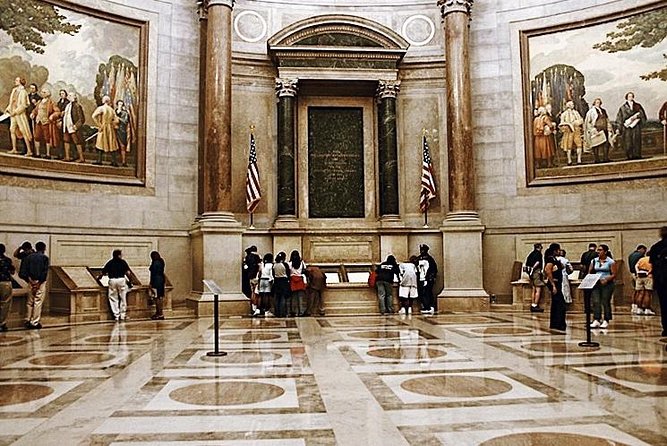
- Original founding documents: See the Declaration of Independence, Constitution, and Bill of Rights in the National Archives Rotunda.
- A private group of up to eight: Your own group participates, unless you select the lower-priced semi-private option.
- More than the Rotunda: The route can include the Public Vaults, Rubenstein Gallery, Magna Carta, presidential letters, and the Emancipation Proclamation.
- Strong guide feedback: Annemarie, Donna, Meghan, Ryan, Kate, and Marybeth receive repeated praise for clear storytelling and personal attention.
- Plan for security and crowds: Skip-the-line access does not guarantee instant entry, and only small bags are allowed.
- Best for history-minded families: Children as young as seven were kept engaged by Meghan, according to one family’s experience.
What you are really paying for
Admission to the National Archives Museum itself is listed as free. Your payment is for the private guided service, not an entrance ticket. At $105.73 per person, this is a serious add-on, especially for a family of four. I would not book it simply to get inside the building. I would book it if you want a person beside you to explain why these documents matter, connect them to other exhibits, and guide you through a busy museum without wasting time.
The private format helps justify the price. A maximum of eight people keeps the group small enough for questions and makes it easier for the guide to adjust the pace. If you book the fully private option, the guide is exclusively for your group. That gives you a better chance to ask about a particular founder, document, or exhibit than you would on a large group walk.
The semi-private option costs less, but the supplied details say it does not include an exclusive guide or the same wheelchair-friendly provision. Check the exact option carefully before paying. The cheaper choice may suit you if price matters more than privacy, but the private version is the more personal experience.
The tour usually lasts between 90 minutes and two hours. That is a good length for a museum visit with a guide. It is long enough to explain the main documents without taking up half your day, yet short enough to fit around the National Mall and other Washington sights.
A few more options to weigh up in Washington DC
- DC Memorials Night Tour: Glass-Roof Convertible Upgrade Option
★ 4.5 · 6,933 reviews - National Mall Monuments Night Tour with 10+ Stops, Entry Tickets
★ 4.5 · 4,863 reviews - Washington DC Monuments by Moonlight Tour by Trolley
★ 4.5 · 3,956 reviews
Meeting the guide at Constitution Avenue
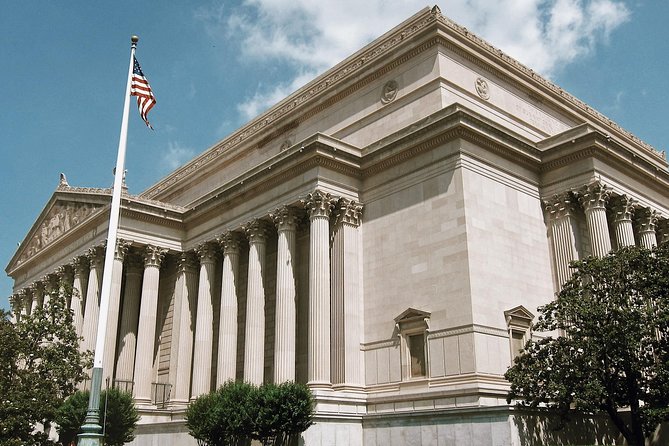
You meet at the National Archives Museum, 701 Constitution Ave. NW, Washington, DC 20408. The tour ends at the same place, so you do not need to arrange a return transfer. Hotel pickup and drop-off are not included, and the operator recommends using a taxi or Uber to reach the museum.
The building is easy to place on a sightseeing map because it sits close to the National Mall. Public transportation is nearby, according to the tour details, but you should still allow time to find the entrance and pass through security. Confirmation arrives when you book, which makes the meeting instructions easy to keep on your phone.
Arrive ready for a security check. Large bags and suitcases are not allowed inside. You can bring a handbag or a small, thin backpack, but it is wise to carry as little as possible. Security can also create a line even with skip-the-line access. That phrase means the tour is designed to reduce ordinary waiting, not that you will walk through every checkpoint without delay.
Dress appropriately for entry into museum areas. Some rooms require very quiet behavior or limit speaking, and the guide explains those rules before you enter. This is a place for looking closely and listening, not for casual chatter in every gallery.
The Rotunda and the documents that shaped the country
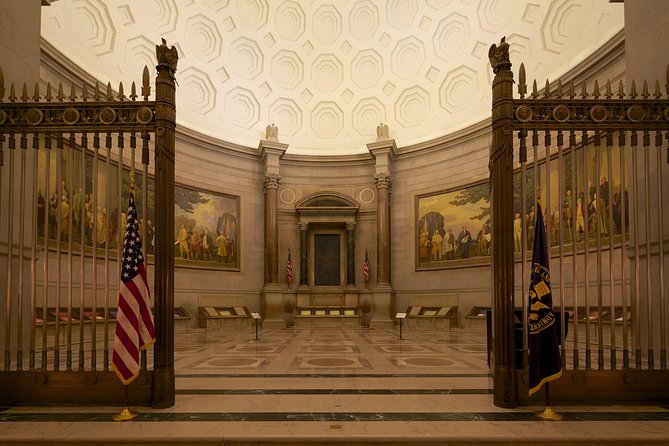
The National Archives Rotunda is the emotional center of the visit. The neoclassical room is designed to feel important, almost like a civic temple, and the documents are displayed behind protective glass. You will see the original Declaration of Independence, Constitution, and Bill of Rights.
Seeing the actual papers changes the scale of the story. These are not giant posters or clean modern reproductions. They are old working documents, signed and written by people who were trying to build a government under pressure. The handwriting, faded ink, and compact pages make the political arguments feel more human.
Your guide should help you notice details that are easy to miss on your own. The tour includes discussion of the Federalist Papers and the founders connected to them, including Alexander Hamilton. The value here is not simply naming famous men. A good explanation shows how these documents relate to one another and why the words on the page still shape American government.
The Rotunda can be crowded. Annemarie was praised for moving a family through busy areas while still explaining the building and documents. Meghan received similar praise for getting a group to the key displays quickly and keeping the information going as the crowd shifted around them. That practical crowd handling matters. A guide who can find a clear viewing position may give you more time with the papers than you would manage alone.
One caution: guided attention can also become too fixed. A recent family felt their guide spent 30 to 45 minutes talking in the center of a room while passing over many nearby displays. If you prefer to browse every case at your own pace, a private guide may feel restrictive unless you say clearly that you want time to look around.
Public Vaults: letters, presidential voices, and difficult chapters
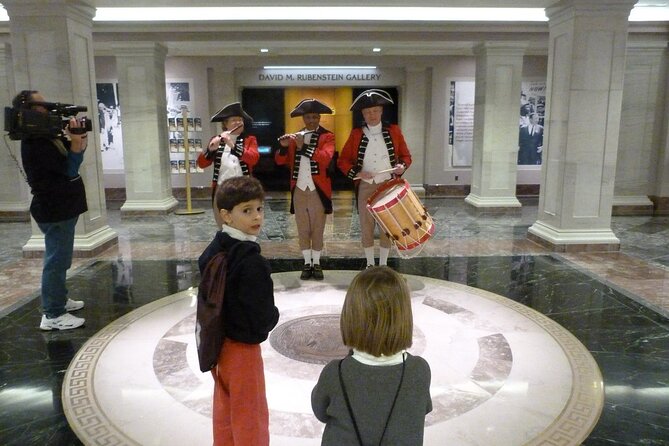
The Public Vaults Exhibits broaden the visit beyond the founding documents. Here you may see letters from George Washington and John F. Kennedy, along with other records that show how national decisions were made and communicated.
This part is valuable because it moves the story from the abstract language of constitutions to the personal voices of leaders. A letter can show hesitation, urgency, personality, or conflict in a way that a formal government document cannot. Guides have been praised for adding background stories and explaining how the documents came about, rather than treating each display as an isolated object.
The Emancipation Proclamation is another major stop. Issued in 1863, it led to the abolition of slavery. A guide can place it within the wider development of American government and citizenship, helping you see that the country’s founding documents did not settle every question at the start. The Archives visit is strongest when it treats American history as an ongoing argument, not a finished achievement.
Collections can vary during the year, so the exact displays you see may not always be identical. The main documents in the Rotunda are the anchor, but the surrounding exhibits may change. That makes the guided explanation useful, since your guide can point out what is currently available and connect it to the larger story.
A different kind of day out entirely:
- Hop-on Hop-off Sightseeing Tour by Open-top Bus with 18 Stops
★ 3.5 · 3,848 reviews - Washington DC in One Day: Guided Sightseeing Tour
★ 4.5 · 3,360 reviews - DC Monuments and Capitol Hill Tour by Electric Cart
★ 5.0 · 2,841 reviews - Washington DC Moonlight Tour by Electric Cart
★ 5.0 · 2,610 reviews
The Rubenstein Gallery and the Magna Carta
The Rubenstein Gallery adds a much older piece to the tour: the Magna Carta of 1297. It was written long before the United States existed, but it influenced later ideas about law, rights, and limits on government.
This is an excellent contrast with the American founding papers. The Magna Carta reminds you that the language of liberty did not begin in 1776 or 1787. Political systems often borrow, adapt, and argue with earlier ideas. Seeing the document beside American records helps explain why certain principles appear in later constitutional writing.
You may find this section especially useful if you already know the names of the founding documents but want a clearer sense of their background. It gives the tour a longer timeline and keeps the visit from becoming a parade of familiar American icons.
The tour provider describes the route as taking you through the main galleries, but the exact amount of time in each room depends on the guide and the crowd. If the Magna Carta interests you, say so at the beginning. The private format should make that sort of request possible.
Guides make or break the experience
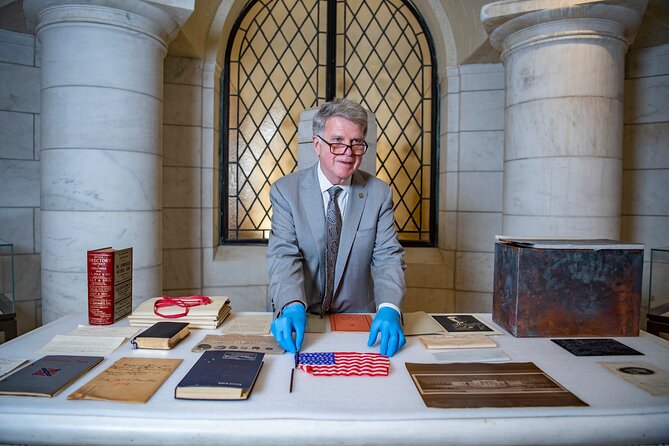
The strongest praise focuses on the guides. Annemarie is repeatedly described as warm, professional, and full of clear explanations about the founding documents, paintings, and building itself. Donna is praised for turning the visit into a personal history lesson and for arriving early to make sure the group felt welcome from the start.
Meghan receives especially strong family feedback. She kept seven and nine-year-old children interested, handled questions with ease, and used stories to make the material accessible. That is important because the Archives can look quiet and serious to children. A lively guide can help them understand that the papers represent real choices and disputes, not just old handwriting.
Ryan is praised for his command of the Archives and Washington, DC more broadly. One family appreciated his ability to answer unusual questions, while another noted his local background and university studies in history and biology. Kate is described as enthusiastic and well prepared, with a presentation that showed clear effort.
Marybeth is praised for going beyond the basic route and suggesting other things to see. That can be useful if you have limited time in Washington and want to build the rest of your museum day around the Archives.
Still, you should keep the less positive experience in mind. One guide talked too quickly, gave too much information at once, and seemed impatient when questions interrupted the planned explanation. That is not a reason to reject the tour, but it is a reason to use the private setting. Tell the guide early if you need a slower pace, have children with you, or want time to examine displays independently.
Families, older visitors, and wheelchair users
This tour suits families better than the solemn setting might suggest. Meghan’s ability to hold the attention of young children is a useful sign, and several family groups describe the storytelling as fun as well as educational. I would still prepare children beforehand by explaining that the most important objects are papers behind glass. The guide supplies the energy, but a little context from you will help.
The museum tour is described as wheelchair friendly when you choose the private option. The supplied details specifically warn that this does not apply to the semi-private choice, so select carefully if accessible arrangements are important. The tour requires a moderate level of physical fitness, though the information does not specify the precise walking distance or seating available in each gallery.
Older visitors may appreciate the guide’s help with navigation, especially during crowded periods. The main physical challenge may be standing while listening. If you need regular pauses, ask for them at the start rather than assuming the guide will know.
Timing, crowds, and the meaning of skip-the-line
The tour is often booked about 28 days ahead, which suggests that popular dates can fill well before your Washington trip. I would reserve early if your schedule is fixed, especially for a private group during a busy travel period.
Crowds are part of the practical picture. Even with skip-the-line access, increased security can cause waiting. Once inside, the Rotunda and other rooms may be crowded enough that your guide needs to move the group, wait for a viewing spot, or alter the order of the explanations.
The best timing advice from the supplied experiences is simple: go early when possible. An early start can mean fewer people around the displays and a less hurried visit. It also gives you more of the day for nearby sights after the tour.
Do not plan a tight connection immediately afterward. The advertised duration is approximately 1.5 to two hours, and delays can happen. Museum closures or delayed opening times can occur without warning. If the opening is delayed more than an hour, an appropriate alternative may be offered, but the terms say refunds or discounts are not provided in that situation.
Is $105.73 good value?
The answer depends on how you use museums. If you enjoy reading every label quietly and setting your own route, the free museum admission makes a self-guided visit attractive. You can save the tour fee and spend longer with the displays.
If you have one short morning in Washington, the price can make more sense. A guide helps you find the major documents, gives them a clear structure, and can answer questions while the experience is fresh. The small group also avoids the distance and noise that can make a large guided tour tiring.
I see the strongest value for families, first-time visitors to Washington, and people who want political context rather than a quick photograph of the Constitution. The value is weaker for repeat visitors who already know the galleries or who dislike being led from one stop to the next.
The 4.9 rating from 381 reviews and 97 percent recommendation rate point to a very reliable experience overall, but they should not hide the price or the guide variation. You are paying for interpretation, navigation, and personal attention. Make sure those are the things you want.
Booking, cancellation, and practical limits
Free cancellation is available if you cancel at least 24 hours before the start time. Cancellations within 24 hours are not refunded, and changes made inside that period are not accepted. The cutoff uses local Washington, DC time.
The maximum group size is eight. The tour is offered in English, includes a mobile ticket, and does not include gratuity. A tip is optional, but it is not part of the listed price.
The museum can occasionally close without advance warning, and some collections change during the year. Bring a phone with your confirmation, keep your bag small, and leave room in your schedule for security or an adjusted opening time.
Should you book this National Archives tour?
I would book it if you want the founding documents explained by a lively guide and you value a small, private group. It is particularly well suited to families, first-time Washington visitors, and anyone who wants to connect the Constitution and Declaration of Independence with the Magna Carta, presidential letters, and the Emancipation Proclamation.
I would skip it if you are happy to explore at your own pace, are watching your budget closely, or dislike extended explanations in crowded rooms. The museum admission is free, so the tour fee needs to earn its keep through good storytelling and efficient navigation.
For the best chance of a smooth visit, choose the fully private option, book ahead, go early, carry only a small bag, and tell your guide what interests you. With Annemarie, Donna, Meghan, Ryan, Kate, or a similarly strong guide, the Archives can become one of the most memorable stops on your Washington schedule. Just remember that the papers are the stars, and the guide’s job is to help you see why.
FAQ
Where does the National Archives tour begin?
It begins at the National Archives Museum, 701 Constitution Ave. NW, Washington, DC 20408, USA.
Where does the tour end?
The tour ends back at the National Archives Museum meeting point.
How long does the experience last?
The guided visit lasts approximately 1.5 to two hours.
What documents will I see?
You will see the U.S. Constitution, Declaration of Independence, and Bill of Rights. The route can also include the Federalist Papers, Magna Carta of 1297, Emancipation Proclamation, and letters from George Washington and John F. Kennedy.
How many people can join the private tour?
A maximum of eight people is permitted per tour. The exclusive guide provision does not apply if you select the semi-private option.
Is the tour wheelchair accessible?
The private tour is described as wheelchair friendly. The semi-private option does not include the same wheelchair-friendly provision.
Can I cancel for a full refund?
Yes. You can cancel at least 24 hours before the experience start time for a full refund. Cancellations or changes made less than 24 hours before the start time are not accepted, and no refund is provided.
Just added in Washington DC
- Washington DC: Monuments and Memorials Bike Tour★ 4.8 · 399 reviews
- Washington DC: Sightseeing Tour with Potomac River Cruise★ 4.7 · 311 reviews
- DC: Capitol Hill and Library of Congress Tour with Tickets★ 4.7 · 1,125 reviews
- No-Wait Washington Monument Direct Entry Tickets & Guidebook★ 4.5 · 465 reviews
- Washington DC Sites at Night Guided Bicycle Tour★ 4.5 · 536 reviews
- Washington DC Night-Time City Tour★ 4.5 · 435 reviews
- Hop-On Hop-Off 21 Stop Trolley Tour + Arlington Cemetery Tour★ 4.0 · 369 reviews
- City Cruises DC: Scenic Buffet Lunch Cruise★ 4.0 · 418 reviews
Washington DC Tours, compared.

DC Memorials Night Tour: Glass-Roof Convertible Upgrade Option
Read our review →
National Mall Monuments Night Tour with 10+ Stops, Entry Tickets
Read our review →
Washington DC Monuments by Moonlight Tour by Trolley
Read our review →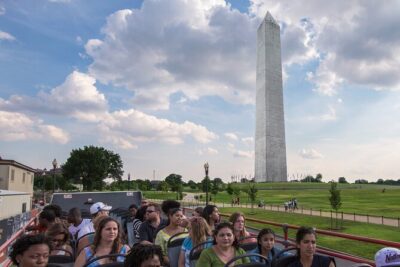
Hop-on Hop-off Sightseeing Tour by Open-top Bus with 18 Stops
Read our review →
Washington DC in One Day: Guided Sightseeing Tour
Read our review →
DC Monuments and Capitol Hill Tour by Electric Cart
Read our review →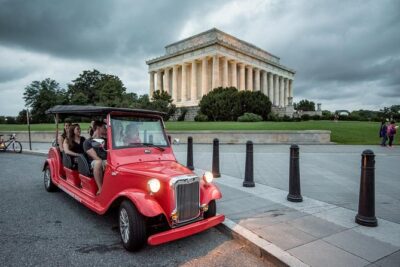
Washington DC Moonlight Tour by Electric Cart
Read our review →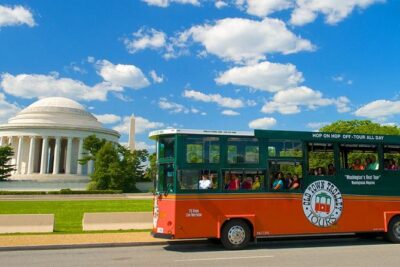
Washington DC Hop-On Hop-off Trolley Tour with 15 Stops
Read our review →Browse the lists this tour appears in