
Reviewed · FOOD & DRINK
Top 10 Sites + Bites of Cincinnati Tour with Riverside Food Tours
Cincinnati tells its story one bite at a time. Riverside Food Tours pairs six local tastings with downtown sights, from the Ohio River and Roebling Suspension Bridge to Findlay Market and Over-the-Rhine. I like the useful full-day streetcar pass, and I like the small groups, capped at 14 people. The main drawback is dietary: the tour cannot accommodate several common restrictions, including gluten-free, vegan, lactose-free, nut-free, or low-carb diets.
This is a smart first-day activity. Guides such as David, Jackie, and Mike bring local stories to the walk, and the food portions are substantial enough to feel like a light meal rather than a series of polite nibbles. You will walk for about 45 to 60 minutes over three hours, but the pace includes streetcar rides and regular stops. Monday visitors should note that Findlay Market is closed, so the final tasting changes.
In This Review
- Key points to know before booking
- Why this three-hour tour works well on your first day
- The Banks and the Ohio River: a modern starting point
- Roebling Suspension Bridge and a quick look across the river
- Fountain Square, murals, and the city center
- Carew Tower, Aronoff Center, and Zaha Hadid’s bold corner
- Central Parkway and the unfinished subway story
- Over-the-Rhine: German roots and a new food scene
- Music Hall and Washington Park on the way north
- Six tastings that explain Cincinnati better than a menu can
- Findlay Market: the final stop and the Monday change
- What the guides add to the route
- Walking, weather, children, and food restrictions
- Should you book Riverside Food Tours’ Sites and Bites tour?
- FAQ
- How long does the Cincinnati Sites and Bites tour last?
- Where does the tour begin and end?
- What food is included?
- Is Findlay Market included every day?
- Is transportation included?
- Can children join the tour?
Key points to know before booking
- Six tastes with Cincinnati character: Expect a Belgium waffle, ice cream, goetta, fudge, cheese, and a cookie, with savory Cincinnati specialties worked into the route.
- A useful city orientation: The tour links the riverfront, downtown, Over-the-Rhine, and Findlay Market, helping you understand how the city fits together.
- Streetcar transportation included: Your full-day pass lets you keep riding the Cincinnati Connector after the tour at no extra cost.
- Small groups make a difference: With no more than 14 people, it is easier to hear the guide and ask questions.
- Moderate walking, not a nonstop march: You cover about 45 to 60 minutes on foot, with time aboard the streetcar and chances to pause.
- Plan around food needs and Monday closures: The operator cannot handle many dietary restrictions, and Findlay Market is unavailable on Mondays.
Why this three-hour tour works well on your first day
At $79 per person, the tour costs more than simply buying a snack and walking around downtown. The value comes from combining food, transportation, local interpretation, and a ready-made route in a compact morning.
You receive six tastings, a certified local guide, a food guide, and a streetcar map. You also get a full-day streetcar pass, which is especially useful after the tour. You can ride the Connector to revisit a neighborhood, return to a favorite stop, or continue exploring without paying another fare.
I would book this near the beginning of a Cincinnati stay, not at the end. The route gives you practical clues about where to spend more time later. Findlay Market may deserve another visit, and the streetcar makes that easy. Your guide can also suggest additional attractions and places to eat.
The format suits solo visitors, couples, families with older children, and anyone who wants a broad introduction rather than a single-subject food crawl. The history covers roughly the last 150 years, while stories about pork, German immigration, local businesses, civic leaders, and the Kroger empire connect the food to Cincinnati’s growth.
More Food Tours in the USA:
- Little Havana Food and Walking Tour in Miami
★ 5.0 · 8,882 reviews - New Orleans Food Walking Tour of the French Quarter with Small-Group Option
★ 5.0 · 6,118 reviews - NYC Bus Tour of Brooklyn, Bronx, Queens: Art, Food & Sports
★ 5.0 · 3,805 reviews
The Banks and the Ohio River: a modern starting point
The tour begins at 16 West Freedom Way, in The Banks, the riverfront district between the Bengals stadium and Great American Ball Park. The area is a modern mixed-use development, but its importance is larger than its restaurants and sports crowds.
Your guide uses The Banks to explain the long effort to reshape Cincinnati’s riverfront. The site represents the biggest shift in how the riverfront was developed since the canal era began in the 1820s. You get about 10 minutes here, enough for orientation and a quick look around rather than a full architectural inspection.
This is a useful opening because Cincinnati’s location beside the Ohio River shaped its trade, transport, and growth. You are not simply looking at a collection of downtown buildings. You are seeing a city that has repeatedly tried to reconnect itself with the water.
Roebling Suspension Bridge and a quick look across the river
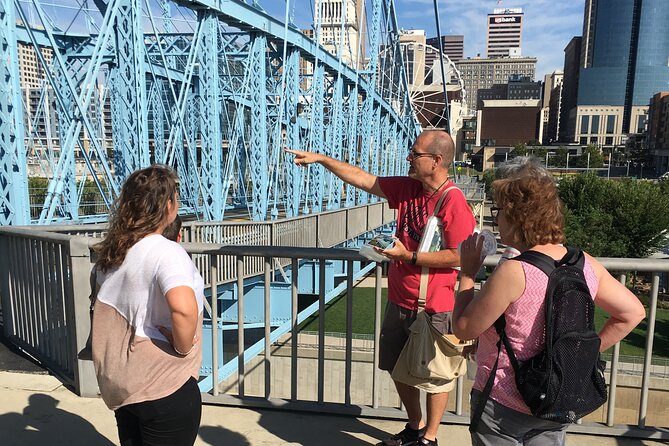
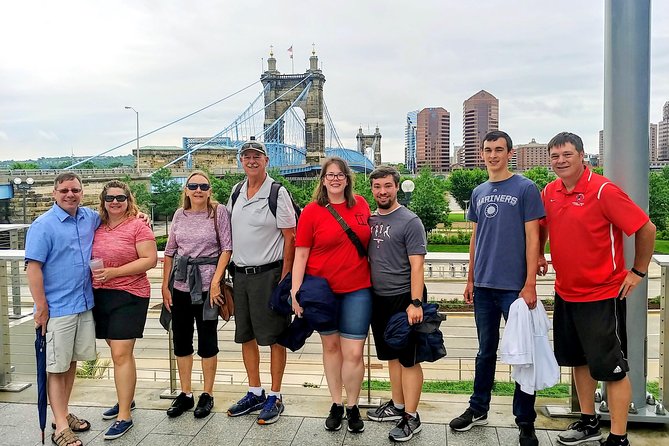
From The Banks, the route reaches the John A. Roebling Suspension Bridge. The bridge links Cincinnati with Covington, Kentucky, and opened on December 1, 1866. Its main span measured 1,057 feet, making it the longest suspension bridge in the world at the time.
You get roughly eight minutes here. That is enough to hear the important facts and take in the structure, but it is not a long bridge walk or a dedicated photography stop. If bridge views matter to you, be ready with your camera when the group arrives. One useful improvement would be a little more time closer to the bridge for photographs, so do not expect a leisurely riverside session.
The bridge also gives the guide a natural way to discuss John A. Roebling’s later Brooklyn Bridge design. Cincinnati’s bridge is not just a crossing. It is an early chapter in a major story of American engineering.
Fountain Square, murals, and the city center
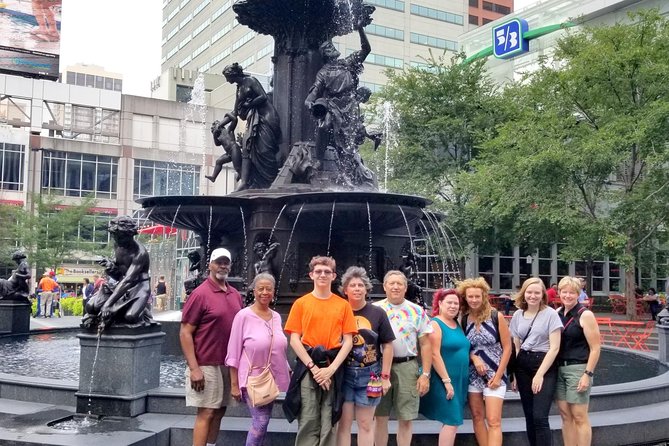
Fountain Square has been Cincinnati’s symbolic center since 1871. The fountain, restaurants, bars, events, and seasonal ice skating make this a natural point for talking about downtown life today.
The stop lasts about eight minutes, so the emphasis is on context rather than a long visit. You will learn how the square functions as a public gathering place and how the surrounding blocks connect Cincinnati’s commercial and cultural districts.
Nearby, Contemporary Artworks adds a different note. The route passes large murals, including one depicting astronaut Neil Armstrong. Cincinnati ArtWorks has helped young apprentices complete more than 230 murals in over 36 Cincinnati neighborhoods and seven nearby cities.
I like this pairing of civic center and public art. The square represents formal downtown identity, while the murals show how community art changes ordinary walls. It also keeps the tour from becoming a procession of old buildings. Cincinnati’s story includes present-day creative work, not only landmarks from the past.
A different kind of day out entirely:
- NYC: SUMMIT One Vanderbilt Tickets
★ 4.7 · 51,195 reviews - NYC: 9/11 Memorial & Museum Timed-Entry Ticket
★ 4.8 · 31,428 reviews - NYC: Empire State Building Tickets – Observatory & Museum
★ 4.7 · 25,757 reviews - NYC: Empire State Building Observation Deck Tickets
★ 4.7 · 22,072 reviews
Carew Tower, Aronoff Center, and Zaha Hadid’s bold corner
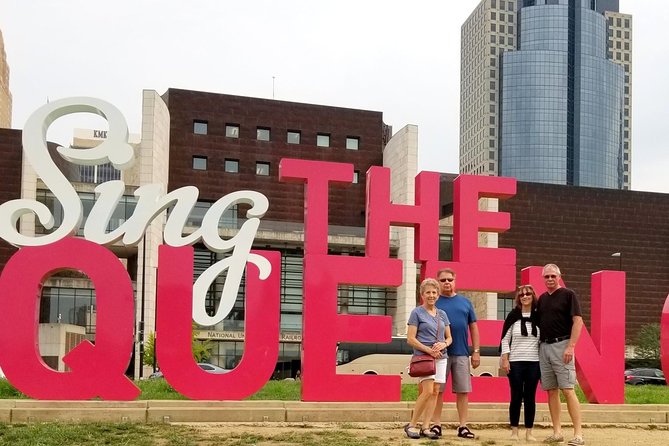
Several downtown sights receive brief drive-by or walking commentary rather than full stops. Carew Tower is the big one. The 49-story, 574-foot Art Deco building was completed in 1931 and is now being remodeled into luxury apartments.
The tower’s scale and decoration help explain Cincinnati’s early 20th-century confidence. You will not tour the interior as part of this experience, but the outside view is enough to make the building memorable.
The Aronoff Center brings the performing arts into the route. Designed by César Pelli and named for Cincinnati native and Ohio senator Stanley Aronoff, it hosts plays, ballet, concerts, comedy, and musicals. The guide’s commentary helps you place it within the city center instead of treating it as an isolated theater.
The Lois and Richard Rosenthal Center for Contemporary Art offers a sharp contrast. Designed by Zaha Hadid, it was the first museum in the United States designed by a female architect. Its angular exterior is hard to miss, even during a short pass-by.
These stops work best for people who enjoy architecture but do not need an interior tour at every building. If you want to enter Carew Tower, the Aronoff Center, or the contemporary art museum, plan a separate visit.
Central Parkway and the unfinished subway story
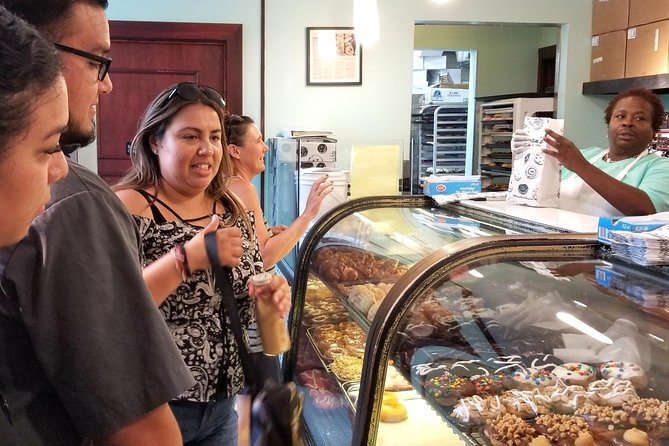
Central Parkway follows the former route of the Miami and Erie Canal. The 1907 park plan by George Kessler envisioned a citywide parkway network, with a rapid transit railway running through a tunnel in the old canal bed.
The subway was abandoned before completion. That unfinished project gives the guide one of Cincinnati’s most entertaining urban-planning stories. You see how an ambitious transport idea can leave a permanent mark even when the trains never arrive.
This part of the tour is mainly about the view from the route and the guide’s explanation. It is not a subway excavation tour. Still, the story adds useful depth to the streetcar ride that follows. Cincinnati’s modern connector is part of a much older conversation about how people should move through the city.
Over-the-Rhine: German roots and a new food scene
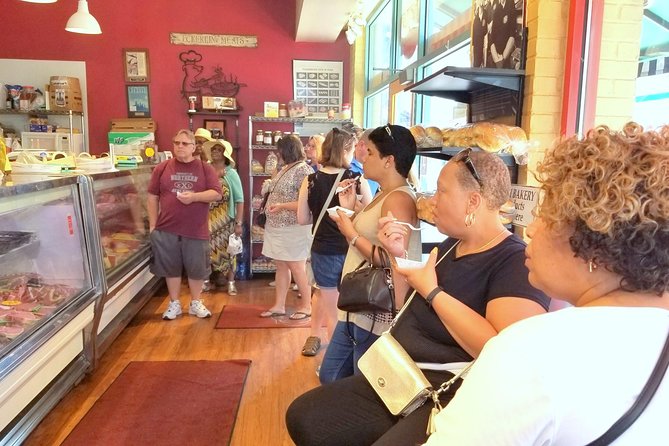
Over-the-Rhine is one of the tour’s strongest sections. Also called Cincinnati’s Rhineland, the neighborhood contains a large collection of well-preserved 19th-century buildings. It began as a working-class German district and now contains craft breweries, gastropubs, and bars.
The neighborhood’s name reflects the Rhine River, a reminder of the German communities that shaped Cincinnati’s food and culture. This is where a bite of goetta makes sense. The pork and grain sausage connects directly to German-American traditions and to Cincinnati’s old nickname, Porkopolis.
The guide does not treat Over-the-Rhine as a frozen museum district. You hear about its older working life and its newer commercial identity. That balance matters. The area is appealing, but its renewal also raises questions about change, housing, and who gets to enjoy the neighborhood. A good guide can help you see both the handsome buildings and the forces that reshaped them.
Because the tour covers much of the district by streetcar and on foot, you get an orientation without trying to inspect every block. I would return later for a slower walk, especially if you want to explore breweries, restaurants, or the architecture in detail.
Music Hall and Washington Park on the way north
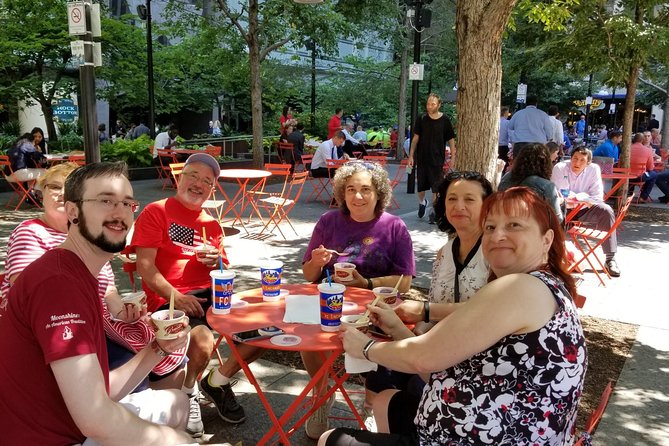
Cincinnati Music Hall appears on the way to Findlay Market. Completed in 1878, the grand performance hall hosts the Cincinnati Ballet, Cincinnati Symphony Orchestra, Cincinnati Opera, May Festival Chorus, and Cincinnati Pops Orchestra.
The tour allows about five minutes here, and admission is not included. You will hear about the building’s performance role and its haunted past, but this is an exterior pass-by rather than an organized concert hall visit.
Washington Park follows as part of the route. The eight-acre park began as cemeteries before the city acquired the land in the mid-1800s and turned it into a Victorian park. Today it hosts more than 300 events each year, including music, markets, outdoor fitness classes, and children’s activities.
These two sights show how Over-the-Rhine mixes grand institutions with open public space. The park is also a practical place to mark for a later visit if your schedule allows.
Six tastings that explain Cincinnati better than a menu can
Food is the organizing thread, not a side reward. The included tastings cover sweet and savory flavors:
- Belgium waffle
- Ice cream
- Goetta
- Fudge
- Cheese
- Cookie
The food is not presented as haute cuisine. That is part of its appeal. You are trying recognizable local and regional favorites, the kind of food that says more about a place than a carefully staged tasting menu sometimes can.
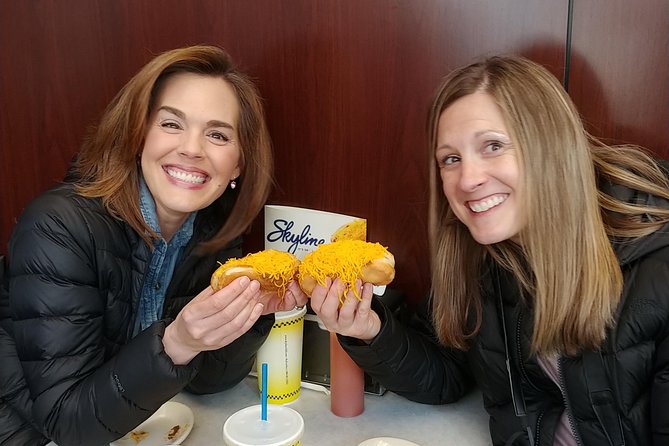
The goetta is especially important. Made in the German-American tradition, it gives the tour a direct connection to Over-the-Rhine and Cincinnati’s pork history. You may also encounter a Skyline Chili Coney, a local staple with chili and cheese on a hot dog bun. The portions are described as generous enough to add up to a small meal, so arrive hungry but not desperate.
The sweet stops help keep the route fun for families, while the savory items keep the morning from becoming a sugar parade. If you prefer mostly savory food, this balance may still feel a little dessert-heavy. One recent response from the operator specifically noted that the tour includes goetta, Skyline Chili Coney, cheese, a Belgium waffle, and three lighter sweets.
Drinks are not included. Soda, coffee, and tea are available to buy, so bring a water bottle, especially in warm weather.
Findlay Market: the final stop and the Monday change
Findlay Market is the final tasting stop and the place where the tour wraps before returning to the starting point. The guide tours the market while you sample the last item, giving you a chance to connect the earlier food stories with a working public market.
This is one of the most useful stops for your own Cincinnati plans. You can return after the tour, browse at a slower pace, and use the streetcar pass to get back later. The market is more rewarding when you have time to look beyond the single tasting.
There is one important exception. Findlay Market is closed on Mondays. On that day, the route uses The Taste of Belgium Bistro for a goetta sample with a waffle instead. The tour still runs, but the market portion is not the same. If the market is a priority, choose another day.
What the guides add to the route
The guide can make or break a city orientation, and this tour has earned its strongest praise for its hosts. David is known for connecting food, civic development, architecture, and Cincinnati’s commercial history. He also adjusts the pace to the group and handles questions well.
Jackie brings a welcoming, attentive style. She has texted before the tour to help people find the meeting point, adjusted the route for hot weather, used more air-conditioned streetcar time when needed, and found shady places for the group. Mike is also praised for his local knowledge and friendly manner.
The practical lesson is simple: expect a guide who does more than point out buildings. You are likely to hear why a food matters, how a neighborhood changed, and where to go next. That personal guidance is a large part of the $79 value.
Walking, weather, children, and food restrictions
The tour involves about 45 to 60 minutes of walking spread over three hours. Wear comfortable shoes, and dress for the weather because the tour operates in rain, heat, and other conditions. The route is not recommended for physically challenged walkers, though one person using a rollator completed the experience and another participant using an electric scooter found the route manageable.
That means you should contact Riverside Food Tours before booking if mobility is a concern. The tour has a maximum of 14 people, which helps the guide adjust the pace, but it does not remove every curb, street crossing, or walking demand.
Children ages 0 to 5 are free but do not receive food. Parents may share their own portions or bring snacks. Children age 6 and older require a ticket and receive full servings.
The food policy is strict. The operator cannot accommodate nut allergies, food allergies, low-carb diets, diabetes-related restrictions, gluten-free diets, vegan diets, or lactose-free diets. If any of these apply to you, this is not the right food tour.
Free cancellation is available if you cancel at least 24 hours before the local start time. Changes or cancellations made later are not accepted for a refund.
Should you book Riverside Food Tours’ Sites and Bites tour?
Book it if you want a well-paced first look at Cincinnati and enjoy trying local staples more than chasing high-end dining. It is particularly useful if you have only a day in town, want help understanding the streetcar, or prefer a small group where you can ask questions.
I would also recommend it for repeat Cincinnati visitors who have seen the major sights but want more context. The route may be familiar, but a strong guide can connect the bridge, pork sausage, public art, old canal, market, and modern redevelopment in a way that makes the city feel newly organized.
Skip it if you need a fully accessible route, have significant dietary restrictions, or want long visits inside museums and landmarks. Also skip Monday if Findlay Market is central to your plans.
For most other visitors, $79 is fair for six tastings, a three-hour guided orientation, and a full-day streetcar pass. Book early if your schedule is fixed, since the tour is often reserved about a month ahead. Then keep the rest of the day open for whichever neighborhood, market, or local specialty catches your attention.
FAQ
How long does the Cincinnati Sites and Bites tour last?
The tour lasts approximately three hours to three hours and 20 minutes. It includes about 45 to 60 minutes of walking spread across the full experience.
Where does the tour begin and end?
The tour begins at 16 West Freedom Way in Cincinnati, Ohio, and returns to the same meeting point.
What food is included?
Six tastings are included: a Belgium waffle, ice cream, goetta, fudge, cheese, and a cookie. Other Cincinnati specialties, including Skyline Chili Coney, may be part of the savory tasting selection.
Is Findlay Market included every day?
Findlay Market is part of the regular route, but it is closed on Mondays. On Mondays, the tour has the goetta and waffle tasting at The Taste of Belgium Bistro instead.
Is transportation included?
Yes. The tour includes a full-day pass for Cincinnati’s streetcar, also called the Connector. You can continue riding after the guided portion at no extra cost.
Can children join the tour?
Yes. Children ages 0 to 5 are free but do not receive food. Children age 6 and older need a ticket and receive full servings.
Just added in the USA
- Monterey Bay Whale Watching★ 4.5 · 316 reviews
- Monterey Whale Watching Tour★ 4.5 · 732 reviews
- 17-Mile Drive Electric Bike Guided Tour★ 5.0 · 401 reviews
- Whale Watching Tour★ 4.5 · 497 reviews
- Elkhorn Slough Wildlife Tour★ 5.0 · 424 reviews
- Carmel Small Group Walking Food & Cultural Tour★ 5.0 · 392 reviews
- U-Drive Hells Revenge 4×4 Tour- 2.5 HR TOUR★ 5.0 · 334 reviews
- The Best U-Drive Hell’s Revenge 4×4 Off Roading Tour from Moab★ 5.0 · 909 reviews
Food & Drink, compared.
New Orleans Food Walking Tour of the French Quarter with Small-Group Option
Read our review →
NYC Bus Tour of Brooklyn, Bronx, Queens: Art, Food & Sports
Read our review →
Savannah First Squares Culinary & Cultural Walking Food Tour
Read our review →
Chinatown & Little Italy Food Tour with 7 Flavorful Tastings
Read our review →
Food Tour with 5+ Tastings of Local Delicacies
Read our review →
Browse the lists this tour appears in