
Reviewed · HISTORICAL TOURS
2.5 Hour Philadelphia History Tour with Washington War Tent Show
The Revolution feels close in Philadelphia. This 2.5-hour walking tour links Independence Hall, the Liberty Bell Center, Elfreth’s Alley, and the Museum of the American Revolution into one clear story of how the nation began. I like the small groups of no more than 12 and the chance to see George Washington’s wartime tent. I also like that the tour gives you a discounted museum ticket for later.
The main tradeoff is simple: you see several major buildings from the outside rather than touring every interior. You also cover a lot of ground in a short time, so good walking shoes and a willingness to keep moving will help.
In This Review
- Key points to know before you book
- Philadelphia’s founding story begins at the Signer
- Independence National Historical Park packs in the major sights
- Independence Hall puts the Revolution in one frame
- The Liberty Bell comes with history and myths
- Carpenters’ Hall connects trade, politics, and independence
- Washington’s War Tent is the tour’s special feature
- Elfreth’s Alley shows Philadelphia at residential scale
- Betsy Ross House and the useful correction of old legends
- Benjamin Franklin and the President’s House add needed complexity
- What the guides do best
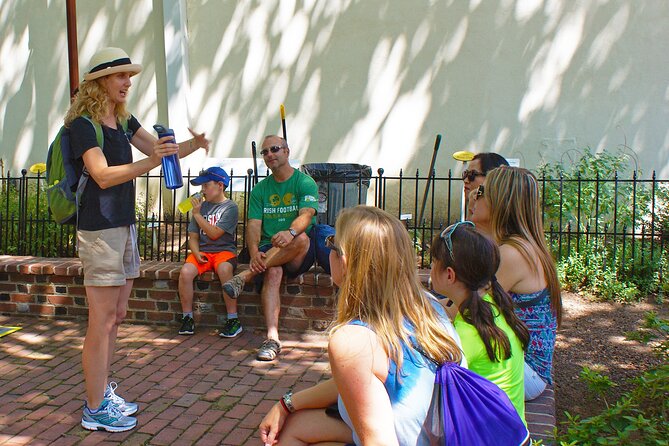
- Group size, pace, and physical demands
- Is $45 a good value?
- Who should book this Philadelphia history tour?
- Final verdict: book it for context, not just entry tickets
- FAQ
- How long does the Philadelphia history tour last?
- How many people can join the tour?
- Is admission to Independence Hall included?
- Do you go inside the Liberty Bell Center?
- Is the Museum of the American Revolution included?
- Where does the tour begin and end?
- Can I cancel for a full refund?
Key points to know before you book
- Washington’s actual War Tent: The Museum of the American Revolution presentation is the tour’s most unusual feature.
- Twelve people maximum: A small group makes it easier to hear the guide and ask questions.
- Old City’s essential landmarks: Independence Hall, Congress Hall, the Liberty Bell Center, Carpenters’ Hall, and more fit into one route.
- Elfreth’s Alley on foot: You visit the oldest continuously occupied residential street in the United States.
- Museum value after the walk: Your tour includes a discounted ticket to return to the museum at a time of your choice after the tour.
- A strong first-day overview: The route helps you decide which places deserve a longer visit later.
Philadelphia’s founding story begins at the Signer
You meet at the Signer’s Garden, at the statue called The Signer, near Chestnut Street in Old City. The statue represents the people who signed the Declaration of Independence and the United States Constitution, so it is a fitting place to begin a tour about American self-government.
The opening stop is brief, only about five minutes. That is useful because it gets the group moving quickly, though it does not offer much time for a long introduction. Your guide sets the theme here: Philadelphia is not just a collection of old buildings. It is a place where arguments about freedom, law, representation, and power took physical shape.
The meeting point is central to the Historic District and close to public transportation. Confirmation arrives when you book, and the tour is offered in English. Since the walk begins in a busy historic area, check the exact starting instructions before setting out.
More History Tours in Philadelphia:
- Revolution and the Founders: History Tour of Philadelphia
★ 5.0 · 2,944 reviews - Philadelphia Old City Historic Walking Tour with 10+ Top Sites
★ 5.0 · 2,020 reviews - Philadelphia: Revolution and The Founders History Tour
★ 4.6 · 450 reviews
Independence National Historical Park packs in the major sights
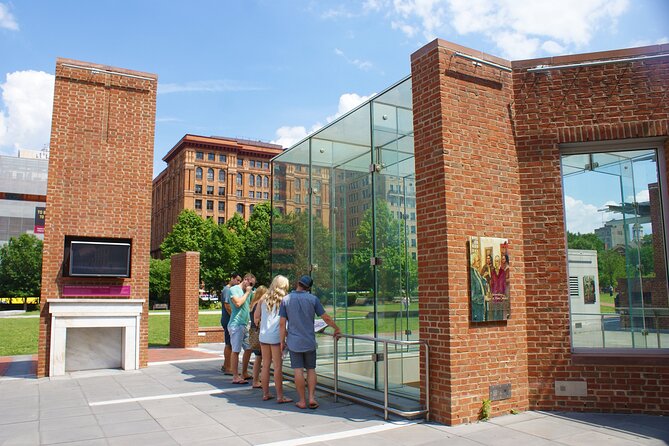
The next section brings you into Independence National Historical Park, where the tour gathers several of Philadelphia’s most important landmarks. You hear about Independence Hall, Congress Hall, and Old City Hall, with the guide explaining how each building supported the developing government.
This is where a good guide matters most. The buildings are impressive, but their meaning can blur when you see them one after another. The tour helps connect the physical spaces to the larger political story, including the work of the Founding Fathers and the growth of democratic ideas.
You spend about 20 minutes in this area, followed by separate stops at Independence Hall, Congress Hall, and Old City Hall. That structure gives you more focused explanations instead of one rushed speech at a single corner.
Still, you should set your expectations correctly. Admission to several sites is not included, and the tour views Independence Hall from outside. If you want an interior tour of Independence Hall or the Liberty Bell Center, plan to arrange that separately before or after this walk.
Independence Hall puts the Revolution in one frame
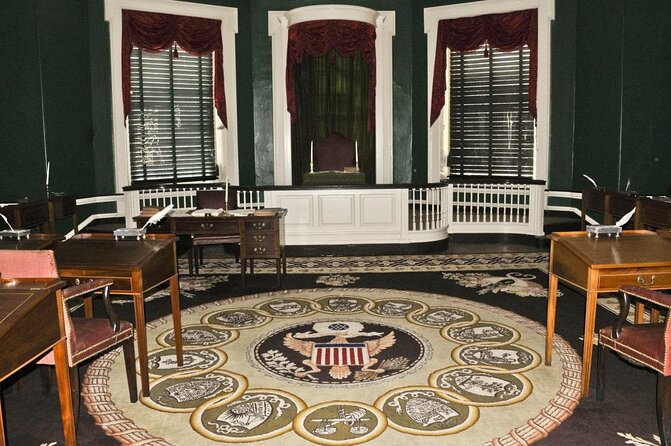
Independence Hall is the visual centerpiece of Philadelphia’s historic district. Its image appears on the $100 bill, but the building feels more meaningful when you hear what happened inside it.
The group circles the exterior for about ten minutes. Your guide discusses the political ideas, conflicts, and hard choices that shaped the country’s founding. This format works well if you have limited time in Philadelphia and want context before deciding if you should return for a longer visit.
The drawback is that an exterior viewing cannot replace an interior tour. You will see the building and learn why it matters, but you will not receive the full room-by-room experience as part of this activity.
Congress Hall and Old City Hall sit nearby and help explain the early government that followed independence. Congress Hall served as the original home of the United States Congress. Old City Hall adds another layer to the story of American government and the people who helped build it.
The Liberty Bell comes with history and myths
At the Liberty Bell Center, the guide explains how the bell became a symbol far beyond its original use. The discussion includes its connection to abolitionists, suffragettes, and the civil rights movement.
The tour also aims to clear up common myths about the bell. That is a welcome touch because the Liberty Bell is often reduced to a single crack and a familiar photograph. Its later use as a symbol of equality and freedom is just as important as its colonial origins.
You do not go inside the Liberty Bell venue on this tour. This is one of the most useful practical details to remember. If you want an interior visit or a close photograph, schedule that separately. The tour gives you the story and an exterior look, not a full admission visit.
A few more options to weigh up in Philadelphia
- From Miami: Everglades Airboat, Wildlife Show & Bus Transfer
★ 4.2 · 8,622 reviews - Miami: Everglades National Park Airboat Tour & Wildlife Show
★ 4.5 · 7,296 reviews - The Haygoods: Branson’s Most Popular Show
★ 5.0 · 7,232 reviews - Oahu: The Magical Mystery Show! at Hilton Waikiki Beach Hotel
★ 5.0 · 2,754 reviews
Carpenters’ Hall connects trade, politics, and independence
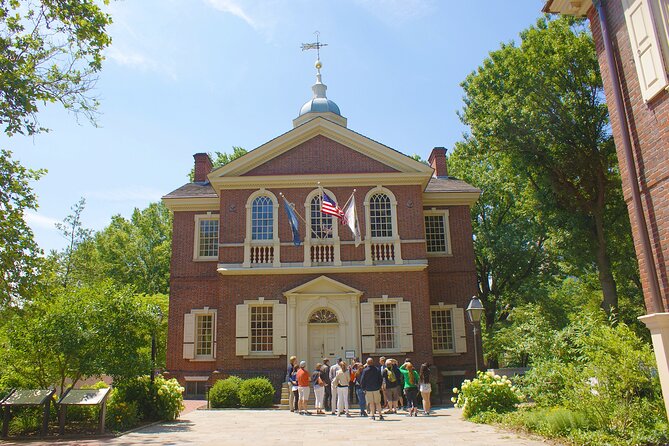
Carpenters’ Hall is another exterior stop, with about ten minutes devoted to the building and its role in early American politics. It was the meeting place of the First Continental Congress, making it a key location in the events that led toward independence.
The building also has importance in Pennsylvania’s history. Your guide uses the stop to explain why this modest-looking hall became a serious political meeting place.
This is a good example of why walking tours help. You may pass a historic building on your own and notice only its age. With a guide, you get the people, decisions, and arguments that give the façade meaning.
Washington’s War Tent is the tour’s special feature
The Museum of the American Revolution changes the pace of the walk. Instead of another exterior stop, you go inside for a presentation featuring the tent George Washington used during much of the Revolutionary War.
This is the experience’s most distinctive attraction. Philadelphia has plenty of important buildings, but a field tent tied directly to Washington’s wartime command gives the story a more personal scale. It helps you picture the war not only as a series of famous speeches and battles, but also as a long campaign managed from temporary quarters.
The presentation lasts about 20 minutes. The full museum visit is not part of the main tour, but you receive a discounted ticket to return afterward at a time of your choice. I consider that a smart arrangement. The guided visit gives you a focused introduction, while the later ticket lets you explore the museum at your own pace.
If you enjoy military history, artifacts, and personal stories, you will probably want to stay and see more. If your schedule is tight, the presentation still gives you the main special feature without requiring a long museum visit during the walking route.
Elfreth’s Alley shows Philadelphia at residential scale
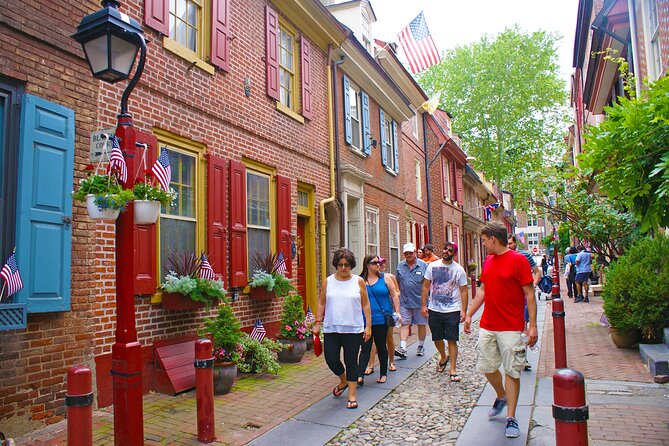
After the major public buildings, Elfreth’s Alley offers a different view of early Philadelphia. Its narrow brick lane and small homes date back to the early 1700s, and it is recognized as the oldest continuously occupied residential street in the United States.
This stop helps balance the political story. Independence Hall tells you where national decisions were made. Elfreth’s Alley helps you picture where ordinary residents lived, worked, and moved through the city.
You spend about ten minutes here. That is enough for an introduction and photographs, but not a detailed house-by-house visit. The street is free to view from outside, while any interior access would be separate.
The architecture is one of the pleasures of this stop. Narrow houses, brickwork, and unusual details make the alley feel different from the larger civic buildings elsewhere on the route.
Betsy Ross House and the useful correction of old legends
The walk passes the Betsy Ross House, associated with the seamstress and flag maker who is often credited with sewing the first American flag.
Your guide also addresses the uncertainty and myths surrounding that story. That is valuable because Philadelphia’s founding legends are often repeated as settled fact. A careful explanation lets you enjoy the story without treating every popular claim as proven history.
The tour does not include admission to the house. You see it as part of the walking route, and you can decide later if the interior visit fits your interests and schedule.
Benjamin Franklin and the President’s House add needed complexity
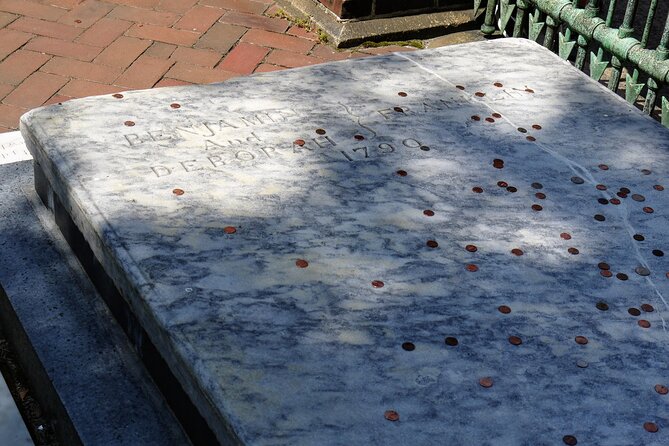
The route continues along Arch Street past Benjamin Franklin’s grave. Franklin is one of Philadelphia’s best-known figures, and the brief stop places his burial site within the larger story of the city’s inventors, writers, diplomats, and political thinkers.
You then visit the President’s House site, where George Washington and John Adams lived while serving as president. This location is especially useful because it adds a less comfortable part of the founding story. Enslaved people also lived there, and the site remains an active archaeological area.
That context matters. A tour of the Revolution should not present the founding era as a simple tale of liberty without examining who was excluded from that promise. The President’s House stop gives the guide a chance to connect political ideals with the lives of enslaved people.
Together, these final stops broaden the experience beyond famous buildings. You get Franklin’s public legacy, the early presidency, and a reminder that the new nation’s ideals were unevenly applied.
What the guides do best
The strongest part of this tour is the quality of the guiding. The guide roster includes Tom, PJ, Adam, Caroline Hodash, David, John, Peter, Donato, Carla, Maria Gorshin, Pat, Laura, Alex, and PK in the supplied feedback.
The repeated praise is not just for factual detail. The guides are described as animated, friendly, patient, and able to answer questions without losing the group’s pace. John, in particular, was praised for keeping children interested and even offering a young participant a way to ask future questions about the American Revolution.
That personal approach matters in a group walk. You are not simply following a flag from one landmark to the next. You can ask about myths, political figures, architecture, and practical Philadelphia suggestions.
The guides also appear to handle disruptions sensibly. During a government shutdown, some buildings were closed, but guides such as Adam, David, and John adjusted the commentary and suggested other places to visit. That cannot guarantee how every future disruption will be handled, but it shows the value of having a live local guide when plans change.
Group size, pace, and physical demands
The maximum group size is 12 people. That is small enough for a more conversational feel and large enough to keep the price reasonable. Several guides were praised for giving the group time to ask questions while still covering the route efficiently.
The tour lasts about 2 hours and 30 minutes and includes many stops. You should expect steady walking through Old City, with time spent standing outdoors at historic sites. Most people can participate, and service animals are allowed, but the supplied details do not promise a fully step-free route or seating at every stop.
Weather will affect comfort because much of the experience takes place outside. Wear comfortable shoes, bring water, and allow extra time if you plan to continue sightseeing afterward. The walk ends in Old City, which makes it easy to keep exploring the Historic District, though no specific onward activity is included.
Is $45 a good value?
At $45 per person, the tour is priced as a guided overview rather than a full admission package. That distinction is important. You are paying for a local guide, the walking route, the Washington’s War Tent presentation, a discounted museum ticket, and a donation to a local nonprofit historic organization.
The value is strongest for a first visit or a short stay. In 2.5 hours, you cover many of the essential Revolutionary landmarks and receive enough background to decide where to spend more time. A family, couple, or solo visitor with only a few hours in Philadelphia can use the tour to get oriented quickly.
The value is weaker if you already know the district well or want long interior visits at Independence Hall, the Liberty Bell Center, and every museum. You would need to pay for or arrange those experiences separately.
Group discounts may be available, which can improve the cost for larger parties. Free cancellation is offered if you cancel at least 24 hours before the start time. Inside that window, the amount paid is not refunded, and changes are not accepted.
Who should book this Philadelphia history tour?
I would recommend it to first-time visitors who want the essential Old City story without planning every stop on their own. It also suits families, since the route mixes famous symbols, unusual objects, architecture, and stories about people.
History fans will appreciate the effort to correct myths about the Liberty Bell and Betsy Ross, while the Washington tent provides a memorable artifact beyond the standard checklist. Solo visitors and couples also benefit from the small group and the chance to ask direct questions.
You may want a different plan if your main goal is interior access. This tour is best understood as a guided framework for Philadelphia, not a complete replacement for the city’s major museums and historic-house admissions.
Final verdict: book it for context, not just entry tickets
I would book this tour if you want a lively introduction to Philadelphia’s founding era and prefer a guide to explain what you are seeing. The route covers an impressive number of important places, and the Washington’s War Tent presentation gives it a feature many basic city walks lack.
Book it especially if you have limited time, are visiting with family, or want help choosing which sites to revisit. Skip it only if you have already explored Old City or want a day built around lengthy interior tours. For most first-time visitors, $45 buys a useful, well-paced introduction to the historic heart of Philadelphia.
FAQ
How long does the Philadelphia history tour last?
The tour lasts approximately 2 hours and 30 minutes.
How many people can join the tour?
The maximum group size is 12 travelers.
Is admission to Independence Hall included?
No. The tour views Independence Hall from outside, and admission is not included.
Do you go inside the Liberty Bell Center?
No. The tour discusses the Liberty Bell and its history, but the Liberty Bell Center admission is not included.
Is the Museum of the American Revolution included?
The tour includes a presentation featuring George Washington’s War Tent. Afterward, you can receive a discounted ticket to visit the rest of the museum at a time of your choice.
Where does the tour begin and end?
The tour begins at The Signer statue in Signer’s Garden, at 434-498 Chestnut Street, Philadelphia. It ends in Old City, Philadelphia.
Can I cancel for a full refund?
Yes, if you cancel at least 24 hours before the experience’s start time. Cancellations or changes made less than 24 hours before the start time are not refunded.
Just added in Philadelphia
- Philadelphia 2 Hour Electric Cart Tour★ 5.0 · 633 reviews
- Inside Philadelphia’s Italian Market: Chef-Led Tasting Journey★ 5.0 · 354 reviews
- Flavors of Philly Food Tour★ 5.0 · 505 reviews
- City Cruises Philadelphia: Signature Dinner Cruise with Buffet★ 4.0 · 372 reviews
- True Crime Philadelphia and History Tour★ 5.0 · 416 reviews
- The Constitutional Walking Tour of Philadelphia★ 4.5 · 902 reviews
- Center City Philadelphia Food Tour with Reading Market★ 5.0 · 861 reviews
- Classic Philadelphia City Bike Tour★ 5.0 · 323 reviews
Historical Tours, compared.


History and Hauntings of Salem Guided Walking Tour
Read our review →
Charleston’s Old South Carriage Historic Horse & Carriage Tour
Read our review →

Big Island in a Day: Volcanoes Waterfalls Sightseeing and History
Read our review →
Freedom Trail History Small Group Walking Tour
Read our review →
Historic Charleston Guided Sightseeing Walking Tour
Read our review →
Starship Landmark 90 Minute Sightseeing Cruise
Read our review →Browse the lists this tour appears in