
Reviewed · HISTORICAL TOURS
Charleston’s Old South Carriage Historic Horse & Carriage Tour
History moves at a gentle pace here. Charleston’s Old South Carriage Tour gives you an easy one-hour introduction to the city, covering about 30 historic blocks while a certified guide explains the homes, churches, gardens, and stories along the way. Belgian or Percheron draft horses do the pulling, adding plenty of old-fashioned charm.
I especially like the broad view you get without wearing out your feet, and the guides often make the past feel personal with stories about former residents. The main catch is the randomly assigned route. You may see Rainbow Row and the Battery, or you may spend your hour in another residential zone, so do not book this expecting a guaranteed list of landmarks.
In This Review
- Key points to know before you book
- Starting at 14 Anson Street
- How the Charleston route is chosen
- Riding through 300 years of Charleston
- Mansions, piazzas, gates, and gardens
- The horses are part of the story
- Is $50 a fair price?
- Weather, seating, and family details
- When to take the ride
- Who will enjoy this Charleston carriage tour?
- Should you book Old South Carriage Company?
- FAQ
- Where does the Charleston carriage tour depart from?
- How early should I arrive?
- How long does the carriage ride last?
- How much of Charleston does the tour cover?
- Can I choose the route or request Rainbow Row and the Battery?
- How many people can ride in the carriage?
- What happens if the weather is bad?
Key points to know before you book
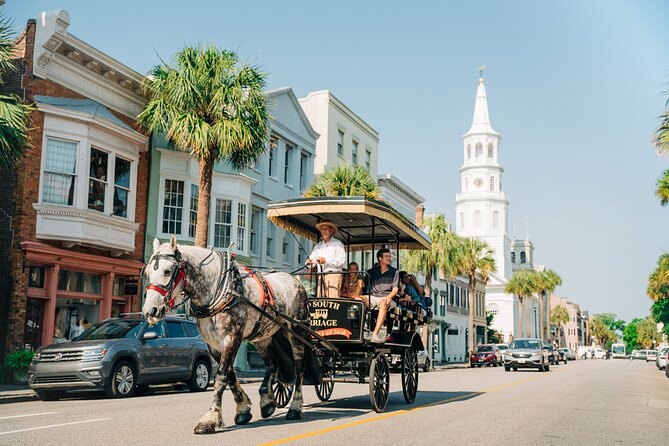
- A city-assigned route: Charleston assigns each carriage one of five zones, so the exact sights vary from tour to tour.
- A full hour on the road: You cover roughly 2.5 miles and 30 blocks, enough for a useful first look at downtown.
- Strong guiding is central: Guides such as Ro, Wendy, Carrie, Carol, and Maddie have been praised for humor, storytelling, and clear historical detail.
- Large draft horses pull the carriage: Belgian and Percheron horses, including well-loved horses named Jordan, Cooper, Bob, and Curtis, are part of the experience.
- A small group, but not a private ride: Carriages hold up to 16 people, while some wagonettes hold eight.
- Best as an orientation tour: Take it early in your Charleston visit, then return on foot to the places that catch your eye.
Starting at 14 Anson Street
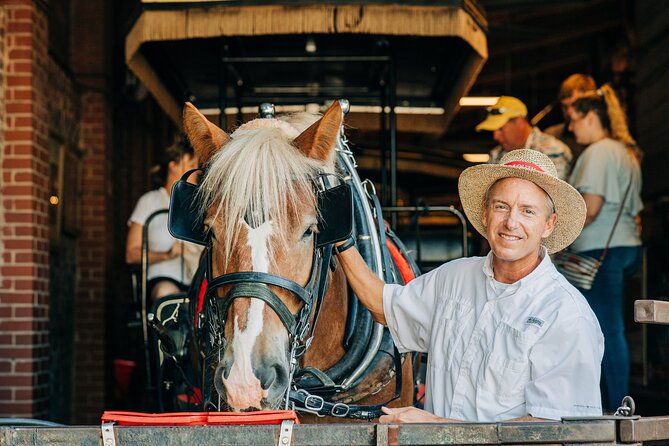
Your tour begins and ends at the Old South Carriage Company stable at 14 Anson Street, one block north of City Market. This location is useful because it puts you close to one of downtown Charleston’s main visitor areas, with parking garages and lots nearby.
Arrive at least 15 minutes before departure. This is not a casual suggestion. Missing check-in can result in cancellation without a refund, so give yourself time to park, walk over, and get settled.
The stable gives you a practical place to wait. You can use the restroom, buy bottled water, watch an educational video, and see the draft horses before boarding. Families may appreciate this short pre-tour stop, especially if children are excited about the animals.
Boarding takes place by an inclined ramp and easy-loading platform. The carriage is covered, which provides shade on a sunny day and some shelter in light rain. Heavy rain can still leave you wet, and ponchos are available for purchase at the stable.
The carriage seats up to 16 people, so this is a shared sightseeing ride rather than an intimate private outing. Some departures use a wagonette with up to eight seats. You may not know which style you will get in advance, but either way, the group size is small enough for a guide to address the carriage without shouting across a huge vehicle.
More History Tours in Charleston
- Historic Charleston Guided Sightseeing Walking Tour
★ 5.0 · 6,216 reviews - Charleston Horse-Drawn Carriage Tour: Explore Historic Charleston
★ 5.0 · 3,561 reviews - Charleston Harbor History Day-Time or Sunset Boat Cruise
★ 4.5 · 2,788 reviews
How the Charleston route is chosen
Charleston’s carriage operators do not choose their own route. After leaving the stable, the carriage goes to a city gate near the Market, where a route is assigned by Charleston’s tourism division.
The system divides the historic center into five zones. The idea is to spread carriage traffic across the city, but it also creates the tour’s biggest limitation: you cannot select the neighborhood you most want to see.
This matters if you have your heart set on Rainbow Row, the Battery, or a particular church. One departure may pass those sights, while another may take you through a quieter residential section. The tour description names major Charleston sights, but it does not promise that every carriage will pass every famous address.
I see the route system as both a benefit and a drawback. It prevents every carriage from crowding the same streets, and it lets you see areas you might otherwise skip. But you should think of this as a guided look at Charleston’s historic center, not a fixed checklist of landmarks.
If you are in town for more than one day, the uncertainty becomes less of a problem. You can take the ride first, note the streets and buildings that interest you, and then explore the specific areas on foot.
Riding through 300 years of Charleston
Once the carriage leaves Anson Street, the city opens up at a slow, useful pace. You pass historic houses, old churches, gardens, gates, and piazzas while the guide explains how Charleston developed from its colonial beginnings.
The route covers more than 2.5 miles and around 30 blocks. That is a good amount of ground for one hour. You will not inspect each building in detail, but you will get a clear sense of how the historic district fits together.
Charleston is often called the Holy City because of its many church steeples. Those steeples become easy reference points as you move through downtown. The carriage also gives you time to notice details that can disappear during a fast walking tour, including wrought-iron gates, garden walls, balconies, and the proportions of old homes.
The pace is one of the ride’s real strengths. You can look left and right, take photographs, and listen without constantly checking a map or dodging pedestrians. I like this format for a first morning in town, when you want the basic shape of Charleston before choosing where to spend more time.
The guide also adds the human side of the city. Instead of only listing dates and architectural terms, the narration includes stories about former residents and Charleston’s role in the Civil War and the wider story of the United States. The quality of the hour depends heavily on the guide, and that is where this company has earned much of its praise.
Names frequently associated with especially enjoyable tours include Ro, Wendy, Carrie, Carol, and Maddie. The descriptions of their work are consistent: clear facts, a good sense of humor, and an ability to keep both children and adults interested. One guide, Wendy, was singled out for her storytelling and humor, while Ro was praised for handling a mixed-age group well.
That does not mean every guide will have the same style. Some people prefer a serious historian, while others want a lively narrator. The company requires historic guides to belong to the Palmetto Guild and pass a broad examination on Charleston history, so you can expect more than a basic drive-by commentary.
Mansions, piazzas, gates, and gardens
Charleston’s houses are a major reason to take this tour. Many historic homes feature piazzas, the city’s term for long, open-sided porches. From a carriage, you can compare the homes as you move through several blocks rather than stopping at just one property.
Gardens and wrought-iron gates are also frequent sights. They make excellent photo subjects, though the carriage’s movement and the position of other passengers can limit the perfect shot. Bring your camera, but treat photography as a bonus rather than the main purpose of the ride.
The tour stops outside notable homes such as the Gov. William Aiken House. William Aiken Jr. served as governor of South Carolina, and the house is listed on the National Register of Historic Places. Seeing it from the carriage does not replace a formal house visit, but the guide can give you context and help you decide if you want to return.
That distinction is important. This is a city tour, not an interior tour. You will see architecture from the street and hear the story attached to it, but you will not get a room-by-room look at the Aiken House or other residences.
You may also pass churches and residential streets that receive less attention from people who spend their whole visit around City Market and the waterfront. Those quieter stretches can be just as useful as the headline sights because they show how Charleston’s historic district functions as a living neighborhood, not simply an outdoor museum.
A few more options to weigh up in Charleston
- Haunted Evening Horse and Carriage Tour of Charleston
★ 4.5 · 3,678 reviews - Charleston: Historical Downtown Tour by Horse-drawn Carriage
★ 4.8 · 1,009 reviews - Charleston’s Historic Residential Horse and Carriage Tour
★ 4.5 · 668 reviews - Charleston Horse & Carriage Historic Sightseeing Tour
★ 4.5 · 460 reviews
The horses are part of the story
The Belgian and Percheron draft horses are not a decorative extra. They are central to the mood of the tour and often become the most memorable part for children.
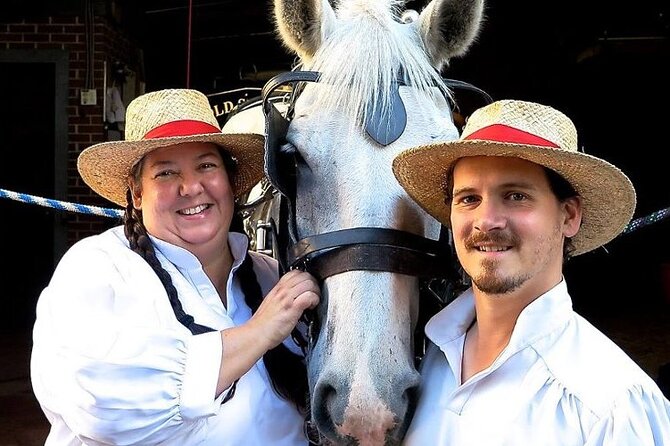
These are the same general types of strong working horses used on American farms in the early 1800s. At the stable, you may have a chance to see the horses before boarding. Names that have received warm attention include Jordan, Aiken, Jesse, Arthur, Bob, Curtis, Cooper, and Skylar.
Some riders particularly enjoy learning about the horses’ working background. The company has explained that some Belgian draft horses come from Amish farms after their farm work is finished. The horses are also described as spending time on a farm when they are not pulling carriages and as having limits on how many routes they work.
Those details matter if animal care is part of your booking decision. The information supplied for this tour indicates that the horses are not worked without limits, but you should still remember that this is an animal-powered activity in a busy city. The carriage operator’s ticket terms ask participants to accept the risks connected with the horses, carriages, and property.
The ride itself is usually gentle, but one account described a rough horse and difficult starts. That appears to be an exception rather than the usual experience, yet it is worth keeping in mind. Horses are living animals, not perfectly predictable sightseeing equipment.
Is $50 a fair price?
At $50 per person, this is not the cheapest way to see Charleston. You can walk the historic district for free, and a self-guided stroll lets you linger wherever you like.
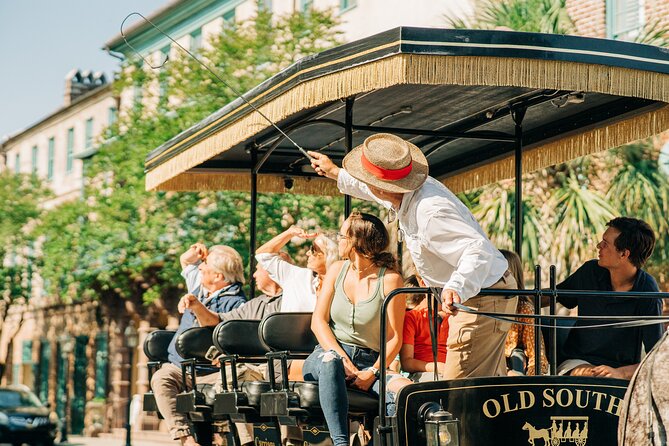
The carriage earns its price through convenience and narration. In one hour, you cover a large section of downtown while sitting under a roof and hearing organized commentary from a certified guide. If you paid for a separate house admission and then walked between several districts, you would spend more time and likely more money.
I consider the price reasonable for a first look, especially if you are visiting Charleston for only a short stay or traveling with relatives who cannot manage a long walking route. It is also useful for families because the children get the horses and the adults get the history.
The value drops if you are buying it only to reach one famous location. Since Charleston controls the zone assignment, you could pay $50 and not pass the Battery or Rainbow Row. If those sights are essential, plan to visit them separately on foot.
With a 4.8 rating from more than 10,000 submitted ratings and a 95 percent recommendation rate, the experience has a very strong satisfaction record. Still, those numbers should not hide the route issue or the fact that guide quality and weather affect the hour.
Weather, seating, and family details
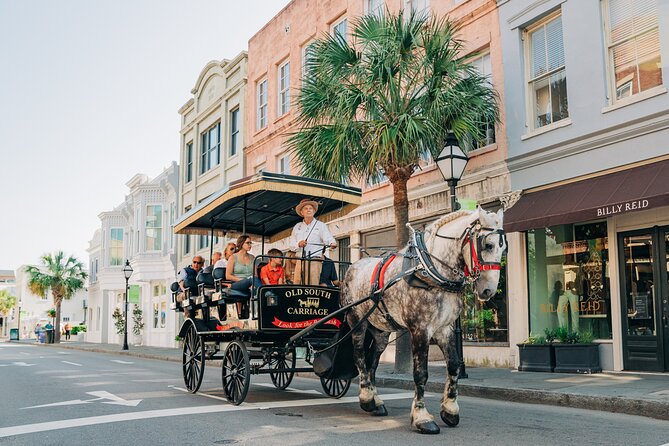
The carriage has a roof, but this is not an all-weather shelter. Light rain may be manageable, while heavy rain can leave you wet. Tours may run in rain but not thunderstorms, and extended bad weather can lead to a closure.
Cold weather deserves equal attention. One account specifically wished for blankets on a chilly day. Ask about the forecast and bring a layer. A sunny day can feel warm in the carriage, while a cool, damp day may feel much colder than expected.
Children age three and under ride free if they sit on a parent or guardian’s lap. If you want a separate seat, you must buy a child ticket. Strollers cannot go on the carriage, but they can be stored at the stable.
Service animals are allowed, and well-behaved dogs are welcome. Small dogs may ride in your lap, while larger dogs can sit in the front row. Food is not allowed on board, though drinks are permitted, and bottled water can be bought before or after the ride.
The activity is described as suitable for most participants and is near public transportation. You can reach the City Market area from the Visitor’s Center using the free Downtown Area Shuttle, known as DASH.
When to take the ride
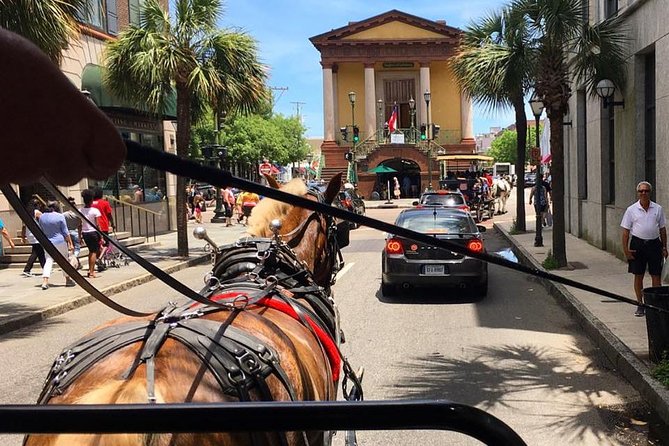
I would schedule this tour near the beginning of your Charleston visit. The carriage helps you get your bearings, introduces several parts of the historic district, and gives you a list of places to revisit.
Morning is often the easiest choice for families and anyone sensitive to heat, though the exact comfort level depends on the season and weather. Arriving early also gives you time to see the horses and avoid the stress of a last-minute check-in.
If your schedule is tight, the one-hour length is convenient. You return to 14 Anson Street with most of the day still open. You can then walk to City Market, visit a historic house, or follow up on a church, garden, or street you noticed from the carriage.
I would not make this your only Charleston activity. The ride shows you many façades, but you need time on foot to enter houses, read plaques, explore shops, and appreciate the city at street level.
Who will enjoy this Charleston carriage tour?
This is a good match for you if you want:
- A relaxed first look at the historic district
- A narrated tour rather than a guidebook
- A family activity with a strong animal appeal
- A way to cover several neighborhoods without a long walk
- Architecture, gardens, church steeples, and local stories
- A short activity that fits easily into a busy itinerary
You may prefer a walking tour if you want to choose the exact streets and landmarks. You may also feel disappointed if you expect to enter historic homes or receive a guaranteed route along the Battery.
Solo visitors can feel comfortable on the tour, and couples get an easy shared activity without committing half a day. Families should find the format manageable, especially since the guides are accustomed to explaining Charleston for both children and adults.
Should you book Old South Carriage Company?
I would book it, with one clear condition: accept the route lottery before you buy. If you see the ride as a comfortable introduction to Charleston, the $50 price buys useful orientation, entertaining narration, and a close look at the city’s architecture.
The strongest part is the combination of guide and horse. A lively narrator such as Ro, Wendy, Carrie, Carol, or Maddie can turn a slow ride into a memorable history lesson, while the draft horses give the experience a real sense of place.
Book this tour if you want the city explained as you pass through it. Skip it, or choose a walking alternative, if visiting specific landmarks matters more than the carriage experience itself. For most first-time visitors, I would take the ride early, then explore Charleston’s best streets and houses at my own pace afterward.
FAQ
Where does the Charleston carriage tour depart from?
The tour departs from the Old South Carriage Company stable at 14 Anson Street in Charleston, one block north of City Market. It also ends back at the stable.
How early should I arrive?
You must check in 15 minutes before your scheduled departure. Arriving late can lead to cancellation without a refund.
How long does the carriage ride last?
The ride lasts about one hour, generally 50 to 60 minutes.
How much of Charleston does the tour cover?
The carriage covers about 2.5 miles and 30 blocks of the historic district, with more than 300 years of Charleston history included in the narration.
Can I choose the route or request Rainbow Row and the Battery?
No. Charleston’s tourism division assigns each carriage one of five zones. Specific landmarks vary by departure, so Rainbow Row and the Battery are not guaranteed.
How many people can ride in the carriage?
Surrey-style carriages hold up to 16 people. Wagonette carriages hold up to eight people.
What happens if the weather is bad?
Tours can operate in rain but do not run during thunderstorms. Extended poor weather may cause the company to close for the day. If the tour is canceled because of weather, you can receive a different date or a full refund. You can cancel for a full refund up to 24 hours before the scheduled start time.
Just added in Charleston
- Middleton Place Admission with Self Guided Tour and Lunch★ 4.5 · 326 reviews
- Charleston Ghosts of Liberty Guided Walking Tour★ 4.5 · 473 reviews
- Undiscovered Charleston: Half Day Food, Wine & History Tour with Cooking Class★ 5.0 · 948 reviews
- 2-Hour Guided Kayak Eco Tour in Charleston★ 5.0 · 954 reviews
- Charleston’s Best Highlights: History, Culture & Architecture★ 5.0 · 422 reviews
- Savor the Flavors of Charleston Walking Food Tour★ 4.5 · 881 reviews
- Afternoon Schooner Sightseeing Dolphin Cruise on Charleston Harbor★ 4.5 · 620 reviews
- Real Hauntings of Charleston! (Small Group Ghost Tour)★ 5.0 · 724 reviews
Historical Tours, compared.

History and Hauntings of Salem Guided Walking Tour
Read our review →

Big Island in a Day: Volcanoes Waterfalls Sightseeing and History
Read our review →
Freedom Trail History Small Group Walking Tour
Read our review →
Historic Charleston Guided Sightseeing Walking Tour
Read our review →
Starship Landmark 90 Minute Sightseeing Cruise
Read our review →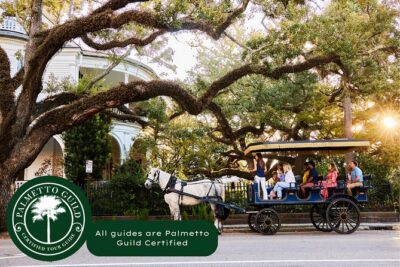
Charleston Horse-Drawn Carriage Tour: Explore Historic Charleston
Read our review →Browse the lists this tour appears in