
Reviewed · HISTORICAL TOURS
Charleston’s Best Highlights: History, Culture & Architecture
Charleston rewards slow walking. This two-hour tour connects major landmarks with the stories behind them, from the Old Exchange and Provost Dungeon to the High Battery. I like the compact route, which brings together architecture, politics, religion, slavery, and the Civil War in one outing. I also like the guide-led storytelling, especially with Brian or Fin, whose teaching backgrounds and personal approach receive strong praise. The main drawback is that several interiors require separate admission or depend on availability, so the tour is more of an outdoor overview than a full museum visit.
You begin at 122 East Bay Street and finish at the same point. The group can include up to 20 people, though some departures may feel nearly private. I would book this early in a Charleston visit, since it gives you useful context for the rest of your stay. Allow extra time, too: some past outings lasted well beyond two hours.
In This Review
- Key reasons to consider this Charleston walk
- Why this route gives Charleston shape
- The Old Exchange starts the story in 1771
- Rainbow Row brings color to the route
- The Old Slave Mart requires clear-eyed attention
- French Huguenot Church shows Charleston’s religious variety
- Dock Street Theater mixes performance and preservation
- City Hall sits at one of Charleston’s Four Corners of Law
- St. Michael’s Church adds woodwork, glass, and political history
- Nathaniel Russell House reveals Charleston’s private side
- The High Battery looks toward Fort Sumter
- The guides are the main reason to book
- Value, practical limits, and who will enjoy it
- Should you book Charleston’s Best Highlights?
- FAQ
- How long does Charleston’s Best Highlights take?
- Where does the tour begin?
- Where does the tour end?
- Is the tour offered in English?
- Is admission to the attractions included?
- Do you enter the Old Slave Mart Museum?
- How many people can join the tour?
- Is the tour suitable for most people?
- What happens if the weather is poor?
Key reasons to consider this Charleston walk
- A powerful opening at the Old Exchange: Hear how this building figured in the American Revolution, the Constitution, George Washington’s 1791 visit, and Charleston’s civic life.
- A frank look at slavery: The stop outside the Old Slave Mart Museum addresses Charleston’s role in the interstate slave trade without treating the subject as a footnote.
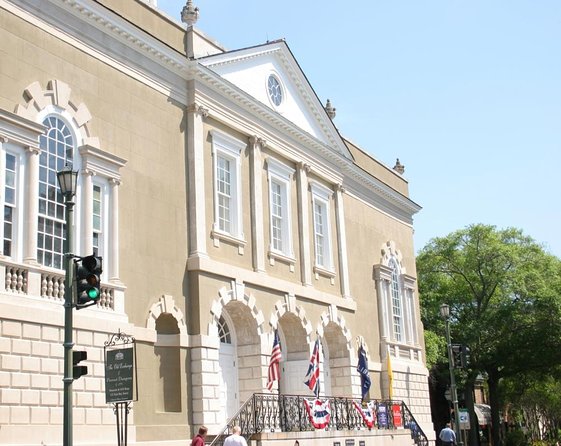
- Nine stops in a walkable downtown route: You see grand public buildings, churches, private homes, waterfront views, and colorful row houses.
- Guides who teach, not just point: Brian and Fin are praised for linking Charleston events to the wider story of the American colonies and the United States.
- Useful for a first day: The route gives you a map of downtown and helps you decide which buildings deserve a return visit.
- A good small-group size: A maximum of 20 people allows questions and makes it easier to hear the guide on city streets.
Why this route gives Charleston shape
Charleston can feel like a collection of handsome facades at first. A pastel row of houses catches your eye, a church steeple rises above the trees, and a grand mansion appears behind an iron gate. The value of this walk is that it links those sights to the people and conflicts that shaped them.
The route covers roughly the heart of the historic city. You move from the civic center near East Bay Street toward Rainbow Row, the French Quarter, important churches, Federal-era homes, and the waterfront. That variety matters. You are not spending two hours hearing only about wealthy merchants or only about military events.
The guide puts architecture into context. Georgian row houses, Gothic Revival design, Federal interiors, stained glass, churchyards, and harbor-facing mansions become clues to Charleston’s changing economy and beliefs. I especially like that the route does not skip the harder subjects. Charleston’s prosperity was tied to slavery, and the tour makes room for that fact.
The experience is offered in English and uses a mobile ticket. Since it is outdoors and weather-sensitive, wear shoes you can walk in and check the forecast before setting out. The pace has been described as manageable, with a break included on at least some outings, but you should still expect a substantial walk on city sidewalks.
More History Tours in Charleston
- Charleston’s Old South Carriage Historic Horse & Carriage Tour
★ 5.0 · 10,023 reviews - Historic Charleston Guided Sightseeing Walking Tour
★ 5.0 · 6,216 reviews - Charleston Horse-Drawn Carriage Tour: Explore Historic Charleston
★ 5.0 · 3,561 reviews
The Old Exchange starts the story in 1771
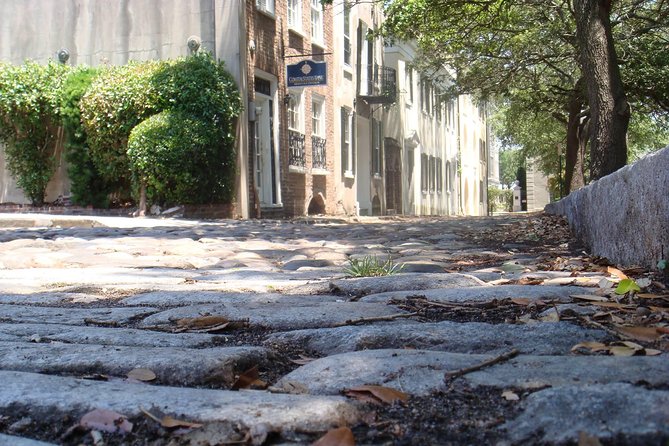
The Old Exchange and Provost Dungeon is an excellent place to begin because one building carries so many layers of Charleston’s past. Built around 1771, it hosted the reading of the Declaration of Independence in 1776. During the American Revolution, British forces used it as a prison for about two years.
The building also connects Charleston to the founding of the United States. South Carolina ratified the Constitution here in 1788, and George Washington was entertained at the building during his week-long visit in May 1791. These details give the opening stop real weight. You are not merely looking at an old exterior. You are standing at a place tied to independence, war, federal government, and early national ceremony.
The planned stop lasts about 15 minutes. Admission is not included, so the tour focuses on explanation rather than a guaranteed interior visit. If the building interests you, you can consider returning later with a separate ticket, but do not assume you will have time to tour every paid site during the walk.
Rainbow Row brings color to the route
Rainbow Row is a quick stop, about five minutes, but it gives the walk a visual change of pace. The attached Georgian row houses form the longest row of their kind in the country. In the 18th and 19th centuries, these buildings housed mariners’ stores, a reminder that this part of Charleston was tied to trade and waterfront business.
Their bright Caribbean color scheme came later, during preservation work in the 1930s. That history is worth noting because the cheerful colors can make the row look older than its current appearance. You get the architectural photograph, but also a lesson in how Charleston chose to preserve and present its past.
Admission is free because this is an exterior viewing stop. It is brief, so have your camera ready and listen for the connection between the houses and the city’s maritime economy.
The Old Slave Mart requires clear-eyed attention
The Old Slave Mart Museum is one of the most important stops on the route. The building was known as Ryan’s Slave Mart in the 1850s and served as an auction site in the interstate slave trade. The guide discusses Charleston’s role in that system, giving the tour a necessary moral and historical center.
You do not enter the museum as part of this experience. The city operates it, and tours are available separately on site. That arrangement is both a limitation and a practical option. The walk gives you context at no extra admission cost, while a return visit lets you spend more time with the museum’s exhibits if you choose.
Do not expect this section to be light sightseeing. It asks you to place Charleston’s grand houses, commercial success, and political influence alongside the forced labor and human sales that helped support them. Any tour of the city that leaves this out gives you a distorted picture. This one gives the subject a dedicated stop.
A different kind of day out entirely:
- Haunted Evening Horse and Carriage Tour of Charleston
★ 4.5 · 3,678 reviews - Fort Sumter Admission and Self-Guided Tour with Roundtrip Ferry
★ 4.5 · 3,343 reviews - Charleston: Fort Sumter Entry Ticket with Roundtrip Ferry
★ 4.7 · 2,879 reviews - Ghosts of Charleston Night-Time Walking Tour with Unitarian Church Graveyard
★ 4.5 · 2,835 reviews
French Huguenot Church shows Charleston’s religious variety
The French Huguenot Church adds a different thread. The Gothic Revival building dates from 1845 and serves one of the only practicing Huguenot, or French Protestant, congregations in the country.
The stop lasts about five minutes and is listed as free to view. Even a short explanation can help you notice how migration and religious identity shaped Charleston. The church also keeps the walk from becoming a parade of political buildings and merchant homes.
Interior access may vary. I would treat this as a chance to appreciate the exterior and hear the religious context, not as a promised church tour.
Dock Street Theater mixes performance and preservation
Dock Street Theater occupies the site of the first theater in the British colonies. The present building dates to about 1937 and was restored from the former Planter’s Hotel, built around 1809. That layering makes the stop more interesting than a simple theater photo.
The Charleston Stage company operates here and presents roughly 120 performances each year. You may be able to enter, depending on availability, but access is not guaranteed. The scheduled visit is about 10 minutes, and the listed admission is free.
I like this stop because it shows how a city can preserve a place by giving it new life. You see colonial theater history, an 1809 hotel, a 1937 restoration, and a working professional theater in one explanation. If a performance is on your schedule, this tour may help you understand the building before you return for a show.
City Hall sits at one of Charleston’s Four Corners of Law
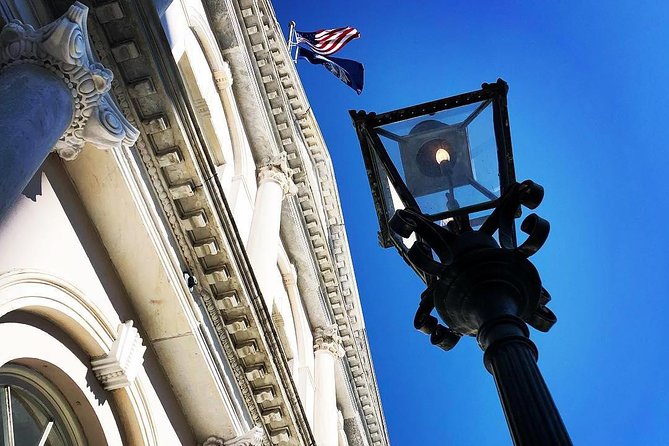
Charleston City Hall takes only about two minutes on the route, but its location gives the guide a useful civic talking point. The building was constructed as a bank in 1801 and has served as City Hall since 1818. It is one of the oldest continuously operating city halls in the country.
The site is part of the Four Corners of Law, a name linked to Robert Ripley of Ripley’s Believe It or Not. The phrase reflects the concentration of important religious and civic buildings in this area.
On weekdays, you may enter the council chamber and see the collection at no charge. That is a worthwhile bonus, but it depends on the day and timing. The brief stop works best as an orientation point, helping you understand how Charleston’s government developed alongside its churches and commercial institutions.
St. Michael’s Church adds woodwork, glass, and political history

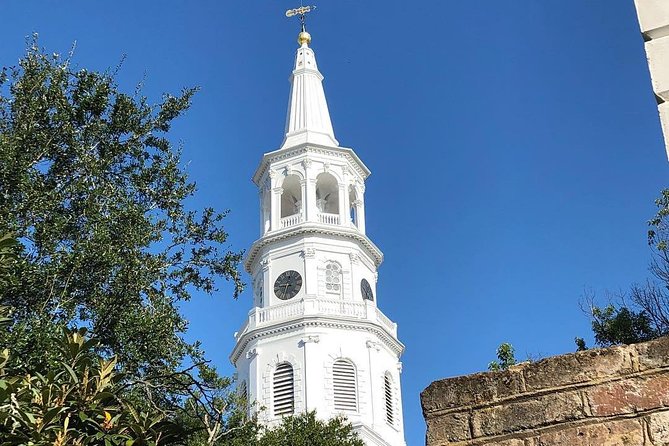
St. Michael’s Church dates to about 1761 and is described as the oldest house of worship in the city. The guide discusses Charleston’s religious past and present, while the building itself offers original woodwork and Tiffany stained glass windows.
The churchyard adds another layer. John Rutledge and Charles Cotesworth Pinckney, both signers of the United States Constitution, are buried there. That detail brings the earlier discussion at the Old Exchange back into view. Charleston’s religious spaces were also tied to political power and the creation of the new nation.
The stop is planned for about 15 minutes. Entry depends on availability, so you might see the exterior and churchyard without entering the sanctuary. Still, the combination of building design, stained glass, and burial ground makes this one of the more rewarding stops, especially for you if churches are a priority.
Nathaniel Russell House reveals Charleston’s private side
At the Nathaniel Russell House, the tour enters the garden of a Federal-style townhouse built in 1808. Nathaniel Russell came from Rhode Island and made his fortune as a merchant involved in shipping.
The garden gives you a glimpse of domestic Charleston, but the house also points back to the commercial networks that connected the city with other parts of the young United States. This is where the guide’s broader American history can be useful. The story is not confined to one street or one state.
Admission is not included, and the planned stop is about 10 minutes. Since the tour enters the garden rather than promising a complete house visit, you should see it as an introduction. If the home’s interiors interest you, plan a separate visit and budget additional time and admission.
The High Battery looks toward Fort Sumter
The final major section takes you along the High Battery wall, where you look toward waterfront mansions and discuss the opening of the Civil War. Fort Sumter is visible from here.
The Edmondston-Alston House has been in the family since 1838. It also became a viewing place during the bombardment of Fort Sumter, when General Beauregard and other onlookers watched the attack. That makes the waterfront more than a pretty end point. The harbor view becomes a place to discuss the beginning of the conflict.
The house itself is not included inside the walk, and admission is separate. The planned stop lasts about 10 minutes. Bring your attention to the view, not just the mansions. The guide’s explanation should help you connect Charleston’s waterfront wealth, secession, and the first shots of the Civil War.
The guides are the main reason to book
The strongest part of this experience is the guide’s teaching. Brian is repeatedly described as warm, funny, highly informed, and good at adjusting the route to the group’s interests. Fin, also spelled Finn in some comments, is praised for his storytelling and his background as a high school history teacher with 30 years in education and 15 years guiding in Charleston.
That background shows in the kind of help you can expect. The guide does not simply list construction dates. He connects South Carolina to the other colonies, links local figures to national events, and answers questions rather than rushing through a script.
Several outings ran longer than the advertised two hours. One reported tour extended well beyond two hours, while another lasted about three hours. That can be a pleasure if you want detail and have an open afternoon. It can be a problem if you have a meal, show, or timed attraction booked immediately afterward.
The small maximum of 20 people also matters. A group of that size remains manageable on narrow sidewalks, and the guide can respond to questions. Some departures may be much smaller, even close to private, but you should not book expecting a private tour.
Value, practical limits, and who will enjoy it
No tour price is provided here, so I cannot judge the exact cost. The value depends on what you want from a walking tour. You are paying for a structured route, a licensed guide, and interpretation across nine major stops. You are not paying for admission to the Old Exchange, Old Slave Mart Museum, or Nathaniel Russell House, and interior access at Dock Street Theater and St. Michael’s Church can change.
For a first visit, the value is strong because the route gives you a useful framework quickly. You can return to the sites that caught your attention instead of choosing museums at random. For a returning visitor, the benefit is different: a good guide may help you notice political, architectural, and personal connections you missed before.
I would recommend it most to:
- First-time visitors who want a strong downtown orientation.
- History-minded couples and families.
- People who enjoy asking questions.
- Anyone interested in architecture and civic buildings.
- Returning visitors who want more context than a carriage ride provides.
- People with enough schedule flexibility to allow the walk to run long.
You might prefer another format if you dislike extended walking, want extensive interior touring, or have only a tightly fixed 90-minute window. The route includes outdoor stops, and poor weather can lead to cancellation, a new date, or a full refund.
The tour is near public transportation, service animals are allowed, and most people can participate. Since the route is outside, good walking shoes and weather planning matter more than dressing up for Charleston’s grand buildings.
Should you book Charleston’s Best Highlights?
I would book this tour near the start of a Charleston stay, ideally when you can let the afternoon remain flexible. The route covers the city’s most recognizable sights, but its real strength is the way Brian or Fin links them into one story.
Book it if you want history explained with energy, including the difficult parts. Skip it if you only want photo stops or guaranteed access to every interior. For a thoughtful introduction to Charleston’s architecture, politics, religion, slavery, and Civil War past, this is a very strong choice, backed by a 5.0 rating from 422 reviews and a 99 percent recommendation rate.
FAQ
How long does Charleston’s Best Highlights take?
The advertised duration is approximately two hours. Some tours have lasted longer, including outings of more than two hours and around three hours.
Where does the tour begin?
The meeting point is 122 E Bay St, Charleston, South Carolina 29401.
Where does the tour end?
The activity ends back at the original meeting point.
Is the tour offered in English?
Yes. English is the listed language.
Is admission to the attractions included?
No. Admission is not included for the Old Exchange and Provost Dungeon, Old Slave Mart Museum, Nathaniel Russell House, and Edmondston-Alston House. Some other stops are free, while entry to Dock Street Theater and St. Michael’s Church depends on availability.
Do you enter the Old Slave Mart Museum?
No. The tour discusses Charleston’s role in the slave trade outside the museum. The City of Charleston operates the museum, and separate tours are available on site.
How many people can join the tour?
The maximum group size is 20 people.
Is the tour suitable for most people?
Yes. Most people can participate, and service animals are allowed. The experience is a walking tour, so you should be prepared to walk outdoors between stops.
What happens if the weather is poor?
The experience requires good weather. If it is canceled because of poor weather, you will be offered another date or a full refund. You can cancel for a full refund up to 24 hours before the start time. Cancellations or changes made within 24 hours are not refunded or accepted.
Just added in Charleston
- Middleton Place Admission with Self Guided Tour and Lunch★ 4.5 · 326 reviews
- Charleston Ghosts of Liberty Guided Walking Tour★ 4.5 · 473 reviews
- 2-Hour Guided Kayak Eco Tour in Charleston★ 5.0 · 954 reviews
- Undiscovered Charleston: Half Day Food, Wine & History Tour with Cooking Class★ 5.0 · 948 reviews
- Savor the Flavors of Charleston Walking Food Tour★ 4.5 · 881 reviews
- Afternoon Schooner Sightseeing Dolphin Cruise on Charleston Harbor★ 4.5 · 620 reviews
- Real Hauntings of Charleston! (Small Group Ghost Tour)★ 5.0 · 724 reviews
- Private Daytime Horse-Drawn Carriage Tour of Charleston★ 5.0 · 340 reviews
Historical Tours, compared.

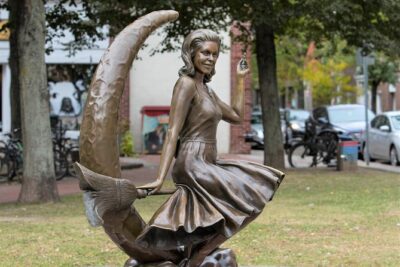
History and Hauntings of Salem Guided Walking Tour
Read our review →
Charleston’s Old South Carriage Historic Horse & Carriage Tour
Read our review →

Big Island in a Day: Volcanoes Waterfalls Sightseeing and History
Read our review →
Freedom Trail History Small Group Walking Tour
Read our review →
Historic Charleston Guided Sightseeing Walking Tour
Read our review →
Starship Landmark 90 Minute Sightseeing Cruise
Read our review →Browse the lists this tour appears in