
Reviewed · WINE TOURS
Undiscovered Charleston: Half Day Food, Wine & History Tour with Cooking Class
Come hungry, leave better informed. This four-hour Charleston experience links the city’s historic streets with the food that grew from them, led by chef and guide Forrest Parker. I especially like the small-group format, capped at 11 people, and the way the 90-minute walk ends with a fresh three-course lunch, wine pairings, and cooking instruction. The main consideration is simple: you need to be comfortable walking outdoors, and the weather can affect the experience.
This is not just a standard food tasting or a standard city walk. Chef Forrest explains how crops, cooking traditions, architecture, commerce, and the painful history of enslavement shaped Charleston’s Lowcountry table. I also like that you leave with copies of his recipes, giving the tour a life beyond your morning in town.
In This Review
- Key points to know before booking
- Why this Charleston tour feels different
- Starting at the Pineapple Fountain in Waterfront Park
- Rainbow Row and Charleston’s picture-postcard center
- The stories behind Lowcountry cuisine
- From city streets to the cooking demonstration
- A three-course lunch with wine pairings
- Recipes that make the experience last
- Food allergies, mobility, and weather
- Who will enjoy this half-day experience?
- Is the experience worth the price?
- Booking, timing, and cancellation advice
- Should you book Undiscovered Charleston?
- FAQ
- Where does the tour begin?
- What time does the tour start?
- How long does the experience last?
- Where does the tour end?
- Is lunch included?
- Are wine pairings included?
- What can I drink if I do not want wine?
- Can dietary restrictions be accommodated?
Key points to know before booking
- Chef Forrest Parker leads both halves: You get one guide for the history walk, cooking demonstration, and lunch.
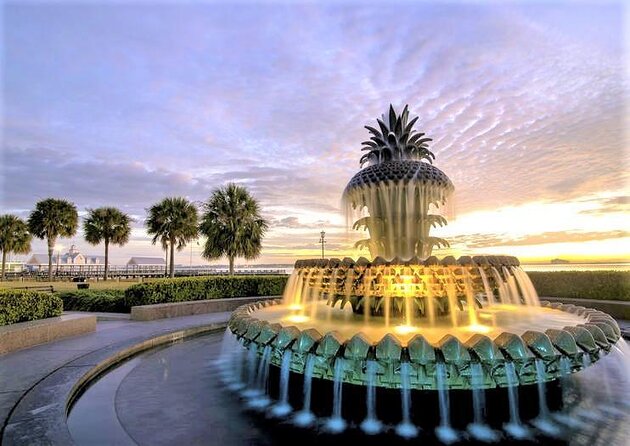
- The tour begins at the Pineapple Fountain: The meeting point is at Waterfront Park, an easy place to find in Charleston’s historic district.
- The 90-minute walk connects food with place: Expect major sights such as Rainbow Row, along with less familiar streets and stories.
- Lunch includes three chef-prepared courses: The dishes interpret Lowcountry classics and use heritage ingredients.
- Wine is paired with each course: Tasting pours are included, with coffee, tea, sweet tea, and water available instead.
- Food needs must be reported ahead of time: Vegetarian, vegan, pescatarian, dairy-free, nut-free, and gluten-free arrangements can usually be made with advance notice.
Why this Charleston tour feels different
Charleston has no shortage of carriage rides, architecture walks, restaurant meals, and food tours. What makes this one useful is the connection between all four. You are not simply told that a dish is local. You learn why certain ingredients arrived, who cultivated or prepared them, and how Charleston’s social history affected what appeared on the table.
Forrest Parker brings a chef’s eye to the city. He also brings humor, which helps during a serious subject. His style is lively and direct, with plenty of jokes, but the tour does not avoid difficult truths. The history includes the influence of enslaved cooks and the ways their work helped shape recipes still associated with Charleston.
That balance matters. You get a more honest picture of Lowcountry cuisine than you would from a quick list of famous dishes. Shrimp and grits, for example, becomes more than a menu item. It becomes part of a wider story about ingredients, labor, migration, and local identity.
The group limit of 11 keeps the walk personal. You should be able to hear Forrest, ask questions, and see the cooking demonstration without being lost in a crowd. A group of four to eight people would be especially comfortable, while solo visitors and couples can still expect a social setting.
More History Tours in Charleston
- Charleston’s Old South Carriage Historic Horse & Carriage Tour
★ 5.0 · 10,023 reviews - Historic Charleston Guided Sightseeing Walking Tour
★ 5.0 · 6,216 reviews - Charleston Horse-Drawn Carriage Tour: Explore Historic Charleston
★ 5.0 · 3,561 reviews
Starting at the Pineapple Fountain in Waterfront Park
The tour begins at 9:00 a.m. beside the Pineapple Fountain at Waterfront Park, at 1 Vendue Range. This is a sensible starting point because you are already in the historic core, near the water and within reach of Charleston’s French Quarter.
Waterfront Park gives the tour an immediate sense of place. It is not just a convenient meeting spot. The waterfront helps explain Charleston’s role as a port city and sets up the larger question of how goods, people, and food traditions entered the region.
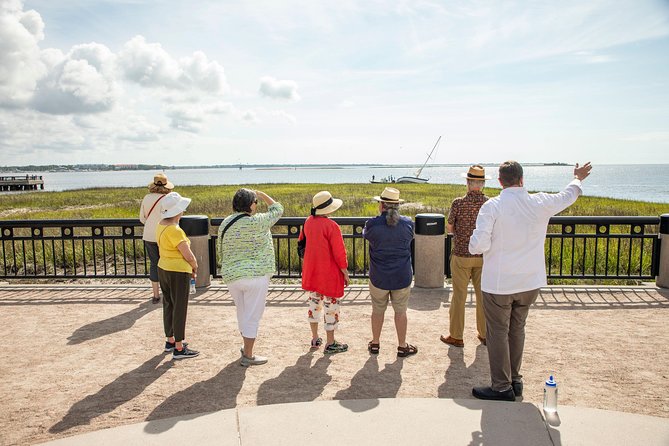
From here, Forrest leads a walking route of about 90 minutes. The pace is described as leisurely, but you should still expect continuous outdoor walking on city streets. Wear shoes that can handle uneven pavement, and bring water, especially in warm weather.
The route includes the well-known sights you would expect, but the appeal is in the less obvious stops along the way. Forrest points out places and details that are easy to pass without understanding. The food focus gives familiar buildings a second layer of meaning.
Rainbow Row and Charleston’s picture-postcard center
Rainbow Row is one of the tour’s named stops. The pastel facades are among Charleston’s most photographed scenes, but a quick photograph tells you little about how the area functioned or changed.
With Forrest, the architecture becomes part of a broader conversation about Charleston’s past and food culture. You might hear about craftsmanship, trade, crops, domestic work, and the people whose labor supported the city’s households and businesses.
This is where a chef-led walk can add something to a traditional architecture tour. Forrest is looking not only at color, windows, and facades, but also at the systems behind Charleston life. The result is a tour that moves between visible beauty and less comfortable history.
The walk also passes through the French Quarter and other historic streets. The route is not presented as a checklist of monuments. Instead, each stop helps build the story of how Charleston became a major food destination.
The stories behind Lowcountry cuisine
The strongest part of the walking tour is the food history. Forrest discusses the culinary influences that shaped Charleston and the wider South Carolina Lowcountry, including the role of heritage ingredients and the people who prepared them.
One especially meaningful detail concerns an enslaved chef whose recipe continues to influence local menus. That kind of story gives credit where it is often missing. It also reminds you that Charleston cuisine did not come from famous dining rooms alone. Much of it was developed by cooks whose names were left out of the record.
The tour does not treat Lowcountry food as a frozen tradition. Forrest connects old recipes with the city’s present-day dining scene and explains how historic ingredients and methods still appear in modern cooking.
His background as a chef makes the explanation practical. He can talk about what a dish is meant to taste like, how it is prepared, and why a particular ingredient matters. His work as a South Carolina Chef Ambassador in 2016 adds useful context, though the real benefit is hearing him explain food in plain language.
Expect humor throughout, but also expect substance. Several accounts of the experience describe Forrest as witty, entertaining, and willing to address hard truths. If you want a polished tour that avoids difficult subjects, this may not be your ideal morning. If you want Charleston presented with both charm and honesty, it is a strong choice.
A few more options to weigh up in Charleston
- New Orleans Demonstration Cooking Class with Meal
★ 5.0 · 3,000 reviews - New Orleans: Cajun and Creole Cooking Class
★ 4.9 · 730 reviews
From city streets to the cooking demonstration
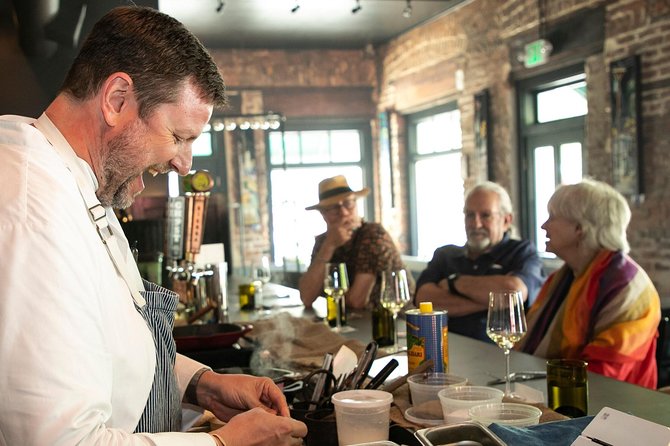
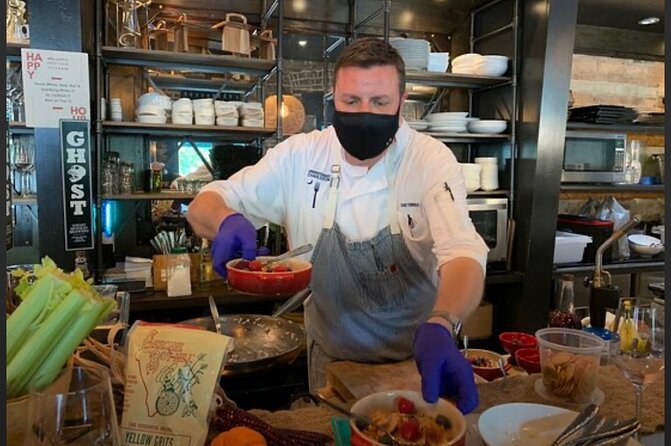
After the walk, the experience moves to a cozy bistro setting associated with Bistro Au Vin, where Forrest demonstrates three of his recipes. The tour description also refers to his kitchen, so the exact feel of the cooking venue may be more intimate than a formal restaurant meal.
This change of pace works well. You spend the first part looking closely at the city, then sit down while the guide turns historical ideas into food. Rather than eating a prepared lunch with no explanation, you see Forrest work through the recipes and explain the techniques he has developed over more than two decades.
The demonstration is interactive in the sense that you can watch, listen, and ask questions. You are not simply served a plate and sent on your way. Forrest explains how you can reproduce the dishes at home, which makes the recipe cards more useful than a souvenir menu.
The exact dishes may change, but the meal centers on Lowcountry classics. Shrimp and grits has been a particular favorite, and other meals have included dishes such as gazpacho. Those examples give you a sense of the cooking style, but they should not be treated as a fixed menu.
A three-course lunch with wine pairings
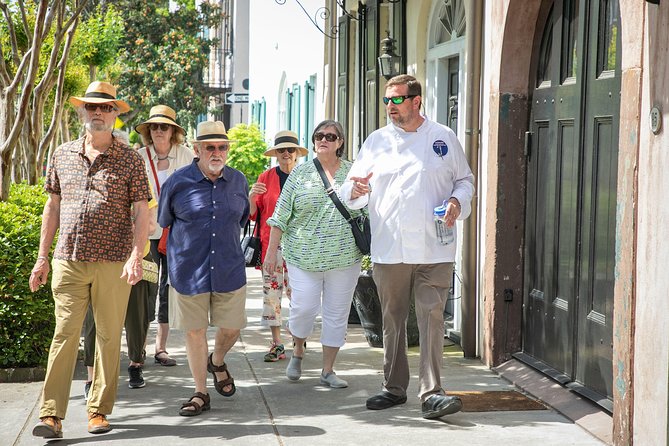
Lunch is the reward for the walk, but it is more than an afterthought. Forrest prepares three courses using heritage Lowcountry ingredients, then pairs each course with wine supplied by Bistro Au Vin.
The pairings add value in two ways. First, they make the lunch feel like a complete food experience rather than a simple cooking class. Second, Forrest can explain why a particular wine works with a dish, giving you another way to think about Southern food.
The wine is served as tasting pours, not as unlimited full glasses. Additional wine is available for purchase, but the included tasting is enough to compare the pairings without turning the meal into a drinking event.
If you do not want wine, you can choose Charleston sweet tea, filtered water, coffee, or tea. That flexibility is useful for non-drinkers and for anyone who wants to focus on the food.
The meal has earned particularly strong praise for flavor and portion size. You should arrive ready to eat lunch, not just sample a few bites. The cooking demonstration may make you more interested in the dishes, but it also means the meal comes toward the end of a fairly active morning.
Recipes that make the experience last
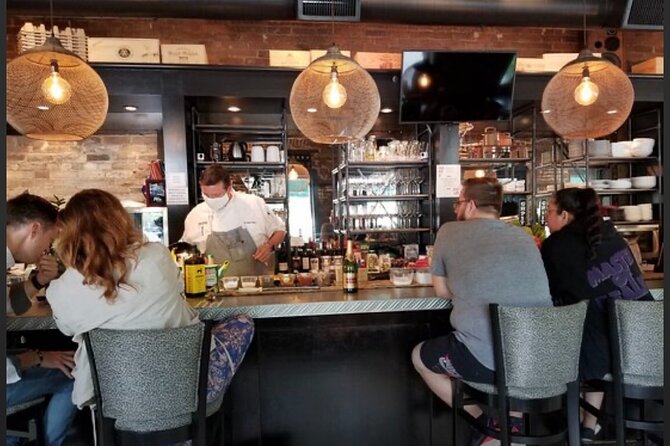
The recipe copies are one of the smartest details of the tour. Many food walks end with a restaurant recommendation or a small edible sample. Here, you take home instructions for the dishes Forrest demonstrates.
That gives you a practical link to Charleston after you leave. You may not reproduce the meal exactly, but you can use the recipes to revisit the flavors at home. It also helps justify the cost if the experience is priced above a basic walking tour, since you are receiving instruction, lunch, wine, and a useful takeaway.
The recipes are especially valuable for people who enjoy cooking. You can ask about substitutions, preparation methods, and the logic behind the dishes. If you rarely cook, they are still a reminder of what made the meal distinctive, though the cooking portion may be less important to you than the stories and lunch.
Food allergies, mobility, and weather
Tell the operator about food needs before the tour. Common dietary requests can be accommodated, including vegetarian, vegan, pescatarian, dairy-free, nut-free, and gluten-free meals, but Forrest needs advance notice so he can prepare properly.
The kitchen handles meat, shellfish, eggs, dairy, nuts, and gluten. That matters for anyone with a serious allergy. You should communicate directly and clearly before booking or as soon as possible afterward. Do not assume a last-minute request can be handled.
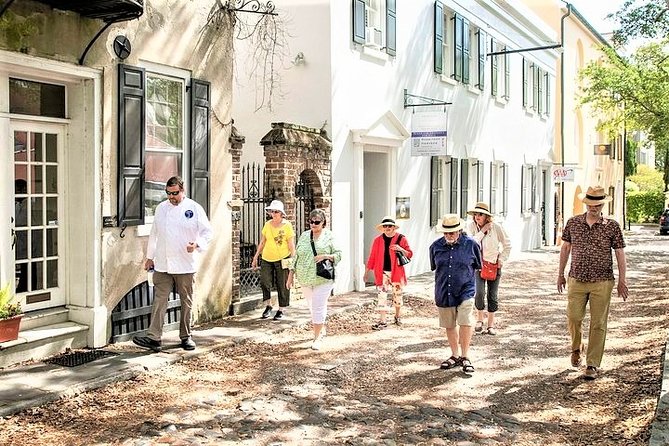
A moderate level of physical fitness is recommended. The walking portion lasts about 90 minutes, and the route takes place outdoors in the historic district. Service animals are allowed, and the meeting point is near public transportation, but the supplied details do not promise a step-free route or seating during the walk.
Weather is another real consideration. The experience requires good weather, and rain can shorten or alter the walking portion. Forrest has shown flexibility by reversing the order, beginning with lunch and walking later when conditions improved, but that depends on the situation. Bring weather protection and check the forecast before you go.
Who will enjoy this half-day experience?
I would choose this tour if you want your first look at Charleston to include food, architecture, and social history in one morning. It is particularly good for couples, small friend groups, birthdays, family visits, and anyone who wants a meal with more explanation than a normal restaurant lunch provides.
It also suits repeat visitors. If you have already seen the main squares and waterfront, Forrest’s lesser-known stories and food connections can give the historic district a fresh angle. One person even returned for a second tour with family, which makes sense because the route and meal offer more than a basic orientation walk.
Food lovers will get the most from the cooking demonstration and wine pairings. History fans will appreciate the attention to enslaved cooks, labor, and cultural exchange. People seeking only a quick snack crawl may find the four-hour format too long.
This is also a good choice for visitors who prefer small groups over large, scripted tours. Forrest’s humor and personal storytelling are a major part of the experience. That is a strength if you like an animated guide. It could be less appealing if you prefer a quiet, formal lecture.
Is the experience worth the price?
A price is not provided here, so I cannot give you a precise cost comparison. I can still explain how to judge its value.
You are paying for several separate elements: a 90-minute guided walk, a chef-led cooking demonstration, three courses, wine pairings, nonalcoholic alternatives, and recipes to take home. Compared with a basic historic walk or a short tasting tour, this is a fuller half-day commitment.
The value is strongest if you would otherwise book both a history tour and a notable lunch. You receive both in one continuous experience, and the food is prepared by the same person who explains the history. That connection is the point.
The value is weaker if you are mainly looking for a cheap meal or a quick introduction to Charleston. You may also prefer a conventional restaurant if you want menu choice, a long relaxed meal, or the freedom to leave whenever you like.
The experience has been recognized by major travel and food organizations, including a 2021 Food and Wine award for Best Food Experience in the World and a Tripadvisor Best of the Best designation. Those honors do not guarantee that every person will love the format, but they support the idea that this is a serious food-and-history program rather than a casual snack stop.
Booking, timing, and cancellation advice
The tour starts at 9:00 a.m. and lasts about four hours. It ends back at the meeting point, so plan the rest of your day from central Charleston rather than assuming you will finish near a different neighborhood.
The group maximum is 11 people, and the experience is offered in English. Participants must generally be at least 21, although older teenagers may attend with their parents.
You can cancel for a full refund up to 24 hours before the local start time. Changes or cancellations inside that 24-hour window are not refunded. If poor weather or an insufficient number of bookings cancels the tour, you are offered another date or experience, or a full refund.
Should you book Undiscovered Charleston?
Yes, if you want Charleston explained through its food rather than through landmarks alone. The best reasons to book are Forrest Parker’s chef-led storytelling, the honest treatment of Charleston’s complicated past, the small group, and the substantial lunch with wine pairings.
I would schedule it early in your visit. The walk can help you get oriented to the historic district, and the food stories may guide your restaurant choices for the rest of your stay. Tell Forrest about dietary needs well ahead of time, wear comfortable shoes, and allow the full four hours.
Skip it if you dislike outdoor walking, want a fixed menu guaranteed in advance, or prefer a quick food crawl. For everyone else, this is a thoughtful way to connect Charleston’s streets, kitchens, and history around one table.
FAQ
Where does the tour begin?
It begins at the Pineapple Fountain in Charleston’s Waterfront Park, at 1 Vendue Range, Charleston, South Carolina 29401.
What time does the tour start?
The tour starts at 9:00 a.m.
How long does the experience last?
The experience lasts approximately four hours, including the 90-minute walking tour, cooking demonstration, lunch, and wine pairings.
Where does the tour end?
The activity ends back at the meeting point.
Is lunch included?
Yes. Chef Forrest demonstrates three recipes and serves a three-course lunch prepared with heritage Lowcountry ingredients.
Are wine pairings included?
Yes. Bistro Au Vin provides wine tasting pours paired with the recipes. Additional wine can be purchased separately.
What can I drink if I do not want wine?
Charleston sweet tea, filtered water, coffee, and tea are available.
Can dietary restrictions be accommodated?
Common dietary needs, including vegetarian, vegan, pescatarian, dairy-free, nut-free, and gluten-free requests, can usually be accommodated with advance notice. Contact the operator directly before the tour so the food can be prepared properly.
More Wine Tours in Charleston
- Napa and Sonoma Wine Country Full-Day Tour from San Francisco
★ 4.5 · 4,455 reviews - San Francisco Super Saver: Muir Woods & Wine Country w/ optional Gourmet Lunch
★ 4.5 · 3,352 reviews - 5-Hour Traverse City Wine Tour: 4 Wineries on Old Mission Peninsula
★ 5.0 · 2,369 reviews - Belle Meade Guided Mansion Tour with Complimentary Wine Tasting
★ 4.5 · 2,189 reviews
More Food Tours in Charleston
- Charleston French Quarter or Brunch Food Tour with 7+ Tastings
★ 5.0 · 1,853 reviews - Downtown Charleston Food Tour
★ 4.5 · 1,376 reviews - Savor the Flavors of Charleston Walking Food Tour
★ 4.5 · 881 reviews - Charleston’s Historic Downtown Food Tour
★ 4.5 · 349 reviews
Just added in Charleston
- Middleton Place Admission with Self Guided Tour and Lunch★ 4.5 · 326 reviews
- Charleston Ghosts of Liberty Guided Walking Tour★ 4.5 · 473 reviews
- Charleston’s Best Highlights: History, Culture & Architecture★ 5.0 · 422 reviews
- 2-Hour Guided Kayak Eco Tour in Charleston★ 5.0 · 954 reviews
- Savor the Flavors of Charleston Walking Food Tour★ 4.5 · 881 reviews
- Afternoon Schooner Sightseeing Dolphin Cruise on Charleston Harbor★ 4.5 · 620 reviews
- Real Hauntings of Charleston! (Small Group Ghost Tour)★ 5.0 · 724 reviews
- Private Daytime Horse-Drawn Carriage Tour of Charleston★ 5.0 · 340 reviews
Wine Tours, compared.
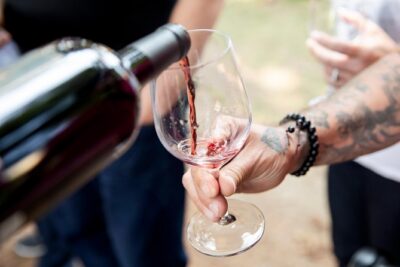
Napa and Sonoma Wine Country Full-Day Tour from San Francisco
Read our review →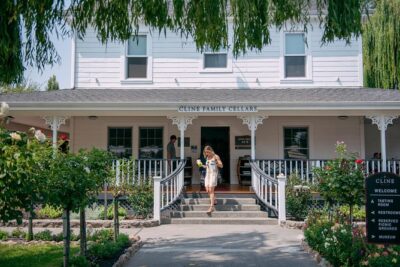
San Francisco Super Saver: Muir Woods & Wine Country w/ optional Gourmet Lunch
Read our review →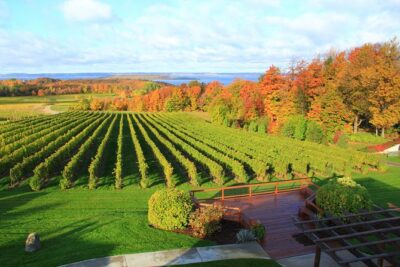
5-Hour Traverse City Wine Tour: 4 Wineries on Old Mission Peninsula
Read our review →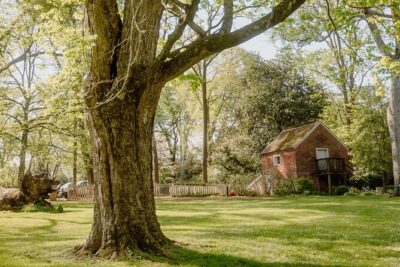
Belle Meade Guided Mansion Tour with Complimentary Wine Tasting
Read our review →
Key West Small-Group Sunset Sail with Wine and Hors d’oeuvres
Read our review →
Private Boat Ride in Miami with Experienced Captain and Champagne
Read our review →
Browse the lists this tour appears in