
Reviewed · FOOD & DRINK
Charleston’s Historic Downtown Food Tour
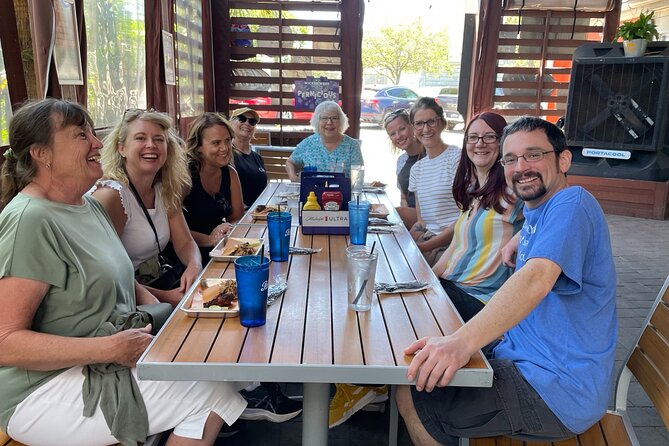
Come hungry, leave better informed. This walking tour links four restaurant tastings with Charleston stories about French cooking, African ingredients, pirates, slavery, and Lowcountry culture. I like the way it turns lunch into a history lesson, and I like that the food is served at sit-down stops rather than handed over at random street corners. The main caution is that the advertised two and a half hours may run closer to two, and shrimp and grits may not be part of the current food lineup.
The tour costs $110, which is a serious lunch bill but not an unreasonable one if you value a guided history walk and several substantial tastings. Guides such as Paige, Jeff, and Emerson have earned especially warm praise for their stories and easy manner. Just keep your schedule flexible, since the pace can feel brisk and the experience requires good weather.
In This Review
- Key points to know before booking
- A Charleston lunch served with context
- Rainbow Row and the French flavor of Charleston
- Pineapple Fountain and the meaning of hospitality
- The Old Exchange, Provost Dungeon, and pirate-era food
- Charleston City Market and African food traditions
- Four restaurant stops and what you may eat
- The guides can shape the whole experience
- Timing, walking, and practical comfort
- Is $110 a fair price?
- Who should book this Charleston food walk?
- Should you book it?
- FAQ
- How long does Charleston’s Historic Downtown Food Tour last?
- Where does the tour begin and end?
- How many restaurant stops are included?
- Is alcohol included in the $110 price?
- Is food included for children ages 0 to 6?
- What happens if bad weather cancels the tour?
Key points to know before booking
- She-crab soup is a likely highlight: This Charleston classic receives repeated praise and may be the best single bite of the tour.
- Four food stops replace a conventional lunch: Tastings have included she-crab soup, rice and chicken, Carolina Gold rice, pulled pork, and dessert.
- The history is not window dressing: French influence, African foodways, Gullah Geechee culture, slavery, the slave trade, and piracy all enter the conversation.
- The walk includes major downtown sights: Rainbow Row, Pineapple Fountain, the Old Exchange and Provost Dungeon, and Charleston City Market shape the route.
- The group is limited to 15 people: That is small enough for questions and conversation, though the tour still moves at a steady pace.
- Allow extra time after booking: The stated duration is about 2 hours 30 minutes, but some departures have finished in roughly two hours.
A Charleston lunch served with context
This is not simply a restaurant crawl. You walk through the historic center while your guide explains how Charleston’s food developed through trade, migration, forced labor, local ingredients, and contact with other cultures.
That matters because Lowcountry food can look simple on the plate. Rice, soup, seafood, and barbecue do not tell their full story by themselves. The guide connects those foods to French settlers, African cooks and farmers, Gullah Geechee traditions, and the port city’s long relationship with the Atlantic world.
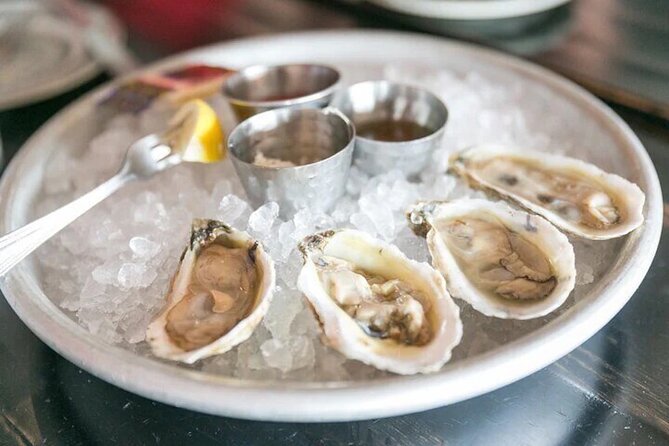
The food is meant to add up to lunch. You are not just nibbling on one oyster and calling it a meal. Past tastings have included she-crab soup, a rice and chicken dish, Carolina Gold rice, a pulled pork slider, and dessert. The exact menu can change, so do not book this expecting one fixed set of dishes.
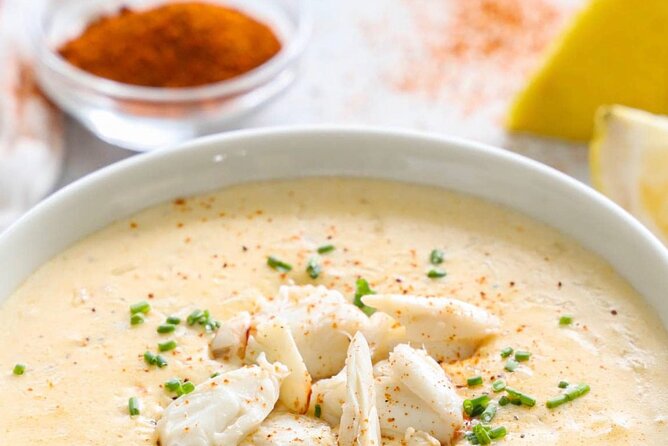
The strongest food praise centers on the she-crab soup. That is fitting. It is one of Charleston’s best-known specialties, and the tour uses it as a way to explain local cooking and the dish’s place in the city’s food culture. The rice dishes also provide a useful link to African food traditions and the importance of rice in the Lowcountry.
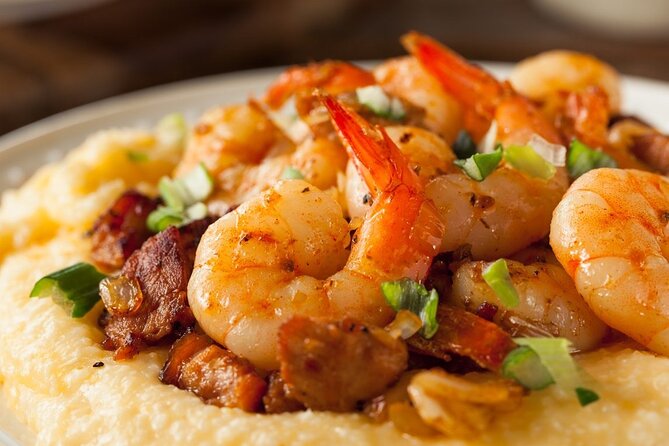
One important correction: do not count on shrimp and grits. The dish has appeared in promotional imagery, but it has not been part of every current food lineup. If that is the one dish you most want to try, order it separately elsewhere rather than treating it as guaranteed here.
More History Tours in Charleston
- Charleston’s Old South Carriage Historic Horse & Carriage Tour
★ 5.0 · 10,023 reviews - Historic Charleston Guided Sightseeing Walking Tour
★ 5.0 · 6,216 reviews - Charleston Horse-Drawn Carriage Tour: Explore Historic Charleston
★ 5.0 · 3,561 reviews
Rainbow Row and the French flavor of Charleston
The tour begins at 195 E Bay Street and moves toward the French Quarter, passing Rainbow Row along the way. You do not pay an admission fee for this stop. The point is the setting and the story, not a long interior visit.
Rainbow Row is an efficient first landmark because it places you in one of Charleston’s most recognizable historic areas while introducing French influence on local cuisine. Your guide may explain how French culture helped shape dishes and cooking habits found in Charleston.
This opening works well for people who want to get their bearings before eating. You are not dropped into a restaurant with no sense of place. Instead, the first food stop follows a short walk through streets that help explain why Charleston’s cooking developed as it did.
The drawback is time. About 15 minutes at Rainbow Row leaves room for a focused explanation, not a full architectural lecture. If you want a detailed discussion of every building, this tour will feel too quick. If you want a useful introduction before lunch, the pace is sensible.
Pineapple Fountain and the meaning of hospitality
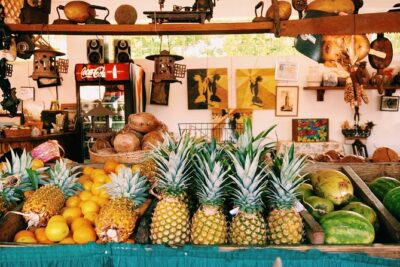
The next major pause is Pineapple Fountain, with roughly 20 minutes set aside for the stop. The pineapple is a South Carolina symbol of hospitality, and the guide uses it to discuss how landmarks and local customs connect with Charleston cooking.
This is a nice change from a standard food tour that treats the city as a series of restaurant addresses. The fountain gives the group a visual marker and a chance to talk about Southern welcome, shared meals, and the way local identity gets expressed through food.
You should also expect this portion to be weather-sensitive. The tour is conducted outdoors and requires good weather. In rain or poor conditions, the operator may cancel and offer another date or a full refund. Even in decent weather, comfortable shoes and a light rain layer make sense.
The tour does not promise an extended break at the fountain. Think of it as a short history stop with photographs and explanation, not free time for a long waterfront visit.
The Old Exchange, Provost Dungeon, and pirate-era food
At the Old Exchange and Provost Dungeon, the guide discusses pirates and privateering in early Charleston. The stop lasts about 15 minutes and has no separate admission charge as part of the tour.
This is one of the more unusual parts of the experience. Many city walks mention pirates as colorful background characters, then move on. Here, the subject is tied directly to food. Your guide explains how piracy and privateering affected what Charlestonians could obtain, trade, and eat.
That connection makes the story practical. A port city’s diet depends on ships, cargo, trade routes, and disruption. The pirate chapter gives you another way to understand Charleston’s food beyond the usual restaurant talk.
The stop is also a reminder that the tour covers difficult and complicated subjects. Charleston’s past includes the slave trade and slavery, and those subjects are treated as part of the city’s story rather than brushed aside. For me, that is an important strength. You should be ready for an honest discussion of how wealth, labor, and food were connected.
The Old Exchange stop is brief, so it will not satisfy someone seeking a full museum visit. Admission to the building is not listed as part of the tour. The value comes from the guide’s explanation while you are in the area.
More Food Tours in Charleston:
- Charleston French Quarter or Brunch Food Tour with 7+ Tastings
★ 5.0 · 1,853 reviews - Downtown Charleston Food Tour
★ 4.5 · 1,376 reviews - Undiscovered Charleston: Half Day Food, Wine & History Tour with Cooking Class
★ 5.0 · 948 reviews - Savor the Flavors of Charleston Walking Food Tour
★ 4.5 · 881 reviews
Charleston City Market and African food traditions
The Charleston City Market receives about 20 minutes. Here, the focus shifts to African influences on local food and the ingredients those traditions brought into Charleston cooking.
This is arguably the most important cultural section of the walk. Rice, cooking methods, vegetables, seafood, and seasoning traditions cannot be understood without acknowledging African expertise and the role of enslaved people in Charleston’s economy and kitchens.
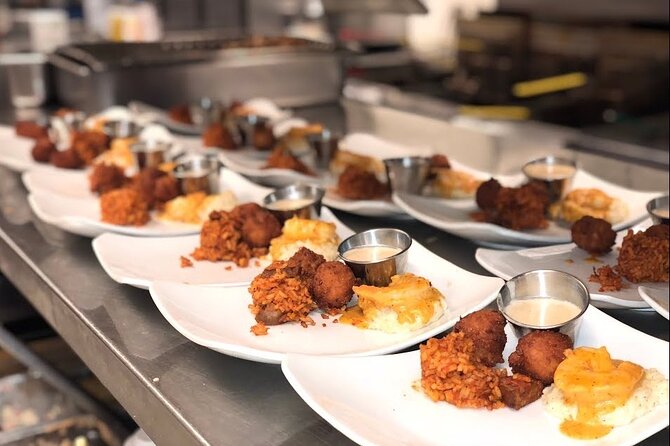
The food samples help make the subject concrete. Rice dishes have appeared on the tour, including rice and chicken and Carolina Gold rice. The guide may connect those foods with the Lowcountry’s agricultural past and with Gullah Geechee culture.
Paige has received particular praise for giving the right amount of attention to Lowcountry and Gullah Geechee culture. That is useful because this subject deserves more than a quick mention. A good guide can explain it in plain language without turning the meal into a lecture, and that balance is one of this tour’s strongest features.
The market stop itself is not a promise of shopping time. You have around 20 minutes for the history discussion and the route. If you want to browse every stall, take photographs, and eat at your own pace, plan to return later.
Four restaurant stops and what you may eat
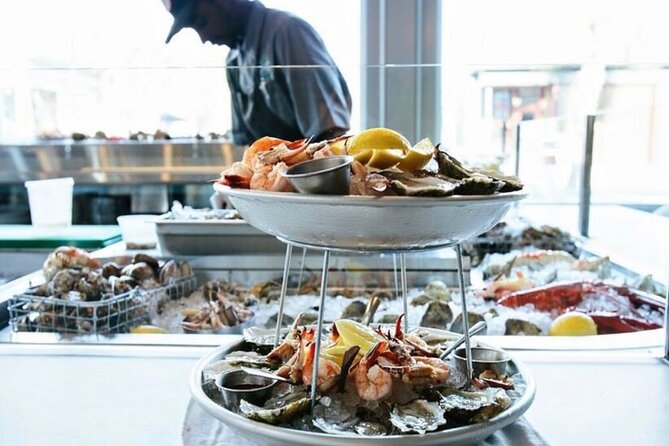
The food portion is spread across four restaurant stops. These are sit-down tastings with VIP access, intended to help the group move past ordinary lines and receive signature dishes in a planned sequence.
Past menus have included:
- She-crab soup
- A rice and chicken dish
- Carolina Gold rice
- A pulled pork slider
- Dessert
That is enough food to function as lunch for most people. Several dishes are served in tasting portions, so you receive variety without committing to a full entrée at each location.
I like this format better than a tour built around tiny samples from ten shops. Four stops give the guide time to explain what you are eating, and sit-down service is more comfortable than standing on a sidewalk with a paper tray.
Still, this is a moving meal. One food-focused rating described the experience as eat and walk, with little time to savor each course or enjoy a drink. That is fair. You are on a schedule, and the group must keep moving between history stops and restaurants.
Alcohol is not included. You can buy a cocktail or another alcoholic drink at the venues if you wish, but doing so may slow you down and add to the cost. Since the tour is already designed around a tight schedule, I would treat drinks as optional rather than central to the experience.
Food quality appears to be generally strong, especially for the soup and dessert, though not every dish will impress every palate. One assessment found the food merely average while still praising the guide’s city and American history knowledge. That is a useful warning: book this for the combination of food and place, not as a substitute for a carefully planned fine-dining afternoon.
The guides can shape the whole experience
The guide is the key variable here. Paige is repeatedly praised for her friendly personality, clear explanations, and strong grasp of Charleston and Lowcountry cuisine. Jeff is remembered for adding a strong historical angle, while Emerson has been appreciated for broad knowledge of the city and American history.
You can expect plenty of opportunities to ask questions. The group size tops out at 15, which keeps the experience more personal than a large coach tour. A patient guide can let the group pause for questions without losing control of the schedule.
The strongest guides tie every dish to a story. She-crab soup becomes more than soup. Rice becomes a doorway into agriculture, African foodways, and the Lowcountry. A pulled pork slider becomes part of a broader conversation about regional cooking.
The experience is less successful if you want a slow, restaurant-by-restaurant tasting. The guide has to balance four food stops, four historic areas, walking time, and a full lunch. You will get more from it if you listen while walking and save long restaurant conversations for another meal.
Timing, walking, and practical comfort
The stated duration is approximately 2 hours 30 minutes. Some departures have taken closer to two hours, so do not schedule another activity immediately afterward based on the published end time alone.
The tour begins at 195 E Bay Street and ends back at the same meeting point. That makes planning easy, especially if you are staying or sightseeing in central Charleston. It is near public transportation, and a mobile ticket is accepted.
You should wear shoes suited to city walking. The route includes several outdoor stops, and poor weather can cancel the experience. There are opportunities for bathroom breaks, which is helpful when the tour combines food, walking, and several hours in the historic district.
Most people can participate, and service animals are allowed. Children aged 0 to 6 may join, but their food is not included. Families should factor that into the price and decide if a two-hour food and history walk fits their children’s attention span.
Because this is a small-group experience, it suits solo visitors and couples who enjoy meeting other people at the table. It also works well near the start of a Charleston stay, when you want an overview of local food and downtown landmarks before exploring on your own.
Is $110 a fair price?
At $110, the tour is not cheap. You are paying for four food tastings, a guided walk, VIP access at restaurant stops, and roughly two to two and a half hours of local history.
The value is strongest if you would otherwise spend money on lunch and a separate downtown history walk. The food is intended to make up a full lunch, and the guide supplies context that you would not get by ordering dishes on your own.
The value is weaker if you mainly want a leisurely meal. Alcohol costs extra, the portions are tasting portions rather than full restaurant meals, and the pace can be quick. A self-guided lunch would cost less, though it would not provide the same structure or explanation.
I would also keep the exact food lineup in mind. If you are paying mainly for shrimp and grits, this is the wrong reason to book. If you want several local tastes, especially she-crab soup and rice-based dishes, plus a useful introduction to Charleston’s past, the price is easier to justify.
Who should book this Charleston food walk?
I would recommend it to first-time visitors who want food and history in the same outing. It gives you a compact look at the French Quarter, waterfront area, Old Exchange, and City Market while introducing dishes that are difficult to understand without local context.
It is also a good fit for people who prefer guided structure. You do not need to research four restaurants or plan a walking route. The guide handles the sequence, and the food arrives as part of the story.
History-minded eaters should be especially happy here. The discussion of slavery, the slave trade, African food traditions, and Gullah Geechee culture adds needed honesty to the meal. Charleston’s cuisine did not develop through elegant dining rooms alone.
I would hesitate to recommend it to anyone who wants a slow, indulgent afternoon with time for cocktails, long conversations, and full-size restaurant plates. The tour moves along, and the schedule may be shorter than advertised.
Should you book it?
Book this tour if you want a full lunch in tasting form, a compact walk through central Charleston, and a guide who can explain how French, African, Caribbean, pirate, and Lowcountry influences shaped the food.
Skip it if your main goal is shrimp and grits, a leisurely restaurant meal, or a precisely timed two-and-a-half-hour activity. For most first-time visitors, though, the combination of she-crab soup, rice, barbecue, dessert, and serious local history offers good value. Leave room in your schedule, wear comfortable shoes, and arrive ready to listen as well as eat.
FAQ
How long does Charleston’s Historic Downtown Food Tour last?
The stated duration is approximately 2 hours and 30 minutes. Some departures have finished in about two hours, so it is wise to allow flexibility afterward.
Where does the tour begin and end?
The tour begins at 195 E Bay Street in Charleston, South Carolina, and ends back at the same meeting point.
How many restaurant stops are included?
Lunch tastings are included at four different restaurant stops. The tour also includes walks and history discussions at Rainbow Row, Pineapple Fountain, the Old Exchange and Provost Dungeon, and Charleston City Market.
Is alcohol included in the $110 price?
No. Alcoholic beverages are not included, but you may purchase drinks at the venues if you wish.
Is food included for children ages 0 to 6?
Children ages 0 to 6 may attend, but food is not included with their ticket.
What happens if bad weather cancels the tour?
The experience requires good weather. If it is canceled because of poor weather, you will be offered a different date or a full refund. You can also cancel for a full refund if you cancel at least 24 hours before the start time.
Just added in Charleston
- Middleton Place Admission with Self Guided Tour and Lunch★ 4.5 · 326 reviews
- Charleston Ghosts of Liberty Guided Walking Tour★ 4.5 · 473 reviews
- 2-Hour Guided Kayak Eco Tour in Charleston★ 5.0 · 954 reviews
- Charleston’s Best Highlights: History, Culture & Architecture★ 5.0 · 422 reviews
- Undiscovered Charleston: Half Day Food, Wine & History Tour with Cooking Class★ 5.0 · 948 reviews
- Savor the Flavors of Charleston Walking Food Tour★ 4.5 · 881 reviews
- Afternoon Schooner Sightseeing Dolphin Cruise on Charleston Harbor★ 4.5 · 620 reviews
- Real Hauntings of Charleston! (Small Group Ghost Tour)★ 5.0 · 724 reviews
Food & Drink, compared.
New Orleans Food Walking Tour of the French Quarter with Small-Group Option
Read our review →
NYC Bus Tour of Brooklyn, Bronx, Queens: Art, Food & Sports
Read our review →
Savannah First Squares Culinary & Cultural Walking Food Tour
Read our review →
Chinatown & Little Italy Food Tour with 7 Flavorful Tastings
Read our review →
Food Tour with 5+ Tastings of Local Delicacies
Read our review →
Browse the lists this tour appears in