
Reviewed · WORKSHOPS
New Orleans Demonstration Cooking Class with Meal
New Orleans cooking tells the city’s story. At the New Orleans School of Cooking, you watch a local chef prepare Creole favorites, hear the stories behind them, and eat a full set of generous samples in a 19th-century molasses warehouse. I like the lively mix of food instruction and Louisiana history, and I like that you leave with recipes rather than just a full stomach. The main drawback is the class size, which can reach 68 people and may feel more like a cooking show than a small workshop.
The roughly two-hour session costs $43 per person. That is a strong price for several dishes, one local beer, iced tea, coffee, water, recipes, and a chef-led performance. You do not cook yourself, so this suits anyone who wants to learn without chopping onions or washing pans, but it may disappoint you if you came for hands-on training.
In This Review
- Key points to know before you book
- A cooking lesson inside an old molasses warehouse
- The first lesson: Cajun, Creole, and the New Orleans table
- Roux, spices, and the dishes on the table
- From demonstration to a generous meal
- Why the recipes make the class more useful
- What the group size means in practice
- Price, timing, and planning details
- Who should book this New Orleans food experience?
- Should you book the $43 cooking class?
- FAQ
- Where does the cooking class begin and end?
- How long does the experience last?
- Is this a hands-on cooking class?
- What food might be served?
- Are drinks included?
- Can dietary restrictions be accommodated?
- How many people can attend?
- What is the cancellation policy?
Key points to know before you book
- The meal is built into the lesson: You sample generous portions of the dishes prepared in front of you, not just a tiny taste.
- The roux gets proper attention: You learn why this dark, careful base matters in gumbo and other Louisiana dishes.
- The chef makes the difference: Presenters such as Lynn, Chef Eric, Chef Dianne, Vivian, Chef Austin, and Chef Terri have earned praise for humor, storytelling, and clear instruction.
- The setting is full of character: The class takes place at the New Orleans School of Cooking in a converted 19th-century molasses warehouse on St. Louis Street.
- This is demonstration only: You watch, ask questions, eat, and take home recipes. You do not prepare the dishes during class.
- Dietary help is available with planning: Vegan, gluten-free, and nut-free substitutions can be arranged for a $5 charge, but those alternative dishes are not demonstrated.
A cooking lesson inside an old molasses warehouse
Your meeting point is the New Orleans School of Cooking at 524 St. Louis Street, in the French Quarter. The address puts you in a useful part of town for a food-focused morning or afternoon, and the school is near public transportation. The activity begins and ends at the same place, so you do not need to coordinate a second pickup point.
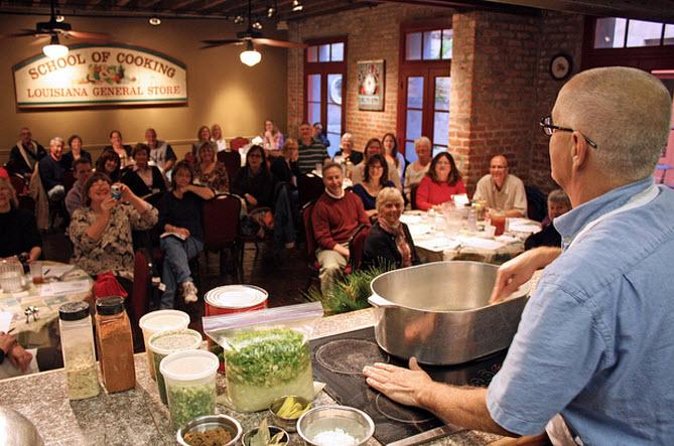
The setting matters. This is not a polished hotel demonstration kitchen or a private home. You sit among other food lovers in a converted 19th-century molasses warehouse, a fitting home for a lesson about ingredients, trade, migration, and local cooking. The room also helps explain why the class feels part culinary show and part cultural talk.
Expect a lively public class rather than an intimate appointment. The stated maximum is 68 people, and one account described a group of about 48. That size allows the price to stay reasonable, but it also creates a clear tradeoff: you may not have a front-row view, and side conversations can make the chef harder to hear.
I would sit as close to the demonstration area as possible and arrive ready to listen. The class works best when the room does. Most of the value comes from the chef’s running explanation, so a noisy table can take away from the experience.
A few more options to weigh up in New Orleans
- New Orleans: Cajun and Creole Cooking Class
★ 4.9 · 730 reviews - Undiscovered Charleston: Half Day Food, Wine & History Tour with Cooking Class
★ 5.0 · 948 reviews
The first lesson: Cajun, Creole, and the New Orleans table
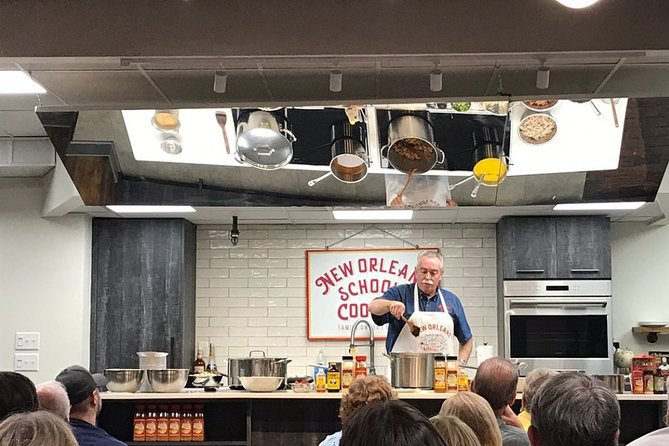
The chef begins by placing Louisiana cooking in context. You hear how several cultural influences shaped the food and why Cajun and Creole cooking overlap without being exactly the same. The distinction can be slight, and the instructor welcomes questions about it.
That background is not filler. A dish such as gumbo makes more sense when you understand that Louisiana cooking developed through many traditions and local ingredients. The chef adds anecdotes, regional stories, and practical details as the food comes together, giving you a better sense of how these recipes belong to New Orleans.
The tone depends on the chef scheduled for your class. The school has used presenters including Lynn, Chef Eric, Chef Dianne, Vivian, Chef Austin, Chef Terri, and Chef Faucheaux. Their styles vary, but the strongest presentations pair solid cooking instruction with Southern charm, jokes, and stories about Louisiana food culture.
Chef Eric receives especially strong praise for making the session both serious and funny. Lynn is noted for entertaining explanations of New Orleans cooking history, while Chef Dianne brings clear instruction about recipes and food culture. Chef Austin has been praised for answering questions, telling stories, and keeping the class well fed.
That variation is worth understanding. You are booking the school’s format rather than a guaranteed performance by one particular chef, unless your reservation names one. Still, the repeated praise for the instructors suggests that the presenter is a major part of the experience.
Roux, spices, and the dishes on the table
The heart of the class is the live preparation of classic Louisiana dishes. You may see gumbo, jambalaya, crawfish étouffée, shrimp or chicken Creole, corn and crab bisque, shrimp and artichoke soup, or other dishes listed for the menu.
The exact selection can change. That is useful if you return to New Orleans, since one returning participant found a different menu on a later visit. It also means you should treat the sample menu as a guide, not a promise that every listed item will appear in your session.
Gumbo usually provides one of the clearest lessons. The chef explains the role of a good roux, including the care needed to build flavor before the other ingredients go in. You also learn about the spice blends that give Louisiana food its character.
One practical detail comes through clearly: the food is not prepared to be aggressively hot. Seasonings such as Joe’s Stuff, Bayou Blend, and a hotter blend are placed on the table so you can adjust the flavor yourself. If you expect every dish to arrive fiery, you may find the food mild. If you prefer control, this is a sensible approach for a large mixed group.
Jambalaya gives the class another useful angle. You watch how a substantial rice dish is built, then taste it while the preparation is still fresh in your mind. Crawfish étouffée, shrimp or chicken Creole, and soup preparations add different textures and sauces, so the meal does not feel like several versions of the same dish.
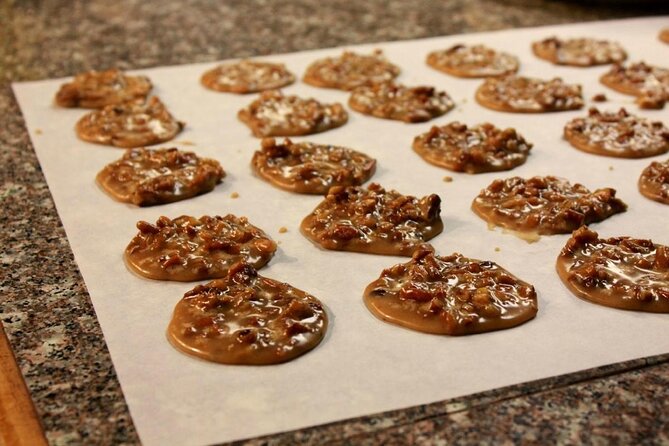
The lesson may also include desserts such as bread pudding, bananas Foster, pralines, and pecan pie. Bananas Foster brings a bit of theater to the session, especially when the dessert is finished with a flame. It is a small showpiece, but it helps keep the two-hour class lively after the savory dishes.
From demonstration to a generous meal
You do not simply watch the cooking and leave hungry. After each demonstration, the prepared food is served as a tasting meal. The portions are described as generous, and the combination of soup, several main dishes, and dessert can easily replace a regular lunch.
The format is smart for a first introduction to New Orleans food. Instead of ordering one entrée and wondering what you missed, you get to sample several dishes in one sitting. You can compare gumbo with jambalaya, taste the difference between a Creole-style preparation and a rich étouffée, and decide what you want to seek out later in the French Quarter.
Drinks are included: one local beer, iced tea, coffee, and water. The beer is a pleasant Louisiana touch, while iced tea and coffee give nonbeer drinkers an easy alternative. You should not think of the drink service as a full tasting session, but it adds real value to a $43 experience.
The meal also turns the lesson into a social event. You are seated with other people, and the chef addresses the whole room. That can be fun if you enjoy a shared table and public presentation. It is less appealing if you want quiet conversation or a private cooking lesson.
Bring an appetite. Several dishes are prepared and sampled, and the food is one of the most praised parts of the experience. At the same time, remember that the meal is made for a large group. The chef cannot tailor each dish to individual tastes, and the seasonings are kept broadly approachable.
A different kind of day out entirely:
- New Orleans Premier Ghost, Voodoo and Vampire Walking Tour
★ 4.5 · 12,856 reviews - New Orleans Steamboat Natchez Jazz Cruise with Dinner Option
★ 4.0 · 7,533 reviews - Adults-Only New Orleans Ghost, Crime, Voodoo, and Vampire Tour
★ 5.0 · 6,545 reviews - New Orleans Food Walking Tour of the French Quarter with Small-Group Option
★ 5.0 · 6,118 reviews
Why the recipes make the class more useful
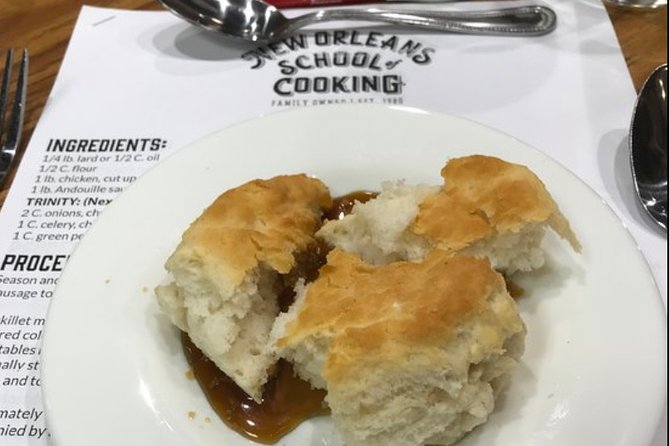
A restaurant meal gives you flavor. This class gives you a way to try the food again at home. You receive copies of the recipes, along with the cooking methods discussed during the demonstration.
That makes the experience more than a two-hour stop for lunch. The chef explains techniques such as building a roux and using spice blends, so you leave with a framework rather than a list of ingredients alone. Several people have found the recipes motivating enough to try gumbo, red beans and rice, or the demonstrated dishes at home.
The recipe handout is especially useful if you are new to Louisiana cooking. You may learn what to look for in a roux, how to think about seasoning, and how the components of a dish fit together. Experienced home cooks can also pick up small tips, even if the class does not offer advanced kitchen practice.
There is also a diploma option. If you submit photos of yourself cooking the recipes at home, you can receive a diploma. That is a playful extra rather than a serious credential, but families and cooking enthusiasts may enjoy having a small reminder of the class.
What the group size means in practice

The class can accommodate up to 68 people. That number is important when setting expectations. You are not standing at a counter with a chef and four other students. You are part of a larger audience watching a live food demonstration.
The benefit is energy. A good chef can work a room, take questions, tell stories, and turn the meal into a shared event. The cost is personal attention. You may not get a detailed answer to every cooking question, and a talkative group can interfere with the presentation.
One account specifically found a group of 48 larger than expected and had trouble hearing because some people were talking. I would not treat that as a reason to dismiss the class, but I would take it seriously if you need a quiet setting or close instruction.
The format works best for couples, families, friends, solo visitors who enjoy meeting people, and anyone who likes food with a bit of showmanship. It is also a good choice for the person in your group who does not cook. The lesson is entertaining even if you have no plans to recreate the recipes.
If your main goal is hands-on practice, choose a different type of class. Here, the appeal is that you can relax and eat while an expert handles the work. As one happy participant put it, the fun is in doing none of the cooking and all of the eating.
Price, timing, and planning details
At $43 per person, the value is strong. You get about two hours of instruction and entertainment, multiple food samples, one local beer, iced tea, coffee, water, and recipes. A comparable restaurant meal could cost that much before drinks, and it would not include the history lesson or cooking guidance.
The price does not include gratuity. A tip of 15 to 20 percent is recommended, so include that in your budget. Cash is useful for this, though the provided information does not state that cash is required.
The class is offered in English and uses a mobile ticket. Confirmation arrives at booking. The experience is often reserved about 24 days ahead, so I would not leave it until the last minute if your New Orleans dates are fixed.
You can cancel for a full refund up to 24 hours before the start time. Cancellations or changes inside that window are not refunded or accepted. If poor weather or an insufficient number of bookings causes the class to be canceled, you can choose another date or receive a full refund.
Dietary restrictions need advance attention. Call the reservation line after booking and tell the staff at check-in. For a $5 charge, the school can provide gumbo z’herbes and Creole z’herbes as vegan, gluten-free, and nut-free substitutes.
Those substitute dishes are discussed but not demonstrated, and the class cannot alter the recipes being prepared for the room. Depending on your needs, you may be able to eat the soup but not the main dish. This option helps, but it is not the same as a fully customized cooking class.
Who should book this New Orleans food experience?
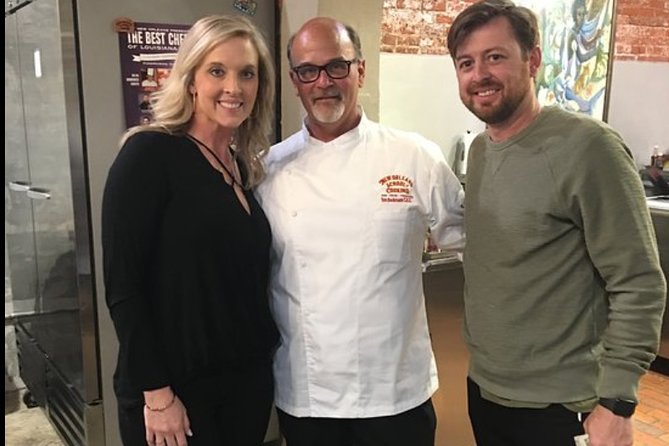
I would recommend it to you if you want a friendly introduction to Louisiana cooking, especially on a first visit. It gives you several classic flavors in one sitting and helps you understand what you are ordering at restaurants afterward.
It also suits you if your group includes mixed interests. A serious home cook can collect tips and recipes, while a noncook can enjoy the stories, food, and dessert presentation. The class is social, lighthearted, and filling without requiring you to perform in front of the room.
Families may appreciate the clear structure and generous samples, though the large group and two-hour presentation may not suit very young children who need constant movement. Couples and friends can treat it as both a meal and a cultural activity.
I would think twice if you want a small class, personal coaching, or a chance to prepare every dish yourself. The format is watch-and-learn, not hands-on. I would also plan carefully if you have strict dietary needs, since the substitutes cost extra and are not part of the live demonstration.
Should you book the $43 cooking class?
Yes, if you value food, local stories, and a full meal more than private instruction. The strongest reasons to book are the generous sampling, the chef’s personality, the useful recipes, and the chance to learn about gumbo, jambalaya, roux, and Creole cooking in one compact session.
Go in expecting a lively room, not a quiet seminar. Sit where you can hear, arrive hungry, ask questions when invited, and set aside money for a tip. If you do that, this is one of the more practical ways to turn a French Quarter visit into a meal you understand and may even recreate at home.
FAQ
Where does the cooking class begin and end?
It begins and ends at the New Orleans School of Cooking, 524 St. Louis Street, New Orleans, Louisiana 70130. The activity does not include a separate drop-off point.
How long does the experience last?
The demonstration and meal take about two hours.
Is this a hands-on cooking class?
No. This is a demonstration class. You watch the chef prepare the dishes, ask questions, eat the samples, and take home the recipes.
What food might be served?
The menu may include corn and crab bisque, gumbo, jambalaya, shrimp or chicken Creole, crawfish étouffée, shrimp and artichoke soup, bread pudding, bananas Foster, pralines, and pecan pie. The exact menu can vary.
Are drinks included?
Yes. The experience includes one local beer, iced tea, coffee, and water.
Can dietary restrictions be accommodated?
Yes, with advance notice. For a $5 charge payable at check-in, vegan, gluten-free, and nut-free gumbo z’herbes and Creole z’herbes substitutions are available. These dishes are not demonstrated.
How many people can attend?
The activity can have a maximum of 68 participants. The class is designed as a public group demonstration rather than a small private lesson.
What is the cancellation policy?
You can cancel at least 24 hours before the start time for a full refund. Cancellations or changes made less than 24 hours before the start time are not refunded or accepted. If the class is canceled because of poor weather or too few bookings, you can choose another date or receive a full refund.
Just added in New Orleans
- New Orleans: French Quarter, Voodoo and Cultural Experience★ 4.5 · 972 reviews
- From New Orleans: Oak Alley Plantation Tour★ 4.5 · 443 reviews
- New Orleans: Voodoo Queen Tour of French Quarter★ 4.7 · 482 reviews
- New Orleans: Bayou Tour in Jean Lafitte National Park★ 4.8 · 428 reviews
- New Orleans: Sunday Steamboat Jazz Cruise + Optional Brunch★ 4.3 · 470 reviews
- New Orleans: Whitney Plantation Tour with Transportation★ 4.7 · 619 reviews
- New Orleans: Guided Swamp Cruise by Tour Boat★ 4.7 · 570 reviews
- New Orleans: Oak Alley Plantation & Airboat Swamp Combo Tour★ 4.7 · 906 reviews
Workshops, compared.

Undiscovered Charleston: Half Day Food, Wine & History Tour with Cooking Class
Read our review →




Beginner-Friendly Waikiki Beach Surfing Lesson
Read our review →Browse the lists this tour appears in