
Reviewed · COOKING CLASSES
New Orleans Hands-On Cooking Class with Meal
Bring your appetite to the kitchen. This three-hour class at the New Orleans School of Cooking gives you a practical way to meet Louisiana cuisine: you chop, season, stir, cook, and then sit down to eat what you made. I like the small groups of up to 10 and the fact that the chef does not simply perform while you watch. I also like the local touch of Abita Amber beer, Louisiana dishes, an apron, and recipes to take home. The main consideration is the $162 price, which is a serious lunch or dinner bill, and you should expect to spend much of the class on your feet.
The class is a good fit if you want more than another restaurant meal in the French Quarter. It gives you useful cooking skills and some cultural context, but it is still a polished visitor experience rather than a rough-around-the-edges neighborhood kitchen. You should also skip a large meal beforehand, since the class includes several courses, drinks, and plenty of tasting.
In This Review
- Key Things To Know Before You Book
- Starting at 524 St. Louis Street
- A Small Class With Real Cooking Time
- The Menu: From Roux to Bananas Foster
- Chefs Who Make the Class Work
- Eating What You Cook
- What You Take Home Besides Recipes
- Is $162 a Fair Price?
- Who Will Enjoy It Most?
- Timing, Booking, and Cancellation
- Should You Book the New Orleans Cooking Class?
- FAQ
- Where does the cooking class begin?
- Where does the experience end?
- How long does the class last?
- How many people can join the class?
- What food might I prepare?
- Are drinks included?
- Is an apron included?
- What is the minimum age?
- Can I cancel for a refund?
Key Things To Know Before You Book
- You cook a full Louisiana meal: You prepare a starter, main course, and dessert, then eat the finished dishes at the school.
- Five cooktops serve up to 10 people: Small groups help you get hands-on time, though solo participants may be paired with someone else.
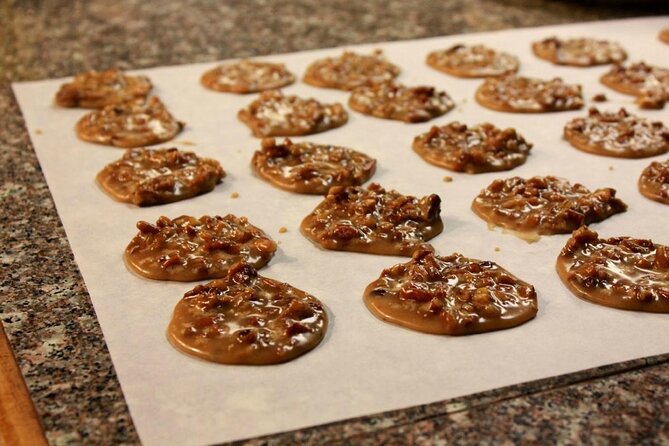
- The menu features New Orleans classics: Possible dishes include yam-crab bisque, gumbo, BBQ shrimp and grits, jambalaya, bananas Foster, and pralines.
- The chef brings more than recipes: Instructors add cooking tips, local food history, humor, and help when a step becomes tricky.
- Your ticket includes useful extras: Wine, Abita Amber beer, nonalcoholic drinks, recipes, and a white apron are included.
- Plan around the three-hour schedule: The class begins and ends at 524 St. Louis Street, in the French Quarter.
Starting at 524 St. Louis Street
The experience begins at the New Orleans School of Cooking, at 524 St. Louis Street. That puts you in the French Quarter, close to public transportation and within easy reach of many central New Orleans sights.
This is not a cooking class in a remote suburb that requires a special taxi ride. You can fit it into a day of exploring the French Quarter, though I would avoid scheduling something immediately afterward. The class lasts about three hours, and cooking, eating, and conversation can make the time feel full.
The setting also matters because the school connects the food to New Orleans. You are not just following a recipe for gumbo or grits. The instructors explain how Louisiana cooking draws from different cultures and how local techniques shape the final dish. That background gives the meal more meaning than a standard restaurant order.
You should arrive ready for an active session. The dress code is casual, but comfortable clothing and shoes make sense since you will be standing and working around a cooktop. The school provides the apron, so you do not need to bring special kitchen gear.
A few more options to weigh up in New Orleans
- New Orleans Demonstration Cooking Class with Meal
★ 5.0 · 3,000 reviews - New Orleans: Cajun and Creole Cooking Class
★ 4.9 · 730 reviews - Hands-on Cajun Roux Cooking Class in New Orleans
★ 5.0 · 356 reviews
A Small Class With Real Cooking Time
The class allows a maximum of 10 people and uses five cooktops. In practical terms, that usually means two people working at each station, with solo participants potentially paired with another person.
I like this setup more than a large demonstration class. You are not simply watching a chef hold up a finished dish. You cut ingredients, season food, follow instructions, and take part in the cooking. The arrangement also gives the chef and assistants a chance to help when you need it.
The class is designed for all skill levels. You do not need professional experience, and you do not need to be an enthusiastic home cook. One especially useful feature is the chef’s presence during the harder steps. Making a roux, balancing seasoning, or handling a dessert such as bananas Foster can seem intimidating at home, but clear direction makes the process manageable.
The class is still social. You share equipment, work with another person if needed, and later sit down for a meal with the group. That can be a plus for solo participants, couples, and friends who want an activity with conversation built in. If you prefer quiet, private instruction, this format may feel more communal than personal.
The Menu: From Roux to Bananas Foster
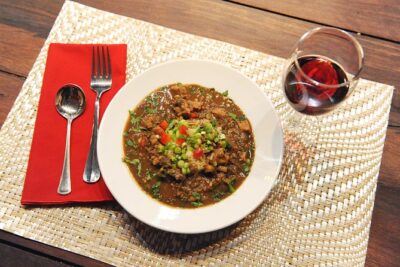
The sample menu offers a choice of dishes, but you should confirm the exact selections available for your class. Possible starters are yam-crab bisque or gumbo. The main course may be BBQ shrimp and grits or jambalaya, followed by bananas Foster or pralines.
That menu gives you a useful tour of Louisiana cooking in a single sitting. Gumbo introduces the importance of seasoning and the slow building of flavor. The bisque offers a different path, with seafood and a smoother texture. BBQ shrimp and grits combines a rich sauce with a Southern staple, while jambalaya shows how rice can carry meat, seafood, vegetables, and spices in one dish.
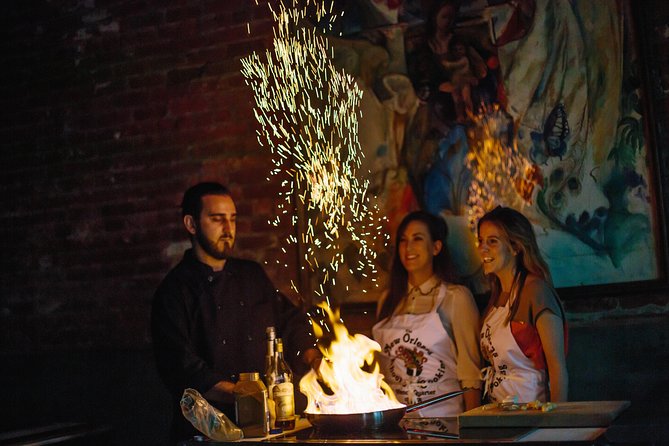
Dessert keeps the meal firmly tied to New Orleans. Bananas Foster is especially fun because the preparation has a bit of drama and teaches a technique you can repeat at home. Pralines offer a sweeter, more traditional Louisiana finish.
The course sequence also helps the class feel organized. You typically work through one course, eat it, then move on to the next. That rhythm keeps you from preparing the entire meal at once and waiting around for everything to finish. It also means you get to taste each dish while the cooking process is still fresh in your mind.
One practical point: the exact result depends partly on your group. A large family or group of friends may naturally divide tasks differently from a pair of solo participants. The five-cooktop format keeps the class manageable, but it does not make the session private.
Chefs Who Make the Class Work
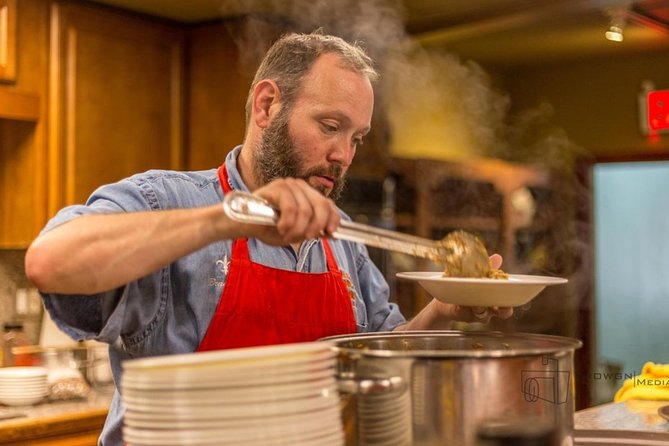
The chef is central to the value of this experience. Instructors named in the feedback include Chef Eric, Chef Austin, Chef Cindy, Chef Ricardo, Chef Vivian, Chef G, and Eduardo. The staff can vary by date, but the common thread is a lively teaching style with clear directions and local context.
Chef Eric is praised for being friendly, patient, and easy to follow. Chef Austin is described as funny and generous with practical tips. Chef Cindy’s format, moving from cooking to eating for each course, helps the session feel smooth. Chef Ricardo brings humor and information, while Chef Vivian adds music and energy to the room.
Those details matter because a cooking class can become dull if the instructor talks too much or leaves you unsure what to do next. Here, the strongest part of the experience appears to be the balance between instruction and participation. You get help, but you also get a real role in preparing the food.
Several people specifically enjoyed the food history and the way the chef explained the mix of cultures behind New Orleans cooking. That is a valuable addition. You leave with more than a list of ingredients, since you also understand why certain dishes belong to this place.
Still, the personality of the chef will shape your day. If you enjoy humor, group conversation, and a lively kitchen, that is likely a strength. If you want a silent, technical lesson with exact individual coaching, the social style may not suit you as well.
A different kind of day out entirely:
- New Orleans Premier Ghost, Voodoo and Vampire Walking Tour
★ 4.5 · 12,856 reviews - New Orleans Steamboat Natchez Jazz Cruise with Dinner Option
★ 4.0 · 7,533 reviews - Adults-Only New Orleans Ghost, Crime, Voodoo, and Vampire Tour
★ 5.0 · 6,545 reviews - New Orleans Food Walking Tour of the French Quarter with Small-Group Option
★ 5.0 · 6,118 reviews
Eating What You Cook
The best payoff comes when you sit down to eat the meal you helped prepare. That simple step changes the experience from a lesson into a shared New Orleans meal.
The class includes red and white wine, Abita Amber beer, iced tea, lemonade, and coffee. Nonalcoholic drinks make the experience workable for people who do not drink, while the local beer gives the meal a clear Louisiana connection.
The amount of food is another reason to plan ahead. You prepare three courses and receive drinks, so skipping lunch or eating only a light meal before the class is sensible. You should not book this expecting a small tasting menu. The goal is to cook and eat a full dinner.
I also like the way the meal creates a natural finish. After standing at a cooktop and paying attention to each step, you can sit down and enjoy the result without rushing off to another attraction. It is a relaxed ending, though the three-hour schedule still keeps the activity focused.
The food is not guaranteed to match the work of a restaurant kitchen, and your group will have a hand in it. That is part of the point. You may get uneven browning, a slightly different level of spice, or a dish that benefits from the chef’s correction. The reward is knowing that your own hands helped make it.
What You Take Home Besides Recipes
The included white apron is a practical souvenir, listed with an $18.99 value. It is more useful than a generic trinket because you can wear it when you try the recipes later.
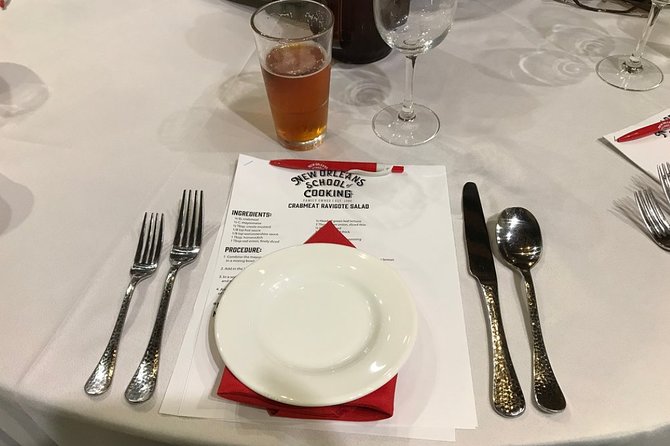
You also receive a copy of the class recipes. That turns the class into something you can use after New Orleans. The recipes are especially valuable for people who want to recreate gumbo, grits, bananas Foster, or other dishes but have never prepared them before.
There is also a diploma available if you submit photos of yourself making the recipes at home. This is a playful extra rather than a reason to book the class, but it gives you a small incentive to use what you learned.
The recipe collection will not replace practice. You still need to find the ingredients, repeat the techniques, and adjust seasoning to your taste. But the class gives you a better starting point than buying a cookbook without seeing the process.
Is $162 a Fair Price?
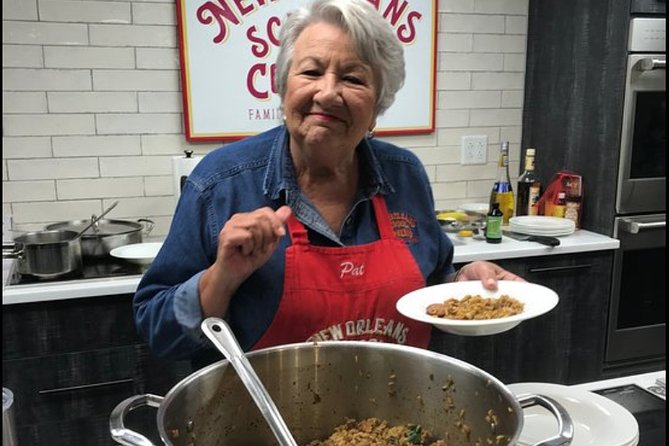
At $162 per person, this is not a budget meal. You are paying for a three-hour activity, instruction from a professional chef, a full meal, alcoholic and nonalcoholic drinks, an apron, and recipes.
The value depends on how you measure the experience. If you only want to eat gumbo and bananas Foster, a restaurant will give you food for less. If you want a meal plus entertainment and a skill you can take home, the price becomes easier to defend.
I consider the small group the key value point. A much larger class could leave you standing at the edge of the action, watching someone else chop and stir. With 10 people and five cooktops, you have a reasonable chance to take part throughout the session.
The price also includes drinks, which can add noticeably to the cost of a restaurant meal. The apron and recipes have lasting use, although you should not treat the listed apron value as a major discount.
This is best viewed as a food experience, not a cheap cooking lesson. For a special occasion, date, family activity, or memorable first day in New Orleans, the cost may feel justified. If your trip budget is tight, compare it with the price of a good meal and decide if the hands-on element matters to you.
Who Will Enjoy It Most?
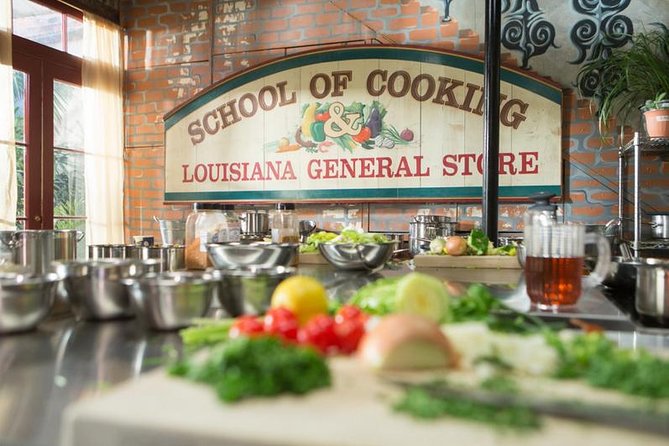
I would recommend this class to couples who want an easy date activity, friends who enjoy cooking together, and families with adult children. The minimum age is 18, so it is not suitable for younger children.
Solo participants can also fit in well. You may be paired with another person, but the small group format gives you an immediate way to meet people without committing to a full-day tour.
You do not need to be a skilled cook. Several of the most useful elements are the chef’s step-by-step guidance and the chance to ask for help. You can come because you love food even if you rarely cook at home.
The class may be less appealing if you have limited time, dislike group activities, or cannot comfortably stand and cook for much of three hours. It also may not be the right choice for someone seeking a fully private experience.
Dietary needs should be shared when booking. Special dietary requests carry a $10 fee payable on site, so ask about your requirements in advance rather than assuming the standard menu can be changed without charge.
Timing, Booking, and Cancellation
This experience is often booked about 37 days ahead, so I would not leave it until the final morning of your trip if the class is important to you. Confirmation is provided when you book, and the activity is offered in English.
The class starts and ends at 524 St. Louis Street. There is no separate drop-off at another attraction, so you can plan the rest of your day from the French Quarter.
A minimum number of participants is required. Even after confirmation, the class can be canceled if that minimum is not reached. In that case, you are offered another date or experience, or a full refund.
You can cancel for a full refund up to 24 hours before the start time. Cancellations or changes made within 24 hours are not refunded or accepted. All times follow New Orleans local time, so keep that in mind if you are rearranging plans.
Should You Book the New Orleans Cooking Class?
Book it if you want to understand New Orleans food by making it, not just ordering it. The strongest reasons are the hands-on format, the compact group, the full three-course meal, and chefs who mix cooking instruction with humor and local food background.
I would especially choose it for a first visit, a date, or a rainy day when you want a real activity rather than another walk through the French Quarter. You will leave with recipes, an apron, and a better sense of how Louisiana dishes come together.
Skip it if $162 feels too high for a meal-based activity, if you need a private lesson, or if standing for several hours will be uncomfortable. For everyone else, this is a well-organized and highly praised way to spend half a day, with the rare bonus that dinner is partly your own work.
FAQ
Where does the cooking class begin?
The class begins at the New Orleans School of Cooking, located at 524 St. Louis Street, New Orleans, Louisiana 70130.
Where does the experience end?
The activity ends back at the meeting point on St. Louis Street.
How long does the class last?
The class lasts approximately three hours.
How many people can join the class?
The maximum is 10 participants, using five cooktops. Solo participants may be paired with another person.
What food might I prepare?
The possible menu includes yam-crab bisque or gumbo, BBQ shrimp and grits or jambalaya, and bananas Foster or pralines.
Are drinks included?
Yes. The ticket includes red and white wine, Abita Amber beer, iced tea, lemonade, and coffee.
Is an apron included?
Yes. You receive a New Orleans School of Cooking white apron to take home.
What is the minimum age?
The minimum age is 18.
Can I cancel for a refund?
Yes. You can cancel up to 24 hours before the start time for a full refund. Cancellations and changes made within 24 hours are not refunded or accepted.
Just added in New Orleans
- Whitney Plantation Tour with Transportation from New Orleans★ 4.5 · 1,351 reviews
- New Orleans Yellow Fever Ghost Tour★ 5.0 · 1,298 reviews
- VIP Jazz Dinner Cruise with Private Tour and Open Bar Option★ 4.5 · 838 reviews
- New Orleans Delicious Donuts & Beignets: A Sweet Walking Tour★ 5.0 · 928 reviews
- New Orleans Private Carriage Tour of the French Quarter★ 5.0 · 537 reviews
- The Escape Game at the French Quarter in New Orleans★ 5.0 · 364 reviews
- New Orleans French Quarter Photo Shoot★ 5.0 · 462 reviews
- The Ghosts of New Orleans Tour★ 4.5 · 702 reviews
Cooking Classes, compared.
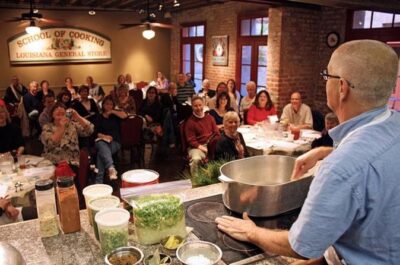
New Orleans Demonstration Cooking Class with Meal
Read our review →
Undiscovered Charleston: Half Day Food, Wine & History Tour with Cooking Class
Read our review →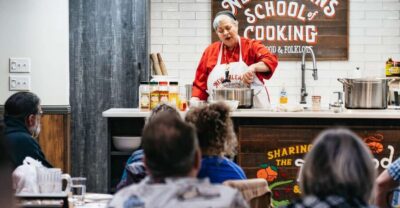
Hands-on Cajun Roux Cooking Class in New Orleans
Read our review →Browse the lists this tour appears in