
Reviewed · WALKING TOURS
The Constitutional Walking Tour of Philadelphia
Philadelphia’s best history lesson has sidewalks. The Constitutional Walking Tour packs America’s founding story into a 1.25-mile route through Independence National Historical Park, with stops at Independence Hall, the Liberty Bell Center, Franklin Court, Betsy Ross House, and more. At $30 per person, it is a brisk introduction to the city’s most important sights.
I like the route’s wide range of historic stops and the way an energetic guide connects buildings, people, and events. I also like the efficient 75-minute format, which helps you get your bearings before deciding which places deserve a longer visit. The main drawback is important: you see the sites from outside. Admission to Independence Hall, the Liberty Bell Center, and other attractions is not included.
Guides such as PJ, Connor, Will, Avi, John, Abby, Michael, Jon, and Viv have earned praise for clear explanations, warmth, and good answers to questions. Still, guide quality can vary. A few visitors found a guide too theatrical, too quiet, or too fast to hear over traffic.
In This Review
- Five Things to Know Before You Book
- What This Philadelphia Walking Tour Does Well
- Starting at the National Constitution Center
- From the President’s House to the Declaration House
- Seeing the Liberty Bell and Independence Hall
- Congress Hall, Old City Hall, and The Signer
- The Philosophical Society, Library Hall, and Two Banks
- Carpenters’ Hall and New Hall Military Museum
- Franklin Court and Christ Church
- Betsy Ross House and Arch Street Meeting House
- Christ Church Burial Ground and Benjamin Franklin’s Grave
- What $30 Buys You
- Walking Conditions, Weather, and Group Size
- Who Should Book It?
- Final Verdict: A Useful First Walk Through Philadelphia
- FAQ
- How long is the Constitutional Walking Tour of Philadelphia?
- How far do you walk?
- Where does the tour begin?
- Where exactly should you meet the guide?
- Where does the tour end?
- Does the tour go inside Independence Hall?
- Does the tour include entry to the Liberty Bell Center?
- Are admission fees to the historic sites included?
- What happens if it rains?
- How early should you arrive?
- How many people can join the tour?
- Is the tour offered in multiple languages?
- Is food included?
- Can I cancel for a full refund?
Five Things to Know Before You Book
- The tour covers more than 20 historic sites: You move through the core of Philadelphia’s Independence National Historical Park rather than focusing on just one building.
- The Liberty Bell and Independence Hall are exterior stops: You can see them and hear their stories, but indoor admission is separate.
- It is a brisk 75-minute walk: The route is manageable, but there are few places to sit, so wear comfortable shoes.
- The meeting point is outside the National Constitution Center: Check in 15 minutes early by the three large stone benches at 525 Arch Street.
- Rain or shine means exactly that: Bring water and weather-appropriate clothing. The tour operates in all weather.
What This Philadelphia Walking Tour Does Well
This is an orientation tour first, and a deep historical visit second. In a short time, you walk past the places where the Declaration of Independence and the United States Constitution took shape. That gives you a useful map of Old City Philadelphia and helps you choose what to visit afterward.
The guide does most of the work. The best guides turn a row of brick buildings into a political drama filled with arguments, compromises, ambition, and practical problems. Connor received especially strong praise for his command of the subject and his ability to keep personal politics out of the presentation. PJ was repeatedly praised for being friendly, attentive, and willing to answer questions.
The format also works well for families. One parent described the route as a good fit for a fourth-grade history enthusiast, while another said the tour suited both children and adults. You do not need a specialist’s interest in early American politics to enjoy it. The stories are broad enough for a first visit, with enough detail to make the buildings meaningful.
The route is not a quiet stroll through a museum. You may hear traffic, wind, and other city noise. One guide was also reported to speak quickly, so stay near the guide if hearing every word matters to you.
More Walking Tours in Philadelphia:
- Philadelphia Old City Historic Walking Tour with 10+ Top Sites
★ 5.0 · 2,020 reviews - Philadelphia: History, Highlights & Revolution Walking Tour
★ 4.9 · 317 reviews - History and Hauntings of Salem Guided Walking Tour
★ 5.0 · 14,564 reviews
Starting at the National Constitution Center
Meet outside the main entrance of the National Constitution Center at 525 Arch Street. The meeting spot is by three large stone benches, not inside the museum. This distinction matters because one person missed the walking group after going into the building and asking for help at the guest services desk.
Arrive 15 minutes early. The tour begins with a short introduction at the Constitution Center, which makes sense as a starting point: the building is devoted to the framework of American government, while the streets ahead contain the actual places where that framework was debated and put into practice.
The Constitution Center itself is not included in the walking tour price. You can visit it separately if you want exhibits and indoor interpretation after the walk.
From the President’s House to the Declaration House
The first outdoor stops quickly establish Philadelphia’s role as the early national capital. At the open-air President’s House site, you learn that George Washington and John Adams lived here while Philadelphia served as the capital from 1790 to 1800.
This stop is brief, only a couple of minutes, but it gives useful context. The early United States did not begin with Washington, D.C. as its political center. Philadelphia was the place where national government was tested in daily use.
Next comes Declaration House, also called the Graff House. Thomas Jefferson lived on this site while writing the Declaration of Independence. The stop is short, so you will not get a full biography of Jefferson or a line-by-line reading of the document. You do get a physical connection between a famous text and the ordinary city block where its author worked.
That is the strength of this tour. It keeps reminding you that the founding story happened in real rooms and streets, not only in distant textbook scenes.
Seeing the Liberty Bell and Independence Hall
The Liberty Bell Center is one of the tour’s headline stops. You can see the building and learn why the bell became such a powerful symbol of American freedom. You do not enter the center or receive admission through this tour.
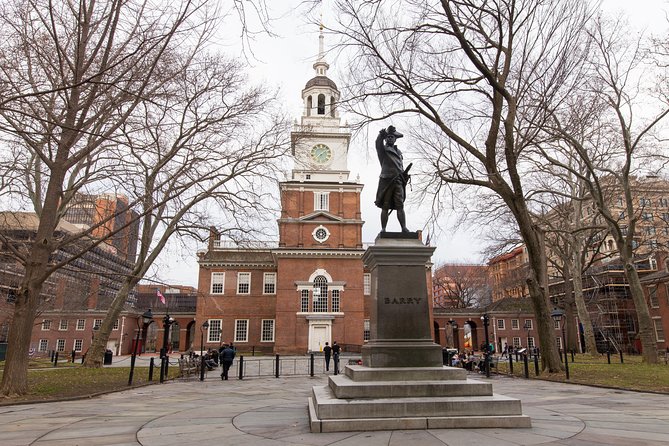
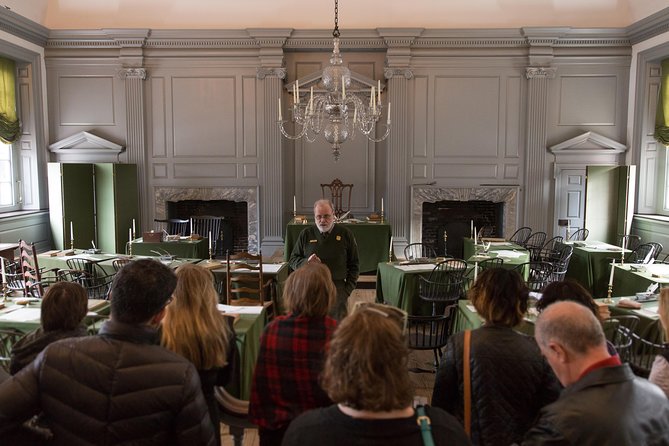
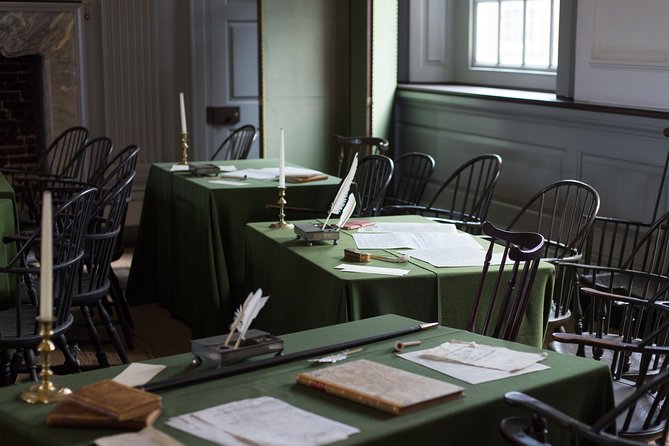
The same rule applies at Independence Hall. The building was constructed in 1732 as the Pennsylvania State House and later became the setting for the Declaration of Independence and the United States Constitution. The guide explains its role, but the walking tour does not take you inside.
This is the point most likely to cause disappointment if you book without reading the details. The tour description highlights the Liberty Bell and Independence Hall, but the experience is an outdoor overview. Security lines can be lengthy, and Independence Hall requires timed admission arranged separately. If stepping inside these buildings is essential, plan those visits on your own and book the walking tour as a separate orientation.
A few more options to weigh up in Philadelphia
- Dark Philly Adult Night Tour
★ 5.0 · 4,241 reviews - Revolution and the Founders: History Tour of Philadelphia
★ 5.0 · 2,944 reviews - Philadelphia Hop-On Hop-Off City Tour
★ 4.0 · 2,347 reviews - 2.5 Hour Philadelphia History Tour with Washington War Tent Show
★ 5.0 · 924 reviews
Congress Hall, Old City Hall, and The Signer
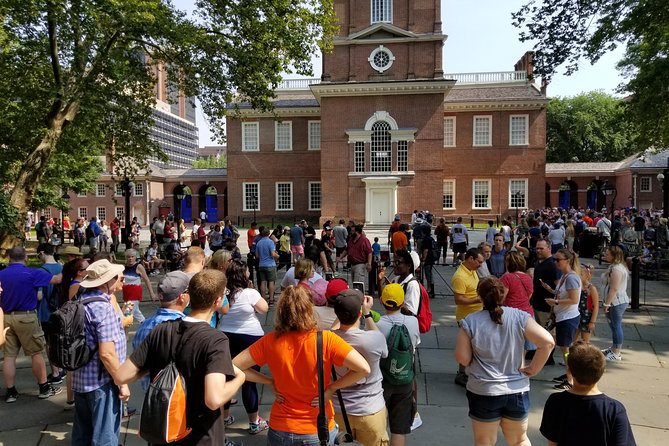
The route then moves through the former center of federal power. Congress Hall served as the United States Capitol from 1790 to 1800, when Congress met in Philadelphia. It began life as the Philadelphia County Courthouse, a reminder that early public buildings often served several roles.
Old City Hall adds another piece of the national story. It was once home to the United States Supreme Court. These two stops help you picture Philadelphia not only as the birthplace of independence, but also as the working capital of a young country.
You will also see The Signer, a statue inspired by George Clymer. The stop is short and visual. It works best as a quick reminder that many people, not just the most famous founders, took part in the political work of creating the new nation.
The Philosophical Society, Library Hall, and Two Banks
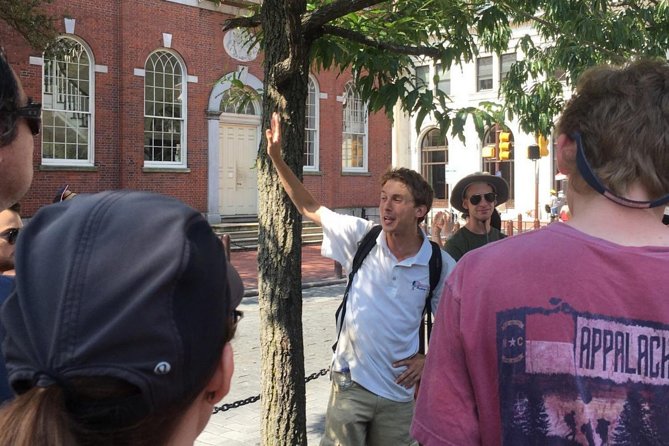
At the American Philosophical Society Museum, the guide introduces what is described as the oldest scholarly society in the United States. This adds an intellectual side to the tour. Philadelphia’s founding story was not only about war and government. It also involved science, education, debate, and organized study.
Library Hall marks the nation’s first public library and the former Library of Congress. Together, these two stops show how civic life depended on places where people could exchange ideas and preserve information.
The Second Bank of the United States offers a financial angle. It was once one of the world’s most influential financial institutions and now functions as a portrait gallery. The First Bank of the United States appears later on the route and helps explain the constitutional arguments surrounding national finance.
I find these bank stops especially useful because they widen the tour beyond familiar patriotic symbols. The founding era was full of arguments over money, federal power, and the proper role of government. You will not receive a full economics lecture in three minutes, but you will understand why these buildings mattered.
Carpenters’ Hall and New Hall Military Museum
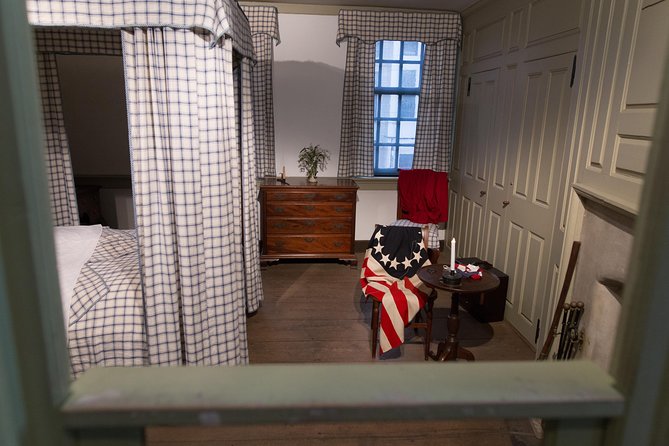
Carpenters’ Hall is tied to the development of an American identity and to early political cooperation among the colonies. Its significance is easy to miss if you simply walk past, so having a guide point it out adds real value.
New Hall Military Museum brings military history into the route. The site interprets the role of the military in early United States history. This is another short stop, but it keeps the tour from presenting the founding only as a series of speeches and documents. The new nation also needed defense, organization, and institutions.
You will not have time to study the interiors of these buildings during the walking tour. Think of each stop as a signpost. Mark the ones that catch your interest and return later.
Franklin Court and Christ Church
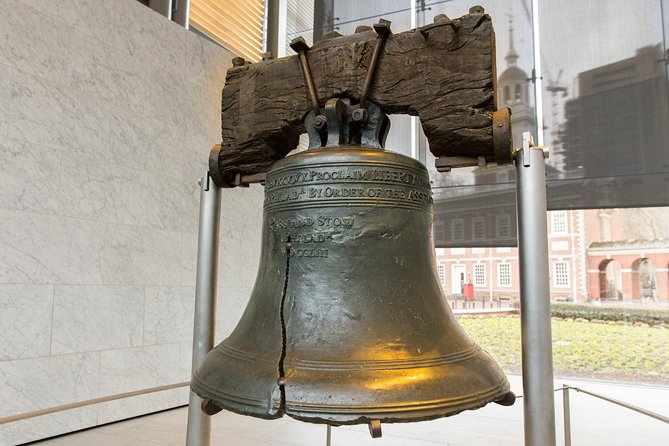
Franklin Court is one of the longer stops, with about five minutes devoted to Benjamin Franklin’s home and the only Colonial-themed post office. Franklin’s presence gives the tour a strong personal thread. He was a printer, inventor, diplomat, civic organizer, and political thinker, and this area helps connect those roles to everyday Philadelphia.
The site is also a good example of why a short overview can be useful. You may decide that Franklin Court deserves more time than the tour can provide. That is not a flaw in the route so much as a natural result of covering so much ground in 75 minutes.
Christ Church has operated as an active parish since 1695 and is often called the Nation’s Church. It links religious life to the public story of the early republic. The guide points out the church, but admission is not part of the tour.
Betsy Ross House and Arch Street Meeting House
The Betsy Ross House is one of the most familiar stops, associated with the sewing of the first Stars and Stripes. The guide gives you the landmark’s place in the national story, while the exterior visit lets you decide if you want to pay for a closer look inside.
Arch Street Meeting House introduces the Society of Friends, better known as the Quakers. This stop broadens your understanding of Philadelphia’s religious and civic life. The city was shaped by several faith traditions, and the meeting house reflects a different style of worship and public participation than Christ Church.
The route moves quickly here. If you want photographs, take them without holding up the group, since the guide has a fixed sequence and a lot of ground to cover.
Christ Church Burial Ground and Benjamin Franklin’s Grave
The final listed stop is Christ Church Burial Ground, the resting place of Benjamin Franklin. The cemetery also contains several other figures from the founding era, though the tour’s purpose is to provide a broad overview rather than a complete list of everyone buried there.
This is a fitting ending because it brings the national story back to individual lives. You have walked past government buildings, banks, churches, meeting houses, and gathering places. At the burial ground, the people behind those institutions become more tangible.
The tour ends back at the National Constitution Center meeting point. That makes it easy to continue with a museum visit, return to a site you want to explore, or head to another part of central Philadelphia.
What $30 Buys You
At $30 per person, the tour offers solid value if you use it as a guided introduction. You receive 75 minutes with a guide, a carefully arranged route, and historical context for more than 20 sites. A self-guided walk can show you the same streets, but it will not necessarily explain why the First Bank, Congress Hall, and Carpenters’ Hall belong in the same story.
The price is less attractive if you expect a series of indoor admissions. Food, drinks, and entry fees are not included. You may need to budget separately for the Liberty Bell Center, Independence Hall, the National Constitution Center, and other historic buildings you choose to visit.
I would book this early in a Philadelphia stay, with the rest of the day or the following day reserved for indoor visits. The tour is booked an average of 12 days ahead, so waiting until the last minute may limit your choice of times.
Walking Conditions, Weather, and Group Size
The route covers about 1.25 miles in roughly 75 minutes. It is not an extreme walk, and there are regular stops to listen, but you remain on your feet for most of the experience. Wear tennis shoes or other comfortable walking shoes.
Bring water, especially on a sunny day. A hat and lightweight clothing can help in warm weather, while a coat and rain protection are sensible in colder or wet conditions. The tour operates rain or shine, including unpleasant weather.
The maximum group size is 40 people. That is large enough for the guide to be difficult to hear near traffic, especially if the guide speaks softly or quickly. A smaller group can feel easier to manage, but the advertised maximum is worth keeping in mind.
Most people can participate, but this is still a walking tour with limited seating. If you need frequent rest stops, ask about the route before booking.
Who Should Book It?
I would recommend this tour to first-time visitors who want a clear introduction to Philadelphia’s historic center. It suits families, couples, solo visitors, and anyone who wants to connect the major landmarks before spending more time at selected sites.
It also works well for people with only a short window in the city. The guide gives you a fast sweep of the area without requiring a half-day commitment.
I would not choose it as my only historical experience if I wanted detailed interior visits or long discussions at each building. The stop-by-stop timing is tight, with many sites receiving only two or three minutes. A few people have found the presentation too general, too quick, or too performance-focused.
The best approach is to treat the walk as a well-informed introduction. Stay close to the guide, ask questions, note the sites that interest you, and return afterward for a slower visit.
Final Verdict: A Useful First Walk Through Philadelphia
Book the Constitutional Walking Tour if you want a friendly guide, a manageable route, and a broad look at the places where the United States took shape. The strongest guides, including Connor, PJ, Will, and Avi, make the past feel connected and human.
Skip it if you expect to enter Independence Hall or stand close to the Liberty Bell as part of the $30 ticket. Those visits require separate planning.
For most first visits, I think the tour earns its price. It gives you the city’s historic framework, then lets you choose where to spend your own time. That is a practical way to meet Philadelphia: start on foot, listen closely, and save the buildings that catch your imagination for a longer look.
FAQ
How long is the Constitutional Walking Tour of Philadelphia?
The tour lasts approximately 1 hour and 15 minutes.
How far do you walk?
The route covers about 1.25 miles through Philadelphia’s Independence National Historical Park area.
Where does the tour begin?
It begins outside the main entrance of the National Constitution Center at 525 Arch Street, Philadelphia, Pennsylvania 19106.
Where exactly should you meet the guide?
Meet directly outside the National Constitution Center by the three large stone benches. Do not go inside the museum to check in.
Where does the tour end?
The tour ends back at the National Constitution Center meeting point.
Does the tour go inside Independence Hall?
No. Independence Hall is an outdoor stop on this walking tour. Admission is not included.
Does the tour include entry to the Liberty Bell Center?
No. You see the Liberty Bell Center from the route, but admission is not included.
Are admission fees to the historic sites included?
No. Admission to historic sites is separate, and fees vary by location.
What happens if it rains?
The tour operates rain or shine. Dress for the weather and bring suitable clothing for wet or cold conditions.
How early should you arrive?
You should check in 15 minutes before the tour begins.
How many people can join the tour?
The activity has a maximum of 40 participants.
Is the tour offered in multiple languages?
The tour is offered in English.
Is food included?
No. Food and drinks are not included.
Can I cancel for a full refund?
Yes, if you cancel at least 24 hours before the experience start time. Cancellations made less than 24 hours in advance are not refunded, and late changes are not accepted.
Just added in Philadelphia
- Philadelphia 2 Hour Electric Cart Tour★ 5.0 · 633 reviews
- Inside Philadelphia’s Italian Market: Chef-Led Tasting Journey★ 5.0 · 354 reviews
- Flavors of Philly Food Tour★ 5.0 · 505 reviews
- City Cruises Philadelphia: Signature Dinner Cruise with Buffet★ 4.0 · 372 reviews
- True Crime Philadelphia and History Tour★ 5.0 · 416 reviews
- 2.5 Hour Philadelphia History Tour with Washington War Tent Show★ 5.0 · 924 reviews
- Center City Philadelphia Food Tour with Reading Market★ 5.0 · 861 reviews
- Classic Philadelphia City Bike Tour★ 5.0 · 323 reviews
Walking Tours, compared.
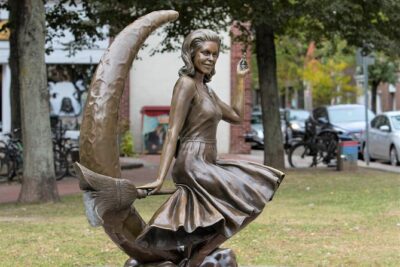
History and Hauntings of Salem Guided Walking Tour
Read our review →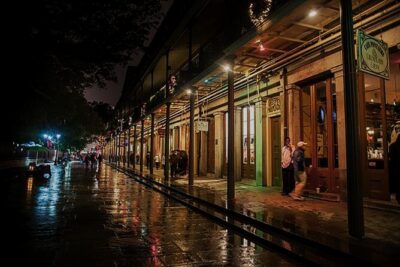
New Orleans Premier Ghost, Voodoo and Vampire Walking Tour
Read our review →
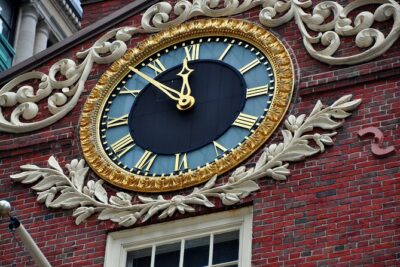
Freedom Trail History Small Group Walking Tour
Read our review →
Historic Charleston Guided Sightseeing Walking Tour
Read our review →
New Orleans Food Walking Tour of the French Quarter with Small-Group Option
Read our review →
Cambridge: Harvard University Student-Guided Walking Tour
Read our review →Browse the lists this tour appears in