
Reviewed · HISTORICAL TOURS
Philadelphia: History, Highlights & Revolution Walking Tour
Philadelphia’s past is packed into a few walkable blocks. This 150-minute tour gives you a clear introduction to Old City, from Independence Hall and the Liberty Bell to Elfreth’s Alley and Benjamin Franklin’s grave. I especially like the strong mix of famous landmarks and lesser-told stories, plus the chance to see a special presentation featuring George Washington’s wartime tent at the Museum of the American Revolution. The $45 price also includes a museum discount, a national park service fee, and a donation to a local community organization.
The main thing to consider is pace. You cover a lot of ground in two and a half hours, and several important places are viewed from outside rather than entered. If you want extended time inside Independence Hall, the Liberty Bell Center, or every museum along the way, this tour works best as an introduction rather than a complete visit.
In This Review
- Key points at a glance
- Starting at Signer’s Garden
- Independence Hall and Congress Hall from the outside
- The Liberty Bell and the limits of a photo stop
- Carpenters’ Hall and the working side of independence
- The Museum of the American Revolution presentation
- Elfreth’s Alley and Philadelphia’s residential past
- Betsy Ross House and the flag story
- Benjamin Franklin’s grave and the US Mint area
- The President’s House site and stories left out of textbooks
- What the $45 price really buys you
- Timing, parking, and practical comfort
- Who should book this Philadelphia walk?
- Should you book the History, Highlights & Revolution tour?
- FAQ
- Where does the tour begin?
- Where does the tour finish?
- How long does the walking tour last?
- What language is the tour conducted in?
- Is the tour wheelchair accessible?
- Does the tour enter Independence Hall?
- Is admission to the Museum of the American Revolution included?
- What can you see at the Museum of the American Revolution?
- Is parking available near the meeting point?
- Can you cancel the booking for a refund?
Key points at a glance
- Washington’s wartime tent: The Museum of the American Revolution presentation gives the tour a strong indoor highlight.
- Old City in one walk: You see Independence Mall, Congress Hall, Carpenters’ Hall, Elfreth’s Alley, the Betsy Ross House, and more.
- Stories beyond the famous names: The President’s House site looks at both the presidents who lived there and the people whose work helped build the new nation.
- A good half-day choice: The route covers the main historic core in 150 minutes, useful if you have limited time in Philadelphia.
- Strong guide-led experience: Guides including Adam, David, Tom, Nina, John, Caroline, and PJ are praised for clear storytelling, humor, patience, and thoughtful answers.
- Community-minded pricing: Part of your ticket supports a local historic or community organization.
Starting at Signer’s Garden
You meet your guide at the Signer Statue in Signer’s Garden. This is a sensible starting point because it places you close to Philadelphia’s central Revolutionary-era sights and gets you into the story without wasting time on transportation.
From there, the walk heads through Independence Mall and Independence National Historical Park. You will want comfortable shoes, since this is a true walking tour and includes city streets, historic blocks, and steps. The tour is wheelchair accessible, though it is still wise to tell the provider about any mobility needs when booking.
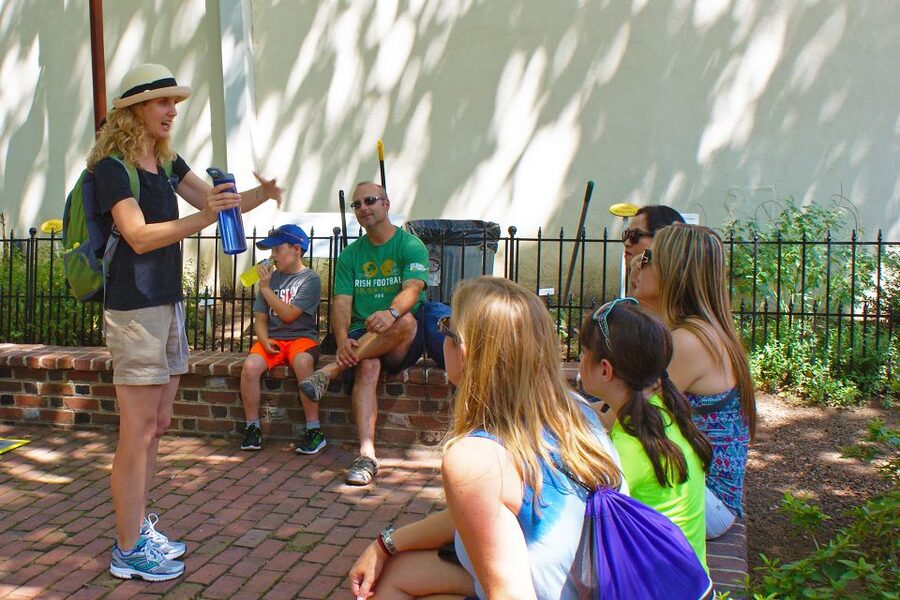
The group is described in several accounts as small enough for easy conversation. That matters here. The best parts of the tour depend on asking questions, slowing down for a particular person of interest, or letting the guide explain why a building matters instead of simply naming it.
More Walking Tours in the USA:
- History and Hauntings of Salem Guided Walking Tour
★ 5.0 · 14,564 reviews - New Orleans Premier Ghost, Voodoo and Vampire Walking Tour
★ 4.5 · 12,856 reviews - Little Havana Food and Walking Tour in Miami
★ 5.0 · 8,882 reviews
Independence Hall and Congress Hall from the outside
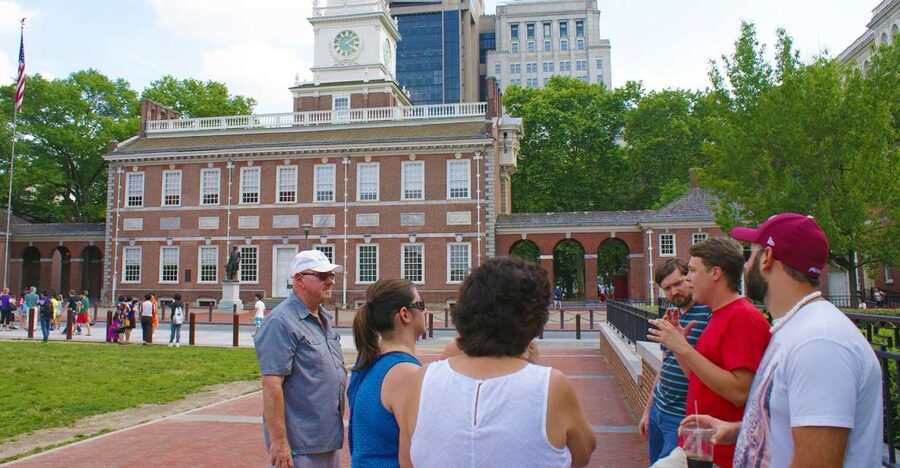
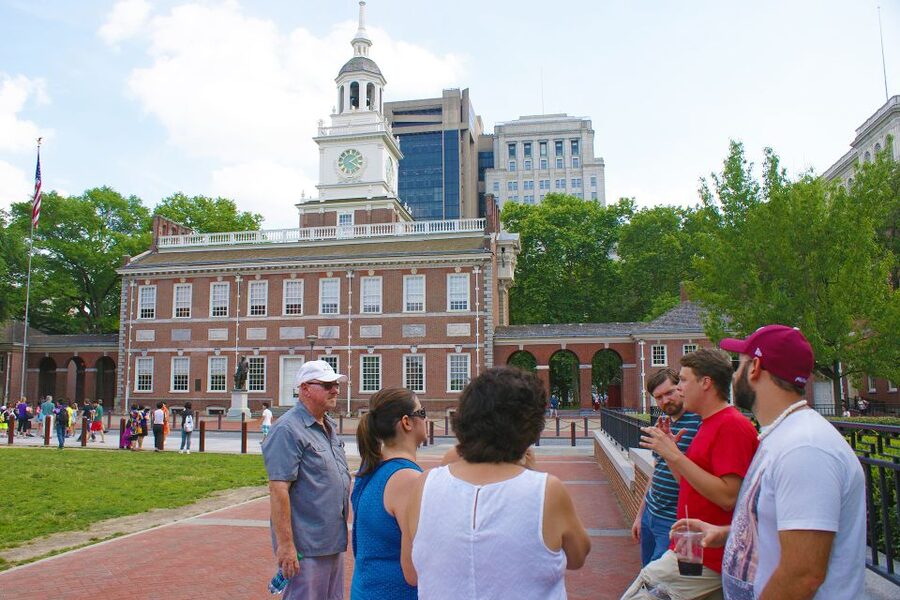
Independence Hall is the headline stop. This is where the Declaration of Independence and the United States Constitution were created, making it one of the most important buildings in the country. The guide explains its role and the events connected with it, but the scheduled tour passes by rather than taking you inside.
That distinction is important. If entering Independence Hall is your top goal, you will need separate admission and planning. This walk gives you the setting, context, and architectural view, but it does not replace an interior visit.
Congress Hall comes next. The building adds another layer to the story of the early United States and helps connect the revolutionary period with the first years of the new government. I like this pairing because Independence Hall can feel like a single grand symbol. Congress Hall shows you that the country’s political life continued to unfold nearby, in ordinary rooms and working government buildings.
The guides are the main reason these exterior stops work. Adam is praised for answering even unexpected questions with humor. Tom is repeatedly described as passionate and engaging, while David is noted for clear explanations and a strong command of the period. Your guide will vary, but the consistent theme is lively storytelling rather than a dry list of dates.
The Liberty Bell and the limits of a photo stop
The Liberty Bell is one of the most recognizable symbols of American freedom. The tour brings you close for a guided visit and photo stop, but the schedule does not promise extended entry into the Liberty Bell Center.
You will hear about the bell’s place in the national story and have the chance to take pictures. If you want the full indoor exhibition, allow separate time after the walk. This is a recurring pattern on the tour: you get a useful introduction to major sites, then you decide which ones deserve a longer visit later.
That approach suits anyone who wants to get oriented quickly. In a short time, you can see the most important points in the historic district without spending the whole day inside one building. It is less satisfying for anyone who expects every famous attraction to be included as a full admission.
Carpenters’ Hall and the working side of independence
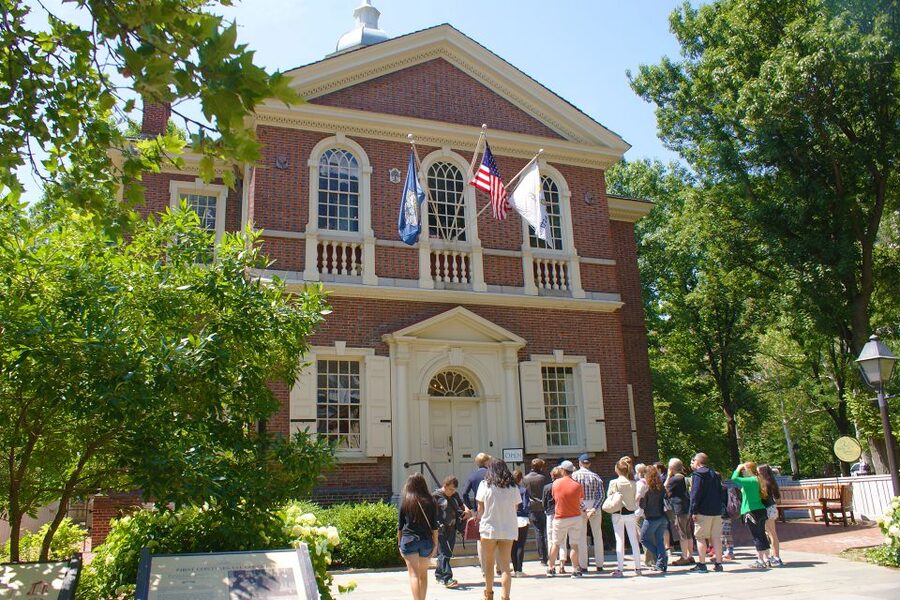
Carpenters’ Hall brings attention to the people and organizations that made political change possible. It is easy to focus on presidents, generals, and famous speeches. A stop here helps widen the picture toward civic groups, tradespeople, and the practical work behind the revolution.
The tour’s larger goal is to move beyond textbook history. That does not mean ignoring the famous names. Instead, the guide uses those names as a way into the people, arguments, and daily decisions that shaped the period.
This is where a good guide can make a real difference. Several guides are praised for making the past feel active and understandable, especially for people who already know the basic schoolbook version. Families can benefit too. One parent specifically noted that Nina kept the experience interesting for a teenager and two adult children, while another said Tom’s storytelling prompted a 13-year-old to ask questions.
More History Tours in the USA:
- New York City: American Museum of Natural History Ticket
★ 4.5 · 15,447 reviews - Charleston’s Old South Carriage Historic Horse & Carriage Tour
★ 5.0 · 10,023 reviews - Beneath The Streets Underground History Tour
★ 4.5 · 8,006 reviews - Big Island in a Day: Volcanoes Waterfalls Sightseeing and History
★ 5.0 · 6,569 reviews
The Museum of the American Revolution presentation
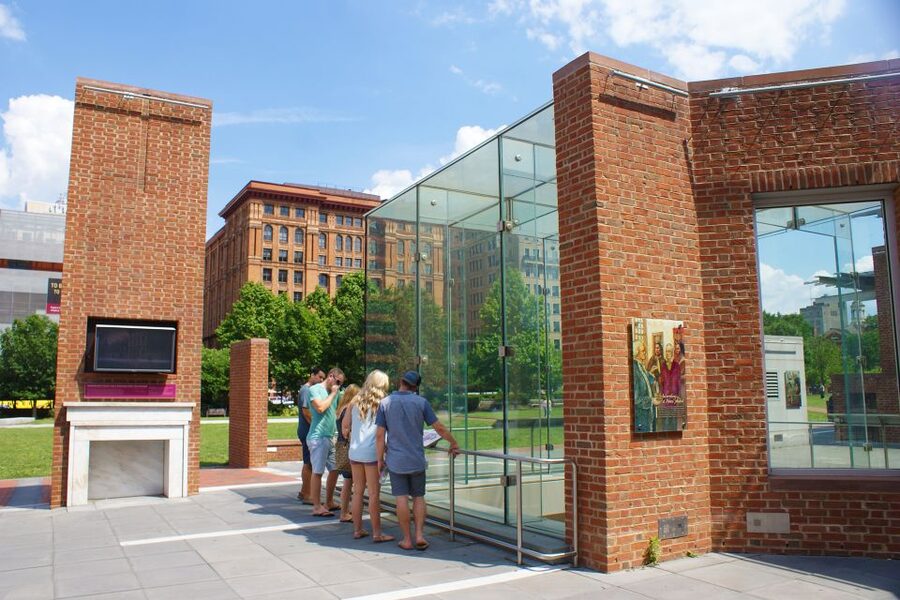
The indoor museum portion is the tour’s most distinctive feature. You receive a special presentation and live demonstration at the Museum of the American Revolution featuring the tent George Washington used during the war.
This is more than another outdoor explanation. After walking past brick buildings and monuments, you get a focused look at a physical object connected to Washington’s military life. The tent gives the revolutionary period a human scale. It points to travel, camp life, command, and the harsh conditions faced during the war.
The experience includes discounted admission to the museum, which you can use after the tour. That makes the walk a useful first visit rather than a substitute for the museum itself. If the presentation sparks your interest, you can return for the rest of the exhibits at a lower price.
The timing also gives you a break from the weather. Philadelphia can be windy, wet, or very hot, and several people have appreciated the tour’s manageable pace even in poor conditions. Still, do not assume the museum discount covers full admission. It is a reduced rate, not free entry.
Elfreth’s Alley and Philadelphia’s residential past
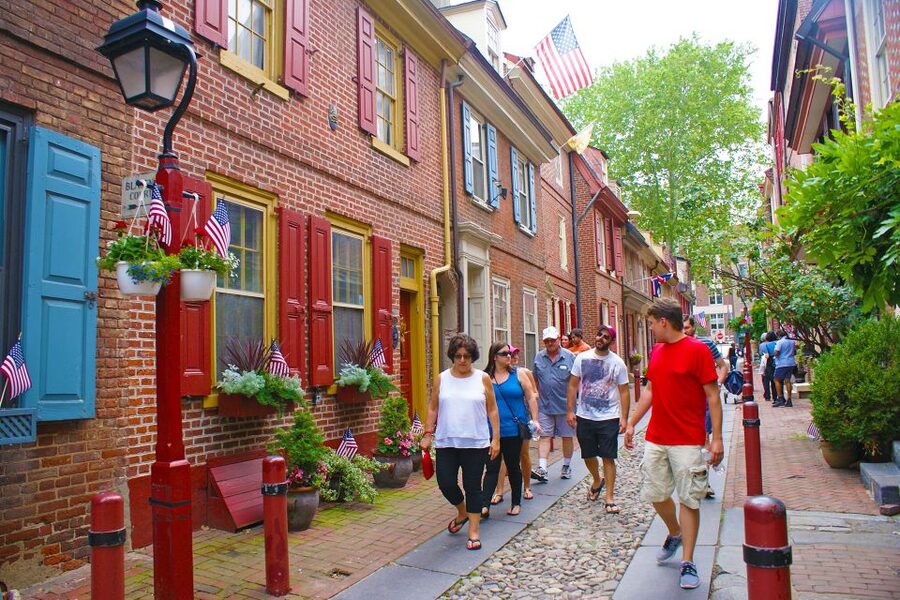
Elfreth’s Alley is one of the most memorable places on the route. It is known as the nation’s oldest continuously inhabited residential street, and its narrow historic setting feels very different from the grand civic buildings around Independence Mall.
This stop helps you picture Philadelphia as a lived-in city, not only the stage for famous political events. You see the scale of ordinary homes and gain a sense of how close daily life was to the meeting halls, workshops, burial grounds, and government buildings nearby.
It is also one of the better photo opportunities. The street is compact, so the guide’s explanation matters more than the amount of time spent walking. Listen for details about how the neighborhood fits into the broader story of Old City.
Betsy Ross House and the flag story
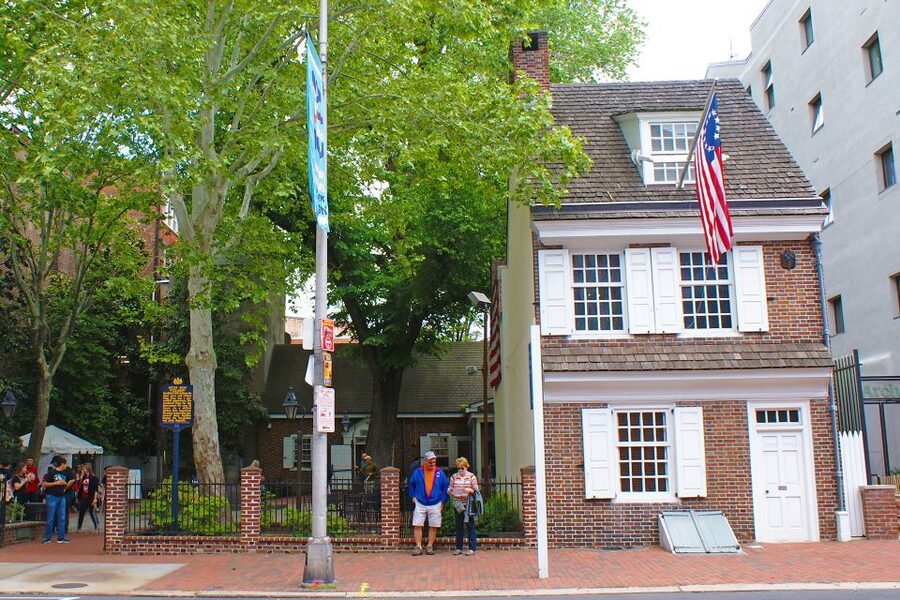
The Betsy Ross House offers another highly recognizable stop. Betsy Ross is credited with creating the first American flag, and the tour takes you to the home associated with her.
The guide leads you through the story, but you should view this as a guided exterior visit unless your booking details say otherwise. The route allows a memorable photograph and a quick connection to one of the most familiar names from the revolutionary period.
This stop is useful because it shows how Philadelphia’s history includes people outside formal government. Ross was an upholsterer, not a political officeholder, and her place in the national story opens the door to discussing women’s work and the less visible labor that supported the new country.
Benjamin Franklin’s grave and the US Mint area
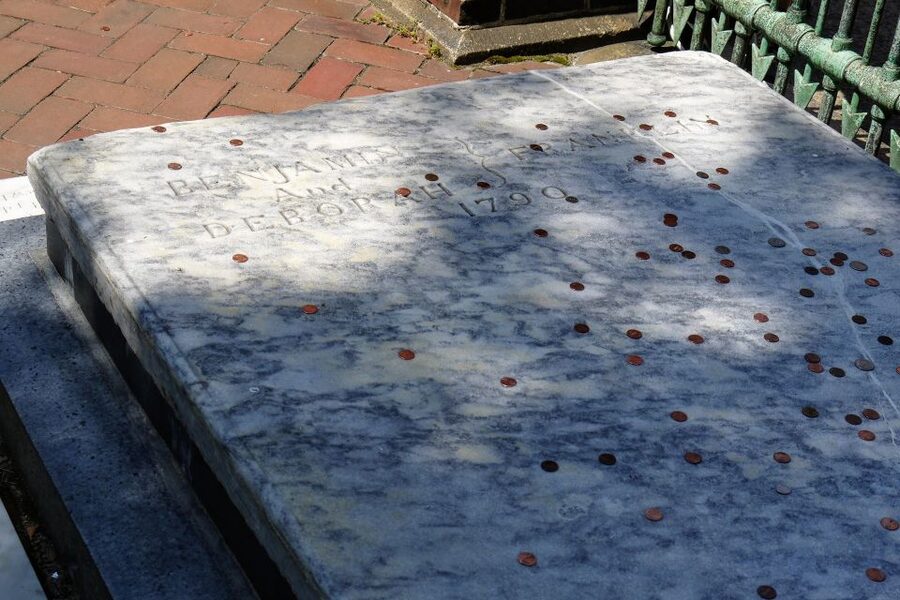
The walk then passes Benjamin Franklin’s burial site. You get a photo stop and a chance to pay respects to one of Philadelphia’s most famous citizens.
Franklin’s grave is a brief stop, but it carries a lot of weight. He was a printer, writer, scientist, diplomat, and political thinker, and his connection to Philadelphia reaches far beyond the revolutionary period. The guide can help connect his public reputation with the city where he lived and worked.
The route also includes North 6th Street and Market Street, with views toward the US Mint area. These urban details keep the tour from becoming a sequence of isolated monuments. You continue seeing how the historic district functions as part of modern Philadelphia, with present-day streets running through places tied to the country’s founding.
The President’s House site and stories left out of textbooks
One of the more thoughtful stops is the recreated President’s House site. Here, you learn about the two presidents who lived there and about the individuals whose roles in the founding era are often pushed aside.
That broader focus improves the tour. Independence-era stories can become too neat if they only cover declarations, battles, and famous white men. This stop makes room for the people who served, worked, organized, and lived within the political world created by the new government.
The tour does not promise a long museum session here, but the site adds an important human layer. If you want a more balanced understanding of Philadelphia’s role in the founding of the United States, this is one of the stops worth listening to carefully.
What the $45 price really buys you
At $45 per person, the tour is not the cheapest way to walk around Old City. You can see many outdoor landmarks without paying for a guide. The value comes from the structure, interpretation, museum presentation, discounted museum admission, national park service fee, and local donation.
I think the price is fair if you have only a half day in Philadelphia or want a strong first orientation. Several people with limited time found the route ideal because it covered the famous sites without requiring a full weekend. You also avoid the problem of reaching Independence Mall with no idea what you are looking at.
The value is weaker if you already know the district well or plan to spend most of the day inside the major museums. In that case, a self-guided walk followed by individual admissions may suit you better.
Timing, parking, and practical comfort
The tour lasts 150 minutes. Starting times vary, so check availability for your date. Since the walk ends in Old City, you can continue exploring, eat nearby, or visit the Museum of the American Revolution after the scheduled route.
Driving requires planning. Parking lots and garages are available throughout Old City, but street and metered parking is a poor choice because the maximum time is two hours, shorter than the tour itself. Arrive early enough to park without rushing to Signer’s Garden.
The tour is conducted in English with a live guide. Free cancellation is available up to 24 hours before departure, and you can reserve now while paying later. Those terms are useful if your Philadelphia schedule is still shifting.
Dress for walking and weather. You may be outside for much of the route, and the pace includes several historic streets and steps. The experience is wheelchair accessible, but the guide may need to adjust the route or stopping points depending on conditions.
Who should book this Philadelphia walk?
I would recommend it to first-time visitors, families, history beginners, and anyone with only a short stay. It is also a good fit for people who want more than dates and famous names but do not want a full academic lecture.
The tour works especially well for mixed-age groups. The guides have been praised for humor, clear explanations, patience with questions, and adapting to the group’s pace. Nina, Tom, Adam, David, John, Caroline, PJ, Maria, and others are singled out for making the material engaging and personal.
History specialists should set expectations carefully. You will see many key sites, but the route cannot give every building a full interior visit in 150 minutes. Think of it as a well-organized framework for your Philadelphia visit. Afterward, you can choose which places deserve more time.
Should you book the History, Highlights & Revolution tour?
Book it if you want a lively introduction to Philadelphia’s Revolutionary-era core, especially if your schedule is tight. The museum presentation with Washington’s tent, the range of stops, and the donation to a local organization give the $45 fee useful substance.
Skip it if you prefer to explore alone, already know Independence National Historical Park well, or want full admission and extended time at each major site. For most first-time visitors, though, this is a smart way to get your bearings, hear the stories behind the landmarks, and leave Old City with a clear plan for what to see next.
FAQ
Where does the tour begin?
The meeting point is the Signer Statue in Signer’s Garden.
Where does the tour finish?
The tour finishes in Old City Philadelphia.
How long does the walking tour last?
The tour lasts 150 minutes, or two and a half hours.
What language is the tour conducted in?
The live tour is conducted in English.
Is the tour wheelchair accessible?
Yes, the activity is listed as wheelchair accessible.
Does the tour enter Independence Hall?
The itinerary lists Independence Hall as a guided sightseeing stop and says the tour passes by. It does not promise interior admission.
Is admission to the Museum of the American Revolution included?
The tour includes a special presentation and demonstration at the museum, plus discounted admission that you can use after the tour. Full museum admission is not listed as included.
What can you see at the Museum of the American Revolution?
The presentation features the tent George Washington lived in during the war.
Is parking available near the meeting point?
There are several parking lots and garages throughout Old City. Street and metered parking is not recommended because the two-hour limit is shorter than the tour.
Can you cancel the booking for a refund?
Yes. You can cancel up to 24 hours in advance for a full refund. You can also reserve now and pay later.
Just added in the USA
- Monterey Bay Whale Watching★ 4.5 · 316 reviews
- Monterey Whale Watching Tour★ 4.5 · 732 reviews
- 17-Mile Drive Electric Bike Guided Tour★ 5.0 · 401 reviews
- Whale Watching Tour★ 4.5 · 497 reviews
- Elkhorn Slough Wildlife Tour★ 5.0 · 424 reviews
- Carmel Small Group Walking Food & Cultural Tour★ 5.0 · 392 reviews
- U-Drive Hells Revenge 4×4 Tour- 2.5 HR TOUR★ 5.0 · 334 reviews
- The Best U-Drive Hell’s Revenge 4×4 Off Roading Tour from Moab★ 5.0 · 909 reviews
Historical Tours, compared.


History and Hauntings of Salem Guided Walking Tour
Read our review →
Charleston’s Old South Carriage Historic Horse & Carriage Tour
Read our review →

Big Island in a Day: Volcanoes Waterfalls Sightseeing and History
Read our review →
Freedom Trail History Small Group Walking Tour
Read our review →
Historic Charleston Guided Sightseeing Walking Tour
Read our review →
Starship Landmark 90 Minute Sightseeing Cruise
Read our review →Browse the lists this tour appears in