
Reviewed · HISTORICAL TOURS
Best Salem Witch Trials Historical Walking Tour
Salem’s darkest story comes alive on foot. This 90-minute walk connects the city’s surviving landmarks with the vanished court, jail, and homes tied to the 1692 witch trials. I like the personal stories of accusers and victims, and I like how the route gives you a quick look at central Salem while building a timeline of the crisis.
The $30 price is fair if you want a guide to explain what happened at sites that no longer look historic. The main caution is that much of the tour involves standing outside modern buildings and hearing about places that disappeared centuries ago. If you expect preserved courtrooms, jail cells, and execution grounds, this may feel less visual than you hoped.
In This Review
- Key points to know before booking
- What this Salem walking tour is really about
- Starting with Salem’s vanished history
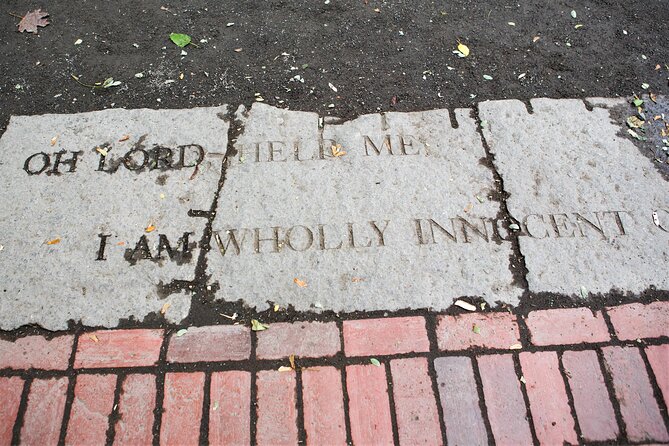
- Salem Witch Trials Memorial and the 20 victims
- Rockafellas and the old meeting house
- The Joshua Ward House and George Corwin
- The Witch House, Salem’s key surviving building
- Betty Parris and the first accusations
- Bridget Bishop at Lyceum Hall
- Jail conditions at the Witch Dungeon Museum
- Samantha, Salem’s modern witch
- The Witchcraft Court on Washington Street
- The vanished jail at 50 St. Peter Street
- How much history fits into 90 minutes?
- Is $30 a fair price?
- Who should book this walk?
- My verdict on the Salem Witch Trials walk
- FAQ
- How long is the Salem Witch Trials walking tour?
- Where does the tour begin?
- What departure times are offered?
- Does the tour visit the original execution site?
- Is admission to the Witch House included?
- Does the tour operate in bad weather?
- Can people with mobility concerns join the tour?
Key points to know before booking
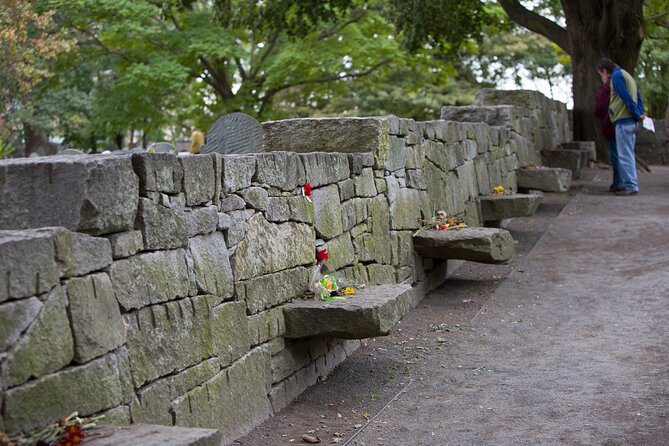
- The Salem Witch Trials Memorial anchors the tour: You hear the names, deaths, and stories of all 20 people who were executed.
- Most stops are historical locations, not preserved buildings: The Witch House is the important exception.
- The route covers about one mile in 90 minutes: Expect a steady walk with frequent stops and plenty of standing.
- Bob has earned special praise for his storytelling: Guide quality can shape the experience, so a strong narrator matters here.
- October needs extra planning: Traffic, parking, crowds, and street vendors can make Central Street difficult to reach.
- The tour stays in central Salem: It returns downtown, where you can continue to the Witch House, museums, restaurants, and other sights.
What this Salem walking tour is really about
Salem’s witch trial story is easy to reduce to black hats, haunted houses, and Halloween decorations. This tour tries to move past that postcard version and explain how fear, religion, local disputes, courtroom failures, and personal accusations combined in 1692.
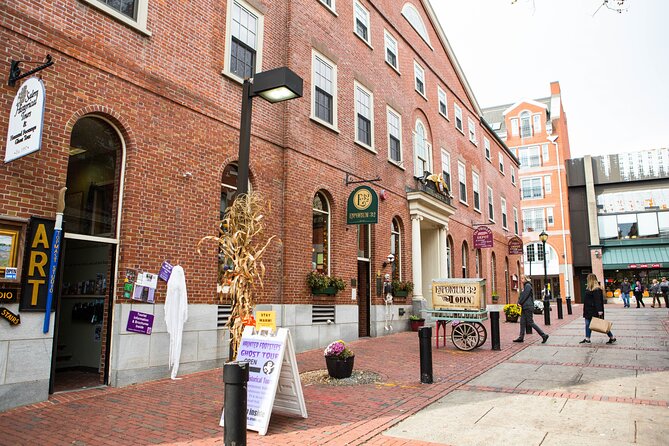
You meet at the Salem Historical Tours office at 8 Central Street. Look for a guide holding a recognizable sign, and arrive about 15 minutes early. Departure times are 10 a.m., 1 p.m., and 4 p.m., which makes it easy to fit the walk into a day of sightseeing.
The group can include up to 40 people. That is not a tiny private walk, but the route is short and the frequent stops help keep the group together. Guide quality matters a great deal here. The strongest guides make the people of 1692 feel real, explain the myths clearly, and answer questions without losing the thread.
Bob is one guide worth requesting if the booking system allows it. His storytelling has been praised for bringing the people and events of the period to life while keeping the grim material from becoming unbearable. Other strong guides have been described as friendly, funny, attentive to the group’s pace, and ready to answer questions.
Still, presentation can vary. One guide may offer a clear chronology, while another may lean more heavily on separate anecdotes. I would ask questions during the walk if you want more context about how the accusations began, how the court operated, or how one event led to the next.
More Walking Tours in Salem:
- History and Hauntings of Salem Guided Walking Tour
★ 5.0 · 14,564 reviews - Salem Voodoo, Vampires, and Ghosts Guided Walking Tour
★ 5.0 · 1,931 reviews - Bewitched Walking Tour of Salem
★ 5.0 · 1,895 reviews
Starting with Salem’s vanished history
The first part of the walk sets the stage. You examine the people, theories, and personal stories behind the crisis, then move toward locations linked to the accusations and legal proceedings.
This opening matters because the surviving buildings alone cannot tell the whole story. Many structures connected to the trials are gone. Your guide fills in the gaps with known locations and, at times, old images from books showing buildings that no longer exist.
That approach is useful, but it requires imagination. You are not walking into an untouched 1692 town. You are walking through a modern city and learning to read its streets as historical evidence.
Salem Witch Trials Memorial and the 20 victims
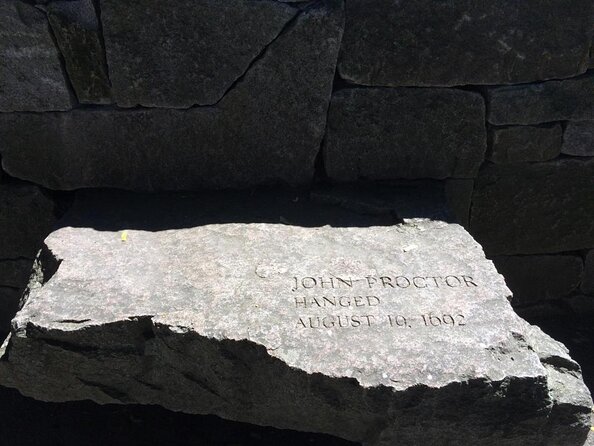
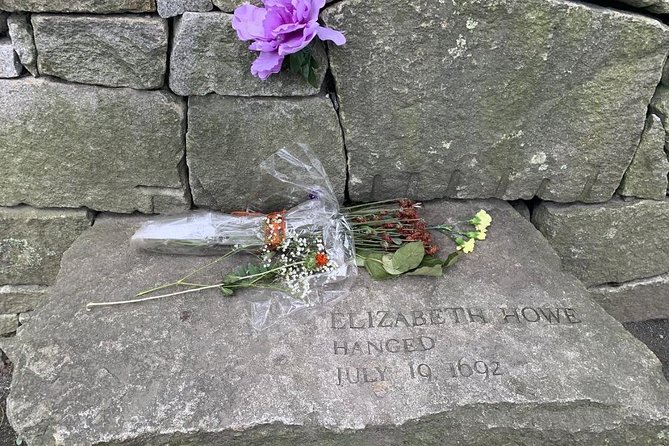
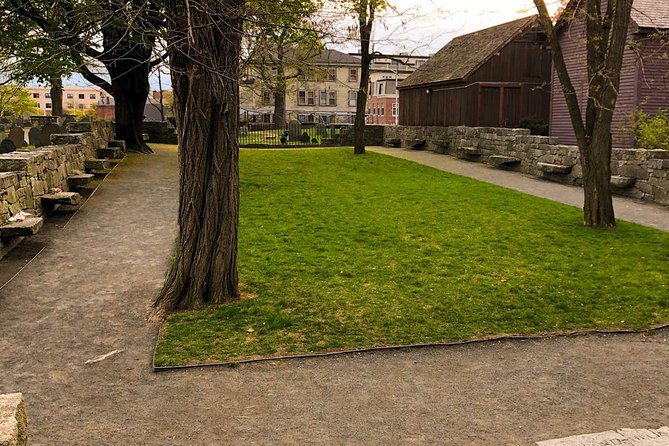
The memorial is the emotional center of the route. Created in 1992, it honors the 20 innocent people who died during the Salem witchcraft trials.
The design uses stone benches. Each bench gives a person’s name, the date of death, and the manner of death. The arrangement makes the memorial quiet and personal rather than theatrical. Your guide explains its symbolism and shares some of the victims’ stories.
This is one place where you should pay close attention. The memorial turns a broad historical event into a list of individual lives. You hear about people who were accused, jailed, condemned, and killed, rather than treating the trials as one vague episode of colonial superstition.
Allow roughly 10 minutes here. One practical point is worth noting: the tour description says the memorial is a stop, but the guide may explain it from nearby rather than lead the group through every part of the site. If you want time to read every bench, return on your own after the tour.
Rockafellas and the old meeting house
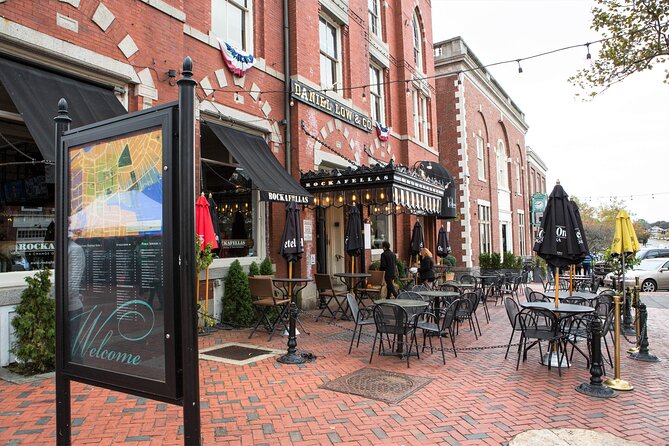
Rockafellas Restaurant occupies the Daniel Low and Co. building in the center of Salem. Today it is a place to eat. In 1692, this location was associated with the First Church of Salem and the town meeting house.
That change is typical of the entire walk. You will often stand outside a restaurant, hotel, office building, or modern street corner while hearing about its earlier role. The value is not in the architecture you see now. It is in understanding where civic and religious life took place when the accusations spread.
The stop lasts about 10 minutes. Admission to the restaurant is not included, and the walk does not promise a meal or interior visit. Think of it as a location lesson, not a restaurant tour.
More History Tours in Salem:
- Wicked Awesome Tours: Witch Trial History and Salem Haunts!
★ 5.0 · 1,032 reviews - 2.5-Hour Salem History & Sightseeing Guided Walking Tour
★ 5.0 · 850 reviews - Salem Night Tour: Haunt and History Guided Night Tour
★ 4.5 · 673 reviews - Salem, MA: History and Hauntings Guided Walking Tour
★ 4.8 · 651 reviews
The Joshua Ward House and George Corwin
The Joshua Ward House is now associated with the Merchant Hotel. It occupies the site of George Corwin’s home.
Corwin was the High Sheriff of Essex County in 1692. He signed arrest and execution warrants, took personal property from accused people, and was connected with harsh treatment of prisoners. The guide also explains that people were tortured in his home.
This stop adds an important layer to the story. The trials were not only about frightened neighbors making accusations. Officials, judges, jailers, and property interests helped turn suspicion into arrests and punishment.
You spend only about five minutes here, so do not expect a long visit. The building you see is not Corwin’s original house. You are learning about the site and the official who operated from it.
The Witch House, Salem’s key surviving building
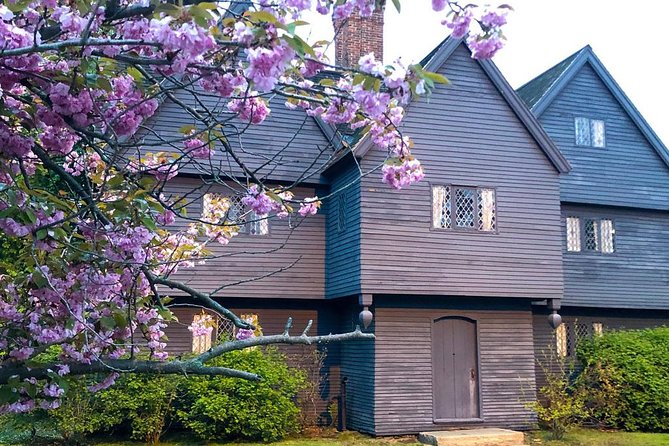
The Witch House is the most tangible stop on the route. It is the only remaining Salem structure with direct ties to the 1692 trials.
The house dates to the 1660s and belonged to Judge Jonathan Corwin. He met there with Judge John Hathorne to discuss accusations and decide who might be considered a witch. The name Witch House comes from Corwin’s connection to the trials, not from evidence that witchcraft took place inside.
This distinction is useful. Salem’s tourism industry sometimes blurs fact, legend, and spooky entertainment. A good guide separates the preserved building from the later stories attached to it.
The tour spends about 10 minutes at the Witch House. Entrance admission is not included, so plan a separate visit if you want to go inside. The brief outdoor stop gives you enough context to decide if the museum deserves more of your day.
Betty Parris and the first accusations
Near the present Salem YMCA on Sewall Street, you learn about Betty Parris. The street takes its name from Judge Stephen Sewall, who served on the Witchcraft Court.
Betty was nine years old when she was moved to this area in July 1692. She was the daughter of Reverend Samuel Parris, and her experiences, along with those of her cousin, played a part in the beginning of the witchcraft hysteria.
The original house is gone. That makes this another stop where the guide’s explanation does the work that a surviving structure cannot. It is also a useful point in the chronology, because it brings the story back to the young people whose behavior helped ignite the accusations.
The stop lasts about 10 minutes. Families may find this section especially helpful because it makes the start of the crisis easier to follow without turning the children involved into simple villains.
Bridget Bishop at Lyceum Hall
Turner’s Seafood occupies Lyceum Hall, built on land once owned by Bridget Bishop and her husband, Edward.
Bridget Bishop was the first woman executed in the 1692 trials. Her arrest, trial, and execution took only eight days. That speed tells you something about the feverish mood of the town and the weak protections available to an accused person.
Your guide explains how the town came to believe she was a witch and gives more detail about her life. The stop lasts about five minutes, and the seafood restaurant is not included in the tour.
This is a good example of how the walk uses ordinary places to tell difficult stories. You may be looking at a restaurant while hearing about a woman whose legal process moved with shocking speed.
Jail conditions at the Witch Dungeon Museum
The Witch Dungeon Museum is not directly tied to the 1692 trial sites, but it helps explain the jail system.
Prisoners were held in cells about the size of a phone booth or closet. They also had to pay for their own time in jail. The tour explains the jailing process and offers a chance to photograph yourself in the pillories, or stocks.
The museum admission is not included. The stop lasts around 10 minutes, so you should not expect a full museum visit as part of the walk.
This section gives you practical insight into what happened after an accusation. Imprisonment was not a brief pause before court. It could be cramped, expensive, and deadly.
Samantha, Salem’s modern witch
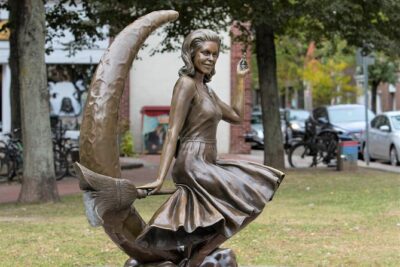
The Bewitched statue of Elizabeth Montgomery offers a sharp change of mood. The statue shows Samantha Stephens from the television series Bewitched, and it makes a good photo stop.
You also hear about episodes filmed in Salem and learn whose land the statue occupies. The irony is part of the fun. A city associated with real executions now honors one of America’s most beloved fictional witches.
The stop lasts about five minutes and is free. It does not add much to the legal history of 1692, but it shows how Salem has built a modern identity around both real tragedy and popular entertainment.
The Witchcraft Court on Washington Street
The Salem Masonic Building, Essex Lodge, marks the area where the Witchcraft Court, formally called the Court of Oyer and Terminer, once operated.
Most of the trials were held in this area, with additional proceedings taking place in January 1693. The guide explains some of the court’s most troubling decisions, including a case where a jury declared an accused person innocent but the judges rejected the decision.
This is an important stop for anyone who wants more than ghost stories. The central failure of Salem was legal as well as social. The court accepted questionable evidence, allowed fear to shape judgment, and made it difficult for accused people to defend themselves.
The modern Masonic building is not the original courthouse. The guide points out the historic location and explains what happened there. Again, the experience works best if you value interpretation over preserved rooms.
The vanished jail at 50 St. Peter Street
The Witchcraft Jail once stood at 50 St. Peter Street. It is gone now, but the location is part of the route.
You hear which accused people were held there, including Giles Corey. Corey was pressed under heavy stones during interrogation after refusing to enter a plea. Some prisoners died in jail, adding another grim element to the trials beyond the executions.
The stop lasts about 10 minutes. It is free, and the guide’s story supplies the meaning because the site itself offers little to see.
The execution site is more than a mile away, and this 90-minute walk does not go there. No confirmed tree or gallows survives, and the exact details of the hanging site remain debated. If seeing that location is essential to you, you will need to visit it separately.
How much history fits into 90 minutes?
The tour covers about one mile, with frequent stops. That sounds easy, and the distance is manageable for most people who can walk and stand for 90 minutes, but the standing may be more tiring than the walking.
You move through narrow and uneven sidewalks, brick sections, cobblestones, and stairs. In October, crowds and street vendors can make the route harder to navigate. Rain, cold, or heat will not automatically cancel the tour, so dress for the forecast and wear practical shoes.
The guide may not visit every location in the order presented here. The route can change, and the group may focus on the downtown sites that can be reached within the allotted time. That is why I would treat the listed locations as the historical range of the experience, not a guarantee that you will receive a full stop at every one.
Is $30 a fair price?
At $30 per person, this is a reasonable introduction to Salem’s trial history. You are paying for a local guide, a structured route, and historical context that would take time to assemble on your own.
The value is strongest if you are new to Salem or want the basic story before visiting museums and preserved buildings. The guide helps you understand why a restaurant, hotel, or empty modern site matters.
The value is weaker if you want physical remains at every stop. You can follow Salem’s yellow walking trail at no cost, and some parts of this tour involve hearing information at locations that look ordinary today. The paid experience earns its price through storytelling, not exclusive access.
I would also allow extra time and patience for parking. Central Salem can be difficult to reach, especially in October. Arrive early, and do not trust a GPS estimate that gives you only a few spare minutes.
Who should book this walk?
I would recommend it to first-time Salem visitors, families with older children, and anyone who wants a compact historical orientation. A 14-year-old with an interest in the subject could enjoy it, especially when the guide connects the story to real people rather than relying on spooky effects.
It also suits visitors who want to see several downtown locations before choosing which museums to enter. The route ends in the downtown area, and the guide can direct you toward your next stop.
I would hesitate to recommend it to anyone who dislikes group walks, long periods of standing, or historical sites that are no longer visible. It is also a poor match if your main goal is the execution site, the original jail interior, or a preserved courtroom.
The tour is offered in English only. Children must be accompanied by an adult, and service animals are allowed. Public restrooms are not provided, so use facilities before meeting the group.
My verdict on the Salem Witch Trials walk
Book this tour if you want a guided introduction to the people, places, and legal failures behind Salem’s 1692 witchcraft hysteria. The best guides bring order to a complicated story and make the vanished buildings feel present through clear explanations and old images.
Skip it if you expect a nonstop parade of preserved sights. Salem’s most important trial locations are largely gone, and the walk cannot change that. At its best, this is a thoughtful city walk about memory, fear, and bad justice, with a few surviving buildings and many invisible historical points along the way.
Free cancellation is available up to 24 hours before the start time. That gives you some flexibility, but October dates can fill early, so plan ahead if you are visiting near Halloween.
FAQ
How long is the Salem Witch Trials walking tour?
The tour lasts about 90 minutes and covers roughly one mile, with frequent stops for stories and explanations.
Where does the tour begin?
It begins at the Salem Historical Tours office at 8 Central Street, Salem, Massachusetts. Arrive about 15 minutes before the scheduled departure.
What departure times are offered?
Tours depart at 10 a.m., 1 p.m., and 4 p.m.
Does the tour visit the original execution site?
No. The execution site is more than one mile from the downtown route and is not included in this 90-minute walk.
Is admission to the Witch House included?
No. Admission tickets to the Witch House and other paid attractions along the route are not included.
Does the tour operate in bad weather?
Yes. The tour operates in all weather conditions, so dress appropriately and wear shoes suitable for uneven sidewalks, bricks, cobblestones, and stairs.
Can people with mobility concerns join the tour?
Participants must be able to walk about one mile and stand during the 90-minute experience. Narrow and uneven sidewalks, cobblestones, bricks, stairs, October crowds, and street vendors may create accessibility challenges.
Just added in Salem
- The Salem Witch Walk★ 4.5 · 1,301 reviews
- Wicked Awesome Tours: Witch Trial History and Salem Haunts!★ 5.0 · 1,032 reviews
- Satanic Salem Walking Tour★ 5.0 · 1,635 reviews
- 2.5-Hour Salem History & Sightseeing Guided Walking Tour★ 5.0 · 850 reviews
- Salem Booze and Brews Haunted Pub Crawl by US Ghost Adventures★ 4.5 · 413 reviews
- Salem Ghost Tour: Witches & Wicked Whispers★ 4.5 · 571 reviews
- Schooner Fame Sailing Tour★ 5.0 · 571 reviews
- Salem “Hocus Pocus” Movie Locations Tour (31st Anniversary)★ 4.5 · 664 reviews
Historical Tours, compared.

History and Hauntings of Salem Guided Walking Tour
Read our review →
Charleston’s Old South Carriage Historic Horse & Carriage Tour
Read our review →

Big Island in a Day: Volcanoes Waterfalls Sightseeing and History
Read our review →
Freedom Trail History Small Group Walking Tour
Read our review →
Historic Charleston Guided Sightseeing Walking Tour
Read our review →
Starship Landmark 90 Minute Sightseeing Cruise
Read our review →Browse the lists this tour appears in