
Reviewed · WALKING TOURS
Birmingham Civil Rights Tour- Riding & Walking
History feels different at the place it happened. This three-hour Birmingham tour connects major civil rights sites by air-conditioned vehicle and on foot, giving you a clear path through a difficult but essential chapter of American history. I especially like the small-group format, capped at 14 people, and the way the route reaches places beyond the usual downtown highlights. The main consideration is the walking: you will cover more than a mile, sometimes in temperatures from 40 to 100 degrees.
I also like that the guide does more than point at buildings. Guides Mike and Clay have been praised for careful storytelling, photographs, artifacts, local knowledge, and thoughtful answers to hard questions. The result is a tour that feels closer to a history lesson on wheels than a quick sightseeing loop, though the emotional weight of the subject may be tiring for some people.
In This Review
- Key points to know before you go
- Why Birmingham needs more than a map
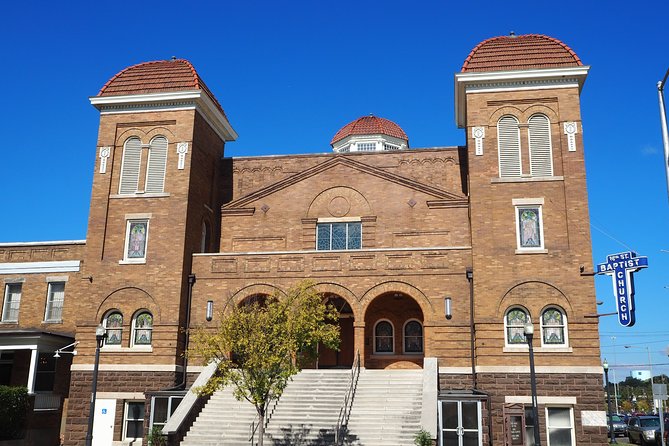
- Kelly Ingram Park and 16th Street Baptist Church
- Linn Park and Boutwell Auditorium
- Riding to Smithfield and Dynamite Hill
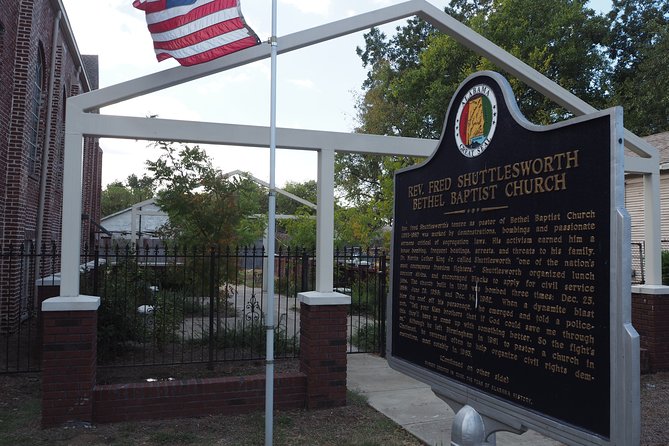
- Bethel Baptist Church and Rev. Fred Shuttlesworth
- Eddie Kendrick Memorial Park and Birmingham’s Black business district
- The Freedom Riders attack site
- What the guide adds to the experience
- Walking, weather, and comfort
- Value, timing, and who should book
- Should you book the Birmingham Civil Rights Tour?
- FAQ
- How long is the Birmingham Civil Rights Tour?
- Where does the tour start?
- Where does the tour end?
- What time does the tour begin?
- How many people can join the tour?
- Is transportation provided?
- How much walking is involved?
- Does the tour run in bad weather?
- What is the cancellation policy?
Key points to know before you go
- The route covers more than downtown: You visit Kelly Ingram Park and 16th Street Baptist Church, then ride to Dynamite Hill, Bethel Baptist Church, the Freedom Riders attack site, and other important locations.
- It balances riding with walking: The van saves your legs between neighborhoods, while walking puts you close to statues, churches, schools, and protest sites.
- The group is limited to 14 people: That makes it easier to ask questions and hear the guide clearly.
- The history is presented in sequence: The tour links protests, church leadership, school integration, bombings, and the Freedom Riders attack into one connected story.
- No extra entrance fees are expected: Taxes, handling charges, activities, transportation, and the driver-guide are included.
- Plan for heat, cold, and a serious subject: The tour runs in most weather, and some stories are painful. Wear practical shoes and bring what you need for the forecast.
Why Birmingham needs more than a map
Birmingham’s civil rights landmarks are close enough to tempt you into a self-guided walk, but distance is not the real problem. The challenge is knowing what happened at each place and how the sites connect.
A church may look like a church. A park may look like a park. A downtown street may offer few clues that it once filled with protesters, police, and Freedom Riders. A guide gives those places meaning without asking you to piece together the story from scattered signs.
I like the way this tour moves from familiar landmarks to less obvious places. Kelly Ingram Park and 16th Street Baptist Church provide the central focus, but Dynamite Hill, Bethel Baptist Church, John Herbert Phillips Academy, and the former Black business district widen the picture.
That wider route matters. Birmingham’s movement was not created by one famous speech or one famous leader. It involved churches, students, families, business owners, ministers, marchers, and people who took enormous personal risks. The tour gives those different parts room to appear.
More Walking Tours in the USA:
- History and Hauntings of Salem Guided Walking Tour
★ 5.0 · 14,564 reviews - New Orleans Premier Ghost, Voodoo and Vampire Walking Tour
★ 4.5 · 12,856 reviews - Little Havana Food and Walking Tour in Miami
★ 5.0 · 8,882 reviews
Kelly Ingram Park and 16th Street Baptist Church
The walking portion begins around the Civil Rights District, including Kelly Ingram Park and 16th Street Baptist Church. Plan on about 30 minutes in this area, followed by another 30 minutes focused on the park and church.
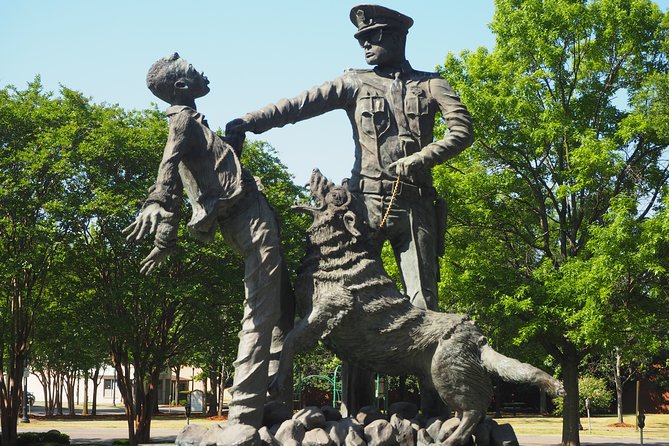
Kelly Ingram Park is filled with statues connected to the movement. These give you something physical to study while the guide explains the people who marched and the forces that opposed them. The park is not just a green space on a city map. It is one of the places where the struggle becomes easier to picture.
The walking is useful here because you can pause near the statues, look at details, and ask questions. A van would get you there faster, but it would not give you the same sense of place.
At 16th Street Baptist Church, the focus turns to the church’s role in Birmingham’s civil rights work and the bombing that killed four little girls. This is one of the most painful stops, and the guide treats it with seriousness rather than rushing past it.
You should expect the tone to change here. The tour is not designed to soften the past. It explains the violence and the human cost, while also showing why the church became such an important center for the movement. Give yourself time afterward if you need a quiet moment.
One practical point: admission is listed as free, but the main value here comes from the explanation. Seeing the church without understanding its place in Birmingham’s story would leave out much of what makes the stop important.
Linn Park and Boutwell Auditorium
The route then moves toward Linn Park and Boutwell Auditorium. Linn Park takes about 15 minutes, while Boutwell Auditorium takes about the same amount of time.
Linn Park is connected with marches and the places where protests ended. The guide also explains the groups involved in Birmingham’s fight for civil rights. It is a short stop, but it helps connect public demonstrations with the city’s civic spaces.
Boutwell Auditorium adds another layer by focusing on Bull Connor and his clashes with people fighting for civil rights. This stop is useful because it places local resistance within the city itself. Instead of hearing only about national figures, you learn how Birmingham officials and local activists confronted one another.
These stops may feel less visually dramatic than the church or the park. That is normal. Their value lies in the story attached to them. If you enjoy tours that explain how political power works in a real city, you will appreciate this part of the route.
Riding to Smithfield and Dynamite Hill
After the central district, the air-conditioned vehicle becomes especially helpful. The ride to Smithfield and Dynamite Hill takes you beyond the core sightseeing area, where walking the entire route would be impractical, particularly in summer.
At Dynamite Hill, the guide points out homes and churches that were bombed during Birmingham’s civil rights era. The stop takes about 15 minutes, but it carries a lot of weight. You are seeing ordinary residential places that became targets because of the people who lived, worshipped, or organized there.
This is one reason I prefer the riding and walking format to a downtown-only tour. Birmingham’s story is not confined to monuments. It also happened in neighborhoods, churches, schools, and homes.
The tour does not turn these areas into entertainment. That restraint matters. The point is to understand the danger faced by local families and organizers, not simply to collect another photo stop.
A different kind of day out entirely:
- NYC: SUMMIT One Vanderbilt Tickets
★ 4.7 · 51,195 reviews - NYC: 9/11 Memorial & Museum Timed-Entry Ticket
★ 4.8 · 31,428 reviews - NYC: Empire State Building Tickets – Observatory & Museum
★ 4.7 · 25,757 reviews - NYC: Empire State Building Observation Deck Tickets
★ 4.7 · 22,072 reviews
Bethel Baptist Church and Rev. Fred Shuttlesworth
The Historic Bethel Baptist Church receives about 20 minutes. The church is linked with Rev. Fred Shuttlesworth, who led the movement from there.
This stop gives the tour a strong human center. You hear about the people who organized locally and kept going despite threats and violence. The church was not only a place of worship. It was also a place from which leadership and action emerged.
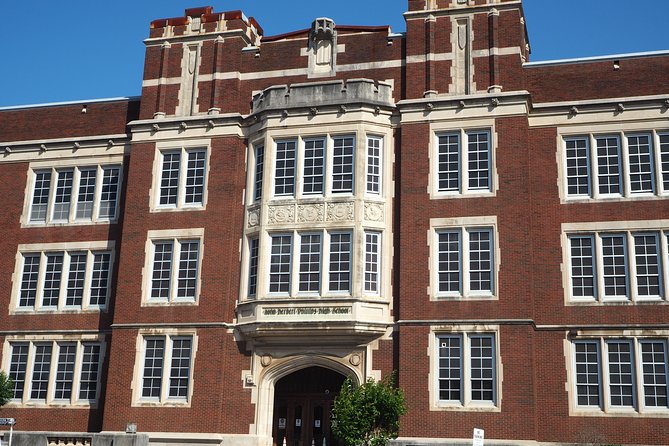
The route later visits John Herbert Phillips Academy, where Rev. Shuttlesworth attempted to integrate Birmingham schools. Together, these two stops help you understand his work in both religious and educational settings.
I find that this pairing makes the tour more complete. You are not simply learning where protests occurred. You are learning how leadership moved through institutions and neighborhoods. The guide’s storytelling is particularly important here, since the buildings alone cannot explain the courage involved.
Eddie Kendrick Memorial Park and Birmingham’s Black business district
Eddie Kendrick Memorial Park is a brief stop of about five minutes. The focus is Birmingham’s Black business district and what Black life was like there during its heyday.
Do not dismiss this as a quick drive-by. Civil rights history is often taught through confrontation, marches, arrests, and violence. This stop offers a look at community life, work, and economic activity. It reminds you that Black Birmingham was not defined only by segregation and resistance.
Five minutes is not enough for a long visit, but it works as part of the wider route. The guide can place the district within the city’s social and economic story before moving on.
The Freedom Riders attack site
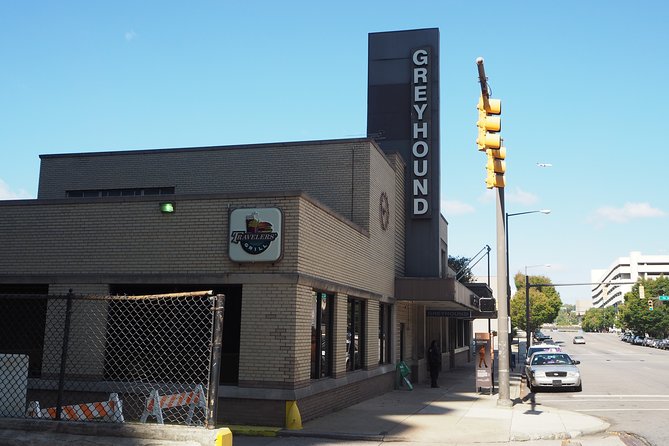
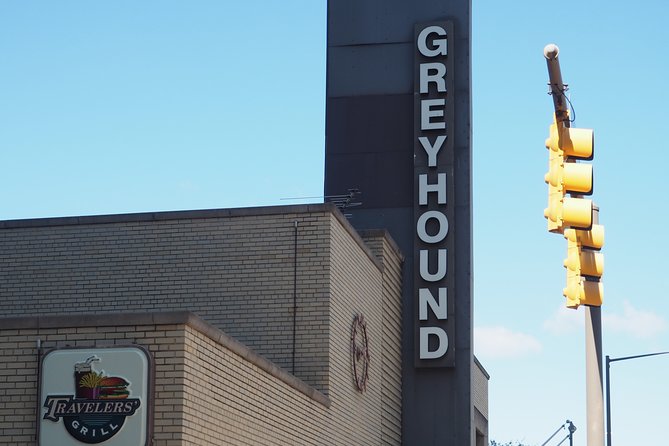
The final listed stop is the site of the 1961 Freedom Riders attack, near a Wells Fargo ATM. The stop lasts about 10 minutes.
The setting may look ordinary today, which is exactly why an explanation helps. Without a guide, you might pass it without realizing what occurred there. With context, an everyday corner becomes part of the national struggle over interstate travel and segregation.
This is a good final stop because it brings the story forward to a major moment in the movement. By this point, you have seen churches, parks, schools, neighborhoods, and civic spaces. The Freedom Riders site shows how local events in Birmingham fit into a wider campaign.
The stop is short, so listen closely and ask questions while you can. If you want a long museum-style presentation about the Freedom Riders, this tour is not a substitute for that. Its purpose is to place you at the location and connect it to the rest of Birmingham’s story.
What the guide adds to the experience
The strongest part of this tour is the guide’s role. Mike Clay is a Birmingham native, and his presentation has been described as clear, chronological, personal, and respectful. Clay and Mike are also praised for answering questions without avoiding difficult subjects.
That matters because this material can easily become either a list of dates or a polished version of the past. The better approach is to explain what happened, who was involved, and what it meant for people living through it. The guide’s use of photographs and artifacts can help you picture the period more clearly.
The small group also improves the experience. With no more than 14 people, you have a better chance of hearing the commentary and asking something specific. On quieter dates, the group may be smaller, and some bookings have worked like private tours when only a couple of people attended.
The guide may also offer useful Birmingham suggestions after the tour, including places to eat, see, or shop. That is a welcome extra, especially if you are making this your main activity in the city.
Walking, weather, and comfort
This is not a fully seated sightseeing ride. You will walk more than a mile, and you need to walk unassisted at a reasonable speed.
The tour runs rain or shine. If serious weather such as a hurricane, tornado, or ice forces a cancellation, you can choose another date or receive a full refund. If rain becomes a problem during the tour, transportation is available, but you should still dress for conditions.
Birmingham can be hot and humid, and the tour specifically warns about temperatures from 40 to 100 degrees. Wear shoes you can walk in, bring water, and consider sun protection in warm weather. In cooler months, bring a layer.
The van is air-conditioned, which makes the format far more practical than walking between every stop. Still, this tour is not a good choice if you cannot manage at least a mile or if hot or cold weather causes serious discomfort.
Service animals are allowed. Children must be accompanied by an adult, and the recommended fitness level is moderate.
Value, timing, and who should book
The tour begins at 9:45 a.m. at 512 16th Street North and returns to the same meeting point. The listed duration is about three hours, so it fits well into a morning without taking your entire day.
A price is not provided here, so I cannot judge the exact dollar amount. I can judge what you receive for the fee: a driver-guide, live commentary, air-conditioned transportation, all activities, and taxes, fees, and handling charges. There are no separate entrance costs listed, which makes the total easier to understand.
The value is strongest if you want a connected explanation of Birmingham rather than a short visit to one church and one park. You are paying for access to a wider route, local interpretation, and the time saved by riding between neighborhoods.
I would recommend it for first-time Birmingham visitors, families with older children, history students, teachers, and anyone who wants a serious introduction to the city’s civil rights story. The tour can work well for solo visitors too, since the small group gives you company without the scale of a large coach outing.
It may not suit someone seeking a light, casual morning or a tour with little walking. The subject is sobering, and parts of it are upsetting. That is not a flaw, but you should know what kind of experience you are choosing.
Free cancellation is available up to 24 hours before the 9:45 a.m. start time. Cancellations or changes made within 24 hours are not refunded, except when the operator cancels for significant weather and offers another date or a full refund.
Should you book the Birmingham Civil Rights Tour?
Yes, if you want to understand how Birmingham’s civil rights story unfolded across the whole city. I would choose this over wandering downtown alone because the route reaches Dynamite Hill, Bethel Baptist Church, John Herbert Phillips Academy, and the Freedom Riders attack site, not just the best-known landmarks.
Book it if you value strong storytelling, local context, and a mix of riding and walking. Skip it only if a mile of walking, outdoor exposure, or emotionally difficult history would make the morning unpleasant. For most people who come to Birmingham to learn, this is a meaningful and well-organized use of three hours.
FAQ
How long is the Birmingham Civil Rights Tour?
The tour lasts approximately three hours.
Where does the tour start?
It starts at 512 16th Street North, Birmingham, Alabama 35203.
Where does the tour end?
The activity ends back at the meeting point.
What time does the tour begin?
The scheduled start time is 9:45 a.m.
How many people can join the tour?
The maximum group size is 14 people.
Is transportation provided?
Yes. The tour includes air-conditioned transportation between locations and a driver-guide.
How much walking is involved?
You will walk more than one mile during the tour. Participants must be able to walk unassisted at a reasonable speed.
Does the tour run in bad weather?
The tour runs rain or shine, but significant weather such as a hurricane, tornado, or ice may lead to cancellation. In that case, you can choose another date or receive a full refund.
What is the cancellation policy?
You can cancel at least 24 hours before the start time for a full refund. Cancellations or changes made less than 24 hours before the experience are not refunded.
Just added in the USA
- Marco Island 2 hour Dolphin, Birding and Shelling tour★ 5.0 · 503 reviews
- Gulf of Mexico Sunset Cruise from Naples★ 4.5 · 511 reviews
- 3 Hour Guided Mangrove Tunnel Kayak Eco Tour★ 5.0 · 350 reviews
- Mangrove Tunnels & Mudflats Kayak Tour – Local Biologist Guides★ 5.0 · 785 reviews
- Rookery Bay Kayak Adventure – Mangroves, Wildlife & Photos★ 5.0 · 335 reviews
- Clear Kayak Guided Eco Tour in North Naples★ 5.0 · 341 reviews
- Manatees and Mangrove Tunnels Small Group Kayak Tour★ 5.0 · 954 reviews
- Dolphin Watch Eco Shelling Cruise to Keewaydin Island★ 5.0 · 333 reviews
Walking Tours, compared.
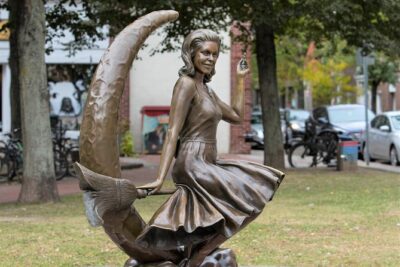
History and Hauntings of Salem Guided Walking Tour
Read our review →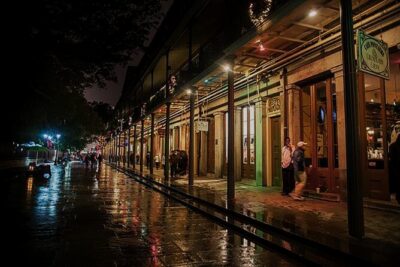
New Orleans Premier Ghost, Voodoo and Vampire Walking Tour
Read our review →

Freedom Trail History Small Group Walking Tour
Read our review →
Historic Charleston Guided Sightseeing Walking Tour
Read our review →
New Orleans Food Walking Tour of the French Quarter with Small-Group Option
Read our review →
Cambridge: Harvard University Student-Guided Walking Tour
Read our review →Browse the lists this tour appears in