

Reviewed · WALKING TOURS
Civil War Savannah!! Guided Walking Tour
Civil War stories begin before the first famous battle. Savannah’s guided walking tour links the city’s squares, antebellum homes, military planning, and civilian hardships in a compact one-hour-45-minute history walk. You’ll start at Warren Square and finish at the Green-Meldrim House, where General Sherman stayed after taking the city.
I like the tour’s clear sense of place and its personable guides, including Zach, Brad, and Will, who have been praised for humor, strong storytelling, and careful answers. I also like that it corrects the common idea that Sherman burned Savannah. The main drawback is focus: the first part covers plenty of Savannah history, so you may get less battlefield action than the title suggests.
In This Review
- Key points to know before you go
- Why Savannah needs a broader Civil War tour
- Starting at Warren Square and Savannah’s colonial center
- Fort Pulaski and the road to war
- The homes of generals and the architecture of power
- Sherman’s strategy and Savannah’s civilian hardships
- The Green-Meldrim House and Sherman’s famous telegram
- How much walking, time, and heat to expect
- Is the tour a good value?
- Who should book this Savannah walk?
- My recommendation: book it if you want context, not battle reenactments
- FAQ
- How long is the Civil War Savannah walking tour?
- Where does the tour begin?
- Where does the tour end?
- How much walking is involved?
- Is the tour only about Civil War battles?
- Is the tour offered in English?
- Are pets allowed?
- Does the tour include hotel pickup?
- What happens if the tour is canceled because of low bookings?
Key points to know before you go
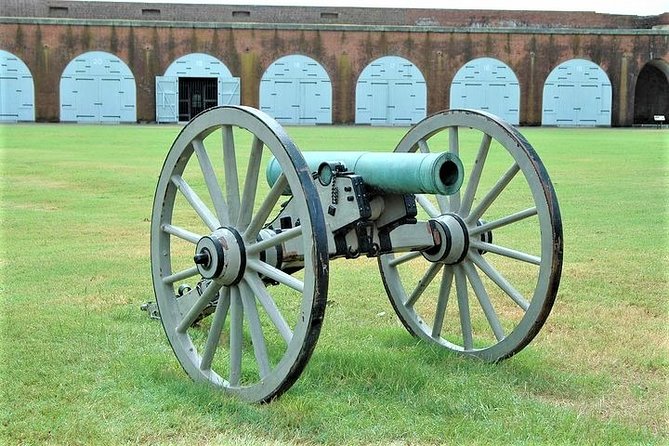
- Savannah’s Civil War story begins at Fort Pulaski: Georgian troops seized the fort in January 1860, months before Fort Sumter’s attack.
- The walk covers about two miles: Wear real walking shoes, not the footwear chosen for a short stroll between cafés.
- Warren Square is the starting point: You’ll meet at 22 Habersham Street and begin among Savannah’s colonial-era squares.
- The Green-Meldrim House is the finale: The tour ends at Sherman’s former headquarters on the west side of Madison Square.
- Guides add humor and local detail: Zach, Brad, and Will have each received praise for making the past easier to follow.
- Expect history beyond combat: Military strategy, politics, architecture, geography, and civilian hardship all form part of the story.
Why Savannah needs a broader Civil War tour
Savannah is not a battlefield city in the usual sense. The Union occupation came late in 1864, and the city did not experience the kind of destructive fighting associated with Atlanta or Columbia. That makes a walking tour here more about politics, planning, occupation, architecture, and memory than marching across fields where armies clashed.
The tour helps explain that difference. You’ll hear about the Confederate states’ role in the war, the decisions made by northern and southern leaders, and the way people in Savannah lived through shortages and uncertainty. The military story is present, but it is tied to the city around you.
That wider approach is useful if you want to understand why Savannah mattered. Its port, fortifications, roads, buildings, and political connections all shaped its wartime role. A guide can point to those details as you walk, while a book or museum often separates them into different chapters.
Still, you should set your expectations before booking. One part of the route may focus more on Savannah’s colonial and early American past than on the four years of the Civil War. That background is not random filler, since it explains the city’s government, streets, defenses, and social structure. But if you want a tour built almost entirely around troop movements and battles, this may feel too broad.
More Walking Tours in Savannah
- Savannah History and Haunts Candlelit Ghost Walking Tour
★ 5.0 · 3,235 reviews - Savannah First Squares Culinary & Cultural Walking Food Tour
★ 5.0 · 3,229 reviews - Historic Savannah Guided Walking Tour
★ 5.0 · 2,918 reviews
Starting at Warren Square and Savannah’s colonial center
The walk begins at Warren Square, at 22 Habersham Street. This is a practical starting point because the square places you directly inside the Savannah Historic District, one of the largest National Historic Landmark Districts in the United States.
The district was the center of colonial government during the 1700s. It was also where Georgia’s first reading of the Declaration of Independence took place. Those details give the tour a long runway before it reaches the Civil War.
You’ll begin by looking at Savannah as a planned city, not simply as a collection of pretty buildings. Its squares, streets, homes, and public spaces reflect earlier political and social choices. That matters because the city’s Civil War story grew out of those older institutions.
The tour’s first stop is listed as about five minutes, with no admission charge. In practice, the guide uses the surrounding streets and buildings to build the story. You are not entering a museum at the start, so the value comes from the explanation, the questions you ask, and the way the guide connects the visible setting to past events.
Warren Square also gives the group a clear meeting point. Since the tour is mobile ticket only and does not include hotel pickup, plan to arrive under your own arrangements. The location is near public transportation, but you should still allow time to reach it before the start.
Fort Pulaski and the road to war
One of the tour’s useful points is its dating of Savannah’s Civil War experience. For the city, the conflict began in January 1860, when Georgian troops seized Fort Pulaski. That event came three months before the attack on Fort Sumter, often treated as the official opening of the war.
This detail changes the usual timeline. The war did not suddenly arrive at Savannah when armies began firing in Charleston Harbor. Political tensions and military action had already reached Georgia.
The guide uses this early seizure to explain the role of fortifications and coastal defense. You’ll learn how northern and southern strategies differed, and why control of ports and river access mattered. You may not see a battlefield or walk through the fort itself on this tour, but the story shows how Savannah fit into the wider conflict.
The local geography also enters the discussion. Savannah had no indigenous stone suitable for building masonry forts, so Civil War-era defenses were made from dirt. That is the sort of detail that turns a broad military explanation into something tied to the ground beneath your feet.
This section may appeal most to anyone who likes cause and effect. You are not only hearing that troops seized a fort. You are learning why that act mattered, how geography shaped defense, and why Savannah’s war story needs to begin before 1861.
The homes of generals and the architecture of power
As you move through the Historic District, you’ll pass houses linked to some of the South’s prominent generals and figures. The buildings are not just attractive backdrops. They help show who held influence and how military, political, and civic life overlapped.
Savannah’s architecture is one of the strongest parts of the tour. You’ll see homes and public buildings that were already present during the Civil War era, then hear how their owners, uses, and surroundings fit into the conflict.
The guide may also point out how much of the city escaped wartime destruction. That is a key part of Savannah’s identity. The historic buildings are not merely preserved scenery. They help you understand the city Sherman captured and the city he chose not to destroy.
The route includes about 18 points of interest, according to the tour provider. That is a lot to cover in under two hours, so expect stops and explanations rather than long visits inside each building. Most of the experience takes place outdoors, with the group gathering around the guide at specific locations.
Zach, often spelled Zack in the tour’s responses, has been praised for making these stops lively with trivia, humor, and details that do not always appear in textbooks. Brad has also been described as engaging and courteous. Will received special praise for extending the walk a little and offering food and sightseeing suggestions afterward.
Guide quality matters here. The houses do not speak for themselves. A strong guide helps you notice the building, then explains why it belongs in a Civil War story. The best moments are likely to come when the guide answers questions or adds a small detail that connects a private home to larger events.
A different kind of day out entirely:
- Savannah Hop-On Hop-Off Trolley Tour
★ 4.5 · 6,527 reviews - 90-Minute Savannah Riverboat Sightseeing Cruise
★ 4.0 · 3,367 reviews - Savannah Ghosts & Gravestones Trolley Tour
★ 4.0 · 2,723 reviews - Savannah’s Ghost City “Dead of Night” Walking Night Tour
★ 4.5 · 2,482 reviews
Sherman’s strategy and Savannah’s civilian hardships

The heart of the tour is the explanation of military strategy. You’ll hear how northern and southern leaders approached the war and how Savannah fit into the final stages of the conflict.
The tour also gives time to civilian life. People in Savannah had to endure the practical hardships of wartime, not just the decisions of generals. Food, safety, work, political pressure, and uncertainty all affected daily life. The exact balance depends on your guide, but this part keeps the tour from becoming a simple procession of famous names.
The political side is also unavoidable. The Civil War grew from political disputes, including the election of Abraham Lincoln and the secession crisis. A guide may compare those tensions with modern political conditions to make the period easier to grasp. That can help you understand the stakes, but it can also feel personal if the guide spends too much time on present-day opinions.
One lower-rated experience raised concerns about political commentary and jokes about stormy weather. That is worth noting because humor varies from person to person. Other accounts praise the guides’ jokes and relaxed delivery, so the tone is not likely to feel stiff or academic. Still, you should expect a guide-led presentation with personality, not a neutral audio recording.
The tour’s approach to Sherman is especially useful. Savannah was presented to President Lincoln as a Christmas gift on December 22, 1864, after Union occupation. The famous telegram is closely tied to the tour’s endpoint, but the guide also explains why Sherman did not burn Savannah.
According to the tour information, Sherman burned only Meridian, Mississippi, and Columbia, South Carolina. Confederate forces burned Atlanta. Savannah’s survival was tied in part to relationships between Sherman and well-known local citizens, including William Washington Gordon Jr. This is a good corrective to the simplified image of Sherman as a general who destroyed every southern city he entered.
The Green-Meldrim House and Sherman’s famous telegram
The walk ends at the Green-Meldrim House, also known as Sherman’s headquarters. The listed end point is 14 West Macon Street, on the west side of Madison Square at Bull and Harris Streets.
This is a satisfying finish because the building connects the military campaign to the city’s political theater. Here, Sherman was invited to stay after the Union occupation. From this setting came his message to Lincoln presenting Savannah as a Christmas gift.
The ending gives the tour a clear narrative shape. You begin in a colonial government center, follow Savannah’s development and wartime position, and finish at the house tied to the city’s occupation. You also end near Madison Square, where you can continue exploring on your own.
The tour does not include a hotel transfer, and admission tickets are not listed for interior visits. Confirm what you will see inside when booking, since the experience is primarily a guided outdoor walk. Even if you only view the house from the street, the final explanation gives the route a strong closing point.
How much walking, time, and heat to expect
The stated duration is about one hour and 45 minutes, though some guides may run slightly longer when questions are flowing. One account describes roughly a two-mile route, and several comments make clear that this is a real walking tour.
Wear comfortable shoes. Savannah’s historic streets reward slow walking, but the distance can become tiring if you arrive in sandals or dress shoes. A patient guide may wait for the full group at each stop, as Zack did for one group, but you should still be ready to keep moving.
Weather matters. Savannah can be hot and humid, with one guide response referring to a 115-degree heat index in July. An umbrella is sensible when thunderstorms are possible, and you should think carefully before scheduling an outdoor walk during the worst summer heat.
The group can contain up to 30 people. That is large enough to create a crowd around narrow sidewalks, but small enough for a guide to manage a shared conversation. Minimum numbers apply, so the tour can be canceled if too few people book. In that case, you are offered another option or a full refund.
Pets are welcome, and most people can participate. The tour is offered in English, uses a mobile ticket, and is near public transportation. Those details make it easy to fit into a day of sightseeing, though you should plan your own route to Warren Square.
Is the tour a good value?
No price is provided here, so I cannot judge the exact cost. The better question is what you receive for the amount shown when you book.
You get a professional guide, nearly two hours on foot, and an explanation of 18 points of interest tied to Savannah’s Civil War story. You also get local context that can be hard to find while walking alone, especially details about Fort Pulaski, Sherman’s occupation, Savannah’s defenses, and the city’s decision not to burn.
The value is strongest if you would otherwise wander through the Historic District without knowing which homes or squares matter. A guide turns a pleasant architectural walk into a connected story. It is also useful early in your stay, since Will’s food and sightseeing advice shows how the tour can help you plan the rest of your visit.
The value is weaker if you want an intensive battlefield tour or a visit focused only on 1861 through 1865. You will spend time on Savannah’s earlier history because that background explains the city’s role in the war. That broader scope is educational, but it may not match the expectations created by the title.
Who should book this Savannah walk?
I would choose this tour if you enjoy American history, historic buildings, and stories that connect national events with one city. It also suits families with older children, particularly those already interested in the causes of the Civil War and the country’s political past.
The format works well for first-time visitors who want an orientation to the Historic District. You’ll see a substantial area, learn where several important buildings fit into the story, and finish close to more sights in the central district.
I would be more cautious if you have limited mobility, dislike walking in heat, or want frequent indoor stops. Most people can participate, but the route is about two miles and is outdoors. Comfortable shoes are essential.
The experience also depends heavily on the guide. Zach, Brad, and Will have each been praised for energy, humor, and strong command of Savannah’s past. One guide was late because of an emergency, and another tour was canceled because of jury duty, so last-minute changes are possible, though uncommon enough not to define the experience.
My recommendation: book it if you want context, not battle reenactments
Book Civil War Savannah if you want to understand how Savannah’s buildings, politics, defenses, and people shaped its wartime story. The tour offers a useful correction to popular myths about Sherman and gives you a better reading of the Historic District.
Skip it if you expect constant combat stories, battlefield ground, or a narrowly focused military lecture. You’ll hear plenty about the Civil War, but the tour also teaches the earlier history of Savannah because that is what makes the war story make sense.
For the best experience, arrive ready for a two-mile walk, bring weather protection, and approach the tour as a history walk with a Civil War focus. That is the honest description, and for many visitors, it is also the reason the tour works.
FAQ
How long is the Civil War Savannah walking tour?
The tour lasts approximately one hour and 45 minutes. Some guides may extend the walk slightly when the group has questions or discussion.
Where does the tour begin?
The tour begins at Warren Square, at 22 Habersham Street, Savannah, Georgia 31401.
Where does the tour end?
It ends at the Green-Meldrim House, also called Sherman’s headquarters, at 14 West Macon Street. The house is on the west side of Madison Square near Bull and Harris Streets.
How much walking is involved?
The route is about two miles, according to tour information and participant descriptions. Comfortable shoes are recommended.
Is the tour only about Civil War battles?
No. It covers Savannah’s Civil War role, military strategy, civilian hardship, generals’ homes, and Sherman’s occupation. It also includes earlier Savannah history because that background explains the city’s role in the war.
Is the tour offered in English?
Yes. The experience is offered in English.
Are pets allowed?
Yes. Pets are welcome on the tour.
Does the tour include hotel pickup?
No. Hotel pickup and drop-off are not included. You must make your own way to Warren Square.
What happens if the tour is canceled because of low bookings?
The experience requires a minimum number of participants. If it is canceled because that number is not met, you are offered an alternative date or experience, or a full refund. You may also cancel for a full refund if you do so at least 24 hours before the start time.
Just added in Savannah
- Savannah: Tybee Island Dolphin Tour★ 4.7 · 359 reviews
- Savannah Yes, Queen! Drag Queen Pub Crawl★ 4.5 · 367 reviews
- Welcome to Savannah Guided Walking Tour★ 5.0 · 329 reviews
- Heart of Savannah History Walking Tour – 2hr★ 5.0 · 857 reviews
- Genteel and Bard’s Savannah History Walking Tour★ 5.0 · 684 reviews
- The Grave Tales Ghost Tour in Savannah★ 4.5 · 396 reviews
- Southern Flavors of Savannah Walking Dessert Tour★ 4.5 · 560 reviews
- American Prohibition Museum Admission★ 4.5 · 403 reviews
Walking Tours, compared.

History and Hauntings of Salem Guided Walking Tour
Read our review →
New Orleans Premier Ghost, Voodoo and Vampire Walking Tour
Read our review →


Freedom Trail History Small Group Walking Tour
Read our review →
Historic Charleston Guided Sightseeing Walking Tour
Read our review →
New Orleans Food Walking Tour of the French Quarter with Small-Group Option
Read our review →
Cambridge: Harvard University Student-Guided Walking Tour
Read our review →Browse the lists this tour appears in