
Reviewed · MUSEUMS
American Prohibition Museum Admission
Prohibition gets a lively history lesson. Savannah’s American Prohibition Museum uses more than 200 artifacts, vivid scenes, videos, and costumed docents to explain how temperance reshaped American life. I especially like the recreated 1918 street scene and the moonshine display, which turn a dry subject into something you can see and feel. The main drawback is that a guided visit can move quickly, leaving little time to read every label.
The $19.78 admission is fair for a visit lasting about one to two hours, and the museum works well on a hot or rainy Savannah afternoon. I also like that you can finish in a speakeasy with a period cocktail, though you will pay extra, and Sunday visitors receive a mocktail instead of alcohol.
In This Review
- Key things to know before you go
- Why this Savannah museum is different
- Entering the 1918 street scene
- Reverend Billy Sunday and the temperance campaign
- Busch, Stephens, and the argument over alcohol
- Moonshine, bootlegging, and the hidden bar
- The speakeasy finish and period cocktails
- Guided tour or self-guided visit?
- Price, timing, and practical planning
- Accessibility and comfort notes
- Who will enjoy this museum most?
- Should you book the American Prohibition Museum?
- FAQ
- How long does the American Prohibition Museum visit take?
- What are the museum’s operating hours?
- Can children enter the museum?
- Can anyone enter the speakeasy?
- Are cocktails served on Sundays?
- Is parking available?
Key things to know before you go
- See Carry Nation’s hatchet in action: A recreated bar and her famous hatchetations show how forcefully temperance activists attacked drinking culture.
- The guided tour is worth considering: Guides such as Casey, Tommy, Marcie, Stephen, Blake, Elijah, and Eric have received especially warm praise for adding humor and detail.
- Plan extra time if you like to read: A guided visit may take about an hour, but you could spend two to four hours with the displays and printed material.
- The speakeasy is part of the appeal: Photo ID is required for a wristband, and only people age 21 and older may enter.
- Sunday changes the drink experience: Georgia law prevents alcohol service on Sundays, so the bar serves mocktails only.
- Use the museum as a history lesson, not just a bar stop: The exhibits cover more than the 1920s, tracing temperance ideas across over two hundred years of American history.
Why this Savannah museum is different
The American Prohibition Museum is billed as the only museum of its kind in the world. That claim gives you a sense of the focus: this is not a general American history museum with one small room devoted to Prohibition. The entire visit follows the battle over alcohol, from early temperance campaigns to the law’s repeal.
You will see propaganda, brewing equipment, photographs, murals, videos, life-size figures, and staged rooms. The displays ask you to consider why some Americans saw alcohol as the root of social disorder while others saw the ban as an attack on personal freedom and ordinary business.
That balance matters. The museum does not reduce Prohibition to flappers, bootleggers, and hidden cocktails. It also explains the moral campaign that came before the 18th Amendment and the cultural fight that followed. You get the public arguments, the private workarounds, and the political consequences in one compact visit.
The presentation leans theatrical, which is a good match for the subject. A fire-and-brimstone preacher, a demolished bar, a moonshine still, and a concealed speakeasy give the story physical shape. If you learn best through rooms and objects rather than long blocks of text, you will likely get more from this museum than from a conventional history exhibit.
More Museum Tours in Savannah:
- NYC: 9/11 Memorial & Museum Timed-Entry Ticket
★ 4.8 · 31,428 reviews - NYC: Empire State Building Tickets – Observatory & Museum
★ 4.7 · 25,757 reviews - New York City: American Museum of Natural History Ticket
★ 4.5 · 15,447 reviews
Entering the 1918 street scene
The visit begins with a recreated 1918 street scene designed to feel like Anywhere, USA. It sets up the social world before national Prohibition took effect. Instead of starting with dates and legislation, the museum places you in a period setting and lets the political argument grow from there.
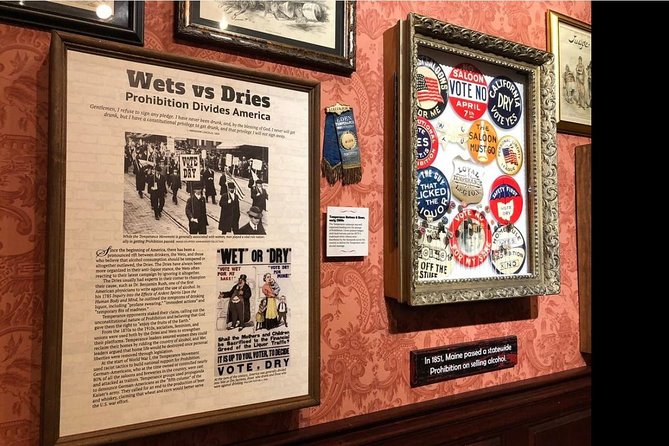
This is one of the most useful parts of the experience because it gives context to everything that follows. Prohibition did not appear out of nowhere in 1920. It grew from long-running concerns about drinking, family finances, public behavior, religion, and industrial safety.
Look closely at the printed material and dry propaganda. The museum has plenty of reading content, including clippings and short historical notes. You can move quickly through the main route, but the small pieces often explain the period’s thinking better than the large set pieces.
If you take a guided tour, listen first and plan to return to the displays afterward. Several parts are packed with information, and a guide may keep the group moving so the next scene does not get blocked. That approach gives you a strong overview, but it is not ideal if your main goal is to read every panel.
Reverend Billy Sunday and the temperance campaign
One of the more memorable rooms recreates a tent revival featuring Reverend Billy Sunday, a preacher associated with the anti-alcohol movement. The fire-and-brimstone style shows how temperance was sold to the public: not as a minor rule change, but as a moral crusade.
The tone is deliberately dramatic. That helps you understand why the movement attracted support, even if you do not share its conclusions. The museum presents temperance as a force that shaped language, political organizing, public behavior, and ideas about the family.
Carry Nation receives another strong display. Her hatchetations, including the destruction of saloons with a hatchet, are represented through a recreated bar and her signature weapon. It is a striking reminder that the fight over alcohol was not always polite debate in a legislative chamber.
I like these theatrical rooms because they make the dispute feel human. You see the intensity of the people who wanted alcohol banned, rather than hearing only about a constitutional amendment. The possible downside is that some scenes favor spectacle over quiet reflection, so readers who prefer a traditional museum may find the approach a little showy.
Busch, Stephens, and the argument over alcohol
The museum also presents opposing sides of the national debate through figures such as Lillian M. N. Stephens and Adolphus Busch. Their disagreement helps explain that Prohibition was not simply religious reformers against criminals.
The argument involved brewers, business owners, politicians, activists, workers, families, and voters. For one side, alcohol damaged homes and communities. For the other, a national ban threatened legal commerce and individual choice.
This is where the museum’s value goes beyond costume and atmosphere. You are encouraged to see the law as a clash of competing ideas about government. The displays show how the same issue could look like moral protection to one person and government overreach to another.
A guide can make this section much stronger. Several guides have been praised for making the arguments funny, clear, and easy to follow. Tommy, in particular, has been singled out for detailed explanations and humor, while Casey and Marcie have also earned warm praise for bringing the material to life. Staff quality can vary by day, but a good guide adds connections you may miss while walking alone.
A few more options to weigh up in Savannah
- Savannah Hop-On Hop-Off Trolley Tour
★ 4.5 · 6,527 reviews - 90-Minute Savannah Riverboat Sightseeing Cruise
★ 4.0 · 3,367 reviews - Savannah History and Haunts Candlelit Ghost Walking Tour
★ 5.0 · 3,235 reviews - Savannah First Squares Culinary & Cultural Walking Food Tour
★ 5.0 · 3,229 reviews
Moonshine, bootlegging, and the hidden bar
The moonshine scene is tucked into a darker part of the museum and represents the illegal production of alcohol in rural America. Brewing equipment and related artifacts show the practical side of getting around the law.
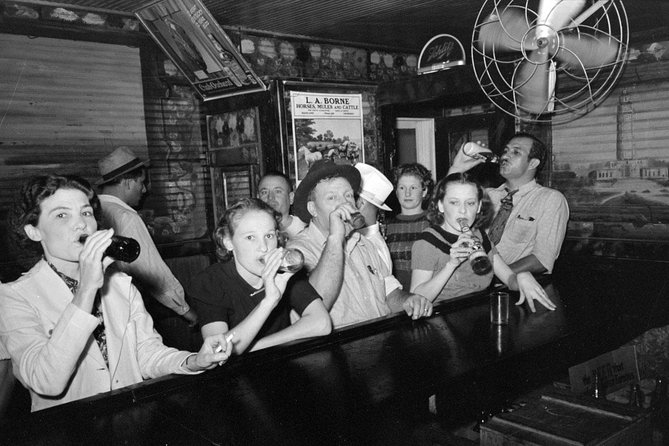
This section works because it moves the story away from speeches and legislation. Prohibition changed behavior, but it did not erase demand. People found ways to make, move, sell, and drink alcohol, creating a new set of risks and businesses.
The museum’s more than 200 artifacts include equipment used for brewing moonshine, along with historical objects and printed material. You will not simply walk past a wall of text. The displays combine objects with videos, murals, photographs, and staged scenes.
Crowding can affect this part of the visit. Interactive displays may become hard to use when several groups arrive together, and one person has noted that competing sounds can make hearing difficult. If you use hearing aids, wear them. If you are sensitive to noise, a quieter period may make the tour more comfortable.
The speakeasy finish and period cocktails
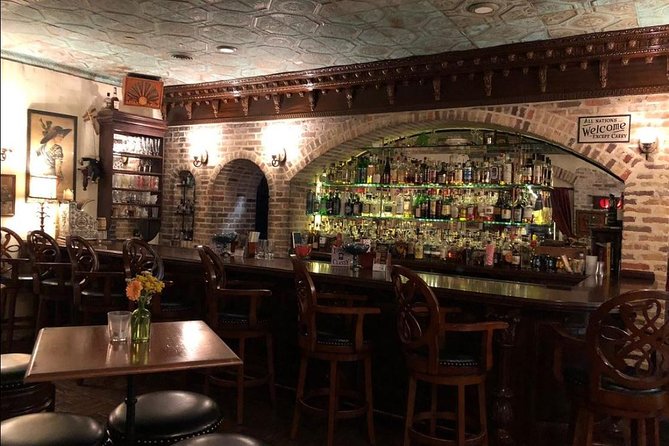
The visit ends near a hidden speakeasy serving drinks based on Prohibition-era recipes. This is the museum’s most playful feature, and it gives you a social ending after the heavier material about law, politics, and moral reform.
Admission covers the museum only. Food and drinks cost extra, so budget for the cocktail separately if you want the full experience. You choose your drink before the tour, then it can be ready when you reach the bar at the end.
You need photo ID at the door to receive a wristband for speakeasy entry. Anyone under 21 is not permitted inside, although children of all ages may enter the museum itself during operating hours. That makes the attraction suitable for a family group, but only the adults can use the bar.
Sunday is the key scheduling trap. Under Georgia law, the speakeasy cannot serve alcohol on Sundays. Mocktails are available instead, and the alcohol-free punch can still be a pleasant finish, but do not book a Sunday expecting a real cocktail.
The speakeasy hours listed for evening service are Wednesday from 5:30 to 10 p.m., Thursday from 5:30 to 11 p.m., and Friday and Saturday from 5:30 p.m. to 1 a.m. The museum visit itself takes place during daytime hours, so confirm the schedule if the drink is central to your plans.
Guided tour or self-guided visit?
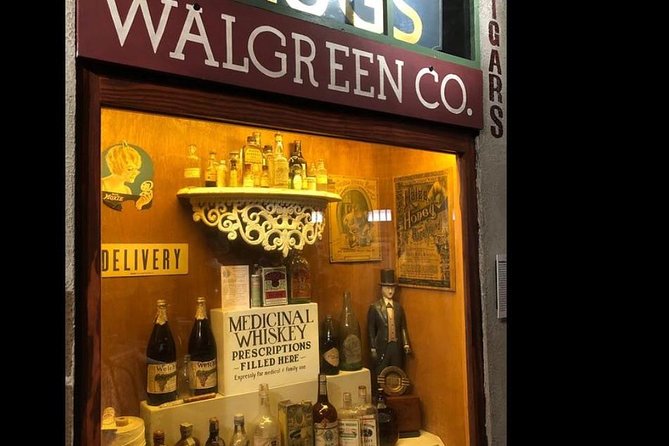
You have a choice between following the museum independently and taking a guided visit. I would lean toward the guide for a first visit, especially if you want the political and social context rather than just the photographs and rooms.
The best guides add humor, pacing, and small connections between exhibits. Eric has been praised for creating an energetic group experience, and Elijah has been credited with explaining details that were new to many people. Stephen and Blake have also been praised for combining museum information with a strong finish at the bar.
A guide does create a tradeoff. You may have to keep moving, and one hour is not enough to read everything. Some people have found the explanations slightly fast, while others felt that a group became too crowded to hear clearly.
A self-guided visit gives you more control. You can spend time with the clippings, propaganda, and artifacts that catch your eye, then move on when you are ready. If you already know the basic story of Prohibition, this slower approach may suit you better.
My practical plan would be to take the guided tour first, then ask whether you can revisit sections on your own. Allow two hours if you want a relaxed visit. If you are a serious history reader, set aside three to four hours, since one hour with a guide will not cover every label.
Price, timing, and practical planning
At $19.78 per person, the admission offers solid value for a central Savannah attraction. You get a full museum visit with elaborate staging and more than 200 artifacts, rather than a brief photo stop. The cost makes the museum an easy choice for a rainy day, a break from walking, or a first activity that gives context to American culture.
The visit is usually one to two hours, but your pace matters. A quick guided route may take about an hour. Add time for photographs, reading, a second pass through favorite rooms, and the speakeasy if you plan to order a drink.
The museum is near Ellis Square in Savannah’s City Market and close to public transportation. Parking is available near the Robinson Parking Garage, though a fee may apply. You arrange your own transportation, and the admission does not include food or drinks.
Hours vary by season in the supplied operating information. From August through March, the museum is open from 10 a.m. to 5 p.m., with last entry at 4:15 p.m. From April through July, it is open from 10 a.m. to 6 p.m., with last entry at 5:15 p.m. Another published operating note gives daytime access from 10 a.m. to 4:15 p.m., so check the current hours before setting a tight schedule.
The museum is closed on March 17 for St. Patrick’s Day. That is an important Savannah-specific warning, since the city is especially busy around that holiday.
Mobile tickets make entry simple, and confirmation is provided when you book. Free cancellation is available if you cancel at least 24 hours before the start time. Cancellations or changes made inside that window are not refunded or accepted.
Accessibility and comfort notes
Most people can participate, and service animals are allowed. Emotional support animals and pets are not allowed.
An elevator problem once prevented a disabled member of a group from enjoying the tour, and the booking provider refunded the affected tickets. That suggests you should check the elevator and current access conditions before arrival if someone in your party depends on it.
The bathroom is near the end of the route, so plan ahead if you need one before the final rooms. Food and drinks are not permitted in the galleries before the speakeasy.
Photography and personal video are allowed. You can take pictures with your phone and share them on social media using the museum’s listed hashtag or account tag. The staged scenes are particularly photo-friendly, though avoid slowing the group if you are on a guided route.
Who will enjoy this museum most?
I would recommend the museum to adults who like history presented with humor and theatrical detail. It is also a good choice for families because all ages can enter the museum during operating hours, even though the speakeasy is limited to people 21 and older.
Couples may enjoy pairing the visit with a cocktail, while friends can treat the final bar as a lighthearted nightcap. History fans should choose the guided option, then return to read the material at their own pace.
You may want to skip it if you dislike staged exhibits, loud group presentations, or displays that move quickly from one scene to the next. It is also less useful on a Sunday if an alcoholic period cocktail is your main reason for going.
Should you book the American Prohibition Museum?
I would book it if you want a compact, entertaining history lesson with strong visual displays and the option of a period cocktail afterward. The most highly praised part is the staff-led presentation, so I would pay for the guided option if available and make a second pass through the exhibits afterward.
Choose a weekday or a less crowded time if you want to hear every explanation and study the artifacts. Avoid March 17, confirm seasonal hours, and do not schedule a Sunday visit if the speakeasy drink matters to you.
For $19.78, this is a worthwhile Savannah stop, especially for first-time visitors, curious families, and anyone who wants more than another standard walking tour. It makes Prohibition feel less like a chapter heading and more like a messy national argument involving preachers, brewers, moonshiners, voters, and bartenders.
FAQ
How long does the American Prohibition Museum visit take?
The usual visit takes about one to two hours. A guided route may take about an hour, while a self-guided visit with extra reading can take longer. Some people may want three to four hours to revisit the exhibits and study the material closely.
What are the museum’s operating hours?
From August through March, the museum is listed as open from 10 a.m. to 5 p.m., with last entry at 4:15 p.m. From April through July, it is listed as open from 10 a.m. to 6 p.m., with last entry at 5:15 p.m. Another operating note lists daytime access from 10 a.m. to 4:15 p.m., so check the current schedule before visiting.
Can children enter the museum?
Yes. Children of all ages may enter the museum during operating hours. Children age three and younger are free.
Can anyone enter the speakeasy?
No. You need photo ID to receive a wristband, and people under 21 are not permitted in the speakeasy. Museum admission does not include food or drinks.
Are cocktails served on Sundays?
No. Georgia law prevents speakeasy alcohol service on Sundays. Mocktails are available instead.
Is parking available?
The museum is next to Ellis Square in Savannah’s City Market. The Robinson Parking Garage is a few blocks away, and parking may involve a fee. Public transportation is also nearby.
Just added in Savannah
- Savannah: Tybee Island Dolphin Tour★ 4.7 · 359 reviews
- Savannah Yes, Queen! Drag Queen Pub Crawl★ 4.5 · 367 reviews
- Welcome to Savannah Guided Walking Tour★ 5.0 · 329 reviews
- Heart of Savannah History Walking Tour – 2hr★ 5.0 · 857 reviews
- Genteel and Bard’s Savannah History Walking Tour★ 5.0 · 684 reviews
- The Grave Tales Ghost Tour in Savannah★ 4.5 · 396 reviews
- Southern Flavors of Savannah Walking Dessert Tour★ 4.5 · 560 reviews
- Sixth Sense Savannah Ghost Tour★ 4.5 · 1,148 reviews
Museums, compared.
Empire State Building Tickets – Observatory & Museum
Read our review →

9/11 Memorial, Ground Zero Tour with Optional 9/11 Museum Ticket
Read our review →

All-Access 9/11: Ground Zero Tour, Memorial and Museum, One World Observatory
Read our review →
Browse the lists this tour appears in