
Reviewed · GETTYSBURG TOURS
Gettysburg Battlefield Self-Guided Driving Audio Tour
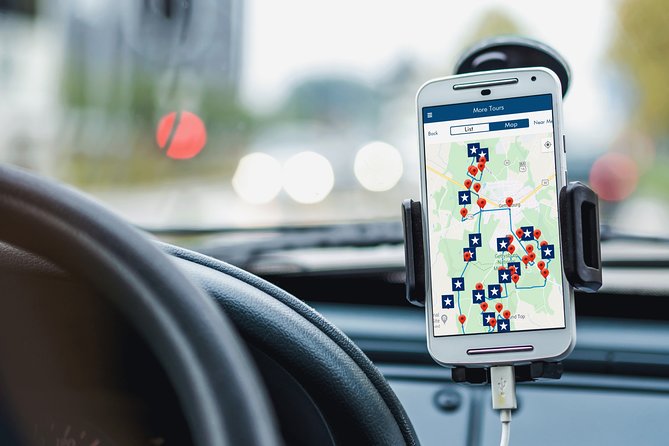
Gettysburg is best read from the road. This self-guided audio tour follows the official battlefield route for more than 19 miles, pairing GPS-triggered narration with Union and Confederate monuments, ridges, farms, towers, and the National Cemetery. I like the freedom to stop and start whenever you wish, and the price is hard to beat at $16.99 for an entire car of up to four people.
I also like the human stories tucked among the troop movements, from Battlefield Sallie, the dog mascot of the 11th Pennsylvania Infantry, to the families who fled farms with dinner still on the table. The main caution is technical: the app can take a little practice, and GPS may lose sync if you stray from the route or drive too quickly.
In This Review
- The Gettysburg tour at a glance
- Starting at the Heritage Center or Visitor Center
- McPherson’s Ridge and the first day of battle
- Oak Ridge, Battlefield Sallie, and the fading first day
- Day Two, from Seminary Ridge to Little Round Top
- The Wheat Field, Peach Orchard, and two abandoned farms
- The Pennsylvania Memorial and Culp’s Hill
- The third day and Pickett’s Charge
- What the audio app does well
- Is $16.99 a good deal?
- Who should choose this tour?
- Should you book the Gettysburg audio tour?
- FAQ
- How long does the Gettysburg driving tour take?
- How much does the tour cost?
- Where does the tour start?
- Do I need cellular service during the tour?
- Does someone meet me at the starting point?
- Are tickets and museum admission included?
- Can I use the tour more than once?
The Gettysburg tour at a glance
- More than 19 miles of battlefield driving: Follow the official Auto Tour route from the Gettysburg Heritage Center or National Park Visitor Center.
- Over 60 audio stories: Narration covers major battles, monuments, commanders, soldiers, civilians, and lesser-known details.
- One price per car: The $16.99 fee covers a private group of up to four people, making it far cheaper than paying four individual admission fees for a guided outing.
- Offline operation: Download the tour over strong Wi-Fi or cellular service before you begin, then use it without a signal.
- Flexible pacing: Pause for photographs, monuments, snacks, or side trips, then return to the route when ready.
- Lifetime access: The tour has no expiry, so you can use it again on another visit or revisit only the parts you missed.
Starting at the Heritage Center or Visitor Center
The tour begins at the Gettysburg Heritage Center, at 297 Steinwehr Avenue, or at the National Park Visitor Center. The Heritage Center is a useful first stop because its museum helps set the stage before you drive onto the fields. Admission is not included, so budget separately if you want to go inside.
You can also begin at the Visitor Center, which gives you another practical starting point for learning about the battle. No guide meets you in the parking lot. You open the Action Tour Guide app, enter the password sent by email and text, and follow the first GPS point.
That setup matters. Download the tour before arriving, and give yourself a few minutes to test the audio. Several people have found that the experience works very well once it is running, but the opening steps can be confusing if you simply arrive and press buttons without checking the instructions.
Connect your phone to the car stereo by Bluetooth, USB, or AUX. Headphones are more useful when you leave the car for a short walk. Apple CarPlay supports audio playback, though the map display is not yet available through CarPlay, and Android Auto support is still being developed.
A few more options to weigh up in the USA
- 2-Hour Gettysburg Battlefield Guided History Bus Tour with a National Park Guide
★ 4.5 · 2,201 reviews - Civil War Ghosts: Echoes of the Fallen Gettysburg Ghost Tour
★ 4.5 · 913 reviews - Gettysburg: Horse-Drawn Carriage Battlefield Tour
★ 4.8 · 896 reviews
McPherson’s Ridge and the first day of battle
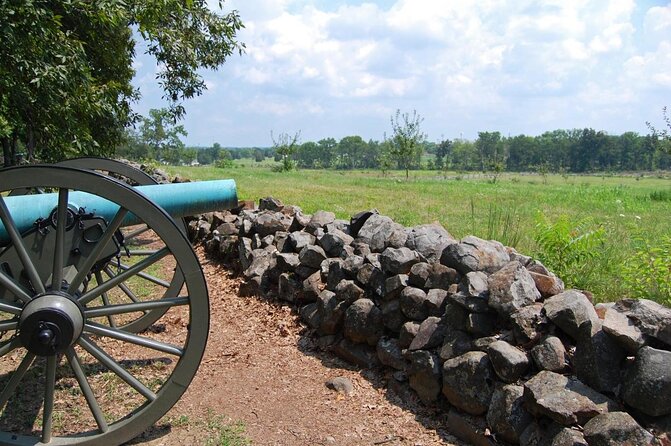
From the opening point, the route moves into the first day of fighting at McPherson’s Ridge. Dawn breaks, Union and Confederate units take position, and the narration helps you picture the armies moving across ground that now looks quiet and open.
The first Auto Tour stop is a good example of why audio works better here than simply following road signs. A monument tells you who served, but the narration explains what happened at that location and why the ridge mattered. You can stay in the car for the main story, then pull over where permitted to look more closely.
The Railroad Cut follows. This was an unlikely setting for a major first-day skirmish, and the audio explains the choices made by commanders on both sides. The route also begins introducing individual soldiers and officers, keeping the experience from becoming a dry list of dates.
At the Eternal Light Peace Memorial, the focus shifts from combat to national memory. Maine granite and Alabama limestone were used together as a symbol of reunited North and South. It is a small but useful reminder that Gettysburg is not only about the battle itself. It is also about how Americans later chose to remember the conflict.
Oak Ridge, Battlefield Sallie, and the fading first day
Oak Ridge Observation Tower offers a broad view over the fields connected to the first day’s fighting. The tower is especially useful for turning the narration into a visual exercise: listen to the troop movements, then look across the ground and consider the distance soldiers had to cover.
The route passes the monument to the 11th Pennsylvania Volunteer Infantry. Watch for the sculpted dog at the base, Battlefield Sallie. She served as the regiment’s mascot and accompanied the unit through much of the Civil War.
That detail captures one of the tour’s strengths. The best stories are not always the grand strategic ones. A dog, a drummer, or a family farm can give you a more personal sense of what military life and wartime disruption meant.
As evening falls in the story, Union soldiers have lost ground and suffered heavy casualties. The narration explains the plans being made after the first day, when both armies had to decide what came next. This is a natural point to pause if you want a meal or a break in town, though the route can also be completed in one continuous outing.
Day Two, from Seminary Ridge to Little Round Top
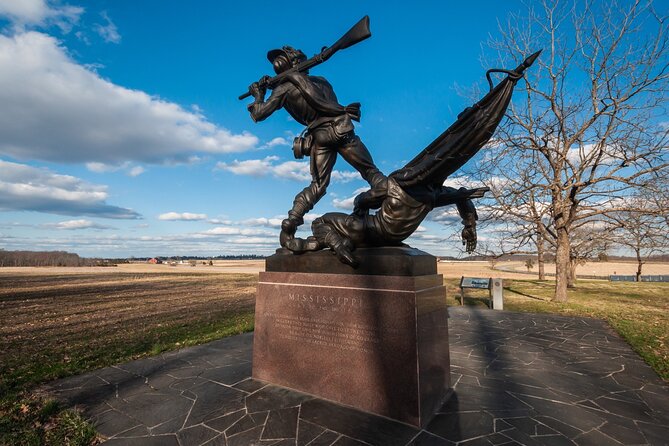
The next part of the drive passes the North Carolina Memorial and Virginia Monument before reaching another major Auto Tour stop. Here, the story moves into the second day, as both armies organize for a larger and more complicated fight.
The Longstreet Observation Tower provides another useful viewpoint over the battlefield. The tour does not require you to rush through every stop. If you want to climb, take photographs, or read nearby monuments, pause the audio and continue when you are ready.
An optional detour leads to Eisenhower National Historic Site. President Dwight Eisenhower often stayed at the property, which overlooks the battlefield. The detour is a nice choice if you have extra time, but it means the outing can stretch beyond the basic driving route.
Warfield Ridge brings the second day’s action into sharper focus. Confederate troops prepare to attack a Union position defended by specially trained marksmen. The narration lays out the opposing plans before leading you toward Little Round Top.
Little Round Top was a critical Union position. Confederate troops nearly seized the hill, but Union soldiers held it. The route also passes the Valley of Death, a name that needs little explanation given the violence of the fighting there.
At Devil’s Den, large volcanic rocks gave Confederate sharpshooters cover. The site is easy to appreciate from the road, but it rewards a stop if you want to examine the unusual rock formations and connect them with the story being told.
One practical note: Little Round Top has been affected by ongoing construction. The tour handles this with narration and pictures, allowing you to experience the site’s story even when access is limited.
A different kind of day out entirely:
- NYC: SUMMIT One Vanderbilt Tickets
★ 4.7 · 51,195 reviews - NYC: 9/11 Memorial & Museum Timed-Entry Ticket
★ 4.8 · 31,428 reviews - NYC: Empire State Building Tickets – Observatory & Museum
★ 4.7 · 25,757 reviews - NYC: Empire State Building Observation Deck Tickets
★ 4.7 · 22,072 reviews
The Wheat Field, Peach Orchard, and two abandoned farms
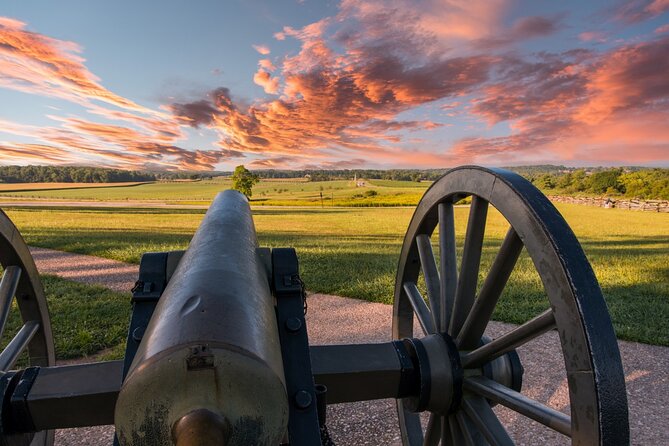
The tour continues past the Wheat Field, one of the major second-day combat areas. The audio places you among the Union soldiers trying to hold against Confederate attacks, then adds the unusual story of Union soldier J. J. Purman.
The Peach Orchard follows. Here, the changing fortunes of the second day become easier to track because the narration links the location with the earlier decisions made by commanders. You can pause at monuments and read the names, then resume the story as you drive.
At the Abraham Trostle Farm, the war reaches directly into a civilian home. The Trostle family fled so quickly that dinner was still on the table. That small detail turns an abstract battlefield into a place where ordinary people had only moments to leave.
The route then reaches Plum Run and the George Weikert Farm. The Weikert family also evacuated, but when they returned, their farm had been turned into a battlefield hospital. The audio explains the work of military doctors and the physical cost of the fighting.
These stops are worth your time because they broaden the tour beyond generals and battle plans. Gettysburg was fought across working farms, roads, woods, and family properties. The farms help you understand how completely the battle disrupted local life.
The Pennsylvania Memorial and Culp’s Hill
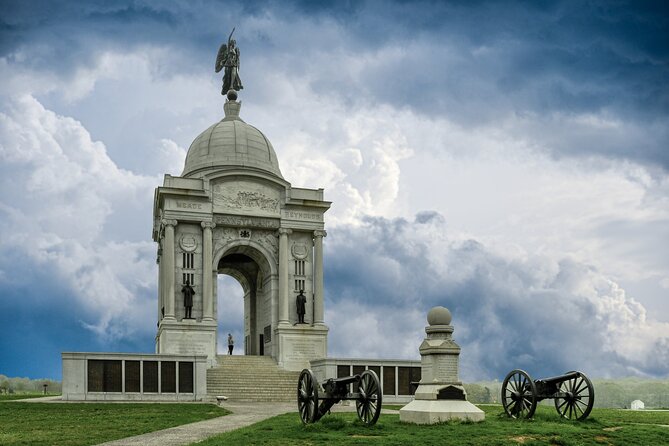
The Pennsylvania Memorial honors nearly 35,000 Pennsylvanian soldiers who fought at Gettysburg. The monument has particular force because these men were defending their home state, not simply serving an idea on a distant field.
Spangler’s Spring offers a quieter stop in the woods. The narration explains why this modest water source mattered during the battle. It is a good place to slow down and notice how different the wooded sections feel from the open ridges.
The route proceeds toward Culp’s Hill Tower, where Union and Confederate forces fought for control of an important position. Union troops managed to hold the hill through the evening, giving the Union a stronger position as the second day ended.
At East Cemetery Hill, the story continues after darkness. The Confederates attempted a nighttime raid because they had not fully captured Culp’s Hill. The Union came close to losing, but perseverance, skill, and luck helped hold the position.
This sequence works well in audio because the tour can explain how several locations relate to each other. You are not just stopping at separate monuments. You are following the changing battle line across the fields and hills.
The third day and Pickett’s Charge

The final day opens with both armies preparing for one last major attack. The tour takes you to the area connected with Pickett’s Charge, the Confederate assault that has become the most famous episode of Gettysburg.
From the top of the hill, you can look across the open ground the Confederate soldiers had to cross. The narration follows the charge toward the Union defenses and identifies the high-water mark, the farthest point reached by Confederate forces during the assault.
This is one of the most effective moments on the route. The field looks deceptively manageable from a car window, but the open space makes the distance and exposure clear. You can stop, look across the ground, and listen again if you want more time with the story.
The tour then reaches the final Auto Tour stop at the National Cemetery. The mood changes here. You are no longer following an attack from ridge to ridge. You are honoring the Union soldiers who died defending the country.
The cemetery is also tied to Abraham Lincoln’s Gettysburg Address. Lincoln was expected to give a long speech, but he kept his remarks brief because he believed the soldiers’ sacrifice deserved the attention. The tour ends with that reminder, giving the drive a fitting close.
What the audio app does well

The strongest part of this experience is the narration. It combines battle movements with side stories, monuments, soldiers, civilians, and small details that help you remember one location from the next.
The GPS-triggered playback is designed to run hands-free. As you approach a story point, the audio should begin automatically, and the next chapter should follow as you continue the marked route. Roadside markers also help identify which chapter you should be hearing.
The app includes extra material at some stops through a learn more option. This gives you a choice: keep moving with the main route, or spend extra time on a subject that catches your attention.
The system is not perfect. GPS sync can be affected by speed, route changes, or the starting position. If you miss a story, you may need to restart it manually, and an incorrect turn can send the audio out of sequence.
For the best result, begin at the official start point, stay on the marked route, obey the speed limit, and avoid trying to set up the app while driving. If the audio stops working, support is available from 9 a.m. to 6 p.m. Eastern Time.
Is $16.99 a good deal?
Yes, especially for a small group. The price covers up to four people in one car, so a full car pays about $4.25 per person. That is a strong value compared with paying separately for a bus or private tour.
The value also comes from repeat use. The tour has lifetime access with no expiry, so you can use it on another Gettysburg visit or replay a favorite section after learning more at the museum or Visitor Center.
The fee does not include museum admission, attraction passes, entry tickets, or reservations. Most of the battlefield stops themselves are free, but you should plan separately for any optional attractions.
Expect the basic route to take about two hours if you keep moving. In practice, allow two to four hours if you stop at monuments, climb observation towers, take photographs, visit the Heritage Center, or make the Eisenhower detour.
Who should choose this tour?
I would choose this tour if you want control over the day. Families can pause when children need a break, couples can linger at a favorite monument, and anyone in a camper van can follow the route without being squeezed into a fixed bus schedule.
It also suits repeat visitors. You can skip the places you already know and spend more time on the farms, towers, or sections you missed before.
The tour is less suitable if you want a live historian answering questions beside you. It is also not the best fit if you dislike phone apps or have trouble following GPS directions. In that case, practice at the starting point and download everything before arriving.
The experience is offered in English only. The recommended devices are an iPhone with iOS 15 or later, an Android device running version 9 or later, or an iPad or tablet with GPS and cellular connectivity.
Should you book the Gettysburg audio tour?
Book it if you want an affordable, private, flexible way to cover the main battlefield route. The narration adds far more meaning than driving from monument to monument with only a map, and the personal stories make the long route easier to follow.
I would especially recommend it for first-time visitors who have at least half a day, families who need flexibility, and anyone who prefers a car to a group bus. Download the app early, start at the correct point, and treat the audio as a guide rather than a machine you must rush to obey.
Skip it if you need a live expert or if app troubleshooting would spoil your day. For most independent visitors, though, $16.99 for a car and lifetime access is a sensible way to experience Gettysburg at your own pace.
Free cancellation is available if you cancel at least 24 hours before the local start time. Cancellations made within 24 hours are not refunded.
FAQ
How long does the Gettysburg driving tour take?
The driving route itself is described as taking about one to two hours, but you should allow two to four hours if you stop for monuments, photographs, museum visits, towers, or the Eisenhower National Historic Site detour.
How much does the tour cost?
The tour costs $16.99 per group of up to four people. You buy one tour for the car rather than paying per person.
Where does the tour start?
You can start at the Gettysburg Heritage Center parking area at 297 Steinwehr Avenue or at the National Park Visitor Center. The tour ends at the National Cemetery area at 125 Taneytown Road.
Do I need cellular service during the tour?
You need strong Wi-Fi or cellular service to download the tour before starting. After the download is complete, the audio and maps work offline.
Does someone meet me at the starting point?
No. This is a private, self-guided activity. You open the Action Tour Guide app at the starting point, enter the supplied password, and follow the GPS-triggered stories.
Are tickets and museum admission included?
No. Attraction passes, entry tickets, reservations, and admission to the Gettysburg Heritage Center are not included.
Can I use the tour more than once?
Yes. The tour provides lifetime access with no expiry, so you can use it again on another trip or replay selected sections whenever you like.
Just added in the USA
- Monterey Bay Whale Watching★ 4.5 · 316 reviews
- Monterey Whale Watching Tour★ 4.5 · 732 reviews
- 17-Mile Drive Electric Bike Guided Tour★ 5.0 · 401 reviews
- Whale Watching Tour★ 4.5 · 497 reviews
- Elkhorn Slough Wildlife Tour★ 5.0 · 424 reviews
- Carmel Small Group Walking Food & Cultural Tour★ 5.0 · 392 reviews
- The Best U-Drive Hell’s Revenge 4×4 Off Roading Tour from Moab★ 5.0 · 909 reviews
- USS Alabama Battleship Memorial Park Admission Ticket★ 5.0 · 471 reviews
Gettysburg Tours, compared.
2-Hour Gettysburg Battlefield Guided History Bus Tour with a National Park Guide
Read our review →
Civil War Ghosts: Echoes of the Fallen Gettysburg Ghost Tour
Read our review →
Gettysburg: Horse-Drawn Carriage Battlefield Tour
Read our review →
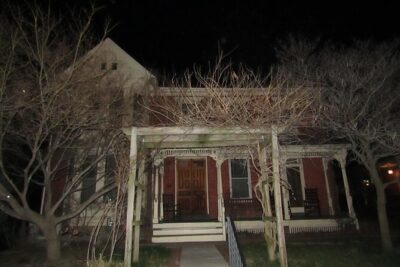
Gettysburg: Ghost Hunt Tour with Ghost Hunting Equipment
Read our review →Civil War Ghosts: Echoes of the Fallen Gettysburg Ghost Tour
Read our review →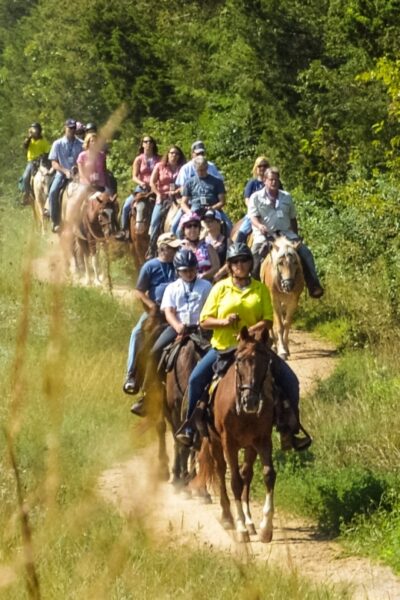
Gettysburg: Licensed Guided Battlefield Horseback Tour
Read our review →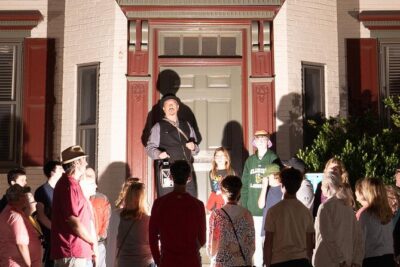
Ghost Tour: History and Haunts – Family Friendly – Best in Gettysburg
Read our review →Browse the lists this tour appears in