
Reviewed · GETTYSBURG TOURS
Gettysburg: Licensed Guided Battlefield Horseback Tour
History feels different from the saddle. This two-hour ride through Gettysburg National Military Park gives you a fresh view of the battle, with an expert Civil War guide explaining how the ground shaped the fighting. I especially like the Virginia Monument stop and the broad view toward Little Round Top from Spangler Farm. The main thing to consider is that this is a focused horseback route, not a complete tour of the entire battlefield.
The horses are calm, well trained, and matched to riders, so you do not need much riding experience. I also like the careful support from the outriders, who help with saddles, stirrups, safety, and nervous riders. Still, you should be comfortable spending two hours outdoors in changing weather, since the ride goes on rain or shine.
In This Review
- Key Points Before You Book
- Why Gettysburg Looks Different on Horseback
- Meeting at McMillan Woods Campground
- The First Stretch Through Gettysburg National Military Park
- The Virginia Monument and Pickett’s Charge
- Spangler Farm and the View Toward Little Round Top
- Crossing Emmitsburg Road to Trostle Farm
- The Horses and the Human Support
- Is $144 a Fair Price for Two Hours?
- Weather, Clothing, and Practical Comfort
- Who Should Book This Gettysburg Ride?
- Should You Book the Horseback Battlefield Tour?
- FAQ
- Where does the horseback tour meet?
- How long does the tour last?
- How much does the tour cost?
- Is horseback riding experience required?
- What locations does the route visit?
- Can children join the tour?
- What should I wear?
- Does the tour operate in bad weather?
- What happens if a live guide is unavailable?
Key Points Before You Book
- Ride through real battlefield terrain: Follow the route through Gettysburg National Military Park on horseback, rather than viewing the fields only from a car or paved path.
- Hear the story as you ride: A live English-speaking guide provides narration, with an English audio guide available so you can hear the commentary clearly.
- See major Civil War landmarks: Visit the Virginia Monument, Spangler Farm, the Peach Orchard area, Little Round Top views, and Trostle Farm.
- Suitable for first-time riders: The horses are described as gentle and easy to handle, while outriders stay with the group throughout.
- Expect all-weather conditions: The activity runs rain or shine, so proper clothing matters as much as your interest in history.
- Know the restrictions: Children must be at least 8 years old, riders under 18 need helmets, and anyone 15 or younger must ride with a parent or guardian.
Why Gettysburg Looks Different on Horseback
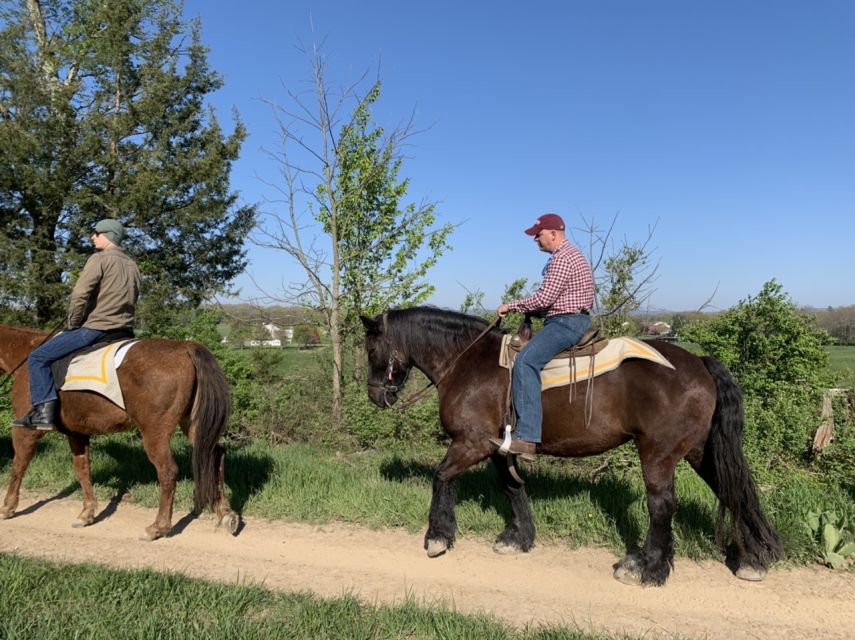
Gettysburg is easy to visit by car, but a car can flatten the story. From the saddle, you move at a slower pace and can better sense the open fields, roads, farms, woods, and rises that affected the battle.
You also travel in a way that fits the setting. In 1863, horses were central to military movement, command, communication, and transport. Riding does not turn you into a Civil War officer, of course, but it gives you a closer sense of how people moved across this ground before modern roads and vehicles changed the experience.
I like the way this tour links history to physical space. A guide can explain a charge or troop movement, but the point becomes clearer when you are sitting above the fields and looking toward the same ridges and roads that commanders had to study.
The ride also offers access to parts of the battlefield that can feel less immediate from a standard driving route. One rider described it as a way to see areas not reached on foot or by car, while another pointed out that the horseback route covers only a small section of the full park. Both points matter. This is a special view of Gettysburg, not a replacement for seeing the rest of the battlefield.
A few more options to weigh up in the USA
- Charleston’s Old South Carriage Historic Horse & Carriage Tour
★ 5.0 · 10,023 reviews - Haunted Evening Horse and Carriage Tour of Charleston
★ 4.5 · 3,678 reviews - Charleston Horse-Drawn Carriage Tour: Explore Historic Charleston
★ 5.0 · 3,561 reviews
Meeting at McMillan Woods Campground
Your meeting point is McMillan Woods Campground. Plan to arrive ready for an outdoor activity, with weather-appropriate clothing and closed-toe shoes. Open-toed shoes are not allowed.
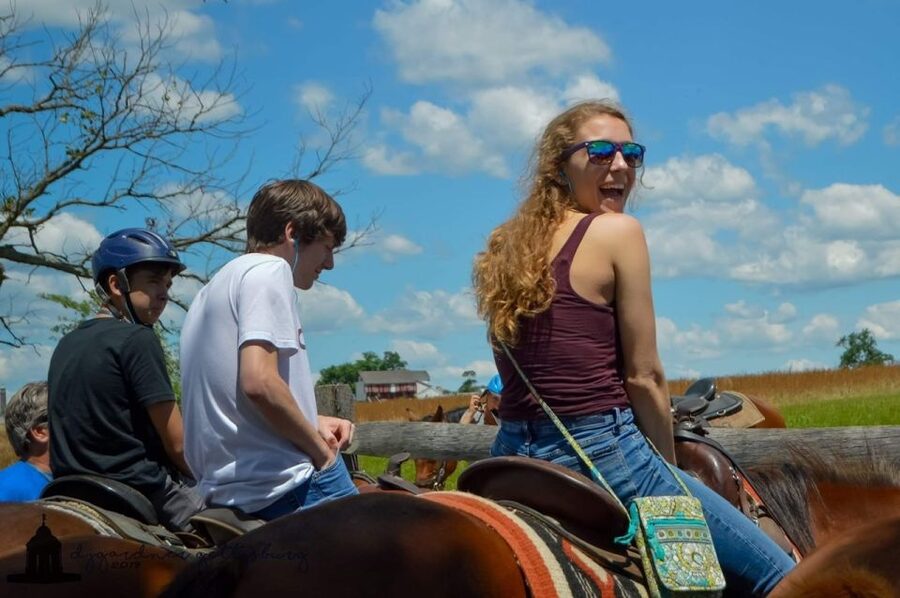
Before you mount, the riding staff provides instructions and helps you get settled. The preparation appears to be one of the strongest parts of the operation. Riders describe help with saddle fit and stirrups, plus checks during the ride to make sure both people and horses remain comfortable.
That support is useful if you are a beginner or have not ridden in years. The horses are trained to stay in line and stop when the group stops, which reduces the amount of work you need to do. You still need to follow instructions and remain alert, but this is not presented as a fast or demanding riding lesson.
An outrider or several outriders accompany the group at all times. They are there for safety and practical help, and riders repeatedly praise their patience and attention. On hot days, the staff has been careful about fly spray, sunscreen, hay, and the condition of the horses. That kind of care is worth noticing, especially on an activity where animal welfare affects the whole experience.
The First Stretch Through Gettysburg National Military Park
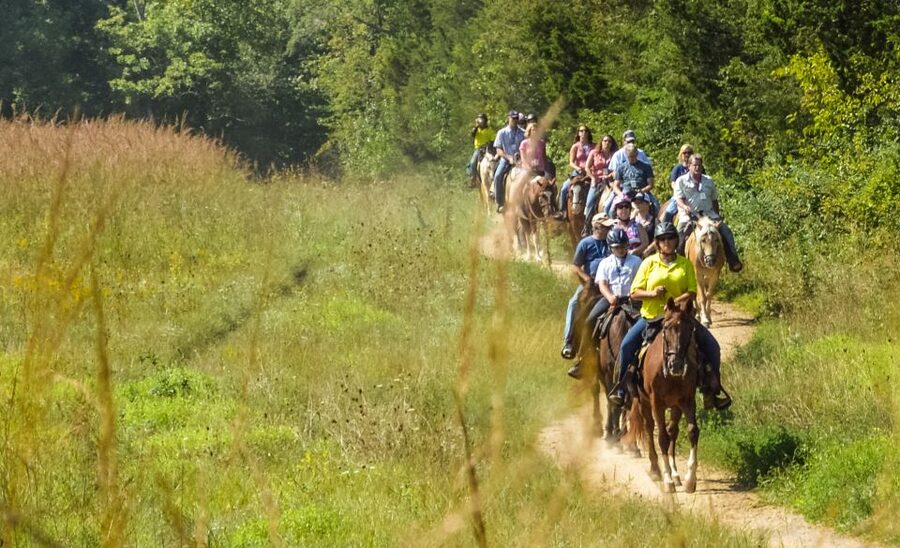
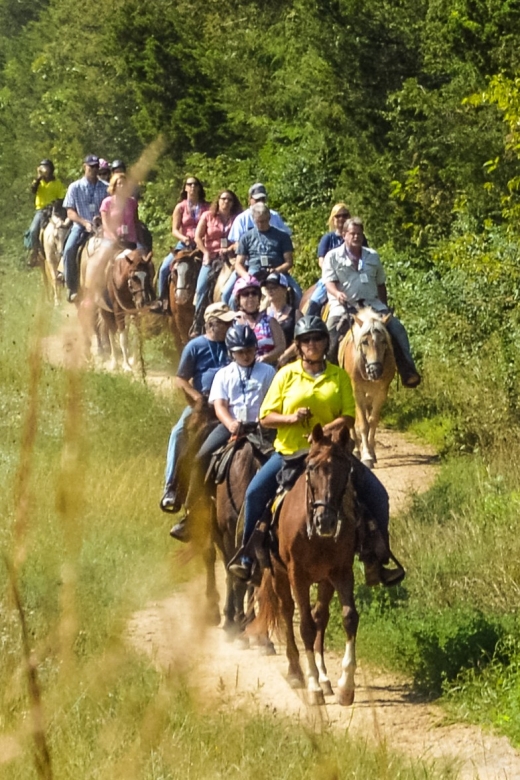
Once mounted, you follow the route through the park at a steady trail-ride pace. The exact riding ability of the group can affect the rhythm. Most riders describe the horses as gentle and sure-footed, but one account noted that a horse lagged well behind the line, causing some bunching among the horses behind it.
That sounds like an occasional group-management issue rather than a major problem, but it is worth keeping in mind. A horseback tour is shared transportation. You may not set the pace, choose your horse, or stop whenever you want for photographs.
The tradeoff is a calmer experience. You have time to listen, look around, and connect the guide’s explanation with what is in front of you. The narration covers battle details, soldiers, local residents, and smaller facts that add texture to the main story.
The guide’s quality is a major part of the value. Guides named in the feedback include Andi, Truman, and others praised for clear storytelling, humor, and strong command of the subject. Andi, in particular, is described as both entertaining and highly informed, while Truman is remembered for a lively delivery and a sharp sense of humor.
You receive an audio guide in English, and riders have specifically appreciated the headsets. That matters because a group spread along a trail can make ordinary spoken commentary hard to catch. With the audio equipment, you are less likely to miss an explanation while your horse is moving.
The Virginia Monument and Pickett’s Charge
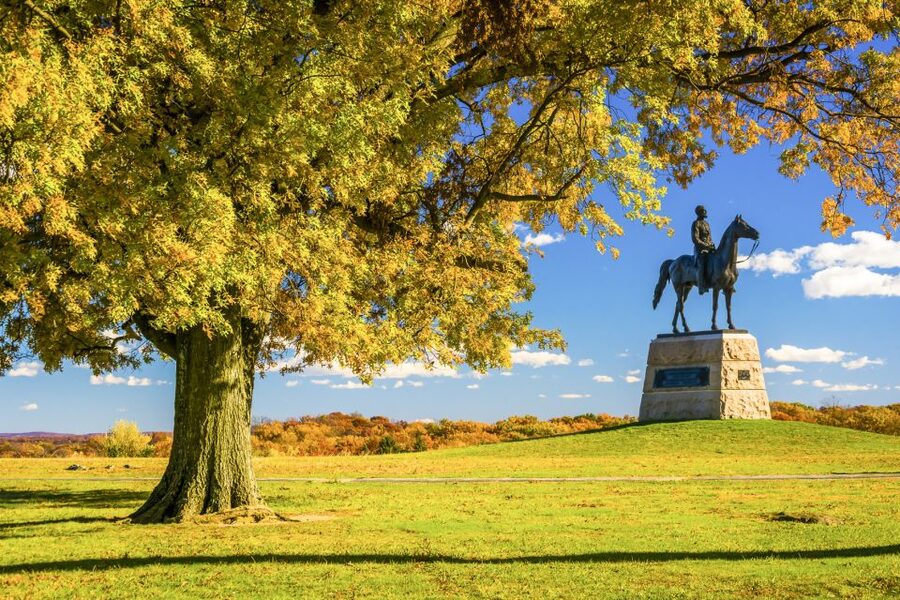
One of the key stops is the Virginia Monument. This monument marks an important point connected with Pickett’s Charge, the Confederate assault during the battle’s final day.
Here, General Robert E. Lee waited for returning troops after the charge. That detail gives the stop a human scale. Instead of treating the battle as a series of arrows on a map, you can picture the commander waiting for men to come back across open ground.
The stop also helps explain the distance and exposure involved. The battlefield is not an abstract stage. Roads, fields, rises, and sightlines all affected how quickly troops could move and what commanders could see.
I find this type of stop more useful than simply collecting monument photographs. The guide’s explanation helps connect the marker to the decisions made around it. You are not only seeing where something happened, but also considering why that place mattered.
The tour does not promise a complete treatment of every phase of the battle. If you want an exhaustive account of the first, second, and third days, you will need more time elsewhere in Gettysburg. This ride works best as a concentrated lesson tied to several important locations.
A different kind of day out entirely:
- NYC: SUMMIT One Vanderbilt Tickets
★ 4.7 · 51,195 reviews - NYC: 9/11 Memorial & Museum Timed-Entry Ticket
★ 4.8 · 31,428 reviews - NYC: Empire State Building Tickets – Observatory & Museum
★ 4.7 · 25,757 reviews - NYC: Empire State Building Observation Deck Tickets
★ 4.7 · 22,072 reviews
Spangler Farm and the View Toward Little Round Top
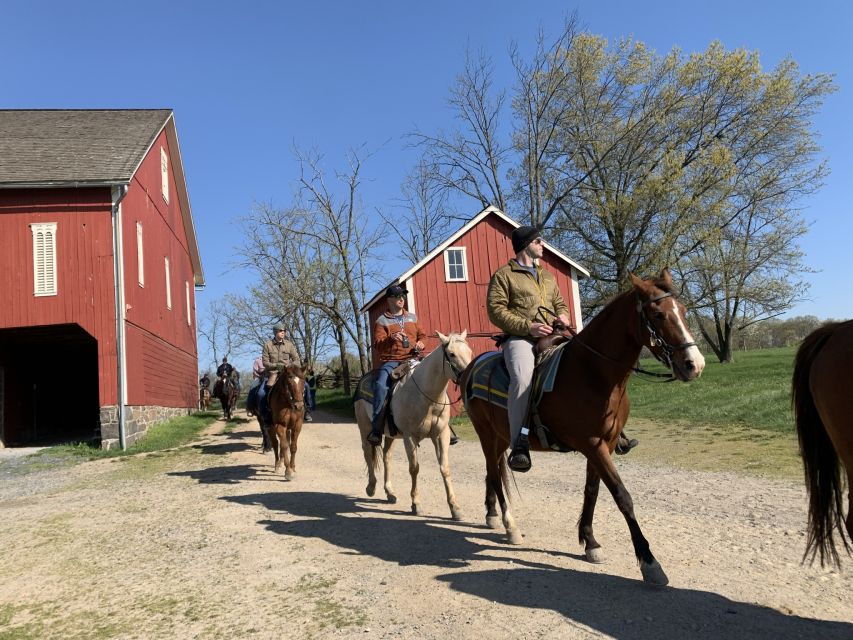
The route continues toward historic Spangler Farm. This is one of the most appealing parts for scenery, since the ride includes broad views toward the Peach Orchard and Little Round Top in the distance.
The view helps you understand the relationship between battlefield locations. Little Round Top is not just an isolated name from a history book. From Spangler Farm, you can see how the land opens out and how positions relate to one another.
The ride may be especially rewarding for someone who has already seen Gettysburg by car. The horse gives you a slower approach, and the farm setting adds a sense of place that a quick roadside stop may not provide.
Photography can be tempting here, but remember that you are still part of a moving group. Follow the guide’s directions rather than trying to reposition your horse for the perfect angle. The best benefit is the view itself and the explanation that goes with it.
The scenery changes with the weather. On a clear day, the battlefield views can be wide and sharp. On a rainy or misty day, visibility may be less dramatic, but the conditions can make the setting feel closer to the discomfort faced by troops in the field. One rider actually found the rain added meaning to the experience, though it naturally also added discomfort.
Crossing Emmitsburg Road to Trostle Farm
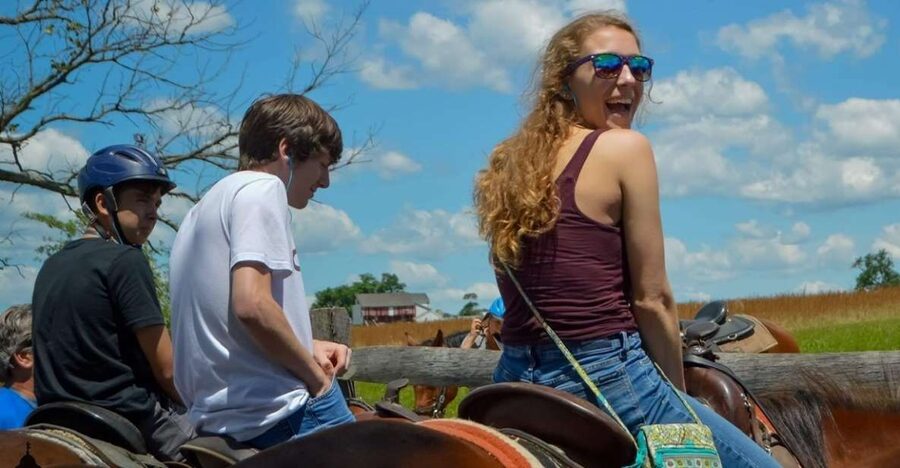
Crossing Emmitsburg Road marks a shift toward the Union side of the battle. The route then reaches Trostle Farm, another stop where a physical detail brings the fighting close.
At the farm, you can look at the large cannonball hole in the side of the barn. It is a simple, powerful reminder that the battle damaged homes and farm buildings, not just military formations.
This is the kind of detail I value on a history tour. A monument can honor an event, but a hole in a barn shows the force of war in a direct way. It also brings local residents into the story, since farms and families occupied this ground before, during, and after the fighting.
The guide uses the stops to explain more than troop movements. You learn about soldiers, civilians, and the setting around them. That wider view keeps the ride from becoming only a list of generals and attacks.
After Trostle Farm, the tour finishes after about two hours. Some riders wish the trip were longer or reached farther into the battlefield. Another rider expected a loop but found the route turned around and retraced part of the way. Those are fair expectations to manage before booking: this is a set route with selected sites, not an open-ended trail ride.
The Horses and the Human Support
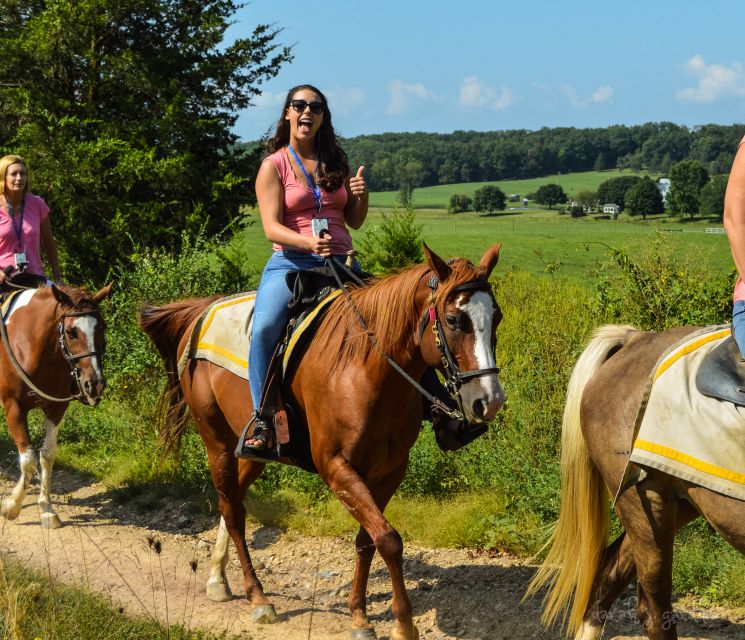
The horses are a central part of the experience, not just a way to move between historical stops. Riders describe them as solid, calm, friendly, well behaved, and easy for beginners to handle.
Several people also praised the horses’ condition and care. One account specifically noted that the animals appeared well cared for, while another said all the horses were rescued. The supplied information does not identify every horse’s background, so I would not assume every animal has the same history, but the repeated emphasis on good care is reassuring.
The staff checks on riders during the tour, including a halfway check. That can make a real difference if your saddle feels uncomfortable, your stirrups need adjustment, or you are uncertain about handling your horse.
Families have found the ride workable for older children, including a 13-year-old grandson who stayed interested during the history talk. Children under 8 cannot participate, and anyone under 18 must wear a helmet. Riders aged 15 and younger also need a parent or guardian with them.
You should not book this if you have a serious medical condition, limited mobility, visual impairment, or are pregnant. The activity also has a weight restriction listed as 250 pounds, or 115 kilograms, with another line giving 254 pounds. Since those figures do not match exactly, confirm the current limit before paying.
Is $144 a Fair Price for Two Hours?
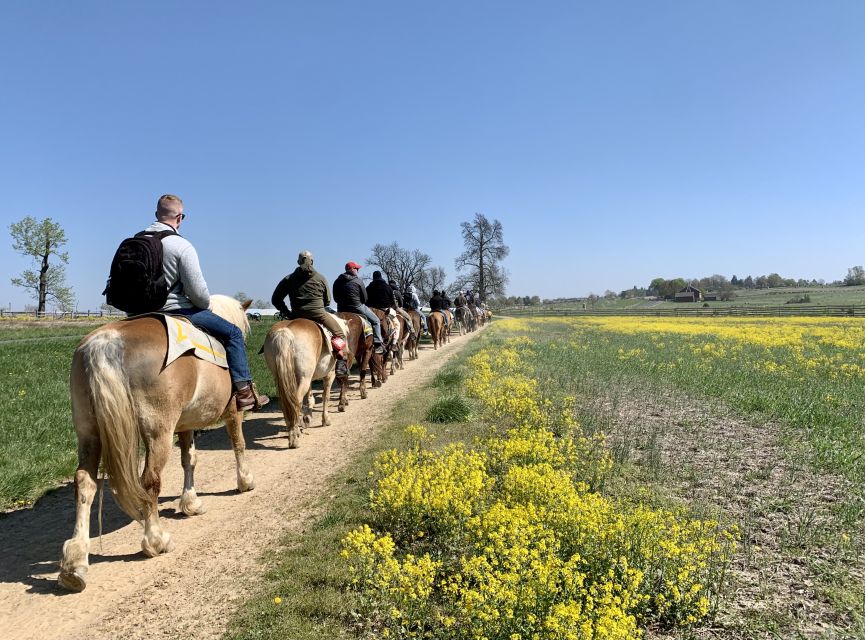
At $144 per person, this is not a cheap trail ride. You are paying for the horse, riding staff, licensed battlefield guide, safety support, and audio equipment, not just for time in the saddle.
The value depends on what you want from Gettysburg. If your priority is covering the maximum number of battlefield locations, a car-based visit will take you farther for less money. If you want a memorable, guided look at selected sites and enjoy horses, the price is easier to justify.
I think the strongest value comes from combining three things that are normally separate: transportation, interpretation, and access to the open battlefield. You are moving through the park while a guide explains the terrain, and the horse changes how you experience distance and pace.
The price also makes more sense for riders who would otherwise book a separate horseback activity. You get a trail ride and a focused Civil War tour in one outing. It is particularly appealing for a return visit to Gettysburg, a family memory-making activity, or anyone who finds standard museum and car tours too passive.
The limitation is duration. Two hours is enough for a satisfying introduction, but not enough to cover all of Gettysburg. I would treat this as one part of a larger visit rather than your only battlefield experience.
Weather, Clothing, and Practical Comfort
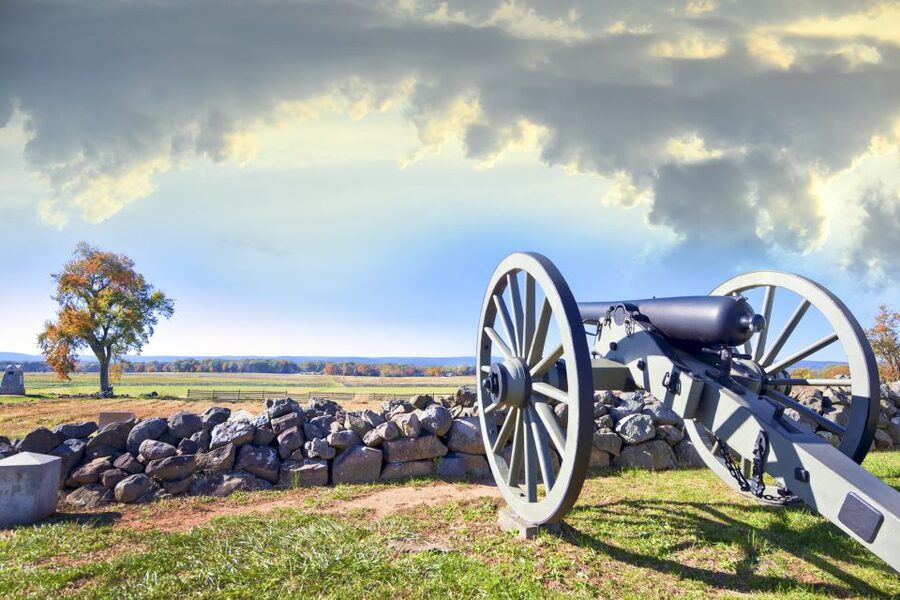
This is an outdoor activity that runs rain or shine. Wear clothing suited to the forecast, and do not rely on a light jacket if the day may be cold or wet. In warm weather, sun and heat can affect both riders and horses.
Closed-toe shoes are required. Choose practical footwear rather than sandals or anything that could slip easily in the stirrups.
You will also need to sign a risk form before riding. That is standard for a horseback activity, but it reinforces the need to listen carefully during the safety briefing.
No horseback experience is required, according to the tour information and rider accounts. Still, no experience does not mean no responsibility. You should be willing to follow directions, remain calm around horses, and spend two hours seated in a saddle.
If a live guide is not available, professionally recorded narration by Civil War commentators is provided. The tour language is English, and the audio guide is also in English.
Who Should Book This Gettysburg Ride?
I would recommend this tour most strongly to:
- First-time visitors who want history explained while they move through the park
- Returning visitors looking for a different view of familiar sites
- Families with children old enough to ride safely
- Couples or friends who enjoy horses and Civil War history
- Riders who want a calm, guided trail experience rather than an independent ride
- People who learn best by seeing terrain while hearing the story
It is less suitable for anyone seeking a full battlefield circuit, a fast ride, or complete control over the route. It is also not the right choice if you dislike outdoor weather, feel uneasy around horses, or cannot meet the age, health, mobility, vision, or weight requirements.
Should You Book the Horseback Battlefield Tour?
Book it if you want Gettysburg to feel physical and personal. The strongest parts are the calm horses, attentive outriders, clear audio, and guides such as Andi and Truman, who bring both detail and personality to the story.
Go in with the right expectations. You will see only a portion of the park, the route may include some backtracking, and two hours can leave you wishing for more. For the best visit, pair the ride with additional battlefield sightseeing by car or on foot.
At $144, this is a special-interest experience rather than a budget activity. But if horseback riding appeals to you, it offers a memorable way to connect the Virginia Monument, Spangler Farm, Little Round Top views, and Trostle Farm. I would book it for the distinctive perspective, not simply for transportation.
FAQ
Where does the horseback tour meet?
The meeting point is McMillan Woods Campground in Gettysburg, Pennsylvania.
How long does the tour last?
The tour lasts two hours.
How much does the tour cost?
The listed price is $144 per person.
Is horseback riding experience required?
No. The horses are described as calm, well behaved, and suitable for riders without previous experience. Staff provide instructions and help with saddles and stirrups.
What locations does the route visit?
The route goes through Gettysburg National Military Park and includes the Virginia Monument, Spangler Farm, views toward the Peach Orchard and Little Round Top, Emmitsburg Road, and Trostle Farm.
Can children join the tour?
Children must be at least 8 years old. Riders under 18 must wear a helmet, and anyone aged 15 or younger must be accompanied by a parent or guardian.
What should I wear?
Wear weather-appropriate clothing and closed-toe shoes. Open-toed shoes are not allowed.
Does the tour operate in bad weather?
Yes. The activity takes place rain or shine, so you will be exposed to the day’s weather conditions.
What happens if a live guide is unavailable?
You will receive professionally recorded narration by professional Civil War commentators. The tour and audio guide are in English.
Just added in the USA
- Monterey Bay Whale Watching★ 4.5 · 316 reviews
- Monterey Whale Watching Tour★ 4.5 · 732 reviews
- 17-Mile Drive Electric Bike Guided Tour★ 5.0 · 401 reviews
- Whale Watching Tour★ 4.5 · 497 reviews
- Elkhorn Slough Wildlife Tour★ 5.0 · 424 reviews
- Carmel Small Group Walking Food & Cultural Tour★ 5.0 · 392 reviews
- U-Drive Hells Revenge 4×4 Tour- 2.5 HR TOUR★ 5.0 · 334 reviews
- The Best U-Drive Hell’s Revenge 4×4 Off Roading Tour from Moab★ 5.0 · 909 reviews
Gettysburg Tours, compared.
2-Hour Gettysburg Battlefield Guided History Bus Tour with a National Park Guide
Read our review →
Civil War Ghosts: Echoes of the Fallen Gettysburg Ghost Tour
Read our review →
Gettysburg Battlefield Self-Guided Driving Audio Tour
Read our review →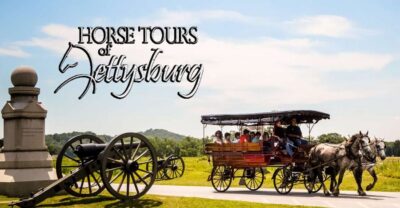
Gettysburg: Horse-Drawn Carriage Battlefield Tour
Read our review →
Gettysburg: Ghost Hunt Tour with Ghost Hunting Equipment
Read our review →Civil War Ghosts: Echoes of the Fallen Gettysburg Ghost Tour
Read our review →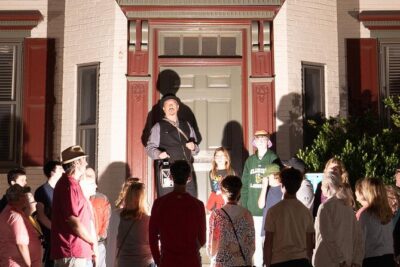
Ghost Tour: History and Haunts – Family Friendly – Best in Gettysburg
Read our review →Browse the lists this tour appears in