
Reviewed · HISTORICAL TOURS
Historic Memphis Guided Walking Tour: Memphis Beyond Beale
Memphis tells its story on foot. I like the compact route, which links Beale Street, Court Square, the Mississippi River, and the Peabody Hotel without wasting time on transport. I also like the guides’ focus on people and turning points, from yellow fever and cotton to Prohibition and Civil War spies. The main drawback is weather: much of the tour takes place outdoors, and cold or rain can make the walk less pleasant.
This is a strong first look at downtown Memphis, especially if you want context before visiting museums, music clubs, or historic sites on your own. I would allow about 90 minutes to two hours for the walking portion, although the advertised experience can run closer to three hours with the optional Orpheum Theater tour. The duck march is the crowd-pleasing finish, but it also means timing and hotel crowds matter.
In This Review
- Key points to know before you book
- A sensible start at The Peabody Memphis
- Barboro Alley and the hard lesson of yellow fever
- WDIA and the sound of a changing city
- Court Square, Memphis’s pause in the middle of downtown
- Fourth Bluff Park and the Battle of Memphis
- The Mississippi River explains Memphis better than any slogan
- Cotton Row and the business behind the romance
- Howard’s Row and the older face of downtown
- The Peabody Ducks, Memphis’s delightfully odd ritual
- Beale Street puts the music in place
- The Orpheum Theater option adds real indoor depth
- How much value do you get for $32.92?
- Who will enjoy this Memphis walking tour?
- Should you book Memphis Beyond Beale?
- FAQ
- How long does the Memphis Beyond Beale tour last?
- Where does the tour begin?
- Is the Orpheum Theater tour included?
- Does the tour include food, drinks, or hotel pickup?
- How many people can join the tour?
- What happens if the weather is poor?
Key points to know before you book
- The route covers nine downtown stops: You see Beale Street, Court Square, Fourth Bluff Park, the Mississippi River, Cotton Row, the Peabody Hotel, and more.
- The tour begins at 9:30 a.m.: Starting at The Peabody Memphis puts you near several parking garages and downtown attractions.
- The stories are the main attraction: Guides such as Charlie, Kate, Mary, and Charles bring Memphis history to life with tales of yellow fever, cotton, war, radio, and organized crime.
- The Peabody Ducks provide a memorable finale: The famous march is included, and you may want to stay for a drink afterward.
- The Orpheum tour is an optional extra: It takes place at noon, runs for one hour, and is offered Monday through Wednesday when available.
- The group can reach 20 people: That is still manageable, but a smaller group may give you more time for questions and conversation.
A sensible start at The Peabody Memphis

The tour starts outside The Peabody Memphis at 149 Union Avenue at 9:30 a.m. This is a useful meeting point, not just a grand hotel address. You finish back near the same location, so the route is easy to fit into a day of downtown sightseeing.
You can get there by public transportation, and parking is available nearby. The closest garage listed for the tour is two blocks away at 149 Peabody Place, near the Hampton Inn. There are also open-air lots and some metered street parking around Second Street, Beale Street, and Peabody Place.
The mobile ticket keeps the arrival simple. Confirmation comes at booking, so you do not need to collect a paper voucher. I would still arrive a little early. The group may include up to 20 people, and it is easier to hear the guide if you are near the front.
The route is a walking tour, not a bus excursion. Most people can participate, and service animals are allowed, but you should be comfortable spending much of the morning outdoors. The walk is described in the tour information as easy, though Memphis weather can change the experience considerably. One wet, cool morning did not stop a guide from running the tour, but that does not mean you will find the conditions comfortable.
More Walking Tours in the USA:
- History and Hauntings of Salem Guided Walking Tour
★ 5.0 · 14,564 reviews - New Orleans Premier Ghost, Voodoo and Vampire Walking Tour
★ 4.5 · 12,856 reviews - Little Havana Food and Walking Tour in Miami
★ 5.0 · 8,882 reviews
Barboro Alley and the hard lesson of yellow fever
The first stop is Barboro Alley, where the guide explains Memphis’s yellow fever outbreaks. This is a smart opening because it gives you an immediate sense of how fragile the city once was.
The yellow fever story is not a side note. It helps explain Memphis’s population changes, downtown development, and the forces that shaped Beale Street. You hear how disease affected the city in the 1870s and how the outbreak influenced the future of Memphis.
This stop lasts about 10 minutes. It is a short introduction, not a full medical or social history, but it gives you a useful lens for everything that follows. I especially like the way this subject connects urban history with ordinary life. Memphis was not built only by famous musicians and political leaders. It was also shaped by fear, public health, migration, and survival.
WDIA and the sound of a changing city
At the WDIA-WHRK Radio Building, the focus shifts from disease to music and broadcasting. WDIA is remembered as the Goodwill Station, and the stop explains its role in Memphis radio history.
This part helps connect the historic downtown streets with the city’s later place in blues, soul, and rock and roll. You are not simply hearing a list of famous performers. You are seeing how radio helped spread Memphis music and gave the city a voice beyond the riverfront.
The stop takes about 10 minutes. It is primarily an exterior history lesson, so do not expect a long indoor museum visit here. Still, it adds welcome range to the morning. A tour that only discussed the Civil War and cotton would miss a major part of Memphis’s identity. The radio stop makes the route feel more like a story of a living city.
Court Square, Memphis’s pause in the middle of downtown

Court Square gives the group a longer break, with about 20 minutes devoted to one of downtown’s oldest parks. The fountain and open space offer a change from the narrow streets and building facades.
Your guide explains the square’s place in Memphis history, then uses it to discuss the city’s growth as a river and commercial center. This is one of the better stops for questions because you are not being hurried from one doorway to the next.
I like the balance here. The tour does not treat every site as a dramatic battlefield or celebrity landmark. A public square can tell you plenty about how a city functioned, where people gathered, and how downtown was organized.
More History Tours in the USA:
- New York City: American Museum of Natural History Ticket
★ 4.5 · 15,447 reviews - Charleston’s Old South Carriage Historic Horse & Carriage Tour
★ 5.0 · 10,023 reviews - Beneath The Streets Underground History Tour
★ 4.5 · 8,006 reviews - Big Island in a Day: Volcanoes Waterfalls Sightseeing and History
★ 5.0 · 6,569 reviews
Fourth Bluff Park and the Battle of Memphis
The next stop is Confederate Park, now renamed Fourth Bluff Park in 2016. It overlooks the Mississippi River and marks the site connected with the Battle of Memphis in June 1862.
The name change adds an important modern layer to the stop. Your guide can discuss both the Civil War event and the way Memphis chooses to remember it today. That gives you more than a battlefield anecdote. You also get a look at how public memory changes as communities reconsider monuments, names, and civic symbols.
The tour also refers to Forrest’s Raid on Memphis, another episode tied to the city’s Civil War past. The emphasis is on stories and setting rather than a long military lecture. You may find the history dense if you prefer music and architecture, but this is valuable context for understanding Memphis as a strategic river city.
Allow around 15 minutes here. The location is outdoors, and the river views are part of the appeal. In strong sun, cold, or rain, the stop may feel longer than it does on a pleasant morning.
The Mississippi River explains Memphis better than any slogan
At the Mississippi River, the guide explains why this waterway matters to Memphis. The river is not merely scenery. It shaped trade, travel, warfare, cotton, and the city’s position in the region.
This is where the earlier references to steamboats, speculators, gamblers, and merchants begin to fit together. Memphis grew through movement and commerce. The river brought opportunity, but it also brought competition, risk, and conflict.
You spend about 15 minutes at the river. The tour does not promise a cruise or a long waterfront walk, so keep your expectations focused on the guide’s interpretation. You are there to understand the river’s role, not to spend the morning exploring the entire shoreline.
I find this kind of stop especially useful early in a Memphis visit. Once you understand the river, cotton, and rail connections, downtown streets make more sense. You can look at later music and nightlife with a clearer idea of how the city developed.
Cotton Row and the business behind the romance
The Cotton Museum at the Memphis Cotton Exchange introduces Cotton Row and the commercial system that made Memphis wealthy. Although the tour does not include admission to the museum, the guide explains the Cotton Exchange and the district’s importance.
This stop gives needed economic context. Memphis’s story is often packaged through music, food, and colorful characters, but cotton money shaped the downtown core. The exchange linked planters, traders, brokers, transport companies, and banks. It also forces you to think about the labor system behind that wealth.
The stop lasts about 10 minutes. If you want a more detailed treatment of cotton, you should plan a separate visit to the museum. On this walk, the guide gives you the framework, then keeps moving.
That approach works well for a short city tour. You get enough information to recognize Cotton Row and understand why the district mattered, without spending the whole morning inside one subject.
Howard’s Row and the older face of downtown
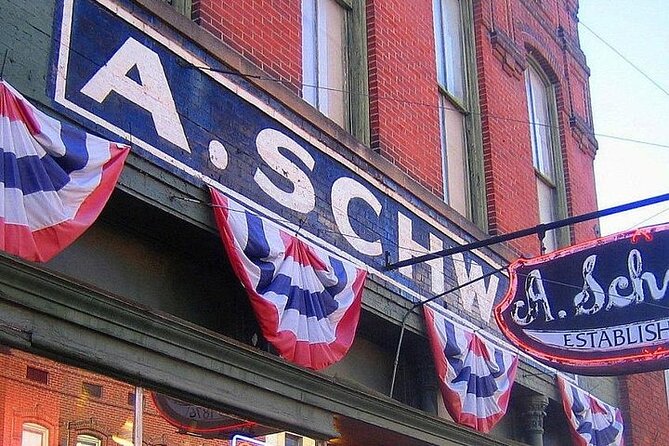
At Memphis Tourism, the group sees the area once known as Howard’s Row. It contains the oldest collection of original buildings in downtown Memphis, according to the tour’s description.
This stop is a reminder that Memphis history is not found only in grand monuments. Older commercial buildings can show how people worked, sold goods, lived, and moved through the city. Your guide uses the site to add texture to the broader story of downtown change.
The stop runs about 10 minutes. Again, this is mainly an outdoor look rather than an extended interior visit. That makes the tour efficient, but it also means you should not expect access to every building along the route.
I like this section because it slows the pace of the history. After battles, epidemics, and cotton trading, the preserved buildings bring the discussion back to the physical city around you.
The Peabody Ducks, Memphis’s delightfully odd ritual
The Peabody Hotel’s duck march is the tour’s most playful moment. The hotel is known as the South’s Grand Hotel, and its ducks make a daily appearance that has become one of Memphis’s best-known traditions.
The exact charm is easy to understand once you see the spectacle. It is formal, funny, and slightly absurd, which is precisely why it works. After a morning of war, disease, cotton, and political power, a procession of ducks offers a welcome change of tone.
The stop is scheduled for about 20 minutes. Timing matters here. The guide needs to bring the group to the hotel at the right moment, and the lobby can be crowded. You will likely have time to watch the event, but not necessarily to linger over the hotel’s details.
One useful tip comes directly from the experience: after the march, consider ordering the rubber ducky cocktail at the bar. You pay separately for food and drinks, but it makes a cheerful little ritual of the stop. I would not plan the rest of your day too tightly if you want time for a drink or photographs.
Beale Street puts the music in place
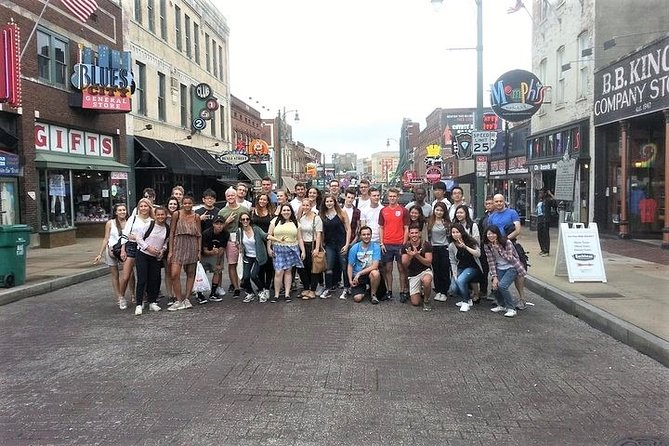
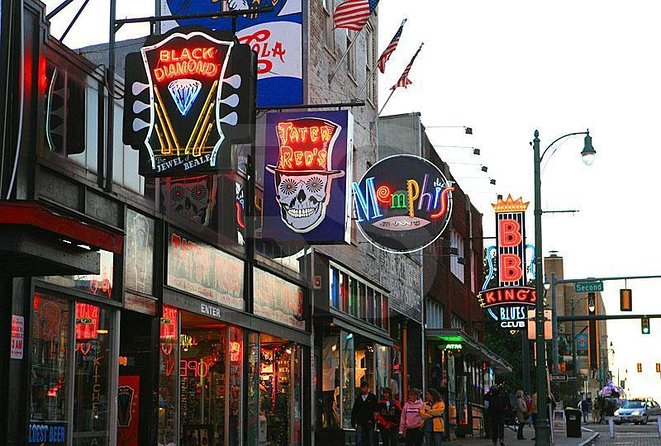
Beale Street is one of the route’s essential landmarks. The tour uses it to explain Memphis as a blues, soul, and rock and roll city, while also placing that music within the city’s wider social and commercial story.
You will not get a full evening of live music during a morning walking tour. What you do get is orientation. The guide helps you understand why this street matters, how it fits into downtown, and how Memphis’s reputation grew from the people who worked, performed, traded, and socialized here.
The route also connects Beale Street with earlier topics, including yellow fever and downtown development. That connection is useful. Beale is not an isolated entertainment strip. It sits within a city shaped by the river, rail, migration, business, and upheaval.
I would use this tour as a starting point, then return to Beale Street later when you have time to explore at your own pace. The walk gives you the background. Your evening can provide the music.
The Orpheum Theater option adds real indoor depth
The final stop is the Orpheum Theatre, a major Memphis entertainment venue since 1928. The regular walking tour brings you to the theater, and an optional guided building tour is available Monday through Wednesday, subject to availability.
The added tour lasts one hour. If you choose it, you arrive at the Orpheum for the noon tour, while the main guide departs. The theater is only two blocks from the starting point, so you are not stranded or faced with a long transfer.
This option changes the shape of the experience. Without it, you have a brisk downtown walk that may last around 90 minutes to two hours. With it, you get a longer morning and a more substantial look inside one of Memphis’s historic performance spaces.
I would choose the add-on if you care about theaters, architecture, or the city’s performance history. If your priority is Beale Street, the river, and a short orientation, the basic walk may be enough. Check availability before building your plans around the theater tour.
How much value do you get for $32.92?
At $32.92 per person, this is priced as an affordable introduction rather than an all-day attraction. The fee covers a professional guide and local taxes. It does not cover food, drinks, hotel pickup, or admission to the Cotton Museum.
The value depends on how much context you want. If you wandered downtown alone, you could see several of these locations for free, but you would miss the links between them. The guide turns separate streets, parks, buildings, and river views into one clear story.
That matters most on a first visit. You can use the tour to decide where you want to return, which museums deserve your time, and how Beale Street fits into the rest of Memphis. The optional Orpheum tour gives you extra value if you want a longer experience, but it should be considered a separate choice.
A group of up to 20 is not intimate, though it is still small enough for a good guide to address questions. The strongest feedback centers on guides who keep the group involved. Charlie, Kate, Mary, and Charles are praised for clear explanations, friendly conversation, and a knack for making facts memorable. One guide also adjusted helpfully when a participant used a scooter, though the tour data does not promise special vehicle assistance for every departure.
Who will enjoy this Memphis walking tour?
I would recommend it most to first-time visitors who want a quick grasp of downtown. It suits history fans, music fans who want more context, and anyone who prefers stories over a simple list of photo stops.
It also works well for people with only one morning in the city. The route reaches several major sights without asking you to plan a complicated series of visits. The 9:30 a.m. start leaves much of the afternoon free.
You may want something else if you dislike outdoor walking, need a fully indoor activity, or want a deep visit to one museum. The tour gives you a broad introduction, not a scholarly treatment of every site. A cold morning can also make the experience less enjoyable, and one less enthusiastic assessment found the scenery limited in poor weather.
Wear comfortable shoes and check the forecast. Keep water with you, and leave room in your schedule for questions at Court Square or a drink at the Peabody. If you add the Orpheum, remember that the noon theater tour takes over after the walking guide finishes.
Should you book Memphis Beyond Beale?
Book it if you want a lively downtown orientation with real historical substance. The best parts are the links between yellow fever, cotton, the river, Civil War Memphis, radio, and Beale Street. The Peabody Ducks provide the comic payoff, while the guides make the information easier to remember.
Skip it if you want an indoor museum program or a long, slow examination of each landmark. For most visitors, though, $32.92 is a fair price for a focused introduction, especially when you use the tour to plan the rest of your Memphis stay. Choose the Orpheum add-on if the theater is important to you, and keep your cancellation flexible because poor weather can lead to a new date or a full refund. Free cancellation is available up to 24 hours before the 9:30 a.m. start.
FAQ
How long does the Memphis Beyond Beale tour last?
The experience lasts approximately two to three hours. The walking portion may be closer to 90 minutes or two hours, while the optional Orpheum Theater tour adds one hour.
Where does the tour begin?
The tour begins at The Peabody Memphis, located at 149 Union Avenue in Memphis. It starts at 9:30 a.m. and ends back at the meeting point unless you continue to the optional Orpheum tour.
Is the Orpheum Theater tour included?
The Orpheum guided tour is included only if you select that option when booking. It takes place at noon, is available Monday through Wednesday, and depends on availability.
Does the tour include food, drinks, or hotel pickup?
No. Food, drinks, and hotel pickup and drop-off are not included. You can purchase a drink separately at the Peabody Hotel.
How many people can join the tour?
The tour has a maximum group size of 20 people.
What happens if the weather is poor?
The activity requires good weather. If it is canceled because of poor weather, you can choose a different date or receive a full refund. You must cancel at least 24 hours before the start time to receive a full refund for your own cancellation.
Just added in the USA
- Marco Island 2 hour Dolphin, Birding and Shelling tour★ 5.0 · 503 reviews
- Gulf of Mexico Sunset Cruise from Naples★ 4.5 · 511 reviews
- 3 Hour Guided Mangrove Tunnel Kayak Eco Tour★ 5.0 · 350 reviews
- Mangrove Tunnels & Mudflats Kayak Tour – Local Biologist Guides★ 5.0 · 785 reviews
- Rookery Bay Kayak Adventure – Mangroves, Wildlife & Photos★ 5.0 · 335 reviews
- Clear Kayak Guided Eco Tour in North Naples★ 5.0 · 341 reviews
- Manatees and Mangrove Tunnels Small Group Kayak Tour★ 5.0 · 954 reviews
- Dolphin Watch Eco Shelling Cruise to Keewaydin Island★ 5.0 · 333 reviews
Historical Tours, compared.


History and Hauntings of Salem Guided Walking Tour
Read our review →
Charleston’s Old South Carriage Historic Horse & Carriage Tour
Read our review →

Big Island in a Day: Volcanoes Waterfalls Sightseeing and History
Read our review →
Freedom Trail History Small Group Walking Tour
Read our review →
Historic Charleston Guided Sightseeing Walking Tour
Read our review →
Starship Landmark 90 Minute Sightseeing Cruise
Read our review →Browse the lists this tour appears in