
Reviewed · COCOA BEACH TOURS
Kennedy Space Center: Entry Ticket with Explore Bus Tour
Big rockets change your sense of scale. Kennedy Space Center combines NASA history, working launch facilities, hands-on attractions, and a bus tour that takes you closer to the famous launch zone than the standard ride. I especially like the Explore Bus Tour, with its space expert and photo stops, and the chance to see the Saturn V rocket and Space Shuttle Atlantis in purpose-built exhibits. The main drawback is simple: this is not a quick stop. You can spend a full day here and still leave exhibits unseen.
The $92 price is easier to justify if you use the bus tour and stay for most of the day. A two-day ticket gives you a second visit within six months, which is useful because the center covers a lot of ground. Arrive early, check launch times before booking, and keep your schedule loose. A launch can add unforgettable excitement, but it can also affect what you see and when.
In This Review
- Key points to know before you go
- Why the Explore Bus Tour is worth adding
- Starting at the visitor complex
- The Explore route: Vehicle Assembly Building and Launch Complex 39
- Apollo and Saturn V: the emotional center
- Space Shuttle Atlantis: a memorable reveal
- Shuttle Launch Experience and interactive attractions
- Heroes & Legends and the Rocket Garden
- Planning one day versus two days
- Timing your visit around a rocket launch
- Is $92 good value?
- Who should book the Explore option?
- Final verdict: choose the extended bus route
- FAQ
- How long is the Kennedy Space Center ticket valid?
- What is included in the Explore package?
- Do I need to take the regular Kennedy Space Center Bus Tour too?
- How much extra time should I allow for Apollo/Saturn V Center?
- What time is the last entry?
- Is the experience wheelchair accessible?
- Are food and drinks included?
Key points to know before you go

- The Explore Tour goes beyond the regular bus route: You stop for closer views and photographs of the Vehicle Assembly Building, Launch Complex 39, and other spaceflight sites.
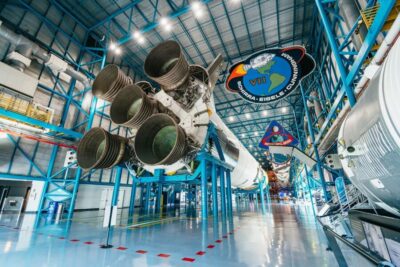
- The Apollo/Saturn V Center is a major highlight: The gigantic Saturn V is displayed indoors, where you can walk beneath the largest rocket ever flown.
- Space Shuttle Atlantis deserves real time: The reveal and exhibition are among the most powerful parts of the visit, even for people who do not think of themselves as space enthusiasts.
- One day is tight: The bus tour, shows, simulators, films, and major exhibit halls can fill the entire day.
- The guide can make a big difference: Guides such as David, Jim, Kevin, Ken, Bart, and others have been praised for clear explanations, humor, and strong knowledge of NASA programs.
- The regular and Explore bus tours are different: You do not need to take both, since both finish at the Apollo/Saturn V Center.
Why the Explore Bus Tour is worth adding
The basic Kennedy Space Center admission already gives you plenty to do. You can visit the Rocket Garden, see Space Shuttle Atlantis, enter Heroes & Legends, watch live presentations, try the Shuttle Launch Experience, and explore the Gateway complex. The regular visitor complex bus is also included.
The Explore Tour earns its extra cost by changing the scale of the visit. Instead of simply riding past distant buildings, you make several stops for views and photographs. The route takes you through the launch site area, with closer looks at the Vehicle Assembly Building and historic Launch Complex 39.
That difference matters. The Vehicle Assembly Building is so huge that a distant glimpse can feel abstract. A stop gives you time to take in its size and understand its role in preparing spacecraft and rockets. Launch Complex 39 carries the weight of Apollo and Space Shuttle history, but it remains part of an active spaceport. You are seeing a working place, not a museum set frozen in the past.
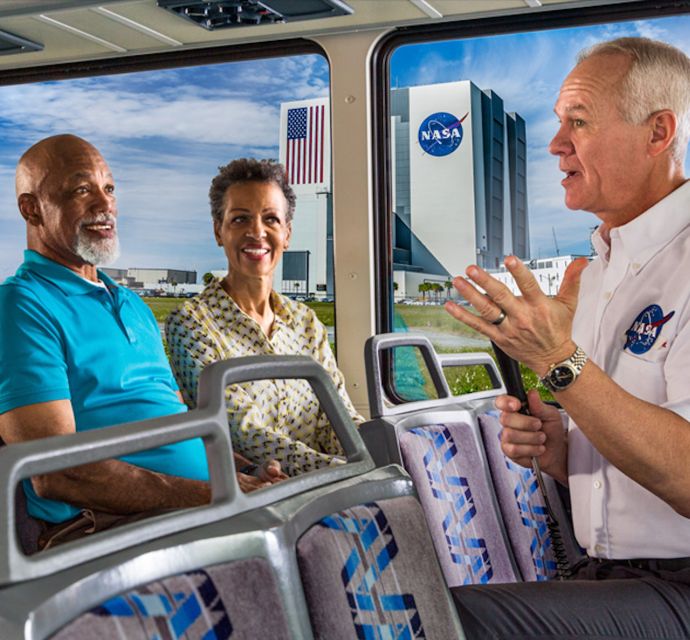
The bus ride is led by a space expert. The strongest guides turn a drive between buildings into a clear story about NASA’s past, present operations, future missions, and even the natural setting around the center. Names reported by visitors include David, Jim, Kevin, Ken, and Bart. Their success comes less from delivering a list of dates and more from making difficult technical subjects easy to follow.
The Explore Tour is not a private, fully guided visit to every attraction. Once you return to the visitor complex, you explore the exhibit halls and shows on your own. That is a good arrangement for most people. You get useful context from the bus, then set your own pace indoors.
A few more options to weigh up in the USA
- Merritt Island: Kennedy Space Center Visitor Complex Ticket
★ 4.7 · 5,637 reviews - Wizard of OZ Museum tour
★ 5.0 · 1,056 reviews - Cocoa Beach Dolphin and Wildlife Tour
★ 5.0 · 1,052 reviews
Starting at the visitor complex
Security and entry take time, so arriving about 30 minutes before the scheduled tour is sensible. One visitor advised being at the meeting point 15 minutes early, and that is good advice for any timed activity. The Explore bus has a separate boarding line from the regular Kennedy Space Center bus, so check the signs carefully before joining a queue.
The visitor complex is wheelchair accessible. Food and drinks are not included, and one practical complaint is that seating can be limited in some areas. Bring a refillable water bottle, since refill fountains are available, and wear comfortable shoes. Florida heat can make a long day feel longer, even when many indoor spaces are cool.
Your ticket normally allows entry for one or two days, depending on the option chosen. The two-day ticket lets you return for a second visit within six months. That is the better choice if you want to watch several films, take your time with Atlantis, ride the simulators, and still enjoy the bus tour without rushing.
The last entry is at 4:00 PM. Do not treat that as a recommended arrival time. A late start can leave you choosing between major attractions, and there is much more here than a couple of rocket displays.
The Explore route: Vehicle Assembly Building and Launch Complex 39
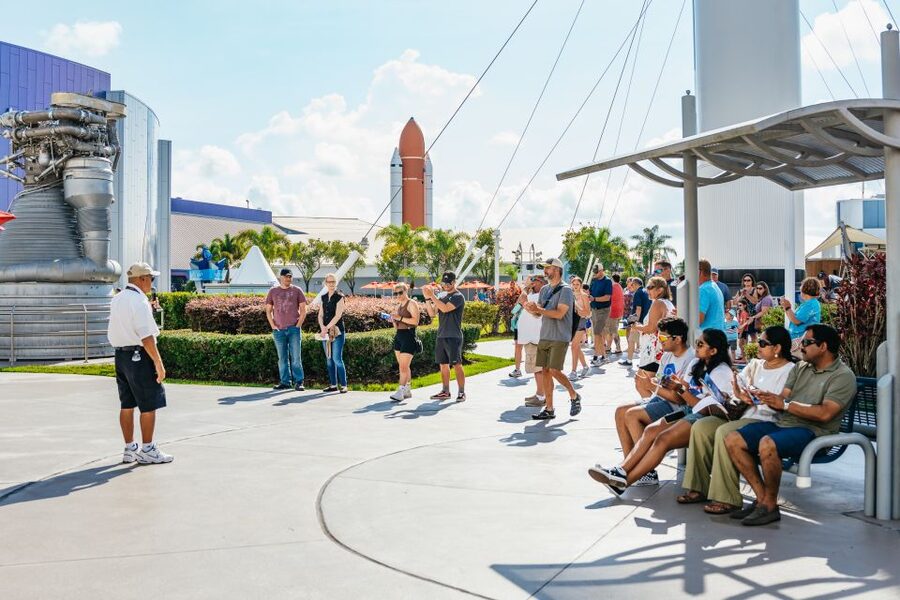
The bus tour takes you into the Launch Site Area, where the space program becomes a collection of giant structures rather than only a series of museum objects. The Vehicle Assembly Building is the obvious visual marker. Its sheer size helps explain the engineering problem behind assembling and preparing large rockets.
The tour also includes views of Launch Complex 39 and the reimagined gantry. These sites are valuable because they connect the historic programs to current space activity. You are not just looking at old launch photographs. You are seeing facilities linked to America’s continuing work as a multi-user spaceport.
The photo stops are a strong reason to choose Explore. The regular bus tour gives you access to the Apollo/Saturn V Center, but the extended route gets closer to key structures and gives you more time to point a camera in the right direction. The stops are not a chance to wander through restricted facilities, and operational rules limit how close you can get. That is worth understanding before you go. You see more, but this remains an active base with real access limits.
The bus portion can take around three hours, according to the experience described by one visitor. Add the return ride and about an hour for the Apollo/Saturn V Center. This is why the bus tour should not be squeezed into the final part of the day.
Apollo and Saturn V: the emotional center

The bus tour finishes at the Apollo/Saturn V Center, and you should allow about an extra hour here before returning to the main visitor complex. The center is more than a rocket display. It gives the Apollo program room to breathe, with spacecraft, artifacts, and exhibits that connect the technology to the people who built and flew it.
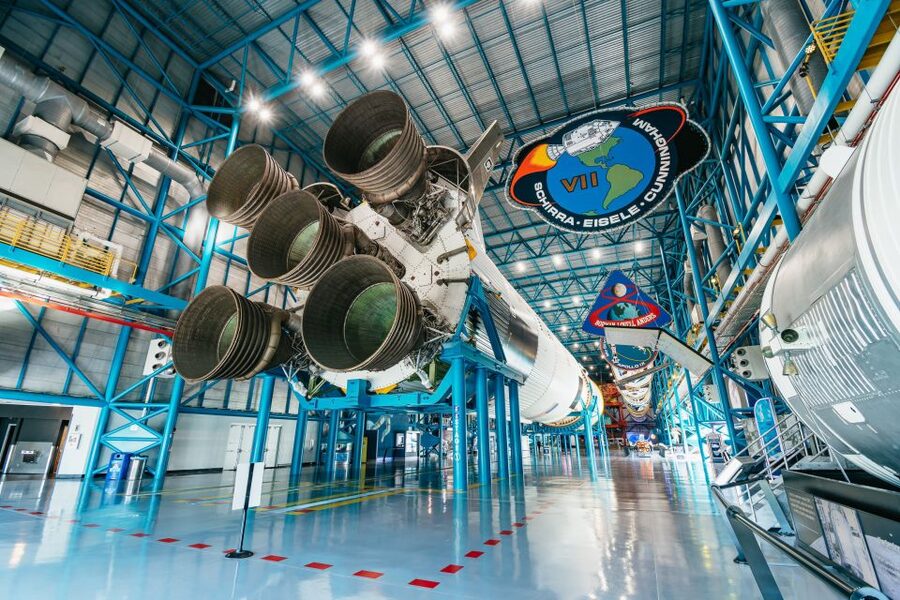
Then comes the Saturn V. The rocket is displayed horizontally, allowing you to walk beneath its stages and see its scale from end to end. The description largest rocket ever flown is not just sales talk. The size is difficult to grasp in photographs, and the indoor presentation lets you study the engines, stages, and structure at close range.
Several people have singled out the Apollo museum as the best part of the Explore route. I can understand why. The bus tour puts you near the launch facilities, but Saturn V gives you the clearest physical sense of what the Apollo missions required. It is a fine place to slow down after the bus ride.
The Apollo/Saturn V Center is also where the regular and Explore tours end. You do not need to take the regular bus tour after completing Explore. Explore on your own at the Apollo/Saturn V Center, then take a visitor complex bus back to the main area. Allow roughly 15 minutes for that return trip.
A different kind of day out entirely:
- NYC: SUMMIT One Vanderbilt Tickets
★ 4.7 · 51,195 reviews - NYC: 9/11 Memorial & Museum Timed-Entry Ticket
★ 4.8 · 31,428 reviews - NYC: Empire State Building Tickets – Observatory & Museum
★ 4.7 · 25,757 reviews - NYC: Empire State Building Observation Deck Tickets
★ 4.7 · 22,072 reviews
Space Shuttle Atlantis: a memorable reveal
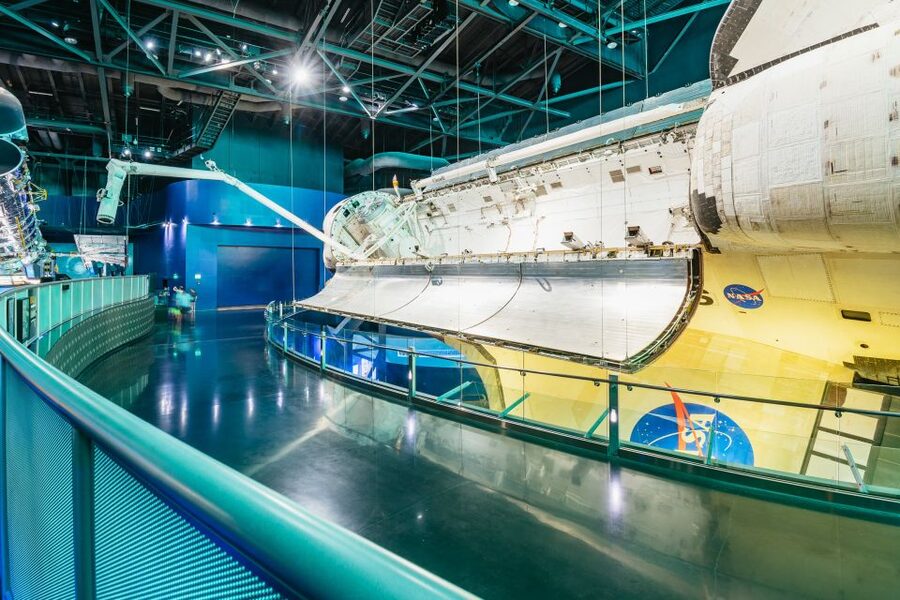
Space Shuttle Atlantis is one of the strongest reasons to visit, even if you arrive with only a passing interest in NASA. The shuttle is presented as a centerpiece rather than tucked away among smaller objects. The reveal is designed for impact, and it works.
The display helps you see the shuttle as a real machine, not a flat image from a launch broadcast. You can study its shape, worn surfaces, and complex structure. Several visitors have called Atlantis phenomenal or jaw-dropping, and this is one of the rare cases where big praise feels fair.
The Atlantis area also adds context about the Shuttle Program and the people who made repeated missions possible. Give it more than a quick photograph. If you are visiting with children, the scale alone can hold their attention, while the surrounding exhibits help answer the obvious questions: How did it launch? How did it return? What made it different from a conventional aircraft?
The shuttle exhibition can be a highlight for adults who thought they might find the center too technical. One visitor who was initially unsure about the subject ended up enjoying the entire visit and was amazed by the size of the rockets. That is a useful reminder: Kennedy Space Center works through objects and experiences, not only through space-program facts.
Shuttle Launch Experience and interactive attractions
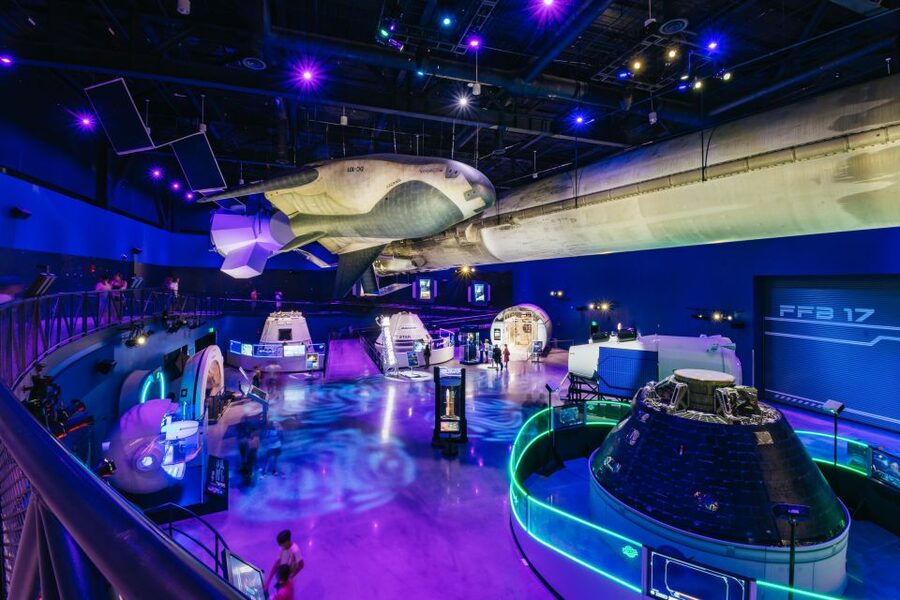
The Shuttle Launch Experience gives you a simulated taste of a shuttle liftoff, including the rumble and movement associated with launch. It is one of the attractions that helps break up the museum-style exhibits.
You will also find interactive simulators, live shows, 3D space films, and the Spaceport motion theater. These make the visit easier for families and for anyone who learns better by doing than by reading display panels. Children aged 8 and 10 have enjoyed the center and the Explore route, while one adult advised that younger children may not remember or appreciate the bus commentary as much.
That makes age less important than attention span. A child who loves machines, rockets, or buttons may have a terrific time. A very young child may find the bus ride and historical explanations slow. Build in breaks rather than expecting everyone to absorb every exhibit in order.
The Journey to Mars: Explorers Wanted presentation adds a live interactive theater element about the Red Planet. It shifts the focus from Mercury, Gemini, Apollo, and the Shuttle era toward future exploration. The Gateway complex continues that forward-looking theme with current and upcoming space technology from NASA and commercial partners.
Gateway also includes an immersive ride with four possible journeys to distant worlds. The attraction gives you a modern, speculative contrast to the actual hardware in the Apollo and Atlantis exhibits. One room looks back at missions already flown. The next asks you to imagine what comes next.
Heroes & Legends and the Rocket Garden
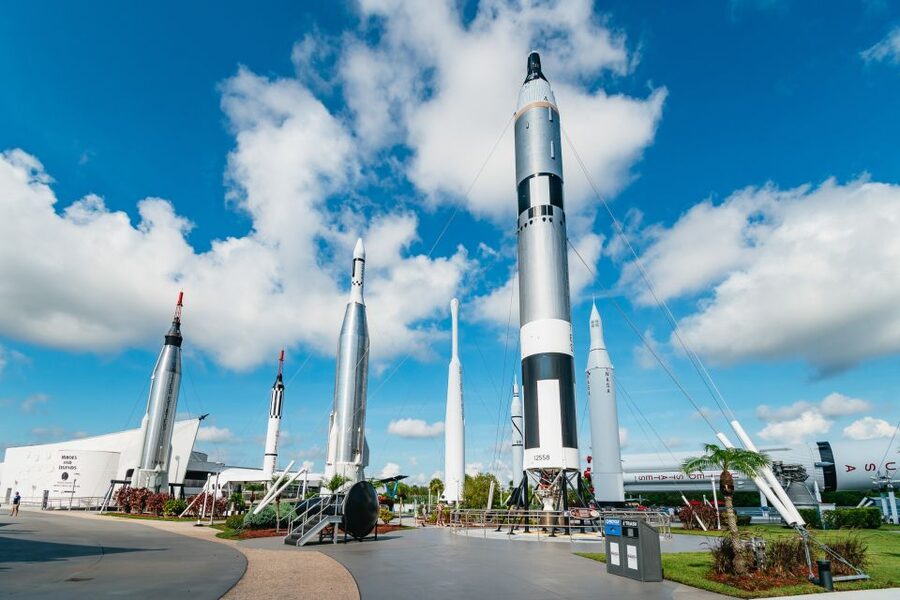
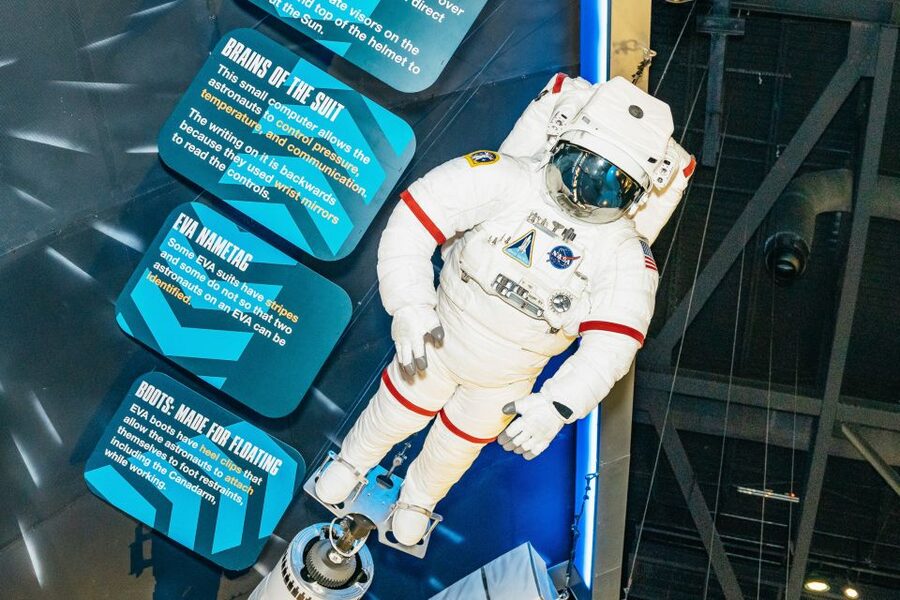
Heroes & Legends, including the U.S. Astronaut Hall of Fame presented by Boeing, honors the people behind the missions. This area is useful if you want the human side of space exploration rather than a straight tour of machinery.
The Rocket Garden offers another chance to see the size and variety of early American launch vehicles. It is a good first stop if you want a quick orientation, or a pleasant outdoor break after time inside the major halls. The rockets here help set up the progression from early programs to Apollo and later shuttle missions.
I would not rush through either area. The center is strongest when you move between technology, personal stories, and future plans. A rocket tells you what was built. The astronaut exhibits explain who accepted the risk. The Gateway and Mars presentations ask what the next generation may attempt.
Planning one day versus two days
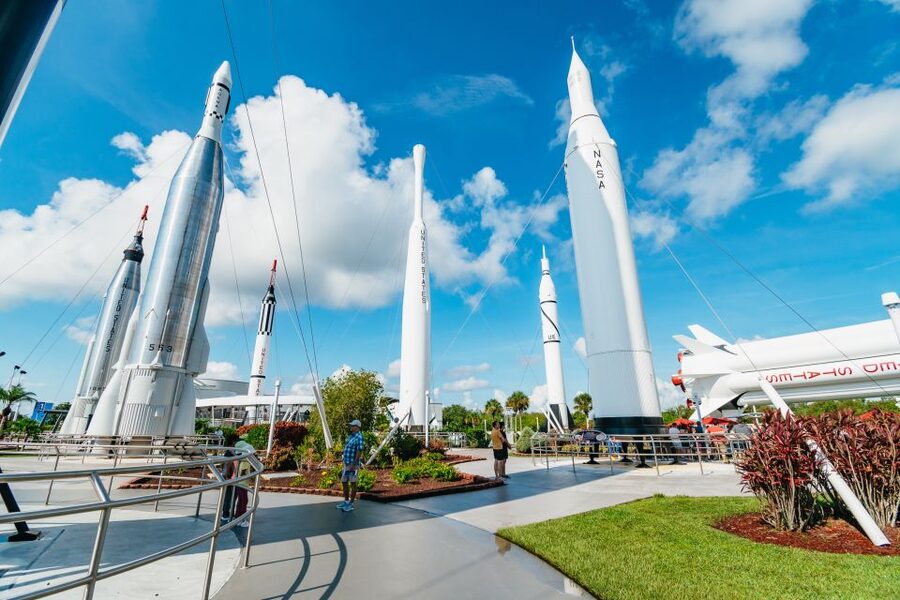
You can visit in one day, but you need to treat it as a full-day outing. The Explore Tour alone takes a serious block of time, then you still have Atlantis, Apollo, Gateway, Heroes & Legends, Rocket Garden, films, shows, and motion attractions.
A sensible one-day plan is to take the Explore Tour early, continue to the Apollo/Saturn V Center, return to the main visitor complex, and then choose your highest-priority exhibits. If Atlantis is your main goal, protect enough time for it rather than assuming you can fit everything around the bus schedule.
The two-day ticket is better for a relaxed visit. Use the first day for the Explore route and Apollo/Saturn V Center, then return for Atlantis, Gateway, Mars, Heroes & Legends, films, and simulators. You may also have a better chance of fitting in a live presentation without cutting another attraction short.
One visitor expected to stay two or three hours and instead spent the entire day inside. Another said even a full day covered only about 70 percent. That is the practical lesson: space fans can easily use two days, and first-time visitors should not build a packed evening plan around a quick exit.
Timing your visit around a rocket launch
A launch can transform the day. Seeing one live adds a sense of immediacy that no exhibit can copy. Several visits were timed with launches, and the excitement was described as the high point of the experience.
You cannot count on a launch for a particular date, and launch schedules can change. Still, check the current launch timetable before booking if this matters to you. One visitor wished they had done so because a launch was scheduled for the following day.
Do not assume a launch will make every attraction easier to see. It may affect timing, crowds, or access around the operational area. The important point is to treat a launch as a possible bonus, not the only reason for buying the ticket.
Is $92 good value?
At $92 per person, this is not a cheap attraction. It becomes fair value when you use the included admission for most of the day and take the Explore route instead of paying for a basic entry experience and then wishing you had gone farther.
The value comes from variety. You are paying for access to a major visitor complex, the extended bus route, Apollo/Saturn V Center, films, live shows, Gateway attractions, Atlantis, Rocket Garden, and other exhibits. The ticket also saves you from having to choose between a museum visit and a tour of the launch area.
The two-day option improves the calculation if you can return within six months. A second visit gives you time to see what a one-day schedule forces you to skip. Food and drinks cost extra, and the experience does not include an astronaut training experience or a separate guided tour, so budget with that in mind.
For a family, the cost adds up quickly. Yet the wide mix of historical displays, rides, films, and interactive features means different ages can find something to enjoy. For a space enthusiast, Atlantis and Saturn V alone may justify the price. For a casual visitor, the Explore guide and the impressive hardware help make the day worthwhile.
Who should book the Explore option?
I would choose this package if you have any interest in NASA history, rockets, engineering, astronauts, or future missions. It also works well for families with school-age children, especially those who enjoy hands-on attractions and large machines.
It is a good choice for first-time visitors who want someone to explain what they are seeing. The guides are repeatedly praised for clear, friendly delivery, and that commentary gives meaning to buildings that might otherwise look like distant industrial structures.
I would think twice if you only have two or three hours. The ticket covers too much ground, and the bus route can take a large part of your available time. I would also reconsider it if you dislike standing, walking, or long attraction days. Seating can be limited, and the center rewards patience.
The attraction is wheelchair accessible, but the supplied information does not give detailed access notes for every ride or exhibit. If a specific attraction is essential, check its current access rules before you go.
Final verdict: choose the extended bus route
I recommend the Kennedy Space Center ticket with the Explore Bus Tour, especially over admission with only the regular bus ride. The extended route brings you closer to the Vehicle Assembly Building and Launch Complex 39, while the guide connects those places to the wider story of American spaceflight.
Plan for a full day at minimum. Choose two days if your schedule allows, and check launch dates before you settle on a visit. The best version of this experience is not a hurried checklist. It is a day spent moving from launch pads to Saturn V, from Atlantis to Mars, with enough time to look up and appreciate how large these machines really are.
FAQ
How long is the Kennedy Space Center ticket valid?
The ticket is valid for one or two days, depending on the option booked. A two-day admission ticket allows you to return for a second visit within six months.
What is included in the Explore package?
It includes Kennedy Space Center Visitor Complex admission, most attractions, shows and exhibits, the Explore Bus Tour with a space expert, the Apollo/Saturn V Center, 3D space films, the Spaceport motion theater, and the reimagined gantry at Launch Complex 39.
Do I need to take the regular Kennedy Space Center Bus Tour too?
No. The Explore Tour and the regular bus tour both finish at the Apollo/Saturn V Center. After exploring that center, you can take a visitor complex bus back to the main visitor complex.
How much extra time should I allow for Apollo/Saturn V Center?
Allow about one additional hour for the Apollo/Saturn V Center and around 15 minutes for the return journey to the main visitor complex.
What time is the last entry?
The last entry to Kennedy Space Center Visitor Complex is at 4:00 PM.
Is the experience wheelchair accessible?
Yes, the activity is listed as wheelchair accessible. The available information does not specify access details for each individual attraction.
Are food and drinks included?
No. Food and drinks are not included in the ticket price.
Just added in the USA
- Monterey Bay Whale Watching★ 4.5 · 316 reviews
- Whale Watching Tour★ 4.5 · 497 reviews
- Monterey Whale Watching Tour★ 4.5 · 732 reviews
- 17-Mile Drive Electric Bike Guided Tour★ 5.0 · 401 reviews
- Elkhorn Slough Wildlife Tour★ 5.0 · 424 reviews
- Carmel Small Group Walking Food & Cultural Tour★ 5.0 · 392 reviews
- U-Drive Hells Revenge 4×4 Tour- 2.5 HR TOUR★ 5.0 · 334 reviews
- The Best U-Drive Hell’s Revenge 4×4 Off Roading Tour from Moab★ 5.0 · 909 reviews
Cocoa Beach Tours, compared.
Merritt Island: Kennedy Space Center Visitor Complex Ticket
Read our review →


Thousand Island Mangrove Tunnel, Manatee & Dolphin Kayak Tour w/Cocoa Kayaking
Read our review →
Mangrove Tunnels, Dolphins, Manatee Tour #1 Rated in Cocoa Beach
Read our review →
Bioluminescence Night Kayaking Tour of Merritt Island Wildlife Refuge
Read our review →
Browse the lists this tour appears in