
Reviewed · FOOD & DRINK
Lower East Side Food Tour: Taste NYC’s American Dream
New York’s past is served in small bites. This three-hour walk links Chinatown, Little Italy, Nolita, and the Lower East Side through four food tastings and a thoughtful look at the immigrant communities that shaped Manhattan. I like the mix of old-school foods and street-level history, especially the way a dumpling shop, an Italian food store, a knish, or an empanada becomes part of a larger story.
I also like the small group, limited to 14 people, and the relaxed pace of about one mile. Guides such as Astrid, Erik, Tavia, Ace, Jesse, and Cullen have earned especially warm praise for making the history clear and lively. The main consideration is that this is more walking history tour with food than a full food crawl. You spend much of the time outdoors, and some people may want more tastings or longer pauses to eat.
In This Review
- Key points to know before booking
- What the $54.14 price really buys you
- Starting with African New York at the burial ground
- From the old pond to the Supreme Court
- Five Points and the edge of Chinatown
- Dumplings and Chinese immigration in Chinatown
- Mulberry Street, Little Italy, and one Italian tasting
- Nolita shows how neighborhoods change
- St. Patrick’s Old Cathedral and Catholic immigrant life
- Sara D. Roosevelt Park and Latin American roots
- The Lower East Side, from tenements to gentrification
- The guides make the difference
- Food, pace, and practical comfort
- Who will enjoy this Lower East Side walk?
- Should you book it?
- FAQ
- How long is the Lower East Side Food Tour?
- What food is included?
- Where does the tour begin and end?
- Is the tour suitable for children?
- Can the tour accommodate dietary restrictions?
- What happens if the weather is bad?
Key points to know before booking
- Four historic food samples may include dumplings, pizza, knish, and empanada.
- The African Burial Ground National Monument and Five Points add serious historical context before the tasting begins.
- Chinatown and Little Italy are explored together, showing how different immigrant groups shaped nearby streets.
- The group is capped at 14 people, which makes it easier to hear the guide and ask questions.
- The walk covers about 1.6 kilometers, with regular stops and a generally easy pace.
- It runs in rain, snow, or sunshine, so dress for the forecast and expect to be outside.
What the $54.14 price really buys you
At $54.14 per person, this tour sits in a reasonable middle range for Manhattan walking tours. You receive four food samples, three hours with an English-speaking local guide, and a route through several neighborhoods and historic sites. The food alone is not meant to replace lunch, but the combination of tastings and interpretation gives the price its value.
I would think of it as a guided introduction to Lower Manhattan rather than a restaurant-hopping afternoon. You are paying for the connections: how immigration changed a block, how a food tradition survived, and how a neighborhood moved from tenements and poverty toward gentrification.
The portions are described as well balanced, and several guides have made thoughtful food choices tied to the communities being discussed. Still, do not arrive expecting a long sit-down meal. Drinks and extra food cost more, and one direct comment about the tour suggested that two additional tastings would have made it feel more generous.
Some food stops are brief. One part of the route provides a chance to sit down, but much of the experience takes place on sidewalks and in neighborhood shops. If you prefer a food tour centered on restaurants, this may feel light. If you want to understand why these foods belong in this part of New York, the price makes good sense.
More Food Tours in New York City
- NYC Bus Tour of Brooklyn, Bronx, Queens: Art, Food & Sports
★ 5.0 · 3,805 reviews - NYC: Chinatown & Little Italy Food Tour with 7 Flavorful Tastings
★ 5.0 · 2,733 reviews - Original NYC Guided Food Tour of Chinatown and Little Italy
★ 5.0 · 2,194 reviews
Starting with African New York at the burial ground
The tour begins at 290 Broadway, near the African Burial Ground National Monument. This is an important choice. The route does not begin with a trendy bakery or a flashy storefront. It starts by recognizing Africans, both enslaved and free, who were buried here through much of the 18th century.
You spend about five minutes discussing how the burial ground was discovered and how the memorial came to be built. The guide also explains parts of the memorial’s design and gives an introduction to the early African experience in New York.
The stop is short, but its purpose is large. It reminds you that New York’s story did not begin with European immigration, and that the city’s growth depended in part on enslaved labor. I appreciate this opening because it gives the later conversations about Irish, Chinese, Italian, Jewish, German, and Latin American communities a wider frame.
There is no admission charge for the stop. Since it is outdoors, your first few minutes also set the tone for the rest of the morning or afternoon: listen closely, dress sensibly, and expect the guide to keep moving.
From the old pond to the Supreme Court
The next stop is the New York City Supreme Court, where the guide discusses the area’s earlier life as a polluted pond and later as a poor Irish neighborhood. You also see the building familiar from many episodes of Law & Order.
This is a good example of the tour’s method. A grand civic building becomes a doorway into ordinary urban life. You hear about the conditions faced by Irish immigrants, then connect that story to the physical changes around you.
The stop lasts about five minutes. That is enough for orientation and context, but not enough for an interior visit or a detailed architectural tour. If you want to explore the courthouse itself, you will need to do that separately.
Five Points and the edge of Chinatown
At Columbus Park, the route briefly crosses the ground associated with Five Points, one of New York’s most notorious old neighborhoods. The guide discusses Irish immigration and uses photographs to show what the area once looked like.
Today, a park can hide the shape of the district that came before it. The photographs help bridge that gap. You are not simply told that the neighborhood changed. You are shown how dramatically it changed.
Again, the stop is brief, about five minutes. That works well for a walking route covering several districts, though anyone hoping for a long lecture on Five Points may want more time at the nearby Museum of the City of New York or other history sites later in the trip. The guide can offer suggestions for what to see next.
A different kind of day out entirely:
- NYC: SUMMIT One Vanderbilt Tickets
★ 4.7 · 51,195 reviews - NYC: 9/11 Memorial & Museum Timed-Entry Ticket
★ 4.8 · 31,428 reviews - NYC: Empire State Building Tickets – Observatory & Museum
★ 4.7 · 25,757 reviews - NYC: Empire State Building Observation Deck Tickets
★ 4.7 · 22,072 reviews
Dumplings and Chinese immigration in Chinatown
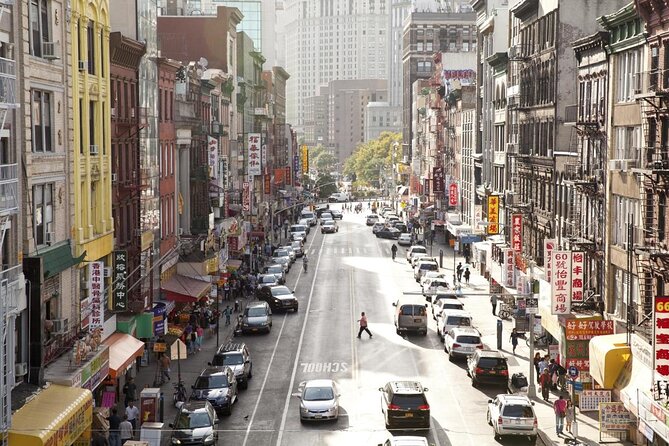
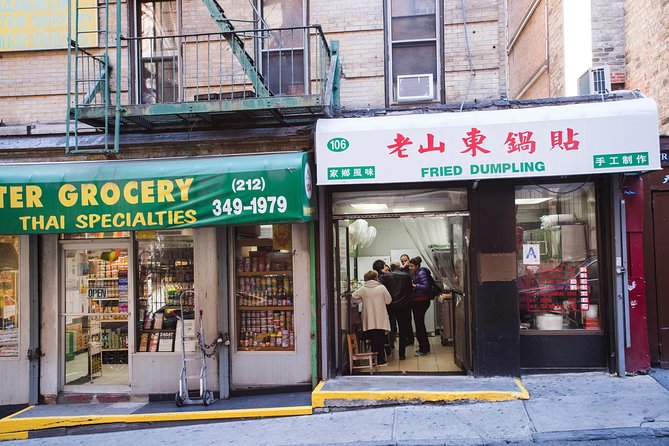
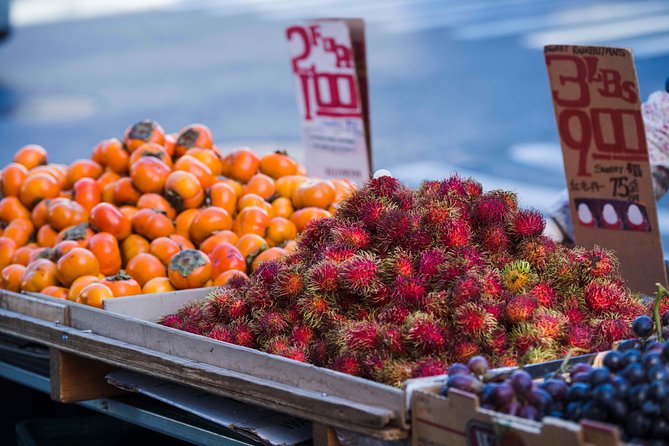
Chinatown is where the food side becomes more immediate. You walk through part of the neighborhood, discuss Chinese immigration, and stop at a dumpling shop described as a local favorite.
The dumplings are one of the most praised bites on the tour. Several people singled them out, and one family still remembered them as a favorite along with the pizza and knish. The sample gives you something concrete to taste while the guide explains how Chinese communities became part of New York.
The Chinatown visit lasts about 20 minutes. That includes walking, interpretation, and the food stop, so it is not a long Chinatown exploration. You receive suggestions for other places to visit in the area, which is useful because the neighborhood is large and easy to approach without a plan.
The best way to enjoy this section is to treat the dumpling as an introduction, not the final word on Chinatown food. You may want to return later for a fuller meal. Since drinks and additional food are not included, budget for that if you plan to continue eating after the tour.
Mulberry Street, Little Italy, and one Italian tasting
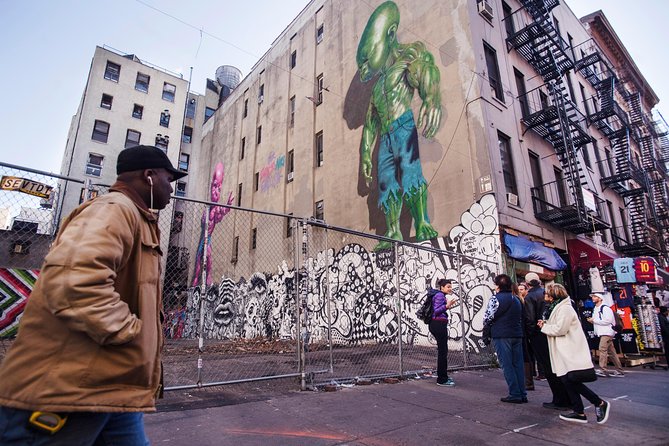
The route then heads around Mulberry Street in Little Italy. Here, the guide turns to Italian immigration, modern street art, and stories about organized crime. You also visit an old Italian food shop for a tasting.
This section has plenty of contrast. The streets carry strong Italian associations, yet the neighborhood has changed and continues to change. The food stop helps connect the old community to what remains today, while the street art shows that the area is not frozen in the past.
Pizza is one of the possible samples, and it has been a hit with families, including children aged seven and nine. The tasting is modest rather than a full meal, but it is familiar, easy to share, and practical for mixed-age groups.
The organized crime stories should be taken as part of the neighborhood’s popular history, not the whole story. The tour also gives time to immigration, shops, churches, and daily life. That balance matters. Little Italy is more than a movie backdrop.
Nolita shows how neighborhoods change
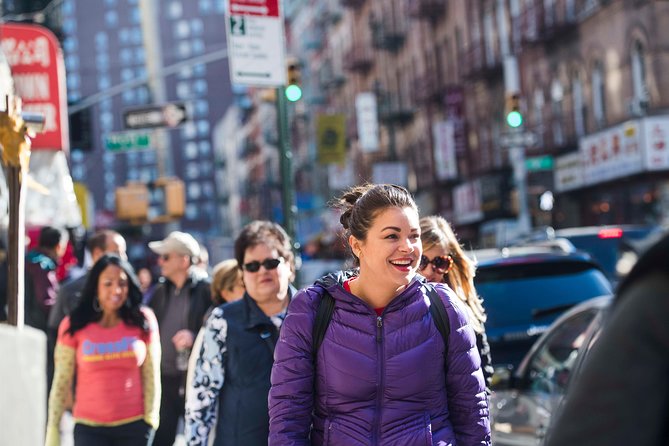
Nolita is one of the clearest examples of present-day change. The guide explains that this area was once part of Little Italy and now contains hip bars, restaurants, and some of the city’s best street art.
You spend about 15 minutes moving through the neighborhood. The value here is not a single landmark. It is the chance to compare the old ethnic district with the newer businesses and style around it.
This part can feel less food-focused than Chinatown or Little Italy. That is not a flaw if you want to understand urban change, but it does reinforce the need to view the tour as a history walk with tastings. Keep your camera ready for the street art, but stay focused on the guide too. The route is active, and the group will not stop at every mural.
St. Patrick’s Old Cathedral and Catholic immigrant life
As you walk through Nolita, you see the Basilica of St. Patrick’s Old Cathedral. The guide discusses the hardships Catholic immigrants faced when they first arrived in the United States.
The stop lasts about five minutes. You may not receive a full church tour, but the building adds a strong visual anchor to the immigration story. A church is not just an attractive old structure here. It represents the institutions immigrants built as they tried to create stable lives in a difficult city.
This is also a useful moment to slow down and look up. Lower Manhattan can feel crowded with signs, traffic, and storefronts. A historic church offers a quick reminder that the neighborhood contains layers from very different periods.
Sara D. Roosevelt Park and Latin American roots
The route continues through the northern end of Sara D. Roosevelt Park, named for President Franklin D. Roosevelt’s mother. You also stop at the M’Finda Kalunga Garden to discuss Latin American immigration and the neighborhood’s later changes.
The park section takes about 10 minutes. It offers a little breathing room after the denser streets of Chinatown, Little Italy, and Nolita. The garden also helps widen the tour’s focus beyond the communities most often associated with the Lower East Side.
I like this section because it shows that immigration is not a story that ended with the arrival of one group. New communities continued to shape the district, and the neighborhood kept changing in response.
The Lower East Side, from tenements to gentrification
The final main stretch returns to the Lower East Side, where the guide discusses Jewish, German, and Latin American immigration. You see street art, community gardens, and signs of the neighborhood’s shift from run-down tenements and poverty toward gentrification.
This is the part where the food and history come together most clearly. A traditional sample, possibly a knish or empanada, gives you a taste of the people who made the district home. The guide then places that food beside the buildings, gardens, businesses, and new development around you.
You spend about 30 minutes in this area, the longest single segment of the route. That allows more room for questions and observation, though the exact balance depends on the group and guide. One person found the food intervals too short and the overall pace rushed. That is worth keeping in mind if you like to linger over each bite.
The tour ends close to the Lower East Side history museum. The guide shares stories about the museum’s founding and offers advice on tickets and its gift shop. You can continue exploring on your own, which is a useful ending because the neighborhood deserves more time than one afternoon can provide.
The guides make the difference
The strongest part of this experience is the human element. Astrid is praised for humor, warmth, and making complicated history easy for preteens. Erik is described as engaging and well prepared, with good links between buildings and food. Tavia has been especially effective at using photographs and answering questions about tenements and Lower Manhattan.
Ace has helped with practical New York matters such as subway navigation, while Jesse, David, Brian, Mickey, Cullen, and Alex have each been praised for their personality and clear storytelling. The exact guide on your date will shape the experience, but the consistent pattern is reassuring: the guide is not simply handing out facts. The best ones bring the streets to life and adjust to the group.
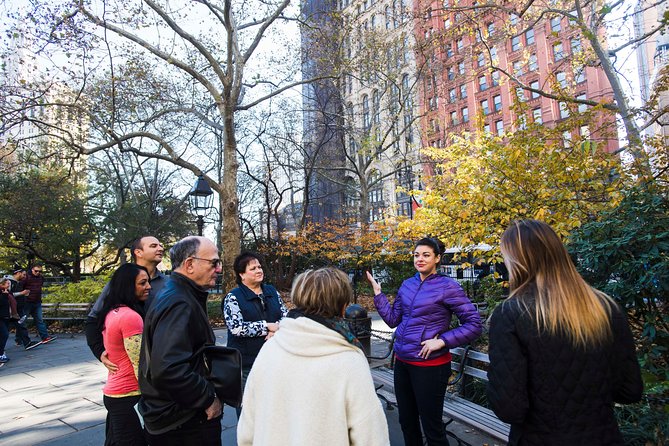
The maximum group size of 14 matters here. You can usually hear more easily, ask questions without holding up a large crowd, and keep a slower pace. On quiet dates, the group may be much smaller, and one couple ended up with what felt like a private tour.
Food, pace, and practical comfort
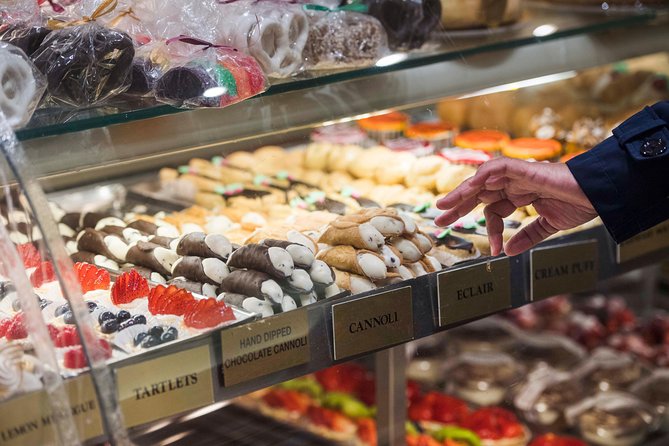
You receive four historic dish samples at four food stops. The foods may include Chinese dumplings, Italian pizza, a knish, and an empanada. These choices cover several communities and tend to work well for families because they are recognizable, shareable foods.
Do not skip breakfast if you need a substantial meal, but do not eat a large one immediately before the tour either. The samples are described by several people as plentiful enough to be satisfying, while another person wanted at least two more tastings. Your appetite and expectations will matter.
The walk is about one mile at a relaxed pace with regular stops. Most people can participate, and the tour is described as suitable for all ages and fitness levels. Children under four can join free, and reduced pricing applies to children aged four through 11.
Wear weather-appropriate clothes. The tour operates in rain, snow, or sunshine, except when conditions become unsafe. Comfortable shoes are sensible, and you should expect most of the three hours to take place outside.
Diet is the main limitation. The tour cannot accommodate vegans or people with gluten allergies or intolerances because the food stops are at establishments that may not be able to adjust their dishes. Other specific dietary requests should be provided at least 24 hours before the start.
Who will enjoy this Lower East Side walk?
I would recommend this tour to a first-time New York visitor who wants an easy introduction to Lower Manhattan without spending three hours inside a museum. It also suits families, curious solo visitors, and anyone who enjoys hearing how food connects to migration and city life.
It works particularly well early in your New York stay. You finish in the Lower East Side with tips about what else to eat and see, and you are already near Chinatown, Little Italy, Nolita, and other central neighborhoods. The experience can help you choose where to return for a longer meal.
I would be more cautious if your priority is restaurant dining, generous portions, or a long seated break. The tour includes four samples, but the food is part of the route rather than its sole purpose. You will walk, listen, look, and taste in roughly equal measure.
Free cancellation is available up to 24 hours before the start time. Changes or cancellations inside that window are not refunded, so check your plans before booking.
Should you book it?
Book this tour if you want immigration history told on the streets, with enough food to make the stories tangible. The small group, gentle pace, broad route, and strong guides make it a useful way to get oriented to the Lower East Side, Chinatown, and Little Italy.
Skip it if you want a dedicated food crawl with many restaurant visits and long meals. For everyone else, $54.14 is fair value for four tastings and three hours of clear, human storytelling, especially if you use the ending as a launch point for your own Lower East Side exploration.
FAQ
How long is the Lower East Side Food Tour?
The tour lasts approximately three hours and includes about 1.6 kilometers, or one mile, of walking with regular stops.
What food is included?
The experience includes four historic food samples at four stops. Possible samples include dumplings, pizza, knish, and empanada.
Where does the tour begin and end?
It begins at 290 Broadway, New York, New York 10007. It ends in the heart of the Lower East Side, near the Lower East Side history museum.
Is the tour suitable for children?
Yes. Children under four can join free of charge, and reduced child pricing applies to children aged four to 11.
Can the tour accommodate dietary restrictions?
The tour cannot accommodate vegans or people with gluten allergies or intolerances. Other specific dietary requests should be provided at least 24 hours before the tour.
What happens if the weather is bad?
The tour operates in rain, snow, or sunshine. If weather creates a safety risk, the experience may be postponed or canceled.
Just added in New York City
- NYC: Woodbury Common Premium Outlets Shopping Trip★ 4.2 · 761 reviews
- New York City: Private Walking Tour with a Local★ 4.6 · 771 reviews
- Washington DC Day Trip by Bus from New York City★ 4.7 · 600 reviews
- Wall Street Insider Tour with a Finance Professional★ 4.5 · 660 reviews
- NYC: Guided Central Park Horse Carriage Ride★ 4.8 · 877 reviews
- True Crime New York: NYPD-Guided Mafia Walking Tour w/ Food★ 4.6 · 318 reviews
- LEGOLAND® New York Theme Park Admission Ticket★ 4.0 · 1,396 reviews
- Whitney Museum of American Art Admission Ticket★ 4.0 · 1,579 reviews
Food & Drink, compared.
New Orleans Food Walking Tour of the French Quarter with Small-Group Option
Read our review →
NYC Bus Tour of Brooklyn, Bronx, Queens: Art, Food & Sports
Read our review →
Savannah First Squares Culinary & Cultural Walking Food Tour
Read our review →
Chinatown & Little Italy Food Tour with 7 Flavorful Tastings
Read our review →
Food Tour with 5+ Tastings of Local Delicacies
Read our review →
Browse the lists this tour appears in