
Reviewed · MUSEUMS
Whitney Museum of American Art Admission Ticket
Art with a skyline attached. I like the Whitney for its excellent mix of American art, from Edward Hopper and Georgia O’Keeffe to living artists, and for its Renzo Piano building with outdoor terraces on several floors. I also like that free daily tours are included, giving you a way to add context without paying extra. The main drawback is crowd control: popular special exhibitions can become so packed that a timed ticket does not guarantee an easy view.
Set aside about two hours, though you can stay longer if a temporary exhibition catches you. At $30 per person, this ticket is a fair deal for anyone interested in American art, especially if the Biennial or a major special show is included. I would check the exact booking arrangement carefully, since most people report quick entry, but one serious complaint described confusion between a third-party voucher and the museum’s own reservation system.
In This Review
- Key points to know before you go
- Why the Whitney is different from a standard art museum
- Arriving in the Meatpacking District
- Checking in with a mobile ticket
- What your two hours inside can look like
- The art: Hopper, O’Keeffe, Calder, and contemporary America
- The building, terraces, and Hudson River views
- Crowds, timing, and the risk of a rushed visit
- Is $30 a fair price?
- Who will enjoy the Whitney most?
- Should you book the Whitney admission ticket?
- FAQ
- How much does admission to the Whitney Museum cost?
- How long should I plan for the Whitney Museum?
- What does the ticket include?
- Are guided tours included?
- Can I explore the museum on my own?
- Are food and drinks included?
- Can I cancel for a refund?
Key points to know before you go
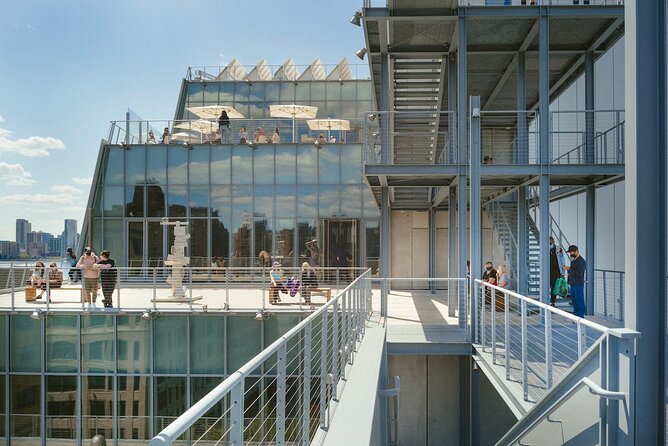
- Renzo Piano’s building is part of the experience: Light-filled galleries, broad windows, and terraces make the museum feel closely tied to Manhattan and the Hudson River.
- The collection reaches from Hopper to living artists: You can see major 20th-century figures alongside contemporary American work.
- Free daily tours add value: Different tour times are offered each day, but you should ask at admission for the current schedule.
- The terraces are worth planning around: Outdoor artworks appear on floors 5, 6, and 7, while floor 8 offers wide city and river views.
- Crowds can change the experience: Popular shows may be difficult to see, particularly near closing time or late in an exhibition’s run.
- The museum pairs well with the High Line: Its Meatpacking District location makes it easy to combine art, architecture, shopping, and a walk above the city.
Why the Whitney is different from a standard art museum
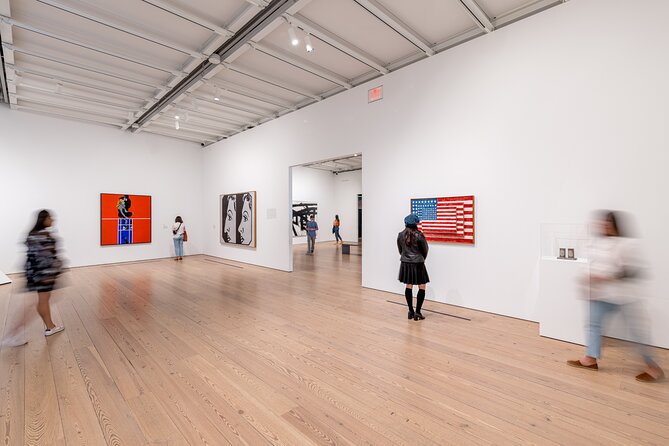
The Whitney focuses on art from the United States, with particular attention to 20th-century and contemporary work. That gives the museum a distinct personality. You are not walking through a broad survey of European masters from many centuries. Instead, you are following the changing ideas, arguments, styles, and social concerns of American artists.
I like this focused approach because it makes the collection easier to understand. Edward Hopper, Jackson Pollock, Georgia O’Keeffe, Alexander Calder, and other major names provide familiar points of reference. Around them, you will find work by living artists and newer figures who may be less familiar but who help explain where American art is heading.
That mixture is important. You can look at a Hopper painting with a clear sense of place and mood, then move into a room where the work may be more abstract, political, experimental, or difficult to read. The Whitney does not try to make every piece comfortable. If you prefer only traditional painting, parts of the museum may test your patience. If you enjoy seeing how artists respond to modern life, the variety is a major strength.
The museum’s signature Biennial is especially important. It is presented as a leading survey of recent American art, so it can feel less like a quiet collection and more like a snapshot of current debates. The ticket information includes access to the 2024 Biennial, although special exhibitions and access can change over time. Check what is included for your selected date.
More Museum Tours in New York City
- NYC: 9/11 Memorial & Museum Timed-Entry Ticket
★ 4.8 · 31,428 reviews - NYC: Empire State Building Tickets – Observatory & Museum
★ 4.7 · 25,757 reviews - New York City: American Museum of Natural History Ticket
★ 4.5 · 15,447 reviews
Arriving in the Meatpacking District
The museum sits in Manhattan’s Meatpacking District, between the High Line and the Hudson River. That location gives you far more to do than simply enter a building, look at art, and leave.
The Whitney is close to the High Line, Chelsea Market, and Greenwich Village. You can make a full half-day from the area by walking the High Line before or after your museum visit, stopping for food at Chelsea Market, and continuing toward the Village. Public transportation is nearby, and the area is easy to connect with other Manhattan plans.
I would avoid treating this as an isolated attraction. The neighborhood helps explain the museum’s appeal. The art is modern and often urban, while the building’s terraces look over the Hudson, the High Line, Little Island, and surrounding streets. You get a sense of how the museum fits into present-day New York.
The museum was founded by Gertrude Vanderbilt Whitney in 1930. That origin matters because the institution was created specifically to support American artists, rather than simply adding American work to a collection built around Europe. The current building continues that purpose with a strong emphasis on American art from the last century and today.
Checking in with a mobile ticket
Your booking provides a mobile ticket, and confirmation is sent at the time of booking. The practical process described for this experience involves going to the Whitney’s admissions desk and exchanging the voucher for a museum ticket.
That extra step is worth noting. This is not necessarily a case of walking directly through the door with a museum-issued barcode. Have the voucher ready on your phone, allow time for check-in, and follow the instructions attached to your reservation.
Many bookings have been described as easy, with quick check-in and entry. One group even entered 15 minutes earlier than expected. Still, one sharply negative experience involved museum personnel saying the visitor had been directed to a third-party seller instead of booking directly with the Whitney. That does not appear to be the usual outcome, but it is a useful warning. Read the voucher instructions carefully and confirm that the product includes the date, admission, and exhibitions you want.
The ticket is generally booked about seven days ahead. That suggests you do not need to plan months in advance for an ordinary visit, but popular exhibitions can be a different matter. If a particular artist or show is the reason you are going, I would not leave the purchase until the last minute.
What your two hours inside can look like
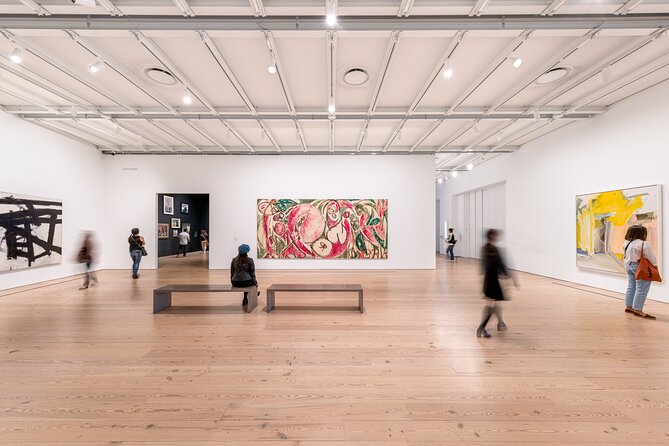
The suggested duration is about two hours. That is enough for a solid visit, but not enough to study every room at length if several floors are open and a major temporary exhibition is drawing crowds.
Start by checking the current floor plan and tour schedule. Free daily tours are included, with different times offered throughout the day. If a tour is about to begin, it can be a smart way to get your bearings and learn how the exhibitions connect. If the timing does not work, you can explore independently.
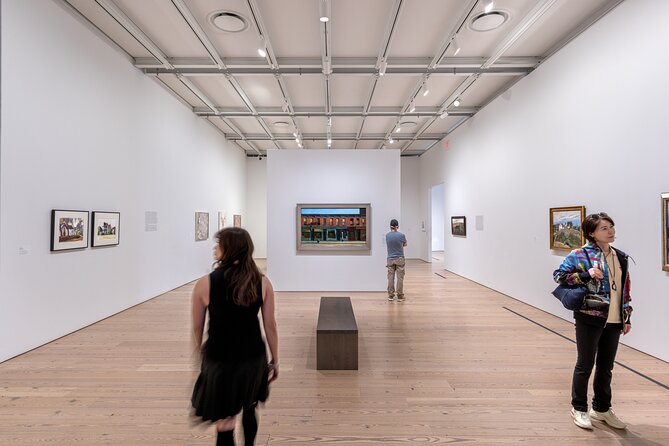
The galleries are described as light-filled, helped by the building’s design and natural views. This is one of the Whitney’s most appealing features. The setting gives you occasional visual relief between galleries, and the windows make the museum feel connected to the city rather than sealed away from it.
Allow extra time for the outdoor areas. Art appears on terraces on floors 5, 6, and 7, so these are not merely fire escapes or photo stops. They extend the exhibition into the open air and give you a different way to see the building and the surrounding city.
The floor 8 terrace is the key viewpoint. From there, you can look toward Manhattan and the Hudson River, with the High Line and nearby landmarks below. The terrace also includes a bar, according to the available visitor information. It is a good place to pause after several galleries, though food and drinks are not part of the ticket and must be purchased separately.
A different kind of day out entirely:
- NYC: SUMMIT One Vanderbilt Tickets
★ 4.7 · 51,195 reviews - NYC: Empire State Building Observation Deck Tickets
★ 4.7 · 22,072 reviews - NYC: Edge Observation Deck Admission Ticket
★ 4.6 · 20,918 reviews - New York City: Statue of Liberty & Ellis Island with Ferry
★ 4.6 · 18,683 reviews
The art: Hopper, O’Keeffe, Calder, and contemporary America
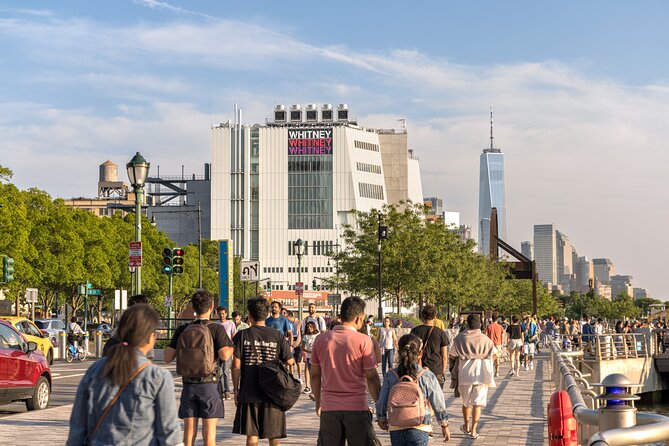
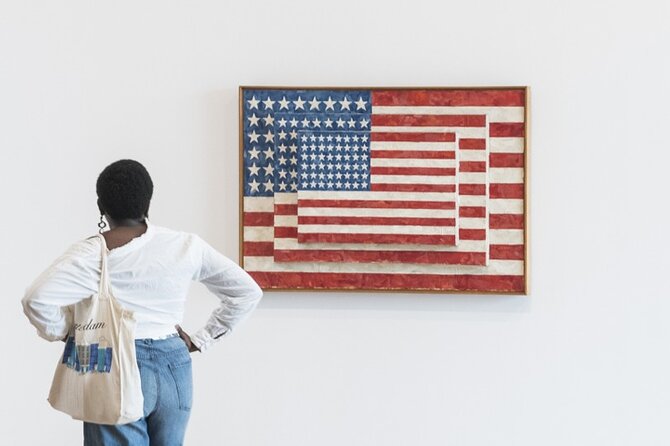
The Whitney’s strongest appeal depends on what you want from a museum. If you are visiting mainly for Edward Hopper, you may find fewer Hopper paintings than expected. One person who came specifically for him felt the selection was limited, while another found a Hopper exhibition outstanding.
That is the useful distinction: the Whitney is not a single-artist museum. Hopper can be a highlight, but the institution’s purpose is much broader. You may see works by Georgia O’Keeffe, Alexander Calder, Jackson Pollock, and other influential artists alongside contemporary installations and temporary shows.
I would encourage you to approach the collection with some flexibility. A work that looks puzzling at first may make more sense after a free tour or after you read the wall text. Other pieces simply may not be to your taste. That is normal in a museum built around modern and contemporary art.
The temporary exhibitions can define your visit. One show focused on Hurricane Maria in Puerto Rico was valued for its educational and enlightening artistic presentations. Another special exhibition received strong praise but also became so crowded that the paintings were hard to see. The quality of a show and the quality of the visit are not always the same thing. A fine exhibition can still be frustrating when ten people are gathered around each work.
The 2024 Biennial is included in the stated experience and is the Whitney’s signature exhibition. A Biennial visit can be rewarding if you want to see current American art rather than only established names. It can also feel challenging or uneven, since a survey of new work is not designed to please every taste.
The building, terraces, and Hudson River views
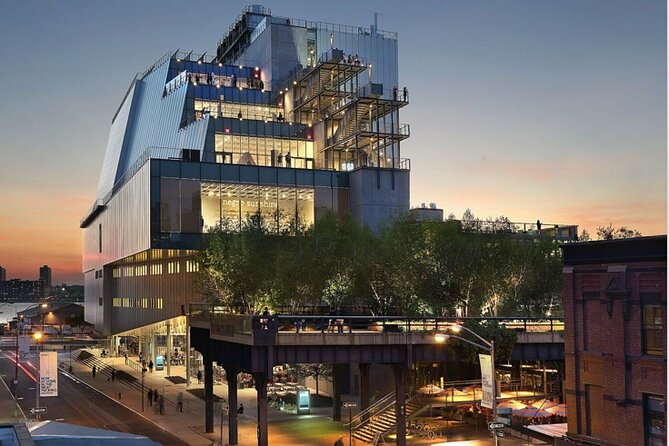
The Renzo Piano-designed building is one of the clearest reasons to choose the Whitney over another museum. It uses broad windows, open-feeling galleries, and terraces to turn the building itself into part of the visit.
I like the way the views work as pauses in the art experience. Look out from several floors, not just the top. The sight lines change as you move upward, and the High Line becomes especially interesting from above. You can watch the neighborhood function as a connected piece of New York, with the river beyond it.
The outdoor artworks on floors 5, 6, and 7 deserve more than a quick photograph. Give yourself time to see how the pieces interact with sky, weather, rooftops, and the structure of the museum. Contemporary art can feel very different outdoors than it does in a quiet white gallery.
The floor 8 terrace is the grand finale for many people. It offers sweeping views and a place to sit with a drink, if you choose to buy one. Several positive accounts single out the upper-floor view and the outdoor areas as essential parts of the experience.
Crowds, timing, and the risk of a rushed visit
Crowding is the biggest concern here. Several accounts describe special exhibitions as packed, with people standing several rows deep around well-known works. One person arrived for a 5 p.m. ticket to a show in a museum closing at 6 p.m. and found too little time to see the exhibition, the rest of the museum, or the shop.
That example offers a clear lesson: do not choose a late entry if you want a leisurely museum visit. A two-hour estimate works best when you arrive with enough time before closing and when the galleries are operating normally.
Timed admission helps control entry, but it does not guarantee an uncrowded room. A popular Hopper exhibition, for example, may still be difficult to view even with a scheduled slot. If you are sensitive to crowds, ask about the quietest available time and consider avoiding the final hours of the day.
Temporary exhibitions may also close or change, and some floors may be unavailable during a visit. One account described half the museum as closed, leaving only 30 to 40 minutes of viewing. That kind of disruption can change the value of a $30 ticket considerably. If a specific collection or show matters most to you, check the museum’s current exhibition information before paying.
Is $30 a fair price?

At $30 per person, the ticket is not a bargain in the casual sense, but it can be good value for a focused museum visit in Manhattan. Admission includes the Whitney’s collection, current exhibitions listed for the date, and free daily tours. The terraces and city views add something beyond the art alone.
The value is strongest when you plan to spend two or more hours inside and also use the location. A museum visit followed by the High Line and Chelsea Market makes the admission feel like part of a larger day rather than a short standalone stop.
The value drops if you only want one artist, arrive shortly before closing, or find that major floors are unavailable. It also drops if a crowd makes the central exhibition difficult to see. The ticket is best for someone who wants a broad American art experience, not simply a guaranteed collection of Hopper paintings.
Free cancellation is available if you cancel at least 24 hours before the scheduled start time. Changes or cancellations made inside that window are not accepted for a refund, so keep an eye on the local time attached to your reservation.
Who will enjoy the Whitney most?
I would recommend this museum to:
- People who enjoy American art from the 20th and 21st centuries
- Anyone interested in contemporary artists and current exhibitions
- Architecture fans who want galleries, terraces, and city views in one stop
- Families and couples looking for a flexible two-hour museum visit
- Visitors already planning to walk the High Line
- Art students or young artists who want to see a wide range of approaches
I would be more cautious if you dislike modern or contemporary art. The museum does have recognizable names and approachable paintings, but much of the experience asks you to consider ideas beyond traditional portraiture or landscape painting.
I would also hesitate if your entire plan depends on one temporary exhibition. Confirm that it is open, included, and likely to be comfortable at your chosen time. Special shows can be the highlight of the day, but they can also be the most crowded part.
Should you book the Whitney admission ticket?
Book it if you want a focused American art museum with a striking building, free tours, outdoor artworks, and some of Manhattan’s best museum views. The combination of Hopper, O’Keeffe, Calder, living artists, and the Biennial gives you a broad look at how American art has changed.
I especially like this ticket for a High Line day. Visit the museum when you have enough time, take one of the free tours if the schedule works, and save the upper terraces for a slower pause near the end.
Skip it if you only have a short window, want a quiet viewing experience, or are interested in just one artist. Also verify your voucher details before heading over, since the check-in process is usually simple but not entirely free of booking confusion. For the right visitor, the Whitney offers more than a roomful of paintings: it gives you American art, a modern building, and New York spread out below the terraces.
FAQ
How much does admission to the Whitney Museum cost?
The listed price is $30 per person.
How long should I plan for the Whitney Museum?
The expected visit lasts about two hours. You may want more time if several exhibitions are open or if you plan to use the terraces and free tour.
What does the ticket include?
It includes admission to the Whitney Museum of American Art and access to free daily tours. The stated experience also includes access to the 2024 Biennial.
Are guided tours included?
Yes. Free daily tours are included, with different tour times offered throughout the day. Ask at admission for the schedule during your visit.
Can I explore the museum on my own?
Yes. You can skip the tour and explore the permanent and temporary exhibitions at your own pace.
Are food and drinks included?
No. Food and drinks are not included, but they are available for purchase. The upper terrace includes a bar.
Can I cancel for a refund?
Yes. You can receive a full refund if you cancel at least 24 hours before the experience start time. Cancellations or changes made less than 24 hours before the start time are not accepted for a refund.
Just added in New York City
- NYC: Woodbury Common Premium Outlets Shopping Trip★ 4.2 · 761 reviews
- New York City: Private Walking Tour with a Local★ 4.6 · 771 reviews
- Washington DC Day Trip by Bus from New York City★ 4.7 · 600 reviews
- Wall Street Insider Tour with a Finance Professional★ 4.5 · 660 reviews
- NYC: Guided Central Park Horse Carriage Ride★ 4.8 · 877 reviews
- True Crime New York: NYPD-Guided Mafia Walking Tour w/ Food★ 4.6 · 318 reviews
- LEGOLAND® New York Theme Park Admission Ticket★ 4.0 · 1,396 reviews
- NYC: Woodbury Common Premium Outlets Shopping Round Trip Service★ 4.0 · 784 reviews
Museums, compared.
Empire State Building Tickets – Observatory & Museum
Read our review →

9/11 Memorial, Ground Zero Tour with Optional 9/11 Museum Ticket
Read our review →

All-Access 9/11: Ground Zero Tour, Memorial and Museum, One World Observatory
Read our review →
Browse the lists this tour appears in