

Reviewed · NEW ORLEANS TOURS
New Orleans Garden District Architecture Tour
Architecture tells New Orleans’ story. This two-hour walk through the Garden District links grand Italianate homes, old family fortunes, burial customs, and local life in a way that helps you understand what you are seeing. I especially like the small-group cap of 14 people and the focus on architectural detail rather than quick photo stops. The guides also add personality: Angela, a tenth-generation New Orleanian, has earned praise for her personal stories, while Doug, Pauline, Lee, and others are known for clear storytelling and a good sense of humor.
The main consideration is the weather. You will be outside and walking for about two hours, often in hot conditions, and Lafayette Cemetery No. 1 can close when services are taking place. The tour also returns to its starting point, so you must arrange your own way to and from 2727 Prytania Street.
In This Review
- Key points to know before you book
- Why the Garden District works so well on foot
- Starting at Lafayette Cemetery No. 1
- Commander’s Palace and the social side of the district
- Morris-Israel House and the Italianate lesson
- The Women’s Opera Guild House and two building eras
- Louise S. McGehee School and a building’s second life
- Carroll-Crawford House and Samuel Jameson’s signature
- The Rink, from recreation to neighborhood memory
- Two hours among the Garden District mansions
- Is $40 a fair price?
- Weather, timing, and who should book
- Should you book the Garden District Architecture Tour?
- FAQ
- How long is the New Orleans Garden District Architecture Tour?
- Where does the tour begin?
- Is Lafayette Cemetery No. 1 always open during the tour?
- Are admission tickets included?
- How large is the tour group?
- What should I wear or bring?
- What is the cancellation policy?
Key points to know before you book

- Lafayette Cemetery adds a distinctly New Orleans lesson: You learn why the city’s burial customs created its famous above-ground tombs and Cities of the Dead.
- Italianate architecture gets special attention: The Morris-Israel House and Carroll-Crawford House give you clear examples of Samuel Jameson’s work.
- Small groups make questions easier: The maximum group size is 14, a useful advantage on a residential street tour.
- Guides bring local connections: Angela, Doug, Pauline, Lee, Gary, Kelsey, and others have been praised for humor, photos, personal stories, and careful research.
- The Rink adds a change of pace: This 1884 building once held the country’s largest skating rink.
- The $40 price buys interpretation, not admission: The homes are viewed from outside, and the value comes from making sense of the neighborhood.
Why the Garden District works so well on foot
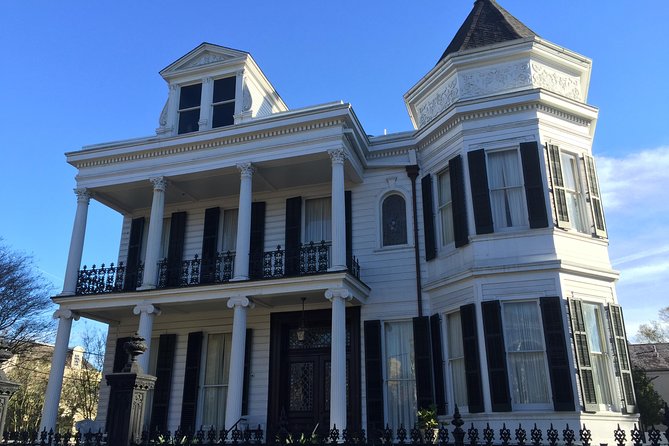
New Orleans can feel like several cities stitched together. The French Quarter is famous for music, food, and crowded streets, but the Garden District offers a calmer look at the city’s 19th-century ambitions.
You walk beneath tree-lined streets while your guide explains how the neighborhood developed, who commissioned its houses, and how architectural fashions changed. The route is not simply a parade of pretty façades. You learn to notice rooflines, columns, balconies, proportions, and the difference between two styles that may look similar at first glance.
That matters because you can keep using the lessons for the rest of your stay. One family review specifically noted that the architecture explanations helped them understand buildings they saw later in New Orleans. I like that practical benefit. A good walking tour should sharpen your eyes, not just fill two hours.
The pace is described as leisurely, with enough time for questions and photos. Guides such as Doug have been praised for moving at a comfortable speed, while Gary used pictures to show how buildings looked at different points in their past. Those visual aids can be especially useful when you are looking at a building that has changed over time.
A few more options to weigh up in New Orleans
- New Orleans Premier Ghost, Voodoo and Vampire Walking Tour
★ 4.5 · 12,856 reviews - New Orleans Steamboat Natchez Jazz Cruise with Dinner Option
★ 4.0 · 7,533 reviews - Adults-Only New Orleans Ghost, Crime, Voodoo, and Vampire Tour
★ 5.0 · 6,545 reviews
Starting at Lafayette Cemetery No. 1
The tour begins at 2727 Prytania Street, near Lafayette Cemetery No. 1. A short portion of the walk focuses on New Orleans burial customs, including the above-ground tombs that give the city’s cemeteries their unusual appearance.
The cemetery stop is brief, listed at about five minutes, so do not expect a long cemetery visit. Its value is as an introduction to the city’s relationship with death, family, and public memory. The setting also gives your guide a natural way to explain why New Orleans developed burial traditions different from those in many other American cities.
There is one important practical limit: the city permits entry, but the cemetery may close when services are being held. That means this portion can change or be unavailable. The tour still has plenty of architectural material beyond the cemetery, but you should not book solely for interior access.
Wear shoes that are comfortable for walking. The tour is outside, and the combination of pavement, warm weather, and two hours on foot can be more tiring than the distance sounds.
Commander’s Palace and the social side of the district

The stop at Commander’s Palace lasts only about three minutes, but it gives the architecture a social setting. Your guide discusses the building, the owners, and the culinary experience associated with this well-known restaurant.
You do not receive admission or a meal as part of the tour, so think of this as an exterior explanation and a possible dining lead. Several guides have offered suggestions about where to eat afterward, which is useful in a city where choosing a restaurant can be half the evening’s work.
This is also a good example of how the tour connects buildings to people. Architecture can seem dry when it is reduced to dates and style labels. It becomes more memorable when you hear how a house or restaurant relates to the people who built, owned, or used it.
Morris-Israel House and the Italianate lesson

At the Morris-Israel House, you spend about five minutes looking at a residence designed by Samuel Jameson in 1869. The house is presented as a strong example of New Orleans Italianate architecture.
This is one of the tour’s most useful teaching stops. Instead of merely hearing that a building is Italianate, you learn how the style fits into the larger mix of Garden District homes. The comparison helps you recognize repeated features across the neighborhood.
Samuel Jameson appears again later at the Carroll-Crawford House. Seeing two houses associated with the same designer gives the discussion some continuity. You begin to understand that the Garden District was not assembled from one uniform plan. It contains related ideas, individual choices, and changes made over time.
The short stop also shows why a guided walk can offer more than an audio guide. Your guide can point toward a detail, answer a question, and compare one façade with the next as you move along.
A different kind of day out entirely:
- New Orleans Food Walking Tour of the French Quarter with Small-Group Option
★ 5.0 · 6,118 reviews - New Orleans Swamp and Bayou Boat Tour with Transportation
★ 5.0 · 5,399 reviews - New Orleans Steamboat Natchez Jazz Cruise
★ 4.5 · 5,334 reviews - New Orleans City Sightseeing Hop-On Hop-Off Bus Tour
★ 4.5 · 4,943 reviews
The Women’s Opera Guild House and two building eras
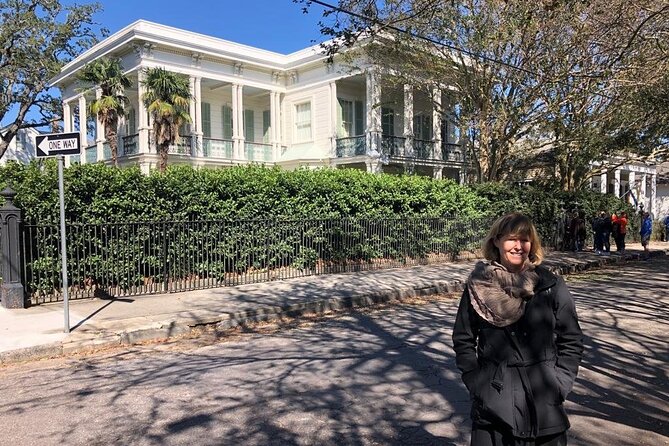
The Women’s Guild of the New Orleans Opera, also called the Women’s Opera Guild House, offers a compact lesson in architectural change. The house was built in two different eras and two different styles.
The three-minute stop is short, but the idea is important. Many old buildings are not the work of one moment. Additions, renovations, and changing tastes can leave several periods visible in one structure.
This stop should appeal to you if you enjoy learning how to read a building rather than memorizing famous names. Your guide explains how to tell the styles apart, giving you another visual tool for the rest of the walk.
Because the tour keeps moving, you will not spend long at every address. That is a strength if you want a broad introduction, but a limitation if you prefer extended time at a few buildings. The format favors variety and comparison over detailed architectural study of one house.
Louise S. McGehee School and a building’s second life
The Louise S. McGehee School receives about ten minutes, making it one of the longer individual stops. The building began as a single-family residence before becoming the school’s library.
That change of use gives you a different way to think about preservation. A historic house does not always remain a private home. It can take on a public or educational role while retaining visible signs of its earlier life.
The stop also widens the tour beyond grand residences. You learn how a building can move through several chapters, shaped by changing needs and changing owners. The school’s history helps connect the Garden District’s domestic architecture with the institutions that later occupied it.
If you have teenagers in your group, this kind of story may work better than a long list of dates. One family specifically found the tour enjoyable with a 17-year-old, and the mix of architecture, people, and local history gives younger visitors something concrete to follow.
Carroll-Crawford House and Samuel Jameson’s signature
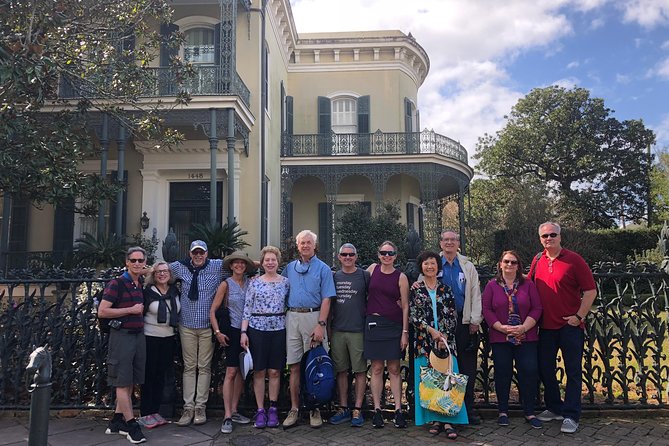
The Carroll-Crawford House is another Samuel Jameson design and another chance to study the Italianate style. The stop lasts about five minutes, allowing your guide to compare it with the Morris-Israel House.
Repeated examples are helpful. One building can make a style seem like an abstract label. Two buildings let you notice what they share and where they differ.
Your guide may also connect the house to former owners and notable residents. Doug, for example, has been praised for adding stories about famous people who lived in the area. That material can make a quiet residential street feel less static, though the emphasis remains on architecture and local history rather than celebrity gossip.
The homes are viewed from public areas. You should not expect to tour the interiors of private residences. The experience depends on exterior details, guide interpretation, and the stories attached to each address.
The Rink, from recreation to neighborhood memory
The Rink Shopping Center provides a welcome change from mansion after mansion. Built in 1884, the simple structure once housed the largest skating rink in the country.
The story reveals what residents did for fun at the turn of the century. It also reminds you that the Garden District was not only a collection of wealthy homes. People worked, shopped, socialized, and sought entertainment here.
At about seven minutes, this is long enough for the building’s purpose and local role to register. I appreciate stops like this because they give the neighborhood texture. Without them, the walk could become an endless procession of façades and famous names.
The Rink also helps explain why a small, local tour can be more satisfying than a route built only around the most photographed houses. Ordinary-looking buildings can carry unusual stories.
Two hours among the Garden District mansions
The broad Garden District portion takes up most of the experience. You spend roughly two hours admiring antebellum mansions, learning about the period when they were built, and hearing about the designers and residents connected to them.
The strongest part of the tour is the combination of detail and context. You are not only told that a house is old or attractive. You hear about the choices behind its design and the people who shaped the neighborhood.
The guides bring different strengths. Angela has been praised for her warmth, humor, and personal connection to New Orleans. Pauline is known for researching how buildings changed across decades and for explaining the people who commissioned them. Lee has been described as witty and highly informed, while Kelsey has impressed visitors with her local research and careful communication when a group arrived late because of traffic trouble.
Those names matter because the guide makes or breaks a walking tour. The route itself is appealing, but the experience depends on whether your guide can turn architecture into a story. The feedback points to a team with varied personalities rather than one fixed presentation.
You can also expect questions to be welcome. Angela and Chelsea have been praised for answering questions thoroughly, and Gary’s use of photographs helped clarify his points. If you are curious about a particular house, ask. A small group gives you a better chance of getting a useful answer than a large city tour.
Is $40 a fair price?
At $40 per person, this is not the cheapest way to see the Garden District. You can walk the streets on your own for free. The homes and public streets do not require a general admission ticket, and transportation to the meeting point is not included.
The price makes more sense if you want interpretation. For two hours, you get a licensed and insured local guide, a planned route, explanations of architectural styles, cemetery customs, neighborhood history, and suggestions for food afterward. The maximum group size of 14 also keeps the format more personal than a large coach excursion.
I would consider the tour good value for a first visit, especially if you are not confident distinguishing Italianate architecture from other styles. It is less compelling if you already know the Garden District well or prefer exploring at your own speed.
The tour is offered in English and uses a mobile ticket. It is near public transportation, but you must arrange your own transportation to and from 2727 Prytania Street. The activity ends where it begins, which makes planning easier if you have another reservation afterward.
Weather, timing, and who should book
You need favorable weather for this experience. New Orleans heat can make a sunny walk feel demanding, and one person specifically noted the heat even while enjoying the tree-lined streets. Bring water, use sun protection, and choose comfortable shoes.
Most people can take part, and service animals are allowed. The tour is a good fit for couples, families, solo visitors, and friends who enjoy history, buildings, and local stories. It also works well early in a New Orleans visit because the architecture lesson can help you make sense of other neighborhoods afterward.
I would be more cautious about booking it for someone who dislikes outdoor walking, needs frequent indoor breaks, or wants interior access to historic homes. The tour is primarily an exterior walking experience.
The cancellation policy is practical but firm. You receive a full refund if you cancel at least 24 hours before the start time. Cancellations or changes within 24 hours are not refunded, while a weather cancellation gives you the choice of another date or a full refund.
Should you book the Garden District Architecture Tour?
Book it if you want more than attractive streets and quick photographs. The tour gives you a working vocabulary for New Orleans architecture, a short but memorable look at Lafayette Cemetery, and stories about the people and uses that shaped the district.
I especially recommend it for a first visit, families with older children, and anyone who likes a relaxed pace with room for questions. The $40 cost is justified by the guide’s local insight and the small group, not by included admissions.
Skip it if you want to wander alone, enter historic houses, or avoid walking in warm weather. Otherwise, this is a focused, friendly introduction to one of New Orleans’ most distinctive neighborhoods, with enough history to keep the grand façades from becoming a blur.
FAQ
How long is the New Orleans Garden District Architecture Tour?
The experience lasts approximately two hours. It includes several short stops plus extended time walking through the Garden District.
Where does the tour begin?
The meeting point is 2727 Prytania Street, New Orleans, Louisiana 70130. The tour ends back at the same meeting point.
Is Lafayette Cemetery No. 1 always open during the tour?
No. Entry is permitted by the City of New Orleans, but the cemetery may close when services are being performed.
Are admission tickets included?
The walking tour includes free admission at the listed stops, but Commander’s Palace admission is not included. Transportation to and from the attractions is also not included.
How large is the tour group?
The activity has a maximum of 14 travelers, allowing for a smaller group format.
What should I wear or bring?
Comfortable walking shoes are recommended. Because the tour depends on favorable weather and takes place outdoors, you should also prepare for warm or wet conditions.
What is the cancellation policy?
You can cancel at least 24 hours before the start time for a full refund. Cancellations and changes made less than 24 hours before the start time are not accepted for a refund. If poor weather cancels the tour, you will be offered another date or a full refund.
Just added in New Orleans
- Whitney Plantation Tour with Transportation from New Orleans★ 4.5 · 1,351 reviews
- New Orleans Yellow Fever Ghost Tour★ 5.0 · 1,298 reviews
- VIP Jazz Dinner Cruise with Private Tour and Open Bar Option★ 4.5 · 838 reviews
- New Orleans Delicious Donuts & Beignets: A Sweet Walking Tour★ 5.0 · 928 reviews
- New Orleans Private Carriage Tour of the French Quarter★ 5.0 · 537 reviews
- The Escape Game at the French Quarter in New Orleans★ 5.0 · 364 reviews
- New Orleans French Quarter Photo Shoot★ 5.0 · 462 reviews
- The Ghosts of New Orleans Tour★ 4.5 · 702 reviews
New Orleans Tours, compared.

New Orleans Premier Ghost, Voodoo and Vampire Walking Tour
Read our review →
New Orleans Steamboat Natchez Jazz Cruise with Dinner Option
Read our review →
Adults-Only New Orleans Ghost, Crime, Voodoo, and Vampire Tour
Read our review →
New Orleans Food Walking Tour of the French Quarter with Small-Group Option
Read our review →
New Orleans Swamp and Bayou Boat Tour with Transportation
Read our review →

New Orleans City Sightseeing Hop-On Hop-Off Bus Tour
Read our review →
Browse the lists this tour appears in