
Reviewed · CITY TOURS
New York City Slavery and Underground Railroad Tour
New York’s freedom story runs beneath familiar streets. This 2.5-hour walking tour follows the city’s African-American Freedom Trail, linking colonial slavery, abolition, Wall Street, and the Underground Railroad in a way that is easy to miss on your own. I especially like the route’s focus on African Burial Ground National Monument and the way guides connect large events to individual lives. I also like the use of historical photographs and visual materials, which help put faces to the story.
The main drawback is practical: this is a lot of standing and listening outdoors. You may spend long stretches on sidewalks rather than inside historic buildings, and construction or blocked areas can occasionally limit what you see. Bring good shoes, dress for the weather, and stay close enough to hear the guide.
In This Review
- Key points to know before booking
- Why New York’s slavery story is easy to miss
- Meeting outside the National Museum of the American Indian
- Battery Park and the harbor gateway
- Fraunces Tavern and the Revolutionary backdrop
- Wall Street, the old wall, and the money behind the city
- Foley Square and the Triumph of the Human Spirit
- African Burial Ground National Monument
- The church connection and New York’s freedom network
- The guides are the strongest part
- How much walking and standing should you expect?
- Is $49 a fair price?
- Who should book this walk?
- My verdict on the New York City Slavery and Underground Railroad Tour
- FAQ
- Where does the tour begin?
- Where does the tour end?
- How long does the tour last?
- Is admission to the museums included?
- Is the tour suitable for people with limited fitness?
- What happens if the tour is canceled?
Key points to know before booking
- A downtown route with serious historical weight: Walk from Bowling Green and Battery Park through Wall Street and Foley Square to African Burial Ground National Monument.
- The guide makes the experience: Guides such as Ludie, Maia, Maya, Sean, and Shawn have been praised for clear explanations, strong storytelling, and thoughtful discussion.
- Expect an outdoor history lesson: The tour includes several stops where you stand while the guide talks, with limited seating and some exterior-only visits.
- The African Burial Ground is the emotional center: This sacred site is the oldest and largest known excavated burial ground in New York connected with enslaved Africans.
- A good value for history-minded visitors: At $49, the cost is reasonable if you want a guided interpretation of places that can otherwise look like ordinary city streets.
- Plan for weather: The tour may be canceled in poor conditions, and rainy, windy, or very cold weather can make the walking and standing difficult.
Why New York’s slavery story is easy to miss
Most first-time visits to Lower Manhattan focus on skyscrapers, the New York Stock Exchange, the harbor, and the beginnings of American government. Those sights are important, but they can give you a narrow picture of the city’s past.
This tour changes the angle. You hear how enslaved Africans helped build colonial New York and how the city’s commerce benefited from slavery. You also learn about Black New Yorkers, abolitionists, escape routes, churches, and people who offered aid to those fleeing bondage.
That shift in focus is the tour’s main value. You are not simply looking at old buildings. You are learning to read the city streets as historical evidence.
The Underground Railroad was not a literal railroad. It was a loose network of routes, safe houses, helpers, and abolitionist contacts. New York was part of that network, even though it was also a major center of the slave trade and a place where slavery remained legal for much of its early history.
The tour does not present the North as innocent. That is important. Some of the most useful moments deal with the complicity of northern business interests and Wall Street. If you already know the basic story of slavery in the South, this route helps explain how the North was tied to it.
A few more options to weigh up in New York City
- NYC: SUMMIT One Vanderbilt Tickets
★ 4.7 · 51,195 reviews - NYC: 9/11 Memorial & Museum Timed-Entry Ticket
★ 4.8 · 31,428 reviews - NYC: Empire State Building Tickets – Observatory & Museum
★ 4.7 · 25,757 reviews
Meeting outside the National Museum of the American Indian
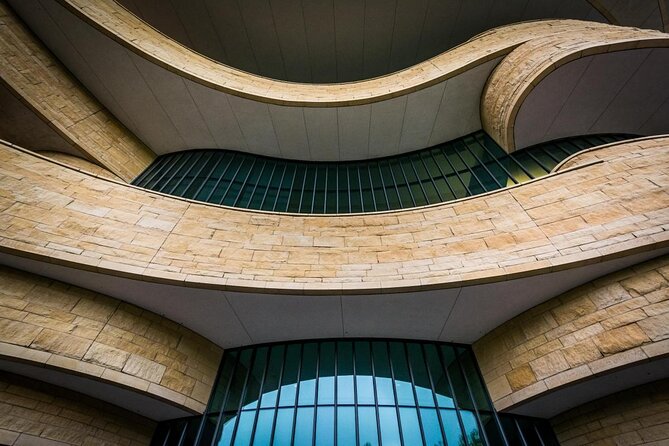
The walk begins at 1 Bowling Green, outside the National Museum of the American Indian. The building is the former Alexander Hamilton Custom House, a Beaux-Arts structure completed in 1907.
You visit the exterior rather than entering the museum, so do not expect this stop to be a museum tour. The building provides a useful opening point for discussing trade, colonial government, and the many communities whose labor shaped New York.
The setting is convenient. Bowling Green is close to several subway lines, Battery Park, the Staten Island Ferry, and the harbor. There is no hotel pickup, so you need to make your own way to the meeting point.
The group can include up to 30 people. That is not a tiny private walk, but it is still small enough for a guide to keep the group together and answer questions. Arrive early enough to locate the guide without rushing.
Battery Park and the harbor gateway
The group then moves toward Battery Park, a place associated with arrivals long before Ellis Island or the Statue of Liberty became symbols of immigration.
This stop broadens the story beyond escape routes. New York was a port city, and ships, commerce, migration, and forced transportation all shaped its growth. Your guide uses the harbor setting to explain how people and goods entered the city, including people brought through the Atlantic slave trade.
Battery Park is also where the tour’s city geography becomes clear. You are walking through a small area that links colonial Manhattan, the waterfront, the financial district, and later movements for freedom.
There is not necessarily a large physical exhibit at this stop. The value comes from explanation and context. Keep your attention on the guide, since the surrounding harbor views can compete for it.
Fraunces Tavern and the Revolutionary backdrop
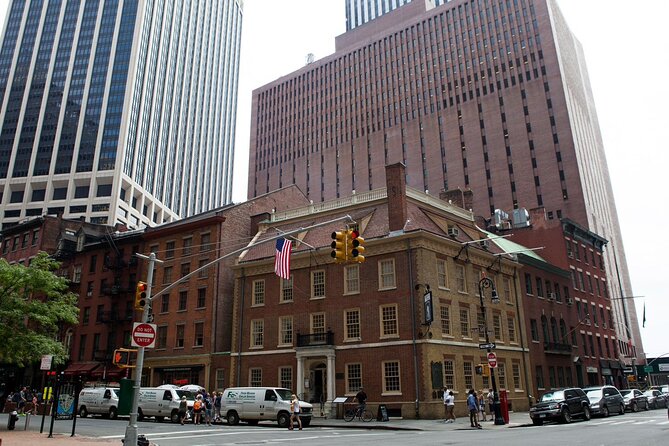
Fraunces Tavern is visited from the exterior. The site played a role before, during, and after the American Revolution, making it a useful place to connect the history of slavery with the founding era.
Many people arrive in New York with a simple picture of the Revolution: patriots, independence, and a break from Britain. This tour adds the harder question of who performed the labor and who remained excluded from the new promises of freedom.
The tavern itself is a functioning historic attraction and museum, but admission is not included in the $49 tour price. The walking experience does not appear to include an interior visit. If you want to explore the museum, plan that separately and check its opening hours.
I like this stop because it places the slavery story beside familiar Revolutionary landmarks. You do not have to travel to a plantation museum to think about slavery. It was part of New York’s colonial and national story too.
A different kind of day out entirely:
- NYC: Empire State Building Observation Deck Tickets
★ 4.7 · 22,072 reviews - NYC: Edge Observation Deck Admission Ticket
★ 4.6 · 20,918 reviews - New York City: Statue of Liberty & Ellis Island with Ferry
★ 4.6 · 18,683 reviews - New York City: American Museum of Natural History Ticket
★ 4.5 · 15,447 reviews
Wall Street, the old wall, and the money behind the city
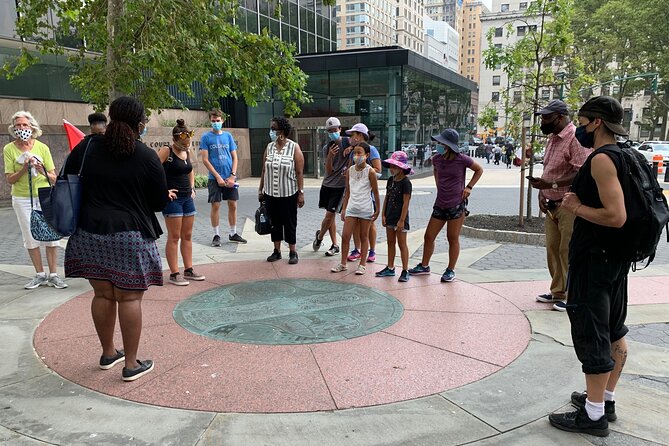
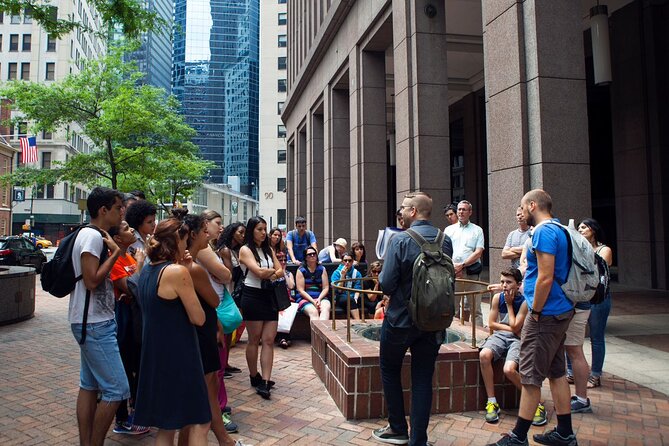
Wall Street is the longest stop, at about 30 minutes. The name refers to an actual wall built in the late seventeenth century, from 1685 to 1699.
The guide explains that enslaved people helped build the wall and that the area became tied to financial systems supported by slavery. This is one of the tour’s most striking contrasts: the same streets now associated with global finance also carry the history of forced labor and human trafficking.
You also hear about people who escaped slavery and hid in New York with help from abolitionists before continuing toward free states. New York was not simply a final destination. It could be a place of danger, concealment, transition, and assistance.
This stop rewards careful listening. There may not be much visible evidence of the people and events being discussed. You are standing among modern office towers and busy sidewalks, so the guide’s words do most of the work.
That can be either a strength or a weakness. I find the lack of obvious monuments thought-provoking, since it shows how much of the past has been covered by later development. If you prefer tours with grand interiors and many preserved objects, this walk may feel too talk-heavy.
Foley Square and the Triumph of the Human Spirit
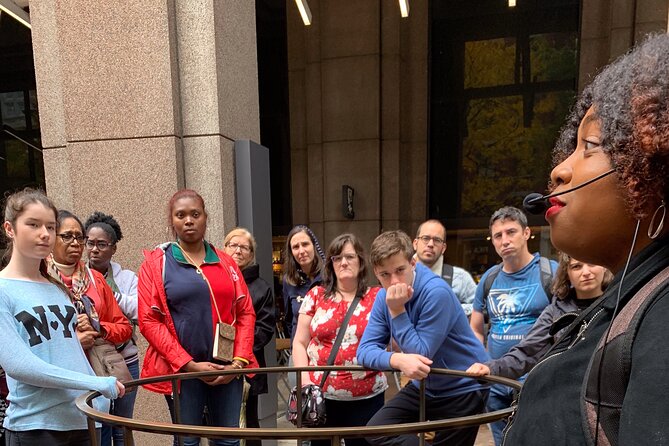
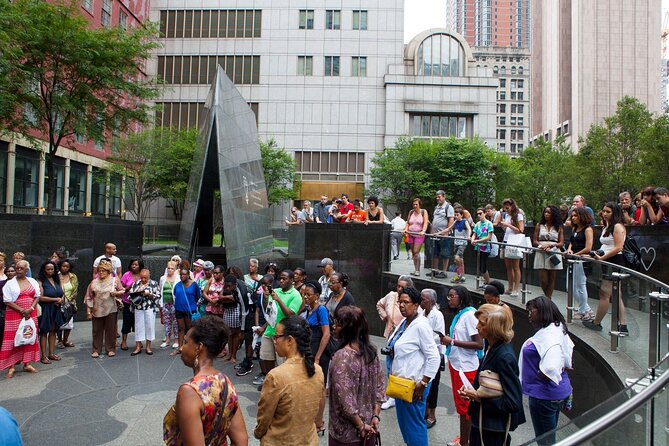
At Foley Square, the group sees the sculpture Triumph of the Human Spirit, which honors the presence and contributions of enslaved people in New York.
This stop gives the tour a visual focal point after the more abstract discussion of Wall Street. A sculpture can never tell the whole story, but it offers a place to pause and think about the endurance of people whose names and lives were often left out of official accounts.
The square is also useful for understanding how New York’s civic and legal institutions developed. Your guide may connect slavery, freedom, law, and the later struggle for civil rights, depending on the questions and pace of the group.
Admission here is free. Like several other stops, the experience is primarily outdoor interpretation rather than a scheduled indoor visit.
African Burial Ground National Monument
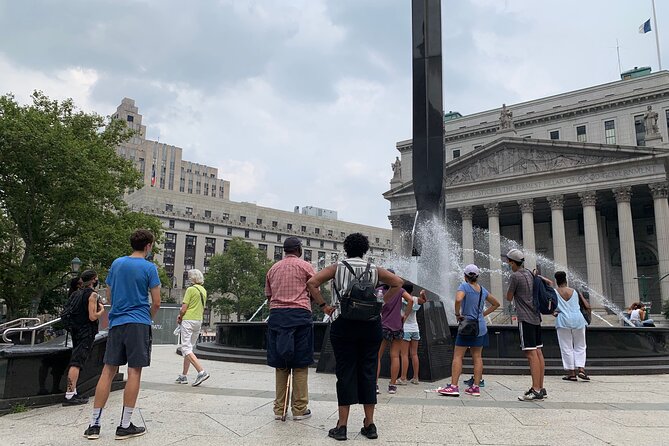
The tour ends at African Burial Ground National Monument, at 290 Broadway. This is the most powerful stop on the route and the one many people remember longest.
The site is the oldest and largest known excavated burial ground in New York connected with enslaved Africans. It documents the lives and deaths of Black people in colonial New York, including people whose work helped the city grow but whose lives were denied equal recognition.
The memorial is a sacred place, not merely another downtown attraction. Give yourself time to be quiet and respectful. Guides have discussed the meaning of the memorial’s symbols and helped visitors understand why the site matters beyond its archaeological importance.
Construction or temporary closures can affect the outdoor area. When that happens, the group may go into the African Burial Ground visitor center or museum area instead, but the exact experience can depend on current conditions.
The final stop gives the walk emotional shape. Earlier, you have heard about labor, trade, escape, and abolition. Here, the focus turns to people who were buried without the public honor they deserved. It is a serious ending, and it should not be rushed.
The church connection and New York’s freedom network
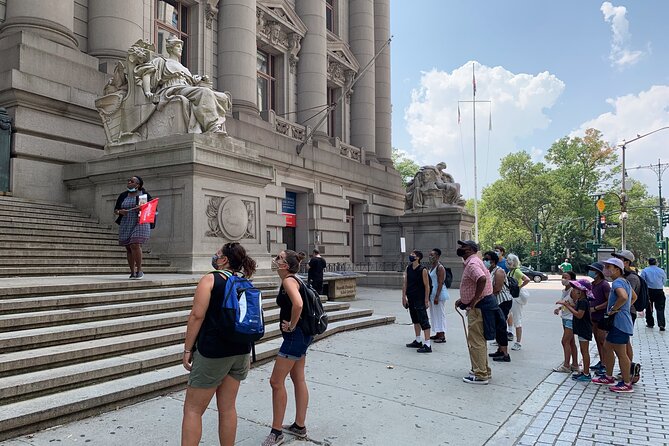
The tour also covers the former site of New York’s first African-American church, which served as a stop connected with the Underground Railroad. This part of the story helps explain how religious communities supported Black New Yorkers and people seeking freedom.
Churches were not only places of worship. They could provide community, leadership, information, and practical aid. Learning about this network makes the Underground Railroad feel less like a collection of dramatic escape tales and more like sustained work by many ordinary people.
Because the listed route finishes at African Burial Ground, the exact position and treatment of the church site may depend on the guide’s route and timing. Ask your guide if this part is especially important to you.
The guides are the strongest part
The quality of this experience depends heavily on who leads it. The strongest guide reports describe people who are warm, expressive, well prepared, and able to answer questions without losing the thread of the tour.
Ludie has been praised for passionate storytelling and for using a binder of photographs showing historical figures and places. Maia and Maya have also been singled out for clear communication and personal engagement. Sean and Shawn have been described as former history teachers or especially strong history educators.
Those details matter because the route contains few obvious visual attractions. A skilled guide must help you picture the people who lived, worked, hid, worshipped, and died here.
The best guides also keep the subject human. They explain slavery without softening it, while avoiding a simple story of shame or blame. The goal is to understand how systems worked and how individuals made choices within them.
Guide quality can vary on any group tour. Still, the 4.9 rating from 411 reviews and 97 percent recommendation rate suggest that strong guiding is common rather than unusual.
How much walking and standing should you expect?
The tour lasts about two and a half hours and requires moderate physical fitness. You walk through Lower Manhattan, but the harder part for some people is standing still while the guide speaks.
One person found the experience tiring because there was little opportunity to sit or get indoors. Cold rain and wind made another person leave before the tour ended. A past complaint also raised the issue of hearing the guide in a larger group, so stay near the front and tell the guide promptly if you cannot hear.
Wear comfortable shoes. Check the forecast before leaving. In summer, heat can make a stationary sidewalk talk feel longer than the mileage suggests. In winter, gloves and warm layers matter.
Service animals are allowed, and the meeting point is near public transportation. Hotel transportation is not included.
Is $49 a fair price?
At $49 per person, this is fairly priced for a 2.5-hour guided walk in Manhattan. You are paying for interpretation, route planning, and access to a connected story that is difficult to assemble from scattered plaques and ordinary sightseeing.
The price does not include admission to the National Museum of the American Indian or Fraunces Tavern Museum. Both are exterior stops on this experience. You should view the tour as a guided historical walk, not as a package of museum admissions.
The value is highest if you want context. If you are content to photograph Wall Street, Battery Park, and historic buildings without a guide, you can see many locations for free. You will not get the same explanation of how slavery, commerce, abolition, and Black community life fit together.
Who should book this walk?
I would recommend it most strongly to history students, teachers, serious readers, and anyone who wants a fuller account of New York’s past. It is also a good choice for residents who think they already know Lower Manhattan. Several guides offer book and museum suggestions, making the tour a useful starting point for further study.
Families with older children may find it meaningful, though the subject is difficult and the format requires sustained attention. People who prefer constant movement, dramatic interiors, or light sightseeing should choose carefully.
The walk is offered in English only. Confirmation arrives at booking, and the group maximum is 30 people. You can cancel for a full refund up to 24 hours before the start time. Poor weather or failure to reach the minimum group size can also lead to cancellation, with another date or a full refund offered.
My verdict on the New York City Slavery and Underground Railroad Tour
Book this tour if you want to understand how slavery and Black resistance shaped Manhattan, not just see its famous buildings. The African Burial Ground, the Wall Street discussion, and the guides’ use of photographs give the experience real purpose.
Skip it if you dislike outdoor talks, cannot stand comfortably for long periods, or want a tour built around interiors and objects. For everyone else, $49 buys a serious, eye-opening walk through a part of New York that many sightseeing routes leave out.
FAQ
Where does the tour begin?
It begins outside the National Museum of the American Indian at 1 Bowling Green, New York, NY 10004.
Where does the tour end?
The listed endpoint is African Burial Ground National Monument at 290 Broadway, New York, NY 10007.
How long does the tour last?
The experience lasts approximately two hours and 30 minutes.
Is admission to the museums included?
No. The National Museum of the American Indian and Fraunces Tavern are exterior visits, and admission tickets are not included. Foley Square and African Burial Ground are listed with free admission.
Is the tour suitable for people with limited fitness?
The tour requires a moderate level of physical fitness. Expect walking and extended periods of standing outdoors.
What happens if the tour is canceled?
If poor weather causes a cancellation, you will be offered another date or a full refund. The same options apply if the minimum number of participants is not reached.
Just added in New York City
- NYC: Woodbury Common Premium Outlets Shopping Trip★ 4.2 · 761 reviews
- New York City: Private Walking Tour with a Local★ 4.6 · 771 reviews
- Washington DC Day Trip by Bus from New York City★ 4.7 · 600 reviews
- Wall Street Insider Tour with a Finance Professional★ 4.5 · 660 reviews
- NYC: Guided Central Park Horse Carriage Ride★ 4.8 · 877 reviews
- True Crime New York: NYPD-Guided Mafia Walking Tour w/ Food★ 4.6 · 318 reviews
- LEGOLAND® New York Theme Park Admission Ticket★ 4.0 · 1,396 reviews
- Whitney Museum of American Art Admission Ticket★ 4.0 · 1,579 reviews
City Tours, compared.


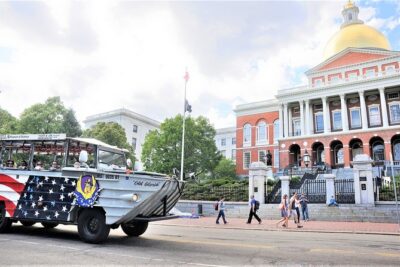
Boston Duck Boat Sightseeing City Tour with Cruise Along Charles River
Read our review →

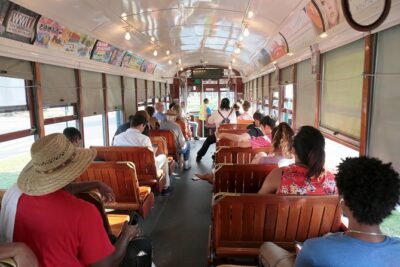
New Orleans City Sightseeing Hop-On Hop-Off Bus Tour
Read our review →
Pearl Harbor, USS Arizona Memorial & Honolulu City Tour
Read our review →Browse the lists this tour appears in