
Reviewed · HISTORICAL TOURS
Savannah Stroll: Guided Sightseeing & History Walking Tour of Savannah
Savannah’s best stories unfold on foot. This 90-minute stroll gives you a clear introduction to the Historic District, linking shady squares, old churches, cemeteries, and major homes while explaining how Savannah grew from a colonial port into one of the South’s most distinctive cities. I especially like the small-group limit of 30 people and the easy pace through tree-lined streets. I also like that guides such as Brad, Zach, William Spinks, and Bill have been praised for adding humor and answering questions beyond their prepared talk.
The main thing to consider is the tour’s focus. It gives the most attention to colonial Savannah, the founding of Georgia, the American Revolution, and selected Civil War stories. If you want a fuller treatment of slavery, Reconstruction, or the Civil Rights era, you will need a more focused tour. Some past departures also had trouble with guide volume, late starts, or route confusion, so I would confirm the meeting and ending details before you go.
In This Review
- Key points before you book
- Starting beside Reynolds Square and colonial Savannah
- The cathedral, cemetery, and Savannah’s public squares
- Green-Meldrim House and Savannah’s grand residences
- Churches, streets, and the wider Historic District
- What the 90-minute format does well
- Where the experience can fall short
- Is the tour worth the money?
- Who should book Savannah Stroll?
- Cancellation and practical details
- FAQ
- How long is the Savannah Stroll tour?
- Where does the tour begin?
- Where does the tour end?
- What language is the tour offered in?
- Are admission tickets included?
- How many people can join the tour?
- Are pets allowed?
- What should I wear?
- Can I cancel for a full refund?
- Should you book Savannah Stroll?
Key points before you book
- Reynolds Square begins the story: You meet at 24 Habersham Street, beside one of the city’s most important colonial squares.
- Fourteen historic sights shape the route: Expect churches, cemeteries, public squares, museums, grand houses, and Savannah’s central historic streets.
- The strongest subject is early Savannah: The tour concentrates on the founding of Georgia, colonial government, the American Revolution, port trade, agriculture, and parts of the Civil War.
- Guides make the biggest difference: Brad, Zach, William Spinks, and Bill receive especially warm praise for humor, local insight, and clear storytelling.
- Ninety minutes keeps the tour manageable: You get a useful orientation without giving up half a day, though the pace leaves little room for extended interior visits.
- Wear walking shoes and plan for weather: Shade helps in warm weather, but you remain outdoors for much of the experience.
Starting beside Reynolds Square and colonial Savannah
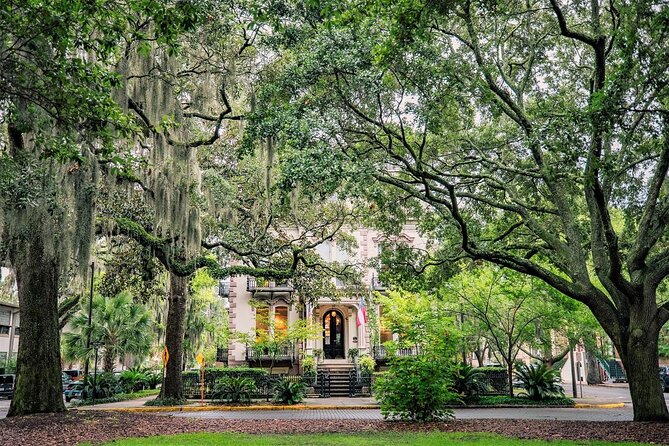
The tour begins at Reynolds Square, at 24 Habersham Street. This is a smart meeting point because the square immediately gives you a sense of Savannah’s unusual city plan: broad streets, formal public squares, historic buildings, and generous tree cover.
Your guide uses Reynolds Square to explain Savannah’s colonial government. In the 1700s, this area was tied to the House of Assembly, where Georgia’s first reading of the Declaration of Independence took place. That opening helps you understand that Savannah’s story is not only about pretty streets. It is also about political power, port trade, land, agriculture, and the people who controlled each of them.
I like starting here instead of at a generic storefront or parking area. You begin with a real historical setting, then move through the city as the story expands. The meeting point is also near public transportation and a parking garage, which makes arrival easier if you are coming from outside the Historic District.
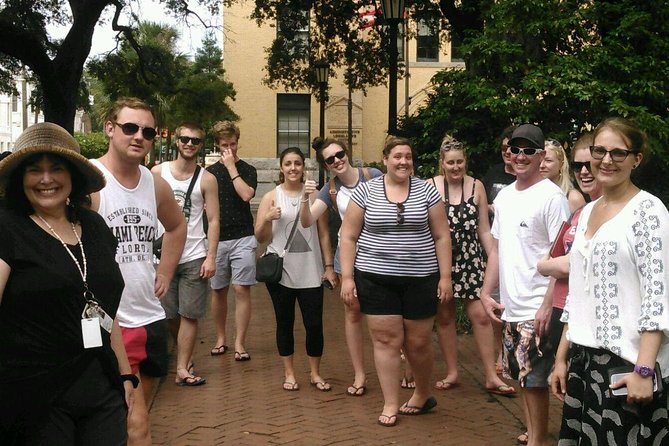
The group can include up to 30 people. That is not an especially tiny group, but it is still more personal than a large sightseeing coach. The experience works best when you stay close to the guide and speak up if you cannot hear.
More History Tours in Savannah
- Savannah History and Haunts Candlelit Ghost Walking Tour
★ 5.0 · 3,235 reviews - Historic Savannah Guided Walking Tour
★ 5.0 · 2,918 reviews - Narrated Historic Savannah Sightseeing Trolley Tour
★ 4.5 · 2,375 reviews
The cathedral, cemetery, and Savannah’s public squares
The route includes the Cathedral of St. John the Baptist, one of Savannah’s most recognizable churches. The tour information does not promise an interior visit, so think of this stop mainly as an architectural and historical view from the street. One past participant specifically noted missing the cathedral, a reminder that the exact pace and route can vary.
From there, the walk moves through Colonial Park Cemetery. This old burial ground adds a more serious note to the tour. It helps connect Savannah’s polished squares with the difficult realities of disease, war, political change, and early urban life. Cemetery stops are especially useful because they turn dates and names into something easier to picture.
The squares are the backbone of the experience:
- Johnson Square introduces one of Savannah’s central public spaces and the formal design that makes the city so easy to recognize.
- Warren Square gives you another example of the city’s repeated pattern of lawns, paths, trees, and surrounding historic homes.
- Oglethorpe Square connects to Savannah’s early planning and the city’s colonial identity.
- Chippewa Square is one of the best-known squares in town and helps show how Savannah’s public spaces became part of the city’s modern image.
- Reynolds Square frames the beginning and, according to the main tour description, the return portion of the walk.
The appeal here is not checking off squares one by one. It is seeing how the system works. A guide can point out how the squares organize the city, offer shade, create gathering spaces, and preserve views of historic buildings. On your own, you may admire the trees and architecture. With a guide, you get the reason those spaces are there.
Green-Meldrim House and Savannah’s grand residences
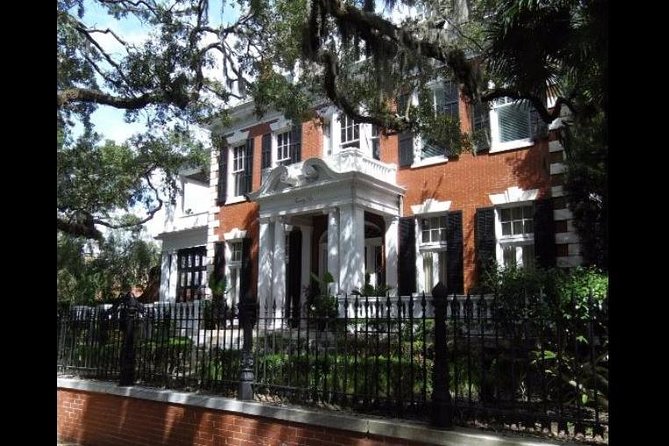
Green-Meldrim House brings the story into the world of Savannah’s wealthy residents and major public events. The route also includes the Juliette Gordon Low Birthplace, the Owens-Thomas House and Slave Quarters, the Olde Pink House, and the Andrew Low House Museum.
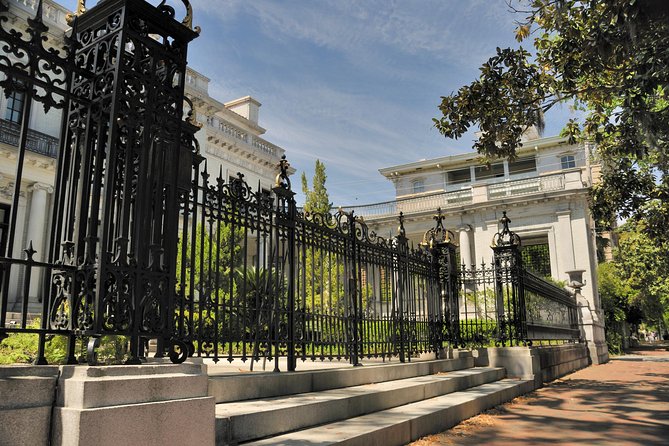
These buildings are valuable even if you do not go inside. Their façades show the city’s range of architectural styles, while their former residents reveal how wealth, politics, commerce, and social position shaped Savannah. The Juliette Gordon Low Birthplace adds a later chapter to the colonial story, connecting the city to one of its best-known local figures.
The Owens-Thomas House and Slave Quarters is particularly important because it can place wealth and domestic life beside the labor that supported them. However, you should not assume that a 90-minute general walking tour will give this subject the same attention as a dedicated slavery or Civil War program. That limitation matters.
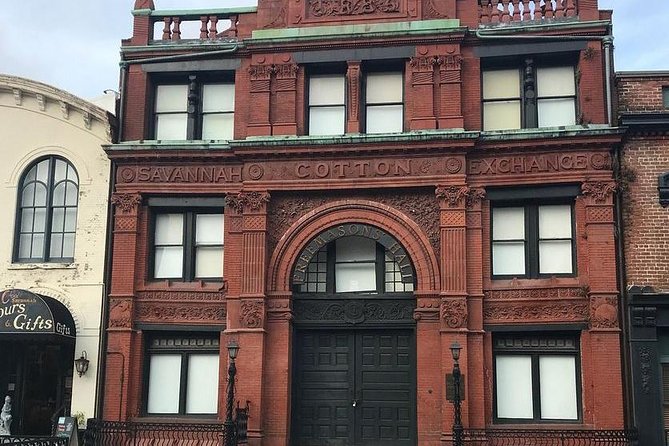
One of the clearest criticisms of the experience concerned the treatment of slavery and the Civil Rights era. The guide emphasized the cotton boom and the people who benefited from it, but did not give enough attention to the enslaved people whose labor made that economy possible. I consider this a fair point for anyone looking for a balanced account of Savannah.
The provider offers a separate Civil War Savannah tour for visitors who want a more focused treatment of war, slavery, and postwar Savannah. If those subjects are central to your trip, book that kind of experience as well rather than expecting this introductory walk to cover everything.
Churches, streets, and the wider Historic District
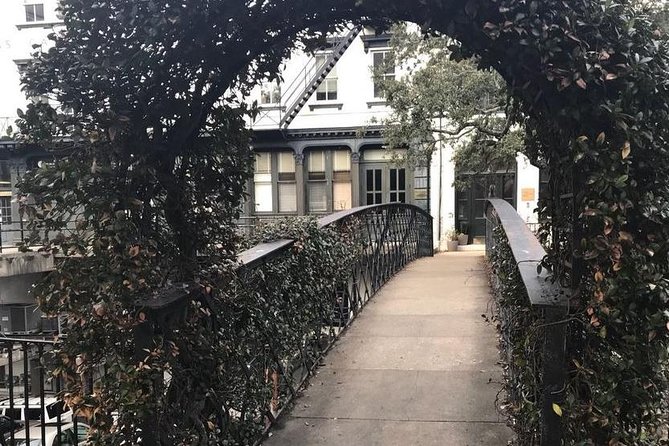
The route includes the Independent Presbyterian Church and passes through the Savannah Historic District, the Savannah Victorian Historic District, and Savannah Walks. Together, these sections provide the broad city overview promised by the tour.
The Historic District is one of the largest National Historic Landmark Districts in the United States. That size explains both the tour’s value and its limits. In 90 minutes, you can sample the city’s main themes, but you cannot examine every square, enter every house, or fully explain every period of Savannah’s past.
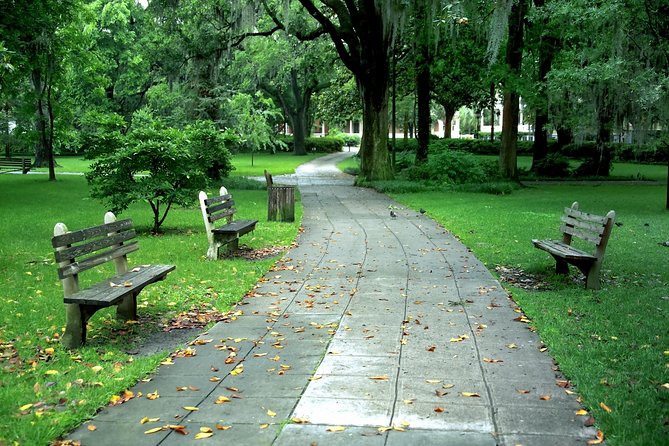
I like the way the walk connects famous sights with ordinary streets. You see canopies of trees, floral plantings, old homes, churches, and public squares while hearing about Savannah as a strategic port. The American Revolution and Civil War are part of that port story, since control of the city involved shipping, trade, supplies, and military strategy.
Several guides have earned strong praise for turning this material into an enjoyable walk. Brad is repeatedly described as funny, organized, and full of unexpected details. Zach is praised for enthusiasm, local knowledge, architecture, and a good sense of timing. William Spinks is noted for explaining politics, agriculture, economics, and the city’s layout. Bill is described as a Savannah native with many stories and local secrets.
That range suggests an important truth: your guide will shape the experience. The best guides do more than recite dates. They answer questions, explain why a building matters, and help you connect the past to the streets around you.
More Walking Tours in Savannah
- Savannah First Squares Culinary & Cultural Walking Food Tour
★ 5.0 · 3,229 reviews - Savannah’s Ghost City “Dead of Night” Walking Night Tour
★ 4.5 · 2,482 reviews - Southern Flavors Food, Pub Crawl, and History Walking Tour
★ 4.5 · 1,623 reviews - Genteel and Bard’s Savannah Dark History and Ghost Encounter Walking Tour
★ 5.0 · 1,546 reviews
What the 90-minute format does well
A short walking tour is a good first activity in Savannah. You get your bearings, learn which squares you want to revisit, and receive suggestions for dining and shopping. One useful feature is the chance to ask about places beyond the formal route. Guides have been praised for answering questions off script and pointing people toward what to see next.
The pace is described as a comfortable stroll. That makes the tour suitable for families, older adults, and groups with strollers, although the route remains a real walk over city streets and sidewalks. Comfortable shoes are a must.
Ninety minutes is also long enough to build a story without exhausting you. In hot weather, much of the route benefits from shade, and one account noted a short air-conditioned break halfway through. Still, Savannah’s heat and humidity can be intense, so bring water and dress for the forecast.
Pets are welcome, and service animals are allowed. Most people can participate, but the tour has no hotel pickup or drop-off. You need to reach the starting point on your own.
Where the experience can fall short
The biggest weakness is uneven delivery. Most of the praise centers on guides who are warm, funny, well prepared, and easy to follow. But a few departures had problems with late starts, poor volume, rambling explanations, or a substitute guide who did not meet expectations.
A group of more than 30 people could also make hearing difficult, especially near traffic or landscaping equipment. If you have trouble hearing, stay near the front and ask the guide to repeat anything you miss. A past tour began awkwardly because of noise and a delayed introduction, although the guide became much more interesting once the walk got moving.
There is also conflicting information about where the tour ends. The main description says it returns to Reynolds Square and the meeting point. A provider response says the regular route ends in Chippewa Square, with a roughly 10-minute walk back. Since those details do not match, I would confirm the endpoint before booking a timed dinner, riverboat trip, or transportation connection.
One more point: the tour’s history is selective. It is strongest as an introduction to colonial Georgia, the city plan, prominent buildings, the Revolution, and some Civil War material. It is not a complete account of Savannah’s past, and you should not book it expecting a full discussion of slavery, Reconstruction, or Civil Rights.
Is the tour worth the money?
The supplied details do not include a fixed ticket price, so I cannot judge the exact dollar amount. I can judge what you receive: a professional English-speaking guide, a 90-minute orientation, access to a carefully chosen route, and practical advice about eating and shopping.
For a first visit, that is usually good value if the price is in line with other guided city walks. You are paying mainly for interpretation, not admission tickets. The listed stops are viewed from the route, and no attraction entry is included.
The tour is especially useful early in your stay. Afterward, you can return to the squares or houses that caught your attention. It can also replace a more general trolley ride if you prefer street-level detail and the freedom to stop for questions.
I would not choose it as your only history experience if your main goal is a serious account of slavery, the Civil War, or modern racial history. Pair it with a specialized tour or museum visit.
Who should book Savannah Stroll?
I would recommend this walk to:
- First-time visitors who want a quick, clear introduction to Savannah.
- Couples and friends who enjoy architecture, public squares, and local stories.
- Families who prefer a short outdoor activity over a long museum visit.
- People who want restaurant and shopping suggestions from a local guide.
- Visitors who like asking questions and learning through conversation.
- Anyone deciding between a trolley overview and a more personal walking route.
I would be more cautious if you have limited walking ability, dislike warm weather, need guaranteed accessibility details, or want a tightly focused account of Civil War and Civil Rights history. Most people can participate, but the tour is still a 90-minute walk, and the exact route may vary.
Cancellation and practical details
You receive confirmation when booking. Free cancellation is available up to 24 hours before the local start time. Cancellations or changes inside that 24-hour window are not refunded or accepted.
A minimum number of participants is required. If the provider cancels because that number is not met, you are offered another date or experience, or a full refund. Severe weather or guide illness can also affect the schedule, so avoid placing an important reservation immediately afterward.
The tour is offered in English and uses a mobile ticket. Plan to arrive at 24 Habersham Street with comfortable walking shoes, and allow a little extra time to locate the group.
FAQ
How long is the Savannah Stroll tour?
The walking tour lasts approximately 1 hour and 30 minutes.
Where does the tour begin?
The listed meeting point is 24 Habersham Street, Savannah, Georgia 31401, near Reynolds Square.
Where does the tour end?
The main tour details say the activity ends back at the meeting point. Another provider note says the regular route ends in Chippewa Square, so confirm the endpoint before making a tight connection.
What language is the tour offered in?
The tour is offered in English.
Are admission tickets included?
The listed stops have no separate admission ticket included. This is primarily an exterior sightseeing and history walk.
How many people can join the tour?
The maximum group size is 30 people.
Are pets allowed?
Pets are welcome, and service animals are allowed.
What should I wear?
Comfortable walking shoes are recommended. Much of the route has shade, but you should still prepare for Savannah’s weather.
Can I cancel for a full refund?
Yes. You can cancel at least 24 hours before the experience starts for a full refund. Cancellations within 24 hours are not refunded.
Should you book Savannah Stroll?
Book it if you want a lively first look at Savannah’s squares, churches, historic homes, and colonial story. The strongest guides turn the route into a friendly conversation, and the 90-minute length fits neatly into a busy day.
I would treat it as an introduction, not the final word on Savannah’s past. If you want the best value, take this walk early in your visit, use it to choose what deserves a longer look, and add a focused Civil War, slavery, or Civil Rights experience if those subjects matter to you. That combination gives you both the beautiful streets and the harder truths behind them.
Just added in Savannah
- Savannah: Tybee Island Dolphin Tour★ 4.7 · 359 reviews
- Savannah Yes, Queen! Drag Queen Pub Crawl★ 4.5 · 367 reviews
- Welcome to Savannah Guided Walking Tour★ 5.0 · 329 reviews
- Heart of Savannah History Walking Tour – 2hr★ 5.0 · 857 reviews
- Genteel and Bard’s Savannah History Walking Tour★ 5.0 · 684 reviews
- The Grave Tales Ghost Tour in Savannah★ 4.5 · 396 reviews
- Southern Flavors of Savannah Walking Dessert Tour★ 4.5 · 560 reviews
- American Prohibition Museum Admission★ 4.5 · 403 reviews
Historical Tours, compared.


History and Hauntings of Salem Guided Walking Tour
Read our review →
Charleston’s Old South Carriage Historic Horse & Carriage Tour
Read our review →

Big Island in a Day: Volcanoes Waterfalls Sightseeing and History
Read our review →
Freedom Trail History Small Group Walking Tour
Read our review →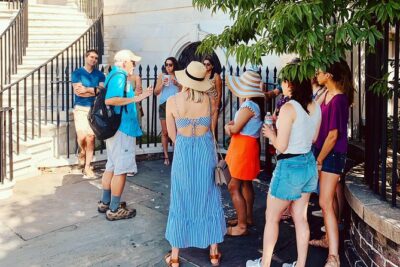
Historic Charleston Guided Sightseeing Walking Tour
Read our review →
Starship Landmark 90 Minute Sightseeing Cruise
Read our review →Browse the lists this tour appears in