
Reviewed · CITY TOURS
Soul of New Orleans City Tour: Enslavement to Modern Day Culture
New Orleans tells its story in layers. This 2-hour-45-minute tour links Treme, Congo Square, Studio BE, the Ninth Ward, and modern Black culture in one air-conditioned ride, giving you a useful city overview without the hassle of finding each place yourself. I like the honest focus on enslavement, segregation, Katrina, and community strength. I also like the personal style of guides such as Jay and Dennis, who use stories, videos, and local perspective instead of simply pointing at buildings.
The main consideration is pace. Several stops are listed at about five minutes, so you should expect a guided introduction rather than long independent visits. At $55 per person, the tour offers good value if you want context and transportation, but visitors seeking long museum visits, shopping time, or a food-focused outing may want to add those separately.
In This Review
- Five things to know before booking
- Why this tour gives New Orleans a fuller introduction
- Starting at Canal Street and settling into the ride
- Treme: music, civil rights, and a Black New Orleans
- Congo Square and the survival of African traditions
- Studio BE turns history into public art
- Civil rights stories, Leona Tate, and the McDonogh Three
- The Ninth Ward and Katrina’s lasting mark
- Local voices, food tips, and the guide experience
- Is $55 a good price for nearly three hours?
- Who will get the most from this experience?
- Should you book the Soul of New Orleans tour?
- FAQ
- Where does the Soul of New Orleans City Tour begin?
- Where does the tour end?
- How long does the experience last?
- How much does the tour cost?
- What language is the tour offered in?
- Is transportation included?
- How large is the group?
- What places are included on the route?
- Can I cancel for a refund?
Five things to know before booking
- Treme and Congo Square anchor the cultural story: These places connect African traditions, jazz, Creole culture, and the long struggle for civil rights.
- The route reaches beyond the postcard center: The experience includes attention to the Ninth Ward, Katrina, levees, and neighborhoods many short city tours skip.
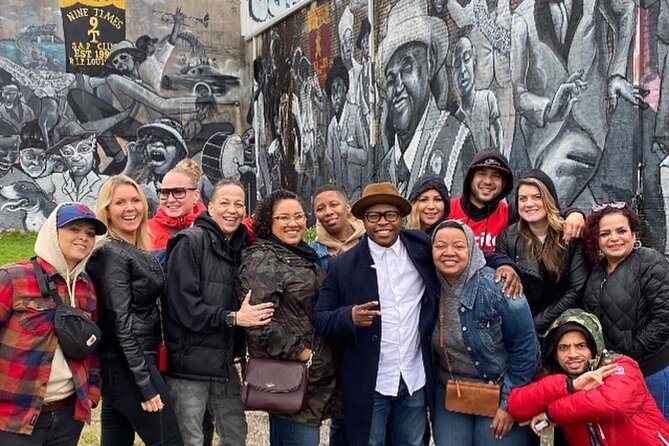
- Jay and Dennis bring different strengths: Jay is praised for humor, videos, local stories, and food tips, while Dennis is known for thoughtful historical detail and a calm approach.
- Studio BE adds a powerful visual stop: The murals help turn difficult history into something you can see and discuss.
- The small group keeps the ride manageable: A maximum of 24 people, air-conditioned transport, and a return to Canal Street make this an easy first or second-day activity.
Why this tour gives New Orleans a fuller introduction
New Orleans can be easy to reduce to jazz clubs, balconies, beignets, and the French Quarter. Those are real parts of the city, but they do not explain how New Orleans became New Orleans. This tour tries to connect the city’s African, Creole, Black American, colonial, musical, artistic, and modern civic stories.
I like that the experience begins with difficult subjects rather than avoiding them. You will hear about enslavement, segregation, poor communities, Hurricane Katrina, and the continuing work of Black New Orleanians. The tone described by the guides is not simply grim. It also points to survival, creativity, faith, music, art, and community action.
That balance matters. A history tour can become a list of dates, or it can become a parade of tragedy. Here, the emphasis is on people and culture. Jay has been praised for showing video clips during the ride, answering questions, and adding restaurant suggestions. Dennis is described as a serious student of the African American journey in New Orleans who gives the subject the care it deserves.
You should not expect a polished lecture with every minute scripted. The strongest part of the tour seems to be the guide’s ability to react to the group. That can make the experience feel personal, though the exact rhythm may vary depending on whether Jay, Dennis, or another guide leads your departure.
A few more options to weigh up in New Orleans
- New Orleans Premier Ghost, Voodoo and Vampire Walking Tour
★ 4.5 · 12,856 reviews - New Orleans Steamboat Natchez Jazz Cruise with Dinner Option
★ 4.0 · 7,533 reviews - Adults-Only New Orleans Ghost, Crime, Voodoo, and Vampire Tour
★ 5.0 · 6,545 reviews
Starting at Canal Street and settling into the ride
The tour begins at Adventures in New Orleans, 414 Canal Street, a central meeting point that is convenient if you are staying near the French Quarter or along the downtown riverfront. It finishes at the same place, so you do not need to plan a cross-town pickup after the activity.
The included air-conditioned transportation is more important than it may sound. New Orleans heat, humidity, and sudden rain can make neighborhood sightseeing tiring. Having a vehicle between stops lets you cover more ground while your guide continues the story.
The group can contain up to 24 people. That is not a private tour, but it is smaller than a large sightseeing coach experience. A group of this size gives you a fair chance to hear the guide and ask questions, though the short stops mean you should stay close and be ready when the group moves.
The tour is offered in English. Confirmation arrives when you book, and the activity is near public transportation. Service animals are allowed, and the operator says most people can participate.
Treme: music, civil rights, and a Black New Orleans
Treme is one of the most important parts of the route. The neighborhood is presented as America’s oldest Black community and as a major center of Black life, political action, and music. The stop also explores its connection to the civil rights movement and the birth of jazz.
The listed stop is brief, about five minutes, so do not picture a long neighborhood walk. You will likely get a focused explanation while passing live music venues and important streets. The value is in the guide’s framing. Instead of treating jazz as background entertainment, the tour connects it to African rhythms, local traditions, social life, and the people who built New Orleans culture.
I especially like this approach for first-time visitors. You may hear jazz everywhere in the city, but sound alone does not explain its roots. A guide can help you understand why Treme matters and why its story belongs at the center of New Orleans, not on the edge of a standard sightseeing route.
The short stop is also a limitation. If you want to wander, photograph architecture, or visit several music venues, you will need extra time on your own. Think of this portion as an introduction that helps you return later with better questions.
Congo Square and the survival of African traditions
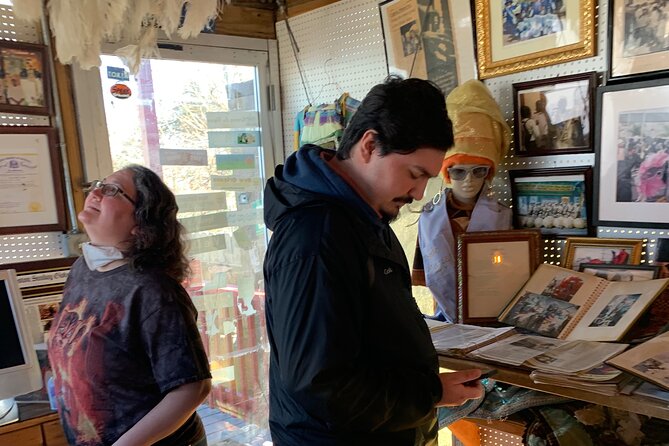
Congo Square adds another layer to the story. The guide discusses how African rhythms, Creole traditions, and other cultural influences came together here. Enslaved people gathered in the space to share music, dance, and culture, making it an important place for understanding how traditions survived under brutal conditions.
Again, the formal stop is listed at about five minutes. That may feel short for a place carrying so much meaning, but the ride commentary gives the guide room to explain the setting before and after the stop.
This is one of the tour’s most valuable connections. You are not only being shown a location. You are being asked to think about how music, movement, language, religion, and communal customs endured when enslaved people were denied basic freedom. The story helps explain why New Orleans culture cannot be separated from African influence.
For me, Congo Square is the kind of stop that rewards a guide who can explain ideas clearly. The physical site may not provide a dramatic visual spectacle at every moment. Its importance comes from what happened there and what those gatherings helped preserve.
A different kind of day out entirely:
- New Orleans Food Walking Tour of the French Quarter with Small-Group Option
★ 5.0 · 6,118 reviews - New Orleans Swamp and Bayou Boat Tour with Transportation
★ 5.0 · 5,399 reviews - New Orleans Steamboat Natchez Jazz Cruise
★ 4.5 · 5,334 reviews - New Orleans City Sightseeing Hop-On Hop-Off Bus Tour
★ 4.5 · 4,943 reviews
Studio BE turns history into public art
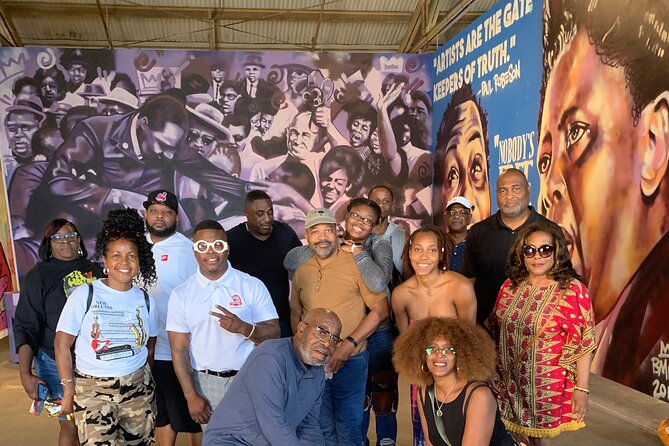
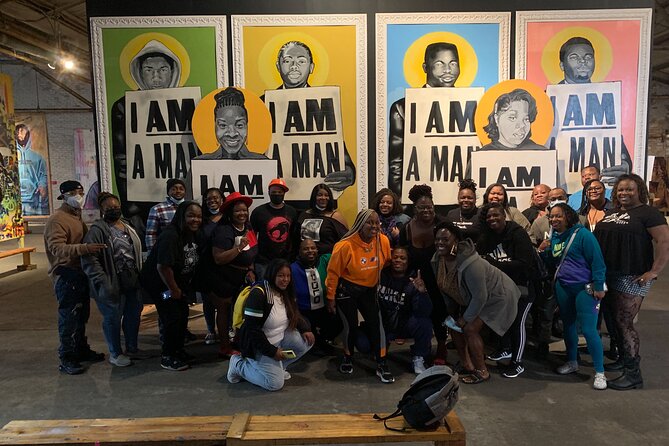
Studio BE provides a change of mood and method. Rather than learning through spoken explanation alone, you get a chance to see large New Orleans murals and public artworks. The art is repeatedly described as a highlight of the experience.
The stop is connected with Brandon Odums, whose work at Studio BE uses striking murals to address Black identity, history, community, and memory. The supplied tour details specifically promise some of New Orleans’ most beautiful murals, while the accounts of the experience emphasize how powerful the art can be.
This stop works well because it gives you something concrete to look at after several history-heavy discussions. A mural can compress a complicated story into faces, symbols, color, and scale. Your guide’s explanation helps you notice more than the surface design.
Do keep the timing in mind. The listed visit is about five minutes, so you may not have time to study every piece. If Studio BE becomes your favorite part, plan to return independently if your schedule allows. The tour gives you the introduction, but not necessarily a leisurely art visit.
Civil rights stories, Leona Tate, and the McDonogh Three
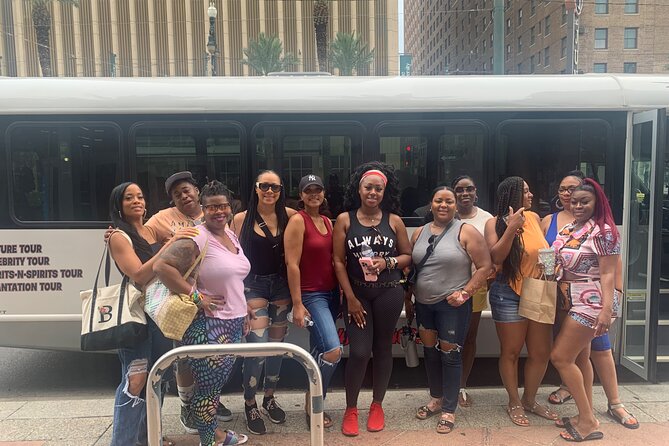
The tour’s modern history is one of its strongest features. It covers school desegregation and the bravery of children who helped change New Orleans. One especially meaningful possibility is learning about Leona Tate, who helped integrate New Orleans schools alongside Gail Etienne and Tessie Prevost.
The story is often overshadowed nationally by Ruby Bridges, but the New Orleans experience gives attention to the McDonogh Three and their role in desegregation. Some departures have included the opportunity to meet Dr. Leona Tate, a rare personal connection that can make the lesson far more immediate.
I would not treat a meeting with her as guaranteed, since the supplied information does not promise it on every departure. Still, the tour’s attention to her story is important. It broadens the familiar civil rights narrative and shows that New Orleans had its own young people facing isolation, hostility, and enormous pressure.
The guide may also point out the TEP Center, which appears to have made a strong impression on past participants. These details give the tour a human scale. You are not studying an abstract movement. You are considering actual children, schools, neighborhoods, and families.
The Ninth Ward and Katrina’s lasting mark
The route also reaches the Ninth Ward and addresses Hurricane Katrina, the broken levees, and the slow recovery of affected communities. This is where the tour shifts from older history to a crisis many people still remember personally.
A guide such as Jay may use video footage inside the vehicle to show what happened and help you compare past images with what you see today. That visual support is useful because flood damage and recovery can be difficult to understand from a passing view. The subject can also be emotional, so expect a serious section rather than a light sightseeing stop.
The tour does not present Katrina as a quick disaster story with a neat ending. The discussion includes the continuing condition of communities and the ways people endured and rebuilt. That is an important distinction. A visitor can easily see the famous parts of New Orleans without understanding how uneven the recovery has been.
If you prefer a purely cheerful city tour, this portion may feel heavy. I think that is a reason to take it, not a flaw, but you should choose the experience with the right expectations. The tour asks you to pay attention to present-day inequality and resilience, not just historic architecture.
Local voices, food tips, and the guide experience
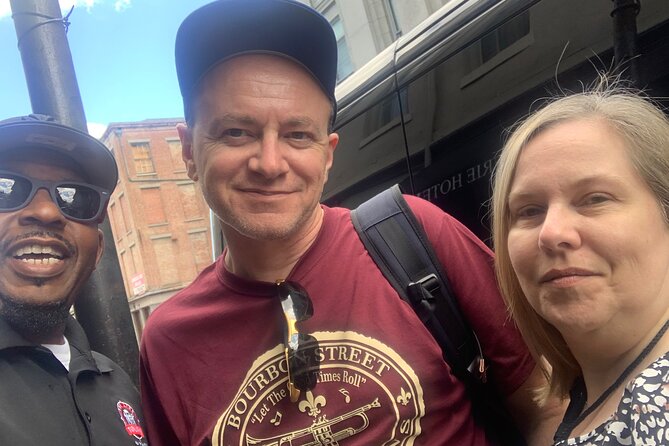
The guide can make or break a history tour, and this one receives unusually strong praise for its human approach. Jay is described as funny, polite, patient, and passionate about his city. He answers questions, uses videos, adds surprises, and shares restaurant recommendations. Several accounts describe his storytelling as the main reason the tour felt memorable.
Dennis brings a different style. He is praised for careful historical explanation, attention to the African American experience, and a willingness to pause for personal interaction. His approach appears especially suited to people who want a thoughtful account of how Black communities formed, struggled, and thrived in New Orleans.
You may also receive food, music, and neighborhood suggestions for the rest of your visit. That is a useful bonus, especially if this is your first time in the city. One fair suggestion is that the tour could include more time for a market or meal, but that would turn it into a different product. At present, the food advice is extra guidance rather than a scheduled tasting stop.
The personal nature of the tour can also lead to a warm group atmosphere. One account described the guide making the group feel like family by the end. That feeling will depend on the guide and the mix of people, but it reflects the conversational style this experience aims for.
Is $55 a good price for nearly three hours?
At $55 per person, the tour is reasonably priced for a nearly three-hour guided outing with transportation. You are paying for a broad route, air conditioning, a small-to-medium group, and a guide who supplies context that would take considerable research to assemble yourself.
The value is strongest if you want to see several parts of New Orleans in one sitting. Without transportation, reaching Treme, Congo Square, Studio BE, and the Ninth Ward would take planning, and you might miss the connections between them. The guide’s videos, local stories, and food suggestions add value beyond simple transport.
The price is less attractive if you mainly want independent time. The stops are short, and there is no stated meal, shopping period, or extended museum admission. Someone focused on galleries, restaurants, or leisurely photography may prefer separate visits.
The tour is also booked about 19 days ahead on average. That suggests you should not leave it until the final morning of a busy New Orleans trip. Booking early is sensible if you have a fixed schedule, especially since the group requires a minimum number of participants and the activity depends on good weather.
Who will get the most from this experience?
I would choose this tour early in a New Orleans visit if I wanted a strong cultural and historical foundation. It suits solo visitors, couples, families, and mixed-age groups. The experience has worked for groups ranging from a one-year-old child to a 71-year-old adult, though the serious subject matter may require some preparation with younger children.
It is particularly useful for you if:
- You want more than French Quarter architecture and nightlife.
- You care about Black history, jazz, civil rights, and local culture.
- You prefer a guide to handle navigation between neighborhoods.
- You learn well through stories, video, conversation, and visual art.
- You want practical restaurant and music suggestions after the tour.
It may not suit you if you want a quiet ride, a strictly chronological lecture, or extended time at each attraction. The experience is broad and interpretive. It gives you a framework, then leaves you to explore more on your own.
The tour requires good weather. If poor weather cancels it, you can receive another date or a full refund. You can also cancel for a full refund up to 24 hours before the start time. Inside that window, changes are not accepted and the payment is not refunded.
Should you book the Soul of New Orleans tour?
Book it if you want to understand the city through its people, not just its famous streets. The combination of Treme, Congo Square, Studio BE, civil rights stories, Leona Tate, the Ninth Ward, Katrina, and modern community life gives you a far more useful introduction than a basic loop around the French Quarter.
I would especially recommend it for a first visit, for families with older children or teenagers, and for anyone who wants a thoughtful cultural experience with local voices. Choose it early in your stay, bring curiosity, and leave room afterward to follow up on the food, music, art, and neighborhoods your guide points out.
Skip it only if you need long stops or a light entertainment tour. For everyone else, $55 buys a serious, personal, and practical look at the soul of New Orleans.
FAQ
Where does the Soul of New Orleans City Tour begin?
It begins at Adventures in New Orleans, 414 Canal Street, New Orleans, Louisiana 70130.
Where does the tour end?
The tour ends back at the meeting point on Canal Street.
How long does the experience last?
The tour lasts approximately 2 hours and 45 minutes.
How much does the tour cost?
The listed price is $55 per person.
What language is the tour offered in?
The tour is offered in English.
Is transportation included?
Yes. Air-conditioned transportation is included, so you do not need to arrange public transport between the neighborhoods.
How large is the group?
The activity has a maximum of 24 travelers.
What places are included on the route?
The listed stops are Treme, Congo Square, and Studio BE. The broader tour also covers subjects connected with the Ninth Ward, Katrina, civil rights, and modern New Orleans culture.
Can I cancel for a refund?
Yes. You can cancel at least 24 hours before the start time for a full refund. Cancellations or changes made less than 24 hours before the start time are not refunded or accepted.
Just added in New Orleans
- Whitney Plantation Tour with Transportation from New Orleans★ 4.5 · 1,351 reviews
- New Orleans Yellow Fever Ghost Tour★ 5.0 · 1,298 reviews
- VIP Jazz Dinner Cruise with Private Tour and Open Bar Option★ 4.5 · 838 reviews
- New Orleans Delicious Donuts & Beignets: A Sweet Walking Tour★ 5.0 · 928 reviews
- New Orleans Private Carriage Tour of the French Quarter★ 5.0 · 537 reviews
- New Orleans French Quarter Photo Shoot★ 5.0 · 462 reviews
- The Ghosts of New Orleans Tour★ 4.5 · 702 reviews
- The Escape Game at the French Quarter in New Orleans★ 5.0 · 364 reviews
City Tours, compared.


Boston Duck Boat Sightseeing City Tour with Cruise Along Charles River
Read our review →

New Orleans City Sightseeing Hop-On Hop-Off Bus Tour
Read our review →
Pearl Harbor, USS Arizona Memorial & Honolulu City Tour
Read our review →Browse the lists this tour appears in