
Reviewed · WALKING TOURS
Artistic, Alternative Greenwich Village Walking Tour
The Village has always had a story to tell. This two-hour walk brings you past brownstones, old bars, music clubs, LGBTQ+ landmarks, and famous film and television locations while your local guide fills in the human details. I like the focus on artists and outsiders, and I like that the tour finishes in Washington Square Park rather than at a generic crossroads.
The $39 price is fair for a small-group introduction to one of New York’s most layered neighborhoods. Guides such as Angela Sharp, Steve, Rob, and Dave have earned praise for lively storytelling and personal connections to the area. The main caution is timing: you will walk 2 to 3 miles, and one delayed start left a group waiting in freezing weather, so leave some space in your schedule.
In This Review
- Six things to know before you book
- Why Greenwich Village rewards a guided walk
- Starting at Sixth Avenue and Waverly Place
- Brownstones, bars, and the Village’s literary past
- Bob Dylan, Jimi Hendrix, and the small-club tradition
- LGBTQ+ history and the Village’s social changes
- Television landmarks, including the Friends apartment
- Washington Square Park and the final 15 minutes
- What the $39 price really buys
- Walking, weather, and practical comfort
- Who will enjoy this Village walk most
- Should you book the Artistic, Alternative Greenwich Village Walking Tour?
- FAQ
- Is the Artistic, Alternative Greenwich Village Walking Tour wheelchair accessible?
- How much walking is involved?
- Where does the tour start?
- Where does the tour end?
- What time does the tour begin?
- What happens if it rains?
Six things to know before you book
- The stories go beyond famous names: Edgar Allan Poe, Bob Dylan, Jimi Hendrix, Dylan Thomas, John Reed, and Upton Sinclair all appear in the neighborhood’s tale.
- The route links culture with change: You hear about bohemian life, the Beat movement, gay rights activism, music clubs, restaurants, and gentrification.
- Washington Square Park is the finale: The walk ends near the park and continues for about 15 minutes with attention to its past as a cemetery site.
- Guides make a major difference: Angela brings energy and personalized recommendations, while Steve offers a longtime resident’s view of how the Village has changed.
- The group is capped at 20: That is small enough for questions, though it is not a private walk.
- Plan for all weather: The tour runs in rain or shine, with comfortable shoes essential.
Why Greenwich Village rewards a guided walk
Greenwich Village is easy to stroll through and surprisingly hard to understand on your own. The streets bend away from Manhattan’s usual grid, and an ordinary-looking doorway may connect to a musician, writer, protest, club, or television show.
That is where this tour earns its keep. You are not simply pointed toward pretty buildings. The guide explains how the neighborhood became a home for people who wanted to work, live, and think outside the city’s usual rules.
The tour covers more than 200 years, but the focus is not a dry march through dates. The useful thread is change. You hear how writers and radicals helped shape the Village, how musicians found small stages here, how gay rights movements gained strength, and how rising costs and new development altered the local character.
I especially like that the walk includes both celebrated figures and uncomfortable subjects. The Village is not presented as a frozen bohemian postcard. You get stories of creativity, nightlife, protest, loss, and the pressure placed on longtime residents by gentrification.
More Walking Tours in New York City
- SoHo, Little Italy, and Chinatown Walking Tour in New York
★ 5.0 · 3,153 reviews - Secrets of Grand Central Station Walking Tour New York City
★ 5.0 · 1,796 reviews - Greenwich Village Walking and Food Tasting Tour
★ 5.0 · 1,572 reviews
Starting at Sixth Avenue and Waverly Place
The meeting point is 375A 6th Avenue, near Waverly Place, with a 1:30 pm start. Arrive early enough to find the exact meeting spot without rushing. Sixth Avenue is a busy street, and the nearby Village streets can feel confusing if you are trying to locate a guide while watching traffic and checking your phone.
The mobile ticket makes the booking side simple. Confirmation arrives at booking, and the tour is offered in English. Public transportation is nearby, which matters in New York, where reaching a neighborhood can take longer than the map suggests.
The guide begins by helping you get oriented. You can expect an introduction to Greenwich Village as a place shaped by artists, musicians, bohemians, activists, and people seeking a less conventional life. The brownstones and storefronts provide the setting, but the stories give the streets their meaning.
This opening is also a good moment to tell the guide what interests you. Angela Sharp has been praised for asking about the group’s interests and then adjusting the stories to match. If you care most about music, architecture, LGBTQ+ history, television, food, or local change, say so at the start.
Brownstones, bars, and the Village’s literary past
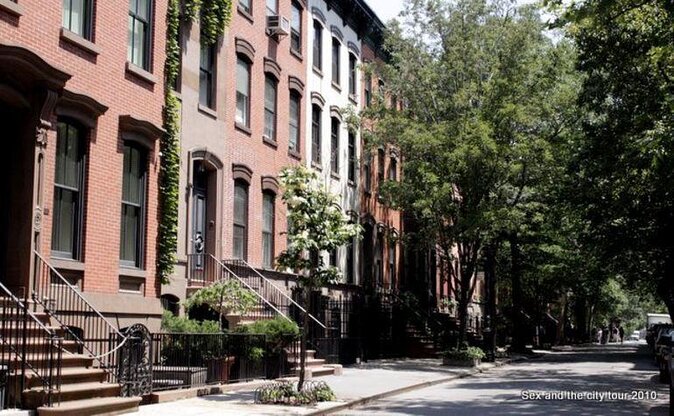
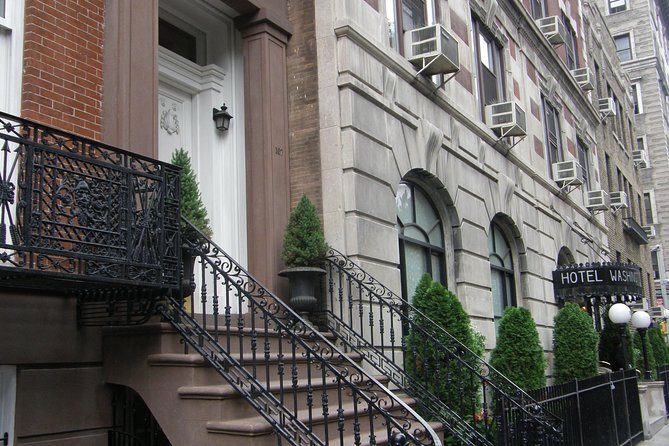
The early portion of the walk takes you through streets lined with old brownstones, bars, restaurants, and buildings that look residential rather than monumental. This is one of the tour’s strengths. You are seeing the neighborhood as a place where people lived and worked, not as a collection of isolated attractions.
Edgar Allan Poe’s connection to Greenwich Village gives the literary side of the walk a recognizable entry point. The guide also discusses Dylan Thomas, whose drinking and death are part of the Village’s darker lore. These stories help explain the old image of the neighborhood as a place where artistic freedom and self-destruction could sit uncomfortably close together.
The tour also brings in John Reed and Upton Sinclair, radical thinkers linked with counterculture movements. That matters because it broadens the picture. Greenwich Village was not only a backdrop for famous songs or a hangout for writers. It was also a place where political ideas gained an audience.
You should expect to stop on public streets while the guide speaks, rather than enter a long list of private buildings. The appeal is in connecting visible architecture with events and personalities. If you want museum interiors or formal exhibits, this is not that kind of outing. If you want context for what you are walking past, it is much more useful.
Bob Dylan, Jimi Hendrix, and the small-club tradition
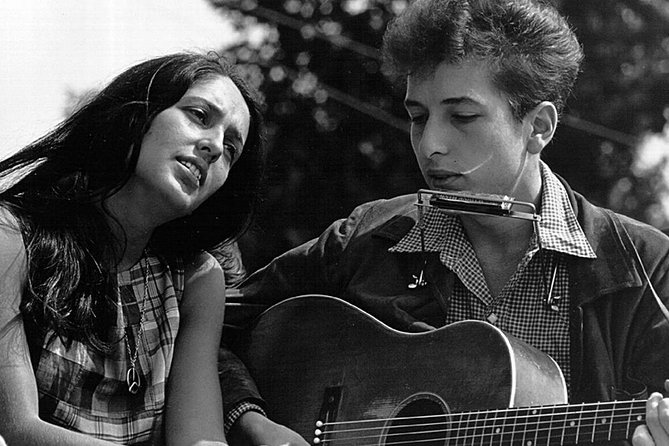
Music is one of the tour’s main draws. Bob Dylan and Jimi Hendrix are tied to the Village’s small clubs, where performers could test new material before reaching larger audiences. The guide places those careers within the neighborhood’s wider musical culture.
That setting is worth understanding. The Village’s importance was not just that famous musicians lived or played here. Small venues created room for experimentation, argument, collaboration, and the slow development of a sound. A narrow club can matter more to an artist than a grand theater because it allows direct contact with an audience.
The route also refers to the Beat movement and the bohemian culture that helped make the area famous. If you enjoy music history, this part should be one of the tour’s strongest stretches. You get a sense of how the Village served as a meeting place for people who did not fit neatly into the city’s mainstream.
Guides bring different strengths. Steve, a longtime local who has lived in Greenwich Village for about 50 years, adds a personal view of change over time. Rob is described as a warm storyteller who sometimes uses a binder with photographs to support his explanations. Dave has also been praised for connecting the places on the route with clear stories and for paying attention to the group’s needs.
You should not expect a full music tour with performances or club admissions. The value comes from the stories and locations. For a deeper music itinerary, you could use the walk as an introduction, then return to the neighborhood on your own.
A different kind of day out entirely:
- NYC: SUMMIT One Vanderbilt Tickets
★ 4.7 · 51,195 reviews - NYC: 9/11 Memorial & Museum Timed-Entry Ticket
★ 4.8 · 31,428 reviews - NYC: Empire State Building Tickets – Observatory & Museum
★ 4.7 · 25,757 reviews - NYC: Empire State Building Observation Deck Tickets
★ 4.7 · 22,072 reviews
LGBTQ+ history and the Village’s social changes
The tour gives serious attention to the gay rights movements that developed in and around Greenwich Village. This is an important part of the route, not a quick aside added for atmosphere.
As you pass local landmarks, the guide explains how the neighborhood became connected with organizing, protest, community, and demands for equal rights. The subject gives the walk moral weight, especially because the Village’s present-day image can make its earlier struggles easy to forget.
The best guides handle this material with care. Angela has been praised for bringing historical figures and events to life with feeling, while Steve has discussed gentrification and its effect on local people. That combination helps you see both the courage of earlier movements and the challenges facing the neighborhood now.
I appreciate that the tour does not treat social history as separate from the buildings and nightlife. Bars, streets, homes, and public gathering places all played a part. You come away with a better sense of how a neighborhood can serve as a refuge, a meeting place, and a stage for public change.
This part may be especially meaningful if you are visiting during Pride month, though the history matters at any time of year. The walk is presented as accessible to most people, and one account specifically noted an easy pace, shade, and suitability for older adults.
Television landmarks, including the Friends apartment
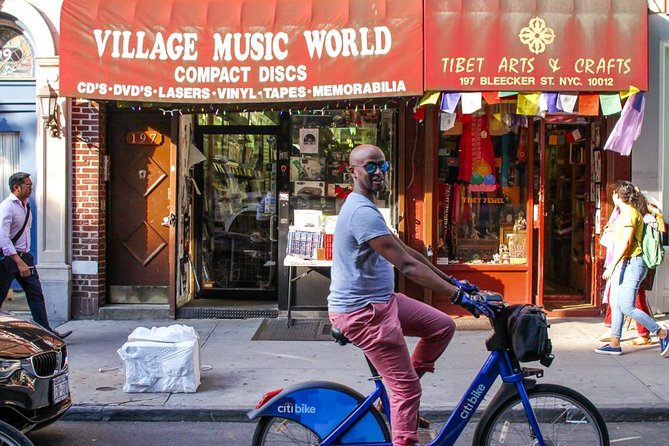
Popular culture gives the tour an easy entry point. You see famous television locations, including the apartment associated with Friends. These stops will please fans, but they are not the whole point of the walk.
The contrast is useful. You may recognize a building from television, then hear about the writers, musicians, activists, and longtime residents connected with the same area. Greenwich Village can be both a screen setting and a real neighborhood with ordinary residents trying to manage daily life.
That mix makes the tour a good choice for first-time visitors who want more than the major Midtown sights. It also works for people who already know New York. Several local participants found that the guide pointed out things they had never noticed, even after years of visiting or living in the city.
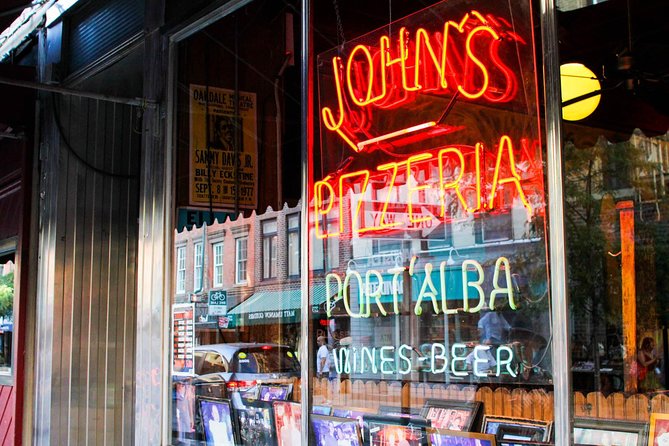
Food recommendations add another practical layer. Angela has been praised for sharing suggestions for bars, restaurants, stores, and events, then sending written recommendations afterward. Those tips can turn the walk into a useful starting point for the rest of your afternoon.
Washington Square Park and the final 15 minutes
The main Greenwich Village walk leads toward Washington Square Park, one of New York’s most recognizable public spaces. The park offers a natural pause after the tighter streets and story-filled stops.
The audio portion lasts about 15 minutes and explains that the park was built atop a forgotten cemetery. That detail changes how you see the lawns, paths, and public gatherings. It is a reminder that New York’s open spaces often have older and more complicated pasts beneath them.
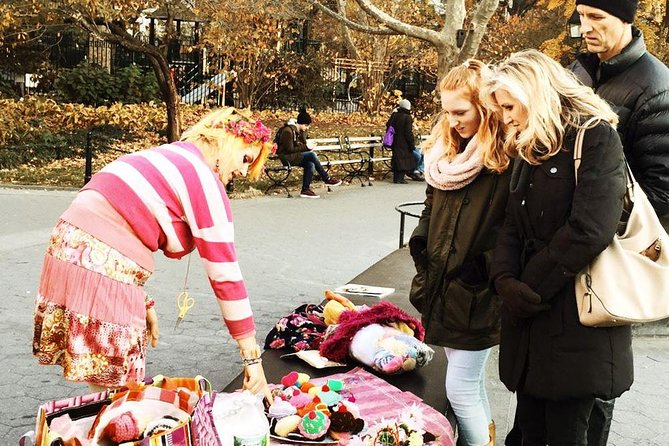
Washington Square is also a place where the Village’s present-day character comes together. You might find musicians, performers, chess players, students, families, and people simply resting in the city. One guide, Rob, has even introduced groups to Johnny Chess, a well-known local figure in the park.
The tour ends at Village Cigars, at 110 7th Avenue South, near Christopher Street and 7th Avenue. This is a useful finishing point because you are still in the Village, with restaurants, bars, shops, and public transportation nearby. You are not deposited far from the places the guide has just recommended.
The park section is brief, so do not treat it as a full Washington Square tour. If you want time for photos, people-watching, or another look at the park, plan to stay after the official end.
What the $39 price really buys
At $39 per person, this is not a bargain-basement stroll, but it is a reasonable New York price for a two-hour guided walk. You are paying for a local storyteller who can connect scattered names, buildings, movements, and neighborhood changes in a way a guidebook cannot easily do.
The value is strongest if you are new to Greenwich Village or want a stronger framework before exploring on your own. It is also good for people who enjoy history but do not want a formal lecture. Guides have been praised for humor, energy, personal memories, and useful recommendations.
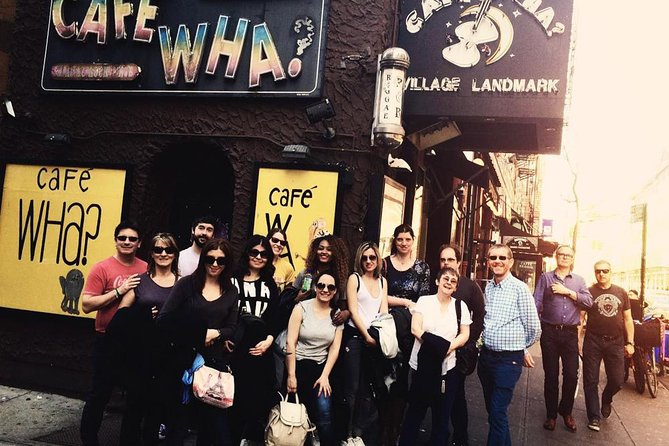
The group can include up to 20 people. That is small enough for a more personal feel than a large bus tour, but you should not expect every question to receive a long answer. The final experience may depend on the guide assigned that day. Angela, Steve, Rob, and Dave have each been singled out for different strengths, including warmth, local experience, humor, photographs, and attention to individual needs.
The main value is not admission to an attraction. The stops are free, and you remain outdoors. You are buying interpretation, direction, and a better understanding of what you see.
Walking, weather, and practical comfort
Plan on 2 to 3 miles at a moderate pace. Wear shoes you would happily use for several hours on pavement, and bring water in warm weather.
The tour runs in all weather. A light rain will not automatically stop it, so check the forecast and dress accordingly. In rare cases of extreme weather, the operator says it may offer a new date or a full refund.
Wheelchairs and strollers are accepted, and service animals are allowed. The route is described as accessible, but a moderate amount of walking remains part of the experience. If you need frequent sitting breaks, tell the guide early. Angela has been praised for helping with breaks and adapting to group needs.
Because the start time is fixed at 1:30 pm, avoid booking a tight connection immediately afterward. One delayed start involved a 20-minute wait, including time spent in cold conditions. The operator said it had sent a message about the delay, but the incident shows why a little scheduling room is wise.
Free cancellation is available up to 24 hours before the start time. Inside that window, refunds and changes are not accepted.
Who will enjoy this Village walk most
I would recommend this tour to you if you want:
- A first look at Greenwich Village before exploring it alone
- Music stories involving Dylan, Hendrix, and the club scene
- LGBTQ+ history presented as part of the neighborhood’s full story
- Local views on gentrification and changing community life
- Television locations mixed with architecture, food, and literature
- A moderate outdoor activity rather than a museum visit
It suits couples, families, solo visitors, friends, older adults who can manage the walking, and even New Yorkers looking for a fresh view of a familiar area. A parent and teenager could both find useful entry points, since pop culture and music sit alongside serious history.
I would think twice if you dislike walking, need guaranteed on-time departures, or want to enter many buildings. The tour is also less suitable if you already know Greenwich Village extremely well and prefer to wander without a guide, though local guides such as Steve have surprised even longtime New Yorkers with lesser-known stories.
Should you book the Artistic, Alternative Greenwich Village Walking Tour?
Yes, if you want to understand why Greenwich Village became associated with writers, musicians, activists, outsiders, and social change. The route is manageable, the price is fair, and the strongest guides turn ordinary streets into places worth noticing.
Book it early if your dates are fixed, since it is often reserved about 16 days ahead. Choose a day when you can continue exploring afterward, especially around Washington Square, Christopher Street, and the West Village.
I would not book it for the name recognition alone. The Friends apartment and famous musicians are pleasant hooks, but the real reward is the connection between past and present. Allow extra time in case of a delay, wear good shoes, and arrive ready to listen. That is when this walk earns its $39.
FAQ
Is the Artistic, Alternative Greenwich Village Walking Tour wheelchair accessible?
Yes. The tour is accessible for wheelchairs and strollers. A moderate amount of walking is still involved.
How much walking is involved?
You will walk about 2 to 3 miles at a moderate pace during the two-hour experience.
Where does the tour start?
The meeting point is 375A 6th Avenue, near Waverly Place, in New York City.
Where does the tour end?
The tour ends at Village Cigars, 110 7th Avenue South, near the intersection of Christopher Street and 7th Avenue.
What time does the tour begin?
The scheduled start time is 1:30 pm.
What happens if it rains?
The tour operates in all weather, so dress for the forecast. In rare cases of extreme weather, you may be offered a new date or a full refund.
Just added in New York City
- All Inclusive Airport Arrival Transfer to NYC/ Brooklyn/Queens★ 4.0 · 849 reviews
- All Inclusive Airport Departure Transfer NYC/ Brooklyn/Queens★ 4.0 · 342 reviews
- The Escape Game Brooklyn: Epic 60-Minute Adventures in City Point★ 5.0 · 332 reviews
- Brooklyn Food Walking Tour: Local Eats & Family‑Run Shops★ 5.0 · 592 reviews
- Brooklyn Bridge & DUMBO Food Tour: Local Eats & Landmarks★ 5.0 · 478 reviews
- Harlem: Central Harlem Sunday Gospel with Locals★ 3.9 · 499 reviews
- West Harlem: Gospel Church Service and Sunday Walking Tour★ 4.3 · 411 reviews
- Manhattan: Statue and Skyline Cruise Aboard a Luxury Yacht★ 4.8 · 540 reviews
Walking Tours, compared.
History and Hauntings of Salem Guided Walking Tour
Read our review →
New Orleans Premier Ghost, Voodoo and Vampire Walking Tour
Read our review →
Freedom Trail History Small Group Walking Tour
Read our review →
Historic Charleston Guided Sightseeing Walking Tour
Read our review →
New Orleans Food Walking Tour of the French Quarter with Small-Group Option
Read our review →
Cambridge: Harvard University Student-Guided Walking Tour
Read our review →Browse the lists this tour appears in