
Reviewed · WALKING TOURS
Boston Freedom Trail Walking Tour with Costumed Guide
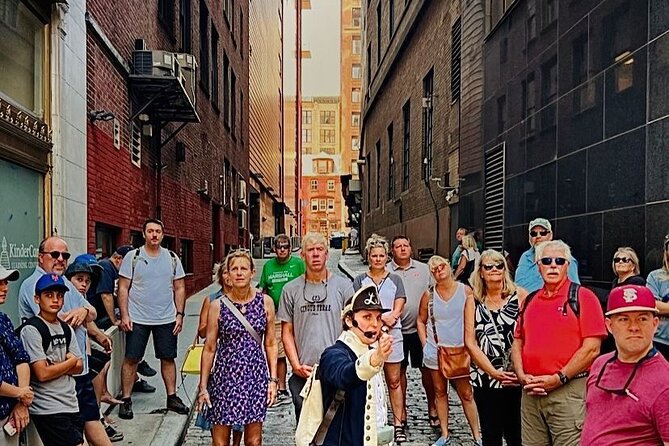
History comes alive on Boston’s brick sidewalks. This 1.2-mile Freedom Trail walk links the State House, Granary Burying Ground, Old State House, and other key sites in about 1 hour 45 minutes. A guide in period clothing adds humor, character, and stories that are easy to miss when you follow the red line alone.
I like the compact route, which packs several major Boston sights into a manageable walk and finishes near the North End’s restaurants. I also like the theatrical guides. Names such as Katherine, Neil McGarry, David Stokle, Ben, and Elaina, who appeared in roles including Mother Goose, have earned praise for making colonial history lively for both adults and children. The main drawback is group size. With as many as 50 people, it can be hard to hear unless you stay close to the guide.
The tour costs $26 per person, a fair price if you want a narrated introduction rather than a self-guided stroll. Just know that you will mostly view buildings from outside, the guide’s style can lean toward comedy, and the walk may run longer than advertised.
In This Review
- Key points to know before you book
- Why this short Freedom Trail route works
- Massachusetts State House and Park Street Church
- Granary Burying Ground: the tour’s strongest stop
- Boston Latin School and the city’s literary past
- Old South Meeting House and the Boston Tea Party
- Old State House and the Boston Massacre
- Samuel Adams, Faneuil Hall, and the statue with a flaw
- Paul Revere House and Paul Revere Mall
- Guide style, group size, and the right place to stand
- Is $26 a good value?
- Who should book this walk?
- Should you book the Boston Freedom Trail walk?
- FAQ
- How long is the Boston Freedom Trail walking tour?
- How far do you walk?
- What sites are included?
- Is the tour led by a costumed guide?
- Are building admission fees included?
- Where does the tour start and finish?
- Is the tour suitable for families?
- Does the tour operate in bad weather?
- Can I cancel for a refund?
Key points to know before you book

- The route covers Boston’s most concentrated historic stretch: You see the State House, Park Street Church, Granary Burying Ground, Old South Meeting House, Old State House, Paul Revere House, and Paul Revere Mall.
- The costumed presentation is the main attraction: Guides use period characters, jokes, and dramatic storytelling instead of giving a plain lecture.
- The Granary Burying Ground gets a large share of the tour: It is one of the most meaningful stops, but long commentary there can squeeze time at later sites.
- The tour is easy to fit into a Boston day: Several departure times are offered, and the starting area is close to public transportation.
- Large groups require a listening strategy: Stay near the front, especially at crowded sidewalks and noisy intersections.
- The endpoint needs careful checking: Details identify Paul Revere Mall as the end, while the meeting information also lists it as a starting point and mentions two departure options.
Why this short Freedom Trail route works
Boston’s full Freedom Trail stretches farther than this tour. This experience chooses a shorter section through the oldest central part of the city, from the Boston Common area toward Faneuil Hall and the North End. That makes it a sensible choice if you want the major Revolutionary-era sights without committing to a longer cross-city walk.
I like this approach for a first visit. You get a clear framework for Boston’s role in the American Revolution, then you can return to the places that interest you most. The route is not strenuous for most people, though you should expect steady walking, street crossings, uneven pavement, and time spent standing.
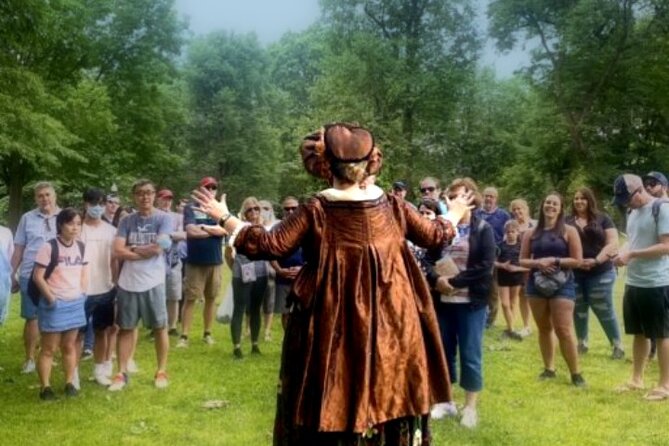
The guide is the difference between this and simply tracing the red-brick trail. You hear why a site matters, who was involved, and how one event led to another. The best guides also connect the past to the buildings and streets around you, so the city feels less like a collection of plaques.
The theatrical element will not suit everyone. Some guides focus more on humor and memorable characters than on precise period detail. If you want dates, political background, and a careful account of every Revolutionary event, a more academic tour may suit you better. If you want history delivered with jokes and a bit of acting, this format has real appeal.
More Walking Tours in Boston
- Boston: Freedom Trail History Small Group Walking Tour
★ 5.0 · 6,450 reviews - Cambridge: Harvard University Student-Guided Walking Tour
★ 4.6 · 3,931 reviews - Harvard University Campus Guided Walking Tour
★ 4.5 · 3,632 reviews
Massachusetts State House and Park Street Church
The tour begins near the Massachusetts State House, with its familiar gold dome. Built in 1798, the building gives the guide an easy opening to discuss colonial government, the American Revolution, and the changing role of Massachusetts in the new United States.
You see the State House from outside, and admission is free. Ten minutes is enough to get the main story and take photographs, but not enough for an interior visit. If touring the State House matters to you, plan a separate visit.
Park Street Church comes next. The church is an important stop on the Freedom Trail, and it also carries a musical footnote: My Country ’Tis of Thee was performed there for the first time on Independence Day in 1831.
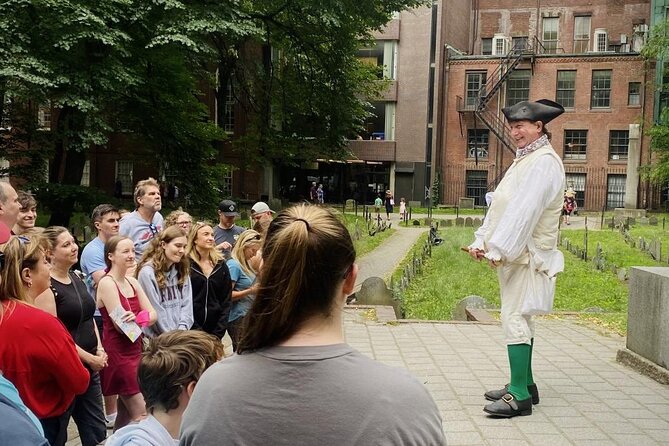
The guide speaks near the front steps, so you do not need to enter. This is a good example of the tour’s rhythm: short walks between landmarks, then a focused story at each stop. Stay near the guide because city noise and passing foot traffic can make a large group difficult to follow.
Granary Burying Ground: the tour’s strongest stop
Granary Burying Ground is likely to be the most memorable part of the walk. Its old stones mark the resting places of Samuel Adams, John Hancock, Paul Revere, James Otis, victims of the Boston Massacre, and three signers of the Declaration of Independence.
The cemetery receives a substantial portion of the tour. That makes sense. It is a rare place where so many major names from the Revolution are gathered in one small space, and the guide can turn a list of graves into stories about Boston society, politics, protest, and war.
I appreciate the chance to slow down here. You can look at the worn stones, listen to the account of colonial Boston, and take photographs without rushing from one doorway to another. For many people, this is the point where the tour’s history becomes personal.
The tradeoff is time management. One guide may spend so long at Granary Burying Ground that later stops receive less attention. A few participants have found that the walk ran beyond two hours, while a later landmark near the North End received less time than expected. If you would rather see more sites than hear a long account of one cemetery, pay attention to the schedule.
Boston Latin School and the city’s literary past
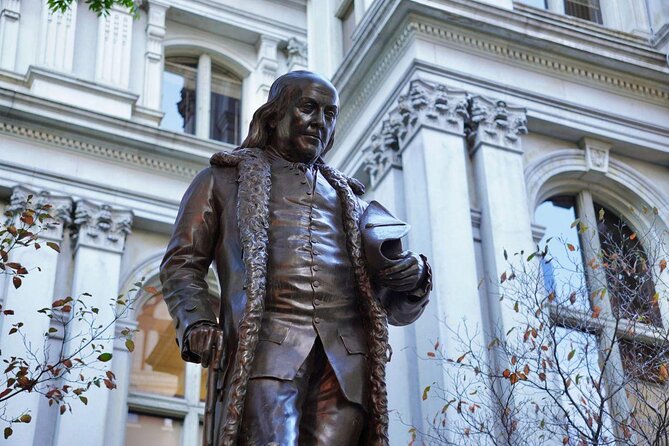
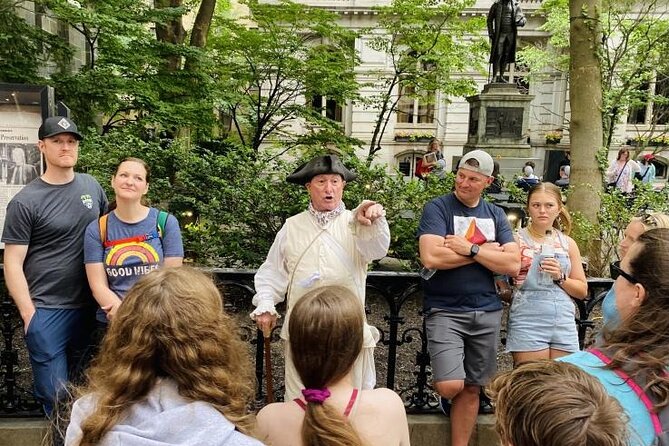
The next stop is the site of Boston Latin School, described as America’s first public school. The guide connects the location with famous colonial pupils such as Benjamin Franklin and Samuel Adams, and points out the Benjamin Franklin statue.
This is a quick stop, about ten minutes. You will not tour the school as part of the walk, but the site helps explain how education and public life developed in early Boston. The Franklin statue also gives you a straightforward photo opportunity.
The route also passes Boston’s oldest commercial building. Its publishing history adds a literary layer to the Revolutionary story. Works associated with Nathaniel Hawthorne, Henry David Thoreau, and Henry Wadsworth Longfellow were published there, including The Scarlet Letter, Walden, and Midnight Ride of Paul Revere.
That connection may surprise you. The Freedom Trail is not only about battles and political speeches. It also passes through the city that shaped American writing and public debate. The guide’s commentary is especially useful here because the building’s significance is easy to overlook when walking alone.
A different kind of day out entirely:
- Boston Duck Boat Sightseeing City Tour with Cruise Along Charles River
★ 4.5 · 9,378 reviews - Boston Hop-On Hop-Off Trolley Tour with 13 Stops
★ 4.5 · 5,576 reviews - Boston: City Cruises Whale Watching Cruise
★ 4.5 · 4,710 reviews - Boston Duck Tour: The Original and World-Famous
★ 4.6 · 3,935 reviews
Old South Meeting House and the Boston Tea Party
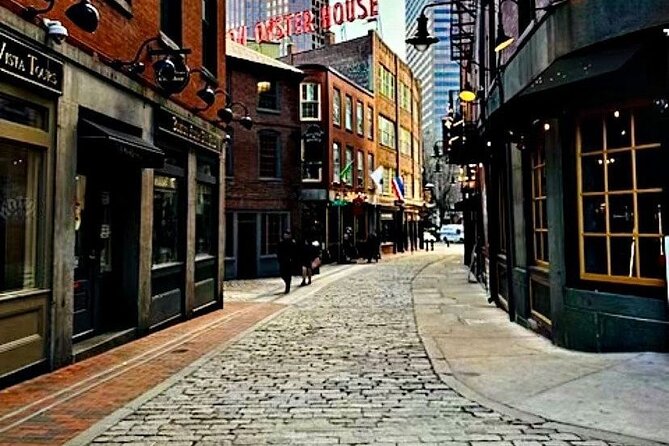
Outside Old South Meeting House, you hear about the Boston Tea Party. This is one of the tour’s clearest links between a physical place and a famous act of protest. The meeting house served as a gathering place, and the guide explains how the crowd and political tension built before the tea was thrown into Boston Harbor.
You also hear about the Paul Revere Bell. The stop lasts around ten minutes and stays outside, so you should not expect an interior museum visit or a detailed examination of the building’s collections.
The value here is context. The Boston Tea Party is often reduced to a dramatic classroom story, but standing at the meeting house helps you picture the public meeting and the arguments that came before the action. A good guide adds enough detail to make the event understandable without turning the stop into a long lecture.
Old State House and the Boston Massacre

At the Old State House, the guide tells the story of the Boston Massacre. The building is one of the most important points on this part of the trail because it connects colonial government, public protest, and the legal arguments that followed the shooting.
The stop lasts about 15 minutes. You stand outside and hear the account rather than entering the building. That is a limitation if you want museum displays, interior architecture, or a quieter look at the site.
Still, this is where the tour’s storytelling can work very well. The Boston Massacre was used by Patriot leaders to build opposition to British rule, and the guide can show how public memory and political messaging shaped the road toward independence. You get more than a name on a map.
Samuel Adams, Faneuil Hall, and the statue with a flaw
Near the statue of Samuel Adams, the guide talks about Faneuil Hall and the man himself. You also hear about the statue’s historical inaccuracy, an amusing detail that gives the stop a memorable edge.
This is a useful place to understand Faneuil Hall as both a historic meeting place and a practical end point for a day in central Boston. The surrounding area offers food and further sightseeing, so you can continue exploring after the tour.
The statue stop is listed at about 15 minutes, though there is no included admission. The tour’s price covers the walk and commentary, not entry to paid buildings. That matters if you want to go inside Faneuil Hall, Old South Meeting House, or other attractions afterward.
Paul Revere House and Paul Revere Mall
The guide then explains the Paul Revere House from outside. The stop is short, about five minutes, so you get the story and the setting without an interior tour.
The route finishes at Paul Revere Mall, an outdoor space in Boston’s North End. The mall is a pleasant place to end because you are close to more Freedom Trail sights and the North End’s many places to eat. The Old North Church is also nearby, but do not assume it is part of the guided walk. One account of the timing noted that the group did not reach it as planned, so check the exact route on your date.
There is some confusing information about meeting points. The tour description presents a route from Boston Common toward Faneuil Hall and the North End, while the meeting details list Paul Revere Mall as both start and end and mention two possible departure locations at checkout. Read your confirmation carefully and arrive at the stated meeting point, not simply the nearest trail marker.
Guide style, group size, and the right place to stand
The guides are the strongest part of the experience. Katherine has been praised for mixing comedy with clear history, even in cold and windy November weather. Neil McGarry is known for theatrical delivery and strong command of Boston’s past, while David Stokle has a gift for keeping children involved.
Other guides use period names and roles. Ben, Jeremiah Poope, John Hancock, Mother Goose, and Benjamin Edes are examples of the character-based approach. This can make a two-hour walk feel quick, especially for families with older children and adults who enjoy a little performance.
The tone varies by guide. Some put factual detail first, while others focus on the key stories people are most likely to remember. That is good for a relaxed introduction, but it may disappoint serious history students who want fuller political and military context.
Groups can reach 50 people, though one well-received outing had about 30. In a crowd that size, your position matters. Stay close to the guide, move promptly between stops, and ask questions when the group gathers rather than trying to hear from the back.
The walk is suitable for most people and has been manageable for seniors, a parent with a stroller, and a baby. You should still wear comfortable shoes. The route operates in all weather conditions, and Boston’s shade, wind, and open streets can make a mild day feel cold. Dress in layers and bring weather protection.
Is $26 a good value?
At $26, I consider this a good buy for a first look at Boston’s central historic district. You are paying for a guide who handles the route, chooses the key stories, and adds historical characters and humor. That saves you from stopping at every sign and trying to build the story yourself.
The value is strongest if you are new to Boston, traveling with relatives, or want a short orientation before visiting museums and historic interiors. The value is weaker if you prefer to move at your own pace, dislike group walks, or plan to read the trail markers carefully on your own.
Remember that admission to attractions is not included. You see several major buildings from the outside, but entering them may cost extra and require separate planning. Think of this as a guided introduction, not a complete ticketed tour of Boston’s historic buildings.
The advertised duration is about 1 hour 45 minutes. In practice, a lively guide may run to two hours or more, especially if the group asks questions or the guide gives the cemetery extra time. Leave some space in your schedule rather than booking a tight lunch reservation or timed admission immediately afterward.
Who should book this walk?
I would recommend it to first-time Boston visitors who want the main Freedom Trail stories without a long, demanding route. It is also a good match for families with school-age children if the children enjoy costumes, jokes, and short bursts of history.
Seniors can find the pace comfortable, and the route is not described as strenuous. Still, you will be outside in all weather, and the walk includes standing and street crossings. A stroller has been used successfully, but the group setting may require patience.
History buffs should book with the right expectations. You will see important sites and hear engaging accounts, but the presentation may favor drama and memorable facts over a full scholarly explanation. If that sounds like a fair trade, the cost is modest for the access and structure.
You may want another plan if you need a small, quiet group or guaranteed time inside the buildings. The maximum group size is 50, and at least one family left early because the child was bored and the guide was difficult to hear from the back.
Should you book the Boston Freedom Trail walk?
Book this tour if you want a lively overview of Boston’s Revolution-era core, especially with a guide who uses costumes and humor. The Granary Burying Ground, Old State House, Old South Meeting House, and Paul Revere sites create a strong sequence, and the North End ending lets you continue sightseeing or find a meal.
Skip it if you want a self-paced walk, detailed academic history, or guaranteed interior access. If you book, choose a departure time that leaves room for an overrun, confirm the exact meeting point, dress for wind and rain, and stand near the front. At $26, it is a sensible introduction to Boston, provided you enjoy your history with a little stagecraft.
FAQ
How long is the Boston Freedom Trail walking tour?
The scheduled duration is approximately 1 hour 45 minutes. It may run longer, with some tours lasting more than two hours.
How far do you walk?
The route covers about 1.2 miles, following a section of the Freedom Trail from the Boston Common area toward the North End.
What sites are included?
You see the Massachusetts State House, Park Street Church, Granary Burying Ground, Boston Latin School, Boston’s oldest commercial building, Old South Meeting House, Old State House, the Samuel Adams statue, Paul Revere House from outside, and Paul Revere Mall.
Is the tour led by a costumed guide?
Yes. The guide wears period clothing and may present a historical character or use a period name during the walk.
Are building admission fees included?
No. The walking tour includes the guided experience and outside views of the listed landmarks. Admission to sites such as the Paul Revere House is not included.
Where does the tour start and finish?
The provided details identify Paul Revere Mall in Boston’s North End as the meeting and ending location, while also mentioning two possible departure locations at checkout. Check your booking confirmation for the exact start point.
Is the tour suitable for families?
Most travelers can participate, and children have enjoyed guides who use humor and theatrical storytelling. A child who does not enjoy American history may find the tour boring, and large groups can make it harder to hear.
Does the tour operate in bad weather?
The tour operates in all weather conditions, so you should dress appropriately. If the operator cancels because of poor weather, you will be offered another date or a full refund.
Can I cancel for a refund?
You can cancel at least 24 hours before the start time for a full refund. Cancellations or changes made less than 24 hours before the start time are not refunded or accepted.
Just added in Boston
- View Boston Observation Deck Admission Tickets★ 4.5 · 314 reviews
- Delicious Donuts of Boston: A Sweet History Walking Tour★ 5.0 · 1,038 reviews
- Boston’s Freedom Trail: A Revolutionary Walking Tour★ 5.0 · 1,343 reviews
- Freedom Trail Walking Tour 250★ 4.5 · 1,118 reviews
- Sunset Sailing Cruise on a Tall Ship in Boston Harbor★ 4.5 · 414 reviews
- Narrated Sunset Cruise of Boston Harbor★ 4.0 · 532 reviews
- City Cruises Salem High Speed Ferry to/from Boston★ 4.5 · 727 reviews
- Boston’s North End Food and History Walking Tour★ 5.0 · 459 reviews
Walking Tours, compared.

History and Hauntings of Salem Guided Walking Tour
Read our review →
New Orleans Premier Ghost, Voodoo and Vampire Walking Tour
Read our review →

Freedom Trail History Small Group Walking Tour
Read our review →
Historic Charleston Guided Sightseeing Walking Tour
Read our review →
New Orleans Food Walking Tour of the French Quarter with Small-Group Option
Read our review →
Cambridge: Harvard University Student-Guided Walking Tour
Read our review →Browse the lists this tour appears in