
Reviewed · CHARLESTON TOURS
Charleston in a Nutshell Private Tours
Charleston rewards a good first look. Charleston in a Nutshell gives you a private, two-hour ride through the historic city, with local guide Jeff Zimmerman at the wheel and commentary on architecture, churches, military history, and daily life. I especially like the hotel pickup and drop-off, plus the chance to see a lot without tiring yourself out in Charleston’s heat.
I also like the private format. You can ask questions, pause for a better view, and shape the conversation around your interests. The main consideration is time: two hours goes quickly, and this is an orientation tour rather than a full visit inside Charleston’s sights.
In This Review
- Key points to know before booking
- A fast, comfortable way to get your bearings
- Waterfront Park and the harbor views
- Dock Street Theatre and Charleston’s performing arts past
- A slow look at the Citadel
- Rainbow Row and Charleston’s pastel facade
- The Battery and White Point Gardens
- The Four Corners of Law
- Colonial Lake and the city’s open spaces
- The White House connection
- What makes Jeff Zimmerman an effective guide
- Comfort, timing, and who gets the most value
- Pickup limits and cancellation terms
- Should you book Charleston in a Nutshell?
- FAQ
- How long is Charleston in a Nutshell Private Tours?
- Is hotel pickup included?
- Is this a private tour?
- What language is the tour offered in?
- Does the tour include transportation?
- Which major sights are included?
- Can I cancel for a full refund?
Key points to know before booking
- Jeff Zimmerman leads the tour: His local connection, clear explanations, and strong command of Charleston’s past receive repeated praise.
- Downtown pickup and drop-off are included: This saves you the trouble of finding parking before your tour begins.
- You see the city from an air-conditioned vehicle: A major advantage during Charleston’s hot and humid months.
- The route covers major landmarks: Expect the harbor, Rainbow Row, the Battery, historic churches, civic buildings, the Citadel, and more.
- It is a true private experience: Only your party participates, so questions and timing can be more personal.
- The tour works best early in your visit: Use it to understand the city’s layout, then return to the places that catch your eye.
A fast, comfortable way to get your bearings
Charleston is compact on a map, but its stories are spread across the peninsula. A short walk can take you from grand antebellum houses to churches, former markets, military grounds, and waterfront defenses. That makes a car tour useful at the start of a visit.
I like the way this experience covers ground while still allowing time to look around. The vehicle lets you reach areas that would take much longer on foot, and you are not spending your first afternoon searching for streets or trying to read a map in the sun.
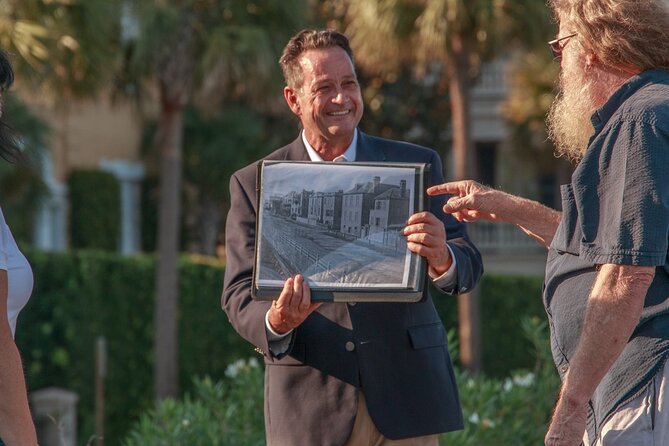
The private setup matters, too. If you want more architecture, military history, churches, or Civil War-era context, you can ask. Jeff has also used old photographs to show how parts of Charleston looked in earlier periods, which can make the preserved buildings easier to understand.
This is not a hop-on, hop-off service. You should think of it as a guided introduction, with short stops and slow drives past places of interest. You may get out at selected locations, but the two-hour schedule does not allow a long visit at every stop.
A few more options to weigh up in Charleston
- Charleston’s Old South Carriage Historic Horse & Carriage Tour
★ 5.0 · 10,023 reviews - Historic Charleston Guided Sightseeing Walking Tour
★ 5.0 · 6,216 reviews - Haunted Evening Horse and Carriage Tour of Charleston
★ 4.5 · 3,678 reviews
Waterfront Park and the harbor views
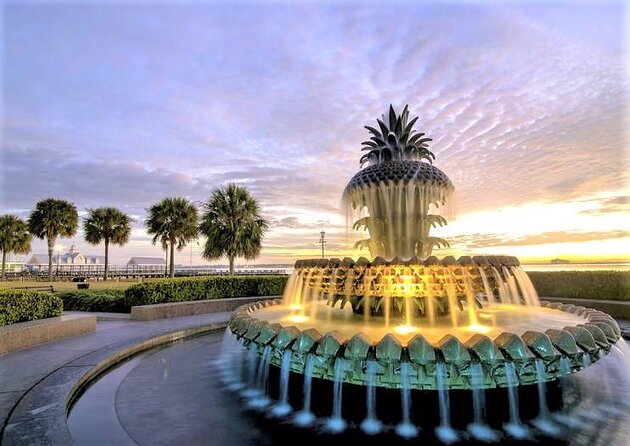
Waterfront Park is one of the best places to begin because it gives you a broad look at Charleston’s setting. From here, you can see the Ravenel Bridge, the U.S.S. Yorktown at Patriots Point, and Fort Sumter across the harbor.
The view helps place the city in context. Charleston is not simply a collection of old streets. Its port, rivers, forts, bridges, and shoreline shaped its economy and its defenses. A guide can connect the view in front of you to the city’s past instead of leaving you with a pretty photograph and no explanation.
You should also expect a practical advantage here: a waterfront stop gives you a break from the vehicle and a chance to take pictures. Since the schedule is short, ask your guide how much time is available before you step away from the car.
Dock Street Theatre and Charleston’s performing arts past
The Dock Street Theatre dates to 1736 and is identified as the first building in America built exclusively for theatrical performances. The stop is listed for about 15 minutes, with no admission charge included because the tour does not require an entry ticket.
The building adds another side of Charleston to the usual story of mansions and war. It points to the city’s early cultural life and to the importance of public performances in the colonial period.
I would treat this as an exterior and historical stop unless your guide tells you otherwise. The tour is built around seeing the city from the road and making selected stops, not attending a performance or taking a full theater tour.
A slow look at the Citadel
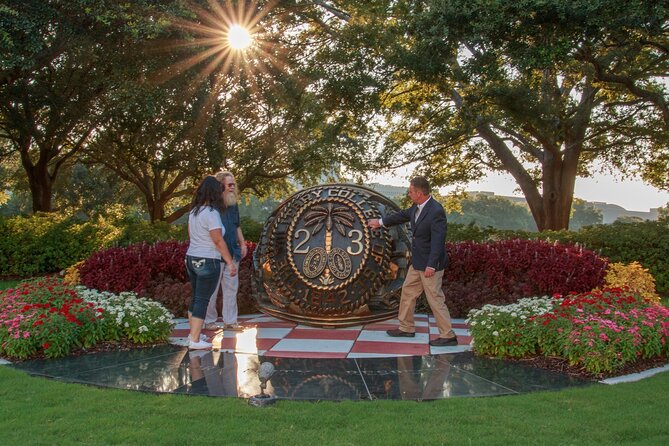
The Citadel was founded in 1842 and is one of six senior military colleges in the United States. Its South Carolina Corps of Cadets includes more than 2,300 cadets, and the college occupies 300 acres along the Ashley River.
The route includes a drive through or slow drive around the Citadel, giving you a look at a part of Charleston that many short downtown walks miss. The setting broadens the tour beyond the historic core and shows how the city’s identity includes military education as well as colonial buildings.
This part is especially useful if you have an interest in military institutions or South Carolina history. It is also one reason a car is handy. Reaching the Citadel from the waterfront and returning to downtown would take time on foot, while the tour folds it into the larger city circuit.
Do not expect a full campus visit or a cadet-led program. The value here is the explanation and the visual introduction from the vehicle.
A different kind of day out entirely:
- Charleston Horse-Drawn Carriage Tour: Explore Historic Charleston
★ 5.0 · 3,561 reviews - Fort Sumter Admission and Self-Guided Tour with Roundtrip Ferry
★ 4.5 · 3,343 reviews - Charleston: Fort Sumter Entry Ticket with Roundtrip Ferry
★ 4.7 · 2,879 reviews - Ghosts of Charleston Night-Time Walking Tour with Unitarian Church Graveyard
★ 4.5 · 2,835 reviews
Rainbow Row and Charleston’s pastel facade
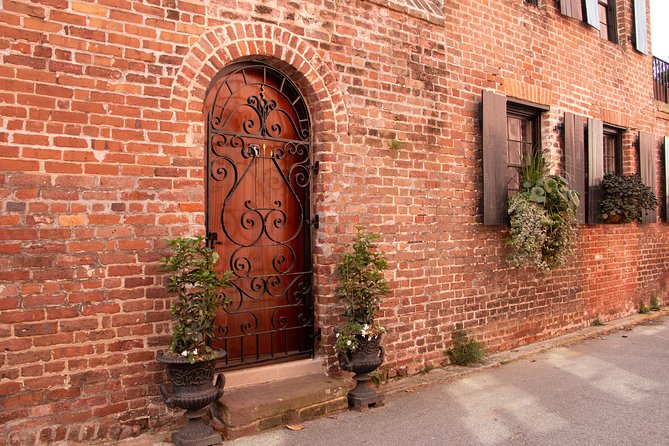
Rainbow Row is the longest continuous cluster of intact Georgian row houses in the United States. Its pastel facades make it one of the most photographed parts of Charleston.
This is an easy place to understand the appeal of the city. The colors are cheerful, the buildings are tightly grouped, and the row creates a memorable picture of historic Charleston. It is also a good example of how preservation and appearance work together in the old district.
The drawback is that a photograph does not tell you much by itself. The guide’s explanation is what gives the stop value, especially if you want to know why the houses look different from the grander free-standing homes elsewhere on the peninsula.
The Battery and White Point Gardens
At the southern tip of the peninsula, the Battery and White Point Gardens offer views toward Fort Sumter and Charleston Harbor. The park is lined by some of the city’s most impressive Southern mansions, making it one of the strongest combinations of scenery, architecture, and history on the route.
The setting is often described locally as the point where the Ashley and Cooper rivers come together and form the Atlantic Ocean. The wording is colorful, though geographically the meeting of the rivers and the open ocean is more complex. Still, the phrase captures how Charlestonians understand this end of the city.
A stop here is useful for pictures and for seeing the relationship between the homes, the park, and the water. You are scheduled for about 10 minutes, so this is a quick look rather than time to wander every path.
I would pay close attention to the mansions and the harbor defenses. The Battery is one of those places where a good guide can turn a pleasant drive into a lesson about Charleston’s wealth, waterfront position, and military concerns.
The Four Corners of Law

The tour passes St. Michael’s Church, built around 1761 and regarded as the oldest church in downtown Charleston. Its churchyard is the resting place of John Rutledge and Charles Cotesworth Pinckney, both signers of the United States Constitution.
St. Michael’s is part of Charleston’s Four Corners of Law, a civic arrangement that places religious, judicial, and municipal authority close together. The church represents ecclesiastical law.
Nearby, the former First Bank of the United States was built between 1801 and 1804 on the site of a colonial marketplace. Its Adamesque design later served as City Hall, and it now represents municipal law within the Four Corners grouping.
This is a strong section of the tour for anyone interested in architecture or American government. You see how Charleston’s founders planned civic space, then watch the buildings change roles over time.
As with the other landmarks, do not assume that the tour includes interior admission. The focus is on the exterior, the stories tied to the buildings, and the way they fit into the city plan.
Colonial Lake and the city’s open spaces
Colonial Lake is a 60-acre park and the largest park on the peninsula. It was once the site of the Washington Race Course. Today, old Live Oaks and Southern Magnolia trees surround its gardens.
This stop gives the tour a change of pace. After churches, banks, row houses, and harbor views, you see a greener part of the peninsula and gain a better sense of how Charleston residents use open space.
The trees are also a reminder that the city is not only stone, brick, and painted wood. The mature plantings help explain the shaded, garden-like character of many Charleston streets. You may not spend long here, but the drive adds variety to the route.
The White House connection
Another distinctive sight is the neoclassical building designed by Irish architect James Hoban. It is likely a model for Hoban’s more famous building, the United States White House. Both buildings are modeled after Leinster House in Dublin, now the seat of the Irish Parliament.
That connection gives you a useful architectural comparison. Instead of viewing the building as an isolated Charleston landmark, you can place it in a wider line of neoclassical design that runs from Ireland to the American capital.
This is the sort of detail that makes a short city tour worthwhile. You get a fact that is easy to remember, then you can return later if the building interests you.
What makes Jeff Zimmerman an effective guide
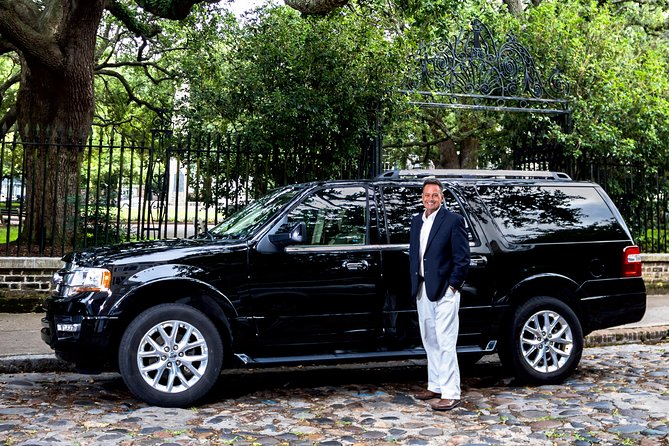
The strongest feature of this tour is Jeff Zimmerman’s approach. He is described as a local who knows Charleston’s streets, buildings, and past well, and his explanations cover everything from the first settlers to the Revolutionary War, the Civil War, and the city today.
His speaking style also matters. Clear delivery is a practical advantage when you are listening from a vehicle and looking out the window at the same time. He has been praised for answering questions, adapting the conversation, and pointing out places beyond the standard stops.
I especially like the reports of him pausing at the curb so people can see a building or take a picture instead of simply rushing past it. That small habit makes a city drive feel less like a checklist.
The tour has earned a 4.9 rating from 375 reviews, with 98 percent of participants recommending it. That is a strong record, though you should also note an important service concern: two very poor reports describe pickup problems in late 2024 and spring 2025. In one case, the operator said attempts to reach the customer had failed and offered a refund. In another, the guide was reportedly unable to work because of a prior stroke.
Because the tour depends on one local guide and one vehicle, confirm your pickup details and keep the provided phone number handy. That is not a reason to dismiss the experience, but it is a sensible precaution for any small private operation.
Comfort, timing, and who gets the most value
The vehicle is described as a comfortable, air-conditioned SUV. That is a real benefit in Charleston, where heat and humidity can make a two-hour walking route tiring. Cold water has also been provided on some outings.
I would choose this tour for your first day or first full morning in the city. It shows you how the peninsula is arranged and helps you mark places to revisit. One visitor wished for an extra 30 minutes, which makes sense: the route covers a lot, and the time passes quickly.
The tour suits:
- First-time visitors who want a broad introduction
- Couples, families, and solo visitors who prefer a private vehicle
- People who find long walks difficult
- Anyone visiting during hot weather
- Repeat visitors who want fresh context or lesser-seen areas
- Cruise passengers seeking a short introduction to Charleston
It may not suit you if you want long interior visits, a hands-on activity, or a slow walk through each historic district. You will see more of Charleston than you could comfortably cover on foot in two hours, but you will not study every building in detail.
Pickup limits and cancellation terms
Complimentary pickup and drop-off are offered at downtown Charleston locations. Pickup is not offered at Charleston International Airport, North Charleston, Summerville, Folly Beach, Isle of Palms, Sullivan’s Island, Daniel Island, John’s Island, Goose Creek, or Kiawah Island.
The experience is offered in English, uses a mobile ticket, allows service animals, and is near public transportation. Most people can participate, and only your own group joins the tour.
You can cancel at least 24 hours before the start time for a full refund. Changes or cancellations made less than 24 hours before departure are not accepted for a refund. Since the tour requires good weather, a weather cancellation brings the choice of another date or a full refund.
No tour price is provided here, so I cannot judge the exact dollar amount. In general, the value is strongest when you compare it with the cost of parking, transportation, and the time needed to cover the same ground independently. For a private group, the per-person value improves as more people share the vehicle.
Should you book Charleston in a Nutshell?
I would book this tour if you want a high-value first look at Charleston, especially in hot weather or at the beginning of a short stay. The private vehicle, downtown pickup, broad route, and personal attention from Jeff Zimmerman make it an efficient way to understand the city before choosing where to spend more time.
I would skip it only if your main goal is entering historic buildings or spending an hour at each landmark. For everyone else, this is a practical introduction with plenty of local detail. Confirm the pickup point carefully, keep your phone available, and use the tour as a map for the rest of your Charleston visit.
FAQ
How long is Charleston in a Nutshell Private Tours?
The tour lasts approximately two hours.
Is hotel pickup included?
Complimentary pickup and drop-off are offered at downtown Charleston locations. Pickup is not offered at Charleston International Airport or several locations outside downtown, including North Charleston, Folly Beach, Isle of Palms, Sullivan’s Island, and Kiawah Island.
Is this a private tour?
Yes. Only your group participates in the activity.
What language is the tour offered in?
The tour is offered in English.
Does the tour include transportation?
Yes. Transportation, including downtown pickup and drop-off, is included.
Which major sights are included?
The route includes Waterfront Park, Dock Street Theatre, the Citadel, Rainbow Row, the Battery and White Point Gardens, St. Michael’s Church, the former First Bank of the United States and City Hall, Colonial Lake, and a neoclassical building connected to architect James Hoban.
Can I cancel for a full refund?
You can cancel at least 24 hours before the start time for a full refund. If poor weather forces the operator to cancel, you are offered another date or a full refund.
Just added in Charleston
- Middleton Place Admission with Self Guided Tour and Lunch★ 4.5 · 326 reviews
- Charleston Ghosts of Liberty Guided Walking Tour★ 4.5 · 473 reviews
- 2-Hour Guided Kayak Eco Tour in Charleston★ 5.0 · 954 reviews
- Charleston’s Best Highlights: History, Culture & Architecture★ 5.0 · 422 reviews
- Undiscovered Charleston: Half Day Food, Wine & History Tour with Cooking Class★ 5.0 · 948 reviews
- Afternoon Schooner Sightseeing Dolphin Cruise on Charleston Harbor★ 4.5 · 620 reviews
- Savor the Flavors of Charleston Walking Food Tour★ 4.5 · 881 reviews
- Real Hauntings of Charleston! (Small Group Ghost Tour)★ 5.0 · 724 reviews
Charleston Tours, compared.

Charleston’s Old South Carriage Historic Horse & Carriage Tour
Read our review →
Historic Charleston Guided Sightseeing Walking Tour
Read our review →
Haunted Evening Horse and Carriage Tour of Charleston
Read our review →
Charleston Horse-Drawn Carriage Tour: Explore Historic Charleston
Read our review →
Fort Sumter Admission and Self-Guided Tour with Roundtrip Ferry
Read our review →
Fort Sumter Entry Ticket with Roundtrip Ferry
Read our review →
Ghosts of Charleston Night-Time Walking Tour with Unitarian Church Graveyard
Read our review →
Charleston Harbor History Day-Time or Sunset Boat Cruise
Read our review →Browse the lists this tour appears in