
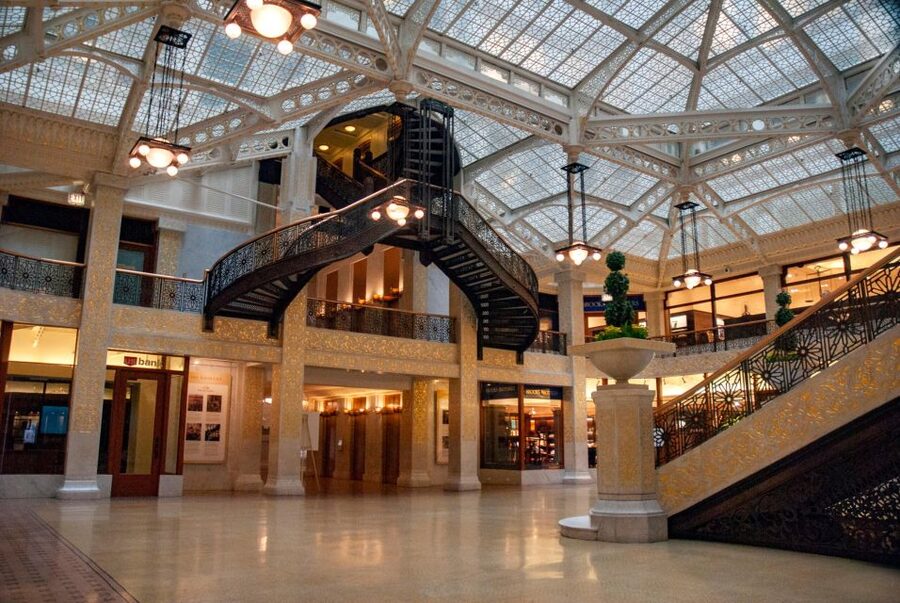
Reviewed · WALKING TOURS
Chicago: Secret Interiors Architecture Walking Tour
Look up, then step inside. Chicago’s Loop is packed with grand entrances, domes, mosaics, and design details that are easy to miss from the sidewalk, and this two-hour walk gives you a reason to enter. I like the focus on lesser-known interiors and the way the guides connect decoration with practical problems such as light, structure, and crowded city blocks. I also like the route’s mix of famous names and surprising spaces.
The main drawback is that this is still a walking tour, and much of it happens outdoors. One January participant estimated that about 90 percent of the time was outside, while another found the pace brisk and noticed several stairs. Plan carefully for cold weather, busy sidewalks, and the possibility that building access may change.
The tour costs $35 per person and begins inside Union Station. You meet under the Clinton Street sign in the Great Hall, then walk through the Loop toward South LaSalle Street and several important buildings, ending at the former Marshall Field and Company Building. English commentary, a live guide, and free cancellation up to 24 hours ahead are included.
In This Review
- What makes this Chicago architecture walk worth your time
- Starting beneath Union Station’s Great Hall
- Walking through the Loop and South LaSalle Street
- The Rookery Building and the logic of a grand entrance
- The Field Building and Chicago’s commercial ambition
- Marquette Building mosaics and fine craftsmanship
- Palmer House and the theater of hotel design
- Chicago Cultural Center and the tour’s grandest interiors
- Marshall Field and Company Building, where the walk ends
- How the guides shape the experience
- Pace, weather, stairs, and accessibility
- Is $35 a fair price?
- Who should book this Loop walking tour?
- FAQ
- How much does the Chicago Secret Interiors Architecture Walking Tour cost?
- How long does the tour last?
- Where does the tour begin?
- Where does the tour end?
- Which buildings are included?
- Is the Rookery Building open every day?
- Is the tour conducted in English?
- Is the tour wheelchair accessible?
- What should I bring?
- Can I cancel for a refund?
- Should you book it?
What makes this Chicago architecture walk worth your time
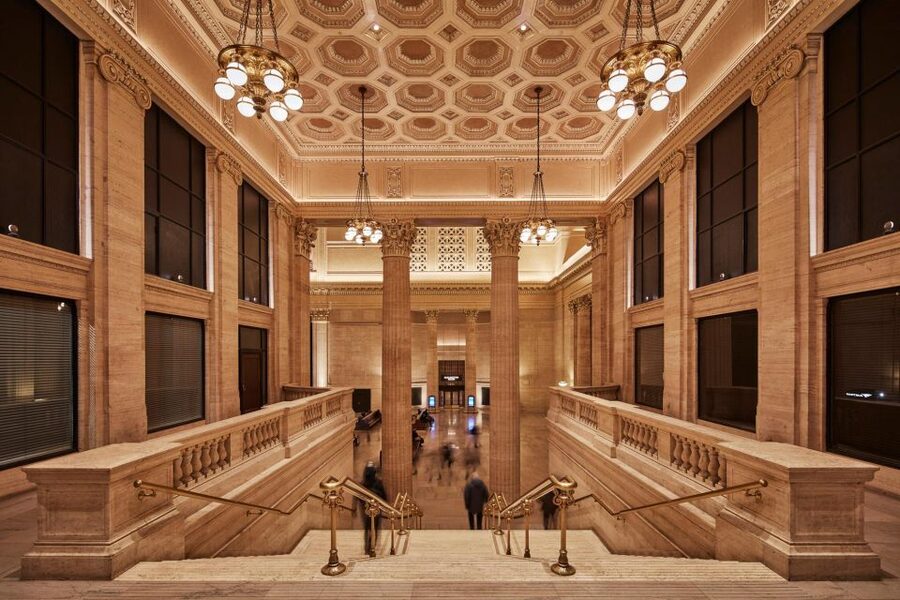
- Grand interiors you might otherwise walk past: The route takes you into buildings such as the Rookery, Marquette Building, Palmer House, and Chicago Cultural Center.
- Architecture explained in plain English: Guides discuss how architects handled lighting, structural strength, decoration, and the rise of early skyscrapers.
- A strong guide roster: Grant, Talia, Annie, Angel, Matthew, Avery, and others have been praised for clear storytelling, humor, warmth, and detailed knowledge of Chicago.
- A route through the historic Loop: Union Station, LaSalle Street, and the old department-store district give the tour a useful sense of place.
- Good value for a short city activity: Two hours and $35 is a fair price if you want both sightseeing and context, not just photographs.
- Weather matters: Bring comfortable shoes and dress for the forecast, since the tour spends substantial time outside.
Starting beneath Union Station’s Great Hall
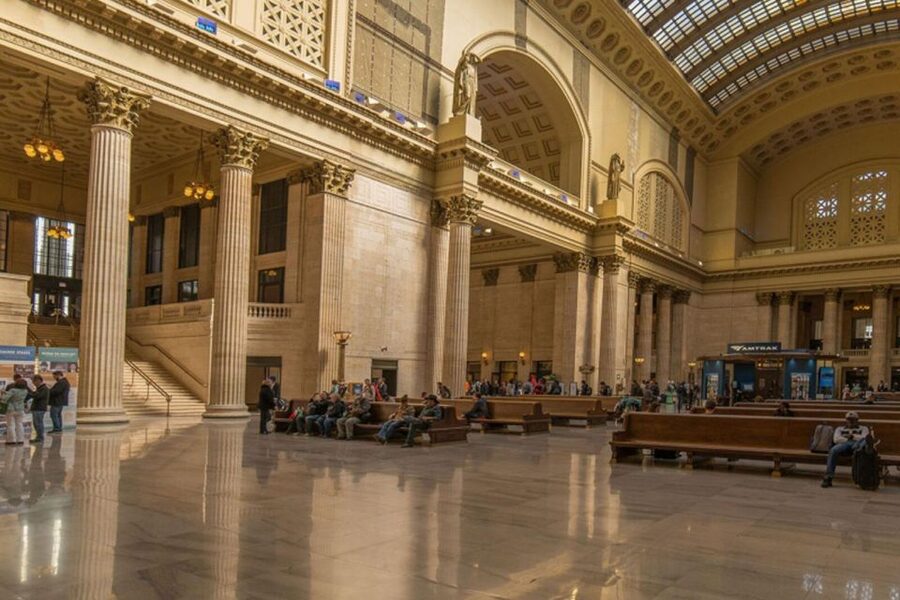
Union Station is more than a meeting point. It gives the tour an appropriate opening, since the Great Hall itself introduces you to Chicago’s taste for scale, order, and ornament. Meet your guide beneath the Clinton Street sign inside the Great Hall, not outside on the pavement.
This location is handy if you arrive by train, and it gives you shelter while you get organized. Arrive with comfortable shoes and a coat suited to the season. The tour lasts about two hours, but the route covers a large part of the Loop at a purposeful walking pace.
The strongest guides make the walk feel like a conversation rather than a lecture. Grant has been singled out for his clear delivery and background as a high school history teacher. Talia is often praised for her humor, patience, and care with group comfort. Annie has a friendly style and has offered useful food and drink suggestions around the route. Angel is especially good at linking design with the city’s past.
Those details matter because architecture tours can become a list of dates and names. Here, the best guides help you notice why a doorway, ceiling, window, or mosaic was made the way it was. They also welcome questions, which is useful when a decorative feature catches your eye.
More Walking Tours in Chicago
- Chicago: Gangsters and Ghosts Walking Tour
★ 5.0 · 7,155 reviews - Chicago Favorites Ultimate Food and Walking Tour
★ 5.0 · 1,962 reviews - Chicago: Gangsters and Ghosts Guided Walking Tour
★ 4.7 · 1,697 reviews
Walking through the Loop and South LaSalle Street
The early part of the tour sets Chicago’s buildings in a wider frame. You move from Union Station through the Loop, with South LaSalle Street serving as one of the key outdoor sections.
This is where the city’s architecture begins to feel like a conversation between eras. Older commercial buildings, early skyscrapers, later modernist work, and monumental civic design all appear within a compact area. Your guide explains how Chicago helped shape new ideas about tall buildings and urban space.
LaSalle Street is also a good place for exterior photographs. Look up before entering the next building, since the upper floors often carry a building’s strongest visual statement. The tour is not only about interiors, despite its title. Several participants appreciated the outside architecture as much as the decorated rooms.
The drawback is that sidewalks and street crossings can slow the group or make it harder to hear. The guide may need to gather everyone tightly before explaining a detail. If you have trouble walking quickly, tell the guide at the start so expectations are clear.
The Rookery Building and the logic of a grand entrance
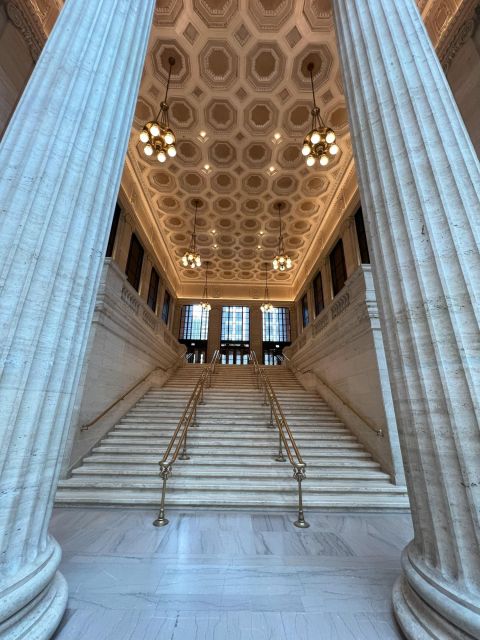
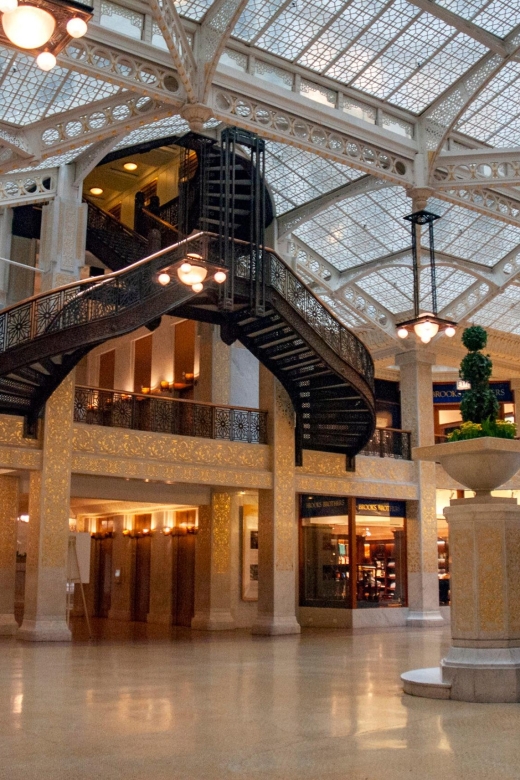
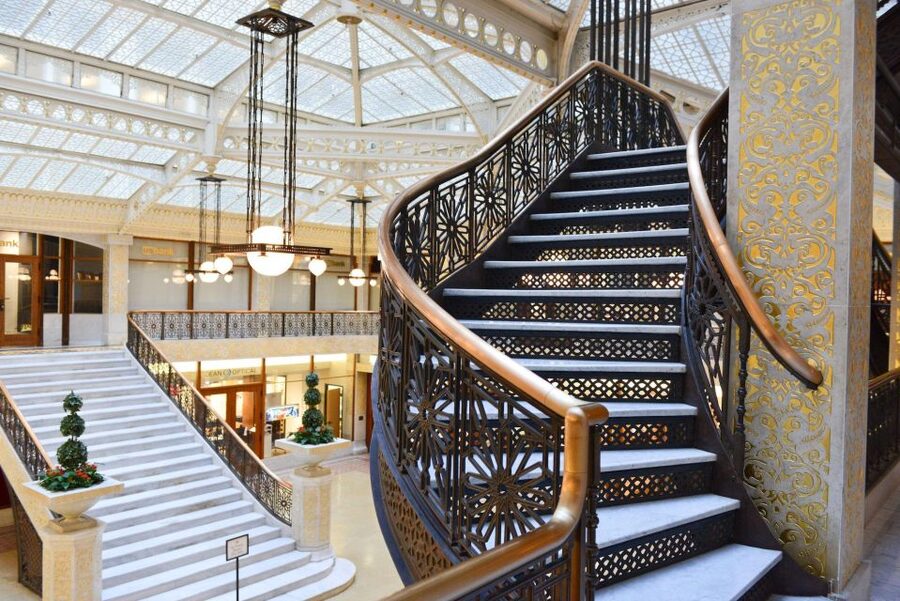
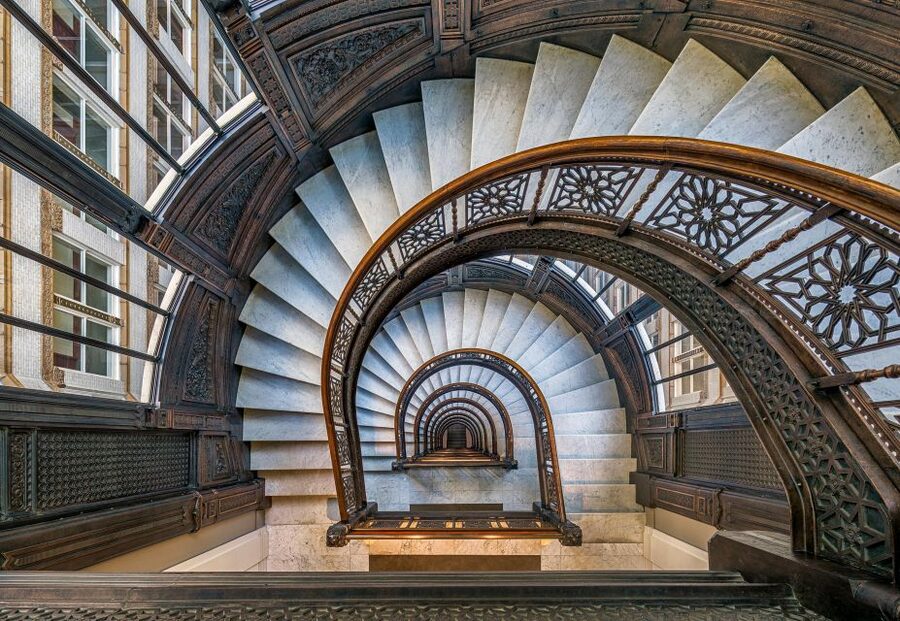
The Rookery is one of the major interior highlights. Its reputation comes from the contrast between its serious exterior and the elaborate spaces inside, where light, ornament, and structure work together.
You are shown how designers dealt with the problem of bringing daylight into a deep urban building. That practical concern is central to the tour. These interiors were not decorated simply to look expensive. Their design also had to make large commercial buildings feel usable, impressive, and modern.
The Rookery helps explain the change from low-rise city blocks to the early skyscraper age. Chicago’s architects were working with new structural ideas while still borrowing visual language from older traditions. The result is a building where engineering and craftsmanship sit side by side.
This stop can be affected by opening schedules. The Rookery is closed on Sundays, so the tour uses an alternative stop that day. Building access can also vary on holidays. A Labor Day participant found some locations closed, though the guide still provided an enjoyable architecture-focused walk. If the Rookery is your main reason for booking, choose a day when it is open.
The Field Building and Chicago’s commercial ambition
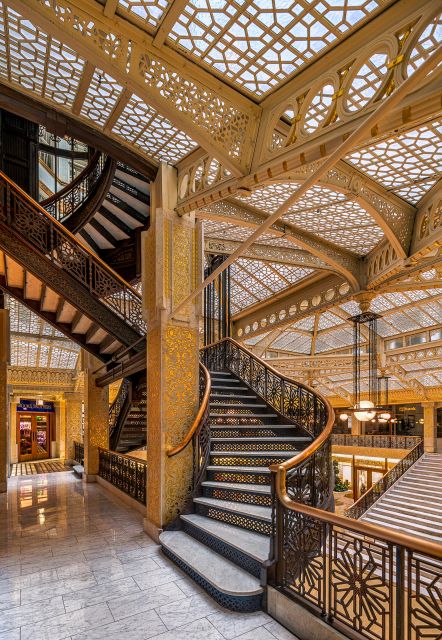
The Field Building adds another layer to the story of the Loop. Its importance is not only the facade you see from the street. The tour uses it to show how commercial buildings communicated power, permanence, and modern business.
Inside, pay attention to transitions: lobby materials, decorative borders, doors, ceilings, and the way the interior directs people through the building. These details can tell you who the building was designed to impress and how its owners wanted the public to feel upon entering.
The guide also places the architecture in the age of industrial fortunes and expanding commerce. Chicago’s major buildings were tied to powerful business figures, ambitious developers, and a city eager to prove itself. The stories include people who moved through these corridors during the Gilded Age and the Roaring Twenties.
This is where the tour earns its price. You are not just collecting building names. You are learning how architecture served business, status, technology, and civic pride.
A different kind of day out entirely:
- Chicago Architecture River Cruise
★ 5.0 · 15,756 reviews - Chicago River 90-Minute Architecture Tour
★ 4.5 · 9,629 reviews - Chicago River: 1.5-Hour Guided Architecture Cruise
★ 4.8 · 8,046 reviews - Chicago Architecture Center River Cruise aboard First Lady
★ 5.0 · 5,536 reviews
Marquette Building mosaics and fine craftsmanship
The Marquette Building is a particularly rewarding stop for anyone who enjoys close-up detail. Its interior decoration includes mosaics and elaborate craftsmanship that can disappear if you hurry through the lobby on your own.
The guide points out the meaning of design elements and helps you read the decoration instead of treating it as background. You might notice how materials, patterns, and figures connect the building to Chicago’s identity and its place in American commerce.
This stop is also a reminder that a building’s most memorable work may be at eye level or underfoot, not high above the street. Give yourself time to look at entrances, floor patterns, doorways, and borders. One participant wished for more unprompted explanation of these smaller features, but also found that Annie was happy to answer questions. That is useful advice: ask when something catches your attention.
The Marquette works well for photographers, though indoor lighting and group movement may limit the time you have for a perfect shot. Bring a phone or camera, but listen first. The explanation gives the decoration much more meaning.
Palmer House and the theater of hotel design
Palmer House adds a different mood to the route. Hotels had to welcome people, impress wealthy clients, and create a sense of occasion. Their public spaces often combine practicality with showmanship.
The tour uses the building to discuss the people who passed through Chicago during the city’s most ambitious decades. Industrial leaders, public figures, and famous personalities all belonged to the world these hotels served. The stories give the architecture a human scale.
The Palmer House is also a useful contrast with office buildings. An office lobby may emphasize business efficiency and corporate authority, while a hotel often aims for drama and comfort. Your guide helps separate those purposes and shows how design changes according to the people a building must receive.
Access is not guaranteed to every part of every building. The experience is built around public or accessible areas, and schedules can affect what you see. Keep that in mind if you are expecting a full examination of each property.
Chicago Cultural Center and the tour’s grandest interiors
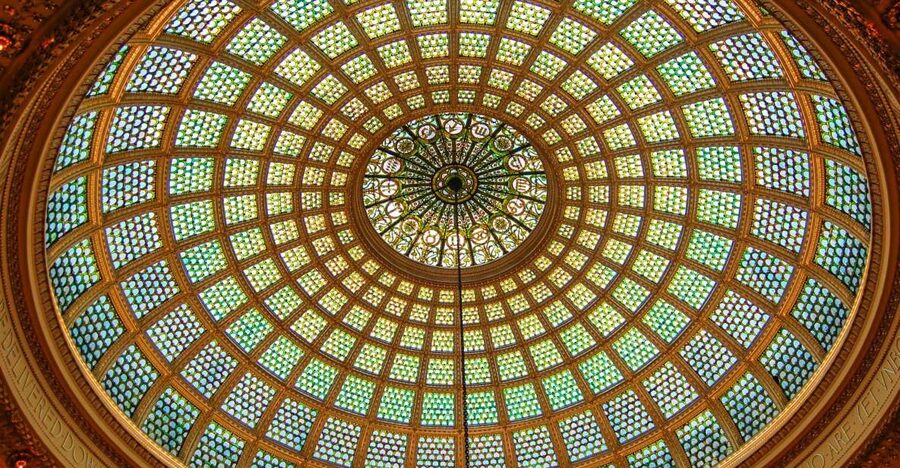
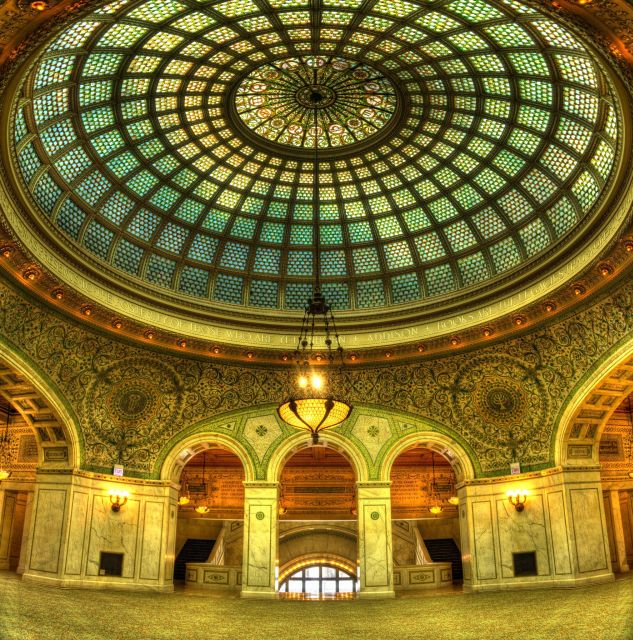
The Chicago Cultural Center is one of the most visually rewarding stops, especially for visitors who enjoy domes, glass, mosaics, and public art. It shows how civic architecture can be both functional and ceremonial.
The building gives the guide a chance to explain how architects used daylight and overhead decoration to make interior spaces feel larger. Look upward, but also study the craftsmanship around the room. The point is not just that the space is beautiful. It is the careful control of light, pattern, scale, and movement that makes it memorable.
This stop also broadens the tour beyond private wealth. Commercial offices and hotels reveal business ambition, while a civic building expresses a public idea of Chicago. That change in purpose helps keep the two-hour route from feeling repetitive.
Families and first-time visitors often do well here because the visual impact is immediate. You do not need a technical background to enjoy the space. The guide supplies enough architecture and history to give the details a place in the larger story.
Marshall Field and Company Building, where the walk ends
The tour finishes at the former Marshall Field and Company Building, one of the Loop’s major retail landmarks. Department stores were designed as destinations, not merely places to buy something quickly. Their interiors had to encourage browsing, display merchandise, and create a memorable public experience.
The building makes a fitting final stop because it brings together the tour’s main themes: commerce, decoration, engineering, and Chicago’s desire to make an impression. By this point, you have seen how architects used grand entrances, carefully managed light, strong structures, and ornate materials to shape public behavior.
Ending here is also practical. You can continue exploring the central Loop after the tour, revisit a building, or find food and drink nearby. Several guides, including Annie and Grant, have provided area suggestions, so ask before you part ways.
A special event can add an unexpected bonus. One October group, touring during Chicago Open House, entered the vault at the Chicago Board of Trade. That kind of access is not promised, but it shows how the experience can occasionally benefit from citywide building programs.
How the guides shape the experience
The guide is the biggest variable in any walking tour, and this one has a strong record. Grant is repeatedly praised for his historical detail, clear speaking voice, easy conversation, and enthusiasm. Talia is described as funny, kind, accommodating, and deeply interested in the city’s interiors.
Annie brings strong storytelling and practical recommendations. Angel combines design knowledge with lively explanations, while Matthew has been praised for being friendly and engaging. Avery has also received high marks for an interesting presentation.
The group size can affect the feel of the walk. A small group gives you more time to ask questions and makes it easier to hear indoors. Some departures have had only two or four people, but the guides remained enthusiastic rather than treating the small turnout as an afterthought.
Do not hesitate to ask about a feature you want explained. The tour covers a lot of ground, and the guide cannot describe every doorway, ornament, and ceiling detail without slowing the route. A direct question often gets you the extra context you want.
Pace, weather, stairs, and accessibility
The walking is manageable for many people, but the route is not a slow indoor museum visit. One participant described a large area covered at a brisk yet unrushed pace. Another found the pace fast for their legs and noted many stairs in and out of buildings.
Comfortable shoes are essential. Chicago weather can change the experience sharply. In winter, much of the tour takes place outside, and several people found it worthwhile even in the cold only because they dressed warmly. In milder weather, the outdoor sections become part of the pleasure, since they let you see how the buildings relate to one another.
The activity is listed as wheelchair accessible. Still, because individual buildings may have different entrances, stairs, or access rules, it is sensible to confirm current conditions when booking, especially if you need step-free access at every stop.
The route includes photo stops, but this is not a dedicated photography tour. You will have opportunities to take pictures, yet the main value comes from seeing details with an explanation attached.
Is $35 a fair price?
At $35, the tour is fairly priced if you want access, interpretation, and a planned route through several important buildings. You could walk past many of these places for free, but you would miss the context and may not know which doors are open to the public.
The value is strongest for first-time visitors, architecture fans, and Chicago residents who have never entered the buildings they pass each day. It also pairs well with a river architecture cruise. The boat gives you a broad view of Chicago’s skyline and riverfront buildings, while this walk brings you indoors and closer to materials, decoration, and entrances.
One participant preferred the architecture boat tour when forced to choose between the two. That is fair. If you have only one architecture activity available, the river cruise may provide a bigger visual overview. Choose this walking tour when you want the city at street level and care about interiors that are easy to miss.
Who should book this Loop walking tour?
I would recommend it to:
- First-time Chicago visitors who want a strong introduction to Loop architecture
- People interested in Art Deco, early skyscrapers, mosaics, domes, and historic interiors
- Residents who know the streets but have rarely entered the major buildings
- Families looking for a two-hour activity with history and visual variety
- Visitors arriving at Union Station who want to continue toward the central Loop afterward
I would be more cautious if you dislike outdoor walking, cold weather, stairs, or a brisk pace. You should also check the day carefully if the Rookery is a priority, since it is closed Sundays.
FAQ
How much does the Chicago Secret Interiors Architecture Walking Tour cost?
The price is $35 per person.
How long does the tour last?
The walking tour lasts two hours.
Where does the tour begin?
Meet your guide inside Union Station in the Great Hall, under the Clinton Street sign.
Where does the tour end?
The tour ends at the former Marshall Field and Company Building.
Which buildings are included?
The route includes Chicago’s Loop, South LaSalle Street, the Rookery Building, Field Building, Marquette Building, Palmer House, Chicago Cultural Center, and Marshall Field and Company Building.
Is the Rookery Building open every day?
No. The Rookery is closed on Sundays, and an alternative stop is included on those departures.
Is the tour conducted in English?
Yes. The live tour guide speaks English.
Is the tour wheelchair accessible?
The activity is listed as wheelchair accessible. Individual building access can vary, so confirm current conditions if you need step-free entry throughout.
What should I bring?
Bring comfortable shoes. You should also dress for the weather because much of the tour takes place outdoors.
Can I cancel for a refund?
You can cancel up to 24 hours in advance for a full refund. You can also reserve now and pay later, which keeps your plans flexible.
Should you book it?
Yes, if you want to see Chicago from the inside. At a reasonable price, this tour combines major Loop landmarks with the smaller details that most independent walks miss: mosaics, domes, doorways, lighting choices, structural solutions, and the people connected to these buildings.
Book it on a day with pleasant weather if possible, wear shoes made for city walking, and ask questions when a detail interests you. If you want a broad skyline lesson, choose the river architecture cruise. If you want Chicago’s grand interiors and the stories behind them, this two-hour walk is the better fit.
Just added in Chicago
- Original Chicago Architecture Interiors Tour: Dazzling Interiors★ 5.0 · 1,489 reviews
- Delicious Donuts & City Sights: Chicago’s Original Donut Tour★ 5.0 · 1,389 reviews
- BYOB Spray Paint and Sip at Studio W.I.P.★ 5.0 · 401 reviews
- Bikes, Bites & Views: Chicago’s Signature Dishes Bike Tour-Adults★ 5.0 · 732 reviews
- The Escape Game Chicago: Epic 60-Minute Adventures in River North★ 5.0 · 332 reviews
- Field Museum of Natural History Admission Tickets★ 4.5 · 489 reviews
- Chicago Loop District Food Tour with Deep Dish & Beef Sandwich★ 5.0 · 870 reviews
- City Cruises Chicago: Signature Lunch Cruise on Lake Michigan★ 4.0 · 348 reviews
Walking Tours, compared.
History and Hauntings of Salem Guided Walking Tour
Read our review →
New Orleans Premier Ghost, Voodoo and Vampire Walking Tour
Read our review →
Freedom Trail History Small Group Walking Tour
Read our review →
Historic Charleston Guided Sightseeing Walking Tour
Read our review →
New Orleans Food Walking Tour of the French Quarter with Small-Group Option
Read our review →
Cambridge: Harvard University Student-Guided Walking Tour
Read our review →Browse the lists this tour appears in