
Reviewed · WALKING TOURS
Chicago’s Secret Interiors Architectural Walking Tour
Chicago keeps some of its best architecture indoors. This two-hour walk pairs famous Loop buildings with interiors you could easily pass without noticing. I like the small-group format and the chance to see places such as the Rookery lobby, Marquette mosaics, and Palmer House without paying separate admission.
I also like the guide-led storytelling, which connects architects, business leaders, celebrities, and engineering problems to the buildings around you. The main drawback is that access can vary, the Rookery is skipped on Sundays, and the group may be larger than the advertised maximum on some dates.
In This Review
- Key points to know before you book
- Why Chicago’s interiors tell the real story
- Starting at Union Station and entering the Loop
- The Financial Canyon around La Salle Street
- The Rookery’s light court and Wright-designed lobby
- Art Deco detail inside the Field Building
- The Marquette Building’s mosaic story
- Palmer House and the luxury of the Gilded Age
- Chicago Cultural Center or the Monadnock Building
- The Marshall Field building and its Tiffany dome
- Guides, group size, and the walking pace
- Weather, comfort, and practical value
- Who should book this Loop walk?
- Should you book Chicago’s Secret Interiors tour?
- FAQ
- How long is Chicago’s Secret Interiors Architectural Walking Tour?
- How much does the tour cost?
- Where does the tour begin?
- Where does the tour end?
- Is the Rookery included every day?
- What buildings are visited?
- Is the tour suitable in bad weather?
- Can I cancel for a refund?
Key points to know before you book
- The Rookery is the star stop: Frank Lloyd Wright’s later work inside Burnham and Root’s 1888 building makes this one of the tour’s most memorable interiors.
- You finish near Macy’s: The route begins at Chicago Union Station and ends at the Marshall Field and Company Building on State Street.
- Most of the time is indoors or between nearby buildings: That helps in cold or wet weather, though you still need to walk outside for the full route.
- The Marquette delivers color and detail: Its lobby mosaics and terra cotta work bring Chicago School architecture to life.
- Sunday has a change: The Rookery is closed, so the route does not include it that day.
- The guides earn much of the praise: Ethan, Grant, Ty, Matt, Matthew, Avery, and Betsy are singled out for energy, humor, clear explanations, and good group control.
Why Chicago’s interiors tell the real story
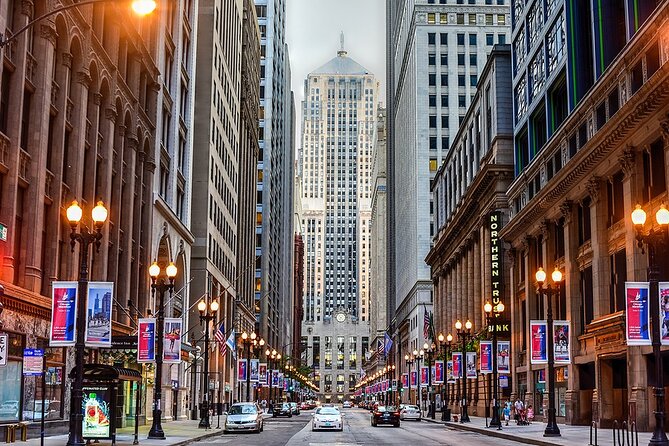
Chicago’s Loop is easy to admire from the sidewalk. Towering office buildings crowd the streets, and landmarks such as the Chicago Board of Trade and Willis Tower give the district its familiar outline.
But the outside view tells only half the story. Step through the right doors and you find stained glass, mosaics, frescoed ceilings, ironwork, carved details, and grand public rooms. This tour is built around that contrast: famous façades outside, ornate spaces inside.
I like the way the walk links design to money and ambition. Chicago’s commercial power helped pay for these buildings, while architects and engineers had to solve hard problems involving height, weight, light, and crowded city blocks. You are not simply looking at decoration. You are seeing how a young industrial city turned business success into stone, steel, glass, and art.
The tour also gives you a useful way to read the Loop. Instead of treating each building as an isolated attraction, the guide explains how the district grew and how different architectural styles followed changing technology and taste.
More Walking Tours in Chicago
- Chicago: Gangsters and Ghosts Walking Tour
★ 5.0 · 7,155 reviews - Chicago Favorites Ultimate Food and Walking Tour
★ 5.0 · 1,962 reviews - Chicago: Gangsters and Ghosts Guided Walking Tour
★ 4.7 · 1,697 reviews
Starting at Union Station and entering the Loop
The meeting point is Chicago Union Station at 225 South Canal Street. This is a practical starting place because Union Station is itself one of the city’s major architectural sights, not merely a place to gather.
The station was designed by Daniel Burnham and completed in 1925. Its Beaux-Arts exterior leads to a grand interior with a large Great Hall and a skylight that gives the space a ceremonial scale. Millions of passengers have passed through here, so the building connects everyday movement with Chicago’s grand civic ambitions.
The listed stop is about 10 minutes, though the actual amount of time devoted to each location can vary. That matters because this is a moving tour rather than a series of long building visits. You should expect focused explanations, photographs, and a steady walk, not a leisurely hour inside each site.
From Union Station, the route heads into the Loop and the financial district. Wear shoes suited to city pavement, and keep your phone ready for quick interior photographs where photography is permitted.
The Financial Canyon around La Salle Street
The La Salle portion introduces what the tour calls Chicago’s Financial Canyon. The phrase makes sense once you are surrounded by tall buildings rising close together, with narrow street views framed by stone, glass, and steel.
This is where the city’s financial identity becomes easiest to understand. The Chicago Board of Trade brings Art Deco drama to the district, while Willis Tower represents a later era of height and structural ambition. The guide uses these buildings to explain the architects behind them and the industries that helped shape the Loop.
I find this section useful for orientation. You learn to look upward and compare periods rather than simply collect famous names. The walk also puts the grand interiors in context. A lavish lobby was not random decoration. It helped a bank, department store, hotel, or office building project confidence and status.
The stop itself is listed at about 10 minutes, so do not expect a detailed visit to every exterior mentioned. Its real value is the overview and the way it prepares you for the more intimate indoor stops ahead.
The Rookery’s light court and Wright-designed lobby
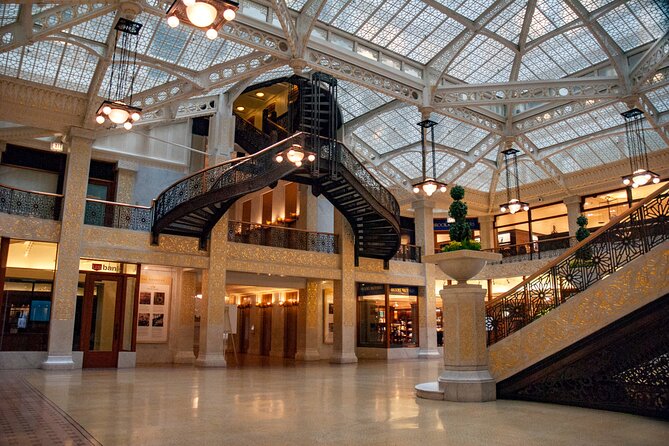
The Rookery is likely to be the architectural high point for many people on the route. Burnham and Root designed the building in 1888, blending Romanesque and Moorish influences in a structure known for its inventive light court.
Inside, the ironwork and oriel staircase reward a slower look. The lobby was later reworked by Frank Lloyd Wright, creating a striking meeting point between early Chicago architecture and Wright’s cleaner design language.
This is the sort of place you might walk past without realizing what is inside. The exterior has its own importance, but the interior explains why the building remains so widely admired. You can see how decoration, structure, and daylight work together rather than treating the lobby as a simple entrance.
Several people rate the Rookery as their favorite stop, and I understand why. It offers the clearest combination of famous architects, structural innovation, and visual detail. Do not plan around it on Sunday, when the building is closed and the route changes.
Because access to working historic buildings can depend on opening arrangements, the indoor visit may not feel identical on every date. Still, when the lobby is included, it gives the tour much of its special character.
A different kind of day out entirely:
- Chicago Architecture River Cruise
★ 5.0 · 15,756 reviews - Chicago River 90-Minute Architecture Tour
★ 4.5 · 9,629 reviews - Chicago River: 1.5-Hour Guided Architecture Cruise
★ 4.8 · 8,046 reviews - Chicago Architecture Center River Cruise aboard First Lady
★ 5.0 · 5,536 reviews
Art Deco detail inside the Field Building
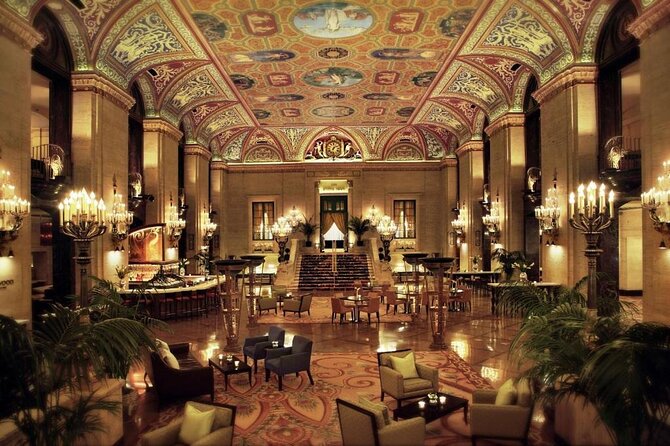
The Field Building adds a different mood. Rather than the older Romanesque and Moorish mix at the Rookery, this stop focuses on Art Deco design and the polished confidence of a later Chicago.
The building’s importance on this tour comes from its details. Art Deco was meant to look modern, orderly, and luxurious, and the Field Building helps you see how those qualities were expressed in an office tower. Your guide explains what to notice instead of leaving you to guess why a doorway, pattern, or material matters.
This is a good stop for anyone who enjoys the transition between historic ornament and streamlined modern design. It also prevents the tour from becoming a parade of similar lobbies. Each building carries a different idea of what progress and success should look like.
The Marquette Building’s mosaic story
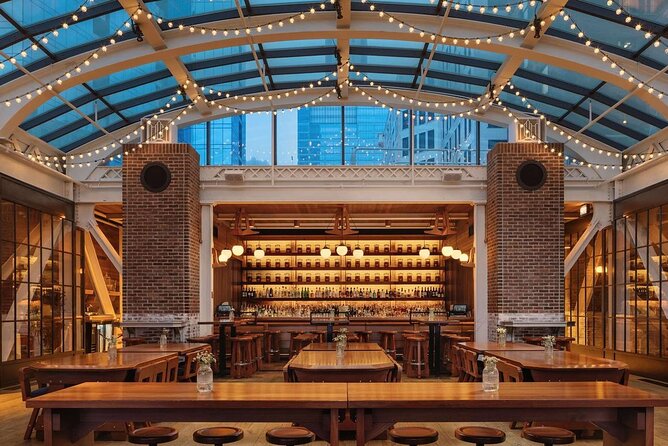
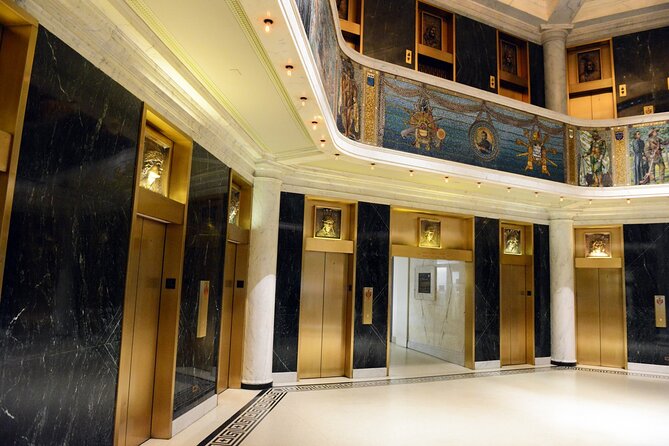
The Marquette Building is one of the most rewarding stops for close inspection. It is linked to the Chicago School of Architecture, known for the pioneering use of large Chicago windows and practical advances in office-building design.
The exterior terra cotta deserves attention, but the lobby is the main draw. Its mosaics tell the story of Jacques Marquette’s exploration of Illinois, turning a passageway into a visual history lesson.
I like this pairing of technology and art. The building shows how a modern office could use new window forms and efficient planning while still giving visitors a richly decorated public room. You get a strong sense of how Chicago’s commercial buildings tried to impress from the moment someone entered.
The Marquette is also a good reminder to look down and around. In Chicago, the best detail may be above the doorway, under your feet, or tucked along a side wall. The guide’s help is valuable here because a casual visit might reveal only a handsome lobby, not the story built into its surfaces.
Palmer House and the luxury of the Gilded Age
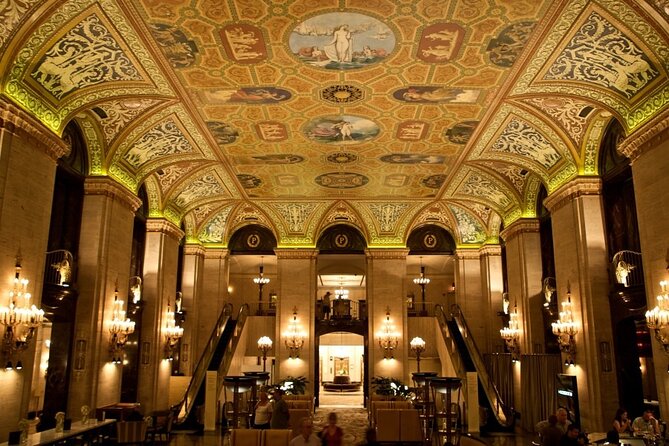
The Palmer House brings the tour into hotel history and the social world of Chicago’s Gilded Age. Rebuilt after the Great Chicago Fire, it became one of the city’s grand hotels and has hosted celebrities and dignitaries over the years.
The lobby gives you plenty to study: a frescoed ceiling, mosaic floors, and bronze peacock doors. These are not subtle spaces. The Palmer House wanted arriving visitors to feel that they had entered a world of wealth, ceremony, and comfort.
This stop works especially well with the tour’s stories about magnates and stars from the Gilded Age and Roaring Twenties. Architecture here is closely tied to public image. A hotel lobby had to function as an entrance, meeting place, and advertisement for the kind of life the hotel promised.
I would give yourself a moment to take in the scale before focusing on individual details. The room can feel active because it remains a working hotel, so the visit is not the same as entering a silent museum. That is part of its appeal. The building is historic, but it still serves its original broad purpose.
Chicago Cultural Center or the Monadnock Building
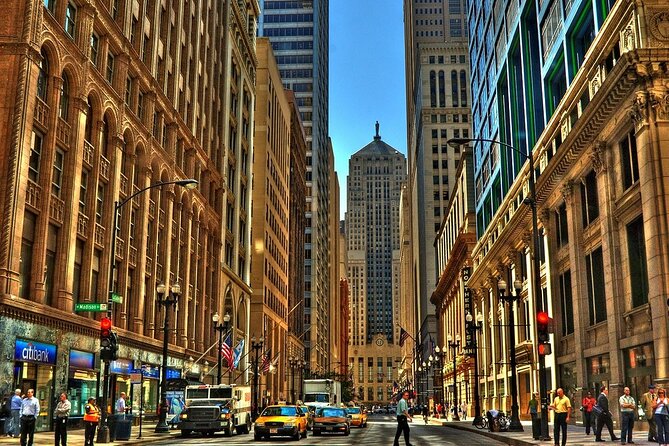
At one point, the route includes either the Chicago Cultural Center or the Monadnock Building. This is an important qualification if you are choosing the tour for one specific interior.
The Chicago Cultural Center offers architectural beauty along with a strong cultural role. It is a natural fit for the tour’s focus on public interiors and civic ambition. The Monadnock Building presents another side of late 19th-century commercial design, with its importance tied to the development of Chicago’s commercial style.
Since the choice can vary, you should treat this stop as a bonus rather than the single reason to reserve. The change also gives the guide some flexibility, which can help the route work around access conditions.
The Marshall Field building and its Tiffany dome
The tour ends at the Marshall Field and Company Building, now home to Macy’s, at 111 North State Street. This makes the finish convenient if you want to continue shopping, explore State Street, or find food in the central Loop.
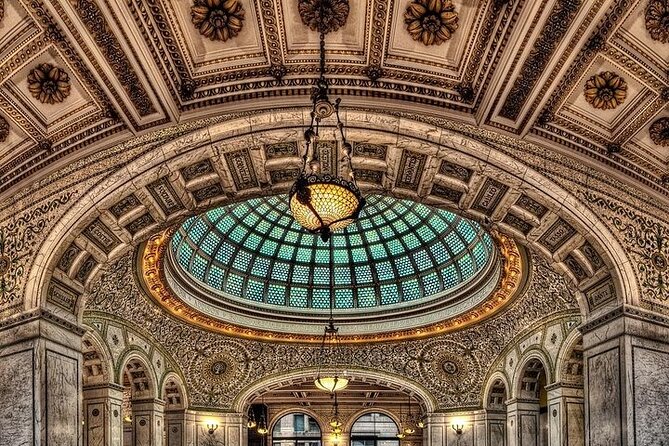
The building is closely tied to Chicago’s retail past. Its famous Tiffany glass mosaic dome is the major visual prize, and the walnut-paneled Tea Room adds another layer of department-store grandeur. These spaces show how early 20th-century retailers turned shopping into an outing rather than a quick transaction.
I like ending here because the building makes the tour’s larger point in a very clear way. Commerce did not only shape Chicago’s streets and skyscrapers. It also shaped the public interiors where people gathered, browsed, met friends, and experienced luxury.
The endpoint is not at Union Station, so plan your onward route from State Street. That is easy enough in the Loop, but it is worth noting if you have a train to catch immediately afterward.
Guides, group size, and the walking pace
The guides are a major part of the experience. Ethan is repeatedly praised for enthusiasm, humor, and strong knowledge of Chicago architecture and history. Grant is noted for keeping the group together and adjusting the pace on a very cold day. Ty is described as accommodating, entertaining, and full of useful detail.
Matt and Matthew also receive high marks for clear explanations and a good balance of professionalism and humor. Avery is praised for keeping the group moving while providing helpful information. Betsy is associated with a particularly memorable visit to the Rookery.
The advertised maximum is 15 people, which would be ideal for hearing the guide and getting through doors without too much delay. Some experiences have had larger groups, including reports of 15 to 20 people and even about 40. That difference can affect how intimate the tour feels, so do not assume every departure will be equally small.
The pace appears manageable for most people who can participate in a normal city walk. One account describes roughly an hour and a half, with a 15-minute break, even though the planned duration is about two hours. Give yourself flexibility rather than scheduling a tight appointment right afterward.
Weather, comfort, and practical value
This is an outdoor walking tour with frequent indoor stops. That makes it more forgiving than a fully outdoor sightseeing walk, but Chicago weather still matters. Bring a coat in cold weather and rain protection when needed. The tour has operated in cold rain, yet the indoor buildings made conditions easier to manage.
The walking route crosses active city streets, so stay with the group and listen for crossing instructions. Public transportation is nearby, and the start at Union Station is convenient for rail connections. Service animals are allowed, and most people can take part.
At $35, the value is strong if you care about architecture, local history, or thoughtful city walks. You are paying for a guide who can arrange the buildings into a story and point out interiors you might otherwise miss. Many of the buildings do not charge a separate admission for this visit, so the price mainly covers access planning and interpretation.
It is less useful if you want extended time at each site or a highly predictable route focused on one building. The short stop structure means you will see many places, but you may wish for more time at the Rookery, Marquette, or Marshall Field building.
Who should book this Loop walk?
I would choose this tour for first-time Chicago visitors who want more than skyline photographs. It also suits local residents who have passed these buildings for years but never stepped inside. The mix of architecture, commerce, hotel culture, retail history, and city legends keeps the two hours varied.
Architecture students, history fans, and people who enjoyed a Chicago architecture boat tour should find useful extra detail here. The walking route does not simply repeat the view from the river. It takes you into the rooms where the city’s public image was built.
I would be more cautious if you dislike walking, need guaranteed access to a particular building, or have a strict Sunday plan centered on the Rookery. The route is also less appealing for young children who are unlikely to enjoy close attention to façades, ceilings, and construction methods.
Should you book Chicago’s Secret Interiors tour?
Book it if you want a smart, affordable introduction to Chicago’s indoor architecture. The Rookery, Marquette, Palmer House, and Marshall Field building provide enough visual reward to justify the $35 price, while the guide adds the context that makes the details stick.
Check the day carefully because the Rookery is not included on Sundays, and allow some flexibility for group size and route changes. If you can accept that small uncertainty, this is one of the better ways to see the Loop from the inside, where Chicago’s grandest ideas often become most visible.
FAQ
How long is Chicago’s Secret Interiors Architectural Walking Tour?
The tour lasts approximately two hours, though some departures may run closer to an hour and a half, sometimes with a short break.
How much does the tour cost?
The listed price is $35.
Where does the tour begin?
The meeting point is Chicago Union Station, at 225 S Canal St, Chicago, Illinois 60606.
Where does the tour end?
The tour ends at the Marshall Field and Company Building, now Macy’s, at 111 N State St, Chicago, Illinois 60602.
Is the Rookery included every day?
No. The Rookery is closed on Sundays, so it is not included on the Sunday route.
What buildings are visited?
Stops can include Union Station, the Rookery Building, the Field Building, the Marquette Building, Palmer House, the Chicago Cultural Center or Monadnock Building, and the Marshall Field and Company Building. The route also covers the Loop and La Salle financial district.
Is the tour suitable in bad weather?
The experience requires good weather. If poor weather causes cancellation, you will be offered another date or a full refund. The tour includes indoor stops, but you still walk between buildings.
Can I cancel for a refund?
You can cancel at least 24 hours before the start time for a full refund. Cancellations or changes made less than 24 hours before the start time are not refunded or accepted.
Just added in Chicago
- Original Chicago Architecture Interiors Tour: Dazzling Interiors★ 5.0 · 1,489 reviews
- BYOB Spray Paint and Sip at Studio W.I.P.★ 5.0 · 401 reviews
- Delicious Donuts & City Sights: Chicago’s Original Donut Tour★ 5.0 · 1,389 reviews
- Bikes, Bites & Views: Chicago’s Signature Dishes Bike Tour-Adults★ 5.0 · 732 reviews
- The Escape Game Chicago: Epic 60-Minute Adventures in River North★ 5.0 · 332 reviews
- Field Museum of Natural History Admission Tickets★ 4.5 · 489 reviews
- Chicago Loop District Food Tour with Deep Dish & Beef Sandwich★ 5.0 · 870 reviews
- City Cruises Chicago: Signature Lunch Cruise on Lake Michigan★ 4.0 · 348 reviews
Walking Tours, compared.
History and Hauntings of Salem Guided Walking Tour
Read our review →
New Orleans Premier Ghost, Voodoo and Vampire Walking Tour
Read our review →
Freedom Trail History Small Group Walking Tour
Read our review →
Historic Charleston Guided Sightseeing Walking Tour
Read our review →
New Orleans Food Walking Tour of the French Quarter with Small-Group Option
Read our review →
Cambridge: Harvard University Student-Guided Walking Tour
Read our review →Browse the lists this tour appears in