
Reviewed · MUSEUMS
Corning Museum of Glass Admission Tickets
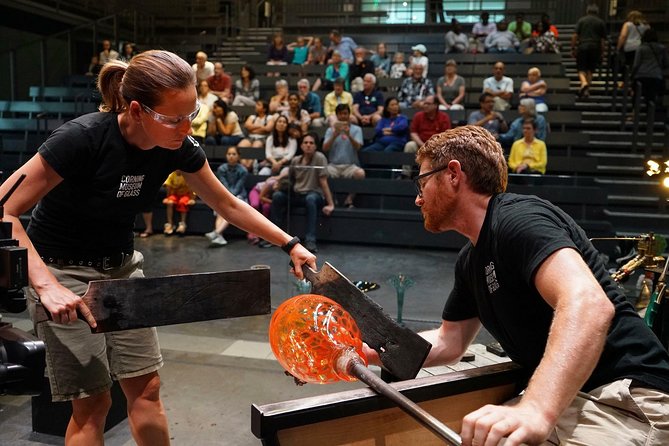
Glass gets serious here. The Corning Museum of Glass brings together more than 50,000 objects spanning 3,500 years, from Ancient Roman vessels and Venetian Renaissance pieces to modern sculpture and enormous Tiffany windows. I especially like the live Hot Glass Demo, where a glowing lump of molten glass becomes a finished object before your eyes, and the fact that your ticket covers two consecutive days. The main drawback is simple: the museum is in Corning, not Rochester, so you need to allow roughly 1.5 to 2 hours by car from Rochester, depending on traffic.
I also like that the museum works for several kinds of visitors at once. You can study ancient objects, watch artists at work, take children through hands-on displays, or sign up to make your own glass piece. It is a large place, though, and three or four hours can feel rushed if you want to see the galleries, attend demonstrations, and use the studio.
In This Review
- Five things to know before you go
- Entering a museum built around glass
- Watching molten glass become an object
- Three floors of glass history
- Contemporary Art + Design in daylight
- Hands-on glassmaking at the Studio
- The Glass Innovation Center for curious minds
- A good rainy-day and family stop
- The gift shop is part of the visit
- Is the two-day ticket good value?
- Getting there from Rochester
- Who should book this museum visit?
- Should you book the Corning Museum of Glass?
- FAQ
- Where is the Corning Museum of Glass located?
- How long should I plan for a visit?
- What does the admission ticket include?
- Are Hot Glass Demos included?
- How often are the glassblowing demonstrations offered?
- Can I make my own glass object?
- How much do the glass workshops cost?
- Is the museum suitable for children?
- Is the museum wheelchair accessible?
- Can I buy food at the museum?
- What is the cancellation policy?
Five things to know before you go
- Your ticket is valid for two days: This is unusually helpful for a museum of this size, especially if you want a workshop.
- Hot Glass Demos are a major highlight: A master glassmaker shapes molten glass while explaining the process.
- The collection covers 3,500 years: You move from Ancient Rome and Egypt to Venetian glass, Colonial America, and contemporary design.
- Hands-on projects cost extra: Make Your Own Glass activities range from $14 to $150, depending on the project.
- Plan for plenty of walking: The museum has seating and small stools you can carry, and the building is wheelchair accessible throughout.
- The location matters: Corning is not in Rochester. Check your driving time before booking.
Entering a museum built around glass
The Corning Museum of Glass is not a small gallery where you make a quick stop, admire a few cases, and leave. It is a full museum complex with several floors, broad galleries, a large gift shop, a cafe, a studio area, and a 500-seat Amphitheater Hot Shop for demonstrations.
The collection includes nearly 50,000 pieces. That number can sound abstract, but the range is easy to feel once you begin. One display may hold a small Egyptian pharaoh head, while another presents a huge Tiffany window. Between those extremes are drinking vessels, scientific objects, decorative pieces, religious items, tools, jewelry, paperweights, and contemporary artworks.
I recommend checking the demonstration schedule as soon as you arrive. Several demonstrations take place during the day, and the times affect how you should arrange the galleries. The museum provides information about the demo schedule and the layout of the three floors, which makes it easier to plan instead of wandering until you accidentally miss the main event.
Expect to walk. Older visitors and anyone with limited stamina should use the available seating and take advantage of the small stools offered for carrying through the galleries. Wheelchair access is available throughout every level, according to the supplied visitor information.
More Museum Tours in the USA:
- NYC: 9/11 Memorial & Museum Timed-Entry Ticket
★ 4.8 · 31,428 reviews - NYC: Empire State Building Tickets – Observatory & Museum
★ 4.7 · 25,757 reviews - New York City: American Museum of Natural History Ticket
★ 4.5 · 15,447 reviews
Watching molten glass become an object
The Hot Glass Demo is the museum’s most memorable shared experience. You watch a glassmaker gather a glowing gob of molten glass, then shape it with tools, heat, air, and careful timing. The material looks soft and alive at first, but it cools quickly, so the artist must work with purpose.
The demonstration is narrated, which adds useful context. You are not simply watching someone handle hot material from a distance. The presentation explains what is happening as the object changes form, helping you understand why glassmaking takes skill and patience.
The Hot Shop seats 500 people, so the museum has made room for a large audience. Even so, you should check the schedule and arrive with enough time to find a good place to watch. One practical point is worth noting: the demonstrations can be fairly short. One visitor found a particular show under 15 minutes, while another family enjoyed a longer, more interactive presentation that included questions and explanations about glass at different temperatures and thicknesses.
That difference may depend on the type of demonstration. Do not judge the entire museum by one short show. If the first presentation feels brief, use the schedule to catch another session later in the day. The demonstrations happen several times, and the later, less crowded session may offer a calmer experience.
The live work gives the collection a human side. After seeing finished objects behind glass, you understand that these works began as difficult, physical acts involving heat, timing, and control.
Three floors of glass history
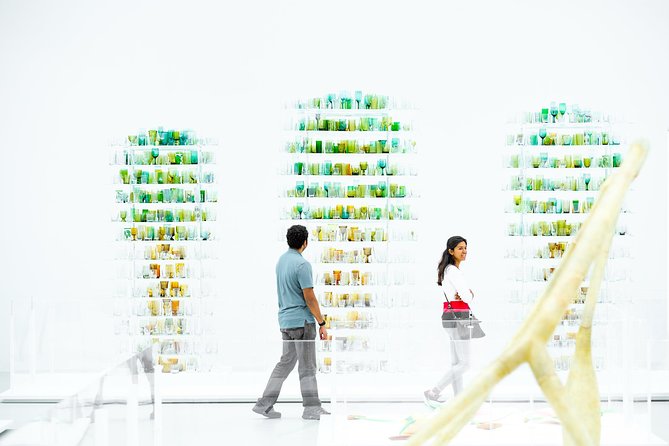
The museum’s historical galleries move through many periods and regions. You can see glass from Ancient Rome, examples connected to Venetian Renaissance traditions, work from Colonial America, and objects from other cultures and eras.
This is where the museum has its greatest strength and also its biggest challenge. The range is huge. You can learn how glass was used for practical vessels, decoration, art, science, architecture, and trade. But the sheer amount of material can become tiring, especially if you try to read every label.
I suggest choosing a theme for each area instead of treating every case as a required stop. Look for changes in shape, color, technique, and purpose. A simple vessel can tell you as much about daily life as a grand art object, while a paperweight or a piece of scientific glass may show a completely different use of the material.
The historical displays also help you see that glass is not only about tableware or cookware. It has served religious, architectural, scientific, industrial, and artistic purposes. That wider view is one reason the museum works well for families, adults who enjoy design, and anyone curious about how ordinary materials become art.
You may want to pace yourself. A three to four hour visit is typical, but the two-day ticket gives you the option to split the historical galleries across two visits. That is a much better plan than trying to race through everything in one afternoon.
Contemporary Art + Design in daylight
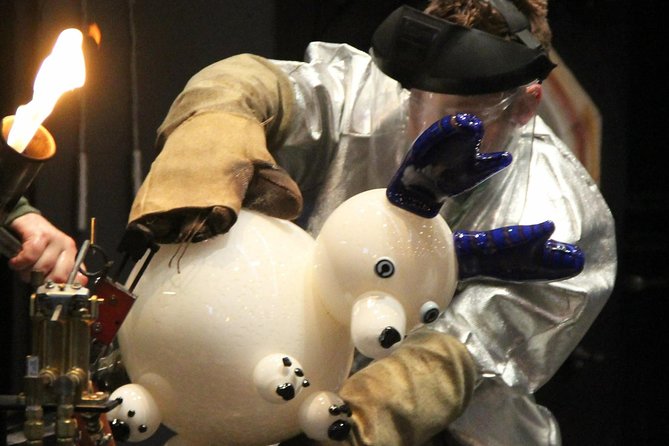
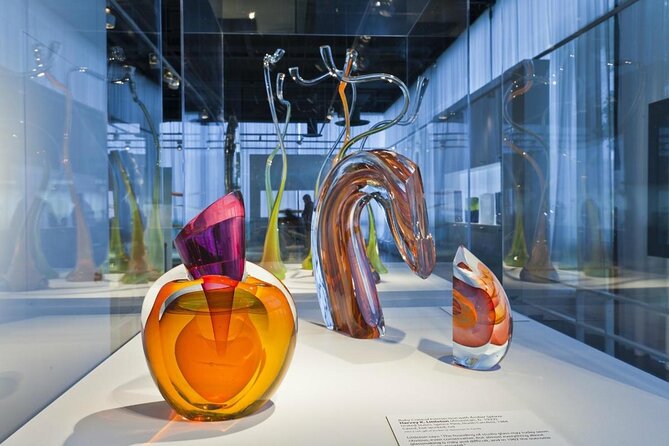
The Contemporary Art + Design Wing presents the best of the last 25 years in glass. It is described as a day-lit space, which suits modern glasswork particularly well. Light can reveal transparency, color, bubbles, distortions, and surface texture in ways that artificial lighting cannot always match.
This section gives the museum a modern counterpoint to the ancient objects. After seeing Roman vessels or Renaissance glass, you can look at artists using the same basic material in far less traditional ways. Some pieces may be decorative, some sculptural, and some difficult to classify at first glance.
You can explore this wing with the GlassApp, which offers a self-guided way to learn more. That is useful if you want extra information but do not want to follow a fixed tour or listen to every available explanation.
The contemporary gallery may appeal most to adults and older children who enjoy art with a strong visual effect. Younger children may prefer the demonstrations and hands-on areas, though the museum’s broad range means each family member can usually find a section that holds attention.
A few more options to weigh up in the USA
- NYC: SUMMIT One Vanderbilt Tickets
★ 4.7 · 51,195 reviews - NYC: Empire State Building Observation Deck Tickets
★ 4.7 · 22,072 reviews - NYC: Edge Observation Deck Admission Ticket
★ 4.6 · 20,918 reviews - New York City: Top of the Rock Observation Deck Ticket
★ 4.6 · 14,488 reviews
Hands-on glassmaking at the Studio
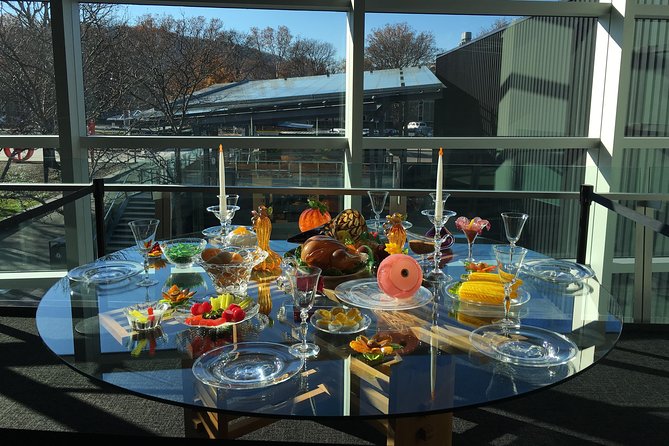
The optional Make Your Own Glass experiences turn you from an observer into a participant. Projects include fused picture frames and suncatchers, sandblasted drinking glasses, flameworked beads, pulled-glass flowers, delicate blown ornaments, and seasonal activities.
Prices range from $14 to $150. That is a wide spread, so check the project cost before signing up. The admission ticket does not include these activities.
I think the studio can be the best use of your time if you are visiting with children, older kids, or adults who like practical experiences. Seeing a professional work is impressive. Making something yourself gives you a different understanding of the material, even if your finished object is less polished than the museum pieces.
Families have used the studio for sandblasted glasses and glass flowers, while others have returned for a second project after enjoying the first. Christmas ornaments and seasonal projects can be especially appealing if you want a souvenir tied to the visit.
Book or arrange the workshop with your museum schedule in mind. A studio session can add close to an hour or more to your day, depending on the activity and timing. Since the admission ticket lasts two days, you do not have to squeeze the workshop into the same visit as every gallery.
The main concern is price. A workshop can be excellent value if you want an activity you can remember and take home. It is less attractive if you only want to see the museum and keep your costs low.
The Glass Innovation Center for curious minds
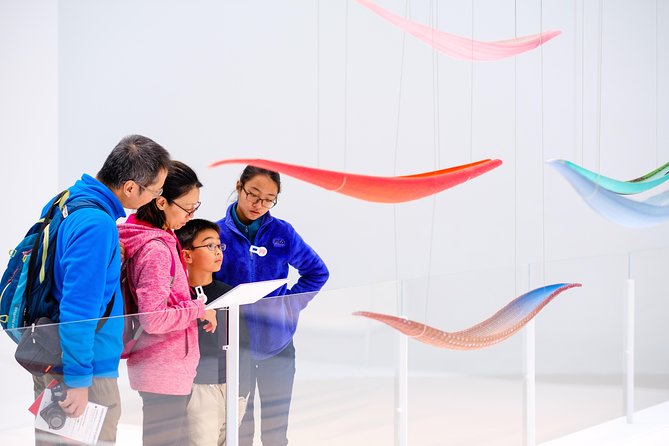
The Glass Innovation Center focuses on optics, vessels, and windows. This section gives you a more hands-on way to think about what glass does and how it behaves.
It is particularly useful for families because it moves beyond looking at objects. Children can connect glass with science, technology, design, and everyday life. Older children may also enjoy the teen scavenger hunt, while younger visitors can look for special objects such as luchador masks included in a museum challenge.
The museum does not rely only on large, dramatic works. Interactive areas help explain why glass matters in practical terms. Optics connect it to lenses and vision. Windows connect it to buildings and light. Vessels connect it to storage, cooking, ceremony, and decoration.
If your children are between four and thirteen, plan for about four hours at the museum, then consider adding a studio activity. That schedule has enough time for the main galleries, live presentations, and some hands-on play without turning the day into a forced march.
A good rainy-day and family stop
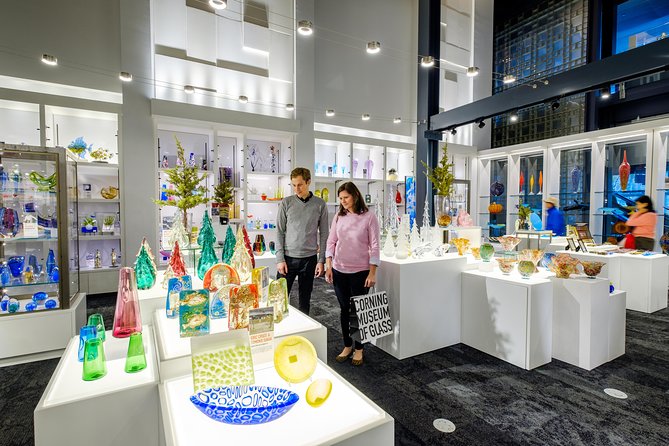
The museum is a strong choice when the weather is poor or uncomfortably hot. Most of your time is indoors, and the variety keeps it from feeling like a single-topic room of display cases.
Families can divide their attention. One person may prefer ancient objects, another may want contemporary sculpture, and children can focus on demonstrations, scavenger hunts, and the Innovation Center. The museum is also suitable for adults visiting alone or as a couple, especially if you enjoy design, craft, architecture, or industrial history.
You should not expect every child to remain interested in every gallery. The collection is large, and some sections require patience. Build in breaks at the cafe and use the activity schedule to create a rhythm.
The cafe offers food and drinks for purchase, including sandwiches. That matters because a museum visit can easily run beyond lunchtime, especially when you add a workshop or return for a second demonstration.
The gift shop is part of the visit
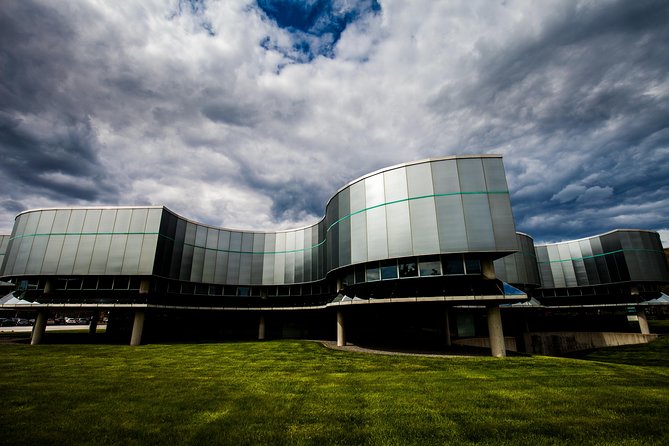
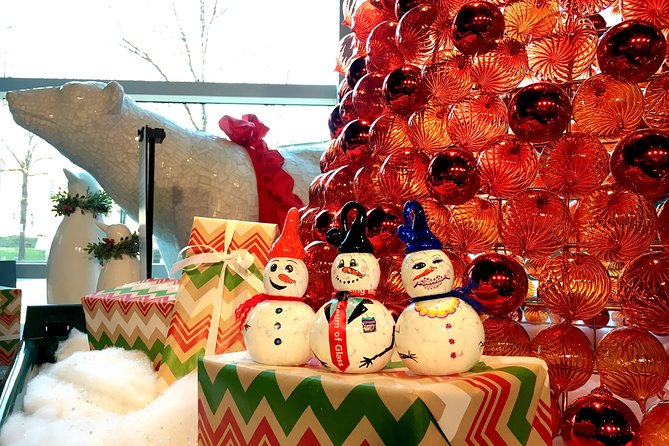
The gift shop is unusually large and easy to notice as you enter. It offers handmade jewelry, ornaments, seasonal pieces, and glass objects made by local artisans and Corning glass artists.
I would save time for it at the end. The selection can be tempting, especially if you are looking for a special household item or a small gift that feels connected to the museum rather than mass-produced. Seasonal displays, including pumpkins and Christmas ornaments, may shape what is available during your visit.
The shop can also affect your sense of value. If you are on a tight budget, set a spending limit before entering. The museum admission already covers a substantial collection, while purchases and studio projects are separate costs.
Is the two-day ticket good value?
The two-day admission is the most important value feature. A typical visit lasts three to four hours, but the museum has enough material for a longer stay. You can return on the second consecutive day without paying another admission fee.
That makes the ticket more useful for a weekend in Corning than for a rushed day trip from Rochester. If you are driving a long distance, staying overnight lets you split the galleries, attend more than one Hot Glass Demo, and schedule a hands-on activity without sacrificing the historical displays.
Price sensitivity varies. One supplied experience record refers to admission of about $25 per person, but prices and discounts can change, so confirm the current total before booking. A local discount may be available for people from the immediate area, and one booking voucher caused confusion when a visitor discovered a lower local rate.
The practical lesson is to compare the museum’s direct price with the third-party ticket total, especially if you live nearby. For a family, even a modest price difference matters. For visitors who use both admission days and attend a demonstration, the value is easier to justify.
Getting there from Rochester
The biggest planning issue is the location. The experience is in Corning, New York, not Rochester. Driving from Rochester may take roughly 1.5 hours, and one account warned of a journey closer to two hours depending on travel conditions.
Do not book it as if it were a central Rochester attraction. Check the map, allow for the drive, and consider pairing the museum with an overnight stay in the Corning area if you want to use both ticket days.
Once in Corning, parking is described as plentiful and close to the museum. The building is easy to find, and the facility is wheelchair accessible throughout its levels. Service animals are allowed, and most people can participate without special restrictions.
The experience provider is the Corning Museum of Glass itself. Confirmation is provided at booking, and free cancellation is available when you cancel at least 24 hours before the scheduled start time. Changes or cancellations inside that window are not refunded.
Who should book this museum visit?
I would recommend it to anyone who enjoys glass, craft, design, architecture, or objects with a strong visual element. It is also a good family choice because the museum combines displays, live demonstrations, science-focused activities, scavenger hunts, and optional studio projects.
You should allow at least three to four hours. Use both days if you are coming a long distance, want to take a workshop, or prefer a slower pace.
I would be more cautious if you dislike museums with large collections or if you expect a short entertainment show rather than a serious museum visit. The Hot Glass Demo may be brief, and the galleries require walking and attention. The museum is not built around a single attraction.
Should you book the Corning Museum of Glass?
Yes, if you can reach Corning without treating it as a quick Rochester stop. The combination of ancient objects, contemporary art, live glassmaking, and hands-on workshops gives you far more than a standard display of glassware.
Book it if you value authentic craft and want to see how glass is made, not just admire finished pieces. Use the two-day ticket to slow down, check the demo schedule on arrival, and add a workshop only if the extra cost fits your plans.
Skip it only if your schedule cannot handle the drive or if you want a compact one-hour attraction. For everyone else, this is one of those museums where a half-day can easily become a full day, and the second day gives you room to enjoy it properly.
FAQ
Where is the Corning Museum of Glass located?
The museum is in Corning, New York. It is not in Rochester, so check your driving time carefully before booking.
How long should I plan for a visit?
A typical visit lasts about three to four hours. You can stay longer and return the following day because admission is valid for two consecutive days.
What does the admission ticket include?
The ticket includes admission to the Corning Museum of Glass for two consecutive days. Food, drinks, and optional Make Your Own Glass workshops cost extra.
Are Hot Glass Demos included?
Yes. The live Hot Glass Demo is part of the museum experience included with admission. Check the daily schedule when you arrive.
How often are the glassblowing demonstrations offered?
Demonstrations are held several times during the day. Exact times can vary, so use the schedule provided at the museum.
Can I make my own glass object?
Yes. Optional Make Your Own Glass projects include picture frames, suncatchers, sandblasted glasses, flameworked beads, pulled-glass flowers, blown ornaments, and seasonal projects.
How much do the glass workshops cost?
Optional workshops range from $14 to $150, depending on the activity. They are not included with general admission.
Is the museum suitable for children?
Yes. Children can enjoy the Hot Glass Demos, Glass Innovation Center, scavenger hunts, and hands-on studio projects. Admission is free for visitors age 17 and under.
Is the museum wheelchair accessible?
Yes. The museum is described as wheelchair accessible throughout every level of the building. Service animals are allowed.
Can I buy food at the museum?
Yes. Food and drinks are available for purchase at the Museum Cafe.
What is the cancellation policy?
You can receive a full refund if you cancel at least 24 hours before the experience start time. Cancellations or changes made less than 24 hours before the start time are not accepted or refunded.
Just added in the USA
- Atlanta: Zoo Atlanta General Admission Ticket★ 4.5 · 712 reviews
- NYC: Woodbury Common Premium Outlets Shopping Trip★ 4.2 · 761 reviews
- Wynwood Art District 1-Hour Street Art Tour by Golf Cart★ 4.9 · 492 reviews
- Zoo Miami: General Admission Ticket★ 4.5 · 868 reviews
- Willow Beach: Black Canyon Kayak Half Day Tour-No Shuttle★ 4.9 · 323 reviews
- From San Francisco: Napa & Sonoma Valley Full-Day Wine Tour★ 4.5 · 513 reviews
- Newport Beach: 2-Hour Whale Watching Tour★ 4.2 · 1,375 reviews
- New York City: Private Walking Tour with a Local★ 4.6 · 771 reviews
Museums, compared.
Empire State Building Tickets – Observatory & Museum
Read our review →

9/11 Memorial, Ground Zero Tour with Optional 9/11 Museum Ticket
Read our review →

All-Access 9/11: Ground Zero Tour, Memorial and Museum, One World Observatory
Read our review →
Browse the lists this tour appears in