
Reviewed · FOOD & DRINK
French Quarter walking Food Tour Famous Flavors of New Orleans
Come hungry, leave with a better map of New Orleans. This three-hour walk through the French Quarter combines classic local dishes with stories about architecture, Mardi Gras, food traditions, and city legends. I like the way the tour uses several different eateries instead of keeping you in one dining room, and I especially like that the tastings are intended to replace a full lunch.
The guides are a major strength. Charles, Kim, Kimberly, Linda, Lyndel, Roger, and Tish have all earned warm praise for their local knowledge, humor, and easy manner. I also like the small-group limit of 16 people, which should make it easier to hear the guide in busy streets. The main caution is food variety: the menu can lean heavily toward rice-based dishes and meat, and vegetarian or gluten-free diners have no guaranteed option.
In This Review
- Key points to know before booking
- Starting at the French Market on Decatur Street
- Jackson Square, architecture, and the food behind the stories
- Tujague’s and the classic bowl of red beans and rice
- Laura’s Pralines and Candies for a sweet change
- Little Vic’s and the muffuletta in a Creole courtyard
- Croissant D’Or and the French side of New Orleans
- Nola Po-Boy and the beef sandwich question
- Cafe Fleur De Lis and shrimp with cheese grits
- What you may actually eat
- Group size, weather, and walking comfort
- Who will get the most from this tour
- Is $75 a good value?
- Should you book the Famous Flavors tour?
- FAQ
- Where does the tour start?
- Where does the tour end?
- How long does the food tour last?
- How many tasting stops are included?
- Is enough food included for lunch?
- Are vegetarian or gluten-free options available?
- Is alcohol included?
Key points to know before booking
- Six named tasting venues, but the exact route can change: The planned lineup includes Tujague’s, Laura’s Pralines and Candies, Little Vic’s Rosticerria, Croissant D’Or Patisserie, Nola Po-Boy, and Cafe Fleur De Lis. The exact number of stops and dishes may vary.
- A meal-sized tasting schedule: Gumbo, red beans and rice, jambalaya, a roast beef po-boy, muffuletta, shrimp and cheese grits, pastries, and pralines are among the listed possibilities.
- The guides receive the strongest praise: Charles is known for his energy and humor, while Linda, Lyndel, Roger, Kim, Kimberly, and Tish are praised for explaining New Orleans food and culture.
- Expect history as well as eating: You visit Jackson Square and hear about French Quarter buildings, Mardi Gras krewes, Cajun and Creole cooking, and local legends.
- Not designed for every diet: No gluten-free or vegetarian option is promised. Tell the operator about allergies ahead of time, but do not assume every request can be met.
- Comfortable shoes matter: You walk outside in all weather, with some reports of repeated zigzagging and stops in hot, cold, windy, or shaded areas.
Starting at the French Market on Decatur Street
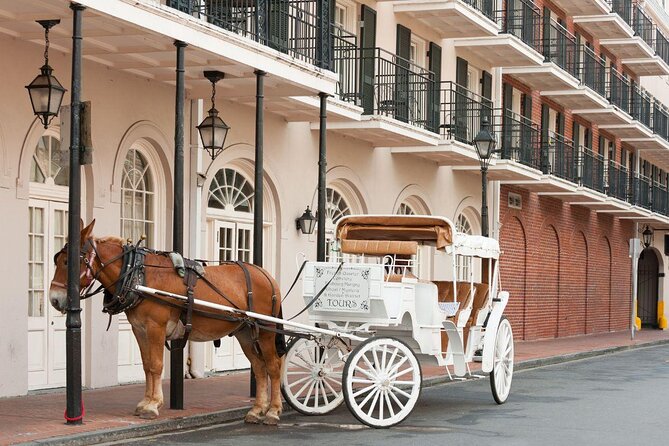
The tour begins at 816 Decatur Street, within the French Market complex. That puts you in a useful part of the French Quarter, close to Jackson Square and the Mississippi River, with plenty of old New Orleans scenery right from the start.
The guide uses the opening stretch to set the table, so to speak. You learn how the city’s food developed through French, Spanish, African, Caribbean, Cajun, and Creole influences. The tour also uses the streets themselves as part of the lesson, pointing out architecture and famous corners instead of treating the food as an isolated restaurant crawl.
I would book this early in your New Orleans stay. Food tours work best near the beginning of a trip because you can return to places you liked and use the guide’s restaurant suggestions later. The experience is booked an average of 29 days ahead, so popular dates may disappear well before arrival.
The tour is offered in English and uses a mobile ticket. It lasts about three hours and ends somewhere in the French Quarter, rather than returning to the starting address. That loose end is useful: you can continue sightseeing, browse the French Market, or make your own dinner plans without crossing the city.
More Food Tours in New Orleans
- New Orleans Food Walking Tour of the French Quarter with Small-Group Option
★ 5.0 · 6,118 reviews - New Orleans Food and History Walking Tour
★ 5.0 · 1,544 reviews - New Orleans French Quarter Food Tour: Cajun, Creole and Culture
★ 5.0 · 1,246 reviews
Jackson Square, architecture, and the food behind the stories
Jackson Square is one of the tour’s important scenic stops. You are not only eating your way through New Orleans, but also seeing the central public space of the French Quarter and hearing how the city’s past shaped its cooking.
This balance is part of the tour’s appeal. Several guides, including Charles, Linda, Lyndel, Roger, Kim, Kimberly, and Tish, have been praised for making the history lively rather than turning the walk into a lecture. Charles in particular is often singled out for his enthusiasm, humor, and ability to connect food with the city’s culture.
That said, you should choose this experience with the right expectation. It is not a nonstop eating event. One disappointing outing was described as more history than food, with only four stops and small servings. Another person found the route involved considerable walking and repeated zigzags through the same areas.
That criticism matters because $75 is a fair price only if you value both parts of the experience: the food and the guided introduction to the French Quarter. If you mainly want large servings or a long seafood meal, this may not be the best use of your money.
Tujague’s and the classic bowl of red beans and rice
Tujague’s is included as a historic restaurant stop. The building once served as a Spanish armory before becoming a restaurant associated with Creole cooking and an elegant setting. The tasting here is listed as red beans and rice, one of New Orleans’ most familiar comfort foods.
This is a good early lesson in the way local food often combines modest ingredients with strong seasoning and a long cultural story. Red beans and rice is filling, familiar, and unmistakably tied to Louisiana cooking.
The drawback is repetition. If your route also includes gumbo and jambalaya, you may encounter several dishes built around rice. One person felt that too much of the meal followed the pattern of rice, red beans and rice, gumbo with rice, and jambalaya. I would keep that in mind if you already know Louisiana food well or want a tour built around many different ingredients.
Laura’s Pralines and Candies for a sweet change
Laura’s Pralines and Candies provides a needed turn from savory food. The shop is described as New Orleans’ oldest candy store, with pralines and handmade chocolates produced in its French Quarter kitchen using recipes that reach back to the 18th century.
Pralines are one of the city’s most recognizable sweets, and this stop gives you a simple way to understand the local candy tradition. It also makes a nice contrast with the heavier dishes served elsewhere on the route.
Laura’s sells Creole and Cajun specialty items as well, so this is one of the better places to pick up a small edible souvenir. The tour includes the tasting, but additional purchases are separate.
More Walking Tours in New Orleans
- New Orleans Premier Ghost, Voodoo and Vampire Walking Tour
★ 4.5 · 12,856 reviews - St. Louis Cemetery No. 1 Official Walking Tour
★ 4.5 · 3,941 reviews - New Orleans French Quarter, Voodoo and Culture Walking Tour
★ 4.5 · 2,961 reviews - New Orleans Garden District History Walking Tour
★ 5.0 · 2,879 reviews
Little Vic’s and the muffuletta in a Creole courtyard
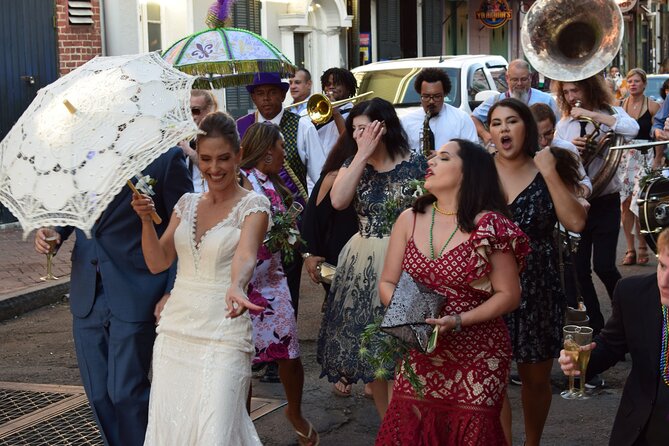
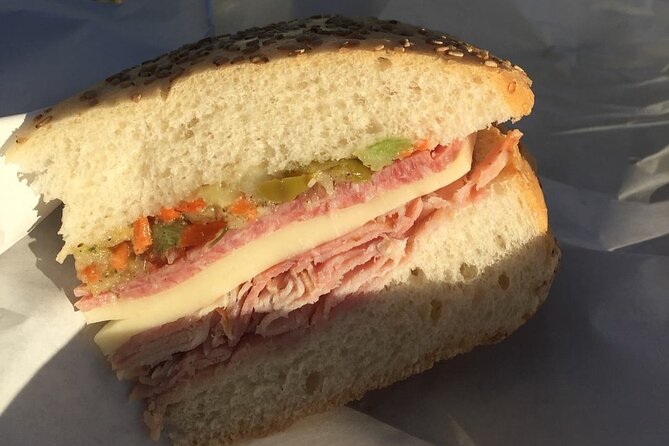
At Little Vic’s Rosticerria, the listed tasting is a traditional muffuletta on homemade bread. The stop is at 719 Toulouse Street, away from the noise of Bourbon Street, and takes place in a peaceful Creole courtyard.
The muffuletta is an important part of the city’s food identity. The sandwich is known for its round bread and savory filling, making it quite different from the roast beef po-boy later in the route. For me, this stop offers one of the clearest examples of why a walking food tour can be useful: you get a signature dish while also seeing a quieter side street and a different kind of French Quarter setting.
Still, food quality can depend on timing and preparation. One person found the po-boy soggy, so it is fair to remember that sandwiches may not always arrive at their best. The route offers a sample, not a made-to-order personal lunch at every stop.
Croissant D’Or and the French side of New Orleans
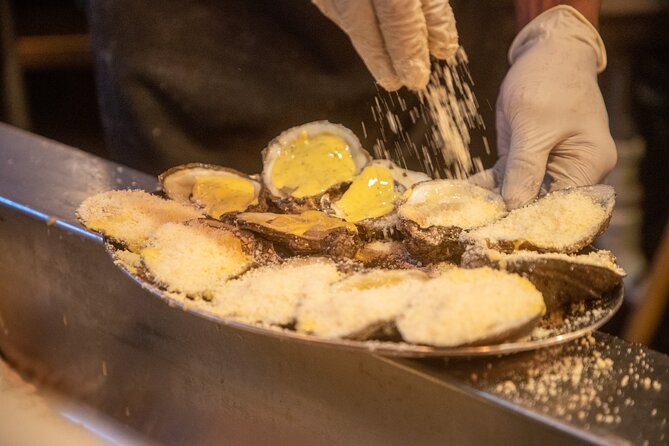
Croissant D’Or Patisserie brings the French influence into sharper focus. The bakery has served French pastries in the French Quarter for nearly 30 years, making it a natural stop in a city where European traditions sit alongside African, Caribbean, and Southern ones.
The pastry course also gives you a pause from meat and rice. Depending on the day’s selection, it may be a welcome lighter bite during a filling schedule.
The sample menu is only an example, so you should not count on one precise pastry. That flexibility lets the operator adjust to availability, but it also means the experience is not a fixed tasting menu. If you have a serious allergy, contact the company ahead of time and ask clearly what can be served.
Nola Po-Boy and the beef sandwich question
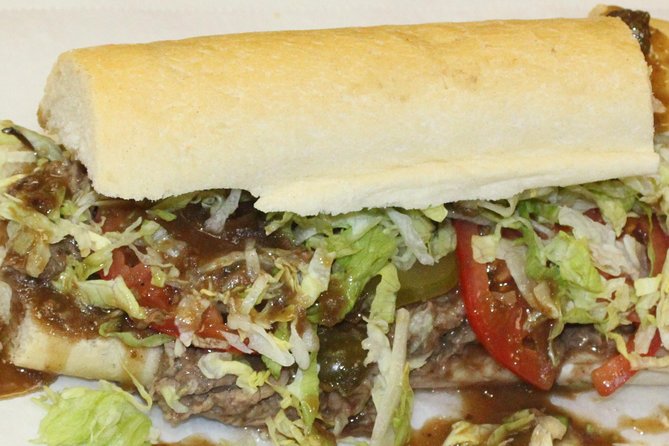
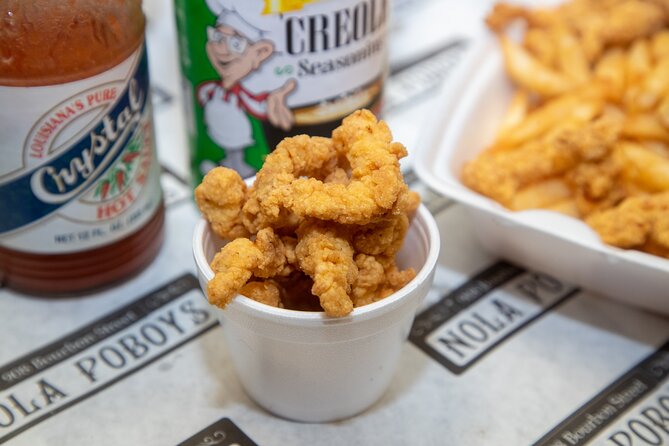
Nola Po-Boy is listed for a fully dressed hot roast beef po-boy. The dressed version typically means the sandwich comes with the customary toppings, but the important point here is that the featured filling is beef, not seafood.
That distinction has caused disappointment for people expecting shrimp, oysters, or another seafood specialty. The tour description does mention a roast beef po-boy, so you should read the menu carefully before booking. New Orleans has a huge seafood tradition, but this particular route is not presented as a seafood-focused tour.
The po-boy is still useful as part of a broad introduction to local food. It shows how New Orleans turned a simple sandwich into a regional institution. Just do not book this tour expecting every stop to feature seafood.
Cafe Fleur De Lis and shrimp with cheese grits
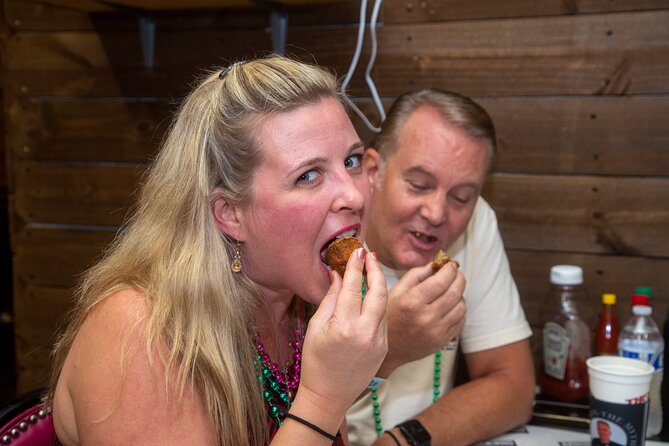
Cafe Fleur De Lis, located in the French Market, is listed as the stop for shrimp and cheese grits. This is the clearest seafood item in the planned lineup and adds a different texture and flavor to the meal.
The cafe also represents Southern cooking within the market setting. By this point, you have seen how food, shopping, architecture, and public life overlap in the French Quarter.
There is an important inconsistency in the published details: the itinerary says five tasting locations, but six venues are named, and some individual accounts describe four stops. Menus and restaurant partners can change. I would treat the listed stops as a guide to the style of the tour, not a promise that every dish will appear exactly as written.
What you may actually eat
The sample menu includes gumbo, red beans and rice, jambalaya, Creole and Cajun dishes, a po-boy, a muffuletta, other rice-based mains, and pralines. The detailed route also lists pastries and shrimp with cheese grits.
That is a generous range on paper, but the actual balance matters. If the route includes several rice dishes, you may feel that the menu repeats itself. If you prefer small portions that let you try many things, this can work well. Several positive accounts describe the servings as manageable tasting portions, while still enough to cover lunch or, in one case, an early dinner.
Your appetite makes a difference. Some people found the food plentiful and comfortable, with time to sit and eat at several stops. Another person needed lunch afterward. I would eat a light breakfast, not skip food entirely, and keep a small snack plan for later if you tend to eat larger meals.
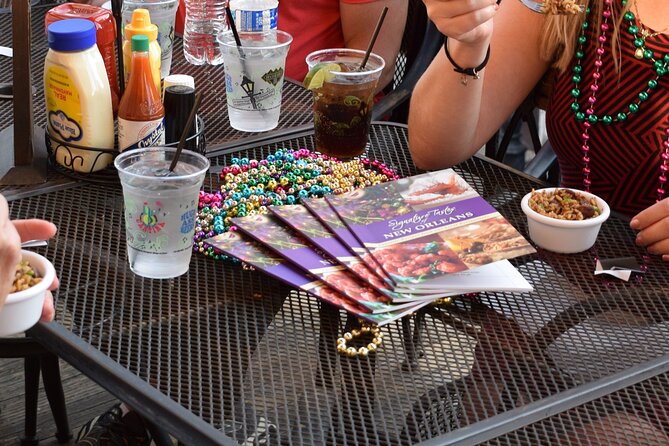
Alcohol is not included, though drinks can be purchased at the stops. New Orleans’ famous to-go cup custom is discussed, but you pay separately for alcoholic drinks. Gratuities are also not included and are appreciated.
Group size, weather, and walking comfort
The maximum group size is 16 people. That is small enough to feel more personal than a large sightseeing bus, though the French Quarter’s street noise can still make it hard to hear at times.
Wear shoes you can walk in for three hours. The route is urban, with restaurant stops and standing or walking between them. Some accounts describe plenty of sitting and eating, while others describe substantial walking and a route that doubles back.
Weather is a real part of the decision. The tour operates in all weather, and the cancellation terms say poor weather can lead to a different date or a full refund. Dress for heat, cold, wind, or rain, and remember that shade can feel chilly in cooler weather. One person found the tour uncomfortable in cold, windy conditions, while another enjoyed it despite temperatures in the 90s.
Service animals are allowed, public transportation is nearby, and most people can participate. Last-minute changes cannot be accommodated, so sort out dietary needs and timing before the day of the tour.
Who will get the most from this tour
I would recommend it to first-time visitors who want a quick introduction to New Orleans food and the French Quarter at the same time. Solo visitors should find the format easy to join, and one solo participant especially appreciated how welcoming the group felt. Couples, families, and mixed-age groups also fit the relaxed format.
It is a particularly good choice if you enjoy stories with your meal. The guides do more than name dishes. They explain Cajun and Creole distinctions, Mardi Gras krewes and their throws, local buildings, and the legends that give the French Quarter its personality.
I would be more cautious if you are vegetarian, gluten-free, highly focused on seafood, or looking for a tour with large portions. The operator explicitly offers no gluten-free or vegetarian option, and the route can lean toward meat and rice. You may also prefer another food tour if you want to discover restaurants you will immediately revisit, since a few dishes and stops have received mixed marks.
Is $75 a good value?
At $75 per person, the price includes the food tastings and three hours with a local guide. If you receive five or six samples and enough food for lunch, the cost is reasonable, especially in a city where several restaurant visits, a pastry, candy, and a guided history walk could quickly add up.
The value drops if the tour has fewer stops, small portions, or food that does not suit your tastes. You are also paying for the guide’s stories, route planning, and access to several establishments, not simply for the cost of the ingredients.
I see this as a city orientation with food built into it, rather than a serious restaurant tasting for dedicated food lovers. That distinction helps explain the wide range of reactions. A well-informed guide can make the experience excellent even when one tasting is ordinary, but no guide can fix a menu that does not match your appetite or diet.
Should you book the Famous Flavors tour?
Book it if you want a friendly, guided walk through the French Quarter with classic New Orleans dishes, useful restaurant suggestions, and plenty of local background. The strongest feature is the combination of food and storytelling, with guides such as Charles, Kim, Linda, Lyndel, Roger, Kimberly, and Tish repeatedly praised for their warmth and command of the subject.
Skip it if you need guaranteed vegetarian or gluten-free food, want a seafood-only route, or expect a large restaurant meal at every stop. Before booking, confirm the current tasting lineup, arrive ready to walk, and treat the menu as changeable. For a first taste of New Orleans, $75 can be good value, provided you want the history and culture as much as the food.
FAQ
Where does the tour start?
It starts at 816 Decatur Street, New Orleans, Louisiana 70116, within the French Market complex.
Where does the tour end?
The tour ends in the French Quarter, New Orleans. A specific final address is not provided.
How long does the food tour last?
It lasts approximately three hours.
How many tasting stops are included?
The itinerary states five tasting locations, but six venues are named in the detailed route. Some accounts describe four stops, so the exact number can change.
Is enough food included for lunch?
The tastings are intended to provide more than enough food for a hearty lunch. Portion sizes can vary, and some people may still want another meal afterward.
Are vegetarian or gluten-free options available?
No gluten-free or vegetarian option is offered. You should report food allergies ahead of time, but special requests are not guaranteed.
Is alcohol included?
No. Alcoholic drinks are available to purchase separately at the stops, and gratuities are not included.
Just added in New Orleans
- New Orleans: French Quarter, Voodoo and Cultural Experience★ 4.5 · 972 reviews
- From New Orleans: Oak Alley Plantation Tour★ 4.5 · 443 reviews
- New Orleans: Voodoo Queen Tour of French Quarter★ 4.7 · 482 reviews
- New Orleans: Bayou Tour in Jean Lafitte National Park★ 4.8 · 428 reviews
- New Orleans: Sunday Steamboat Jazz Cruise + Optional Brunch★ 4.3 · 470 reviews
- New Orleans: Whitney Plantation Tour with Transportation★ 4.7 · 619 reviews
- New Orleans: Guided Swamp Cruise by Tour Boat★ 4.7 · 570 reviews
- New Orleans: Oak Alley Plantation & Airboat Swamp Combo Tour★ 4.7 · 906 reviews
Food & Drink, compared.
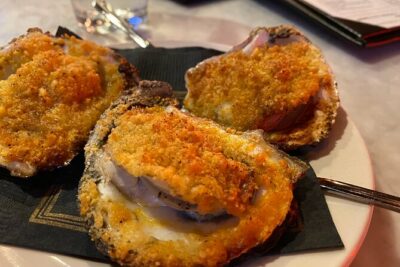
New Orleans Food Walking Tour of the French Quarter with Small-Group Option
Read our review →
NYC Bus Tour of Brooklyn, Bronx, Queens: Art, Food & Sports
Read our review →
Savannah First Squares Culinary & Cultural Walking Food Tour
Read our review →
Chinatown & Little Italy Food Tour with 7 Flavorful Tastings
Read our review →
Food Tour with 5+ Tastings of Local Delicacies
Read our review →
Browse the lists this tour appears in