
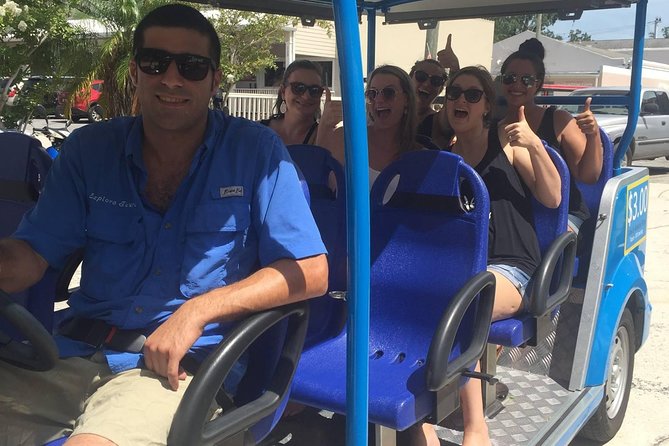
Reviewed · HISTORICAL TOURS
Guided Historical Tour of St. Augustine Per Person
St. Augustine’s story is too large for one street. This one-hour tour makes it manageable, carrying you through the historic center in a small open-air electric vehicle while your guide explains the city’s Spanish, British, military, religious, and American chapters. I like the personal feel of a group capped at nine people, and I like that the driver stops near important sights so you can hear clearly and ask questions.
The main trade-off is the weather. The vehicle is open to the air, so a cool breeze or drizzle can affect your comfort, even though one recent rider reported staying dry during light rain. You also need to arrange parking yourself and arrive early, since the tour does not provide it.
In This Review
- Key things to know before you book
- Why this short St. Augustine tour works
- A small electric vehicle changes the pace
- Mission Nombre de Dios and the city’s beginning
- Castillo de San Marcos, where defense shaped the city
- Flagler College and St. Augustine’s grand turn
- The Cathedral Basilica and St. Augustine’s religious story
- Tolomato Cemetery and St. Francis Barracks
- Gonzalez-Alvarez House and early colonial life
- Plaza de la Constitución and the Bridge of Lions
- Guides who make the history easier to follow
- Timing, meeting point, and parking advice
- Price, weather, and cancellation terms
- Who should book this ride?
- Should you book the St. Augustine historical tour?
- FAQ
- How long is the guided historical tour?
- How much does the tour cost?
- Where does the tour begin?
- Where does the tour end?
- How many people can join the tour?
- Is the tour conducted in English?
- Is parking included?
- Are service animals allowed?
- What happens if the weather is poor?
Key things to know before you book
- A compact one-hour introduction: You see a broad sweep of St. Augustine without spending half a day on a long sightseeing ride.
- Groups of no more than nine: The small vehicle makes it easier to hear the guide and ask questions.
- Karen, Marc, Mark, and other named guides: Personal storytelling, humor, and strong local knowledge are central to the experience.
- Major sights from the outside: The route passes the Castillo de San Marcos, Mission Nombre de Dios, Flagler College, the cathedral, cemeteries, barracks, and city plaza.
- A useful first activity: The tour helps you decide which places deserve a longer visit on foot or inside a museum.
- Plan for parking and weather: The meeting point is at 1 Cordova Street, and the open vehicle can feel cool in wind or light rain.
Why this short St. Augustine tour works
St. Augustine can be confusing at first. The historic district is compact, but its landmarks represent more than four centuries of changing rulers, faiths, military goals, and building styles. A short ride gives you a map in your head before you begin exploring on foot.
I like the balance between movement and explanation. You are not simply driven past a row of buildings with a recorded voice. The driver is also your guide, and the small group gives you room to ask about a church, cemetery, fort, street, or story that catches your attention.
The tour is priced at $30.60 per person. That is fair value if you want orientation, history, and a look at many major sights in one hour. It is less useful if you want extended time inside the Castillo, Flagler College, or the cathedral, since this experience focuses on seeing the city from the vehicle rather than providing full visits to each attraction.
The tour is especially practical at the start of your stay. Several people used it to decide where to return later, and that is exactly how I would use it. Let the guide show you the city’s shape and key points, then choose two or three places for a slower visit.
More History Tours in St Augustine:
- Private Guided Historic Electric Cart Tour of St. Augustine
★ 5.0 · 1,194 reviews - Walking History Tour of St. Augustine’s Historic District
★ 5.0 · 1,152 reviews - Ghost Tour of St. Augustine: The Original Haunted History Tour
★ 5.0 · 386 reviews
A small electric vehicle changes the pace

The open-air electric vehicle is the defining feature. It moves faster than a walking tour, but slowly enough for the guide to point out buildings and explain what you are seeing. You cover more ground with less effort, which can matter in warm weather or after a long day of sightseeing.
With a maximum of nine people, the ride feels much more personal than a large sightseeing bus. A group of six, for example, leaves enough space for a real exchange with the guide. On quieter departures, the group may be even smaller, and some departures have effectively become private rides when only one passenger booked.
The vehicle also lets you see the streets at eye level. You are close to the architecture and can take pictures as the route passes. The open sides are useful for views, but they also expose you to wind. Bring a light layer during cooler months, especially if you tend to feel cold while sitting still. One guide even supplied a blanket on a cool day, but you should not rely on that as standard equipment.
Mission Nombre de Dios and the city’s beginning

The tour includes Mission Nombre de Dios, one of the most important places for understanding St. Augustine’s origin. Pedro Menéndez de Avilés landed here on September 8, 1565, claimed the site for Spain and the Church, and named it Nombre de Dios, meaning Name of God.
The site also includes the Shrine of Our Lady of La Leche. Its story reaches back to the city’s founding, when Menéndez placed Father Lopez in charge of the mission. He became St. Augustine’s first parish priest.
This stop gives the tour a useful starting point. Instead of treating St. Augustine as a collection of pretty old buildings, the guide connects the city to Spanish colonial expansion and Catholic mission work. The setting is also linked with the first founding of the city at the Timucua village of Seloy, located at today’s Fountain of Youth Archaeological Park.
You should think of this part as an introduction rather than a full archaeological visit. The vehicle passes by the area and explains its importance. If the founding story interests you, save time later for a return visit to the Fountain of Youth Archaeological Park or the mission area.
Castillo de San Marcos, where defense shaped the city
The Castillo de San Marcos is the tour’s most obvious military landmark. Built by the Spanish to protect Florida and the Atlantic trade route, it is the oldest masonry fortification in the continental United States.
The fort preserves more than military walls. Its story includes more than 450 years of cultural contact and changing control. Spain, Britain, and the United States each had a role in the city’s later development, and the Castillo helps explain why St. Augustine mattered beyond Florida.
Seeing it from the vehicle is a good preview, but this is one place where you may want to return on foot. A drive-by gives you the structure and the broad story. An interior visit gives you the rooms, passageways, views, and more detailed interpretation. The tour helps you decide if that extra time belongs on your schedule.
A few more options to weigh up in St Augustine
- St. Augustine Hop-On Hop-Off Trolley Tour
★ 4.5 · 3,799 reviews - St. Augustine Ghost Tour: A Ghostly Encounter
★ 4.5 · 2,404 reviews - Medieval Torture Museum with Ghost Hunting and Tiny Art Gallery
★ 5.0 · 2,011 reviews - Take a Scenic Boat Ride in St. Augustine
★ 4.5 · 1,399 reviews
Flagler College and St. Augustine’s grand turn

The former Ponce de Leon Hotel, now Flagler College, represents a very different period. Henry Flagler built the hotel during the late 19th century, when St. Augustine was being promoted as a resort destination for wealthy visitors.
The building is a visual change from the Spanish colonial sites. Its elaborate design shows how the city shifted from a military and colonial outpost toward a fashionable American resort town. The guide can place that change within the wider story of St. Augustine, rather than presenting the building as decoration alone.
The route also passes Flagler’s Memorial Presbyterian Church. It was dedicated on March 16, 1890, after Flagler built it for his daughter Jennie Louise Flagler, who died in 1889. Carrere & Hastings designed the church, the same architects responsible for the Ponce de Leon Hotel, and the design draws from St. Mark’s Basilica in Venice.
This is a good example of why a guide adds value. Without context, you might simply notice an ornate church. With the story, you see how personal grief, wealth, architecture, and civic ambition shaped the city.
The Cathedral Basilica and St. Augustine’s religious story
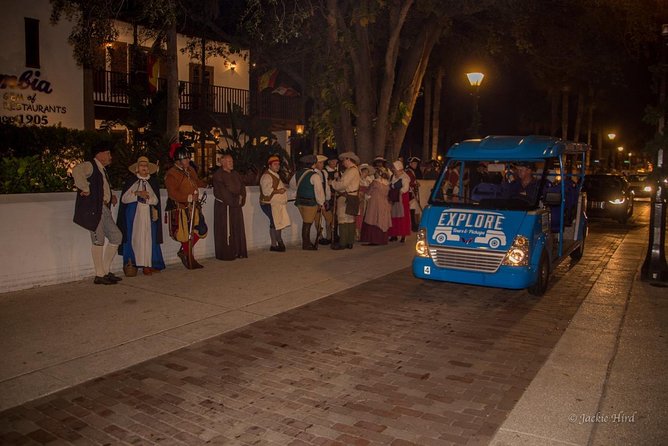
The Cathedral Basilica of St. Augustine is identified as the city’s oldest Catholic church and the oldest parish in the country. It faces the Plaza de la Constitución and helps anchor the historic center.
The cathedral is particularly important in a tour that begins at Mission Nombre de Dios. Together, the two sites show the continuing role of Catholic worship in St. Augustine from the city’s founding onward.
The vehicle gives you a close look and a concise explanation, but the time is limited. If you want to study the interior, attend a service, or examine the building at a slower pace, return after the ride. The tour is best at showing how the cathedral fits into the city rather than replacing a full visit.
Tolomato Cemetery and St. Francis Barracks
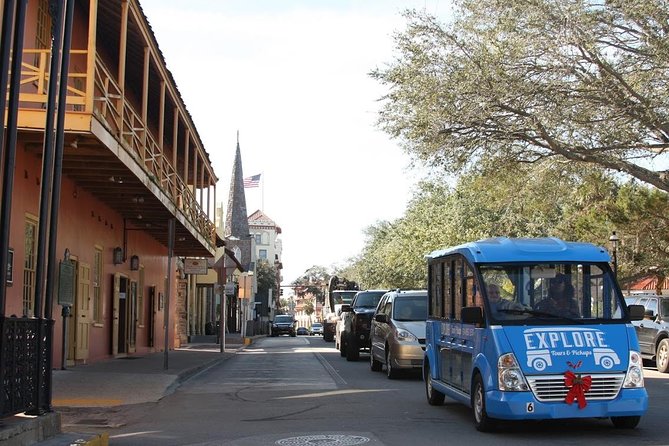
Tolomato Cemetery adds a quieter and more reflective note. It was used from the 18th century until 1884, making it part of the long record of life and death in the city. Cemeteries can be easy to miss when you are focused on grand buildings, so having the guide point it out is useful.
The cemetery also reminds you that St. Augustine’s past is not only about founders, forts, and wealthy builders. It includes ordinary residents, religious communities, and generations of families who lived in the city.
The St. Francis Barracks brings the military story forward again. Franciscan friars built the coquina barracks between 1724 and 1755 on Marine Street. When Britain took possession of Florida in 1763, the building was converted for military use.
After Florida became part of the United States in 1821, the U.S. Army controlled the barracks until its deactivation in 1900. In 1907, it was leased to Florida State Troops, the forerunner of today’s National Guard.
This sequence is a fine example of the tour’s value. One short route connects Spanish religious work, British rule, American control, and the state’s military tradition. You gain a timeline that makes later sightseeing easier to understand.
Gonzalez-Alvarez House and early colonial life
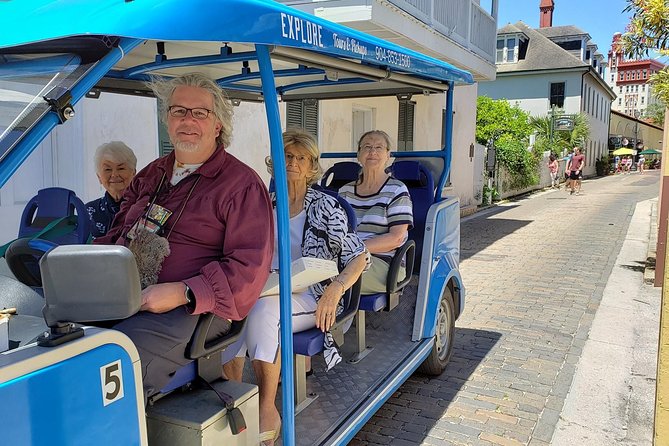
The Gonzalez-Alvarez House, also called the Oldest House, is described as the oldest surviving Spanish colonial residence in Florida. It is owned and operated by the St. Augustine Historical Society.
A fort tells you how a city defended itself. A residence tells you more about how people lived. The house helps bring the Spanish colonial period down to a human scale, with attention shifting from governments and armies to domestic life.
Again, the tour provides an exterior orientation and historical explanation rather than a full house visit. If early homes interest you, mark it as a place to revisit. The guide’s overview can help you decide how much time to give it.
Plaza de la Constitución and the Bridge of Lions
The Plaza de la Constitución sits at the center of the historic city. It is bordered by the Cathedral Basilica, Trinity Episcopal Church, and Government House, and it faces the Bridge of Lions.
The plaza has been a public market since the 1500s, when people traded fish, vegetables, and other goods there. Today, its central pavilion hosts city events, private gatherings, and live entertainment. That long public use makes the plaza more than a pleasant open space. It is the city’s civic meeting point across centuries.
The Bridge of Lions adds an architectural flourish to the route. Completed in 1927 during Florida’s extravagant land boom, it was designed as a work of art as well as a road connection between downtown St. Augustine and Anastasia Island.
These final sights help pull the tour together. The plaza represents public life, the cathedral represents faith, the bridge reflects 20th-century ambition, and the earlier stops explain the city’s colonial and military roots.
Guides who make the history easier to follow
The guide can make or break a one-hour history tour. Here, the strongest feedback centers on guides such as Karen, Marc, Mark, and Deanna.
Karen is repeatedly praised for careful research, warmth, patience, humor, and the ability to tell stories rather than recite dates. She also leaves time for pictures and questions. One useful detail is that she has helped people recognize the same stories later in museums, which suggests her explanations give you a solid base for independent sightseeing.
Marc and Mark are described as personable, funny, and well informed. Deanna is praised for mixing documented history with local hearsay in a light and entertaining way. That mix can make a short ride more enjoyable, though I would still treat colorful legends as stories to enjoy, not always as proven fact.
The best part of the small group is that you can speak directly with the guide. If you want to know why a building matters, ask. If you are planning lunch or the rest of your day, guides have also offered local recommendations.
Timing, meeting point, and parking advice
The tour lasts about one hour and begins at 1 Cordova Street, St. Augustine, Florida 32084. It returns to the same meeting point, which makes it easy to use as an early activity before exploring nearby sights.
Confirmation arrives when you book, and you should read the special instructions on your ticket carefully for the exact meeting details. Include a phone number that can reach you on the day of the tour.
Parking is not provided. St. Augustine traffic can be slow, and a short drive from the beach can take much longer than expected. I would build in extra time, locate a parking option before leaving, and arrive early rather than risk a rushed start.
The tour is offered in English. Service animals are allowed, public transportation is nearby, and most people can participate. The maximum group size is nine.
Price, weather, and cancellation terms
At $30.60 per person, the tour offers good value for a first look at St. Augustine. You are paying for a certified guide, a small vehicle, and a concentrated route through major historic areas. The strongest value comes when you use the hour to plan the rest of your visit.
The open-air format needs a little preparation. Light drizzle may not ruin the ride, but cool wind can be uncomfortable. Check the forecast, bring a light jacket, and remember that the experience depends on good weather.
Free cancellation is available if you cancel at least 24 hours before the start time. Cancellations within 24 hours are not refunded, and changes inside that period are not accepted. If poor weather forces a cancellation, you can choose another date or receive a full refund. The same choice applies if the minimum number of participants is not reached.
Who should book this ride?
I would recommend it to first-time visitors, families, couples, small friend groups, and anyone who wants the city explained before walking it. It is also useful if you have limited time and want to see many key areas without committing to a long tour.
It suits people who enjoy asking questions and listening to stories. It is less suitable if you want long stops, extensive interior visits, or a fully sheltered vehicle.
Book it early if your schedule is tight. The tour is commonly reserved about 10 days ahead, and a small vehicle has limited space. If you can choose your timing, an earlier ride may give you a better orientation for the rest of the day.
Should you book the St. Augustine historical tour?
Yes, if you want a friendly and efficient introduction to the city. The strongest reasons are the nine-person maximum, the chance to speak directly with the guide, and the broad route covering the Castillo, Mission Nombre de Dios, Flagler College, the cathedral, cemeteries, barracks, Oldest House, plaza, and Bridge of Lions.
At $30.60, it is a sensible first step rather than a replacement for every major attraction. Bring a layer, solve your parking plan early, and treat the ride as your city overview. Afterward, return to the places that caught your interest and explore them at a slower pace.
FAQ
How long is the guided historical tour?
The tour lasts approximately one hour.
How much does the tour cost?
The listed price is $30.60 per person.
Where does the tour begin?
The meeting point is 1 Cordova Street, St. Augustine, Florida 32084.
Where does the tour end?
The experience returns to the same meeting point.
How many people can join the tour?
The tour has a maximum of nine participants.
Is the tour conducted in English?
Yes, the tour is offered in English.
Is parking included?
No. Parking is not provided, so you should plan ahead and arrive early.
Are service animals allowed?
Yes, service animals are allowed.
What happens if the weather is poor?
If the tour is canceled because of poor weather, you can choose another date or receive a full refund.
Just added in St Augustine
- Walking History Tour of St. Augustine’s Historic District★ 5.0 · 1,152 reviews
- Wine Tasting Cruise in St. Augustine★ 5.0 · 426 reviews
- The Original Haunted Pub Tour★ 4.5 · 382 reviews
- St. Augustine’s Wine, Cocktail and Food Experience★ 5.0 · 1,251 reviews
- Old Jail Museum Tour in St. Augustine★ 5.0 · 717 reviews
- Private Guided Historic Electric Cart Tour of St. Augustine★ 5.0 · 1,194 reviews
- Sunset Cruise of St. Augustine★ 5.0 · 1,235 reviews
- Nights of Lights Boat Cruise★ 4.5 · 382 reviews
Historical Tours, compared.


History and Hauntings of Salem Guided Walking Tour
Read our review →
Charleston’s Old South Carriage Historic Horse & Carriage Tour
Read our review →

Big Island in a Day: Volcanoes Waterfalls Sightseeing and History
Read our review →
Freedom Trail History Small Group Walking Tour
Read our review →
Historic Charleston Guided Sightseeing Walking Tour
Read our review →
Starship Landmark 90 Minute Sightseeing Cruise
Read our review →Browse the lists this tour appears in