
Reviewed · MUSEUMS
Las Vegas Mob Museum Admission Ticket
Las Vegas has a darker origin story. The Mob Museum turns organized crime into a sharp, hands-on lesson, tracing the rise of Al Capone, Lucky Luciano, Bugsy Siegel, and the law officers who worked to stop them. I especially like the historic federal courthouse setting and the museum’s mix of original objects, film, recordings, and interactive displays. The main drawback is the amount of reading and graphic material, so casual sightseers may tire before reaching the basement.
Plan on at least three hours if you want to hear the recordings, watch the courtroom presentation, and take your time with all three floors. I also like the timed admission, which can save you from a long wait during the busiest part of the day. The museum can get crowded from about 11 a.m. to 4 p.m., and the exhibits make more sense if you begin upstairs and work down.
In This Review
- Key points to know before you go
- Why the Mob Museum belongs on a Las Vegas itinerary
- Begin upstairs, then follow the story downward
- Stand beside the St. Valentine’s Day Massacre wall
- Sit in the courtroom of the Kefauver hearings
- Hear the evidence through FBI surveillance tapes
- Follow Las Vegas, labor, and political connections
- End with Prohibition at The Underground
- Timing, transport, and the practical details
- Who will enjoy the Mob Museum most
- Should you book the Mob Museum?
- FAQ
- What are the Mob Museum’s opening hours?
- How long should I plan for the Mob Museum?
- Can I use my ticket at any time on my reserved date?
- Is admission to The Underground included?
- What are The Underground’s hours?
- Are children allowed at the Mob Museum?
- Can children enter The Underground?
- Is parking available?
- Can I take photographs inside?
- Is an audio guide available?
Key points to know before you go

- Start on the third floor: The displays are arranged for a downward journey through the rise of organized crime and the fight against it.
- See the Kefauver courtroom: This restored courtroom hosted the 1950 hearings that put mob figures, politicians, and business leaders under national scrutiny.
- Expect graphic content: The St. Valentine’s Day Massacre wall, crime footage, and other material make this better for teens and adults than young children.
- Save time for The Underground: The basement speakeasy and distillery add a lively Prohibition chapter, though cocktails, food, and moonshine cost extra.
- Use the free mobile app: It includes a building map, exhibit details, self-guided tours, and interactive missions.
- Allow three to four hours: The basic visit is self-guided, but talks, videos, and interactive displays can stretch the stay.
Why the Mob Museum belongs on a Las Vegas itinerary
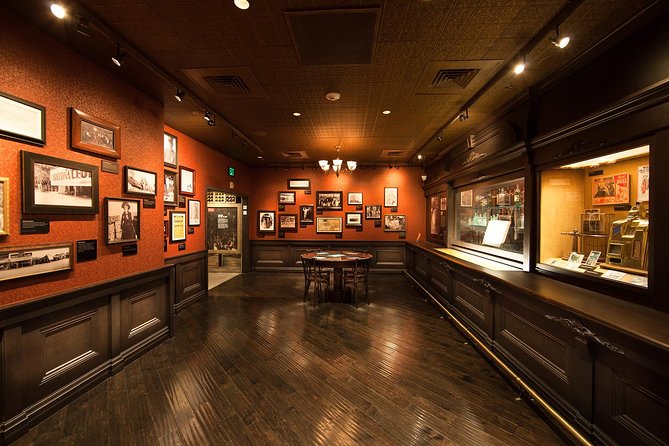
The Mob Museum is a useful break from casino floors and stage shows. It sits in downtown Las Vegas, only a short walk from the Fremont Street Experience, but its setting feels far removed from the Strip’s polished spectacle.
The building is a former federal courthouse listed on the National Register of Historic Places. That matters. You are not just looking at a collection of crime memorabilia in a modern hall. You are moving through a place tied to the legal system, then sitting in the very courtroom where organized crime was examined in public.
The museum tells two stories at once. One follows criminals, bootleggers, racketeers, and corrupt officials. The other follows investigators, prosecutors, federal agents, and local police. That balance keeps the experience from turning into a simple celebration of gangsters.
The subject also connects directly to Las Vegas. Organized crime helped shape the city’s early gambling industry, and the exhibits explain how money, politics, labor, and violence became tangled together. You leave with a clearer idea of why Las Vegas developed as it did, rather than simply a list of famous criminal names.
At $34.95 per person, this is not a bargain attraction for a quick 45-minute stop. It becomes a good buy if you stay two to four hours and use the interactive sections. The ticket also gives you access to The Underground, although food and drinks there are separate purchases.
More Museum Tours in Las Vegas:
- Ticket for ARTE Museum Las Vegas
★ 5.0 · 2,106 reviews - Madame Tussauds Wax Museum Las Vegas
★ 4.4 · 601 reviews - Titanic: The Artifact Exhibition at the Luxor Hotel and Casino
★ 4.5 · 350 reviews
Begin upstairs, then follow the story downward
The museum has three public floors, and the most useful approach is to start on the third floor and work your way down. This gives the exhibits a rough chronological flow and prevents the common mistake of seeing the final chapters first.
The first sections explain how organized crime developed, including the role of Prohibition, illegal gambling, bootlegging, and criminal networks that crossed city and state lines. Displays introduce major figures such as Al Capone and Lucky Luciano, along with the wider system that allowed their operations to grow.
The Wall of Infamy gathers famous names including Capone, Luciano, and John Gotti. It is an efficient way to place the personalities, but the museum does more than show mugshots. Multimedia material and artifacts help explain how these men gained power, recruited allies, and used legitimate businesses or political connections to protect themselves.
Bugsy Siegel receives special attention because his story is tied to the birth of modern Las Vegas. The museum does not treat the city’s Mob connection as a colorful footnote. It shows how gambling profits and organized crime became part of the city’s early development.
Give yourself time here. The information is dense, and you can easily spend an hour on a floor if you read every panel and stop for the videos. If you prefer a faster visit, focus on the major artifacts and interactive stations, then return to the sections that catch your interest.
Stand beside the St. Valentine’s Day Massacre wall
One of the museum’s most memorable displays is the wall connected to the St. Valentine’s Day Massacre. The exhibit presents the event as a turning point in public awareness of organized crime, not as a glamorous gangster legend.
The material is graphic. You may see crime scene imagery, violent footage, and descriptions of killings. The museum warns that the content may not suit children under 12, and that advice is worth taking seriously. Children age 10 and under can enter free with a paying adult, but free admission does not make the subject family-friendly.
This part works because the museum keeps the violence tied to its consequences. You see how brutal crime pushed law enforcement and the public to take organized crime more seriously. The emphasis is on what happened and how authorities responded, rather than on making killers into movie heroes.
Photography is allowed, but flash is prohibited. You also need to keep clear of exhibit entrances and busy walkways. That is especially important around popular displays, where stopping for a photo can quickly block other people.
Sit in the courtroom of the Kefauver hearings
The restored courtroom is one of the museum’s strongest spaces. The Kefauver committee hearings in 1950 examined organized crime in front of a national audience, and the courtroom gives that story a physical setting.
Here, the museum shifts from shootings and gangsters to institutions. Businessmen, politicians, and mob figures faced questions about criminal networks, influence, and money. The hearing helped bring organized crime into American living rooms through televised proceedings.
A courtroom presentation adds useful context. It is a good place to pause, since the museum’s many panels and screens can become tiring. You might also encounter a scheduled talk by a former Mob family member, such as Frank Calabrese Jr., who has spoken in the courtroom about his experience. These talks can add a human angle that static displays cannot provide, so check the schedule when you arrive.
The presentation can take time, but it is often worth adjusting your route around it. If you see a guest speaker listed, make room in your plan rather than treating the museum as a quick walk-through.
A few more options to weigh up in Las Vegas
- Grand Canyon West, Hoover Dam Stop and Optional Lunch and Skywalk
★ 5.0 · 19,535 reviews - Grand Canyon West, Hoover Dam Stop, Breakfast, Lunch & Skywalk
★ 5.0 · 12,194 reviews - Half-Day Mojave Desert ATV Tour from Las Vegas
★ 5.0 · 7,350 reviews - Grand Canyon West Bus Tour with Hoover Dam and Optional Skywalk
★ 4.0 · 7,224 reviews
Hear the evidence through FBI surveillance tapes
The museum’s law enforcement sections explain how investigators built cases against organized crime. Real FBI surveillance tapes let you hear conversations connected to investigations, giving the subject a less polished and more awkward sound than film versions usually provide.
You also learn how law enforcement techniques changed. Surveillance, informants, financial records, wiretaps, and coordinated federal investigations all played a part in weakening Mob operations. The story is not simply that the Mob disappeared. It is about how authorities adapted over time.
The weapons training section offers another interactive element. It gives you a sense of the tools and procedures used by federal agents, rather than leaving law enforcement as a collection of uniforms and photographs.
The free mobile app can help here. It provides an interactive map, exhibit information, self-guided tours, and missions connected to Mob and law enforcement topics. An audio tour is also available for a small fee, so ask at the box office if you prefer narration over reading.
One caution: popular audio and video stations may be occupied during busy periods. If the museum is crowded, you may need patience or a return visit to catch every recording.
Follow Las Vegas, labor, and political connections
The middle and lower sections widen the story beyond famous mobsters. You learn about the Mob’s role in Las Vegas gambling, its connections to Jimmy Hoffa, and its relationship with political power.
The exhibits also address the Mob’s alleged involvement in the assassination of a president. This material is presented as part of the wider debate over organized crime and political influence. It is a good reminder that the museum deals with disputed and complex subjects, not only settled facts.
This broader view is one reason the museum works for people who do not consider themselves Mob fans. You do not need to arrive knowing every gangster’s nickname. The exhibits explain the basic players and show how crime affected courts, unions, businesses, elections, and city life.
The tradeoff is that the museum asks for attention. It is not a ride with a single dramatic finish. You read, listen, watch, and make connections over several floors. If you want a fast attraction between meals, this may feel too demanding. If you like well-researched museums, the detail is the point.
End with Prohibition at The Underground
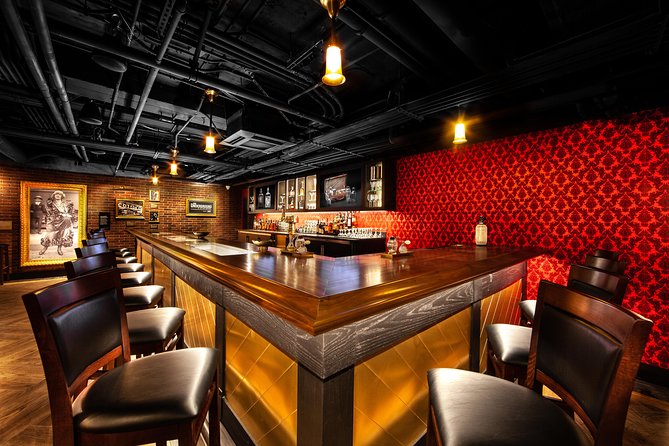
The Underground sits in the basement and provides a change of pace after the serious exhibits above. This Prohibition-era space is designed as a speakeasy and working distillery, surrounded by period artifacts and a 1920s setting.
Admission to The Underground is included with the museum ticket, but drinks and food are not. You can order craft cocktails, light food, and house-made moonshine. The flavored moonshines have become a popular choice, and the speakeasy also offers coffee, drinks, and shareable items.
The distillery tour shows where the museum produces its own moonshine. It adds a practical layer to the Prohibition story, showing how alcohol production and concealment shaped the period.
The Underground is open to museum patrons of all ages before 5 p.m. After 5 p.m., the space is for people 21 and older. Anyone ordering alcohol must be 21 or older, and the distillery is also limited to those 21 and over.
I would treat The Underground as a proper stop, not a quick glance at the end. It makes a pleasant break in the middle of a long museum visit, especially if you want a drink and snack before returning upstairs. If you do not drink, you can still look around, but the basement will offer less value than it does for cocktail fans.
Timing, transport, and the practical details
The museum is open daily from 9 a.m. to 9 p.m., while The Underground is open daily from noon until midnight. Hours can change, so check the official website before setting out.
Your ticket is tied to the entry time you select. Arrive a few minutes early to exchange it for admission, especially if you are visiting during the 11 a.m. to 4 p.m. rush. Advance booking is useful because it can reduce time spent waiting in line, and this attraction is commonly reserved about 11 days ahead.
Paid parking is available at the museum. If the main lot is full, other parking is within a short walk, but check signs carefully. An overflow lot can have different parking rules, and parking in the wrong area may result in a ticket.
Public transport is easy. The free Downtown Loop stops outside the museum, and the RTC Deuce bus connects downtown with several points along the Strip. A rideshare can also drop you close to the entrance.
The building has an elevator and a lift at the front. Service animals are allowed, but other pets are not. Photography is permitted without flash, and clothing with profane, obscene, or injurious language is not allowed.
Who will enjoy the Mob Museum most
I would recommend this attraction to you if you like American crime history, Las Vegas development, courtroom stories, or exhibits that let you listen and interact rather than simply look at objects.
It is also a smart choice for a hot afternoon, a rainy day, or a break from casino noise. Families with older teenagers may find plenty to discuss, but younger children are likely to become bored or upset by the violent material. The museum itself recommends it for ages 12 and up.
Allow two hours for a focused visit. Give it three hours if you want the courtroom film, surveillance tapes, interactive stations, and The Underground. Four hours is reasonable if you read closely, attend a speaker presentation, and stop for food or drinks.
The basic ticket does not include add-ons such as the Premier Pass, Crime Lab Experience, or Use of Force Experience. Those may appeal to people who want extra participation, but the standard admission already fills a substantial visit.
Should you book the Mob Museum?
Yes, if you want a serious, unusual Las Vegas attraction with strong local connections. The $34.95 price makes sense when you stay at least three hours, and the historic courthouse, courtroom, original artifacts, FBI recordings, and basement speakeasy give you plenty to do.
Book it if you prefer a self-guided visit and can handle graphic subject matter. Arrive early or late to avoid the busiest hours, begin on the third floor, and check for a guest speaker before you start.
Skip it if you want a quick, lighthearted attraction or if crime scenes and violent material are not your thing. For most adults and older teenagers, though, this is one of downtown Las Vegas’s most worthwhile breaks from the usual casino routine.
FAQ
What are the Mob Museum’s opening hours?
The museum is open daily from 9 a.m. to 9 p.m. Operating hours can change, so check them before your visit.
How long should I plan for the Mob Museum?
A focused visit can take one to three hours. Plan on three to four hours if you want to see all three floors carefully, attend a presentation, and spend time in The Underground.
Can I use my ticket at any time on my reserved date?
No. You must use the ticket at the entry time you selected. Arrive a few minutes early to redeem it.
Is admission to The Underground included?
Yes. Museum admission includes access to The Underground, but food, cocktails, and other drinks cost extra.
What are The Underground’s hours?
The Underground is open daily from noon until midnight, although hours may change.
Are children allowed at the Mob Museum?
Yes, children are allowed, and children age 10 and under can enter free with a paying adult. The museum recommends the content for ages 12 and up because of graphic material.
Can children enter The Underground?
The Underground is open to museum patrons of all ages before 5 p.m. After 5 p.m., it is limited to people age 21 and older. Guests must be 21 or older to eat or drink there, and the distillery is also 21 and over.
Is parking available?
Paid parking is available at the museum. If that lot is full, additional parking is available within a short walking distance. Check the signs carefully, especially in overflow areas.
Can I take photographs inside?
Yes, photography is allowed, but flash photography is prohibited. Do not block exhibits, entrances, exits, or busy walkways.
Is an audio guide available?
Yes. Self-guided and audio tours are available, with audio tours offered for a small fee. Ask at the box office for current details.
Just added in Las Vegas
- Zion and Bryce Canyon Small Group Tour from Las Vegas★ 5.0 · 879 reviews
- Zombie Burlesque at Planet Hollywood Resort and Casino★ 4.5 · 404 reviews
- VEGAS! The SHOW at Planet Hollywood Resort and Casino★ 4.5 · 834 reviews
- Wild West Sunset Horseback Ride with Dinner from Las Vegas★ 5.0 · 1,031 reviews
- Valley of Fire Tour★ 4.5 · 423 reviews
- Valley of Fire Guided Hike from Las Vegas★ 5.0 · 1,611 reviews
- V – The Ultimate Variety Show at Planet Hollywood Resort and Casino★ 4.5 · 755 reviews
- Valley of Fire State Park Day Tour from Las Vegas★ 5.0 · 317 reviews
Museums, compared.
Empire State Building Tickets – Observatory & Museum
Read our review →

9/11 Memorial, Ground Zero Tour with Optional 9/11 Museum Ticket
Read our review →

All-Access 9/11: Ground Zero Tour, Memorial and Museum, One World Observatory
Read our review →
Browse the lists this tour appears in