
Reviewed · MUSEUMS
Miami: Frost Museum of Science and Planetarium Entry Ticket
Science gets theatrical in Miami. The Phillip and Patricia Frost Museum of Science packs an aquarium, planetarium, and hands-on exhibits into one waterfront stop. I like the three-level aquarium, especially the stingray touch pool and hammerhead sharks. I also like the planetarium’s huge screen, which turns climate science and black holes into memorable shows.
The main catch is timing. The $30 ticket is fair if you stay for three or four hours, but planetarium shows are first-come, first-served. You may need to plan your museum route around the show rather than simply walk in whenever you please.
In This Review
- Frost Science highlights at a glance
- What the $30 Frost Science ticket includes
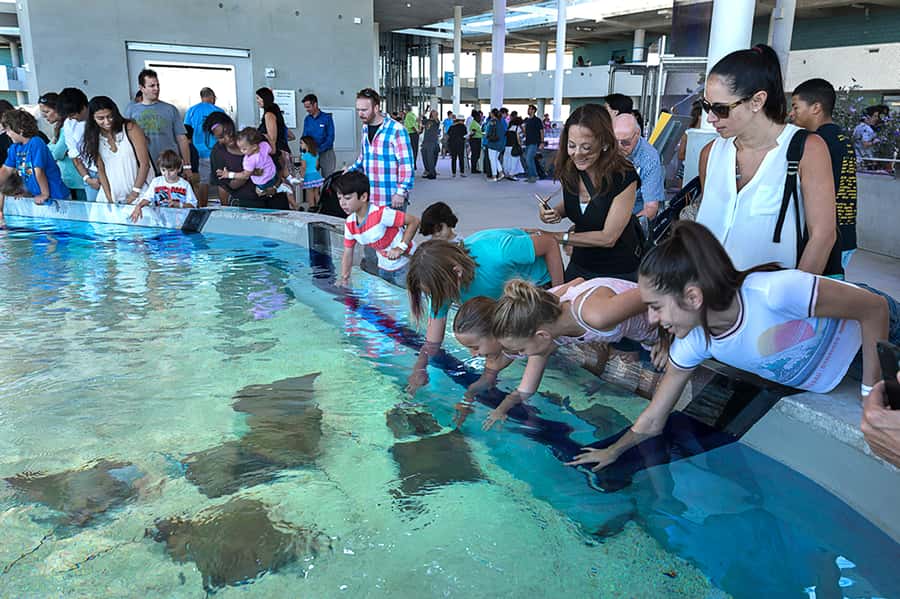
- Starting at the aquarium, from stingrays to sharks
- The planetarium: choose your show carefully
- Feathers, dinosaurs, aviation, and Mars
- Power of Science and the hands-on exhibits
- How long you need inside
- Who will get the most from this visit
- Practical tips for a smoother visit
- Is Frost Science worth booking?
- FAQ
- How much does the Frost Science entry ticket cost?
- What does the ticket include?
- How long is the ticket valid?
- How long should I plan to spend at the museum?
- Are planetarium shows guaranteed with admission?
- Can I cancel the booking?
- Is the museum wheelchair accessible?
Frost Science highlights at a glance
- Three-level aquarium: See jellyfish, hammerhead sharks, stingrays, and other marine life while moving through the aquarium’s descending layout.
- Hands-on science: Touch, test, and experiment with displays designed for children and adults, including science gadgets and live programming.
- Nearly 360-degree planetarium: Choose one show, either Dynamic Earth or Black Holes, subject to availability.
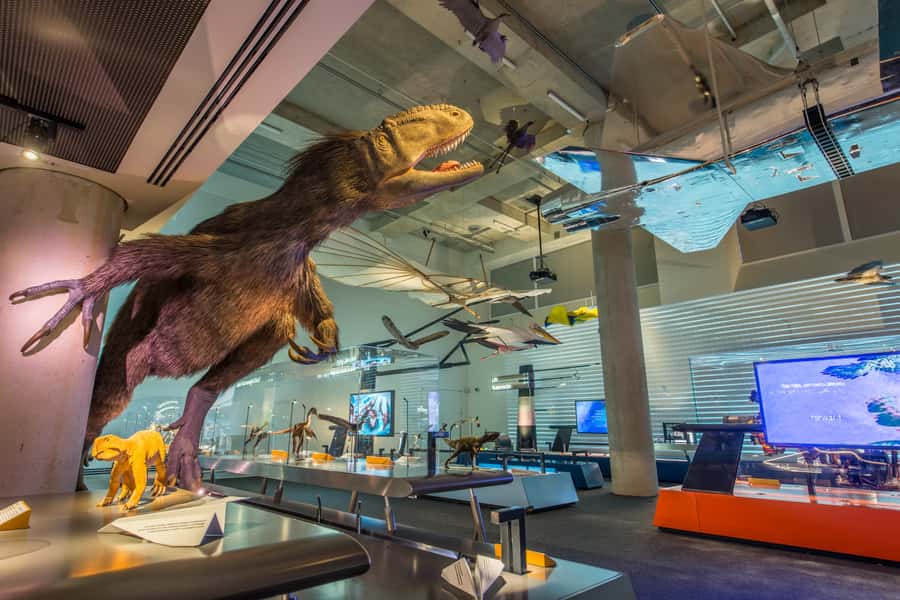
- Thirty-foot dinosaur: Meet the towering Yutyrannus Huali in the Feathers to the Stars exhibition.
- Space and aviation exhibits: Trace the path from feathered dinosaurs to human flight and spacecraft landing on Mars.
- Family-friendly timing: Plan on three to four hours if you want to see the main exhibitions, aquarium, and planetarium.
What the $30 Frost Science ticket includes
The standard admission costs $30 per person. That price covers entry to the Phillip and Patricia Frost Museum of Science, aquarium access, and one planetarium show.
For Miami, that can be solid value. This is not a quick room with a few displays. You have more than 250,000 square feet to explore, and the experience mixes animals, technology, science demonstrations, large-scale film, and interactive stations. If you spend only an hour here, the ticket may feel expensive. If you stay three or four hours, it makes more sense.
The ticket does not include food, drinks, transportation, or an upgrade to an annual membership. A GetYourGuide ticket also cannot be applied toward an annual membership purchase. If you live nearby and expect to return often, check the annual membership option separately before buying.
The ticket is valid for one day. It also offers free cancellation up to 24 hours before the scheduled experience, and you can reserve now and pay later. That flexibility helps if your Miami plans depend on weather or changing family schedules.
More Museum Tours in Miami:
- Miami: Museum of Ice Cream Entry Ticket
★ 4.3 · 394 reviews - NYC: 9/11 Memorial & Museum Timed-Entry Ticket
★ 4.8 · 31,428 reviews - NYC: Empire State Building Tickets – Observatory & Museum
★ 4.7 · 25,757 reviews
Starting at the aquarium, from stingrays to sharks
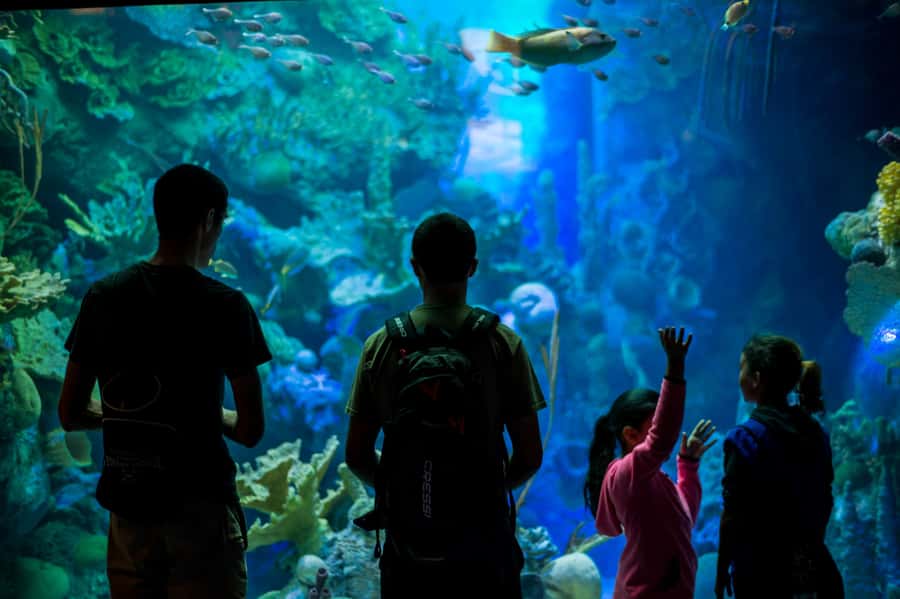
I would begin with the aquarium, especially if you are visiting with children. The aquarium occupies three levels, and its design lets you move through different parts of the marine world rather than stare at one large tank and call it a day.
The stingray area gives the visit a hands-on spark. You can touch a stingray, an experience that makes marine biology feel less distant. You may also encounter displays where children can feel different textures, which can be useful for younger children who are not yet ready to read long exhibit panels.
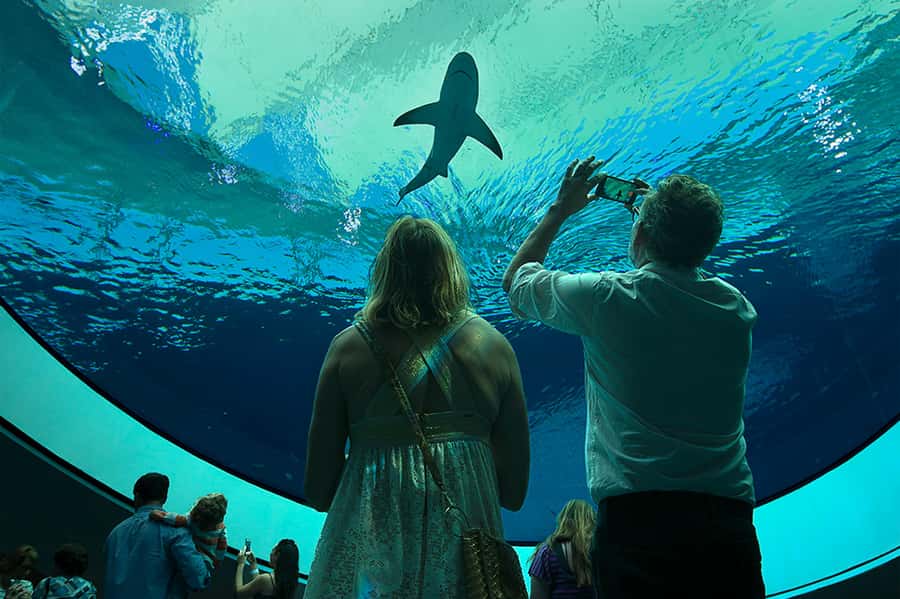
The larger aquarium displays bring you close to hammerhead sharks, jellyfish, stingrays, and other fish. The sharks provide the drama, while the jellyfish offer the calmer visual moment. Their movement and color can hold the attention of young children even when they have lost interest in a written explanation.
One practical note: the aquarium may take longer than you expect. The three-level layout creates a natural route, but you still need time to pause at the touch areas and tanks. If your family moves slowly, allow extra room before your planetarium show.
The aquarium works for adults, too. It is not only a children’s attraction. The animals give the science museum a living center, and the mix of viewing and touch makes this section more engaging than a row of static panels.
The planetarium: choose your show carefully
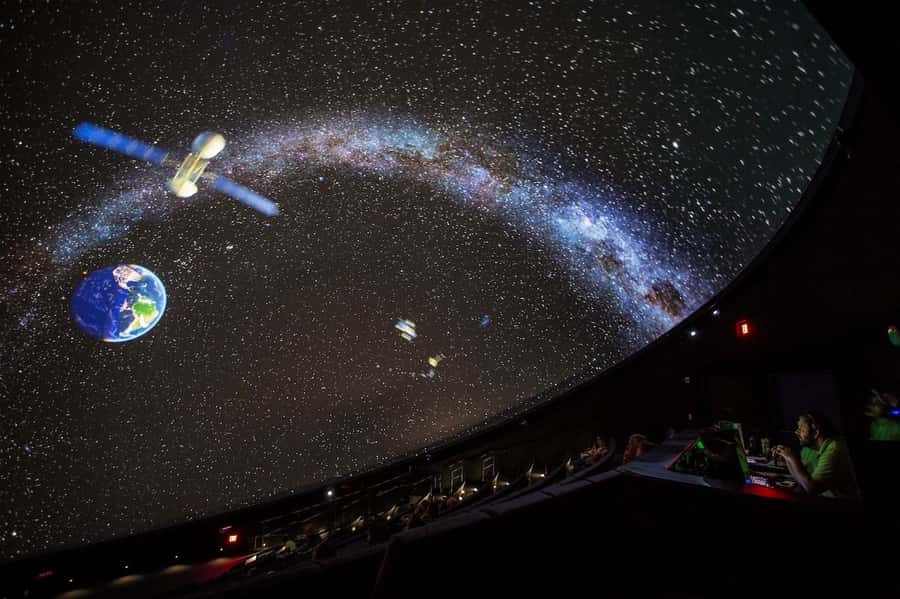
The Frost Planetarium uses a nearly 360-degree screen. That wide format makes the show feel more like a visual event than a standard lecture, though the content still carries a science lesson.
You choose one planetarium show. Dynamic Earth examines the workings of Earth’s climate system and is narrated by Liam Neeson. It suits you if you want a science topic tied to the planet under your feet.
Black Holes takes a more cosmic route. The program covers wormholes, the formation of the Milky Way, the violent death of a star, and the birth of a black hole. If you prefer big space questions and dramatic imagery, this may be the better pick.
The planetarium is one of the strongest reasons to visit, but it requires planning. Shows are available on a first-come, first-served basis. Your admission does not guarantee a seat at the exact time you want, so check the day’s show arrangements when you arrive and make that your first scheduling decision.
This matters most during a family visit. Children may be happy to wander through exhibits, but they are less happy when you suddenly hurry them across the museum because a show is about to begin. Get your planetarium plan early, then work the aquarium and exhibitions around it.
One child-focused account described the planetarium as an eye-opening, almost out-of-body experience, with colors that held even a very young child’s attention. That is a useful clue: the show can work for mixed ages, even if the youngest children cannot take part in every interactive exhibit.
Feathers, dinosaurs, aviation, and Mars
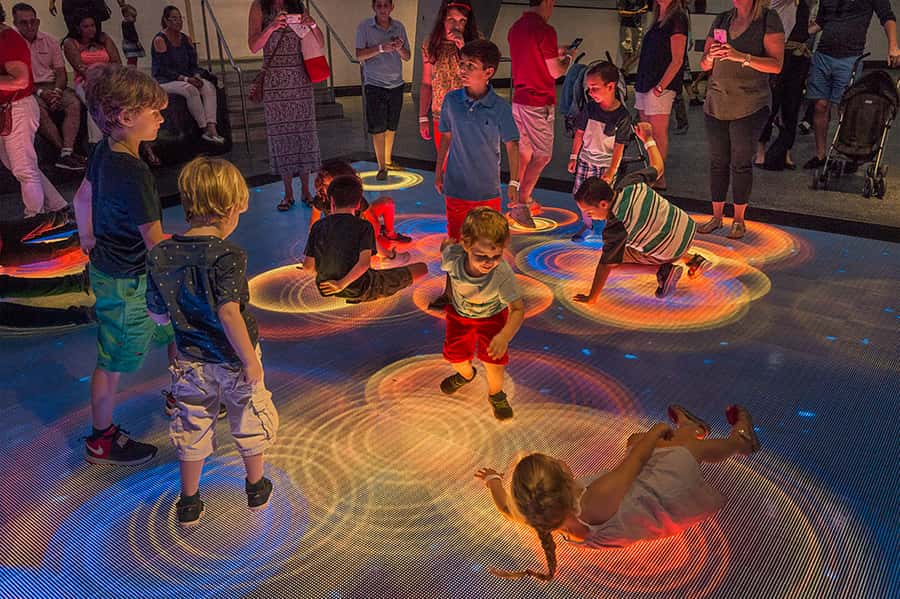
The Feathers to the Stars exhibition links several big ideas. It follows the path from feathered dinosaurs to human space travel, giving you a story rather than a disconnected collection of objects.
The centerpiece is a 30-foot Yutyrannus Huali dinosaur. Its size gives the exhibition a strong visual anchor. You do not need to be a dinosaur expert to appreciate the scale, and children will likely spot this display before they read the surrounding information.
The exhibition also looks at the inventors who pushed aviation forward. That section connects the desire to fly with the later effort to reach space. The result is a useful bridge between natural history, engineering, and exploration.
You can also try to land a spacecraft on Mars. This kind of interactive task turns a complicated subject into a simple challenge: make decisions, test the result, and try again. It is a good example of why Frost Science works well for families with different attention spans.
The strength here is variety. One person can enjoy the dinosaur, another can focus on flight, and someone else can spend time with the Mars activity. The possible weakness is that children may rush from one large attraction to the next without absorbing much explanation. If you want more than photo stops, slow down and read a few of the science panels.
A few more options to weigh up in Miami
- Little Havana Food and Walking Tour in Miami
★ 5.0 · 8,882 reviews - From Miami: Everglades Airboat, Wildlife Show & Bus Transfer
★ 4.2 · 8,622 reviews - Miami: Biscayne Bay Millionaire’s Homes Sightseeing Cruise
★ 4.5 · 7,348 reviews - Miami: Everglades National Park Airboat Tour & Wildlife Show
★ 4.5 · 7,296 reviews
Power of Science and the hands-on exhibits
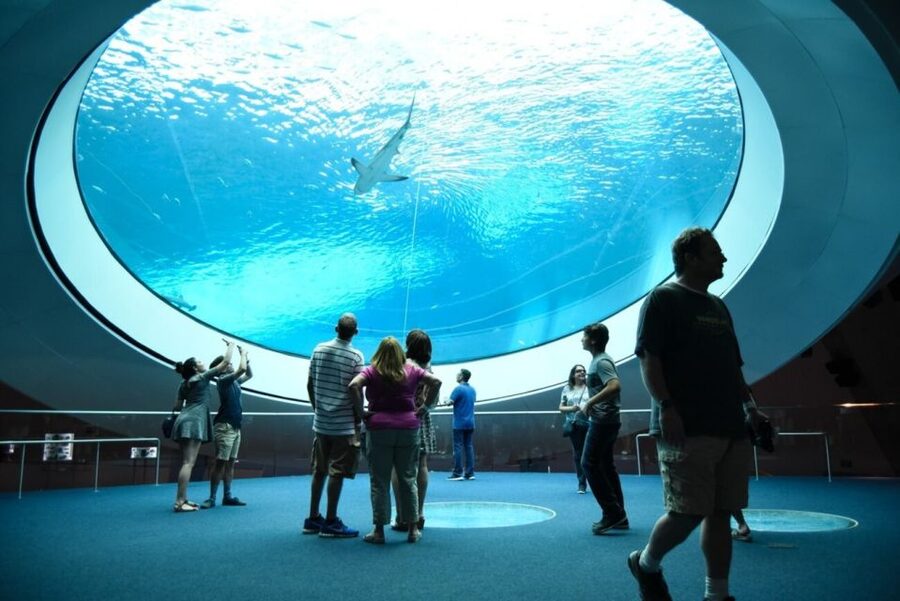
The Power of Science exhibition focuses on how scientific discoveries push beyond what people think is possible. It is less about one animal or one machine and more about the process of questioning, testing, and finding new answers.
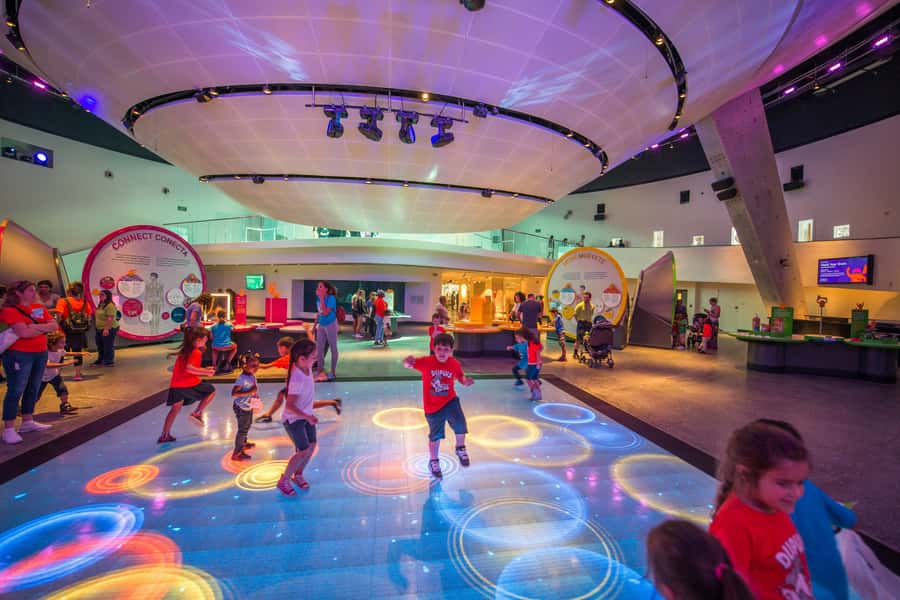
The museum also has interactive science gadgets, live programming, and technology-based displays. These give you ways to participate instead of simply looking. A visit can feel especially rewarding when you allow time for the experiments rather than treating them as filler between the aquarium and planetarium.
Families often need this kind of flexibility. A child who is not interested in a long explanation may still enjoy pressing, turning, touching, or testing something. Adults can use the same displays to explain a basic idea without turning the day into a school lesson.
The bugs exhibition deserves attention, too. It has large, close-up views of insects, with colors and details that make even familiar creatures look strange and impressive. If you usually hurry past insects, this may be the section that changes your mind.
The museum shop also has science-themed items and unusual souvenirs. It is not part of the ticket value, of course, but it can add a final stop for children who want something to remember the visit by. Keep your budget in mind, since the ticket price does not cover purchases there.
How long you need inside
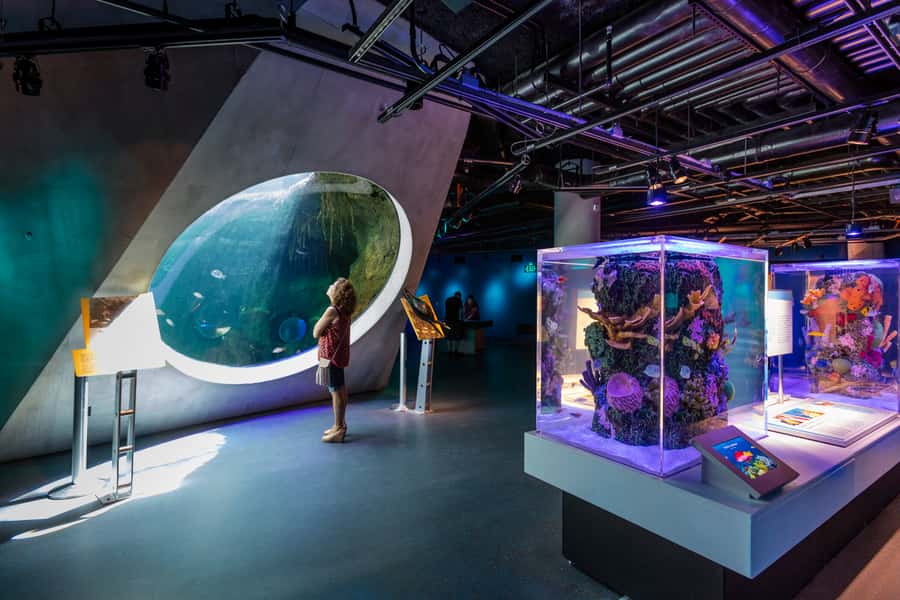
You can technically visit Frost Science in less time, but three to four hours is a better target if you want to see the main exhibitions, aquarium, and planetarium.
Here is a practical rhythm:
- Allow about an hour for the aquarium if you want time at the stingrays and shark displays.
- Set aside time for your planetarium show, including the need to claim a place on a first-come, first-served basis.
- Use the remaining time for Feathers to the Stars, Power of Science, the bugs exhibition, and other interactive areas.
- Keep some flexibility for live programming or a display that catches your attention.
The exact pace depends on your group. A family with young children may spend longer at touch stations and less time reading. Adults and older children may want to examine the science explanations and try more of the technology.
The museum is clean and described as suitable for all ages. Wheelchair access is available, which makes the visit easier for people who need an accessible setting. No hotel pickup or drop-off is provided, so you must arrange your own way to the museum.
Who will get the most from this visit
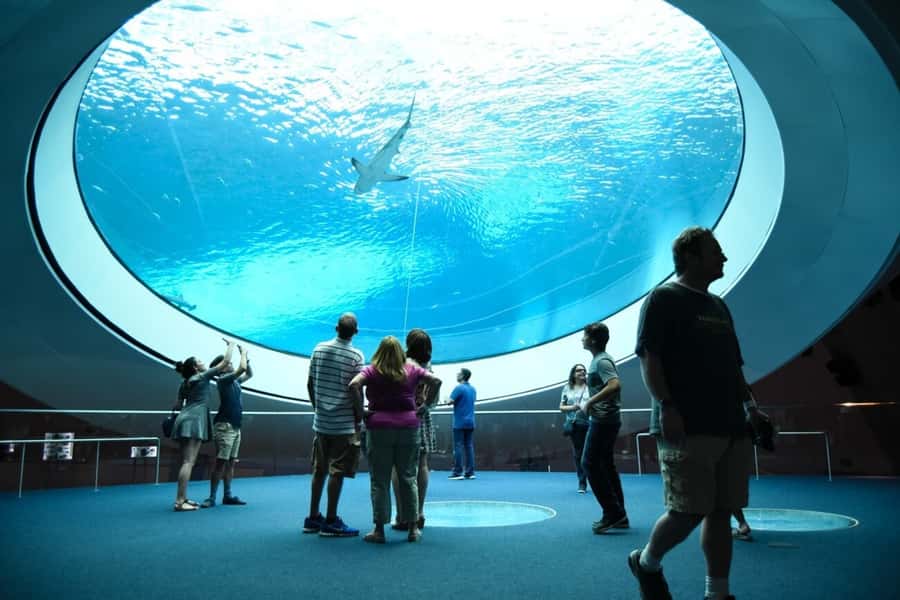
Frost Science is a particularly good choice for families. The aquarium provides animals, the touch pool gives children a direct activity, and the interactive displays offer plenty of chances to move around. Even a toddler can enjoy the fish, sharks, stingrays, and colorful planetarium images, though very young children may not use every exhibit.
It also suits adults who like science presented through visuals and demonstrations rather than a quiet museum of labels. The planetarium shows give the visit a strong centerpiece, while the aquarium adds a relaxing change of pace.
I would be more cautious if you want a short, low-cost stop. At $30, you should plan to stay long enough to use the ticket well. A person who only wants a planetarium show may find the full admission less appealing, while someone who wants several hours of science, animals, and technology gets better value.
It is also not the best choice if you need a guaranteed planetarium time. The first-come, first-served arrangement means you must accept some uncertainty and organize your visit early.
Practical tips for a smoother visit
Go to the Phillip and Patricia Frost Museum of Science to begin and finish at the same location. Since there is no hotel transportation included, factor in your own arrival and departure plans.
At the start, confirm the available planetarium show and seat arrangements. This prevents the most common timing problem: spending too long at the aquarium and then finding that your preferred show is full.
Wear something comfortable for several hours of walking and standing. The museum is large, and the exhibits are spread across a substantial area. You will get more from the visit if you take short breaks instead of trying to race through every room.
If you have children, let them choose one or two interactive areas to revisit. The best part of a science museum is often not seeing every display. It is giving a child enough time to test an idea, fail, and try again.
Food and drinks are not included. Plan around that fact rather than counting on the admission ticket to cover the full day’s needs.
Is Frost Science worth booking?
I would book this ticket if you want a family-friendly Miami activity that can fill half a day and still offer something for adults. The aquarium, stingray touch area, hammerhead sharks, 30-foot dinosaur, Mars activity, and planetarium create a good mix of live animals, big visuals, and hands-on learning.
The strongest value comes from staying three to four hours and seeing more than one section. The main drawback is the $30 price if you make only a brief visit, plus the first-come, first-served planetarium system.
Book it when you want an indoor activity with plenty of variety, especially for children who need to touch and try things. Skip it if you only want a quick aquarium stop or require a fixed planetarium seat time.
FAQ
How much does the Frost Science entry ticket cost?
The ticket costs $30 per person.
What does the ticket include?
It includes entry to the Frost Museum of Science, aquarium access, and one planetarium show.
How long is the ticket valid?
The ticket is valid for one day. Check availability for the starting times shown when you book.
How long should I plan to spend at the museum?
If you want to use the main exhibitions, aquarium, and planetarium, plan on three to four hours.
Are planetarium shows guaranteed with admission?
A planetarium show is included, but show access is first-come, first-served. Check the available arrangements when you arrive.
Can I cancel the booking?
Yes. You can cancel up to 24 hours in advance for a full refund.
Is the museum wheelchair accessible?
Yes. The activity is wheelchair accessible.
Just added in Miami
- Zoo Miami Ticket with Optional Upgrade★ 4.0 · 346 reviews
- Wynwood Graffiti Golf Cart Small-Group Tour★ 5.0 · 1,646 reviews
- Miami All-In-One: City Sightseeing & water taxi experience★ 4.5 · 456 reviews
- Skip the Line: Wynwood Walls Admission Ticket★ 4.5 · 368 reviews
- Miami: Superblue Miami Immersive Art Experience Ticket★ 4.0 · 367 reviews
- Explore Miami in Style: Private Boat Cruise Tour with Captain★ 5.0 · 420 reviews
- Miami Private Boat Cruise & Tour with a Captain★ 5.0 · 335 reviews
- Best of Miami: Private Top-Rated Boat Charter & Guided Experience★ 5.0 · 1,462 reviews
Museums, compared.

Empire State Building Tickets – Observatory & Museum
Read our review →


9/11 Memorial, Ground Zero Tour with Optional 9/11 Museum Ticket
Read our review →

All-Access 9/11: Ground Zero Tour, Memorial and Museum, One World Observatory
Read our review →
Browse the lists this tour appears in