
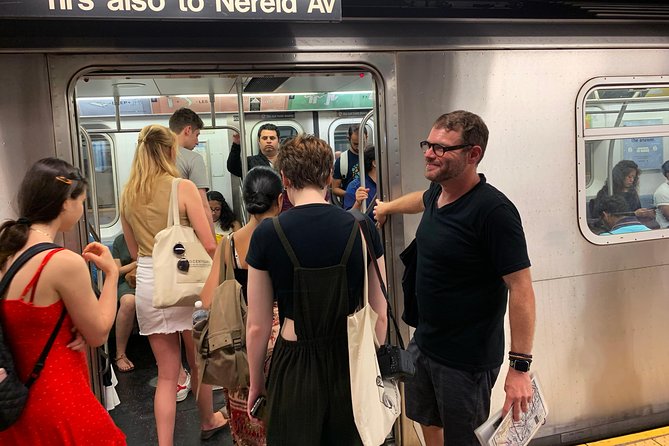
Reviewed · WALKING TOURS
NYC Underground Subway Walking Tour
New York’s best museum may be underground. This two-hour tour turns a routine subway ride into a lesson in city building, politics, architecture, and local lore. I especially like the small group of no more than 12 people and the provided earpieces, which help you follow the guide beside roaring trains. The chance to ride the 6 train past abandoned stations is another strong reason to go. The main drawback is physical: expect plenty of stairs, walking, heat, and nearly two hours below street level.
The tour begins outside Fulton Center and moves through City Hall Park, the Municipal Building, Union Square, and several subway stations before returning to the starting point. Guides such as AJ, Pete, Cullen, Alexis, Rayn, and Ryan have earned praise for making complex transit facts easy to follow. Still, this is mainly a transportation and architecture tour. If you want long stories about subway performers, crime, or daily life underground, you may find the subject matter a little too technical.
In This Review
- Key things to know before you book
- Why this subway tour feels different
- Starting outside Fulton Center
- City Hall Park and the first subway station
- The Municipal Building and the city behind the trains
- Union Square’s art and the pleasure of slowing down
- Riding the 6 train past abandoned stations
- What the guides add to the experience
- Walking, stairs, heat, and the small-group pace
- Is $39 a fair price?
- Booking timing and cancellation details
- Who should book this underground experience?
- Should you book the NYC Underground Subway Walking Tour?
- FAQ
- How long does the NYC Underground Subway Walking Tour last?
- Where does the tour begin?
- Where does the tour end?
- Is the subway fare included?
- What is included in the $39 price?
- How many people can join the tour?
- What language is the tour offered in?
- Will I see abandoned subway stations?
- Can I cancel for a full refund?
Key things to know before you book
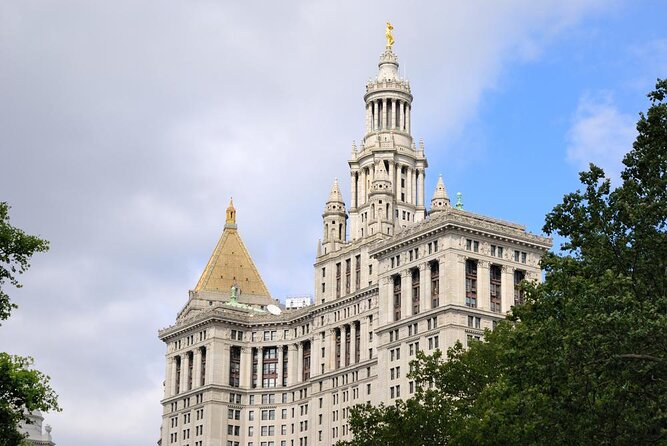
- The 6 train provides the rarest view: You ride past abandoned stations, including old platforms preserved beneath the active system.
- City Hall Park reveals the subway’s beginning: Visible remnants help explain how New York’s first subway station was built.
- The Municipal Building connects transit with power: This stop shows how city government and the subway grew together.
- Union Square adds art and design: The station’s installation rewards anyone who usually rushes through underground corridors.
- The group stays small: With a maximum of 12 people, you have a better chance to hear the guide and ask questions.
- Bring a MetroCard or fare payment: One subway swipe is not included in the $39 price.
Why this subway tour feels different
Most New York sightseeing tours keep you above ground. This one asks you to notice the city beneath your feet, where old stations, shifting routes, public art, and engineering decisions still shape daily life.
I like the way the tour joins visible street landmarks with what lies below them. City Hall Park is not just a meeting point on a map. It helps you picture the first subway station and understand how the system began. Later, a ride on the 6 train gives you a moving look at stations that no longer serve the public.
The guide is a native New Yorker, and that matters here. The subway is difficult to explain with a simple timeline because its lines, stations, companies, and neighborhoods overlap. A good guide can point out why the system feels so complicated and connect business, politics, community needs, and transportation.
The experience is also useful if you are new to New York. One visitor found that the tour made the system easier to navigate afterward. You will not become a subway expert in two hours, but you should leave with a better sense of how the routes and stations fit together.
More Walking Tours in New York City
- SoHo, Little Italy, and Chinatown Walking Tour in New York
★ 5.0 · 3,153 reviews - Secrets of Grand Central Station Walking Tour New York City
★ 5.0 · 1,796 reviews - Greenwich Village Walking and Food Tasting Tour
★ 5.0 · 1,572 reviews
Starting outside Fulton Center
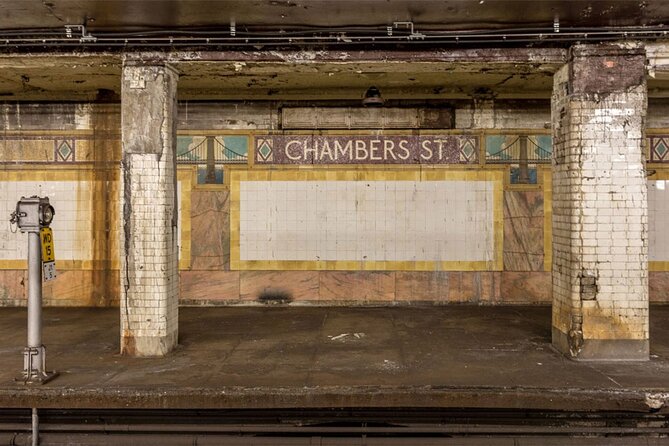
Meet your guide at 200 Broadway, outside Fulton Center. This is a practical starting point because Fulton Center sits at one of Lower Manhattan’s major transit crossroads, but do not treat the first meeting as a casual arrival.
One person missed the experience after taking the wrong train and ending up on the other side of the river. Check your route before leaving, and allow time to find the exact meeting spot. The tour begins on foot, and the group will not wait indefinitely for someone still trying to cross Manhattan.
Once everyone arrives, the guide provides an earpiece. This is one of the tour’s most useful features. Subway platforms are noisy, and it is easy to miss a key point when a train pulls in. The audio equipment is intended to let you hear the guide while walking through stations and riding the train.
That said, sound quality can vary. Most of the feedback about the earpieces is positive, but one participant found the audio difficult to hear over the trains. If you have trouble, say so early rather than trying to follow silently for two hours. The tour operator uses regular earpieces, not noise-canceling headphones.
City Hall Park and the first subway station
The first main stop is City Hall Park, where you learn about the creation of New York’s first subway station. The park also offers visible remnants connected to that early system.
This opening works well because it gives the tour a physical starting point. Instead of beginning with a long lecture about dates and companies, you look at surviving pieces of the city’s first underground effort. The guide can then explain why the subway mattered so much to New York’s growth.
This is also where the tour begins to show its main style. Expect facts about construction, transit planning, city growth, and the decisions that shaped the system. If you enjoy infrastructure, old buildings, and the question of how a city functions, you will be comfortable here.
The stop lasts about 15 minutes. It is short enough to keep the tour moving, but long enough to establish the story. You will also see the Brooklyn Bridge near the beginning of the walk, adding a useful connection between bridges, neighborhoods, and subway travel.
The Municipal Building and the city behind the trains
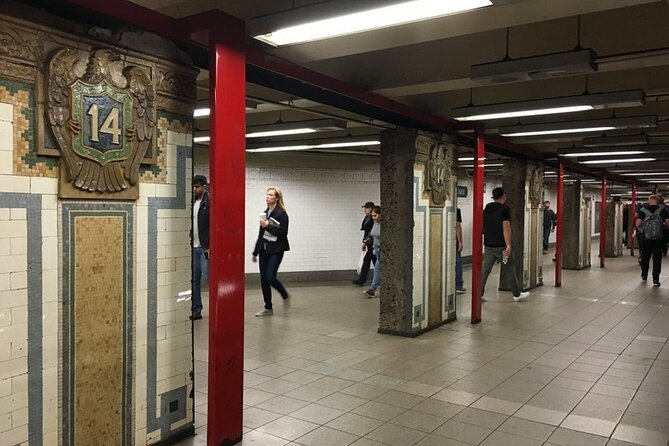
The Municipal Building is the next major stop, with about 10 minutes devoted to its role in the creation of the subway system. This part helps you see transit as a government project, not simply a collection of tunnels and trains.
New York’s subway developed alongside city administration, business interests, and plans for urban growth. The Municipal Building gives the guide a strong setting for explaining those links. Look up from the station entrances and think about the city offices and decisions that helped determine where lines were built.
I find this section valuable because it supplies context that a normal subway ride misses. You may use the system every day without wondering who planned it, why certain routes took shape, or how the subway changed access across New York.
The stop is brief, so listen closely. This tour covers a large subject in roughly two hours. The information comes quickly, and the material can be hard to follow if you do not already know the basic layout of the subway.
A different kind of day out entirely:
- NYC: SUMMIT One Vanderbilt Tickets
★ 4.7 · 51,195 reviews - NYC: 9/11 Memorial & Museum Timed-Entry Ticket
★ 4.8 · 31,428 reviews - NYC: Empire State Building Tickets – Observatory & Museum
★ 4.7 · 25,757 reviews - NYC: Empire State Building Observation Deck Tickets
★ 4.7 · 22,072 reviews
Union Square’s art and the pleasure of slowing down
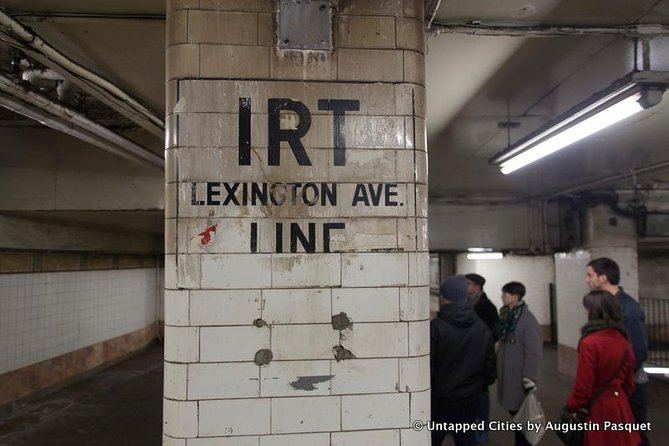
At Union Square, the guide points out a surprising art installation in the subway station. This is an easy detail to miss when you are rushing for a train, which makes it a fitting stop on a tour built around overlooked details.
The tour does not treat the subway as only a mechanical system. Art, architecture, and preserved fragments also tell the story. At Union Square, you get a chance to see how older subway elements have been incorporated into newer station design.
The stop lasts about 10 minutes. That is enough time to look around and hear the explanation, though anyone hoping to study every part of the station will want to return on their own.
This is one of the tour’s best moments for people who are not train enthusiasts. You do not need to memorize route numbers to appreciate a well-placed piece of public art or the way a station carries traces of earlier construction.
Riding the 6 train past abandoned stations
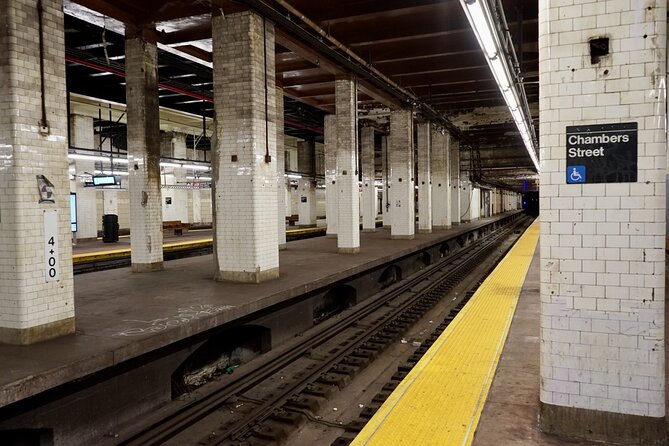
The 6 train ride is the tour’s signature feature. As you travel through the system, the guide identifies abandoned stations and explains what survives from earlier eras.
You do not simply hear that New York has unused platforms. You ride through the active system and look for stations frozen in place below the city. These old spaces give the subway a sense of time, showing how routes change while parts of the past remain nearby.
The experience is especially strong for train fans, transit users, and anyone who likes places that are usually passed without notice. Several guides have been praised for pointing out old station details, architecture, and facts that are easy to miss during an ordinary journey.
Keep your expectations realistic. You are viewing abandoned stations from an active train, not walking through them. The tour’s wording about ghost stations can sound more dramatic than the actual access. Their appeal comes from seeing preserved platforms and learning why they were left behind.
The 6 train also makes the tour practical. You learn while doing the thing New Yorkers do every day, riding through the city. By the end, you may look at a subway platform with more curiosity instead of treating it as a place to wait.
What the guides add to the experience
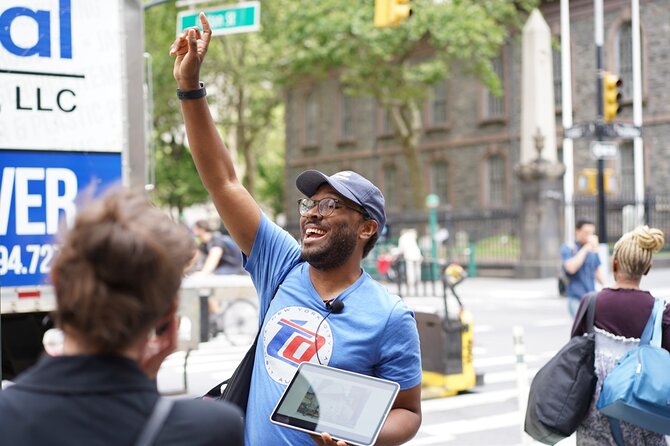
The guide makes or breaks a tour like this, and the named guides have different strengths. AJ is praised for handling complicated routes, keeping a group together through several stations, and answering detailed questions. Pete is known for a lively presentation and strong transit knowledge.
Cullen has been praised for setting a good pace and helping with directions after the tour. Alexis brings together subway history with social and political context. Rayn and Ryan have also received warm comments for making the system easier to understand.
The common thread is enthusiasm. The best guides do not just recite dates. They explain why the subway looks and operates as it does, then add side stories that give the system some personality.
The presentation can lean toward railway facts and business history. One participant wanted more stories about singers, beggars, criminals, animals, and other people who use the subway. That is a fair warning. This tour focuses more on the system than on underground street life.
Walking, stairs, heat, and the small-group pace

Two hours sounds modest, but the underground setting makes the tour more demanding than a typical neighborhood walk. You will walk between locations, enter multiple stations, ride the subway, and handle a fair number of stairs.
Recent feedback repeatedly points out the stairs. The tour can work for a wide range of ages, but most people should be ready for steady movement. If stairs are difficult for you, ask about the planned route before booking because the published details do not promise a step-free experience.
The subway can also be hot and stuffy. The operator cannot control the temperature of the system, and you may spend much of the tour underground. Wear comfortable shoes and clothing, and consider bringing water if permitted and practical.
The group limit of 12 is a real advantage. A small group is easier to move through turnstiles and corridors, and you can ask questions without holding up a large crowd. It also lets the guide watch the group more closely, which matters when everyone is changing trains or walking through busy stations.
The earpiece helps, but do not assume it removes every sound problem. Stand where you can see the guide when possible, and speak up if the audio is unclear.
Is $39 a fair price?
At $39 per person, the tour is reasonably priced for a two-hour guided experience that includes a native New Yorker, a small group, and audio equipment. The one extra cost is the MetroCard or subway fare for one swipe.
The value depends on how much you want interpretation rather than transportation. You can ride the subway for much less on your own, but you would miss the explanation of the first station, the Municipal Building, the Union Square art, and the abandoned platforms.
I think the price works best for first-time visitors who want a different side of New York, locals who usually hurry through stations, and people who enjoy architecture or public transit. It is less appealing if you dislike stairs, hate being underground, or want a broad social history of subway life.
A visit to the New York City Transit Museum can also pair well with this tour. The museum gives you a general understanding of the system, while this experience places those ideas in actual stations and on active trains. That combination may be especially rewarding for anyone who wants more than a surface-level look at New York.
Booking timing and cancellation details
The tour is often booked about 24 days ahead, so reserve early if your schedule is fixed. It is offered in English, uses a mobile ticket, and confirms your booking at the time of purchase.
Free cancellation is available if you cancel at least 24 hours before the start time. Cancellations or changes made within 24 hours are not refunded or accepted, based on the local start time.
Service animals are allowed, and the tour is near public transportation. Most people can participate, but the stairs, walking, train noise, heat, and time underground deserve serious consideration before you commit.
Who should book this underground experience?
I would recommend it most strongly to:
- Subway and railway fans who want technical facts, old stations, and route context.
- History and architecture fans interested in how New York grew.
- First-time New York visitors who want help making sense of the subway.
- Local residents looking for a fresh way to see a familiar system.
- Families with older children who can manage stairs and a steady two-hour pace.
- Couples and solo visitors who prefer a small group over a large city tour.
I would be more cautious if your main interest is the human side of the subway, such as performers, commuters, crime, or street culture. Those subjects may appear in passing, but the core is engineering, transportation, civic planning, architecture, and preserved stations.
Should you book the NYC Underground Subway Walking Tour?
Book it if you want to understand why New York’s subway is so large, old, and confusing. The tour gives you a useful framework, a ride through active stations, views of abandoned platforms, and details you would probably miss alone.
Skip it if stairs and underground heat would make two hours unpleasant, or if you want a relaxed above-ground walk with plenty of time for photographs. For most curious visitors, though, $39 is a fair price for a small-group look at the machinery and memory beneath New York. Bring your fare, wear good shoes, and arrive ready to listen.
FAQ
How long does the NYC Underground Subway Walking Tour last?
The tour lasts approximately two hours.
Where does the tour begin?
It begins at 200 Broadway, New York, NY 10038, outside Fulton Center.
Where does the tour end?
The tour ends back at the meeting point.
Is the subway fare included?
No. One MetroCard swipe or subway fare is not included in the tour price.
What is included in the $39 price?
The price includes the guided walking tour with a native New Yorker and an earpiece for each participant.
How many people can join the tour?
The maximum group size is 12 people.
What language is the tour offered in?
The tour is offered in English.
Will I see abandoned subway stations?
Yes. The tour includes a ride on the 6 train with views of abandoned or ghost stations.
Can I cancel for a full refund?
Yes, if you cancel at least 24 hours before the experience start time. Cancellations within 24 hours are not refunded.
Just added in New York City
- NYC: Woodbury Common Premium Outlets Shopping Trip★ 4.2 · 761 reviews
- New York City: Private Walking Tour with a Local★ 4.6 · 771 reviews
- Washington DC Day Trip by Bus from New York City★ 4.7 · 600 reviews
- Wall Street Insider Tour with a Finance Professional★ 4.5 · 660 reviews
- NYC: Guided Central Park Horse Carriage Ride★ 4.8 · 877 reviews
- True Crime New York: NYPD-Guided Mafia Walking Tour w/ Food★ 4.6 · 318 reviews
- LEGOLAND® New York Theme Park Admission Ticket★ 4.0 · 1,396 reviews
- Whitney Museum of American Art Admission Ticket★ 4.0 · 1,579 reviews
Walking Tours, compared.

History and Hauntings of Salem Guided Walking Tour
Read our review →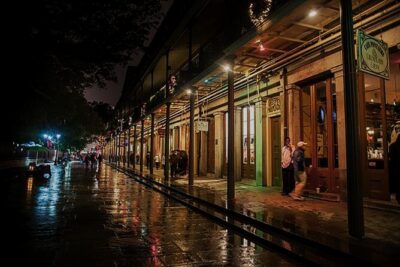
New Orleans Premier Ghost, Voodoo and Vampire Walking Tour
Read our review →


Freedom Trail History Small Group Walking Tour
Read our review →
Historic Charleston Guided Sightseeing Walking Tour
Read our review →
New Orleans Food Walking Tour of the French Quarter with Small-Group Option
Read our review →
Cambridge: Harvard University Student-Guided Walking Tour
Read our review →Browse the lists this tour appears in