
Reviewed · MUSEUMS
Plimoth Patuxet Museums
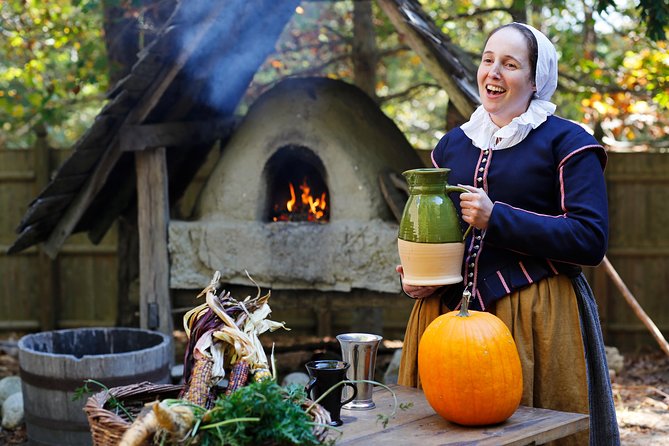
History comes alive in Plymouth’s open air museums. Plimoth Patuxet Museums gives you more than old buildings behind ropes. You meet costumed interpreters, walk through a recreated 17th-century English settlement, and hear Indigenous perspectives at the Historic Patuxet Homesite. I especially like the hands-on conversations and the chance to combine the main museum with the Mayflower II and Plimoth Grist Mill. The main drawback is that the experience requires plenty of walking on uneven ground, and the quality of interaction can vary from one interpreter to another.
You can buy a package based on your interests, with admission starting at about $35 per person. A visit to Plimoth Patuxet alone takes roughly two and a half hours, but adding the ship and mill can turn this into a five-to-seven-hour Plymouth day. Plan your route before arriving, since the Mayflower II is about three miles from the main museum and the Grist Mill is in downtown Plymouth.
In This Review
- Key things to know before you go
- What Plimoth Patuxet is really trying to show you
- Start at the Visitor Center
- The Historic Patuxet Homesite: the strongest part for many visitors
- The 17th-Century English Village: ask, watch, and slow down
- The Mayflower II: a short but worthwhile harbor stop
- Plimoth Grist Mill: a compact stop with real machinery
- How to plan the full Plymouth day
- Is the $35 admission good value?
- Who will enjoy this most?
- Should you book Plimoth Patuxet Museums?
- FAQ
- How long does a visit to Plimoth Patuxet Museums take?
- Does admission include the Mayflower II and Plimoth Grist Mill?
- Can I visit the sites on different days?
- How far is the Mayflower II from Plimoth Patuxet?
- Is the experience suitable for people with mobility concerns?
- What happens if it rains?
Key things to know before you go
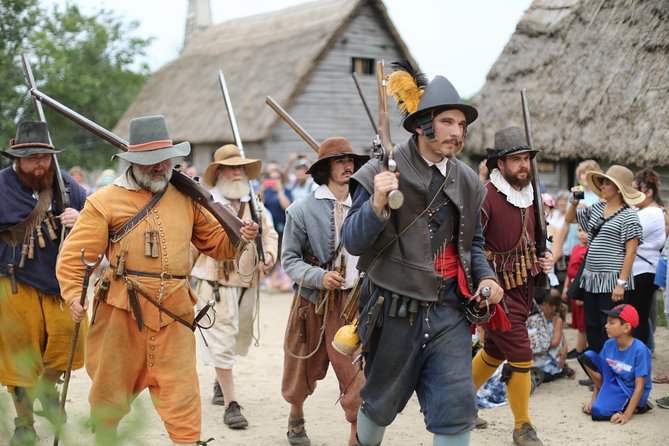
- The Historic Patuxet Homesite gives Indigenous history a central place, with contemporary interpreters explaining Wampanoag life and heritage in the Northeast.
- The 17th-Century English Village works best when you ask questions, since the costumed interpreters bring the settlement to life through conversation rather than long written displays.
- The Mayflower II and Grist Mill are optional additions, so you can build a short visit or a full day around the sites.
- Expect dirt paths, gardens, and uneven surfaces, although free golf cart service can help people with mobility concerns.
- The Mayflower II requires a car or separate local transportation, while the Grist Mill is within reach of downtown Plymouth and Brewster Gardens.
- School groups can make the main site noisy, especially during weekday field-trip periods from September through November.
What Plimoth Patuxet is really trying to show you

Plimoth Patuxet is not just a Pilgrim village. Its purpose is to place the 17th-century English settlement beside the Indigenous world that was already here.
That balance matters. The Historic Patuxet Homesite presents the heritage of the Wampanoag people, whose communities have lived in the Northeast for more than 12,000 years. Contemporary interpreters explain foodways, homes, tools, agriculture, and daily life from an Indigenous point of view.
The English Village then shows a recreated settlement from the 1620s. Costumed interpreters take on the roles of people living there, answering questions in character and explaining the practical problems of food, shelter, work, religion, and survival.
You should come ready to talk. The strongest moments happen when you ask a period character why a house is built a certain way, how food is stored, or what daily work looks like. Some interpreters are warm and eager to chat. Others can seem tired or give short answers, so the experience is partly shaped by whom you meet.
There is not a large amount of traditional museum text at every house. If you want a chronological account of the Pilgrims, including detailed information about William Bradford, Myles Standish, the first winter, and the development of the settlement, you may find the village lighter on explanation than expected.
That is not necessarily a flaw, but it changes how you should use the site. Think of it as a place for questions and observation rather than a standard exhibit hall. Watch how the houses, gardens, tools, clothing, and crops fit together. The real crops growing around the village help the setting feel practical rather than decorative.
More Museum Tours in the USA:
- NYC: 9/11 Memorial & Museum Timed-Entry Ticket
★ 4.8 · 31,428 reviews - NYC: Empire State Building Tickets – Observatory & Museum
★ 4.7 · 25,757 reviews - New York City: American Museum of Natural History Ticket
★ 4.5 · 15,447 reviews
Start at the Visitor Center
Your ticket redemption point is at 137 Warren Avenue in Plymouth. Begin inside the Visitor Center, where an introductory film helps explain what you are about to see. Several people found the film useful because it gave them a framework before they entered the outdoor sites.
I recommend watching the full presentation if you have time. It helps you understand why Plimoth Patuxet includes both English and Indigenous history, and it gives you a better sense of how to approach the interpreters.
The Visitor Center also has a café serving modern food and dishes inspired by 17th-century fare. The succotash soup has earned particular praise, and a Thanksgiving-style meal may be available at lunchtime on some days. The menu is not especially broad, and you should not expect many healthy choices, so people with specific dietary needs may want to plan ahead.
Four retail shops sell Plimoth-made crafts and local New England goods. At the Grist Mill, you can also buy freshly stone-ground cornmeal and samp, a type of cracked corn or grits.
The Historic Patuxet Homesite: the strongest part for many visitors
The Historic Patuxet Homesite is one of the most important parts of the visit. It presents an Indigenous settlement through the voices of contemporary interpreters rather than treating Wampanoag culture as a brief introduction to the Pilgrim story.
The setting includes reconstructed homes, gardens, crops, and working areas. You learn how the environment shaped everyday life and how food, housing, tools, and seasonal work were connected.
For many families, this is the most engaging stop because the interpreters explain things in a direct, practical way. Teenagers who may not enjoy a conventional history lesson often respond better to seeing how a home functions or hearing why a crop matters.
Take your time here. Look closely at the construction and ask questions. The value comes from the staff interaction and the physical setting, not from rushing along a marked path.
The site is outdoors and open in all weather. Rain can make the experience soggy, but poor weather may also give you a small sense of how exposed 17th-century life could be. Wear shoes that can handle dirt and uneven ground, and bring clothing suited to the forecast.
The 17th-Century English Village: ask, watch, and slow down
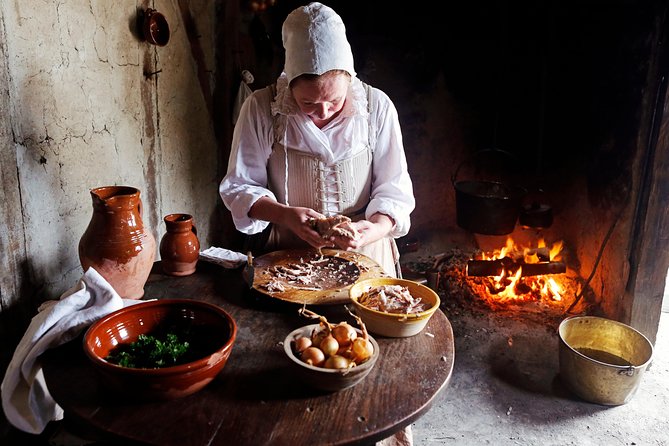
The English Village is the part most people picture when they hear about Plimoth Patuxet. You walk among reconstructed houses, gardens, fences, and work areas while costumed interpreters present daily life in the early settlement.
The houses are built to look and feel functional. You can see how limited space, handmade furnishings, and basic tools shaped daily routines. Children often enjoy the simple visual details, while adults tend to appreciate the chance to ask how people worked, ate, slept, and managed without modern conveniences.
The interpreters are the heart of this area. When they stay in character and engage with your questions, the visit becomes far more than a walk through replicas. You can hear stories and explanations that make the buildings easier to understand.
The quality is not perfectly even. One person may offer a lively, detailed answer while another seems bored or gives you little to work with. My advice is to keep moving and try another house rather than letting one flat interaction define the whole village.
You may also find the village less informative if you prefer signs and labels. There is not always enough written material to explain who lived in each house or how the settlement developed. Ask direct questions about the residents, the first winter, food supplies, religious life, and relations with surrounding Indigenous communities.
Allow about two and a half hours for Plimoth Patuxet if you want to see both the Homesite and English Village without racing. Add time for the introductory film, café, shops, and any conversations that catch your attention.
A different kind of day out entirely:
- NYC: SUMMIT One Vanderbilt Tickets
★ 4.7 · 51,195 reviews - NYC: Empire State Building Observation Deck Tickets
★ 4.7 · 22,072 reviews - NYC: Edge Observation Deck Admission Ticket
★ 4.6 · 20,918 reviews - Grand Canyon West, Hoover Dam Stop and Optional Lunch and Skywalk
★ 5.0 · 19,535 reviews
The Mayflower II: a short but worthwhile harbor stop
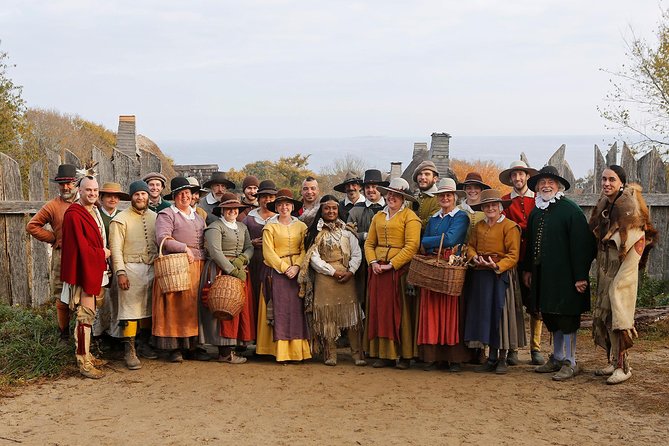
The Mayflower II is a full-size reproduction of the ship associated with the 1620 crossing. It is docked in Plymouth Harbor and functions as a floating museum.
The ship visit is generally shorter than the main museum, taking about 30 minutes. Guides are available to explain the 1620 voyage and the ship’s place in Plymouth’s story. You can walk through the vessel and get a physical sense of cramped quarters, although the reconstruction is in such good condition that it may feel cleaner and more polished than the original ship ever did.
That is worth keeping in mind. The Mayflower II is not a preserved survivor from 1620. It is a carefully made reproduction designed to help you understand the crossing and the people aboard it.
The ship works especially well after the village. At the village, you see the settlement’s daily life. On the ship, you see the difficult journey that came before it. Together, the two stops give the story a clearer shape.
The Mayflower II is not at the main museum. It is about three miles north, so you need a car or another way to get around. You may visit it on the same day as Plimoth Patuxet or on another day during the 2025 season, depending on the ticket you select.
If you have limited time, I would choose the main museum first. If you can spare a full day, the Mayflower II is a worthwhile addition, particularly for families and anyone interested in maritime history.
Plimoth Grist Mill: a compact stop with real machinery
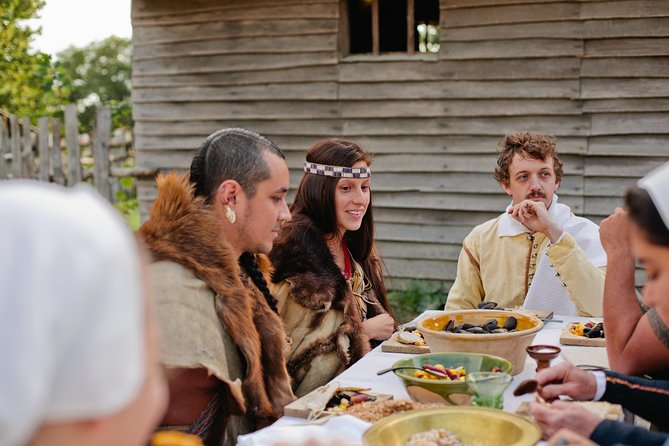
The Plimoth Grist Mill sits at 6 Spring Lane in historic downtown Plymouth, beside Town Brook and near Brewster Gardens. It is a working reproduction of the mill built by Pilgrim John Jenney, placed near the original location.
This is a smaller stop, usually about 30 minutes, but it offers a useful change of pace. Instead of focusing mainly on people and buildings, the mill shows how water power, grain, machinery, and the local ecology worked together.
On Saturday afternoons, the millstones operate. On other days, millers may be sifting and preparing the cornmeal, checking the equipment, or getting the stones ready for the next run. If seeing the machinery in action is important to you, check the operating schedule before you go.
The lower exhibit includes interactive elements that let you try aspects of the milling process. That makes the stop more suitable for children than its modest size might suggest.
You can reach the mill through Brewster Gardens from the waterfront, although construction may affect the walking route at times. If you are already visiting the Mayflower II or Plymouth Rock, the mill fits naturally into a downtown walking plan.
The store sells freshly stone-ground cornmeal and samp. These are useful souvenirs because they connect directly to what you have just seen, rather than adding another generic trinket to your luggage.
How to plan the full Plymouth day

The basic museum visit takes about two and a half hours. Adding the Mayflower II and Grist Mill can take five hours at a brisk pace, while a relaxed day with lunch and downtown walking may take seven hours.
A sensible order depends on your ticket and transportation:
- Start at Plimoth Patuxet to watch the introductory film and visit the Homesite and English Village.
- Drive to the Mayflower II if it is included in your package.
- Visit the Grist Mill near downtown Plymouth, ideally when the millstones are operating.
- Leave time for lunch, Plymouth Rock, Brewster Gardens, or a short waterfront walk.
Do not underestimate the distances between locations. The Mayflower II is about three miles from Plimoth Patuxet, and the Grist Mill is in a different part of town. The ticket allows some sites to be visited on separate days during the 2025 season, which can be useful if you are staying in Plymouth.
Public transportation is possible from Boston. Amtrak’s Kingston/Plymouth line runs from South Station, and Plymouth and Brockton buses also depart from South Station. Arrange local livery service before arrival if possible. The free RideCircuit app may also provide service between locations, but check its schedule rather than assuming a car will appear when you need one.
The museum operates in all weather. Comfortable shoes are essential, and the free golf cart service at Plimoth Patuxet can help people who have trouble walking the long paths. Ask Guest Services about it when you arrive. Service animals are allowed.
Try to avoid the busiest school field-trip periods if quiet conversation is important to you. Weekday visits from September through November can bring large groups of children. During those times, the open-air setting can become noisy, and some houses may be crowded.
Is the $35 admission good value?
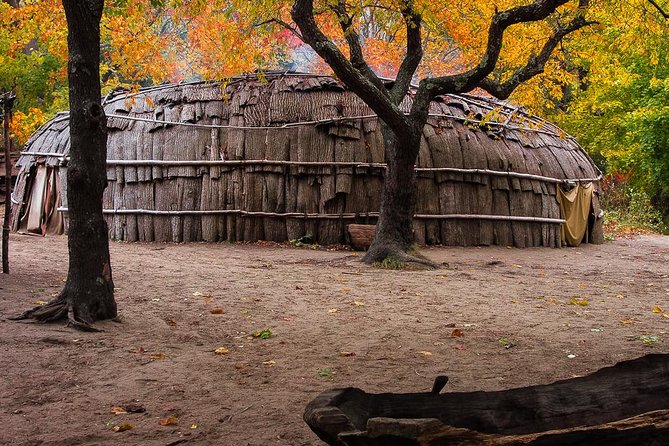
At about $35 per person, Plimoth Patuxet is not a casual, quick museum stop. The price makes more sense when you plan to spend several hours there and take advantage of the living-history format.
The basic ticket includes the Historic Patuxet Homesite, the 17th-Century English Village, the Craft Center, and the exhibit We Gather Together: Thanksgiving, the Making of an American Holiday. That is enough content for a substantial half-day.
The Heritage or combination options can include the Mayflower II and Plimoth Grist Mill. These packages offer better value if you genuinely want all three sites, but check the exact inclusions before paying because the Mayflower and mill are add-ons to the main Plimoth Patuxet admission.
A full combination day can feel like a bargain if you use the sites well. One family spent about five hours including lunch with the village and Mayflower, while another needed closer to seven hours to visit all three museums at an easy pace.
The value drops if you expect a conventional museum filled with wall text and detailed biographies. You are paying for staff-led interaction, reconstructed settings, outdoor interpretation, and working demonstrations. The experience rewards curiosity more than passive sightseeing.
Who will enjoy this most?
I would recommend Plimoth Patuxet to families, history lovers, school-age children, and anyone spending several days in the Boston area who wants a Plymouth day trip with substance.
It is particularly good for children because they can see houses, crops, tools, gardens, and machinery instead of only reading about them. The Mayflower II adds a strong visual element, and the mill gives younger visitors something mechanical to watch and touch through its exhibits.
Adults who already know the basic Pilgrim story may appreciate the Indigenous presentation most. The Historic Patuxet Homesite gives the visit more breadth and helps move the story beyond a simple Thanksgiving narrative.
You may be disappointed if you want only Pilgrim biographies or a tightly scripted guided tour. The experience is spread across several sites, and the English Village depends on your willingness to ask questions. It is also less suitable for anyone who cannot manage uneven paths unless you arrange golf cart assistance.
Should you book Plimoth Patuxet Museums?
Book it if you want to understand Plymouth through places, people, and practical details rather than a short list of dates. I especially recommend the full combination for a first visit, provided you have a car and most of a day.
Choose the basic Plimoth Patuxet ticket if you prefer a focused visit, want to spend time with the interpreters, or are watching your budget. Add the Mayflower II if the 1620 crossing interests you, and add the Grist Mill if you enjoy working machinery, food history, and a downtown walk.
The strongest strategy is to arrive early, watch the opening film, ask plenty of questions, and leave room for the experience to unfold at walking speed. Book ahead if you want guaranteed entry, but remember that the supplied admission price may not always be lower than buying directly on site.
Free cancellation is available when you cancel at least 24 hours before the start time. After that cutoff, refunds are not provided, and changes are not accepted.
FAQ
How long does a visit to Plimoth Patuxet Museums take?
The main Plimoth Patuxet visit takes about two hours and 30 minutes. Visiting the Mayflower II and Grist Mill as well can take five to seven hours, depending on your pace and whether you stop for lunch.
Does admission include the Mayflower II and Plimoth Grist Mill?
The basic Plimoth Patuxet ticket includes the Historic Patuxet Homesite, 17th-Century English Village, Craft Center, and the Thanksgiving exhibit. The Mayflower II and Grist Mill are add-ons available through combination or Heritage tickets.
Can I visit the sites on different days?
Yes. With the appropriate combination ticket, you may visit the Mayflower II and Plimoth Grist Mill on the same day as Plimoth Patuxet or on a different day during the 2025 season.
How far is the Mayflower II from Plimoth Patuxet?
The Mayflower II is about three miles north of Plimoth Patuxet. You will need a car or local transportation to travel between the two locations.
Is the experience suitable for people with mobility concerns?
The outdoor paths include uneven 17th-century-style dirt surfaces. Free golf cart service is available at Plimoth Patuxet, and you can ask Guest Services for assistance when you arrive.
What happens if it rains?
The museum remains open in all weather conditions. Wear comfortable shoes and dress appropriately for rain, wind, heat, or cold.
Just added in the USA
- Atlanta: Zoo Atlanta General Admission Ticket★ 4.5 · 712 reviews
- Zoo Miami: General Admission Ticket★ 4.5 · 868 reviews
- NYC: Woodbury Common Premium Outlets Shopping Trip★ 4.2 · 761 reviews
- Wynwood Art District 1-Hour Street Art Tour by Golf Cart★ 4.9 · 492 reviews
- Willow Beach: Black Canyon Kayak Half Day Tour-No Shuttle★ 4.9 · 323 reviews
- From San Francisco: Napa & Sonoma Valley Full-Day Wine Tour★ 4.5 · 513 reviews
- Newport Beach: 2-Hour Whale Watching Tour★ 4.2 · 1,375 reviews
- New York City: Private Walking Tour with a Local★ 4.6 · 771 reviews
Museums, compared.
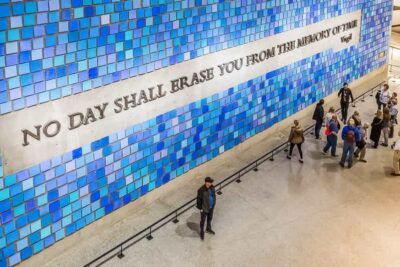

Empire State Building Tickets – Observatory & Museum
Read our review →


9/11 Memorial, Ground Zero Tour with Optional 9/11 Museum Ticket
Read our review →

All-Access 9/11: Ground Zero Tour, Memorial and Museum, One World Observatory
Read our review →
Browse the lists this tour appears in