
Reviewed · WALKING TOURS
San Francisco LGBTQ Walking Tour with Local Guide
The Castro tells its story on foot. This two-hour walk brings you to Harvey Milk’s home, camera shop, and campaign headquarters, then connects those places to the Rainbow Honor Walk, Pink Triangle Memorial Park, and other sites tied to LGBTQAI+ history. I like the personal, community-based approach, and I especially like that the tour treats the Castro as both a neighborhood and a center of political action. The main consideration is that the experience is serious as well as upbeat, with time spent on persecution, the AIDS epidemic, civil rights, and ongoing inequality.
The tour costs $40 per person and begins at 10 a.m. at 400 Castro Street. Guide Kathy receives especially warm praise for her humor, personal stories, and ability to include solo participants, families, and teenagers. The listed maximum of two people may make the walk feel unusually personal, though you should confirm the group arrangement when booking.
In This Review
- Key reasons to consider this Castro walking tour
- Why the Castro makes a powerful walking tour
- Meeting at 400 Castro Street at 10 a.m.
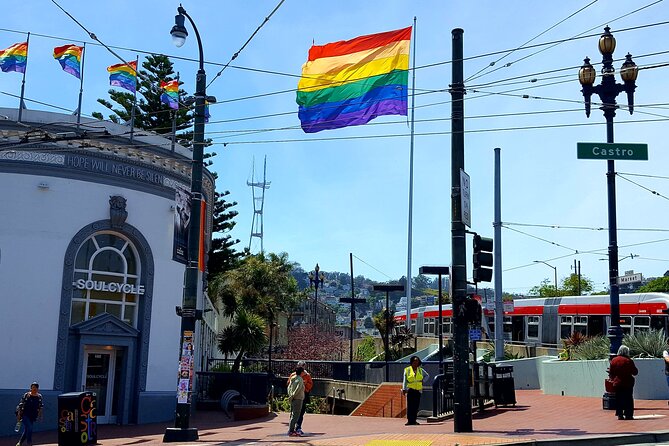
- Castro Theatre and the neighborhood’s name
- Harvey Milk Plaza and the making of a political movement
- The Human Rights Campaign Action Center
- Pink Triangle Memorial Park and the AIDS Quilt site
- Rainbow Honor Walk and public memory
- Kathy’s guiding style and what it adds
- Is $40 a fair price?
- Who should book this experience?
- Should you book the Castro LGBTQ walking tour?
- FAQ
- Where does the tour start and end?
- What time does the walking tour begin?
- How long does the tour last?
- What is included in the price?
- Is the tour wheelchair accessible?
- What happens if the tour is canceled?
Key reasons to consider this Castro walking tour
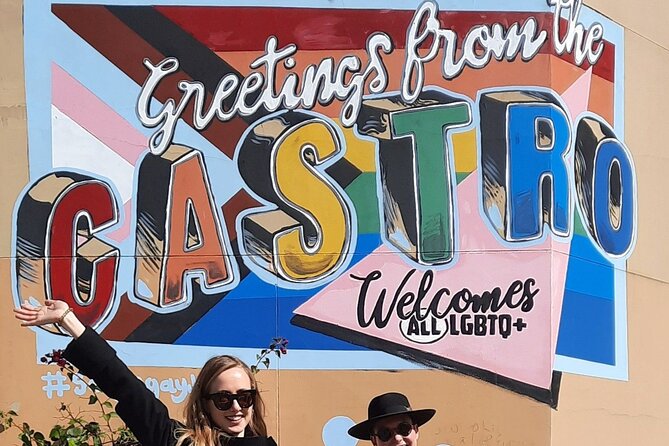
- Harvey Milk’s Castro: See his former home, camera shop, and political headquarters while learning how he became the first openly gay male politician elected to public office in the United States.
- Memorials with real emotional weight: Visit Pink Triangle Memorial Park and the original site of the AIDS Quilt Names Project.
- A guide with local roots: Kathy has lived in the neighborhood for decades and connects public history with personal experience.
- More than 20 historic sites: The route reaches from Gold Rush-era stories through World War II, the civil rights movement, the AIDS epidemic, and present-day activism.
- A manageable morning walk: The tour lasts about two hours, uses public walkways, and returns to the starting point.
- A strong record of satisfaction: The experience has a 4.9 rating from 600 reviews, with 100 percent recommending it.
Why the Castro makes a powerful walking tour
San Francisco’s Castro is easy to visit on your own. You can see the rainbow flags, walk past the famous theater, and stop for a meal or coffee. What you cannot easily do alone is understand how the streets connect to the people and events that changed LGBTQ rights in the United States.
That is the real purpose of this tour. It does not treat the Castro as a collection of colorful storefronts. It explains how a neighborhood became a meeting place, a refuge, a political base, and a symbol recognized around the world.
You will hear about LGBTQ culture, diversity, and the lack of equal rights in employment, housing, and public accommodations. The political material is not an optional side note. It explains why particular buildings and memorials matter.
The tour also covers difficult subjects. You will encounter stories related to discrimination, persecution, the AIDS epidemic, and the long struggle for civil rights. I see that as a strength, but it is worth knowing before you arrive. This is not only a light sightseeing stroll.
More Walking Tours in San Francisco:
- North Beach & Little Italy Walking Tour: Food, History & Flavor
★ 5.0 · 1,044 reviews - San Francisco Chinatown Walking Tour
★ 5.0 · 778 reviews - Chinatown Walking Tour: Food, History & Flavor
★ 5.0 · 575 reviews
Meeting at 400 Castro Street at 10 a.m.
The tour starts and ends at 400 Castro Street, which keeps the morning simple. There is no hotel pickup or drop-off, so you need to make your own way to the neighborhood. The meeting point is near public transportation, an important advantage in San Francisco, where driving and parking can add needless hassle.
A 10 a.m. start gives you a useful first activity of the day. You can take the tour, then remain in the Castro for lunch, shopping, additional sightseeing, or a slower look at places that caught your attention.
The walk operates rain or shine, although poor weather can lead to cancellation with the choice of another date or a full refund. Wear comfortable shoes and bring clothing suited to changing San Francisco conditions. The supplied information does not promise indoor shelter at every stop, so plan for an outdoor morning.
The route uses public walkways that are wheelchair accessible. Service animals are allowed, and most people can participate. The experience is listed with a maximum of two participants, which could offer a quieter format than a large group walk, though minimum numbers still apply.
Castro Theatre and the neighborhood’s name
One early landmark is the Castro Theatre, known for its Spanish Colonial Baroque architecture. Even if you have seen photographs of the building, standing in front of its ornate facade gives the neighborhood a clear sense of place.
The guide also explains how the district got its name. That small detail matters because it turns a familiar street name into part of the city’s broader story. You are not simply passing a famous theater. You are learning how the area developed and why it became such an important home for LGBTQ culture.
The tour’s route covers more than 20 historical sites. The subjects reach back to the Gold Rush, continue through World War II and the civil rights era, and move into the AIDS epidemic and newer public memorials. That span helps you see the Castro as a changing community rather than a neighborhood defined by one decade.
Expect a steady series of stops rather than a long lecture at a single location. The format lets you connect streets, buildings, artworks, and memorials as you walk.
Harvey Milk Plaza and the making of a political movement
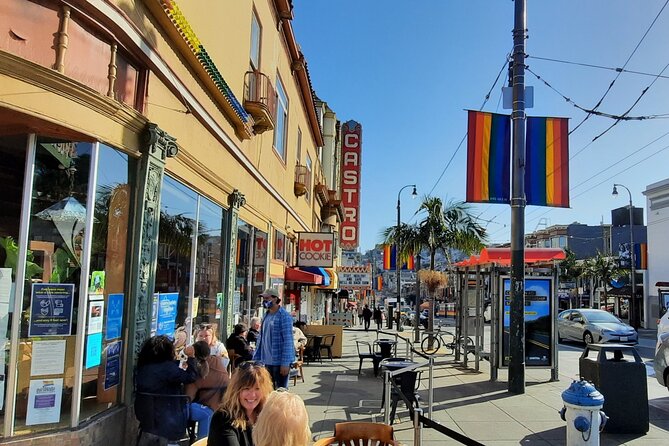
Harvey Milk Plaza is one of the central stops. Here you learn how Milk arrived in the Castro and became the first openly gay male politician to serve in public office in the United States.
The discussion also includes his work as a civil rights activist and the creation of the rainbow flag. That combination of personal story and public symbol gives the stop lasting force. The rainbow flag is familiar almost everywhere, but learning how it emerged from this political and cultural setting makes it feel less like decoration and more like a piece of civic history.
The tour continues to several places connected with Milk. You see his home, his camera shop, and the headquarters used for his political campaigns. These sites help turn a famous name into a person who lived and worked in the neighborhood.
That is one of the best reasons to take this walk instead of relying on a museum display or a short biography. You can picture the relationship between Milk’s daily life, his business, and his organizing work.
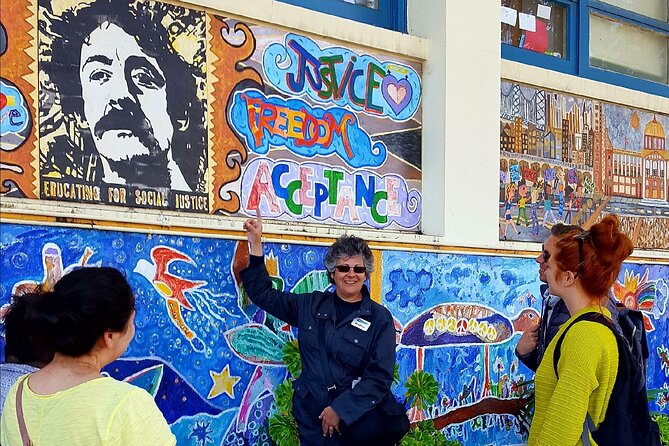
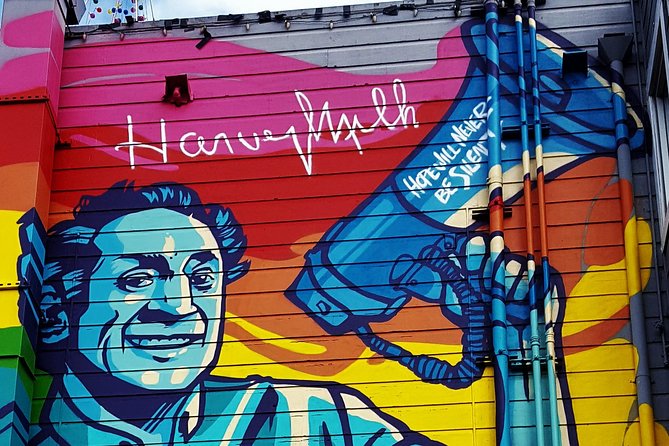
The route may also include the exterior wall of Harvey Milk Academy, where the artwork created for elementary school children has been singled out as a memorable sight. It adds a younger and more hopeful note to a tour that often deals with painful events.
A few more options to weigh up in San Francisco
- Muir Woods and Sausalito (Return by Bus or Ferry)
★ 4.5 · 5,098 reviews - Big Bus SF: Hop-on Hop-off Tour with 17 Stops and Sunset Option
★ 4.0 · 4,539 reviews - Napa and Sonoma Wine Country Full-Day Tour from San Francisco
★ 4.5 · 4,455 reviews - Small Group Yosemite and Giant Sequoias Day Trip from San Francisco
★ 5.0 · 3,671 reviews
The Human Rights Campaign Action Center

Harvey Milk’s former camera shop, campaign headquarters, and residence now house the Human Rights Campaign Action Center and Store. This stop gives the tour a direct link between past activism and current civil rights work.
The focus here is not simply on what has changed. You also learn that LGBTQ people do not have equal rights in employment, housing, and public accommodations today. That makes the stop useful for anyone who wants a clearer view of the work that remains.
The building has several layers of meaning. It was once a personal residence, a business, and a base for political action. Today, it serves a public advocacy role. You can see how one address carries the story forward without pretending the struggle ended with the victories of earlier generations.
If you prefer tours that avoid politics, this may be the point where the experience feels most direct. For me, that is appropriate. The Castro’s story is political because the right to live openly, work safely, find housing, and use public spaces has always been political.
Pink Triangle Memorial Park and the AIDS Quilt site
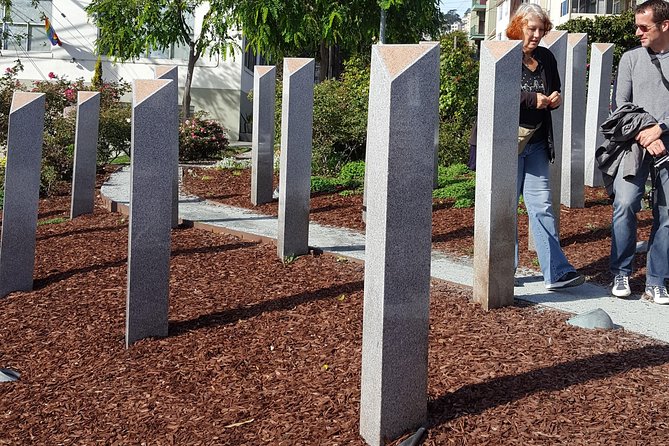
The Pink Triangle Memorial Park is one of the tour’s more sobering stops. Its presence asks you to consider how LGBTQ people were marked, targeted, and persecuted. The guide places that memorial within a longer history of civil rights and community resistance.
The original site of the AIDS Quilt Names Project adds another emotional layer. The AIDS epidemic affected the LGBTQ community on a massive scale, and a place connected with the names project gives that history a human focus.
These stops are not included for atmosphere. They help explain why remembrance is part of activism. Names, symbols, and public spaces can protect memory when official accounts have ignored or diminished it.
You may find the tone shifts here. Kathy’s humor and warmth help, but she does not turn serious subjects into easy entertainment. Several reviews describe the experience as moving and inspiring, and that response makes sense given the memorials included.
One especially meaningful detail from the tour is the chance to pay respects to an activist hero at a site associated with their ashes. The supplied information does not identify the person, so I would not promise that exact moment on every departure. Still, it suggests the kind of personal connection the guide can bring to the walk.
Rainbow Honor Walk and public memory
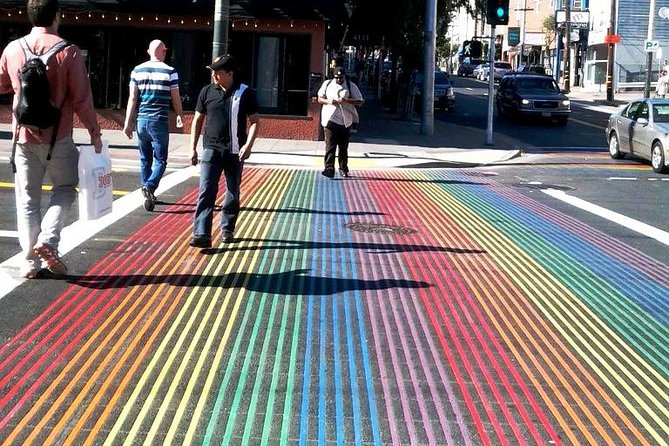
The Rainbow Honor Walk places plaques in the sidewalks to recognize important LGBTQ people. It is an effective way to encounter history during an ordinary neighborhood walk. You look down and find names where you might otherwise see only pavement.
A previous participant returned to the Castro after many years and noticed how these sidewalk plaques had changed the experience of the neighborhood. That is a useful point for repeat visitors. The Castro is not frozen in its past. New memorials and public art continue to shape how the community tells its story.
The tour also includes the Human Rights Campaign and other places tied to LGBTQAI+ activism. Taken together, these stops show several ways a community preserves memory: through buildings, names, art, memorials, campaigns, and public gatherings.
I like this mix because it keeps the tour from becoming a single-person biography. Harvey Milk is important, but the walk also recognizes broader community work and the people who came before and after him.
Kathy’s guiding style and what it adds
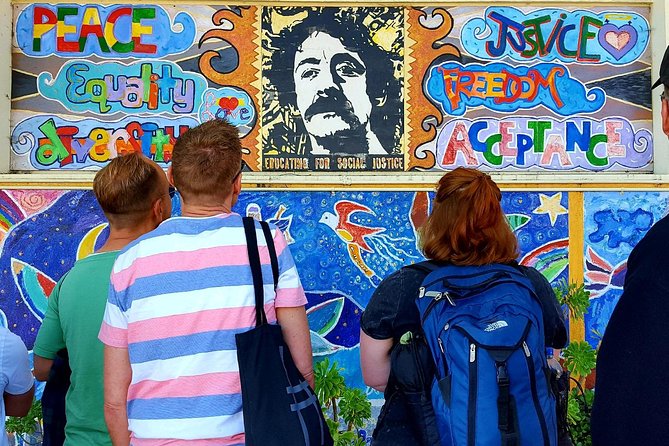
Kathy is the guide most often named in the feedback, and her approach is a major reason this tour earns such strong marks. She has lived in the neighborhood for decades, works as a local historian and community activist, and brings personal experience to the route.
You can expect an informative guide with a sense of humor, but also someone willing to discuss current challenges without softening them. Multiple comments describe Kathy as kind, funny, passionate, accommodating, and genuinely interested in the people on her walk.
That personal attention matters in a small-group setting. Solo participants have felt included, families have found the tour suitable for children, and one teenager reportedly stayed engaged and left inspired. A four-year-old was also accommodated during one visit, although the tour’s serious subject matter may be better suited to older children and teenagers who can follow the discussion.
The tour is not delivered like a detached textbook. The guide’s connection to the community gives it an insider perspective. That is valuable, but it also means the walk has a clear point of view in support of LGBTQ rights and activism. If you want a strictly neutral presentation that avoids present-day issues, choose another activity. If you want history linked to lived experience, this approach is a strong fit.
Is $40 a fair price?
At $40 per person, the tour is not the cheapest way to spend two hours in San Francisco. You could walk through the Castro at no cost. The question is what you would learn without a guide.
The fee includes a local guide and admission to the walking experience. There are no extra attraction tickets listed, and the tour returns to its starting point. You are paying for interpretation, local connections, and access to more than 20 historical points along a planned route.
For first-time visitors, I consider that good value. The tour gives you a useful framework for exploring the neighborhood afterward. It can also prevent the Castro from becoming a quick photo stop centered only on rainbow flags and Harvey Milk.
The value is strongest if you listen closely and care about social history. If you only want architecture, nightlife suggestions, or general sightseeing, you may find a shorter self-guided walk enough.
Because the tour is sometimes booked 29 days in advance, plan early if your San Francisco dates are fixed. The listed cancellation terms are strict: the experience is non-refundable and cannot normally be changed. The exceptions are cancellations caused by poor weather or failure to reach the minimum number, when you are offered another date or a full refund.
Who should book this experience?
I would recommend it to first-time visitors who want context before exploring the Castro on their own. It also suits LGBTQ visitors looking for a connection to the neighborhood’s political and cultural past, as well as anyone interested in American civil rights.
Families can consider it, especially with older children and teenagers. The guide’s warm style seems to help mixed-age groups, but parents should remember that the walk addresses discrimination, AIDS, persecution, and unequal rights.
Solo visitors are also a good match. The tour has been designed in a way that can include one person fully, rather than making a solo participant feel like an extra seat in a larger group.
I would be more cautious if you have limited mobility and are uncomfortable walking for two hours, even though public walkways are wheelchair accessible. Ask the operator about the current route if you need specific support. The published information confirms accessible walkways, but it does not provide details about restrooms, seating, or the exact distance.
Should you book the Castro LGBTQ walking tour?
Book it if you want the Castro explained by someone with a long personal connection to the neighborhood. The strongest features are Kathy’s storytelling, the direct connection to Harvey Milk, the memorials, and the honest discussion of both past victories and unfinished rights work.
Skip it if you want a purely casual neighborhood stroll or a tour without political and emotional subjects. At $40, the price makes sense when you value interpretation and local perspective, not just sightseeing.
For most visitors interested in San Francisco’s LGBTQ history, I would make this a priority morning activity. Arrive at 400 Castro Street before 10 a.m., dress for outdoor conditions, and leave time afterward to revisit the places that speak to you most.
FAQ
Where does the tour start and end?
The tour starts and ends at 400 Castro Street, San Francisco, California 94114.
What time does the walking tour begin?
The scheduled start time is 10 a.m.
How long does the tour last?
The walking tour lasts approximately two hours.
What is included in the price?
The $40 price includes a local guide and admission to the walking tour. Hotel pickup and drop-off are not included.
Is the tour wheelchair accessible?
Public walkways used by the tour are wheelchair accessible. Service animals are also allowed.
What happens if the tour is canceled?
If poor weather causes cancellation, you are offered another date or a full refund. If the minimum number of participants is not reached, you are offered another date or experience, or a full refund.
Just added in San Francisco
- From San Francisco: Napa & Sonoma Valley Full-Day Wine Tour★ 4.5 · 513 reviews
- The Escape Game San Francisco: Epic 60-Minute Adventures Downtown★ 5.0 · 334 reviews
- Small-Group Wine Country Tour from San Francisco with Tastings★ 5.0 · 1,543 reviews
- San Francisco Authentic Food Tour with 5 Locals Favorites Dishes★ 5.0 · 852 reviews
- Yosemite Day Tour from San Francisco★ 4.5 · 713 reviews
- California Academy of Sciences General Admission Ticket★ 4.0 · 586 reviews
- Skip The Bus: San Francisco By Luxury Van Tour★ 5.0 · 800 reviews
- San Francisco Movie Sights City Tour★ 5.0 · 1,223 reviews
Walking Tours, compared.
History and Hauntings of Salem Guided Walking Tour
Read our review →
New Orleans Premier Ghost, Voodoo and Vampire Walking Tour
Read our review →
Freedom Trail History Small Group Walking Tour
Read our review →
Historic Charleston Guided Sightseeing Walking Tour
Read our review →
New Orleans Food Walking Tour of the French Quarter with Small-Group Option
Read our review →
Cambridge: Harvard University Student-Guided Walking Tour
Read our review →Browse the lists this tour appears in