
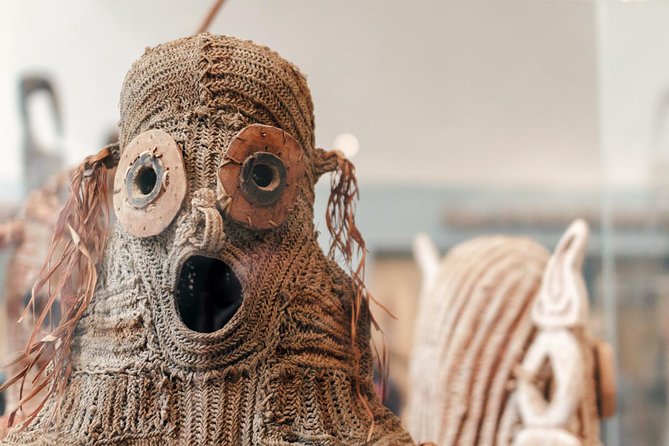
Reviewed · MUSEUMS
2-hour Metropolitan Museum Guided Tour
The Met can swallow a whole day. This two-hour guided walk gives you a clear path through its vast galleries, pairing famous works with odd, memorable surprises such as Egyptian tomb models, Henry VIII’s armor, and the Antioch Chalice. I like the efficient route and the way a good guide turns a grand museum into a series of understandable stories. The main drawback is time: two hours offers a strong introduction, not a full visit.
I also like the small-group format, which can make it easier to ask questions and shape the visit around your interests. Guides such as Katie, Jett, Kevin, Rob, and Stephane Z have been praised for humor, warmth, and strong command of the collection. Still, group size and acoustics can vary, and one person found it hard to hear the guide when the group grew larger.
In This Review
- Key points to know before you book
- Why a guided visit helps at the Met
- Ancient Egypt gives the tour its best opening
- The Temple of Dendur changes the scale
- Henry VIII and the Antioch Chalice keep history lively
- Greek, Roman, and Papua New Guinean works broaden the route
- Monet, Van Gogh, and Rodin finish the visit strongly
- How much can you really see in two hours?
- The $65 price and the value of pre-arranged admission
- Group size, sound, and guide quality
- Who should book this Met tour?
- Practical details before you arrive
- Should you book the two-hour Met tour?
- FAQ
- How long does the Metropolitan Museum guided tour last?
- What is included in the $65 price?
- Where does the tour begin?
- Where does the tour end?
- Is the tour offered in English?
- What works and galleries are included?
- How large is the group?
- Is hotel pickup included?
- Can I cancel for a full refund?
Key points to know before you book
- Egyptian tomb models and mummies come first, giving the tour an engaging historical start.
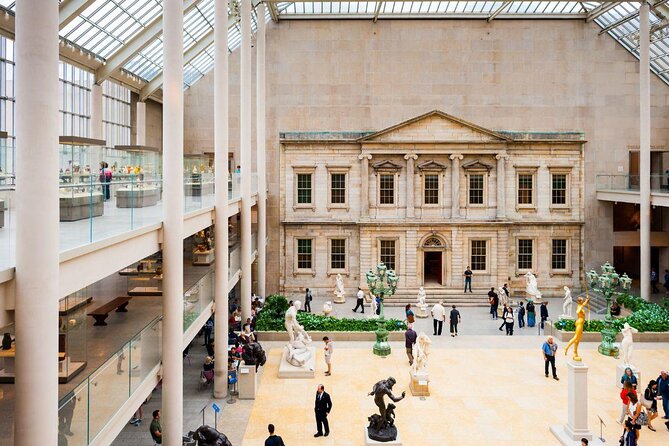
- The Temple of Dendur is the museum’s grand centerpiece, an ancient Egyptian temple displayed inside the Met.
- The route mixes famous art with less obvious objects, including Henry VIII’s armor and the Antioch Chalice.
- Monet, Van Gogh, and Rodin appear near the end, providing a strong finish in the European art galleries.
- Two hours is ideal for a first orientation, but too brief if you want extended time with individual works.
- The $65 fee includes museum admission and a guide, with free cancellation up to 24 hours before the start.
Why a guided visit helps at the Met
The Metropolitan Museum of Art is not a quick stop. Its galleries cover thousands of years, and the building can leave you wondering where to begin. You can walk in with a map and still spend half your visit finding the right staircase.
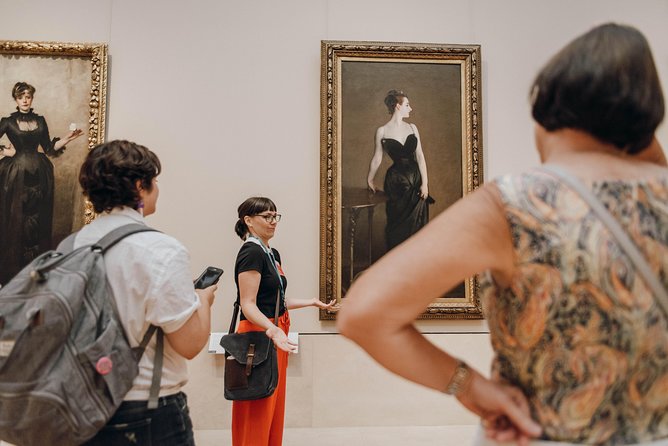
This tour solves that problem with a planned route and a live guide. Instead of trying to absorb every room, you move through selected works that help explain the museum’s range. The result is less about checking off paintings and more about learning how to look.
I especially like this format for anyone who does not normally visit museums. The guides are described as approachable and lively, and several people praised their ability to explain art without making the experience feel like a classroom. Katie was singled out for keeping teenagers interested, while Jett was praised for humor and for explaining the stories behind both the artists and their work.
The tour is offered in English and lasts about two hours. That is enough time to get your bearings, see major highlights, and leave with a short list of galleries you may want to revisit. It is not enough time to cover the Met in any serious depth. That is not a flaw in the tour so much as a fact of museum math.
More Museum Tours in New York City
- NYC: 9/11 Memorial & Museum Timed-Entry Ticket
★ 4.8 · 31,428 reviews - NYC: Empire State Building Tickets – Observatory & Museum
★ 4.7 · 25,757 reviews - New York City: American Museum of Natural History Ticket
★ 4.5 · 15,447 reviews
Ancient Egypt gives the tour its best opening
The route begins in Ancient Egypt, a smart choice for a museum introduction. The first objects are small tomb models and dioramas showing daily life in the era of Tutankhamun. These little scenes can be more revealing than a grand statue because they show ordinary work, food, rituals, and social life.
Your guide uses them to explain Egyptian burial customs and the belief system behind the objects. That context matters. Without it, a museum case full of models can look like a collection of delicate miniatures. With a story attached, you begin to see why they were made and what they were meant to do.
Next come the Egyptian mummies, including William, the Met’s familiar mascot. The tour uses him as an approachable way into a subject that can otherwise feel distant or solemn. You get a closer sense of how the Egyptians understood death, preservation, and the journey into the afterlife.
This section is especially good for families and first-time museum visitors. It has clear visual subjects, strong stories, and enough human detail to hold your attention before the tour moves into larger architectural and artistic works.
The Temple of Dendur changes the scale
The Temple of Dendur is one of the Met’s most impressive spaces. After the small tomb models and mummies, you encounter a full ancient Egyptian temple displayed inside the museum. The contrast gives the tour a useful rhythm, moving from intimate objects to a structure that feels almost impossible to contain indoors.
The temple is also a fine reminder that the Met is not simply a room full of framed paintings. It presents architecture, sculpture, ritual objects, armor, decorative arts, and works from many parts of the world. The Temple of Dendur brings that wide scope into focus.
You will also get a view connected with Central Park during this part of the visit. The museum’s position along Fifth Avenue adds to the sense that you are visiting both an institution and a major New York landmark. The tour ends back at the museum meeting point, so you can continue exploring afterward if you still have energy.
One practical point: the route may change if a gallery is closed or an artwork is absent. The tour provider specifically notes that these changes can happen without notice. A flexible attitude is useful here, since the Met’s size and changing gallery conditions make a fixed promise about every object unrealistic.
Henry VIII and the Antioch Chalice keep history lively

The tour then moves into objects that carry a bit more mystery and drama. Henry VIII’s armor offers a visual link to one of Britain’s most famous kings. Armor is easy to appreciate even if you know little about art because it immediately raises practical questions: Who wore it? How heavy was it? Was it made for battle, ceremony, or display?
The Antioch Chalice brings a different kind of story. It has been identified by some as the Holy Grail, a claim that gives the object an extra layer of intrigue. A good guide can use this piece to separate proven facts from later legends, which is often where museum visits become most interesting.
These stops also show why a guided route can help. You might walk past armor or a ceremonial vessel without knowing why it matters. A short explanation gives the object a place in a larger story, and you can decide later whether it deserves another look.
The tour does not stay in one period for long. You continue through Greek sculpture and Roman frescoes before reaching works from Papua New Guinea. That quick movement across cultures is part of the experience, but it also explains why the tour provides an overview rather than a detailed art study.
A different kind of day out entirely:
- NYC: SUMMIT One Vanderbilt Tickets
★ 4.7 · 51,195 reviews - NYC: Empire State Building Observation Deck Tickets
★ 4.7 · 22,072 reviews - NYC: Edge Observation Deck Admission Ticket
★ 4.6 · 20,918 reviews - New York City: Statue of Liberty & Ellis Island with Ferry
★ 4.6 · 18,683 reviews
Greek, Roman, and Papua New Guinean works broaden the route
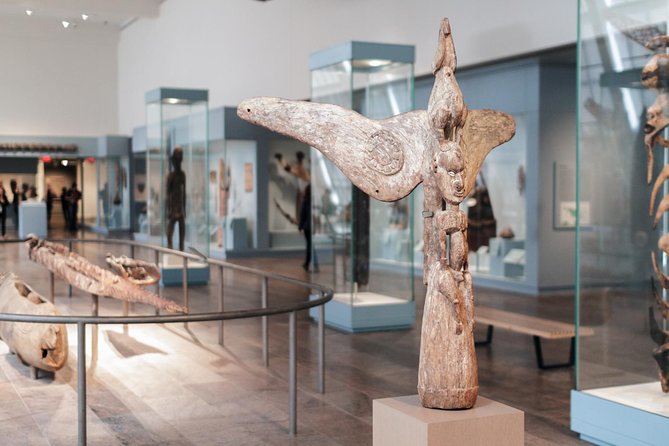
The Greek and Roman sections add the familiar foundations of Western art. Ancient statuary gives you a chance to see how artists represented the human body, movement, power, and ideal beauty. Roman frescoes bring you closer to domestic spaces and wall decoration, rather than only monumental sculpture.
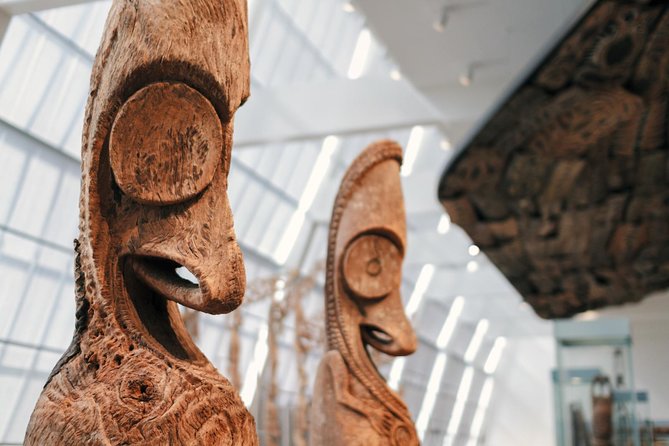
The stop in Papua New Guinea changes the mood again. It introduces art from a different cultural setting and prevents the tour from becoming a straight march through European history. That variety is one of the route’s strengths.
I would not expect a long discussion of every culture represented in these galleries. Two hours simply cannot provide that. Instead, you should think of this section as a set of doors opening onto subjects you can explore later. If you already have a strong interest in Greek sculpture, Roman painting, or the art of Papua New Guinea, tell your guide at the start. Small groups may allow some adjustment.
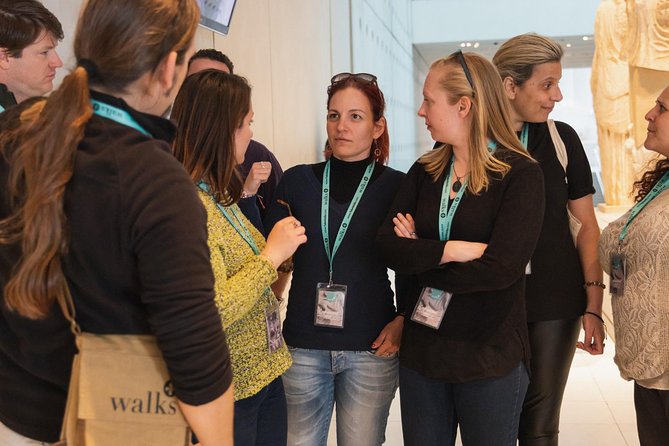
Several people specifically appreciated guides who asked what the group wanted to see. One group of about ten was invited to name particular periods or objects, and the guide shaped the visit around those requests. That kind of flexibility can make the tour feel less like a fixed script.
Monet, Van Gogh, and Rodin finish the visit strongly
The second-floor galleries bring the tour to some of the Met’s most widely recognized European works. Claude Monet’s Water Lilies offer a quiet change after the ancient galleries and their historical subjects. The paintings reward a little patience, even if the group cannot linger for long.
Vincent van Gogh’s works bring more emotional force. Guides have been praised for explaining the artists behind the paintings, not merely pointing out famous names. That background can help you notice choices in color, brushwork, and mood that might otherwise pass by in a crowded gallery.
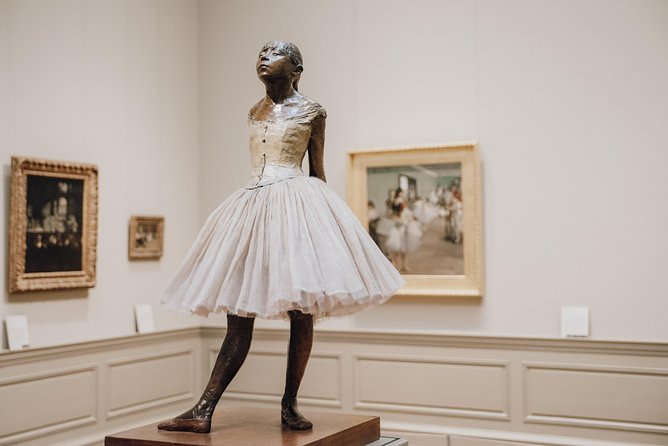
Rodin’s Thinker provides a strong final stop. It is instantly familiar, but the guide can help you look beyond the silhouette and consider the figure’s physical tension and expression. Ending with a work that many people already recognize gives the tour a satisfying point of connection.
The order also works well for a first visit. You begin with ancient objects and ritual, move through architecture and historical artifacts, then finish with major European art. It is a broad sample of the Met rather than a single-theme tour.
How much can you really see in two hours?
You will see a lot of the museum, but you will not see all of it. The route includes Ancient Egypt, Greek and Roman works, Papua New Guinea, European paintings, Rodin, the American Wing area, the Temple of Dendur, and views connected with Central Park and Fifth Avenue.
That sounds extensive because it is. The tradeoff is that many stops receive only a focused explanation before the group moves on. If you want to study one Monet painting for twenty minutes or compare several Van Gogh works, you will need to return after the tour.
Several people called two hours the right amount of time for an introduction. One person who had visited the Met before found the tour far more educational than going alone. Another suggested taking a longer tour if you want more substance about individual works.
I agree with that division. Choose this experience if you want a strong first pass and a sense of how the museum fits together. Choose a longer visit, or plan time afterward, if your priority is detailed art discussion.
The $65 price and the value of pre-arranged admission
The cost is $65 per person, including museum admission and a local guide. The value depends on how you use your time.
If you are comfortable navigating the Met and already know which galleries matter to you, you may prefer to enter independently. But if this is your first visit, the guide can save you from wandering through a huge building without a plan. The admission is arranged in advance, which also removes one task from your arrival.
The strongest value comes from the interpretation rather than the ticket itself. You are paying for a route, explanations, historical context, and the chance to ask questions. People who joined with little art background often found the visit much easier to enjoy because the guide gave them a way into the collection.
At $65, I would consider it worthwhile for a first-time visit, a short New York stay, or a family that wants structure. It is less appealing if you have already planned a detailed day around specific galleries and prefer to move at your own pace.
The experience is often booked about 18 days ahead, so popular times may fill before your New York trip. If you want an early start, book ahead rather than waiting until you are in the city.
Group size, sound, and guide quality
The tour is intended as a small-group experience, with a stated limit of 15 people in the highlights and a maximum of 18 in the additional details. The difference matters because museum acoustics can be poor, especially near popular works.
Most feedback praises the guides’ warmth, humor, and command of the museum. Kevin was praised for adding historical context, particularly in the Egyptian galleries. Rob was appreciated for humor and for sharing details over a longer version of the visit. Lisa Banks, LizBanks, Ryan, Phil, Katie, Jett, Stephane Z, and others were also singled out for making the tour engaging.
There is one practical concern: hearing the guide. One person found the group too large and wished for microphones and headsets. Another said that interesting explanations were sometimes missed because the guide could not be heard clearly.
You can reduce that risk by staying close to the guide and speaking up early if you cannot hear. If the group is near the larger end of the stated range, the experience may feel less personal than expected.
Who should book this Met tour?
This tour suits you best if:
- You are visiting the Met for the first time.
- You normally find large museums overwhelming.
- You want famous works plus unusual objects.
- You have only two hours.
- You are visiting with children or teenagers who need a lively pace.
- You want a guide who can explain art in plain English.
- You would like to identify galleries to revisit on your own.
It is also useful for repeat visitors who have seen the Met but never understood how its collections fit together. One returning visitor found the guided visit more educational and enjoyable than previous solo visits.
I would hesitate if you want a slow, scholarly examination of a single period. The route moves quickly, and some planned stops may change if galleries close. You should also be comfortable walking at a moderate pace, since this is a walking tour through a large museum.
Bring your interests with you. If you care about Egyptian art, Impressionism, a particular artist, or a certain historical period, mention it at the beginning. The smaller groups may allow the guide to give extra attention to those requests.
Practical details before you arrive
The meeting point is the Metropolitan Museum of Art, 1000 Fifth Avenue, New York, NY 10028. The activity ends at the same meeting point, and the museum is near public transportation.
You receive confirmation when you book, and the ticket is mobile. The tour is conducted in English. Most people can participate, but you should be able to walk at a moderate pace without difficulty.
Hotel pickup and drop-off are not included. Plan your route to the Met before the start time, since this experience begins at the museum rather than at your hotel.
You can cancel for a full refund up to 24 hours before the local start time. Cancellations or changes made within 24 hours are not refunded or accepted.
Should you book the two-hour Met tour?
Book it if you want a well-planned first look at an enormous museum. The route gives you Egyptian tomb models, mummies, the Temple of Dendur, Greek and Roman art, Papua New Guinean works, Monet, Van Gogh, and Rodin without asking you to design the day yourself.
The best guides make the $65 price worthwhile by adding stories, humor, and context. The main cautions are the brisk pace, possible gallery changes, and the chance that a larger group may make hearing difficult.
For a first visit, I think this is a smart choice. Arrive ready to walk, stay near the guide, and keep time afterward for the galleries that catch your eye. The tour will not show you everything, but it can help you understand what deserves your attention next.
FAQ
How long does the Metropolitan Museum guided tour last?
The tour lasts approximately two hours.
What is included in the $65 price?
The price includes a local expert guide and pre-arranged Metropolitan Museum admission tickets.
Where does the tour begin?
It begins at the Metropolitan Museum of Art, 1000 Fifth Avenue, New York, NY 10028, USA.
Where does the tour end?
The activity ends back at the meeting point at the Metropolitan Museum of Art.
Is the tour offered in English?
Yes. The tour is conducted in English.
What works and galleries are included?
The route includes Ancient Egyptian tomb models, mummies, William, the Temple of Dendur, Henry VIII’s armor, the Antioch Chalice, Greek statuary, Roman frescoes, works from Papua New Guinea, Monet’s Water Lilies, works by Van Gogh, Rodin’s Thinker, and parts of the American Wing area.
How large is the group?
The tour is described as a small-group experience limited to 15 people, while the additional details give a maximum of 18 participants.
Is hotel pickup included?
No. Hotel pickup and drop-off are not included.
Can I cancel for a full refund?
Yes. You can cancel at least 24 hours before the local start time for a full refund. Cancellations or changes made less than 24 hours before the start are not accepted and are not refunded.
Just added in New York City
- NYC: Woodbury Common Premium Outlets Shopping Trip★ 4.2 · 761 reviews
- New York City: Private Walking Tour with a Local★ 4.6 · 771 reviews
- Washington DC Day Trip by Bus from New York City★ 4.7 · 600 reviews
- Wall Street Insider Tour with a Finance Professional★ 4.5 · 660 reviews
- NYC: Guided Central Park Horse Carriage Ride★ 4.8 · 877 reviews
- True Crime New York: NYPD-Guided Mafia Walking Tour w/ Food★ 4.6 · 318 reviews
- LEGOLAND® New York Theme Park Admission Ticket★ 4.0 · 1,396 reviews
- Whitney Museum of American Art Admission Ticket★ 4.0 · 1,579 reviews
Museums, compared.

Empire State Building Tickets – Observatory & Museum
Read our review →

9/11 Memorial, Ground Zero Tour with Optional 9/11 Museum Ticket
Read our review →

All-Access 9/11: Ground Zero Tour, Memorial and Museum, One World Observatory
Read our review →
Browse the lists this tour appears in